
The short answer
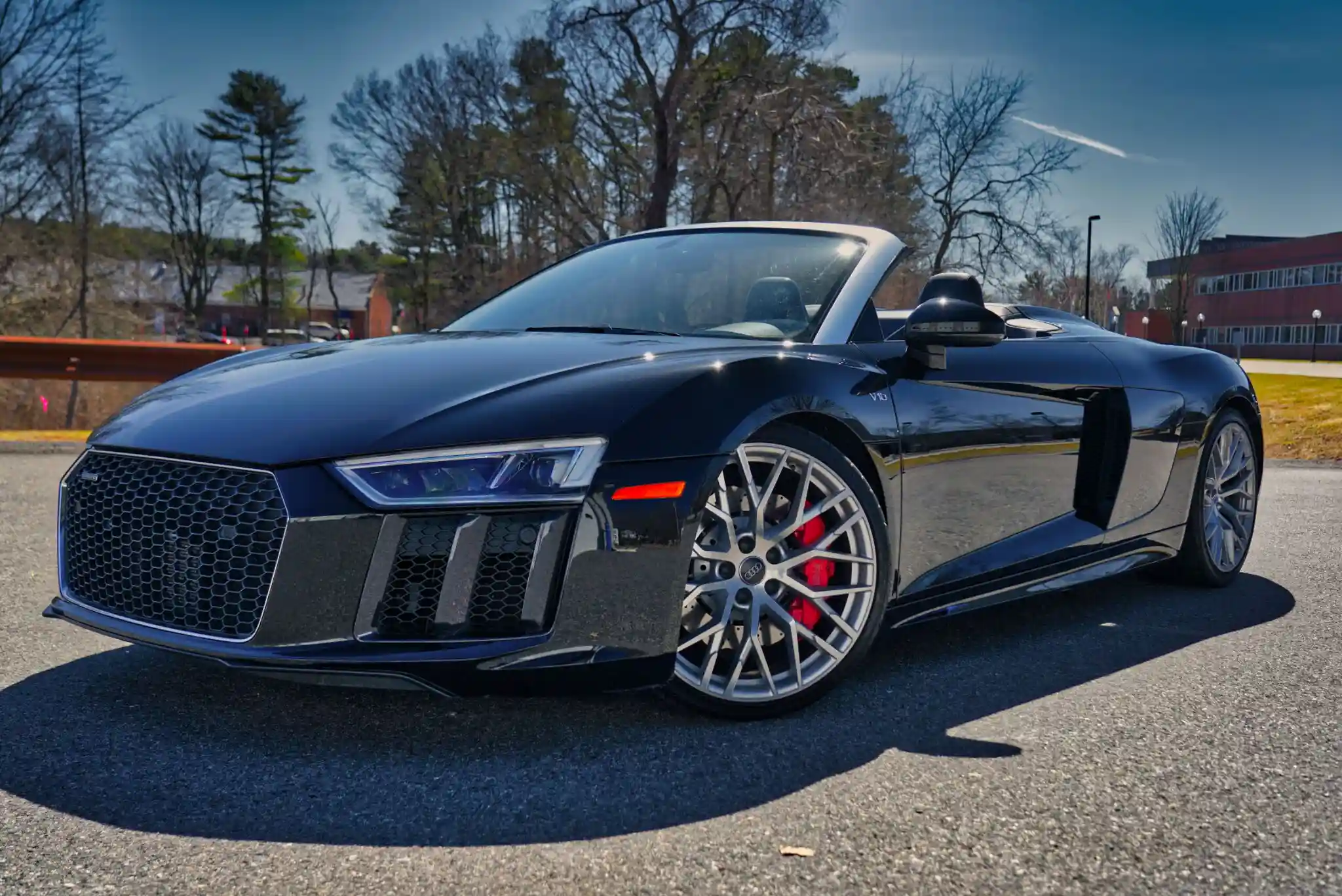
Luxury and performance vehicles are usually protected everywhere except the windshield.
Owners install paint protection film on the front bumper, hood, fenders, mirrors, rocker panels, and rear quarters. They ceramic coat the paint, wheels, calipers, and glass. They tint the windows for comfort and UV protection.
Then the windshield takes a direct hit on the highway.
For many premium vehicles, windshield replacement is not simple or cheap. A windshield can be large, curved, rare, expensive, backordered, or tied into cameras, sensors, rain detection, head-up display systems, or driver-assistance features.
On performance cars, the risk can be even higher because of lower vehicle profiles, highway driving, spirited use, sticky tires, wide tires, track days, rallies, road trips, and high-speed debris.
That is where windshield protection film makes sense.
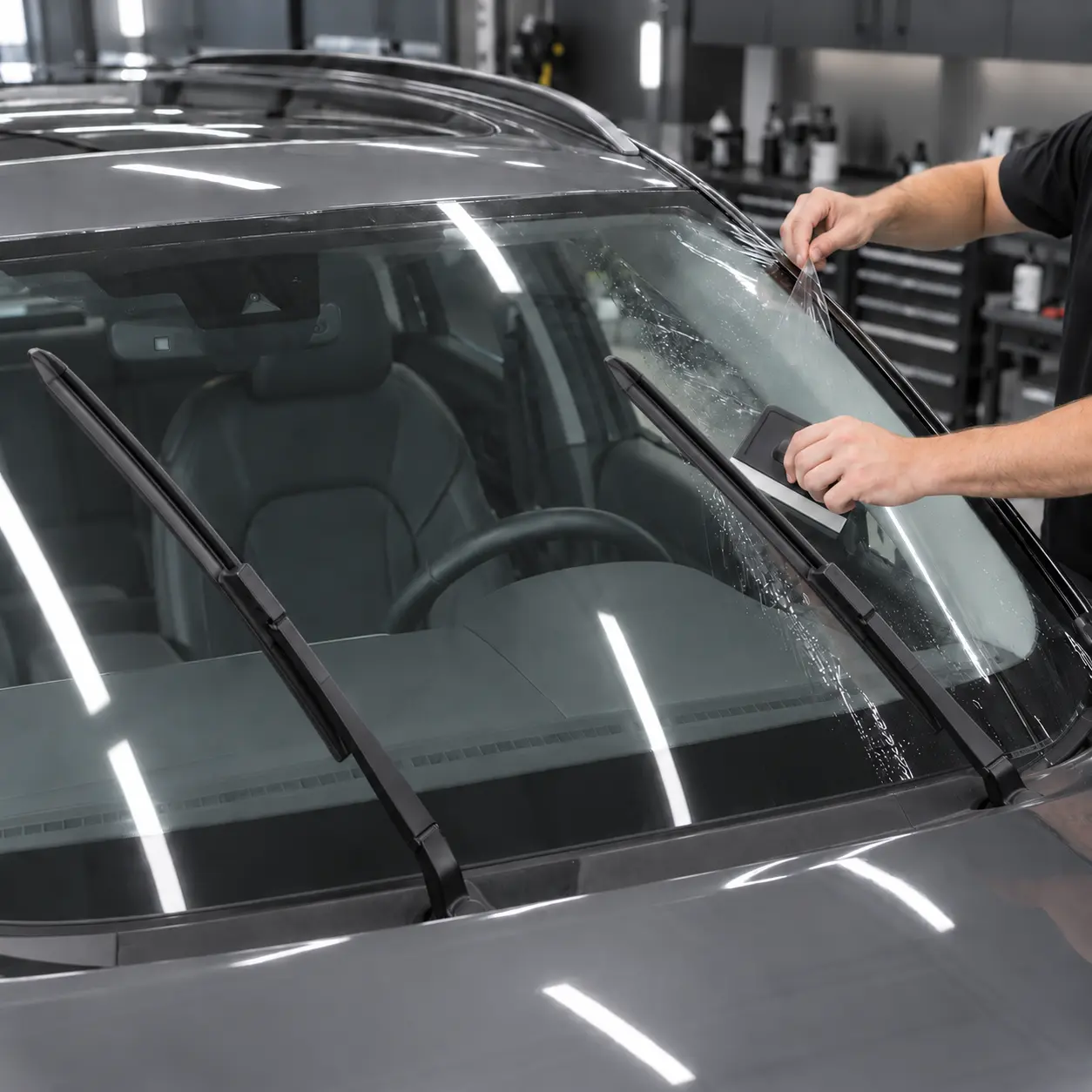
Windshield protection film is a clear exterior film installed on the outside of the windshield. It acts as a sacrificial layer that helps reduce chips, pitting, and damage from everyday road debris.
It does not make the windshield unbreakable.
It does not guarantee that severe impacts cannot crack the glass.
But for Porsche, Corvette, BMW, Mercedes-Benz, Audi, Ferrari, Lamborghini, McLaren, Aston Martin, Bentley, Rolls Royce, Range Rover, Cadillac V-Series, and other premium vehicles, windshield protection film can be a smart way to reduce risk.
At Kickin’ Customs in Raynham, MA, we install XPEL windshield protection film, paint protection film, ceramic window tint, ceramic coatings, and premium vehicle protection packages for drivers across Massachusetts and Rhode Island.
Premium vehicles and glass exposure
Why Windshields Matter on Premium Vehicles
A windshield is not just a piece of glass anymore.
On many luxury and performance vehicles, the windshield is part of a larger system.
It may include or work around cameras, sensors, rain sensors, lane-keeping systems, driver-assistance systems, head-up display projection areas, mirror mounts, defrost systems, and advanced glass shapes.
When the windshield gets damaged, replacement may involve more than ordering new glass.
The vehicle may need calibration.
The glass may need to be sourced.
The vehicle may need to sit while parts are located.
The replacement may need to be performed by a qualified shop.
The owner may worry about fitment, clarity, electronics, and whether the replacement glass feels the same as the original.
For owners of higher-end vehicles, avoiding unnecessary replacement can be worth the added protection.
Performance Vehicles See More Road Debris
Performance vehicles are often driven in ways that create more windshield risk.
They may sit lower to the ground.
They may be driven at higher speeds.
They may use wider tires.
They may follow other performance cars on cruises, rallies, or track events.
They may spend time on highways.
They may have aggressive body shapes that place the windshield directly in the path of road debris.
A small stone that may bounce harmlessly at low speed can strike much harder at highway speed.
That is why windshield protection film is especially useful for performance vehicles.
The film adds a sacrificial layer over the glass to help reduce everyday impact damage.
It will not stop every severe hit, but it can help with the normal debris that chips and pits windshields over time.
Luxury Vehicles Can Have Expensive Glass
Luxury vehicle glass can be expensive for several reasons.
The windshield may be large.
It may have acoustic layers.
It may support a head-up display.
It may work with advanced safety systems.
It may include special coatings, tint, heating elements, or sensor areas.
It may require calibration after replacement.
It may not be readily available.
Even if insurance covers the glass, the process can still be inconvenient.
Many owners would rather protect the original windshield than deal with replacement unless absolutely necessary.
Windshield protection film helps reduce the chance of small road debris turning into a larger glass replacement issue.
For luxury vehicles, the value is not only the cost of the glass.
It is the downtime, hassle, and concern around replacing factory glass.
Windshield Protection Film Is Not Window Tint
Windshield protection film and windshield tint are not the same product.
Windshield tint is installed on the inside of the glass. It is mainly used for heat rejection, glare reduction, UV protection, and cabin comfort.
Windshield protection film is installed on the outside of the windshield. It is designed to help reduce damage from road debris and impact.
A vehicle can have both.
A performance car may receive a light ceramic windshield tint on the inside for heat and glare, while receiving windshield protection film on the outside for impact reduction.
The tint helps comfort.
The windshield protection film helps protect the glass.
They solve different problems.
Windshield Protection Film Is Not Glass Coating
Windshield protection film is also different from ceramic coating for glass.
Glass coating helps with water behavior, rain performance, bug cleanup, and easier cleaning.
Windshield protection film is a physical film layer designed to help protect the windshield from impact damage.
A glass coating will not stop a rock chip the way protection film is intended to.
If the customer wants better rain behavior and easier cleaning, glass coating can be helpful.
If the customer wants to reduce the chance of windshield chips and cracks, windshield protection film is the better conversation.
Both products can be useful, but they are not interchangeable.
For high-value vehicles, it is important to match the product to the problem.
Benefits, limits and road debris
What Windshield Protection Film Can Do
Windshield protection film can help reduce chips, pitting, and damage from everyday road debris.
It can add a sacrificial layer over the exterior glass.
It can help protect rare or expensive windshields.
It can reduce the likelihood of small impacts turning into visible chips.
It can help preserve windshield clarity by reducing surface wear from sand, salt, and grit.
It can be especially useful for highway-driven vehicles, performance cars, luxury vehicles, exotics, road trip vehicles, and cars driven in New England winter conditions.
The goal is not perfection.
The goal is reducing risk.
For expensive and hard-to-replace glass, that risk reduction can be worth it.
What Windshield Protection Film Cannot Do
Windshield protection film cannot make glass indestructible.
It cannot guarantee that a windshield will never crack.
It cannot stop every rock.
It cannot stop every severe impact.
It cannot repair existing cracks.
It cannot fix badly pitted or damaged glass.
It cannot prevent damage from the inside of the vehicle.
It cannot replace proper wiper care, cleaning, or maintenance.
This is important because windshield film needs honest expectations.
If a large rock hits the windshield at the wrong speed and angle, the glass can still break.
Windshield protection film is designed to reduce risk from common road debris, not rewrite physics.
Why Lower Vehicle Profiles Matter
Many performance cars sit lower than daily drivers.
Lower vehicles can be more exposed to debris kicked up by tires, trucks, and surrounding traffic.
The windshield may also be positioned at an aggressive angle, depending on the vehicle design.
Low sports cars, wide performance cars, and supercars often see road debris differently than taller SUVs.
Porsche 911s, Corvettes, McLarens, Lamborghinis, Ferraris, and similar vehicles can all be exposed to highway debris, rally debris, and road trip abuse.
A lower profile does not automatically mean the windshield will crack.
But it can increase exposure in certain driving conditions.
Windshield protection film adds another layer of defense for these vehicles.
High-Speed Driving Increases Impact Force
Speed matters.
A small stone at low speed is one thing.
A small stone at highway speed is another.
Luxury and performance vehicles often spend time on highways, back roads, rallies, road trips, and spirited drives.
The faster the vehicle is moving, the harder road debris can strike.
Windshield protection film helps absorb and reduce the effect of everyday impacts.
It can be especially useful for owners who enjoy driving their vehicle rather than storing it.
If the vehicle regularly sees highway speeds, the windshield is taking abuse whether the owner notices it or not.
Over time, that abuse can create chips, pitting, and glare.
Wide Tires Can Throw Debris
Wide tires and sticky tires can contribute to paint and glass damage.
Performance tires can pick up and throw stones, sand, and grit.
This is why performance cars often benefit from PPF on rocker panels, lower doors, rear quarters, and rear impact areas.
The same driving environment can also affect the windshield.
When driving with other performance cars, debris can be thrown from vehicles ahead.
On rallies, cruises, and group drives, this can become more noticeable.
Windshield protection film is not only for the front bumper and hood conversation.
The windshield is part of the high-impact zone too.
Vehicle-specific considerations
Porsche Windshield Protection Film
Porsche owners are strong candidates for windshield protection film.
Many Porsche vehicles are low, fast, and driven on highways, back roads, rallies, and spirited drives.
A Porsche windshield may also be expensive or more involved to replace depending on the model and options.
Porsche 911, Cayman, Boxster, Taycan, Panamera, Macan, and Cayenne owners may all consider windshield protection depending on how the vehicle is used.
A 911 or Cayman that sees spirited driving may benefit because of road debris exposure.
A Taycan may benefit because of EV glass and technology considerations.
A Macan or Cayenne may benefit because of daily use and highway mileage.
For Porsche owners who already invest in PPF, windshield film is a logical next step.
Corvette Windshield Protection Film
Corvette owners often understand front-end protection.
The Corvette has aggressive body lines, low ride height, wide tires, and strong performance potential.
C7 and C8 owners commonly consider full front PPF, rocker protection, ceramic coating, and windshield protection film.
The windshield is exposed during highway driving, cruises, events, road trips, and spirited use.
A chip or crack can quickly become frustrating, especially on a newer Corvette with advanced technology and expensive replacement concerns.
Windshield protection film can help reduce the risk of everyday road debris damage.
For Corvette owners who drive the car the way it was meant to be driven, windshield protection film is worth discussing.
BMW Windshield Protection Film
BMW owners, especially M car owners, can benefit from windshield protection film.
BMW M vehicles are often driven hard, driven fast, and used year-round.
M2, M3, M4, M5, M8, X3M, X5M, X6M, and other performance models see highway miles, debris, and aggressive driving conditions.
Luxury BMW models can also have advanced windshield technology and higher replacement costs.
Windshield protection film can be useful for owners who want to reduce glass damage risk, especially when combined with full front PPF and ceramic coating.
BMW drivers often care about both appearance and driving experience.
Clear, protected glass supports both.
Mercedes-Benz and AMG Windshield Protection Film
Mercedes-Benz and AMG vehicles are another strong fit.
Many Mercedes models use advanced safety systems, sensors, rain sensors, acoustic glass, head-up display options, and premium windshield assemblies.
AMG vehicles also see performance driving, highway speeds, and road debris exposure.
A windshield replacement on a Mercedes-Benz can be more involved than owners expect.
Windshield protection film can help reduce the chance of chips, cracks, and surface pitting from everyday road use.
For AMG owners, it pairs well with full front PPF, wheel coating, ceramic coating, and ceramic tint.
For luxury Mercedes owners, it helps protect one of the most important visibility surfaces on the vehicle.
Audi and RS Windshield Protection Film
Audi vehicles, especially S and RS models, are often daily driven quickly and comfortably.
RS3, RS5, RS6, RS7, S4, S5, S6, S7, R8, Q8, SQ5, and other Audi models can all benefit from windshield protection depending on use.
Audi windshields may include advanced sensors, cameras, rain systems, or acoustic glass.
Performance models also see highway debris and spirited driving.
For Audi owners who want a clean, protected, premium vehicle, windshield protection film can be part of a complete protection plan.
Full front PPF protects the paint.
Windshield film helps protect the glass.
Ceramic coating and tint support maintenance and comfort.
Exotic Car Windshield Protection Film
Exotic car windshields can be expensive, rare, and difficult to source.
Ferrari, Lamborghini, McLaren, Aston Martin, Lotus, Bentley, Rolls Royce, and other specialty vehicles may have glass that is not as easy to replace as a common daily driver windshield.
Some glass may be unique to the model.
Some may have long lead times.
Some may involve specialized installation.
Some may be tied to advanced systems.
Even if the vehicle is not driven every day, a single road trip, rally, or highway drive can create windshield damage.
For exotic owners, windshield protection film can be less about daily use and more about avoiding a major headache.
If the glass is rare or expensive, protecting it makes sense.
Ferrari Windshield Protection Film
Ferrari owners often protect the paint early with PPF.
The windshield should be part of the same conversation.
Ferrari vehicles are low, fast, and often driven in situations where debris exposure matters.
A windshield chip on a Ferrari is more than an annoyance. Replacement can be expensive, sourcing can take time, and owners often prefer preserving factory glass when possible.
Windshield protection film can help reduce risk from everyday road debris.
It is especially useful for owners who drive their cars on highways, rallies, events, and weekend trips.
A Ferrari does not need to be daily driven to justify windshield protection.
One bad impact can be enough.
Lamborghini Windshield Protection Film
Lamborghini windshields can be large, low, and exposed.
Huracan, Aventador, Urus, and newer Lamborghini models can all benefit from windshield protection depending on use.
The Huracan and Aventador sit low and are often driven at highway speeds or on spirited routes.
The Urus may be daily driven and see year-round road conditions.
Windshield protection film can help reduce chips, pitting, and debris damage.
For Lamborghini owners, a protection package often includes full body PPF or full front PPF, ceramic coating, tint, and windshield protection film.
The windshield is part of the vehicle’s value and driving experience.
It should not be ignored.
McLaren Windshield Protection Film
McLaren vehicles can have expensive and specialized glass.
They are also low, fast, and often driven on roads where debris can be a concern.
Owners who invest in PPF, ceramic coating, and careful detailing should consider whether the windshield deserves the same level of planning.
A windshield crack on a McLaren can create downtime, sourcing issues, and replacement concerns.
Windshield protection film helps reduce the chance of everyday debris causing glass damage.
It is not a guarantee, but it is a smart risk-reduction product for a vehicle where replacement may not be simple.
Aston Martin, Bentley, and Rolls Royce Windshield Protection Film
Aston Martin, Bentley, and Rolls Royce vehicles may not always be driven aggressively, but windshield protection can still matter.
These vehicles often have expensive glass, premium interiors, acoustic comfort expectations, advanced systems, and higher replacement costs.
A windshield replacement on a premium luxury vehicle can be disruptive.
Owners often care about originality, fit, finish, and driving refinement.
Windshield protection film can help reduce chips and surface wear from normal road use.
Even if the vehicle is used for weekend drives, events, or occasional trips, the windshield is still exposed.
Luxury vehicles deserve protection that matches the ownership experience.
Range Rover and Luxury SUV Windshield Protection Film
Luxury SUVs can benefit from windshield protection film too.
Range Rover, Mercedes G-Class, BMW X5 and X7, Audi Q7 and Q8, Porsche Cayenne, Cadillac Escalade, Lexus LX, Bentley Bentayga, Rolls Royce Cullinan, and similar vehicles often have large windshields and expensive glass.
These vehicles are also commonly daily driven.
They see highways, winter roads, family use, long trips, and outdoor exposure.
A large windshield creates a larger target for road debris.
Windshield protection film can help reduce the chance of chips, pitting, and cracks from everyday driving.
For premium SUVs, it pairs well with ceramic tint, PPF, ceramic coating, and wheel coating.
Cadillac V-Series and American Performance Vehicles
American performance vehicles are also strong candidates.
Cadillac V-Series, Corvette, Camaro, Mustang, Shelby, Dodge Charger, Dodge Challenger, and similar vehicles can all see high-speed driving, wide tires, group drives, and road debris exposure.
Owners often invest in stripes, PPF, ceramic coating, tint, and wheel protection.
Windshield protection film fits into that same package.
It is especially useful for vehicles that attend events, cruises, track days, or long highway drives.
A rock chip on a performance car windshield can be frustrating, especially when the vehicle is otherwise protected.
The glass should not be the weak link.
Driving, visibility and vehicle systems
Track Days, Rallies, and Group Drives
Track days, rallies, cruises, and group drives increase windshield risk.
When vehicles drive together at speed, debris from tires and road surfaces can be thrown backward.
Even if the vehicle itself is not on a racetrack, spirited group driving can expose the windshield to more debris than normal commuting.
Windshield protection film can help reduce damage from smaller impacts and surface wear.
It will not stop every severe hit.
It should not be treated as a racing safety product.
But for owners who participate in events, it can be a practical layer of protection.
If the vehicle is already getting PPF for event use, windshield film should be discussed too.
Highway Commuting in a Premium Vehicle
Not every luxury or performance vehicle is a weekend toy.
Many are daily driven.
A Porsche Macan, BMW M3, Mercedes AMG, Audi RS6, Range Rover, Tesla Plaid, Cadillac Escalade, or Corvette may see regular highway use.
Daily highway driving creates repeated debris exposure.
Over time, small impacts and grit can create chips, pitting, and glare.
Windshield protection film can help reduce that wear.
For owners who commute in a premium vehicle, protection is not only about resale.
It is about reducing inconvenience and keeping the vehicle enjoyable to drive.
A clear windshield matters every day.
New England Roads Are Hard on Windshields
Massachusetts and Rhode Island roads can be rough on glass.
Winter sand, salt, plow debris, potholes, construction zones, highway traffic, and trucks all create windshield risk.
Even careful drivers cannot control what comes off the road or the vehicle ahead.
Premium vehicles are not immune to this.
In fact, a low performance car or large luxury SUV may be more exposed in different ways.
Windshield protection film is especially relevant in New England because the windshield sees seasonal abuse.
Winter grit and summer construction can both take a toll.
For vehicles driven year-round, protection becomes more practical.
Windshield Protection Film for Rare Glass
Rare glass changes the conversation.
If the windshield is common, replacement may be annoying but manageable.
If the windshield is rare, discontinued, backordered, or expensive, the risk becomes more serious.
Some specialty vehicles, exotics, older performance cars, limited-production vehicles, and imported models may have glass that is harder to source.
A cracked windshield can leave the vehicle down while parts are located.
Windshield protection film helps reduce the chance of needing that replacement.
For rare or difficult glass, the value of protection can be higher than the material cost alone.
It is about avoiding a problem that may be hard to solve.
Windshield Protection Film for Head-Up Displays
Many luxury and performance vehicles have head-up displays.
The windshield plays a role in how that display appears to the driver.
Any windshield replacement can require the correct glass for the head-up display system.
If the wrong glass is used, the display may not look right.
Windshield protection film does not replace the need for proper glass if replacement is ever required, but it can help reduce the chance of needing that replacement.
If a vehicle has a head-up display, clarity expectations should be discussed before film installation.
The film must be installed cleanly and maintained properly.
The windshield is a viewing surface first.
Protection should support that, not compromise it.
Windshield Protection Film for Camera and Sensor Systems
Modern premium vehicles often use cameras and sensors mounted near the windshield.
These systems may support lane keeping, adaptive cruise, automatic emergency braking, rain sensing, automatic high beams, driver assistance, or other features.
When a windshield is replaced, these systems may need calibration or careful service.
Windshield protection film helps reduce the chance of damage requiring replacement.
The film is installed on the outside of the glass, but clarity and fitment still matter.
For vehicles with advanced systems, professional installation is important.
A windshield protection film job should never be treated as a quick add-on without considering the vehicle’s technology.
Windshield Protection Film and Visibility
Visibility matters more than anything.
A windshield is different from a hood, bumper, or rocker panel because the driver looks through it constantly.
The film must be clear.
The installation must be clean.
The wipers must be maintained.
The surface must be cared for properly.
A poor installation can create annoyance, distortion, contamination, edge issues, or wiper-related concerns.
For luxury and performance vehicles, owner expectations are usually higher.
That is why product quality and installation quality matter.
Windshield protection film should add protection while preserving a comfortable driving experience.
Windshield Protection Film and Wipers
Windshield protection film sits under the wipers.
That means wiper condition is important.
Old wipers can streak, chatter, drag, or wear the film surface.
Dirty wipers can trap grit and create marks.
Damaged wipers can reduce clarity and shorten film life.
Owners should keep wipers clean and replace them when needed.
Do not use dry, dirty wipers unnecessarily.
Do not scrape aggressively across the film.
Do not let grit sit under the blades.
The film is sacrificial, but that does not mean it should be abused.
Good wiper maintenance supports film life and clarity.
Windshield Protection Film and Winter Care
Winter care matters for windshield protection film.
Do not aggressively scrape the film with damaged or dirty tools.
Do not drag sand or grit across the surface.
Do not let wipers freeze to the windshield and then force them loose without care.
Use proper defrosting and safe winter habits.
In Massachusetts and Rhode Island, winter roads can create heavy windshield abuse.
Salt, sand, brine, slush, and plow debris are all part of the environment.
Windshield protection film helps reduce damage from that exposure, but the owner still needs to maintain it properly.
Winter is one of the strongest reasons to install the film, but winter also requires the most care.
Windshield Protection Film and Summer Care
Summer brings bugs, road tar, construction dust, pollen, hard water, road trips, and high-speed driving.
Bug splatter should be cleaned off in a reasonable amount of time.
Hard water should not be left to dry repeatedly.
Construction debris should be washed away carefully.
Windshield protection film can help reduce impact damage, but it still needs proper cleaning.
Do not scrub aggressively with abrasive pads.
Do not use harsh chemicals unless they are safe for the film.
Do not treat the film like bare glass without thinking.
Summer driving can be hard on windshields, especially for vehicles that see events, long trips, and highway miles.
Protection plans, maintenance and timing
Windshield Protection Film and PPF
Windshield protection film pairs naturally with paint protection film.
Full front PPF protects the painted impact zones.
Windshield protection film protects the glass impact zone.
For luxury and performance vehicles, a complete front-end protection package may include the hood, bumper, fenders, mirrors, headlights, rocker panels, and windshield.
This is especially useful for Porsche, Corvette, BMW M, Mercedes-AMG, Audi RS, Ferrari, Lamborghini, McLaren, and other performance vehicles.
If the front bumper and hood are worth protecting from road debris, the windshield should at least be considered.
The same road that chips paint can chip glass.
Windshield Protection Film and Ceramic Tint
Windshield protection film also pairs well with ceramic tint.
Ceramic windshield tint is installed inside the glass and helps with heat, glare, and UV exposure.
Windshield protection film is installed outside the glass and helps with road debris impact.
Together, they address comfort and protection.
This can be especially useful for luxury and performance vehicles where interior comfort, visibility, and glass protection all matter.
A customer may choose a light ceramic windshield tint for comfort and a clear exterior protection film for impact reduction.
The products are different, but they work well together when installed properly.
Windshield Protection Film and Ceramic Coating
Ceramic coating can help with cleaning and water behavior.
Windshield protection film helps with impact reduction.
The two should not be confused.
If an owner is coating paint, wheels, calipers, and glass, windshield film may still be worth discussing because coating does not provide the same physical protection.
On certain vehicles, a complete protection package may include PPF, windshield protection film, ceramic coating, glass coating, wheel coating, and ceramic tint.
Each product has a different purpose.
The right combination depends on how the vehicle is driven, stored, and maintained.
Maintenance With XPEL WPF Restore
Windshield protection film needs proper maintenance because it lives in a tough location.
● Wipers move across it.
● Road debris hits it.
● Bugs and grime sit on it.
● Weather affects it.
At Kickin’ Customs, we recommend XPEL WPF Restore at around 6 months as part of a proper maintenance plan for XPEL windshield protection film.
This helps support the film surface and ownership experience.
The film should be treated like a protective product, not ignored like bare glass.
Good maintenance helps preserve clarity, wiper behavior, and surface performance.
Warranty Expectations
XPEL windshield protection film has a 12-month or 12,000-mile warranty for manufacturer defects.
This is not the same as a no-crack guarantee.
The warranty does not mean every rock impact is covered.
It does not mean severe impacts cannot damage the windshield.
It does not mean the glass is impossible to break.
This distinction matters.
Windshield protection film is designed to reduce risk from road debris.
It is not a promise that nothing can ever happen.
For premium vehicle owners, the value is in reducing the likelihood of a frustrating and expensive glass replacement.
When Windshield Protection Film Makes the Most Sense
Windshield protection film makes the most sense when the vehicle has expensive glass, rare glass, advanced technology, high-speed use, frequent highway driving, or strong owner concern about replacement.
It also makes sense when the vehicle already has other protection services.
If a customer is installing full front PPF, ceramic coating, wheel coating, and tint, windshield protection film is a logical add-on.
The more valuable, rare, low, fast, or glass-sensitive the vehicle is, the stronger the case becomes.
It is especially relevant for performance cars, luxury SUVs, exotics, EVs, and daily driven premium vehicles.
When Windshield Protection Film May Not Be Worth It
Windshield protection film may not be worth it for every owner.
If the windshield is already cracked, badly pitted, deeply scratched, or damaged, film may not make sense.
If the vehicle is rarely driven, the risk may be lower.
If replacement glass is inexpensive and easy to source, the value may be less obvious.
If the customer expects complete crack prevention, expectations need to be reset.
If the owner does not want to maintain wipers or care for the film properly, the experience may not be ideal.
The product is best for owners who understand risk reduction and want to reduce the chance of damage.
Best Time to Install Windshield Protection Film
The best time to install windshield protection film is before damage happens.
A new windshield or newer vehicle is usually the ideal starting point.
The glass should be clean, healthy, and suitable for film installation.
If the windshield already has chips, cracks, or heavy pitting, the film will not erase those issues.
For new luxury and performance vehicles, windshield film should be part of the early protection conversation alongside PPF, ceramic coating, tint, and wheel coating.
Waiting until after the windshield is cracked is too late.
Protection works best before damage.
Windshield Protection Film for Garage-Kept Vehicles
Garage-kept vehicles can still benefit from windshield protection film.
A garage reduces exposure while the vehicle is parked, but it does not protect the windshield while driving.
Many garage-kept performance cars still see highway drives, weekend cruises, events, rallies, and road trips.
A single bad impact can happen on a sunny weekend drive.
For premium vehicles, the number of miles is not the only factor.
The cost and difficulty of replacement matter too.
A low-mile exotic or weekend Porsche can still be worth protecting if the windshield is expensive or rare.
Windshield Protection Film for Daily Driven Premium Vehicles
Daily driven premium vehicles are some of the best candidates.
A daily driven Porsche, Corvette, BMW, Mercedes, Audi, Range Rover, Cadillac, Tesla, or Rivian sees real road conditions every week.
Highway miles, winter roads, construction zones, trucks, and traffic all increase exposure.
For these vehicles, windshield protection film is not just a special-event upgrade.
It is practical daily protection.
The more often the vehicle is driven, the more likely it is to see debris.
Protecting the windshield can reduce the chance of chips, pitting, cracks, and replacement headaches.
Windshield Protection Film for Road Trips
Road trips can be hard on windshields.
Long highway stretches, trucks, construction zones, winter roads, dirt roads, and high speeds all increase exposure.
Performance and luxury vehicle owners often take road trips, especially to events, shows, rallies, tracks, vacations, and weekend destinations.
Windshield protection film can be a smart upgrade before a major trip.
It helps reduce the risk of damage from everyday road debris.
It does not guarantee nothing will happen.
But it gives the windshield a better chance.
For expensive glass, that added protection can be worth it before the trip begins.
Windshield Protection Film for Track and Event Cars
For track and event cars, windshield protection film is worth discussing.
Track days, autocross events, rallies, cruises, and group drives can expose the windshield to debris from other vehicles.
The film is not a racing safety device and should not be treated as one.
But it can help reduce chips and pitting from smaller debris.
For cars that are trailered to events or driven on spirited routes, windshield protection can still make sense.
If the owner already protects the front end with PPF, adding windshield film can help cover another vulnerable area.
The windshield sees more abuse than many owners realize.
Windshield Film Removal and Replacement
Windshield protection film is sacrificial.
That means it can wear, become damaged, or eventually need replacement.
If the film takes a hard impact, gets heavily worn, or becomes visually distracting, it should be inspected.
Over time, film may need to be removed and replaced based on use, exposure, maintenance, and driving conditions.
This is normal.
The goal of the film is to take damage so the windshield has a better chance.
A worn film is better than a cracked windshield.
Owners should understand that windshield protection film is a protective wear item, not a permanent glass replacement.
Realistic Expectations Matter
Windshield protection film is one of those products where honest expectations are critical.
It can help reduce chips.
It can help reduce pitting.
It can help reduce everyday road damage.
It can help preserve expensive glass.
It can make sense on luxury and performance vehicles.
But it cannot stop every severe impact.
It cannot guarantee no cracks.
It cannot fix existing damage.
It cannot be ignored without maintenance.
Customers who understand this usually appreciate the product more.
It is a risk-reduction layer for an exposed, expensive, and important part of the vehicle.
Final Thoughts
Windshield protection film makes a lot of sense for many luxury and performance vehicles.
Porsche, Corvette, BMW, Mercedes-Benz, Audi, Ferrari, Lamborghini, McLaren, Aston Martin, Bentley, Rolls Royce, Range Rover, Cadillac V-Series, and other premium vehicles often have expensive, rare, advanced, or difficult-to-replace glass.
They also tend to see highway driving, high-speed debris, low vehicle profiles, group drives, rallies, road trips, and spirited use.
Windshield protection film gives the glass an added sacrificial layer against everyday road debris.
It does not make the windshield unbreakable.
It does not guarantee that a severe impact cannot crack the glass.
But for owners who want to reduce risk and protect expensive glass before damage happens, it can be a smart addition to a complete protection package.
At Kickin’ Customs in Raynham, MA, we install XPEL windshield protection film, paint protection film, ceramic window tint, ceramic coatings, and premium vehicle protection packages for drivers across Massachusetts and Rhode Island.
If you want to protect the windshield on your luxury or performance vehicle, contact Kickin’ Customs and we can help you decide whether XPEL windshield protection film makes sense for your vehicle, glass, and driving habits.
Frequently Asked Questions
Is windshield protection film worth it for luxury vehicles?
Yes, it can be worth it when the vehicle has expensive glass, advanced technology, rare glass, or higher replacement concerns.
Is windshield protection film worth it for performance cars?
Yes, performance cars often see highway debris, high-speed impacts, low vehicle profiles, wide tires, group drives, and spirited use, which can make windshield protection film valuable.
Does windshield protection film prevent cracks?
Windshield protection film can help reduce the chance of chips and cracks from everyday road debris, but it cannot guarantee that a windshield will never crack.
Can windshield protection film be installed on a Porsche?
Yes. Porsche owners often consider windshield protection film, especially on 911, Cayman, Boxster, Taycan, Macan, Cayenne, and other models that see highway or performance use.
Can windshield protection film be installed on a Corvette?
Yes. Corvette owners are strong candidates because of low vehicle profile, highway driving, wide tires, and the common use of PPF and other protection services.
Can windshield protection film be installed on exotic cars?
Yes. Ferrari, Lamborghini, McLaren, Aston Martin, Lotus, Bentley, Rolls Royce, and other specialty vehicles can benefit from windshield protection film, especially when glass is expensive or hard to source.
Does windshield protection film affect visibility?
A properly installed windshield protection film should maintain normal driving visibility, but product quality, installation quality, wiper condition, and maintenance all matter.
Does windshield protection film affect sensors or head-up display?
Modern vehicles with cameras, sensors, rain sensors, or head-up displays should be discussed before installation. Professional installation and clarity are important.
How long is XPEL windshield protection film warrantied?
XPEL windshield protection film has a 12-month or 12,000-mile warranty for manufacturer defects. This is not the same as a guarantee against all cracks or impact damage.
How do you maintain windshield protection film?
Use clean wipers, safe cleaners, proper washer fluid, gentle washing, and careful winter ice removal. At Kickin’ Customs, we recommend XPEL WPF Restore around 6 months.
Plan your next step
Want to reduce the risk of chips, pitting, and expensive windshield replacement on your luxury or performance vehicle? Contact Kickin’ Customs in Raynham, MA and we can help you decide whether XPEL windshield protection film belongs in your protection package.
