
Real answers. Real experience.
Marine Protection FAQs
144 answers · 12 topics
Considering protection for your boat? This guide explains marine paint protection film, window tint, and ceramic coatings, including how each helps protect surfaces, improve comfort, or simplify maintenance. Explore common concerns such as dock rash, saltwater exposure, UV damage, installation, pricing, warranties, and choosing the right protection for your vessel and how you use it.
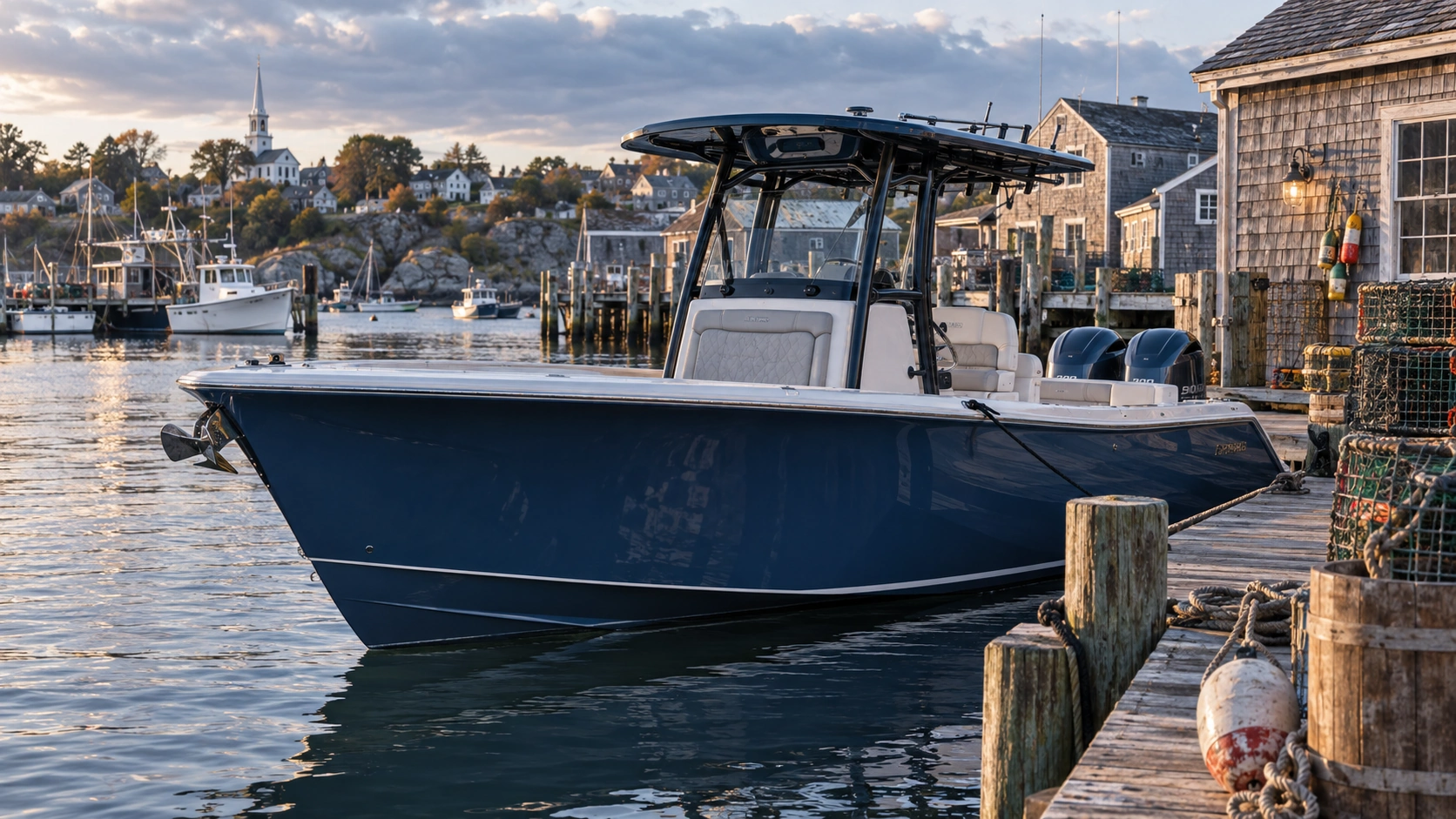
Illustrative settingReal Answers About Marine Protection, Backed by Real-World Experience
Showing all 144 questions
No matching answers
Try a shorter phrase, a different word, or browse all topics.
What Marine Protection Actually Is and How It Works
What Is Marine Protection?
Marine protection is a group of products and services designed to protect boats and marine surfaces from wear, UV exposure, staining, oxidation, scuffs, scratches, salt, grime, and daily use. The main categories include marine paint protection film, marine window tint, and marine ceramic coatings.
Each product has a different job. Marine PPF is a physical film that helps protect high-contact areas. Marine tint improves comfort, glare control, UV protection, and appearance on marine glass. Marine ceramic coating adds a protective surface layer that makes gelcoat, paint, glass, metal, and other areas easier to clean and maintain.
At Kickin’ Customs, we do not treat marine protection as one product. A boat may need PPF in high-wear areas, tint on glass, and coatings on gelcoat or metal. The right protection depends on the boat and how it is actually used.
Link to this answerHow Does Marine Paint Protection Film Work?
Marine paint protection film works by adding a clear protective layer over vulnerable boat surfaces. It helps absorb contact, scuffs, abrasion, and wear before they reach the surface underneath.
On boats, PPF can be useful in areas that get hit, stepped on, leaned against, rubbed by fenders, touched by ropes, contacted by gear, or exposed to dock rash. Instead of the gelcoat or painted surface taking the abuse directly, the film acts as the sacrificial layer.
This is similar to automotive PPF in concept, but the marine environment is different. Boats deal with water, sun, salt, grime, movement, and constant contact from equipment and people. That is why product selection, placement, and edge strategy matter.
Link to this answerWhat Is XPEL Marine PPF?
XPEL marine PPF is paint protection film designed for marine use. It is installed on vulnerable boat surfaces to help protect against scuffs, scratches, wear, impact, and contact damage.
The goal is not to cover every inch of the boat unless the customer wants a larger protection plan. Most marine PPF projects focus on high-impact and high-contact areas where damage is most likely.
This may include areas near docks, boarding points, storage openings, steps, gunwales, transoms, swim platforms, anchor lockers, rod storage areas, fender contact points, and other surfaces that see repeated use.
Link to this answerHow Does Marine Window Tint Work?
Marine window tint works by adding film to marine glass to reduce heat, glare, and UV exposure. It can make the cabin or helm area more comfortable and improve visibility by reducing harsh sunlight.
Boats often have large glass areas and strong sun exposure from open water. Glare can be intense, especially when light reflects off the water. Marine tint helps soften that environment and can make time on the boat more comfortable.
The right film and shade depend on the boat, glass type, visibility needs, and how the owner uses the vessel. Marine tint should improve comfort without creating unsafe visibility concerns.
Link to this answerHow Do Marine Ceramic Coatings Work?
Marine ceramic coatings create a protective layer over surfaces like gelcoat, paint, metal, glass, and certain trim areas. The coating helps reduce how strongly dirt, salt, grime, fish blood, bird droppings, oxidation, and water spotting bond to the surface.
A ceramic coating does not make the boat maintenance-free, but it can make washing and upkeep easier. It can also help preserve gloss and reduce the effort needed to keep the boat looking clean.
Marine coatings are especially useful because boats are constantly exposed to harsh conditions. Sun, saltwater, freshwater, humidity, and repeated washing all wear on marine surfaces.
Link to this answerIs Marine PPF the Same as Marine Ceramic Coating?
No. Marine PPF and marine ceramic coating are different products. Marine PPF is a physical protective film that helps reduce scuffs, scratches, and contact damage. Marine ceramic coating is a liquid-applied protective layer that helps with gloss, slickness, cleaning, and resistance to contamination.
If the concern is contact damage from docks, fenders, ropes, shoes, coolers, fishing gear, or boarding areas, PPF is the stronger option. If the concern is easier cleaning, gloss, water behavior, and reducing grime buildup, ceramic coating is the better option.
Many boats benefit from both. PPF protects specific impact and contact zones, while ceramic coating helps maintain larger surfaces.
Link to this answerIs Marine Tint the Same as Automotive Window Tint?
Marine tint and automotive tint are similar in purpose, but the marine environment creates different challenges. Boats deal with heavy sun exposure, water reflection, salt air, moisture, curved glass, and visibility needs that may differ from a vehicle.
Marine tint is used to reduce heat, glare, and UV exposure while improving comfort and appearance. The film choice should be appropriate for marine use and installed with the boat’s glass and operating conditions in mind.
The biggest difference is visibility and safety. A boat operator needs clear sightlines in changing light, glare, weather, and water conditions. Tint should be chosen responsibly.
Link to this answerWhat Surfaces Can Be Protected on a Boat?
Many boat surfaces can be protected depending on the product. Marine PPF can be installed on vulnerable painted, gelcoat, or smooth finished surfaces where contact damage is likely. Marine ceramic coatings can be applied to gelcoat, paint, glass, metal, wheels on trailers, and certain other surfaces depending on compatibility. Marine tint can be installed on appropriate glass areas.
Common protection areas include hull sides, gunwales, transoms, swim platforms, steps, boarding areas, console surfaces, windshield glass, cabin glass, painted accents, tower components, stainless hardware, and high-contact zones.
Not every surface is a good candidate for every product. Textured, porous, heavily oxidized, damaged, or flexible surfaces may require a different approach.
Link to this answerDoes Marine Protection Replace Boat Maintenance?
No. Marine protection does not replace boat maintenance. It makes maintenance easier and helps reduce wear, but the boat still needs to be washed, inspected, dried, and cared for properly.
Salt, sun, fish blood, bird droppings, sunscreen, water spots, and grime can still affect protected surfaces if they are neglected. Protection gives the owner more forgiveness, but it is not permission to ignore the boat.
The best results come from combining proper protection with regular care. Marine PPF, tint, and coatings all perform better when the boat is maintained correctly.
Link to this answerIs Marine Protection Worth It?
Marine protection is worth it when the owner wants to reduce wear, preserve appearance, make cleaning easier, and protect high-value surfaces from common damage. Boats are expensive, and the marine environment is harsh.
For many owners, the value is not just cosmetic. Protection can reduce the frustration of dock rash, scuffs, stained gelcoat, oxidized surfaces, harsh glare, hot interiors, and difficult cleaning.
The best marine protection plan depends on how the boat is used. A fishing boat, center console, yacht, wake boat, pontoon, personal watercraft, and trailered freshwater boat may all need different protection strategies.
Link to this answerMarine Paint Protection Film
What Is Marine Paint Protection Film?
Marine paint protection film is a clear protective film installed on vulnerable boat surfaces to help reduce scuffs, scratches, abrasion, impact marks, and contact damage. It acts as a physical barrier between the boat’s surface and the everyday abuse that comes from docking, boarding, ropes, fenders, shoes, coolers, fishing gear, and general use.
On a boat, many areas get damaged from repeated contact rather than one major impact. People step on surfaces, drag gear, lean rods against panels, bump docks, tie ropes, move coolers, and use the boat in ways that slowly wear down gelcoat, paint, or finished surfaces.
Marine PPF is designed to take that abuse first. Instead of the original surface being the first point of contact, the film becomes the sacrificial protection layer.
Link to this answerHow Is Marine PPF Different from Automotive PPF?
Marine PPF and automotive PPF are similar in concept because both protect finished surfaces from damage, but the environment is different. A vehicle deals mostly with road debris, washing, sun, and weather. A boat deals with water, salt, docks, ropes, fenders, shoes, fish blood, sunscreen, storage covers, and constant human contact.
Marine PPF needs to be planned around how the boat is used. The highest-risk areas are not always the same as a car or truck. On a boat, the damage often happens at boarding points, gunwales, transoms, storage lids, steps, swim platforms, and areas where people or equipment touch the surface repeatedly.
The product may be clear, but the strategy is not generic. A good marine PPF install should be based on real use, not just where the film is easiest to install.
Link to this answerWhat Areas of a Boat Should Be Protected with PPF?
The best areas for marine PPF are the areas most likely to get touched, rubbed, scuffed, scratched, or impacted during normal use. This may include boarding areas, gunwales, transoms, swim platforms, steps, dock-side contact points, fender rub zones, anchor locker areas, rod storage areas, cooler contact points, storage lids, console areas, and painted or gelcoat surfaces that see repeated wear.
For some boats, the priority may be dock rash and fender wear. For others, it may be fishing gear, anchor damage, shoes, bags, or passengers stepping on finished surfaces.
The best protection plan comes from walking around the boat and identifying where damage is most likely to happen. Marine PPF is most valuable when it is placed where the boat actually gets abused.
Link to this answerDoes Marine PPF Protect Against Dock Rash?
Yes, marine PPF can help reduce dock rash in areas where the film is installed. Dock rash usually happens when the boat contacts docks, pilings, fenders, ropes, or other surfaces during docking, storage, loading, or movement.
The film gives those areas an added layer of defense before the gelcoat or paint gets scuffed. This can be especially valuable on darker boats, painted hulls, high-gloss gelcoat, and areas that show marks easily.
Marine PPF does not make the boat immune to heavy impact or poor docking. A hard hit against a dock can still damage the surface. The film is there to reduce common scuffs and contact damage, not replace careful handling.
Link to this answerDoes Marine PPF Protect Against Fenders and Ropes?
Yes, marine PPF can help protect against wear from fenders, ropes, lines, straps, and other repeated contact points. Over time, these items can rub against the hull, transom, or finished surfaces and create dull spots, scratches, or scuffing.
This is one of the best use cases for marine PPF because the damage is often repetitive. A single fender rub may not look like much, but constant movement against the same area can wear the surface down over a season.
By placing film in those contact zones, the film takes the wear instead of the boat surface underneath.
Link to this answerDoes Marine PPF Protect Against Fishing Gear?
Yes, marine PPF can help protect areas that are exposed to fishing rods, tackle boxes, hooks, nets, coolers, bait buckets, anchor gear, and other equipment. Boats used for fishing often see more surface contact than owners realize.
Gear gets placed on gunwales, leaned against consoles, dragged across decks, stored in tight areas, or bumped into finished surfaces. Over time, that can create scratches and wear.
PPF can be used strategically in high-contact areas to reduce damage. It is not a replacement for careful use, but it adds a valuable protection layer in the areas most likely to take abuse.
Link to this answerDoes Marine PPF Protect Against Shoes and Boarding Damage?
Yes, marine PPF can help protect areas where people step, climb, board, or slide across finished surfaces. Shoes, sandals, bare feet with sand, bags, towels, and coolers can all create wear over time.
Boarding areas are especially vulnerable because people often step in the same spots repeatedly. If that area has gelcoat, paint, or a glossy finish, it can become scratched, dull, or marked.
Adding PPF to boarding points, steps, and high-contact entry areas can help preserve the finish and reduce visible wear.
Link to this answerCan Marine PPF Be Installed on Gelcoat?
Yes, marine PPF can often be installed on smooth, clean, healthy gelcoat. The surface needs to be in good condition for the film to bond and look right.
If the gelcoat is oxidized, chalky, heavily scratched, contaminated, or damaged, it may need correction or preparation before film installation. Film will not magically fix a poor surface underneath it.
The best results come from installing PPF on clean, stable gelcoat. If the gelcoat is already worn or damaged, that should be addressed before the film is applied.
Link to this answerCan Marine PPF Be Installed on Painted Boats?
Yes, marine PPF can be installed on many painted boat surfaces if the paint is healthy, stable, and properly prepared. Painted boats can benefit greatly from PPF because scuffs, scratches, and dock rash may be more noticeable or expensive to repair than on some gelcoat surfaces.
Paint condition matters. If the paint is failing, peeling, oxidized, poorly repaired, or not properly cured, film installation and removal can become riskier.
A painted boat should be inspected before installation. Marine PPF works best when the surface underneath is strong enough to support the film.
Link to this answerCan Marine PPF Be Installed on the Hull?
Marine PPF can be installed on certain hull areas depending on the surface, use case, and exposure. It may be useful on areas that experience dock contact, fender wear, trailer contact, or repeated scuffing.
The install strategy depends heavily on the boat design. Selected compatible hull-side areas above the waterline may be considered. Continuously submerged and below-waterline areas are outside the normal Marine PPF installation; heavily curved, textured or unstable surfaces require separate review.
A hull protection plan should be built around realistic contact points. The goal is to protect vulnerable areas where film can perform properly, not force film into areas where it does not belong.
Link to this answerIs Marine PPF Visible?
Marine PPF is clear, but it may still have visible edges depending on the surface, coverage pattern, lighting, and installation area. On certain colors or finishes, edges may be easier to see up close.
This is normal. Like automotive PPF, marine film is a physical layer applied over the surface. It is designed to protect, not disappear completely in every possible lighting condition.
A good install should look clean and intentional. Edges should be placed thoughtfully, and the customer should understand where coverage starts and stops before the film is installed.
Link to this answerIs Marine PPF Worth It?
Marine PPF is worth it for boat owners who want to reduce wear in high-contact and high-risk areas. It is especially valuable on newer boats, higher-end boats, painted boats, dark gelcoat, center consoles, yachts, fishing boats, wake boats, and boats that see frequent docking, boarding, or equipment use.
The value comes from preventing avoidable damage. A scuff or scratch on a boat can be frustrating, expensive to repair, and difficult to make perfect again.
Marine PPF is not necessary on every square inch of every boat, but in the right areas, it can be one of the most practical ways to preserve the finish.
Link to this answerMarine Window Tint
What Is Marine Window Tint?
Marine window tint is window film installed on suitable boat glass to help reduce heat, glare, and UV exposure while improving comfort and appearance. It can be used on cabin glass, helm glass, side windows, and other approved marine glass surfaces depending on the boat.
Boats are exposed to intense sunlight, and glare from the water can be much stronger than what drivers experience on the road. Marine tint helps soften that harsh light and can make time on the boat more comfortable for the operator and passengers.
At Kickin’ Customs, we look at marine tint as a comfort and visibility upgrade. The right film should reduce heat and glare without creating unsafe visibility issues for the person operating the boat.
Link to this answerHow Is Marine Tint Different from Automotive Tint?
Marine tint and automotive tint are similar in that both reduce heat, glare, and UV exposure, but the environment is different. Boats deal with stronger reflection from water, more direct sun exposure, more moisture, salt air, and different visibility demands.
On a vehicle, tint is mostly about comfort, privacy, heat rejection, UV protection, and appearance. On a boat, those benefits still matter, but visibility and safe operation become even more important because light conditions can change quickly on the water.
Marine tint needs to be selected carefully. The goal is not simply to make the glass darker. The goal is to improve comfort while keeping the boat safe and usable.
Link to this answerDoes Marine Tint Reduce Heat?
Yes, marine tint can help reduce heat by limiting the amount of solar energy entering through the glass. This can make enclosed cabins, helm areas, and seating areas near glass more comfortable.
The amount of heat reduction depends on the film type, glass layout, boat design, exposure, and how much direct sun the glass receives. Boats with larger glass areas can benefit more noticeably because more sun is entering the space.
Ceramic tint is often a strong choice because it can provide meaningful heat rejection without needing to be extremely dark. That matters on boats where visibility should remain a priority.
Link to this answerDoes Marine Tint Reduce Glare?
Yes, marine tint can reduce glare, and this is one of the biggest benefits on a boat. Sunlight reflecting off the water can be harsh, distracting, and tiring, especially during long days on the water.
Reducing glare can improve comfort for passengers and help make the helm area easier to use. It can also reduce eye strain when looking through or around the glass.
That said, tint should be chosen responsibly. A film that is too dark can create visibility concerns in low light, cloudy conditions, nighttime operation, or while docking.
Link to this answerDoes Marine Tint Block UV Rays?
Yes, quality marine tint can block a significant amount of UV exposure. This helps protect passengers and interior surfaces from sun damage.
On boats, UV exposure can be intense because sunlight comes from above and reflects off the water. Over time, UV can contribute to fading, drying, cracking, and aging of upholstery, dash surfaces, flooring, trim, and interior materials.
Marine tint should be viewed as part of a larger sun protection strategy. It helps reduce exposure through the glass, but it does not replace sunscreen, shade, covers, or normal marine care.
Link to this answerDoes Marine Tint Add Privacy?
Marine tint can add privacy depending on the shade, reflectivity, glass layout, and lighting conditions. Darker or more reflective films may reduce visibility into the cabin or enclosed areas during the day.
Privacy expectations should be realistic. Like architectural film, reflective or darker tint can look more private during daylight, but lighting conditions matter. If it is dark outside and lights are on inside the cabin, visibility may change.
For many boat owners, privacy is a secondary benefit. The main reasons for marine tint are usually heat reduction, glare reduction, UV protection, and appearance.
Link to this answerCan Marine Tint Be Installed on Any Boat Glass?
Marine tint can be installed on many boat glass surfaces, but not every piece of marine glass is automatically a good candidate. Glass type, shape, coating, condition, seals, access, and whether the surface is true glass or a plastic material all matter.
Some boat windows are curved, framed tightly, difficult to access, or made from acrylic, polycarbonate, or other materials that may not accept traditional window film the same way glass does.
The surface needs to be evaluated before installation. A professional recommendation should be based on the actual boat, not just the desire to tint every clear surface.
Link to this answerCan Marine Tint Be Installed on Acrylic or Isinglass?
Traditional window tint is generally designed for glass, not soft vinyl, isinglass, acrylic, or polycarbonate panels. Those materials can behave differently, scratch more easily, flex, expand, contract, or react poorly with adhesives.
If the boat has plastic-style clear panels instead of glass, the right solution may not be standard tint. Those surfaces need to be inspected carefully before any recommendation is made.
This is important because forcing the wrong film onto the wrong material can lead to poor appearance, adhesion issues, damage, or failure. Marine film work should start with identifying the surface correctly.
Link to this answerCan Marine Tint Be Too Dark?
Yes, marine tint can absolutely be too dark. A boat needs safe visibility in bright sun, shade, cloudy weather, rain, dusk, dawn, nighttime conditions, and tight docking situations.
A tint that looks great at the dock may not be practical when operating the boat in changing light. This is why marine tint should be chosen for comfort and usability, not just appearance.
For many boats, a lighter high-performance ceramic film is a better choice than a very dark film. It can reduce heat and glare while keeping visibility more reasonable.
Link to this answerWill Marine Tint Affect Nighttime Visibility?
Marine tint can affect nighttime visibility depending on the shade and film selected. Darker film will reduce the amount of light coming through the glass, which can make it harder to see in low-light conditions.
This is one of the biggest considerations for boat owners who operate at night, early morning, or late evening. A film that works well during the day may feel too dark after sunset.
If the boat is used at night, that should be discussed before choosing a shade. Safety and visibility need to come first.
Link to this answerIs Ceramic Tint Better for Boats?
Ceramic tint is often a strong choice for boats because it can provide good heat rejection and UV protection without needing to be extremely dark. That allows the owner to improve comfort while keeping visibility more practical.
Ceramic film can also be useful in marine environments where heat and sun exposure are major concerns. It can help reduce cabin heat, glare, and sun strain while keeping the boat looking clean.
The best film still depends on the boat and how it is used. Ceramic tint is a strong option, but shade selection and visibility expectations still matter.
Link to this answerIs Marine Tint Worth It?
Marine tint is worth it for boat owners who want better comfort, reduced glare, UV protection, improved appearance, and a more enjoyable experience on the water.
It is especially valuable on boats with enclosed cabins, helm glass, large windows, or strong sun exposure. It can make the boat feel cooler, reduce eye strain, and help protect interior materials.
The key is choosing the right film and shade. Marine tint should improve the boating experience without creating visibility problems.
Link to this answerMarine Ceramic Coatings
What Is a Marine Ceramic Coating?
A marine ceramic coating is a protective coating applied to boat surfaces to help improve gloss, reduce staining, make cleaning easier, and add resistance against environmental contamination. It can be used on gelcoat, painted surfaces, metal, glass, and other compatible marine surfaces depending on the product and preparation.
The coating creates a slicker, more protective surface that helps reduce how strongly salt, grime, fish blood, bird droppings, water spots, oxidation, and general marine buildup bond to the boat.
At Kickin’ Customs, we explain marine ceramic coating as a maintenance and preservation upgrade. It does not make the boat maintenance-free, but it can make the boat easier to clean and help preserve the finish when maintained properly.
Link to this answerHow Does a Marine Ceramic Coating Work?
A marine ceramic coating bonds to the surface and creates a protective layer over the gelcoat, paint, glass, metal, or other compatible material. This layer helps improve water behavior, slickness, gloss, and resistance to common marine contaminants.
On a boat, surfaces are constantly exposed to sun, salt, freshwater, humidity, bird droppings, fish blood, sunscreen, grime, and repeated washing. A coating helps reduce how aggressively those contaminants stick to the surface.
The result is a boat that is usually easier to wash, easier to dry, and easier to keep looking clean compared to an uncoated surface.
Link to this answerIs Marine Ceramic Coating the Same as Wax?
No. Marine ceramic coating is not the same as wax. Wax sits on the surface temporarily and usually breaks down faster, especially in harsh marine conditions. Ceramic coating is designed to bond more strongly and last longer than traditional wax or sealant.
Wax can still make a boat look good, but it usually requires more frequent reapplication. A ceramic coating is a more durable option for owners who want longer-lasting protection and easier maintenance.
That said, ceramic coating still needs care. It is not a permanent shield, and it does not eliminate washing or maintenance.
Link to this answerDoes Marine Ceramic Coating Prevent Oxidation?
Marine ceramic coating can help reduce oxidation by adding a protective layer that limits direct exposure to UV, water, salt, and contaminants. This can help slow down the aging process and preserve gloss longer than an untreated surface.
However, coating does not make gelcoat immune to oxidation forever. Boats still live in a harsh environment, and long-term sun exposure can eventually affect any surface.
The best results come from applying coating to properly prepared gelcoat or paint and then maintaining it regularly. Coating slows the process, but it does not replace care.
Link to this answerCan Marine Ceramic Coating Restore Faded Gelcoat?
No. Ceramic coating does not restore faded or oxidized gelcoat by itself. If the gelcoat is dull, chalky, oxidized, or heavily weathered, it usually needs correction, polishing, or restoration before coating is applied.
The coating locks in the condition of the surface. If the boat is polished properly first, the coating can help preserve that improved finish. If coating is applied over dull gelcoat, it will not magically create a deep gloss.
Preparation is one of the most important parts of marine coating. The coating is only as good as the surface underneath it.
Link to this answerDoes Marine Ceramic Coating Make a Boat Easier to Clean?
Yes, marine ceramic coating can make a boat easier to clean because contaminants usually do not bond as strongly to a coated surface. Salt, grime, fish blood, bird droppings, water spots, and general buildup may release more easily during washing.
This can reduce cleaning time and make routine maintenance less frustrating. For boat owners who wash often, that difference can be noticeable.
The coating does not mean the boat can be ignored. If contaminants sit too long, especially in sun or saltwater environments, they can still stain or etch. Coating gives you more help, not unlimited forgiveness.
Link to this answerDoes Marine Ceramic Coating Help with Saltwater?
Yes, marine ceramic coating can help protect surfaces exposed to saltwater by making them easier to rinse and clean. Salt is harsh and can dry onto surfaces, contribute to spotting, and make maintenance harder.
A coated surface usually releases salt and grime more easily than an uncoated surface. This is especially useful for boats used in coastal areas, marinas, and saltwater environments.
Saltwater boats still need to be rinsed and maintained properly. Coating helps, but it does not replace regular washdowns after use.
Link to this answerDoes Marine Ceramic Coating Prevent Water Spots?
Marine ceramic coating can help reduce water spotting by improving water behavior and making surfaces easier to dry, but it does not eliminate water spots completely. Water spots can still form when mineral-heavy water, saltwater, or dirty water dries on the surface.
This is especially true in direct sun. If water is allowed to sit and bake onto the coating, spotting can still happen.
The best prevention is proper washing and drying. Coating makes the process easier, but the owner still needs good maintenance habits.
Link to this answerCan Marine Ceramic Coating Be Applied to Glass?
Yes, marine ceramic coating can often be applied to glass when the correct product is used. A glass coating can improve water behavior, make cleaning easier, and help reduce how strongly salt, grime, and water spots bond to the glass.
This can be helpful on windshields, cabin glass, helm glass, and other marine glass surfaces. Clear glass matters on a boat, especially when glare, salt spray, and water spotting are constant issues.
Glass coating is different from marine tint. Tint improves heat, glare, and UV comfort. Glass coating improves surface behavior and cleanability.
Link to this answerCan Marine Ceramic Coating Be Applied to Metal?
Yes, marine ceramic coating can often be applied to compatible metal surfaces, including certain polished, painted, stainless, aluminum, or coated metal areas depending on the product and surface condition.
Metal on boats is constantly exposed to water, salt, grime, fingerprints, and environmental contamination. A coating can make these surfaces easier to clean and help maintain their appearance.
The surface needs to be properly cleaned and prepared before coating. Metal condition matters because coating does not remove corrosion, oxidation, or existing damage by itself.
Link to this answerCan Marine Ceramic Coating Be Applied Over Marine PPF?
Yes, ceramic coating can often be applied over marine paint protection film when the products are compatible. This can make the film easier to clean and improve water behavior on protected areas.
This combination can be useful because PPF protects against scuffs and contact damage, while the coating helps with cleaning and surface maintenance.
The products should be planned together. Marine PPF handles physical contact protection. Marine ceramic coating helps with slickness, cleaning, and environmental resistance.
Link to this answerIs Marine Ceramic Coating Worth It?
Marine ceramic coating is worth it for boat owners who want easier cleaning, better gloss, improved surface slickness, and added protection against marine contamination. It is especially valuable for boats exposed to sun, saltwater, fish blood, bird droppings, water spots, and frequent use.
The coating is not a replacement for washing, polishing, or proper maintenance. It is a way to make that maintenance easier and help preserve the finish longer.
For many boat owners, the value is time and appearance. A coated boat is usually easier to keep clean and easier to maintain throughout the season.
Link to this answerMarine Protection By Boat Type & Use Case
What Types of Boats Benefit from Marine Protection?
Many types of boats can benefit from marine protection, including center consoles, fishing boats, wake boats, bowriders, yachts, cruisers, pontoons, personal watercraft, cabin boats, and high-end performance boats. The right protection depends on how the boat is used and which surfaces take the most abuse.
A fishing boat may need protection from rods, coolers, tackle, fish blood, anchor gear, and dock contact. A wake boat may need protection around boarding areas, swim platforms, steps, and high-touch surfaces. A yacht or cruiser may need coatings, tint, glass protection, and PPF in areas where appearance and long-term maintenance matter most.
At Kickin’ Customs, we do not recommend the same marine protection plan for every boat. The best setup comes from looking at how the boat is stored, how often it is used, who uses it, and where damage is most likely to happen.
Link to this answerIs Marine Protection Worth It for a Center Console?
Yes, marine protection can be very worthwhile on a center console because these boats often see heavy use, strong sun exposure, saltwater, fishing gear, dock contact, and constant foot traffic. Center consoles are built to be used, but that also means they take a lot of abuse.
Marine PPF can help protect high-contact areas like gunwales, transoms, boarding zones, cooler contact points, and areas where rods, ropes, fenders, or equipment rub. Marine ceramic coating can make gelcoat, metal, and glass easier to clean after saltwater use. Marine tint can improve comfort and reduce glare where the boat has suitable glass.
For center console owners, the goal is usually practical protection. The boat still needs to be washed and maintained, but the right protection can make that process easier and reduce visible wear.
Link to this answerIs Marine Protection Worth It for a Fishing Boat?
Yes, marine protection is a strong fit for fishing boats because fishing creates constant contact with the boat’s surfaces. Rods, reels, hooks, tackle boxes, bait buckets, coolers, nets, fish blood, shoes, and anchor gear can all create scratches, stains, and wear.
Marine PPF can help protect the areas that get hit or rubbed repeatedly. Marine ceramic coating can make cleanup easier after a day of fishing, especially when dealing with salt, grime, fish blood, and organic residue.
Fishing boats are working boats in many ways. Protection does not mean the boat will stay perfect, but it can help reduce damage and make maintenance less frustrating.
Link to this answerIs Marine Protection Worth It for a Wake Boat?
Yes, marine protection can be very useful on a wake boat because these boats see a lot of boarding, passengers, gear, towels, bags, ropes, boards, and swim platform use. The same areas get touched and stepped on over and over again.
Marine PPF can protect high-contact areas like swim platforms, steps, transoms, boarding points, storage lids, and areas where boards or ropes may rub. Marine ceramic coating can help keep gelcoat and painted surfaces easier to clean and maintain.
Wake boats are often social boats, which means more people are moving around the boat throughout the day. The more contact a surface sees, the more sense protection makes.
Link to this answerIs Marine Protection Worth It for a Yacht or Cruiser?
Yes, marine protection can be a strong investment for yachts and cruisers because appearance, comfort, and maintenance matter heavily. Larger boats often have more gelcoat, painted surfaces, glass, metal, and interior spaces exposed to sun and water.
Marine ceramic coating can help preserve gloss and make cleaning easier across larger surfaces.
Marine tint can improve cabin comfort, reduce glare, and help protect interiors from UV exposure. Marine PPF can be used in targeted areas where docking, boarding, ropes, fenders, or foot traffic create wear.
For yachts and cruisers, protection is often about preserving a higher-end finish and reducing maintenance effort. The larger the boat, the more valuable easier cleaning can become.
Link to this answerIs Marine Protection Worth It for a Pontoon Boat?
Yes, marine protection can make sense for pontoon boats, especially when the boat has painted panels, glass, metal rails, high-contact entry points, or surfaces exposed to passengers, gear, docks, and sun.
Pontoon boats often carry groups of people, coolers, bags, towels, pets, and equipment. That traffic can create wear on entry points, gates, panels, and surfaces that get touched often.
Marine ceramic coating can help with cleaning and surface maintenance. Marine tint may help on boats with suitable glass or enclosures. Marine PPF can be used in specific high-wear areas where contact damage is most likely.
Link to this answerIs Marine Protection Worth It for Personal Watercraft?
Marine protection can be worthwhile on personal watercraft, especially if the owner wants to reduce scuffs, scratches, UV wear, and cleaning difficulty. Personal watercraft are frequently boarded, beached, tied up, trailered, and exposed to sun and water.
Marine PPF can help protect high-contact areas where knees, feet, ropes, docks, or gear may rub. Ceramic coating can make the surface easier to clean and help preserve gloss.
Because personal watercraft are smaller, targeted protection may be enough. The best plan depends on where the unit gets worn and how the owner uses it.
Link to this answerIs Marine Protection Worth It for a Trailering Boat?
Yes, marine protection can be useful on boats that are trailered often. Trailering adds different types of wear, including loading contact, strap rub, road grime, bugs, dirt, and debris exposure while being transported.
Marine PPF can be useful in contact points where straps, guides, bumpers, or loading areas create wear. Ceramic coating can help make road grime and marine grime easier to clean after transport and use.
A trailered boat may not sit in a marina all season, but it still sees plenty of abuse. Road travel and launch ramp use can create their own kind of wear.
Link to this answerIs Marine Protection Worth It for a Saltwater Boat?
Yes, marine protection is especially valuable for saltwater boats because salt is harsh and constant. Saltwater can contribute to staining, spotting, corrosion concerns, oxidation, and difficult cleanup if the boat is not rinsed and maintained properly.
Marine ceramic coating can make salt and grime easier to rinse from gelcoat, paint, glass, and metal. Marine PPF can protect high-contact areas that see ropes, fenders, gear, and dock contact. Marine tint can help reduce glare and heat from intense coastal sun.
Saltwater does not mean the boat cannot stay looking good. It means protection and maintenance matter more.
Link to this answerIs Marine Protection Worth It for a Freshwater Boat?
Yes, marine protection can still be worth it for freshwater boats. Freshwater may be less harsh than saltwater in some ways, but boats still deal with sun, water spots, dock contact, algae, grime, bugs, passengers, gear, and oxidation.
Marine ceramic coating can make cleanup easier and help maintain gloss. Marine PPF can protect contact areas from scuffs, shoes, ropes, and gear. Marine tint can reduce heat and glare during long days on the water.
Freshwater boats still age and wear. Protection helps reduce that wear and makes regular maintenance easier.
Link to this answerIs Marine Protection Worth It for a New Boat?
Yes, a new boat is usually one of the best candidates for marine protection because the surfaces are still in their best condition. Installing protection early helps reduce damage before scuffs, oxidation, scratches, stains, and wear start building up.
Marine PPF can be placed in high-contact areas before they get damaged. Marine ceramic coating can help preserve gloss and make cleaning easier from the beginning. Marine tint can improve comfort before the first full season of use.
Once a boat is already worn or oxidized, more prep may be needed before protection can be installed. Starting early usually gives the best result.
Link to this answerIs Marine Protection Worth It for an Older Boat?
Marine protection can be worth it on an older boat if the surfaces are still in good condition or can be properly restored first. The boat should be inspected before protection is installed because film and coatings perform best over clean, stable surfaces.
If the gelcoat is oxidized, chalky, stained, scratched, or neglected, correction may be needed before ceramic coating or PPF. If the glass is scratched or damaged, marine tint may not look as clean.
Protection does not erase years of wear by itself. But once the boat is properly prepared, marine PPF, tint, and coatings can help preserve the improved condition.
Link to this answerMarine Protection By Boat Type & Use Case
What Types of Boats Benefit from Marine Protection?
Many types of boats can benefit from marine protection, including center consoles, fishing boats, wake boats, bowriders, yachts, cruisers, pontoons, personal watercraft, cabin boats, and high-end performance boats. The right protection depends on how the boat is used and which surfaces take the most abuse.
A fishing boat may need protection from rods, coolers, tackle, fish blood, anchor gear, and dock contact. A wake boat may need protection around boarding areas, swim platforms, steps, and high-touch surfaces. A yacht or cruiser may need coatings, tint, glass protection, and PPF in areas where appearance and long-term maintenance matter most.
At Kickin’ Customs, we do not recommend the same marine protection plan for every boat. The best setup comes from looking at how the boat is stored, how often it is used, who uses it, and where damage is most likely to happen.
Link to this answerIs Marine Protection Worth It for a Center Console?
Yes, marine protection can be very worthwhile on a center console because these boats often see heavy use, strong sun exposure, saltwater, fishing gear, dock contact, and constant foot traffic. Center consoles are built to be used, but that also means they take a lot of abuse.
Marine PPF can help protect high-contact areas like gunwales, transoms, boarding zones, cooler contact points, and areas where rods, ropes, fenders, or equipment rub. Marine ceramic coating can make gelcoat, metal, and glass easier to clean after saltwater use. Marine tint can improve comfort and reduce glare where the boat has suitable glass.
For center console owners, the goal is usually practical protection. The boat still needs to be washed and maintained, but the right protection can make that process easier and reduce visible wear.
Link to this answerIs Marine Protection Worth It for a Fishing Boat?
Yes, marine protection is a strong fit for fishing boats because fishing creates constant contact with the boat’s surfaces. Rods, reels, hooks, tackle boxes, bait buckets, coolers, nets, fish blood, shoes, and anchor gear can all create scratches, stains, and wear.
Marine PPF can help protect the areas that get hit or rubbed repeatedly. Marine ceramic coating can make cleanup easier after a day of fishing, especially when dealing with salt, grime, fish blood, and organic residue.
Fishing boats are working boats in many ways. Protection does not mean the boat will stay perfect, but it can help reduce damage and make maintenance less frustrating.
Link to this answerIs Marine Protection Worth It for a Wake Boat?
Yes, marine protection can be very useful on a wake boat because these boats see a lot of boarding, passengers, gear, towels, bags, ropes, boards, and swim platform use. The same areas get touched and stepped on over and over again.
Marine PPF can protect high-contact areas like swim platforms, steps, transoms, boarding points, storage lids, and areas where boards or ropes may rub. Marine ceramic coating can help keep gelcoat and painted surfaces easier to clean and maintain.
Wake boats are often social boats, which means more people are moving around the boat throughout the day. The more contact a surface sees, the more sense protection makes.
Link to this answerIs Marine Protection Worth It for a Yacht or Cruiser?
Yes, marine protection can be a strong investment for yachts and cruisers because appearance, comfort, and maintenance matter heavily. Larger boats often have more gelcoat, painted surfaces, glass, metal, and interior spaces exposed to sun and water.
Marine ceramic coating can help preserve gloss and make cleaning easier across larger surfaces. Marine tint can improve cabin comfort, reduce glare, and help protect interiors from UV exposure. Marine PPF can be used in targeted areas where docking, boarding, ropes, fenders, or foot traffic create wear.
For yachts and cruisers, protection is often about preserving a higher-end finish and reducing maintenance effort. The larger the boat, the more valuable easier cleaning can become.
Link to this answerIs Marine Protection Worth It for a Pontoon Boat?
Yes, marine protection can make sense for pontoon boats, especially when the boat has painted panels, glass, metal rails, high-contact entry points, or surfaces exposed to passengers, gear, docks, and sun.
Pontoon boats often carry groups of people, coolers, bags, towels, pets, and equipment. That traffic can create wear on entry points, gates, panels, and surfaces that get touched often.
Marine ceramic coating can help with cleaning and surface maintenance. Marine tint may help on boats with suitable glass or enclosures. Marine PPF can be used in specific high-wear areas where contact damage is most likely.
Link to this answerIs Marine Protection Worth It for Personal Watercraft?
Marine protection can be worthwhile on personal watercraft, especially if the owner wants to reduce scuffs, scratches, UV wear, and cleaning difficulty. Personal watercraft are frequently boarded, beached, tied up, trailered, and exposed to sun and water.
Marine PPF can help protect high-contact areas where knees, feet, ropes, docks, or gear may rub. Ceramic coating can make the surface easier to clean and help preserve gloss.
Because personal watercraft are smaller, targeted protection may be enough. The best plan depends on where the unit gets worn and how the owner uses it.
Link to this answerIs Marine Protection Worth It for a Trailering Boat?
Yes, marine protection can be useful on boats that are trailered often. Trailering adds different types of wear, including loading contact, strap rub, road grime, bugs, dirt, and debris exposure while being transported.
Marine PPF can be useful in contact points where straps, guides, bumpers, or loading areas create wear. Ceramic coating can help make road grime and marine grime easier to clean after transport and use.
A trailered boat may not sit in a marina all season, but it still sees plenty of abuse. Road travel and launch ramp use can create their own kind of wear.
Link to this answerIs Marine Protection Worth It for a Saltwater Boat?
Yes, marine protection is especially valuable for saltwater boats because salt is harsh and constant. Saltwater can contribute to staining, spotting, corrosion concerns, oxidation, and difficult cleanup if the boat is not rinsed and maintained properly.
Marine ceramic coating can make salt and grime easier to rinse from gelcoat, paint, glass, and metal. Marine PPF can protect high-contact areas that see ropes, fenders, gear, and dock contact. Marine tint can help reduce glare and heat from intense coastal sun.
Saltwater does not mean the boat cannot stay looking good. It means protection and maintenance matter more.
Link to this answerIs Marine Protection Worth It for a Freshwater Boat?
Yes, marine protection can still be worth it for freshwater boats. Freshwater may be less harsh than saltwater in some ways, but boats still deal with sun, water spots, dock contact, algae, grime, bugs, passengers, gear, and oxidation.
Marine ceramic coating can make cleanup easier and help maintain gloss. Marine PPF can protect contact areas from scuffs, shoes, ropes, and gear. Marine tint can reduce heat and glare during long days on the water.
Freshwater boats still age and wear. Protection helps reduce that wear and makes regular maintenance easier.
Link to this answerIs Marine Protection Worth It for a New Boat?
Yes, a new boat is usually one of the best candidates for marine protection because the surfaces are still in their best condition. Installing protection early helps reduce damage before scuffs, oxidation, scratches, stains, and wear start building up.
Marine PPF can be placed in high-contact areas before they get damaged. Marine ceramic coating can help preserve gloss and make cleaning easier from the beginning. Marine tint can improve comfort before the first full season of use.
Once a boat is already worn or oxidized, more prep may be needed before protection can be installed. Starting early usually gives the best result.
Link to this answerIs Marine Protection Worth It for an Older Boat?
Marine protection can be worth it on an older boat if the surfaces are still in good condition or can be properly restored first. The boat should be inspected before protection is installed because film and coatings perform best over clean, stable surfaces.
If the gelcoat is oxidized, chalky, stained, scratched, or neglected, correction may be needed before ceramic coating or PPF. If the glass is scratched or damaged, marine tint may not look as clean.
Protection does not erase years of wear by itself. But once the boat is properly prepared, marine PPF, tint, and coatings can help preserve the improved condition.
Link to this answerMarine Protection Pricing, Value & Project Planning
How Much Does Marine Protection Cost?
The cost of marine protection depends on the boat, the surfaces being protected, the products selected, the amount of prep required, and how complex the installation is. Marine PPF, marine tint, and marine ceramic coatings are all priced differently because they solve different problems and require different installation processes.
A small targeted marine PPF job on high-contact areas will price differently than a larger hull protection project. Marine tint on a few cabin windows will price differently than tinting a larger boat with complex glass. Marine ceramic coating pricing depends heavily on boat size, surface condition, correction needs, and which surfaces are being coated.
At Kickin’ Customs, we look at marine protection as a custom project. A boat should be evaluated based on how it is used, where damage is most likely, and what the owner wants to protect.
Link to this answerWhy Does Marine Protection Pricing Vary So Much?
Marine protection pricing varies because boats vary so much. Size, shape, access, surface condition, storage location, product choice, and the amount of coverage all affect the final price.
A clean new boat is usually easier to protect than an older boat with oxidation, staining, chalky gelcoat, water spots, or existing damage. A boat stored indoors may be easier to work on than one sitting outside at a marina. A boat with flat glass may be easier to tint than one with tight curves, frames, or difficult access.
The right quote needs to account for the actual boat. Marine protection is not something that should be priced blindly without understanding the condition and scope.
Link to this answerIs Marine PPF Expensive?
Marine PPF can be expensive depending on the coverage area, surface shape, installation difficulty, and amount of custom work required. The cost reflects the film, prep, fitting, installation, edge finishing, and the skill needed to install film on boat surfaces.
The value is in reducing damage to areas that are expensive or frustrating to repair. Gelcoat scratches, dock rash, painted surface damage, and repeated contact wear can be difficult to fix perfectly.
Marine PPF is usually most cost-effective when used strategically. Protecting the high-contact areas first often gives the best value.
Link to this answerIs Marine Tint Expensive?
Marine tint pricing depends on the number of windows, glass shape, access, film selected, and installation difficulty. Some boat glass is simple to work on, while other glass can be tight, curved, framed, or difficult to reach.
Marine tint should not be chosen only by price. The wrong shade or poor installation can create visibility issues, peeling, contamination, or a result that does not fit the boat.
The value comes from comfort, glare reduction, UV protection, and appearance. If the boat has harsh sun exposure or uncomfortable glass areas, tint can make a noticeable difference.
Link to this answerIs Marine Ceramic Coating Expensive?
Marine ceramic coating can be a significant investment because the prep work is often the biggest part of the job. If the boat needs washing, decontamination, oxidation removal, polishing, water spot removal, or surface correction before coating, that labor affects the price.
The coating itself is only one part of the process. A ceramic coating locks in the condition of the surface, so the boat needs to be prepared properly before application.
The value is easier cleaning, improved gloss, and better resistance to marine contamination. For owners who care about appearance and maintenance, coating can be well worth the cost.
Link to this answerWhy Is Prep Work So Important for Marine Coatings?
Prep work is critical because marine ceramic coating does not hide oxidation, scratches, staining, or dull gelcoat. It protects the surface condition that exists at the time of application.
If a boat is oxidized, chalky, or heavily water-spotted, those issues usually need to be corrected before coating. Otherwise, the coating may protect a finish that already looks tired.
A properly prepped boat will usually look better, clean easier, and get more value from the coating. Skipping prep may lower the upfront cost, but it usually lowers the final result too.
Link to this answerIs Marine Protection Worth It on a Brand-New Boat?
Yes, marine protection is often most valuable on a brand-new boat because the surfaces are still clean, glossy, and undamaged. Protecting early helps prevent wear before it starts.
Marine PPF can protect boarding areas, fender zones, dock-side contact points, and other high-risk surfaces before they get scuffed. Marine ceramic coating can help preserve gloss and make cleaning easier from the beginning. Marine tint can improve comfort before the first full season on the water.
A new boat is easier to protect than a neglected boat. Starting early often gives the cleanest result and the best long-term value.
Link to this answerIs Marine Protection Worth It on an Older Boat?
Marine protection can be worth it on an older boat if the boat is still in good condition or if the owner is willing to correct the surface first. Older boats may need more prep before film or coating can be installed properly.
If the gelcoat is heavily oxidized, stained, scratched, or chalky, ceramic coating should usually come after correction. If the surface is damaged or unstable, PPF may not bond or look the way it should.
The best approach is to inspect the boat honestly. Protection can preserve a restored finish, but it should not be treated as a shortcut that fixes neglected surfaces by itself.
Link to this answerWhat Marine Protection Gives the Best Value?
The best value depends on the owner’s biggest problem. If the boat keeps getting scuffed at docks or boarding points, marine PPF may give the best value. If the boat is difficult to clean and loses gloss quickly, marine ceramic coating may be the better value. If heat, glare, and UV exposure are the problem, marine tint may be the most noticeable upgrade.
Many boats benefit from combining services. PPF protects contact areas, coating makes larger surfaces easier to maintain, and tint improves comfort through the glass.
The best value comes from solving the right problem first. A protection plan should be built around how the boat is actually used.
Link to this answerWhat Am I Actually Paying For with Marine Protection?
You are paying for more than film, tint, or coating. You are paying for product selection, surface evaluation, preparation, custom planning, installation skill, and the experience to understand how boats actually get used.
Marine protection is different from installing products on a car. Boats have different surfaces, different exposure, different access challenges, and different wear patterns.
A proper marine protection project should reduce avoidable damage, improve comfort, make maintenance easier, and preserve the boat’s appearance in the real world. That is the value.
Link to this answerMarine Protection Installation Process
How Is Marine Protection Installed?
Marine protection is installed differently depending on the product. Marine PPF is installed as a clear film over selected high-contact areas. Marine tint is installed on suitable marine glass. Marine ceramic coating is applied to properly prepared gelcoat, paint, metal, glass, or other compatible surfaces.
The process starts with evaluating the boat, the surface condition, and the owner’s goals. A fishing boat, center console, wake boat, yacht, and personal watercraft may all need a different protection strategy.
At Kickin’ Customs, we treat marine protection as a custom project. The best result comes from understanding how the boat is used, where damage is most likely, and which products make sense for each surface.
Link to this answerDoes the Boat Need to Be Clean Before Marine Protection?
Yes, the boat needs to be clean before marine protection can be installed. Salt, grime, oxidation, wax, old sealant, fish blood, sunscreen, water spots, mildew, and general contamination can all affect the final result.
Marine PPF and tint need clean, stable surfaces to bond properly. Marine ceramic coating needs proper preparation because the coating locks in the condition of the surface underneath it.
A boat may look clean from a distance but still need deep cleaning, decontamination, or polishing before protection. Surface prep is one of the most important parts of the job.
Link to this answerCan Marine PPF Be Installed Over Oxidized Gelcoat?
Marine PPF should not be installed over oxidized, chalky, or unstable gelcoat without proper correction first. Film follows the condition of the surface underneath it. If the gelcoat is dull, contaminated, or failing, the film may not look clean or bond properly.
Oxidation should usually be corrected before PPF installation. The goal is to apply film over a clean, smooth, stable surface.
Installing film over poor gelcoat may save time upfront, but it usually creates a weaker result. The better approach is to prepare the surface correctly before protection is applied.
Link to this answerCan Marine Ceramic Coating Be Applied Without Polishing?
Sometimes, but only if the surface is already in excellent condition. Ceramic coating does not fix oxidation, staining, water spots, scratches, or dull gelcoat by itself.
If the boat has wear, oxidation, or surface defects, polishing or correction may be needed before coating. Otherwise, the coating will lock in the existing condition.
For new or well-maintained boats, prep may be lighter. For older or neglected boats, prep can be the biggest part of the coating process. The coating is only as good as the surface it is applied to.
Link to this answerCan Marine Tint Be Installed on Every Boat Window?
No, marine tint cannot automatically be installed on every boat window. The surface needs to be true glass and suitable for window film. Some boats use acrylic, polycarbonate, vinyl, isinglass, or other clear materials that are not the same as glass.
Glass shape, access, seals, frames, curvature, and visibility requirements all matter. Some areas may be good candidates for tint, while others may not be practical or safe.
Marine tint should be evaluated carefully before installation. The goal is to improve comfort and glare control without creating visibility or adhesion problems.
Link to this answerHow Long Does Marine Protection Installation Take?
Installation time depends on the boat, product, surface condition, coverage area, and access. A small marine PPF project may take far less time than a full ceramic coating or larger tint installation.
Marine ceramic coating often takes longer because washing, decontamination, polishing, and prep may be required before the coating is applied. Marine PPF requires careful fitting and installation in high-contact areas. Marine tint requires clean glass, careful film placement, and proper drying time.
The timeline should be based on the actual scope of the project. Marine work should not be rushed because surface prep and installation quality directly affect the result.
Link to this answerCan Marine Protection Be Installed at the Marina?
Sometimes, but it depends on the service, the boat, the location, and the working conditions. Some marine projects may be possible on-site if the boat is accessible, clean, dry, protected from weather, and located in a workable environment.
However, controlled conditions are usually better. Wind, dirt, humidity, direct sun, rain, water movement, dock access, and limited workspace can all make installation more difficult.
For the best result, the installation environment matters. A clean, stable, protected work area is usually preferred whenever possible.
Link to this answerDoes the Boat Need to Be Out of the Water?
For many marine protection services, the boat may need to be out of the water or in a controlled position where the work areas are dry and accessible. This is especially important for PPF and ceramic coating on hull sides, transoms, lower surfaces, and other areas near the waterline.
Marine tint may be possible in more situations if the glass is accessible and the working conditions are clean and dry. However, even tint benefits from a stable environment.
The exact requirement depends on the service and coverage area. If the surface needs to be cleaned, corrected, filmed, or coated properly, access and dryness matter.
Link to this answerWhat Happens After Marine PPF Is Installed?
After marine PPF is installed, the film needs time to settle. The owner should avoid aggressive washing, picking at edges, harsh chemicals, pressure washing edges, or heavy contact during the early period after installation.
Small moisture pockets or slight settling may be normal at first depending on the installation and conditions. The film should be inspected after it has had time to cure and after the boat has seen some use.
Because boats see water, sun, ropes, fenders, and contact, care matters. A proper handoff should explain how to clean and protect the film after installation.
Link to this answerWhat Happens After Marine Ceramic Coating Is Installed?
After marine ceramic coating is installed, the coating needs time to cure. The boat should be kept dry and protected according to the product’s curing requirements before being exposed to water, washing, or harsh conditions.
During the early cure period, the coating is still setting up. Exposing it too soon to saltwater, rain, cleaners, or heavy contamination can affect performance.
After the cure period, the coating should be maintained with proper washing and care. It will make cleaning easier, but it does not eliminate maintenance.
Link to this answerWhat Happens After Marine Tint Is Installed?
After marine tint is installed, the film needs time to dry and cure. During this period, there may be light haze, small moisture pockets, or a slightly uneven appearance as the installation moisture evaporates.
The customer should avoid touching, cleaning, or disturbing the film too soon. If the boat has windows that open or move, the installer should explain when they can be used normally.
Marine tint needs a proper cure period just like automotive or architectural tint. Patience after installation helps the final result settle cleanly.
Link to this answerWhat Can Go Wrong with Poor Marine Protection Installation?
Poor marine protection installation can lead to lifting film, trapped contamination, poor adhesion, haze, streaking, coating failure, uneven gloss, tint peeling, visibility issues, or protection placed in the wrong areas.
The biggest problems usually come from poor prep, wrong product choice, bad surface evaluation, rushing the job, or ignoring how the boat is actually used.
A good marine protection project starts with planning. The right products need to be installed on the right surfaces, in the right areas, with the right expectations.
Link to this answerMarine Protection Durability, Longevity & Failure Points
How Long Does Marine Protection Last?
Marine protection lifespan depends on the product, boat use, storage conditions, maintenance habits, sun exposure, saltwater exposure, freshwater exposure, and how much contact the protected areas receive. Marine PPF, marine tint, and marine ceramic coatings all age differently because they are exposed to different types of wear.
A ceramic coating may last longer on a well-maintained boat that is washed properly and stored indoors than on a boat left in saltwater, direct sun, and harsh weather all season. Marine PPF may last longer on a lightly used area than on a surface constantly rubbed by ropes, fenders, shoes, or fishing gear. Marine tint lifespan depends on film quality, glass type, installation, sun exposure, moisture, and care.
The best expectation is that marine protection extends the life and appearance of surfaces, but it does not eliminate wear. Boats live in one of the harshest environments, so maintenance still matters.
Link to this answerDoes Marine PPF Wear Out?
Yes, marine PPF can wear out over time. It is a sacrificial protective film, which means it is designed to take abuse before the surface underneath does.
On a boat, that abuse may come from fenders, ropes, dock contact, fishing gear, coolers, shoes, boarding areas, water, salt, sun, covers, and repeated cleaning. Over time, the film may show scratches, scuffs, edge wear, staining, haze, or impact marks.
That does not mean the film failed. In many cases, it means the film protected the surface underneath. When marine PPF becomes too worn, it can often be removed and replaced if the surface underneath is still in good condition.
Link to this answerDoes Marine Ceramic Coating Wear Off?
Yes, marine ceramic coating wears down over time. It is more durable than traditional wax or sealant, but it is not permanent.
Sun, salt, water, washing, chemicals, fish blood, bird droppings, dock grime, oxidation, and normal use all affect coating longevity. A boat that is rinsed, washed, and maintained properly will usually get more life from the coating than a boat that is neglected.
The coating should be viewed as a long-term maintenance aid, not a one-time solution that removes the need for care. It helps make cleaning easier and helps preserve gloss, but it still needs proper maintenance.
Link to this answerDoes Marine Tint Last as Long as Automotive Tint?
Marine tint can last a long time when installed properly on suitable glass, but the marine environment can be harsher than a vehicle environment. Boats see more direct sun, water reflection, humidity, salt air, and moisture exposure.
Film longevity depends on the product, installation, glass type, edge exposure, cleaning habits, and how the boat is stored. Cabin glass that is protected and cleaned properly may last longer than glass constantly exposed to moisture and sun.
The best way to extend marine tint life is to use the right film, install it correctly, avoid harsh cleaning, and make sure the film is applied only to suitable surfaces.
Link to this answerWhat Causes Marine PPF to Fail?
Marine PPF can fail from poor surface preparation, installation over oxidized or unstable surfaces, constant edge abuse, pressure washing, harsh cleaners, trapped contamination, improper coverage placement, heavy fender rub, dock impact, or age.
Edges are often the most vulnerable area because water, cleaning, contact, and friction can work against them. Areas that see repeated rubbing from ropes, fenders, shoes, or gear may wear faster because that is exactly where the film is taking abuse.
A good installation starts with choosing the right areas and preparing the surface properly. Marine PPF performs best on clean, healthy, stable surfaces.
Link to this answerWhat Causes Marine Ceramic Coating to Fail?
Yes, using the right products helps maintain the film.
Recommended:
pH-neutral car wash soap
PPF-safe cleaners for bugs and stains
Microfiber towels for drying
Ceramic Boost for maintenance
Avoid:
Harsh chemicals
Petroleum-based cleaners
Abrasive compounds
Using proper products helps preserve the appearance and lifespan of the film.
Link to this answerWhat Causes Marine Ceramic Coating to Fail?
Marine ceramic coating can fail or wear prematurely if the surface was not prepared properly, if the boat was coated over oxidation or contamination, if the coating was exposed to water too soon during curing, or if harsh cleaners are used after installation.
Coating also wears faster when a boat is left dirty, exposed to salt, allowed to bake in the sun with contaminants on the surface, or washed aggressively with strong chemicals.
The most common coating issue is unrealistic expectations. A coating makes maintenance easier, but it still needs maintenance. If salt, grime, fish blood, and bird droppings are left sitting for long periods, they can still damage or stain the surface.
Link to this answerWhat Causes Marine Tint to Fail?
Marine tint can fail from poor installation, installation on the wrong surface, excessive moisture exposure, harsh cleaning, damaged edges, unsuitable glass, contamination, or using film on acrylic, polycarbonate, isinglass, or other materials that are not appropriate for standard tint.
Peeling, bubbling, haze, scratches, or edge lifting can all happen if the film is abused or installed in the wrong application. Boats also move, flex, and live in wet environments, so film choice and installation details matter.
Marine tint should be installed only where it makes sense. The best result comes from identifying the glass correctly and choosing a film that fits the boat’s real use.
Link to this answerCan Marine PPF Peel or Lift?
Yes, marine PPF can peel or lift if the edges are abused, pressure washed, picked at, installed over contaminated surfaces, or exposed to constant rubbing from ropes, fenders, shoes, gear, or dock contact.
Some areas on a boat are simply harsher than others. A protected area that sees repeated heavy contact may wear faster than an area that only gets occasional use.
A proper installation reduces the risk of lifting, but maintenance and expectations still matter. Marine PPF is strong, but it is not immune to constant friction or careless cleaning.
Link to this answerCan Marine Ceramic Coating Scratch?
Yes, marine ceramic coating can still scratch. A ceramic coating adds slickness and chemical resistance, but it does not make gelcoat, paint, metal, or glass scratch-proof.
Fishing gear, shoes, coolers, dock lines, brushes, dirty towels, sand, and aggressive washing can still scratch coated surfaces. The coating may help reduce how contaminants bond to the surface, but it cannot stop physical abrasion from damaging the surface underneath.
If scratch resistance is the main concern, marine PPF is usually the stronger option for targeted areas. Ceramic coating is better for cleanability, gloss, and surface maintenance.
Link to this answerCan Marine Protection Handle Saltwater?
Yes, marine protection can handle saltwater when the correct product is used and the boat is maintained properly. Saltwater is one of the main reasons marine protection is valuable.
Marine PPF can protect high-contact areas from scuffs and wear. Marine ceramic coating can make salt easier to rinse away. Marine tint can help reduce heat, glare, and UV exposure in harsh coastal sun.
Saltwater boats still need regular rinsing and cleaning. Protection helps, but salt should not be allowed to sit on surfaces longer than necessary.
Link to this answerCan Marine Protection Be Removed?
Yes, marine PPF and marine tint can usually be removed when needed, and ceramic coating wears away over time or can be polished down during surface correction. Removal should be handled carefully, especially on painted, gelcoat, or sensitive surfaces.
Marine PPF removal depends on surface condition, film age, exposure, and how the film was installed. Marine tint removal depends on glass type, adhesive, and access. Ceramic coating removal usually requires polishing or correction.
If the boat is being refinished, repaired, re-coated, or updated, the existing protection should be evaluated before removal or replacement.
Link to this answerWhat Is the Biggest Limitation of Marine Protection?
The biggest limitation of marine protection is that it reduces wear, but it does not stop all damage. Boats are exposed to water, sun, salt, impact, movement, passengers, gear, docks, ropes, fenders, and cleaning tools.
Marine PPF can protect against scuffs and contact damage, but heavy impacts can still damage the surface. Marine tint improves comfort, but it does not eliminate every glare or visibility concern. Marine ceramic coating makes cleaning easier, but it does not replace washing or prevent every stain.
The best results come from choosing the right protection for the right surface and maintaining the boat properly after installation.
Link to this answerMarine Protection Maintenance & Care
How Do You Maintain Marine Protection?
Marine protection should be maintained with regular washing, gentle cleaning, proper drying, and the right care products for the surface. Marine PPF, marine tint, and marine ceramic coatings all have different care needs, but the main idea is the same: keep the boat clean and avoid aggressive methods that damage the protection.
Salt, grime, fish blood, sunscreen, bird droppings, water spots, and dock residue should not be left sitting longer than necessary. The longer contamination sits, especially in sun and heat, the harder it can be to remove.
At Kickin’ Customs, we explain marine protection as a maintenance helper, not a maintenance replacement. The products make the boat easier to care for, but the owner still needs to wash and maintain it properly.
Link to this answerHow Do You Maintain Marine PPF?
Marine PPF should be washed gently with film-safe soaps and soft wash materials. Avoid harsh brushes, aggressive scrubbing, pressure washing directly into edges, strong chemicals, and picking at film edges.
Because marine PPF is often installed in high-contact areas, it should be inspected regularly for edge wear, scuffs, scratches, or lifting. Areas near docks, ropes, fenders, coolers, shoes, and boarding points will usually see the most abuse.
If the film gets marked up but the surface underneath is protected, the film has done its job. When it becomes too worn or damaged, replacement may be better than letting the original surface take the abuse.
Link to this answerHow Do You Maintain a Marine Ceramic Coating?
A marine ceramic coating should be maintained with regular rinsing, proper washing, and safe marine cleaning products. Saltwater should be rinsed off as soon as practical, and heavy contamination should not be allowed to bake onto the surface in direct sun.
The coating makes cleaning easier, but it does not make the boat self-cleaning. Fish blood, bird droppings, sunscreen, hard water, salt, and grime can still create staining or spotting if ignored.
For best results, the boat should be washed consistently and dried when possible. Maintenance toppers or coating-safe products may also be recommended depending on the coating system used.
Link to this answerHow Do You Maintain Marine Tint?
Marine tint should be cleaned gently with a soft microfiber towel and tint-safe cleaner. Avoid abrasive pads, blades, harsh ammonia-heavy cleaners, aggressive scrubbing, or anything that can scratch or lift the film.
Because boats deal with moisture and salt air, edges should be treated carefully. If the film is on moving or framed glass, the customer should avoid disturbing the film too soon after installation and follow the cure instructions given at pickup.
Marine tint improves comfort and glare control, but it needs proper care to stay clear and clean. Gentle cleaning is the best approach.
Link to this answerHow Soon Can I Use the Boat After Marine Protection Is Installed?
That depends on the product installed. Marine PPF, marine tint, and marine ceramic coatings all need time to settle or cure before they are exposed to heavy use, washing, water, or harsh conditions.
Marine PPF needs time for the adhesive and edges to set. Marine tint needs time to dry and cure. Marine ceramic coating needs time to cure before saltwater, rain, washing, or heavy contamination exposure.
The exact waiting period should be explained at pickup based on the product, temperature, humidity, and installation conditions. Early care matters because the protection is still setting up.
Link to this answerCan I Pressure Wash Marine PPF or Ceramic Coating?
Pressure washing can be used carefully around marine PPF and ceramic-coated surfaces, but it should not be done aggressively. Avoid placing the nozzle too close to the surface, and never blast directly into PPF edges.
Ceramic-coated surfaces can usually be rinsed safely, but harsh pressure and aggressive chemicals are still unnecessary. The goal is to clean the boat, not strip or damage the protection.
With PPF, edge care is especially important. High pressure aimed at an edge can cause lifting, especially if the film has already been damaged or worn.
Link to this answerCan I Use Harsh Marine Cleaners on Protected Surfaces?
Harsh marine cleaners should be used carefully, and only when they are compatible with the protection installed. Some marine cleaners are aggressive because they are designed to remove oxidation, stains, salt, mildew, rust, or heavy buildup.
Those products may not be safe for ceramic coatings, PPF, tint, or certain protected surfaces. Using the wrong cleaner can shorten the life of the protection or damage the surface.
If a boat has marine protection installed, cleaning products should be selected with that in mind. Stronger is not always better.
Link to this answerCan I Wax Over Marine PPF or Ceramic Coating?
Marine PPF can usually be maintained with compatible products, but waxes or sealants should be chosen carefully so they do not stain edges, leave residue, or create buildup. Ceramic coatings generally do not need traditional wax because the coating is already providing the protective surface layer.
Some waxes may sit on top of a coating and reduce the slickness or water behavior the customer expects. Coating-safe maintenance products are usually a better choice.
The best recommendation depends on the exact product installed. If the boat has PPF, coating, or both, care products should be selected accordingly.
Link to this answerHow Often Should a Coated Boat Be Washed?
A coated boat should be washed as often as needed based on use, water type, storage, weather, and exposure. A saltwater boat should be rinsed and cleaned more often than a lightly used freshwater boat stored indoors.
After saltwater use, the boat should be rinsed as soon as practical. If fish blood, bird droppings, sunscreen, or heavy grime gets on the surface, it should be cleaned sooner rather than later.
A coating makes cleaning easier, but it performs best when the owner keeps up with maintenance. Neglect will shorten the life and performance of the coating.
Link to this answerHow Often Should Marine PPF Be Inspected?
Marine PPF should be inspected regularly, especially in high-contact areas. Edges, corners, fender zones, boarding points, steps, transoms, storage lids, and gear contact areas should be checked for lifting, scuffing, scratches, or wear.
This does not need to be complicated. A quick visual check during washing can catch problems early.
If an edge starts lifting or an area becomes heavily damaged, it is better to address it before water, dirt, or contact makes the issue worse.
Link to this answerWhat Should I Avoid After Marine Protection Is Installed?
After marine protection is installed, avoid aggressive washing, harsh chemicals, pressure washing edges, dragging gear across protected areas, scrubbing tint, scraping film, and exposing ceramic coatings to water or salt before the cure period is complete.
You should also avoid assuming the boat is maintenance-free. Protection improves durability and cleanability, but it does not eliminate the need for proper care.
The best results come from treating the boat better after protection, not rougher. The products give you more defense, but they still need to be maintained.
Link to this answerWhat Is the Biggest Maintenance Mistake with Marine Protection?
The biggest mistake is thinking marine protection means the boat can be ignored. Salt, sun, water, fish blood, bird droppings, sunscreen, and grime can still damage surfaces if they are left too long.
Another common mistake is using overly aggressive cleaners or pressure washing film edges. Marine products are built for harsh environments, but the wrong care can still shorten their life.
The best maintenance plan is simple: rinse regularly, wash properly, avoid harsh methods, inspect high-wear areas, and clean contamination before it bakes into the surface.
Link to this answerMarine Protection Warranty & Real-World Expectations
Does Marine Protection Come with a Warranty?
Marine protection may come with manufacturer warranty coverage depending on the product installed, the surface being protected, the condition of the boat, and the manufacturer’s warranty terms. XPEL marine paint protection film, marine ceramic coatings, and marine tint may each have different warranty expectations because they are different products used for different purposes.
This is important because a boat lives in a harsh environment. Sun, salt, freshwater, humidity, ropes, fenders, docks, fish blood, bird droppings, sunscreen, harsh cleaners, and repeated washing all affect marine surfaces.
At Kickin’ Customs, we explain marine protection warranties clearly before installation. Warranty coverage is important, but it should not be confused with a guarantee that the boat can never be scratched, stained, oxidized, damaged, or worn.
Link to this answerWhat Does the XPEL Marine PPF Warranty Cover?
XPEL paint protection film warranties are generally designed to cover manufacturer-related film defects such as yellowing, cracking, blistering, and delamination when the product is professionally installed and maintained according to the manufacturer’s terms.
For marine applications, the expectation should be realistic because the film is often installed in high-contact areas. Ropes, fenders, docks, fishing gear, shoes, coolers, and boarding areas can all create wear that may not be the same as a product defect.
The warranty supports the product, but marine PPF is still a sacrificial protection layer. If the film gets scuffed, marked, or worn from protecting the boat surface underneath, that often means the film is doing its job.
Link to this answerDoes Marine PPF Warranty Cover Dock Rash?
Marine PPF can help reduce dock rash in the areas where film is installed, but warranty coverage should not be understood as protection against every dock impact, scrape, hard hit, or repeated fender rub.
Dock rash is usually caused by real physical contact. A light scuff against a protected surface may be absorbed by the film. A hard impact into a dock, piling, trailer, lift, or another boat can still damage the film or the surface underneath.
The best way to think about marine PPF is simple. It reduces damage risk and takes abuse before the boat does, but it does not turn the boat into an impact-proof surface.
Link to this answerDoes Marine PPF Warranty Cover Scratches?
Warranty coverage for scratches depends on the cause. If the issue is related to a qualifying product defect, warranty coverage may apply under the manufacturer’s terms. If scratches are caused by ropes, fenders, fishing gear, coolers, shoes, dock contact, harsh brushes, dirty towels, pressure washing, or normal use, that is usually considered wear or physical damage rather than a manufacturer defect.
Marine PPF is often installed exactly where contact happens. That means the film may show scratches or scuffs over time because it is protecting the gelcoat or paint underneath.
A scratched film is not always a failure. In many cases, it is better to replace damaged film than repair damaged gelcoat or paint.
Link to this answerWhat Does the XPEL Marine Ceramic Coating Warranty Cover?
XPEL Fusion Plus Marine Ceramic Coating has warranty coverage for recreational watercraft factory paintwork when professionally installed according to XPEL’s recommendations. Warranty terms may include coverage related to environmental contaminants, loss of gloss, and UV damage during the stated warranty period.
This does not mean the coating prevents every stain, water spot, scratch, oxidation issue, or maintenance problem. The coating still needs proper care, and the boat still needs to be washed and maintained.
Marine ceramic coating is a protective maintenance layer. It helps preserve gloss, improve cleanability, and reduce how strongly contaminants bond, but it does not replace regular care.
Link to this answerDoes Marine Ceramic Coating Warranty Cover Water Spots?
Marine ceramic coating can help reduce water spotting and make surfaces easier to clean, but it does not guarantee that water spots can never happen. Saltwater, hard water, mineral-heavy water, dirty water, and direct sun can still create spotting if water dries on the surface.
Water spots are often maintenance-related. If water, salt, or minerals are allowed to sit and bake into the surface, spotting can still occur even on a coated boat.
The coating gives the owner more help during cleaning, but proper washing and drying still matter. A warranty should not be viewed as permission to neglect the boat.
Link to this answerDoes Marine Ceramic Coating Warranty Cover Oxidation?
Marine ceramic coating can help reduce UV-related wear and help preserve gloss, but it does not make gelcoat or paint immune to oxidation forever. Boats are constantly exposed to sun, water, salt, and weather, and those conditions can eventually age any surface.
If the boat was oxidized before coating, the coating will not magically fix it. The surface needs proper preparation, correction, and polishing before coating is applied.
Warranty expectations depend on the product, surface, prep, and care. The coating performs best when installed on a properly prepared surface and maintained consistently.
Link to this answerDoes Marine Tint Come with a Warranty?
Marine tint may come with warranty coverage depending on the film installed, the glass type, and the manufacturer’s terms. Coverage is usually related to product defects such as bubbling, peeling, adhesive failure, cracking, or discoloration when installed on suitable glass and maintained properly.
Marine tint should only be installed on compatible surfaces. True glass is different from acrylic, polycarbonate, isinglass, vinyl, or other clear marine materials. Using the wrong product on the wrong surface can create failure and warranty issues.
The warranty conversation should always start with proper surface identification. Not every clear boat panel is a good candidate for traditional tint.
Link to this answerDoes Marine Tint Warranty Cover Scratches or Cleaning Damage?
Usually, scratches and cleaning damage are not treated the same as manufacturer defects. Marine tint can be scratched or damaged by abrasive towels, harsh cleaners, blades, salt grit, rough cleaning tools, or aggressive scrubbing.
Boats are often cleaned more aggressively than vehicles because of salt, grime, sunscreen, mildew, and fish residue. That makes proper care especially important.
If marine tint is installed, it should be cleaned gently with tint-safe products and soft towels. The better the care, the longer the film is likely to last and look clean.
Link to this answerDoes Marine Protection Warranty Cover Poor Maintenance?
No, warranties generally do not cover poor maintenance. If marine PPF, tint, or ceramic coating is damaged by neglect, harsh chemicals, aggressive washing, pressure washing edges, dirty brushes, abrasive towels, or failure to clean salt and contamination, that may not be treated as a product defect.
Marine protection gives the owner more defense, but it still needs proper care. Saltwater, fish blood, bird droppings, sunscreen, and grime should not be left sitting longer than necessary.
The best results come from combining quality products with good maintenance habits. Protection and care work together.
Link to this answerDoes Marine Protection Warranty Cover Existing Damage?
No, marine protection warranties do not cover existing damage that was already present before installation. Film and coatings do not repair oxidized gelcoat, cracked paint, deep scratches, failing surfaces, stained glass, or damaged clear materials.
If the boat has existing damage, that should be addressed before protection is installed. Ceramic coating locks in the prepared condition. PPF follows the condition of the surface underneath. Tint shows through the condition of the glass.
A proper inspection is important before installation so the customer understands what protection can and cannot improve.
Link to this answerWhat Voids or Limits a Marine Protection Warranty?
A marine protection warranty may be limited by improper care, harsh chemicals, abrasive cleaning, pressure washing film edges, installation over damaged surfaces, physical impact, vandalism, dock damage, normal wear, lack of maintenance, or work performed by another company.
Warranty coverage can also depend on whether the product was installed on the correct surface and used within its intended purpose. A coating, film, or tint installed on an unsuitable surface may not perform properly.
The safest approach is to follow the care instructions, maintain the boat regularly, avoid aggressive cleaning methods, and contact the installer if something looks wrong.
Link to this answerWhat Is the Biggest Warranty Misunderstanding with Marine Protection?
The biggest misunderstanding is thinking marine protection warranties mean the boat cannot be scratched, stained, oxidized, damaged, or worn. That is not realistic in a marine environment.
Marine PPF reduces scuffs and contact damage in protected areas. Marine ceramic coating helps preserve gloss and makes cleaning easier. Marine tint improves comfort and glare control on suitable glass. None of these products make a boat maintenance-free or immune to damage.
At Kickin’ Customs, we want customers to understand the real value. Marine protection helps reduce damage, preserve appearance, and make upkeep easier, but the boat still needs proper care and realistic expectations.
Link to this answerMarine Protection Comparisons & Real Buyer Questions
Is Marine Protection Worth It?
Marine protection is worth it for boat owners who want to reduce wear, preserve appearance, make cleaning easier, and protect high-contact areas from common damage. Boats are expensive, and the marine environment is tough on every surface.
The value depends on the boat and how it is used. A saltwater center console used every weekend may benefit heavily from marine ceramic coating and targeted PPF. A wake boat may benefit most from PPF around boarding areas and swim platforms. A cruiser or yacht may benefit from coatings, tint, and glass protection for comfort and appearance.
Marine protection is not about making the boat perfect forever. It is about reducing avoidable damage and making ownership easier.
Link to this answerShould I Choose Marine PPF or Marine Ceramic Coating?
Marine PPF and marine ceramic coating solve different problems. Marine PPF is the better choice when the main concern is scuffs, scratches, dock rash, rope rub, fender wear, shoes, gear contact, or damage in high-touch areas.
Marine ceramic coating is the better choice when the main concern is gloss, easier cleaning, salt removal, water behavior, oxidation resistance, and reducing how strongly grime bonds to the surface.
Many boats benefit from both. PPF handles physical contact protection in targeted areas, while ceramic coating helps maintain larger surfaces and makes cleanup easier.
Link to this answerShould I Choose Marine Tint or Marine Ceramic Coating?
Marine tint and marine ceramic coating are completely different services. Marine tint improves comfort through the glass by reducing heat, glare, and UV exposure. Marine ceramic coating improves the surface behavior of gelcoat, paint, metal, and glass so those surfaces are easier to clean and maintain.
If the boat feels too hot, too bright, or uncomfortable around the glass, marine tint is the better answer. If the boat is difficult to clean, loses gloss, stains easily, or sees constant salt and grime, marine ceramic coating is the better answer.
The two can work together well. Tint improves the experience inside the boat, while coating helps protect and maintain the surfaces.
Link to this answerIs Marine PPF Better Than Ceramic Coating?
Marine PPF is better than ceramic coating for physical contact damage. If the surface is getting scuffed by docks, fenders, ropes, boarding, shoes, coolers, fishing gear, or repeated use, PPF is the stronger protection.
Ceramic coating is better for easier cleaning, gloss, slickness, and resistance to contamination. It helps with maintenance, but it does not provide the same physical barrier as film.
The best choice depends on the problem. If something is rubbing, hitting, or scratching the boat, choose PPF. If the boat is hard to clean and you want better gloss and easier maintenance, choose ceramic coating.
Link to this answerIs Marine Ceramic Coating Better Than Wax?
Marine ceramic coating is generally more durable and longer lasting than traditional wax. Wax can make a boat look good, but it usually breaks down faster, especially in sun, saltwater, repeated washing, and harsh marine conditions.
Ceramic coating bonds more strongly to the surface and can make cleaning easier for a longer period when properly maintained. It is a better option for owners who want a more durable maintenance solution.
That said, ceramic coating is not magic. It still needs proper prep, washing, and care. It is better than wax for longevity and maintenance, but it does not make the boat maintenance-free.
Link to this answerIs Marine PPF Better Than Just Being Careful?
Being careful helps, but it does not stop all damage. Boats are used around docks, ropes, fenders, coolers, passengers, fishing gear, swim platforms, trailers, and unpredictable conditions. Even careful owners deal with scuffs and wear.
Marine PPF adds a physical layer in the areas most likely to get abused. That matters because contact damage is often repetitive. The same boarding point, fender zone, or storage lid may get hit over and over again.
Careful use and PPF work together. The film gives you extra protection when real life happens.
Link to this answerIs Marine Tint Safe?
Marine tint can be safe when the right film and shade are chosen for the boat and how it is used. The goal is to reduce heat and glare while keeping visibility practical.
Marine tint should not be selected only for appearance. A film that is too dark can create problems in low light, bad weather, docking situations, nighttime operation, or when visibility through the glass is critical.
A responsible marine tint recommendation should consider comfort, glare reduction, UV protection, and safe operation. The right shade matters.
Link to this answerIs Marine Tint Worth It If I Wear Sunglasses?
Yes, marine tint can still be worth it even if you wear sunglasses. Sunglasses help your eyes, but they do not reduce heat inside the cabin, protect interior surfaces through the glass, or improve comfort for everyone on the boat.
Marine tint helps reduce heat, glare, and UV exposure through the glass itself. Passengers, seating areas, cabin spaces, and helm areas can all benefit.
Sunglasses are personal comfort. Marine tint improves the environment around the glass.
Link to this answerIs Marine Protection Worth It on a Boat That Is Stored Indoors?
Yes, marine protection can still be worth it on an indoor-stored boat if the boat is used often, exposed to docks, passengers, gear, saltwater, freshwater, or sun during use. Indoor storage reduces exposure when the boat is not being used, but it does not stop wear during boating.
A boat can still get scuffed at the dock, scratched by gear, stained by fish blood, exposed to UV while on the water, or covered in salt during a single trip.
Indoor storage helps, but protection still matters if the boat sees real use.
Link to this answerIs Marine Protection Worth It on a Boat That Is Kept in the Water?
Yes, marine protection can be very valuable on boats kept in the water because they are exposed to sun, water, humidity, salt, grime, dock contact, fenders, and marina conditions for longer periods.
A boat stored in the water may benefit from ceramic coating for easier cleaning and gloss preservation, PPF in fender and dock contact areas, and tint for heat and glare reduction.
The key is choosing the right products for the right surfaces. Normal Marine PPF and wrap service is above the waterline. Below-waterline and continuously immersed areas are outside that service; the actual vessel, waterline and proposed surfaces must be evaluated.
Link to this answerShould I Protect a Boat Before the Season Starts?
Yes, the best time to protect a boat is usually before the season starts. The boat is often cleaner, easier to access, and not yet exposed to the full season of sun, salt, water, dock contact, and gear use.
Installing marine PPF, tint, or ceramic coating before heavy use helps protect the boat before damage begins. It can also make seasonal maintenance easier.
Once the season is underway, protection is still possible, but the boat may need more cleaning, decontamination, or correction first.
Link to this answerShould I Protect a Boat After the Season Ends?
Yes, after-season protection can also make sense, especially if the boat is being cleaned, corrected, polished, or prepared for storage. This can be a good time to restore the finish and lock in protection before the next season.
Ceramic coating after correction can help preserve the refreshed finish. PPF can be added to areas that showed wear during the season. Tint can be installed while the boat is out of regular use.
The best timing depends on the boat’s condition and the owner’s schedule. Before-season protection prevents damage early. After-season protection can preserve a corrected finish.
Link to this answerWhat Is the Biggest Mistake Boat Owners Make with Marine Protection?
The biggest mistake is waiting until the boat is already heavily oxidized, scratched, stained, or worn before thinking about protection. Protection works best when it is installed early on clean, healthy surfaces.
Another mistake is choosing the wrong product for the problem. Ceramic coating will not stop fender rub like PPF. Tint will not protect gelcoat. PPF will not replace washing. Each product has a specific job.
The best results come from building the protection plan around how the boat is actually used.
Link to this answerWhat Should I Look for in a Marine Protection Installer?
Look for an installer who understands marine surfaces, not just automotive surfaces. Boats have gelcoat, paint, glass, metal, textured areas, curves, tight access, moisture, salt exposure, and different wear patterns than vehicles.
A good installer should understand where boats actually get damaged, how to prep gelcoat or paint, where PPF makes sense, how tint affects visibility, and how ceramic coating fits into real maintenance.
At Kickin’ Customs, we approach marine protection as a custom plan. The goal is to protect the areas that matter, improve comfort where it counts, and make the boat easier to maintain without overselling what the products can do.
Link to this answerKeep exploring
More marine protection guidance
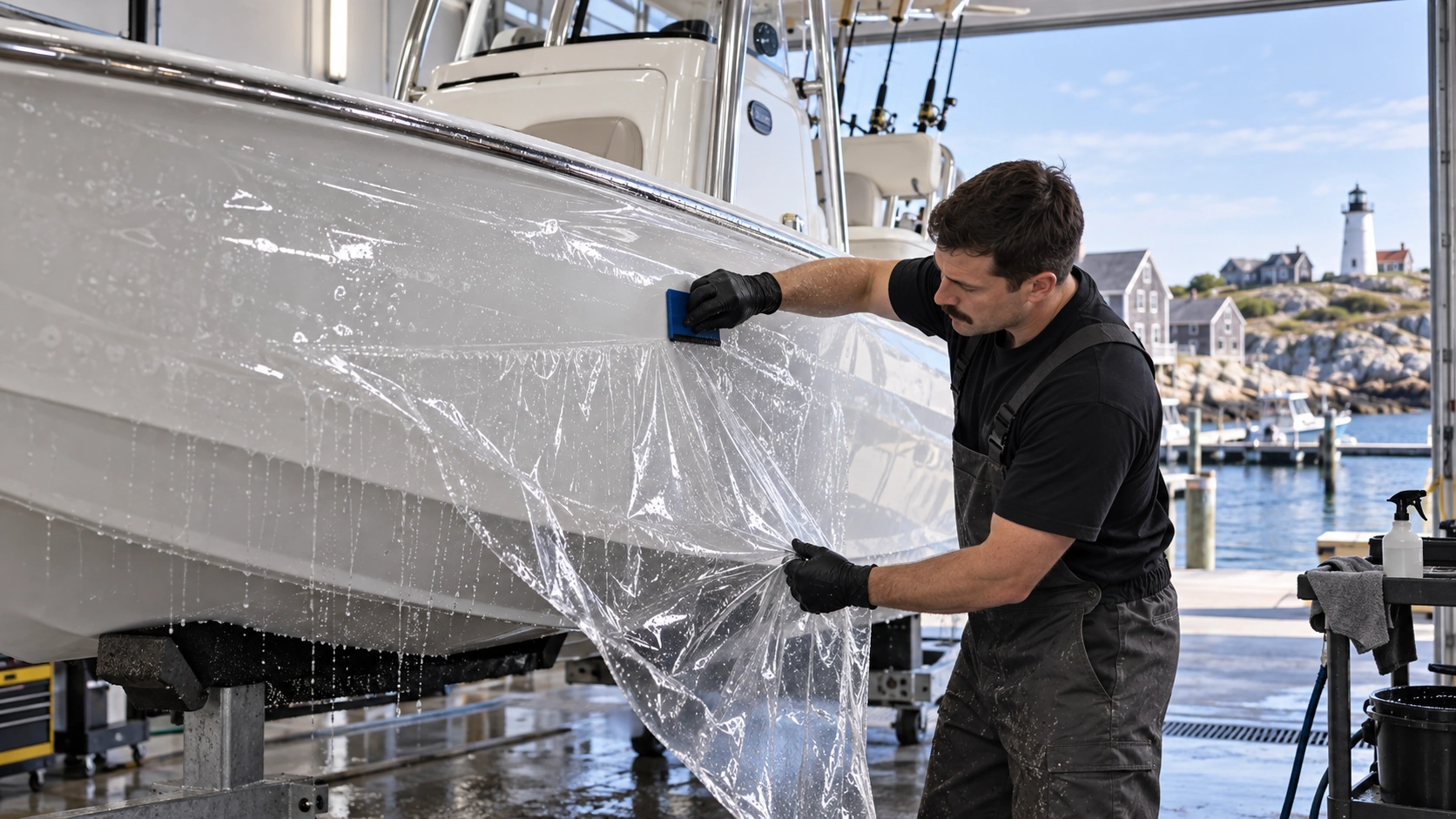
Is Marine Paint Protection Film Worth It for Boats?
Marine paint protection film can absolutely be worth it for boats, especially in the areas that get touched, rubbed, stepped on, bumped, loaded, docked, and abused over and over again.
Read the guide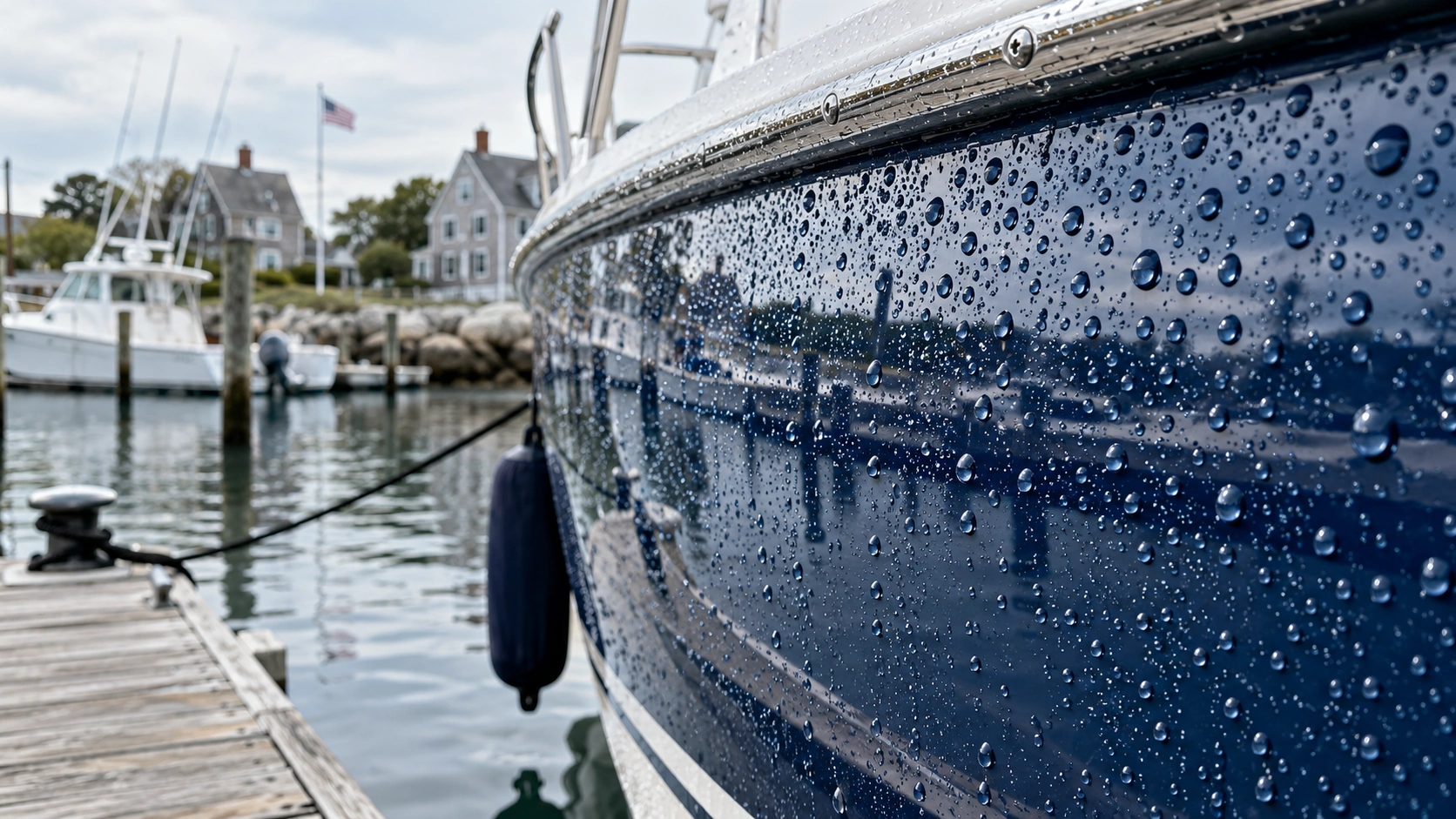
How to Maintain Marine PPF, Tint, and Ceramic Coatings
Marine paint protection film, marine window tint, and marine ceramic coatings can all help protect a boat, improve appearance, reduce wear, and make cleaning easier.
Read the guideMarine Services and Written Project Planning
Explore the dedicated service pages, arrange a vessel-specific consultation, or identify the correct product-warranty review path. Each service keeps its own compatibility, installation, care and issued-document requirements.
- Marine Protection Consultation & Pricing
- Marine Paint Protection Film
- Marine Ceramic Coating
- About XPEL Marine Protection
- Marine Window Tinting
- Marine Vinyl Wrapping
- XPEL Marine Product Warranty
Normal Marine wrap installation requires the vessel out of the water, dry, stable and properly supported. Marine PPF and normal wrap coverage are above the waterline; submerged areas and underlying repairs require separate review.
Still Have Questions About Marine Protection?
Every boat is used differently, stored differently, and exposed to different types of wear.
By this point, you should have a clear understanding of what marine protection does, how XPEL marine paint protection film works, how marine tint improves comfort, how marine ceramic coatings help with maintenance, and what to expect from installation, durability, warranty, and real-world use.
The right choice comes down to the boat, the surfaces being protected, how the boat is used, where it is stored, and what problems the owner wants to reduce.
Ready to Protect Your Boat?
Marine protection is one of the best ways to reduce avoidable wear and make boat ownership easier. XPEL marine PPF can help protect high-contact areas from scuffs, dock rash, fender rub, ropes, shoes, coolers, fishing gear, and boarding damage. Marine tint can help reduce heat, glare, and UV exposure through suitable glass. Marine ceramic coatings can make gelcoat, paint, glass, metal, and other compatible surfaces easier to clean and maintain.
These products do not make a boat maintenance-free or impossible to damage. They give the boat added protection where it matters and help preserve the finish through real-world use.
For many owners, the value is simple. Less frustration, easier cleanup, better comfort, and more protection against the kind of damage boats see every season.
Let Kickin’ Customs Help You Build the Right Marine Protection Plan
At Kickin’ Customs, we do not treat every boat the same. A center console, fishing boat, yacht, wake boat, pontoon, personal watercraft, and trailered boat all see different types of wear.
Some boats need targeted marine PPF in high-contact areas. Some need ceramic coating to make cleaning easier and preserve gloss. Some need marine tint to reduce glare and cabin heat. Many boats benefit from a combination of all three.
The best recommendation starts with how the boat is actually used. Where do people step? Where do fenders rub? Where does gear hit? Where does the sun create glare? Which surfaces are hardest to clean? Those answers help determine the right protection plan.
Marine Protection Should Be Built Around Real Expectations
Marine protection should be explained honestly. Marine PPF reduces scuffs and contact damage, but it does not stop every hard impact. Marine tint improves heat, glare, and UV comfort, but it must be chosen responsibly for safe visibility. Marine ceramic coating makes maintenance easier, but it does not replace washing.
These are not weaknesses. They are realistic expectations.
When the right product is installed on the right surface for the right reason, marine protection can make a major difference in how the boat looks, feels, and maintains over time.
Get Help Choosing Between Marine PPF, Marine Tint, and Marine Ceramic Coating
If you are unsure which marine protection service makes the most sense, the best starting point is identifying the biggest problem.
If the boat is getting scuffed, rubbed, scratched, or damaged in specific areas, XPEL marine PPF is likely the best place to start. If the boat is hot, bright, or uncomfortable around the glass, marine tint may be the right option. If the boat is difficult to clean, losing gloss, staining easily, or exposed to salt and grime, marine ceramic coating may be the better conversation.
Whether you own a center console, fishing boat, yacht, cruiser, wake boat, pontoon, personal watercraft, or trailered boat, Kickin’ Customs can help build a marine protection plan that fits the way your boat is actually used.
Serving drivers throughout Southeastern Massachusetts with professional paint protection film installation.
Step 2 of 2
Your Contact Details
Your preferences have changed. Your current contact form has been kept. Use Edit Request to review them.
If the embedded form is unavailable, open the secure contact form or contact the shop.