
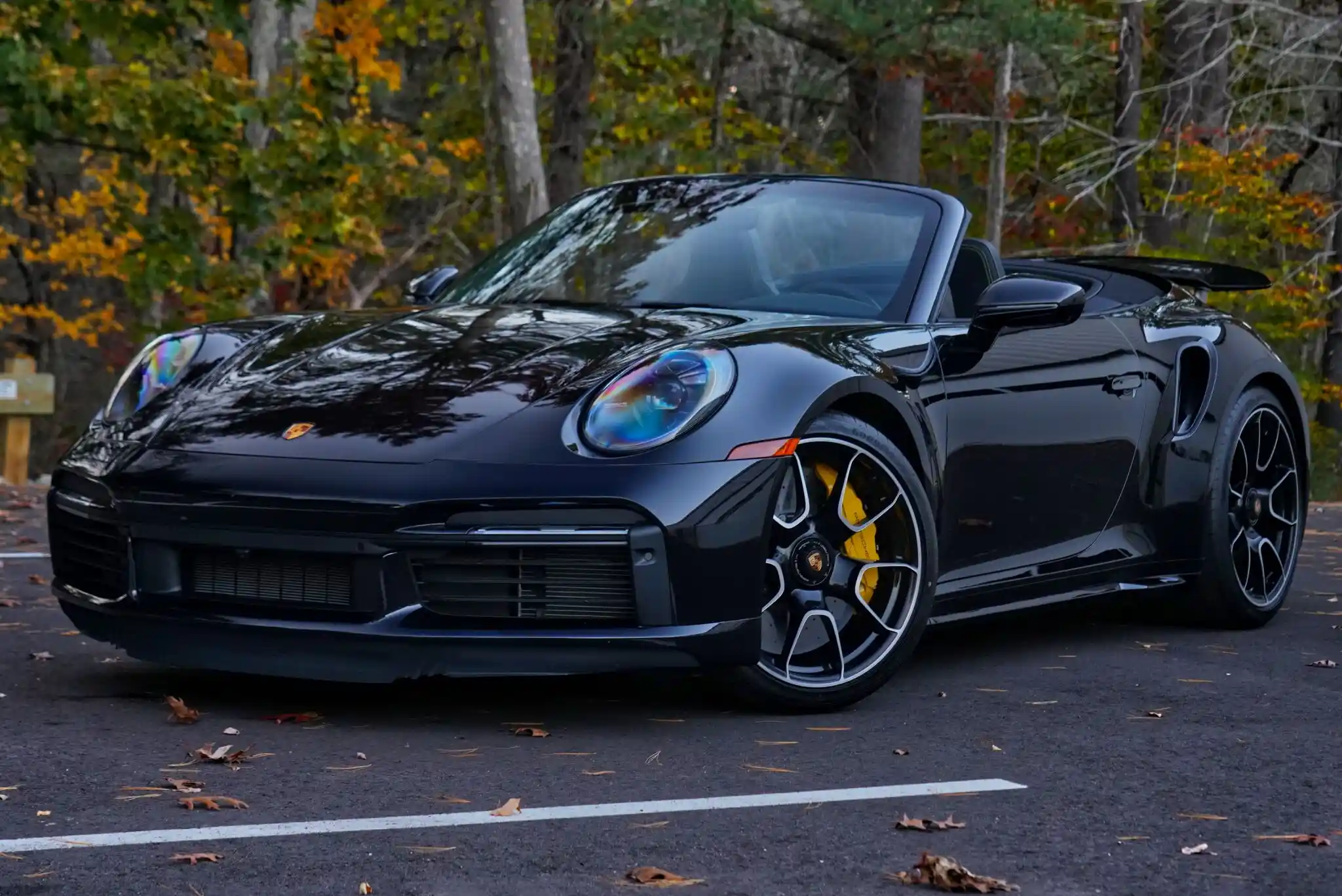
The short answer
Paint protection film is one of the best ways to protect your vehicle from rock chips, road debris, bug acids, salt, sand, and everyday driving wear.
But not every PPF package covers the same amount of the vehicle.
One of the most common decisions customers face is whether to choose partial front PPF or full front PPF. Both options protect important areas, but they are very different in coverage, appearance, and long-term value.
Partial front PPF is usually the lower-cost entry point. Full front PPF covers more painted surface and creates a cleaner overall look because the film typically ends at natural panel edges instead of stopping halfway across the hood or fenders.
At Kickin’ Customs in Raynham, MA, we install XPEL paint protection film for vehicles across Massachusetts and Rhode Island. Whether you drive a daily commuter, truck, SUV, Tesla, Corvette, Porsche, BMW, luxury vehicle, or performance car, understanding the difference between partial front and full front PPF will help you choose the right coverage.
Compare the coverage
What Is Partial Front PPF?
Partial front PPF is designed to protect the most forward-facing areas of the vehicle while keeping the package more budget-friendly.
Coverage can vary depending on the vehicle and package, but partial front PPF commonly includes the front bumper, mirror caps, and the leading section of the hood and fenders.
The goal is simple: protect the areas that take the earliest and most direct impact from road debris.
This can be a good option for customers who want meaningful protection without covering the full hood and full fenders. It is often considered for daily drivers, leased vehicles, commuter cars, or customers who want a practical starting point.
The important thing to understand is that partial front PPF has visible stopping points.
Because the hood and fenders are only partially covered, the film has to stop somewhere on the painted surface. That line may be subtle, but it can still be visible depending on the vehicle color, lighting, paint condition, maintenance habits, and viewing angle.
Partial front PPF can be a smart package, but the customer should know exactly what it does and does not cover.
What Is Full Front PPF?
Full front PPF is a larger coverage package that protects the full front end of the vehicle.
A true full front package usually includes the full hood, full front fenders, front bumper, mirror caps, and often the headlights depending on the vehicle and package.
Instead of stopping partway up the hood, the film carries to the hood edges. Instead of stopping partway across the fenders, the film covers the full fenders. This creates a cleaner appearance because the film edges are usually placed at natural panel breaks instead of across large painted surfaces.
Full front PPF is one of the most popular choices for new vehicles because it protects the areas that usually take the most abuse without requiring full body coverage.
For many customers, full front PPF is the best balance of protection, appearance, and value.
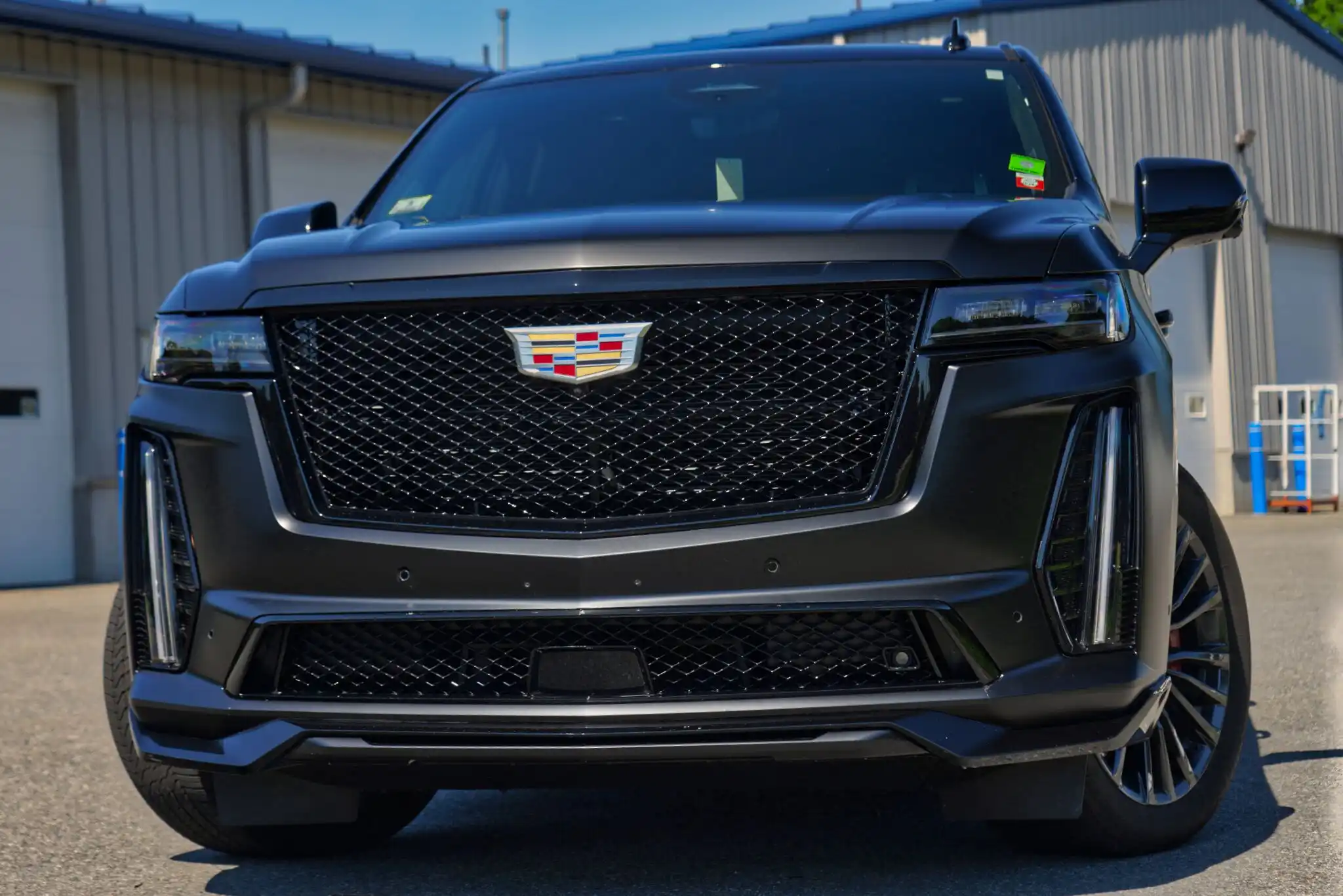
Where the film stops
The Biggest Difference Is Where the Film Stops
The biggest difference between partial front and full front PPF is not just how much film is installed.
It is where the film stops.
With partial front PPF, the film stops across the hood and fenders. That means there will be a line where the protected area ends and the unprotected paint begins.
On some vehicles, this line is not very noticeable. On others, especially darker colors or vehicles with large flat hoods, the line can be easier to see.
Over time, dirt, wax, polish residue, road grime, or contamination can collect near that edge if the vehicle is not maintained properly. This can make the stopping point more visible.
With full front PPF, the hood and fenders are covered as complete panels. The film is usually carried to natural edges, body gaps, or panel breaks. This gives the installation a more finished look and reduces visible transitions across the paint.
If visible film lines bother you, full front PPF is usually the better choice.
Partial Front PPF Protects the First Impact Zone
Partial front PPF protects the areas most likely to get hit first.
The front bumper takes constant abuse from rocks, bugs, sand, salt, and road debris. Mirror caps also take direct impact. The leading edge of the hood and fenders can get chipped from debris kicked up by other vehicles.
For customers who are mainly concerned with the most exposed impact zone, partial front PPF can make sense.
This is especially true if the vehicle is a daily driver and the customer wants to reduce damage without investing in larger coverage.
However, road debris does not always stay low or hit only the first few inches of the hood. Rocks can bounce higher. Sand and salt can spread across the full front end. Highway driving can expose much more of the hood and fenders than people expect.
That is where partial front coverage has limits.
Full Front PPF Protects the Whole Front End Better
Full front PPF gives you a much larger protected area.
By covering the full hood, full fenders, bumper, mirrors, and often headlights, the package protects the panels that are most exposed during normal driving.
This matters for vehicles that see highway mileage, long commutes, winter roads, construction zones, back roads, or frequent travel between Massachusetts, Rhode Island, Cape Cod, Greater Boston, MetroWest, and the South Shore.
It also matters for vehicles with expensive paint, wide front ends, long hoods, aggressive body lines, or performance tires.
The more you drive, the more full front PPF starts to make sense.
If you are protecting a new vehicle and want the front end to stay cleaner long-term, full front coverage is usually the stronger option.
The Hood Is the Main Visual Difference
The hood is usually the biggest visual difference between partial front and full front PPF.
On partial front coverage, the film stops partway up the hood. This creates a line across one of the largest and most visible painted panels on the vehicle.
On full front coverage, the entire hood is protected.
This matters because the hood is easy to see every time you walk up to the vehicle, wash it, photograph it, or look across it in sunlight.
If the vehicle is white, silver, or lighter colored, a partial hood line may be less noticeable. If the vehicle is black, dark blue, dark gray, red, or another deep gloss color, the line may stand out more in certain lighting.
The same applies if the vehicle is not washed carefully. Residue near the film edge can make the line easier to see.
For customers who are particular about appearance, full hood coverage is usually worth the upgrade.
The Fender Difference Matters Too
Partial front PPF often covers only the front section of the fenders.
This protects the leading edge, but it does not protect the full fender panel. It also creates another stopping point where the film ends.
Full front PPF covers the full front fenders, giving the vehicle a more complete protected zone.
This is helpful on vehicles with wider fenders, sculpted body lines, vents, trim, or aggressive wheel and tire setups. It is also helpful on performance cars and trucks where debris can move across the side of the front end more aggressively.
Like the hood, the fender decision comes down to coverage and appearance.
Partial fender coverage is more limited. Full fender coverage looks cleaner and protects more paint.
Front Bumper Coverage Is Important Either Way
Whether you choose partial front or full front PPF, the front bumper is one of the most important areas to protect.
The bumper is usually the first thing to take damage from road debris. It also sees bug impact, salt spray, sand, parking lot wear, and general road grime.
Modern bumpers are not always simple to install film on. Many have parking sensors, vents, grilles, splitters, tow hook covers, sharp curves, body lines, and complex edges.
This is where installation quality matters.
A good PPF installation is not just about sticking film to the vehicle. The installer needs to understand pattern fitment, stretch, edge placement, relief points, sensor areas, and how the film will settle during curing.
At Kickin’ Customs, we install XPEL paint protection film and choose installation methods based on the vehicle, panel shape, coverage package, and customer expectations.
Choose for your vehicle
When Partial Front PPF Makes Sense
Partial front PPF can make sense when the goal is practical protection at a lower cost.
It may be a good fit for a customer who wants to protect the bumper, mirrors, and leading painted surfaces but is not as concerned about full hood or full fender coverage.
It can also make sense for a lease, a commuter vehicle, an older vehicle, or a customer who wants to protect the most vulnerable areas without stepping into a larger package.
Partial front PPF is not a bad option. It simply has limits.
The main trade-off is that you will have visible stopping points, less protected paint, and more exposed hood and fender area compared to full front coverage.
If those trade-offs are acceptable, partial front PPF can still be a smart value.
When Full Front PPF Makes More Sense
Full front PPF makes more sense when the vehicle is new, valuable, freshly corrected, performance-oriented, or important to preserve.
It is often the better choice for customers who plan to keep the vehicle long-term or want to avoid visible film lines across the hood.
Full front PPF is also a strong choice for highway drivers. If you commute on Route 24, I-495, I-95, Route 3, the Mass Pike, or travel regularly between Southeastern Massachusetts and Rhode Island, the front of the vehicle is going to see a lot of exposure.
Luxury vehicles, sports cars, EVs, trucks, and SUVs also benefit from full front coverage because the front end can be expensive to repaint, difficult to match, or important for resale value.
If you already know paint chips will bother you, full front PPF is usually the smarter choice from the start.
Partial Front PPF vs Full Front PPF for New Cars
For new cars, full front PPF is usually the better recommendation.
New paint is easiest to protect before damage happens. Once chips, scratches, and road rash are already present, film can still be installed, but it will not erase existing damage.
A partial front package can still help on a new car, but it leaves more exposed paint on the hood and fenders. If the vehicle is brand new and you care about keeping the front end protected, full front coverage usually makes more sense.
This is especially true if the car has dark paint, soft paint, expensive paint, or a shape that exposes more of the hood and fenders to road debris.
Partial front PPF is about reducing risk in key areas.
Full front PPF is about protecting the complete front impact zone.
Partial Front PPF vs Full Front PPF for Daily Drivers
Daily drivers can benefit from either package, depending on the owner’s priorities.
If the vehicle is used mostly around town and the customer wants basic protection for the front bumper and leading edges, partial front PPF may be enough.
If the vehicle sees daily highway use, winter roads, construction zones, or long commutes, full front PPF is usually the better fit.
Daily drivers take constant abuse. Salt, sand, bugs, tar, and debris build up quickly. The more miles the vehicle sees, the more value there is in covering complete panels instead of only partial sections.
For many daily drivers, full front PPF is the point where the investment makes the most sense.
Partial Front PPF vs Full Front PPF for Performance Cars
Performance cars usually benefit from full front PPF.
Lower front ends, wider tires, sticky rubber, aggressive aero, and spirited driving can expose the paint to more debris. Rocks, rubber, tar, bugs, and road grime can hit more than just the first few inches of the vehicle.
The hood, bumper, fenders, mirrors, rocker panels, and lower areas can all take abuse.
Partial front PPF may protect some of the leading impact areas, but it may not be enough for the way the vehicle is driven.
If the vehicle is a Corvette, Porsche, BMW M car, AMG, Audi RS, Mustang, Camaro, Ferrari, Lamborghini, McLaren, or similar performance vehicle, full front coverage is usually the better starting point.
Partial Front PPF vs Full Front PPF for Trucks and SUVs
Trucks and SUVs can also benefit heavily from full front PPF.
Larger front ends take a lot of impact. Tall bumpers, big mirrors, wide hoods, painted grilles, fender shapes, and lower panels are all exposed to road debris.
If the truck or SUV is used for work, towing, family use, winter driving, or highway travel, the front end can wear quickly.
Partial front PPF may help reduce some damage, but full front coverage is better for customers who want more complete protection and fewer visible stopping points.
For trucks, it is also worth considering rocker panel, lower door, rear bumper, tailgate ledge, and bedside protection depending on use.
Cost and future upgrades
What About Cost and Value?
Partial front PPF costs less because it uses less film and covers fewer areas.
That lower cost is the main reason customers consider it.
Full front PPF costs more because it covers more painted surface, requires more material, and takes more installation time.
The value depends on what you are trying to protect.
If you only want targeted protection and are comfortable with visible stopping points, partial front PPF may be the better value.
If you want a cleaner finished look, more complete coverage, and stronger long-term protection, full front PPF is usually the better value.
The mistake is choosing partial front PPF only because it costs less, then being unhappy with the visible line or wishing more of the hood and fenders were covered.
It is better to choose the right coverage upfront than to regret the compromise later.
Can You Upgrade From Partial Front to Full Front Later?
In some cases, yes, but it is not always the most efficient path.
If you start with partial front PPF and later decide you want full hood or full fender coverage, the original pieces may need to be removed and replaced with larger pieces.
That can add labor and cost.
It can also be less ideal if the uncovered paint has already picked up chips, wear, or staining before the upgrade.
If you are already leaning toward full front coverage, it usually makes more sense to do it from the beginning.
That gives you better protection from day one and avoids paying twice for overlapping work.
Film, care and support
Film Quality Matters
Coverage matters, but film quality matters too.
Kickin’ Customs installs XPEL paint protection film, including XPEL Ultimate Plus, XPEL Stealth, and XPEL Ultimate Fusion.
XPEL paint protection film carries a 10-year manufacturer warranty. That warranty helps protect against qualifying film defects, but it does not mean the film cannot be damaged by impact, neglect, harsh chemicals, improper washing, or accidents.
PPF is sacrificial protection. If the film takes a rock hit, scratch, scrape, or road debris impact, it may have done its job by protecting the paint underneath.
For customers who want easier washing and better water behavior, XPEL Ultimate Fusion can be a strong choice. The hydrophobic properties are expected to last around 4 years, while the film itself still carries the 10-year warranty.
Maintenance Still Matters After Installation
No matter which coverage package you choose, paint protection film needs proper care after installation.
PPF cure time is generally 2 to 3 weeks. During that period, the film is settling, moisture may be clearing, and the adhesive is continuing to bond.
Customers should avoid washing the vehicle for 7 days after installation. They should also avoid picking at edges, scrubbing the film, or pressure washing too close to film edges.
A small amount of edge movement during curing can be normal. Around 1/16 inch can often be addressed during the follow-up inspection.
At Kickin’ Customs, the 3-week follow-up inspection is required for PPF workmanship coverage. This allows us to inspect the film after it cures and address small concerns before they become larger problems.
The follow-up is part of the process.
Kickin’ Customs No-Fault Replacement Benefit
PPF is designed to be a sacrificial layer, which means it takes damage so your paint has a better chance of staying protected.
If film gets damaged, the affected piece may be replaceable.
Kickin’ Customs offers a one-time No-Fault Replacement benefit up to $250 on qualifying installs of $495 or more. This can help customers feel more comfortable using the vehicle normally after installation.
Paint protection film is not magic. It cannot stop every possible impact, scrape, or accident. But when installed and maintained properly, it gives the paint a strong layer of defense against the kind of wear that vehicles see every day.
The No-Fault Replacement benefit is for the original customer on qualifying PPF installations. Insurance claims are excluded.
Which Option Should You Choose?
Choose partial front PPF if you want lower-cost protection for the most forward impact areas and you are comfortable with visible stopping points on the hood and fenders.
Choose full front PPF if you want more complete protection, fewer visible film lines, and a cleaner long-term appearance.
For many customers, full front PPF is the better choice because it protects the full hood, full fenders, bumper, mirrors, and often the headlights. It gives the front of the vehicle a more complete layer of coverage without requiring full body PPF.
Partial front coverage has its place, but full front coverage is usually the package customers are happier with long-term.
Final Thoughts
Partial front and full front PPF both protect your vehicle, but they are not the same.
Partial front PPF is a targeted, budget-conscious option that protects the bumper, mirrors, and leading hood and fender areas. Full front PPF protects the full hood, full fenders, bumper, mirrors, and often the headlights, creating a cleaner look and a larger protected area.
The right choice depends on your vehicle, budget, driving habits, and expectations.
At Kickin’ Customs in Raynham, MA, we install XPEL paint protection film for drivers across Massachusetts and Rhode Island. Whether you are protecting a new daily driver, luxury SUV, EV, truck, Corvette, Porsche, BMW, Tesla, or weekend vehicle, we can help you choose the right PPF package for how the vehicle will actually be used.
If you are deciding between partial front and full front PPF, contact Kickin’ Customs and we can walk you through the coverage options before installation.
Frequently Asked Questions
What is the difference between partial front and full front PPF?
Partial front PPF usually covers the front bumper, mirrors, and the leading portion of the hood and fenders. Full front PPF usually covers the full hood, full front fenders, front bumper, mirrors, and often the headlights depending on the vehicle and package.
Does partial front PPF leave a visible line?
Yes, partial front PPF can leave a visible line where the film stops on the hood and fenders. The line may be subtle, but it can be more noticeable on darker colors, dirty vehicles, or vehicles with residue buildup near the film edge.
Is full front PPF worth it?
For many customers, yes. Full front PPF protects more paint, reduces visible stopping points, and gives the vehicle a cleaner long-term appearance. It is especially worth considering for new cars, luxury vehicles, performance cars, EVs, trucks, and highway drivers.
Is partial front PPF enough for a daily driver?
Partial front PPF can be enough for some daily drivers, especially if the goal is basic protection at a lower cost. If the vehicle sees a lot of highway mileage, winter driving, or long-term ownership, full front PPF usually makes more sense.
Can I upgrade from partial front PPF to full front PPF later?
Sometimes, but it may require removing the partial pieces and installing larger full-panel pieces. If you already think you may want full front coverage, it is usually better to install it from the start.
Does full front PPF cover the headlights?
Headlight coverage depends on the vehicle and package. Many full front packages include headlights, but it should always be confirmed before installation.
Which PPF option looks better?
Full front PPF usually looks cleaner because the film is carried to natural panel edges instead of stopping across the hood or fenders. Partial front PPF can still look good, but the stopping points are more visible.
How long does XPEL paint protection film last?
XPEL paint protection film carries a 10-year manufacturer warranty. Proper installation, maintenance, and care help the film look and perform better over time.
Does PPF need time to cure?
Yes. PPF generally takes 2 to 3 weeks to cure. Customers should avoid washing the vehicle for 7 days after installation and should avoid disturbing edges while the film settles.
Why does Kickin’ Customs require a 3-week follow-up inspection?
The 3-week follow-up allows us to inspect the film after it cures and address small edges, lift points, or settling concerns early. At Kickin’ Customs, this inspection is required for PPF workmanship coverage.
Plan your next step
Not sure if partial front or full front PPF makes more sense for your vehicle? Contact Kickin’ Customs in Raynham, MA and we can help you compare XPEL paint protection film coverage options based on your vehicle, driving habits, and long-term goals.
