
Easier Routine Cleaning
Help water and everyday contamination release more readily during proper washing, making suitable coated surfaces easier to maintain.
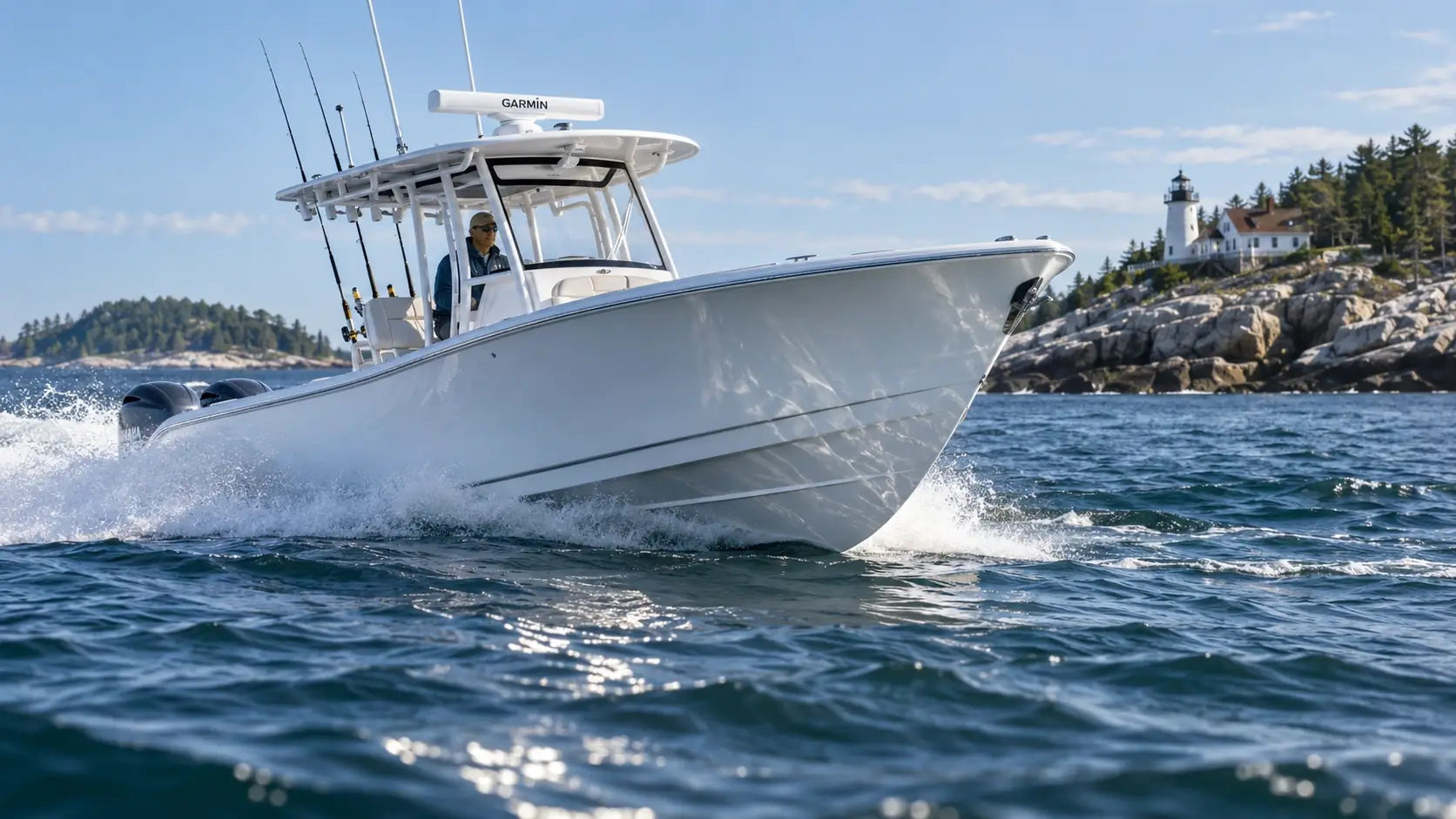
A Finish That’s Easier to Care For
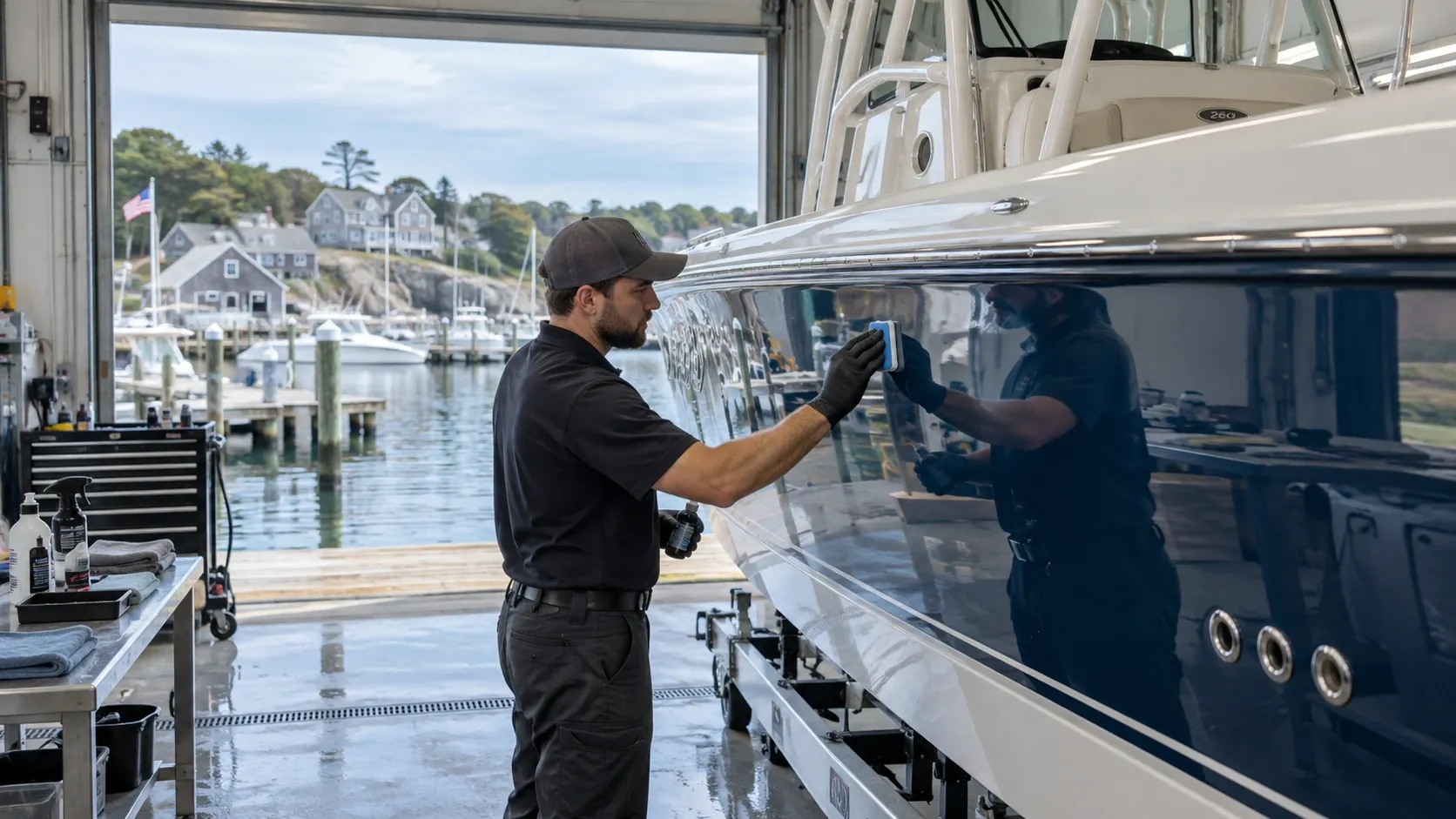
Make routine cleaning easier and enhance the depth and shine of a suitable glossy finish with XPEL FUSION PLUS MARINE V2. Our Raynham team matches preparation and coating to your boat’s surfaces, condition and use, serving Southeastern Massachusetts and Rhode Island.
Spend less effort on routine care
Salt, residue and regular exposure make a marine finish demanding to maintain. FUSION PLUS MARINE V2 is a thin clear coating that can help water and routine contamination release from suitable prepared surfaces. On an approved glossy finish, it can also enhance depth and shine.
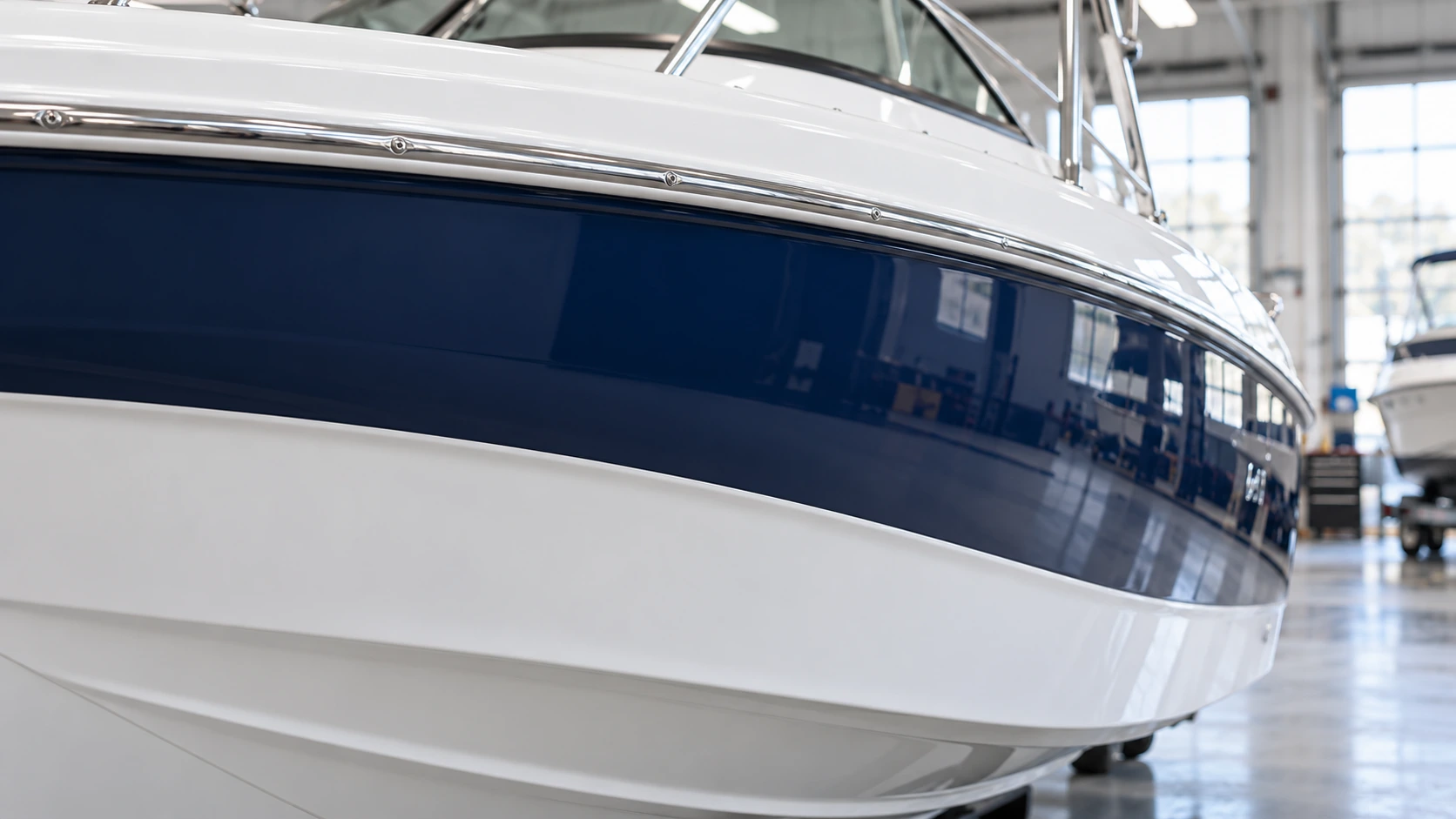
Help water and everyday contamination release more readily during proper washing, making suitable coated surfaces easier to maintain.
Preparation addresses the existing finish before coating enhances its appearance. Any light polishing is planned around the condition and safe limits of the paint or gelcoat.
Account for sun, salt, storage, wash habits and contact zones so product selection and care fit your boat.
Water repellency is not antifouling, impact protection or a guarantee against spots, stains or corrosion. The coating does not replace bottom paint, washing or repair.
Start with the surface
Tell us which surfaces you would like to discuss. We will review their condition and product compatibility; you do not need to identify every area to request a quote.
Review oxidation, porosity, repairs and safe preparation before coating suitable gelcoat.
Match preparation and coating to the paint system, cure, condition and intended appearance.
Review the exact film, topcoat, age, seams and edges before considering an additional coating.
Check the film, laminate, ink, finish and condition. Coating is not automatically appropriate for every wrap.
Glass, metal and other finished surfaces require a separate product decision. Clear plastics, electronics and non-skid are not automatic coating areas.
Describe what you know without guessing. We can discuss the next step for an unknown material or finish.
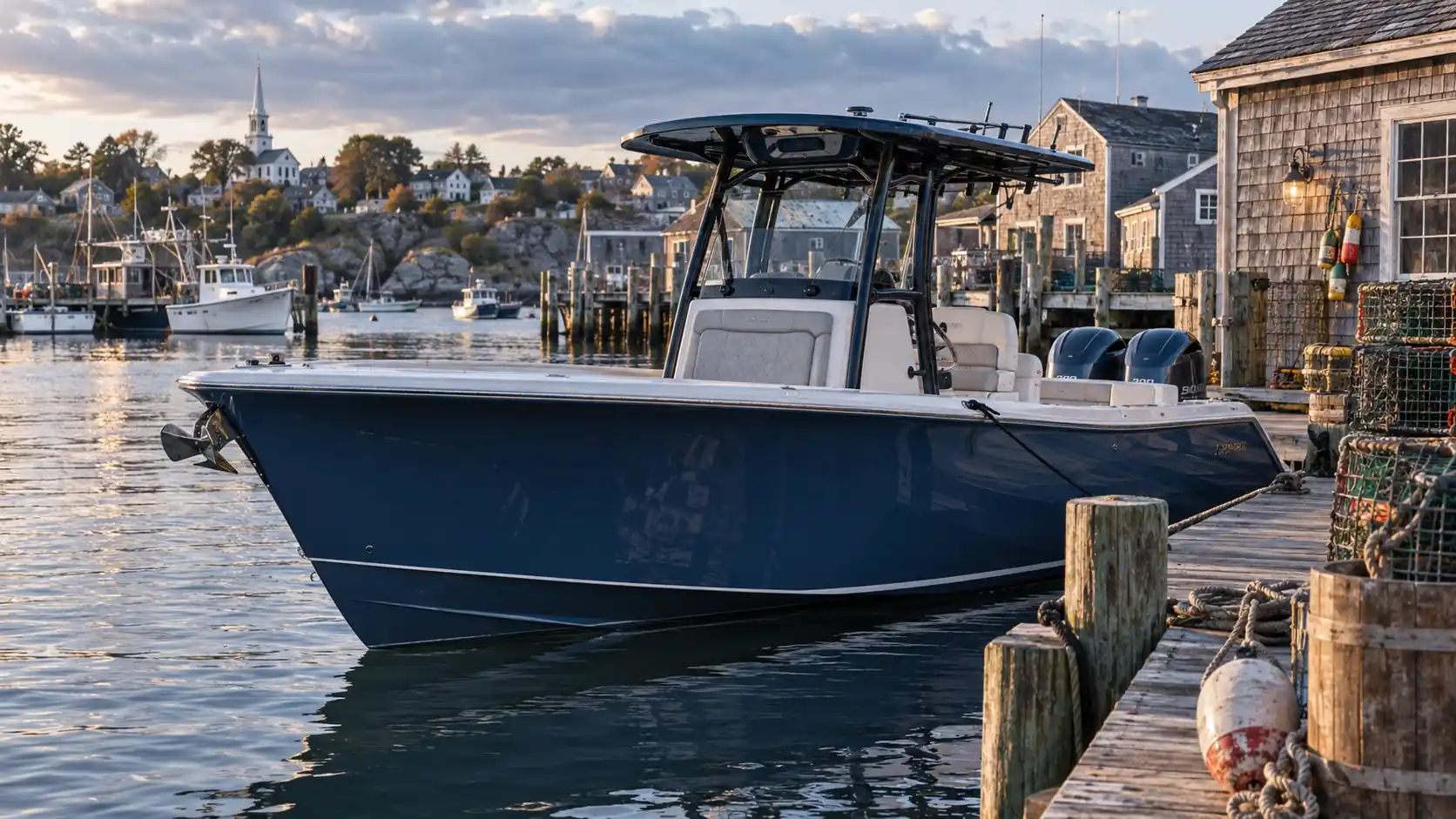
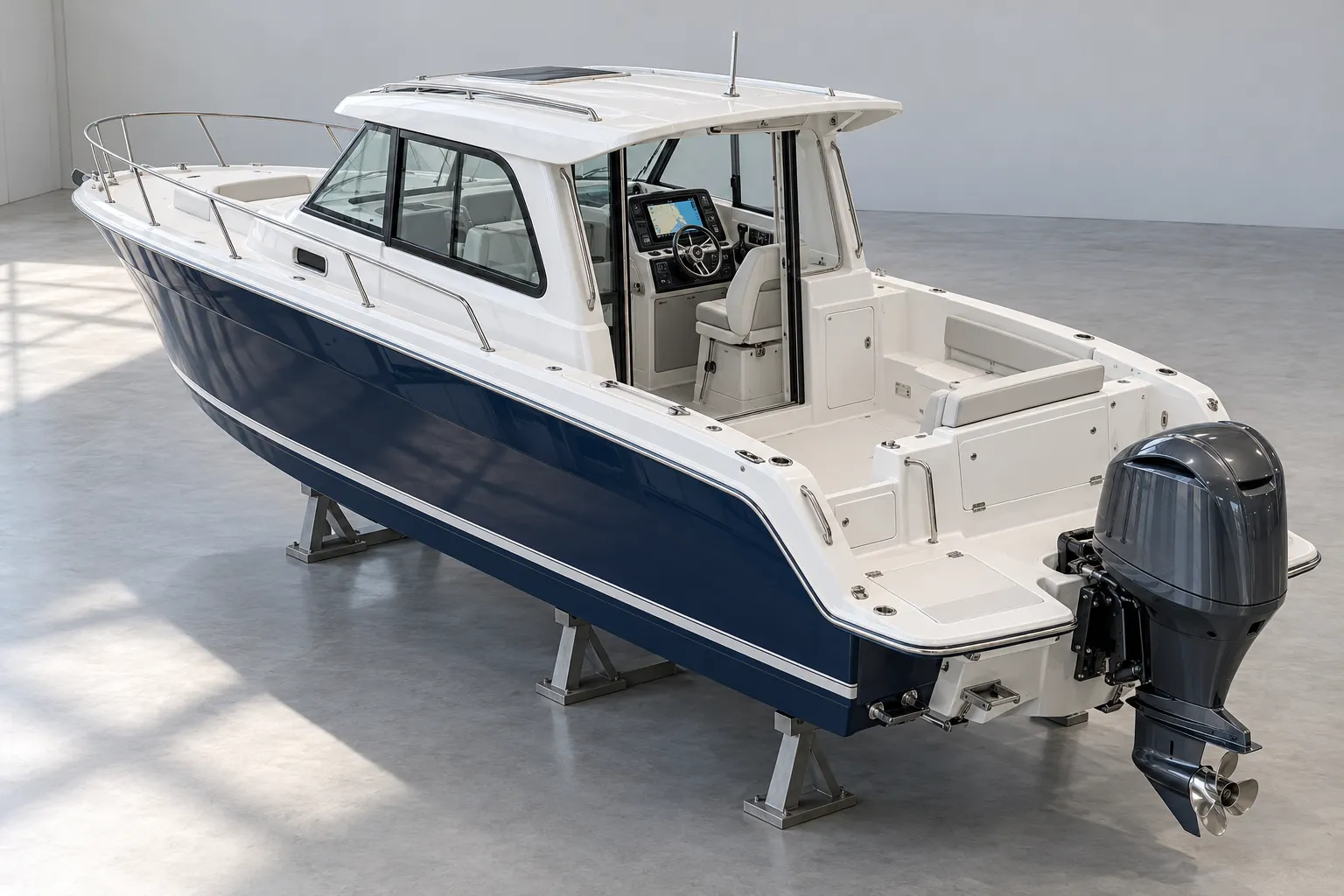
Choose what you want to discuss
Select a number on the boat or an area on the right. You can choose several areas, add notes and change your selections. These choices are added to your request below.
Have another area in mind? Add it here, or tell us what you want to improve.
Preparation creates the result
We clean and prepare suitable finishes before applying the coating. Light polishing may improve mild haze or surface marks where the finish allows. Heavy oxidation, damaged gelcoat, failed paint or corrosion must be addressed by an appropriate repair specialist before coating.
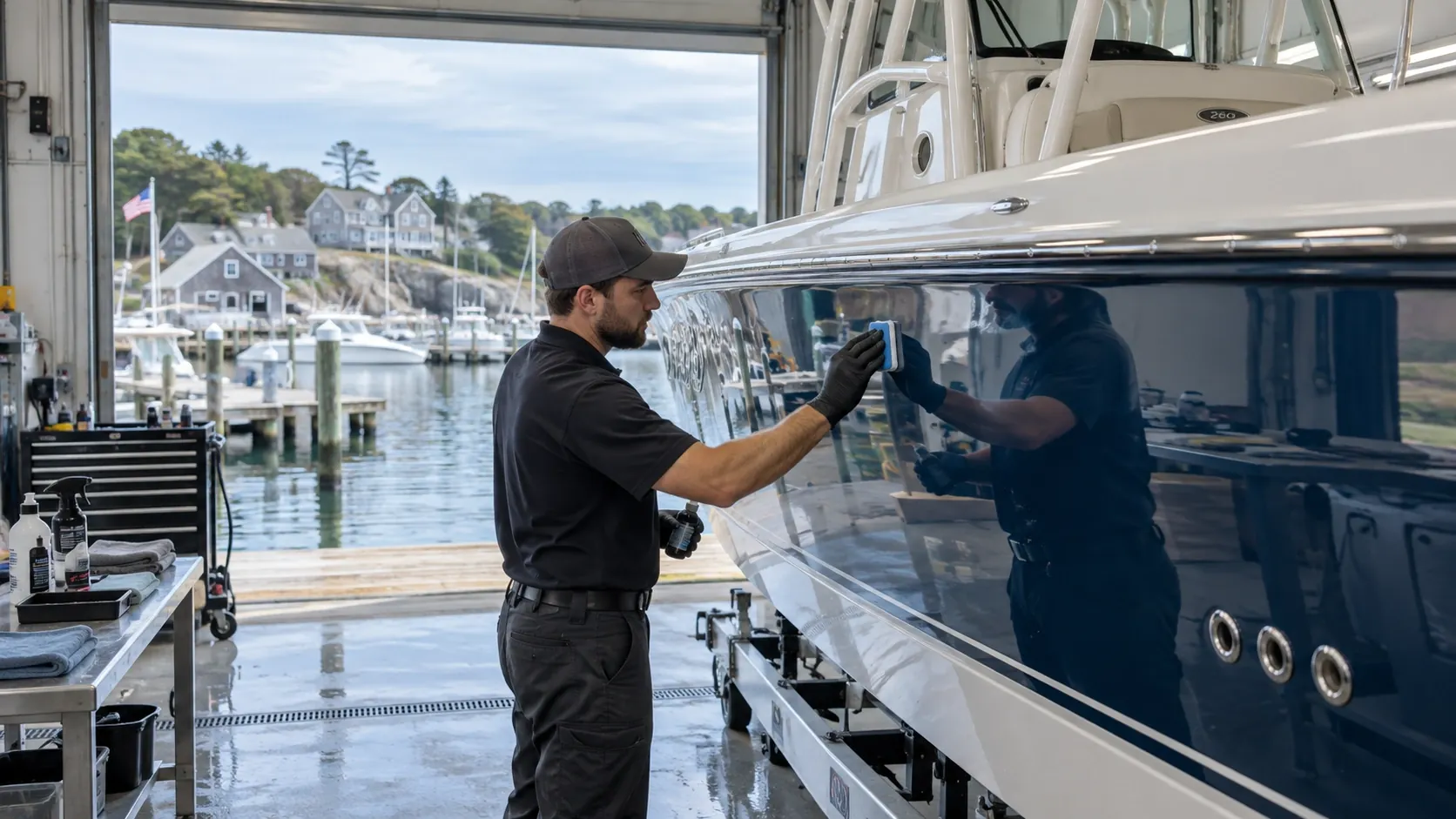
Salt, minerals, wax, prior coatings, silicone, oil, fuel, polish and cleaner residue can affect bonding and appearance. We select appropriate decontamination for the surface.
Finish condition and thickness guide any light polishing. Matte and satin finishes need their own preparation methods and are not polished like gloss finishes.
Our coating service includes the cleaning and preparation listed in your proposal. We do not perform heavy restoration, sanding or repairs. Any needed repair work must be completed before coating.
A small test area can help us assess the finish and choose a suitable preparation method. Some marks or gloss differences may remain where further polishing would risk the finish. Coating does not hide existing damage.
Easier care for your existing film
A compatible ceramic coating can make your existing PPF or vinyl wrap easier to wash. It is an optional addition, not something every film needs. We check what is already on your boat and help you decide whether coating would be worthwhile.
A suitable coating can help water and everyday residue release from the film during washing.
PPF still provides the physical wear layer, while vinyl provides the color or graphics.
Tell us what film you have, if you know. We check its condition and existing finish before recommending a compatible coating.
Coating will not fix lifting edges, damaged vinyl or a failing finish beneath the film.
We explain how to wash and maintain the finished surface. The film and coating keep their own warranty terms.
If the film needs replacing later, we will explain any coating work needed on the replacement area.
Wax and sealant can help with routine care but usually need more frequent reapplication. Ceramic coating is an easier-cleaning treatment. PPF adds a physical wear layer, while vinyl changes color or adds graphics. None replaces repairs to a damaged finish.
Preparation through handoff
Identify the finish, condition, prior products, use and desired result, with separate decisions for special materials.
Agree on cleaning, any light polishing, exact products, excluded areas, access, price and a protected installation setting.
Protect nearby materials, complete the agreed preparation, apply the selected system and inspect the finish.
Provide written drying, curing, transport, launch, cleaning and care directions for the actual project.
Allow Time for Drying & Curing
XPEL’s FUSION PLUS MARINE V2 technical data sheet lists a six-hour dry time and a three-day cure time. Your written project handoff confirms the restrictions for water, washing, covering, transport and launch based on the actual product and conditions.
Keep water, dew, salt, fuel, cleaners, covers, fenders, lines and other work away as directed. Report unexpected contact, high spots, smearing or contamination before polishing, topping or recoating. These coating times do not apply to PPF, tint or wrap.
Vessel-specific proposals
The areas, material, condition, cleaning and light polishing needs drive the proposal, along with access, products and protected cure time. Describe your boat and cleaning goals first. Missing measurements and photographs do not prevent an inquiry.
Application needs safe access, stable support, a dry surface, suitable temperature and humidity, lighting, ventilation and protection from rain, salt, dust and nearby work. The location and any marina or yard permissions are confirmed before scheduling.
Hauling, blocking, lifting, storage and other-trade services are separate responsibilities. Working time, total project duration and cure or launch readiness are not interchangeable.
Kickin’ Customs has served vehicle and property owners from Raynham since 2012. For your vessel, we bring the discussion back to the actual finish, useful product choices and an agreed written plan.
Start with the details you know
Choose your interests and tell us what you need. Continue to add your contact details. Nothing is sent until you submit the contact form.
Unknown information is welcome. Describe observations without guessing a material, cause or warranty decision.
Step 1 · Your Boat and Project
Add your contact details and check Your Message before submitting. Nothing is sent until you submit the contact form.
This is the current request used in the contact-form link and optional copy. Preparing or copying it does not submit an inquiry. Check Your Message before submitting the contact form.
This earlier wording is saved for recovery. It is not included in the current request unless you add it back. Copy any wording you want into the editable current summary. Only the current summary is copied.
Notes stay in page memory until copied; reloading clears them. Do not include keys, access codes, vessel registration, navigation data, exact storage location or private schedules. No files are uploaded here. Privacy Policy
Care and realistic expectations
Water beads can still leave mineral spots. Use compatible cleaners and soft tools, and remove salt, fuel, sunscreen and other contamination promptly. Avoid harsh chemicals, abrasion and unapproved toppers.
Reduced beading alone does not prove product failure. Residue, minerals, abrasion and surface condition can change behavior. Inspection helps determine cleaning, correction or reapplication needs.
Product defects, workmanship, external damage and underlying-surface failure follow different review paths. Keep product, preparation, installation, care and issued warranty records. No single service-life promise covers every area.
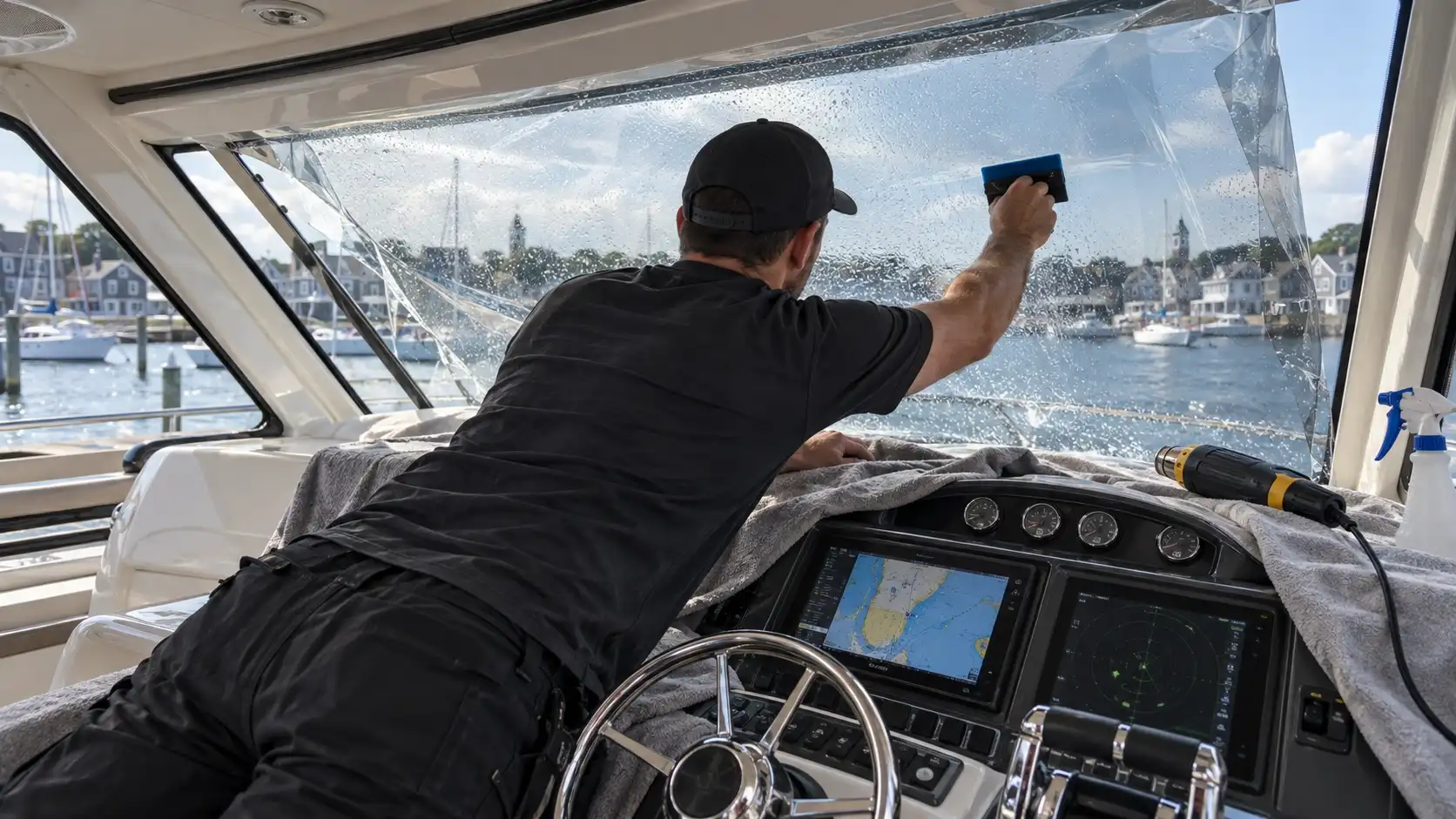
Windows, clear plastics, textured walking surfaces and other special materials need products suited to their use. Navigation screens also need a product approved for the display; a coating intended for paint or gelcoat is not automatically suitable.
Continuous immersion, bottom paint, antifouling, transducers, anodes, through-hulls, running surfaces and safety-critical equipment are outside a general above-waterline coating claim. Blistering, osmosis, leaks, corrosion and structural problems require the appropriate repair provider.
Repeated contact can scratch a coated finish, and horizontal or exposed areas may age differently. Reapplication may need decontamination, testing, renewed preparation and cure protection. A warranty is not a guarantee of maintenance-free service life.
Marine FAQs
It creates a thin clear surface treatment that can improve hydrophobic behavior, enhance an approved finish, and make routine contamination easier to remove on selected compatible surfaces.
No. Coated surfaces still need compatible washing, drying, contamination removal, inspection, and maintenance. Salt, minerals, water spots, fuel, sunscreen, mildew, and other contamination can still remain or cause damage.
No. Hydrophobic behavior is not antifouling performance. Bottom paint, continuous immersion, underwater gear, anodes, propulsion components, and marine-growth control require their own approved systems.
Stable compatible gelcoat may be evaluated after its finish, condition, oxidation, repairs, porosity, contamination, previous products, and preparation needs are reviewed.
No. Cleaning and light polishing may improve some mild marks before coating. We do not perform heavy oxidation removal, restoration, sanding or repairs. Deep damage or a failing finish needs attention from an appropriate repair specialist before coating.
Possibly. The exact film, age, condition, topcoat, seams, edges, cleaning history, coating compatibility, and warranty instructions must be reviewed first.
Possibly, but the exact film, laminate, ink, finish, age, seams, edges, condition, preparation, and manufacturer instructions control eligibility.
Glass requires a visibility-focused product and review. Acrylic, polycarbonate, flexible vinyl, tinted windows, and other clear plastics are not automatically eligible and can require a different product or process.
No. It is not scratch-proof and does not replace PPF. Fenders, lines, docks, covers, lifts, trailers, brushes, tools, footwear, and routine use can scratch or wear the coated surface.
There is no universal service life. Product, substrate, preparation, cure, sunlight, salt, chemicals, cleaning, abrasion, storage, use, and maintenance all affect performance and appearance.
The current XPEL FUSION PLUS MARINE V2 data sheet lists a six-hour dry time and three-day cure time, but the written project handoff controls launch, washing, covering, transport, and other exposure for the actual conditions.
The boat will usually need to be out of the water in a dry, protected setting so we can prepare the surfaces, apply the coating and allow it to cure. Tell us how your boat is stored, and we will confirm the installation plan before scheduling.
No. Water beads can still dry and leave salt or mineral deposits. Prompt rinsing, compatible washing, and proper drying remain important.
Only the cleaning, preparation and any light polishing listed in your written proposal are included. Kickin’ Customs does not perform heavy restoration, sanding or repairs. Any required repair work must be completed before coating.
Pricing is vessel-specific. Surface area, material, condition, cleaning, light polishing, access, product, application conditions, drying and curing protection, and scheduling all affect the quote.
Start with the vessel description, your goal and general town or project area. Known surface condition and desired timing help, but exact dimensions and photos are optional. Ask our team for a private way to share useful records; do not include exact vessel location, access codes, registration or private navigation information in this planner.
Show the vessel type and target area without registration, vessel name, private location or navigation information.
Include condition, existing products, edges, hardware and material labels where safely accessible. Do not disturb damaged or hazardous areas.
Ask our team how to share photos, artwork or records securely. This planner does not upload files. You can inquire without photographs.
Prepare My Request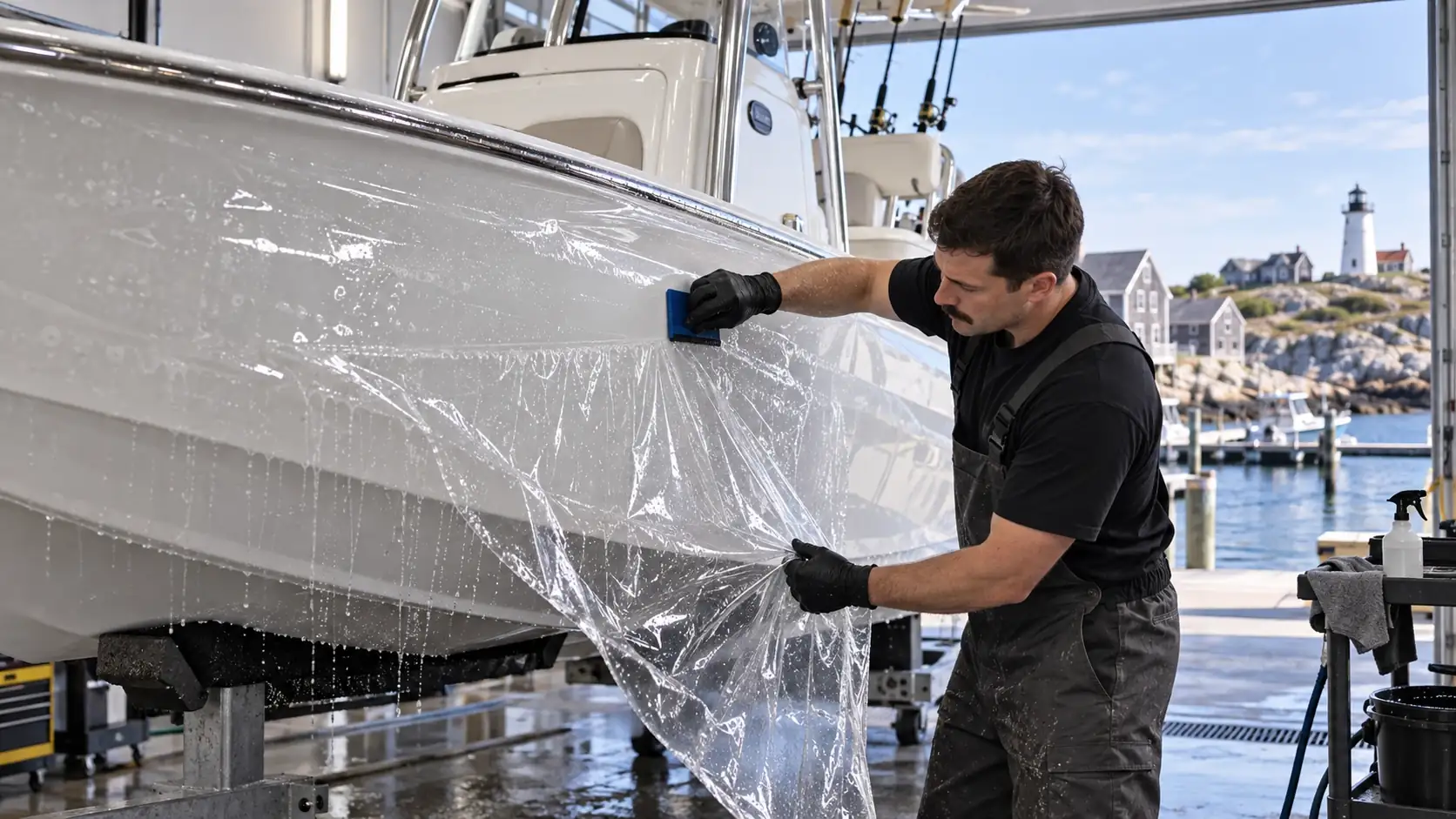
Understand the role of selected physical protection.
Compare ownership and maintenance considerations.
Explore window tint for heat and glare.
Based in Raynham, Massachusetts
244 North Main Street, Raynham, MA 02767
Monday-Friday, 9 AM-6 PM · 617-431-6858
Serving Southeastern Massachusetts and Rhode Island. The actual Marine installation location is confirmed for each project.