Do Not Wash
Follow Kickin’ Customs’ no-wash guidance. Remove surface residue gently; report lifted edges or exposed adhesive immediately.
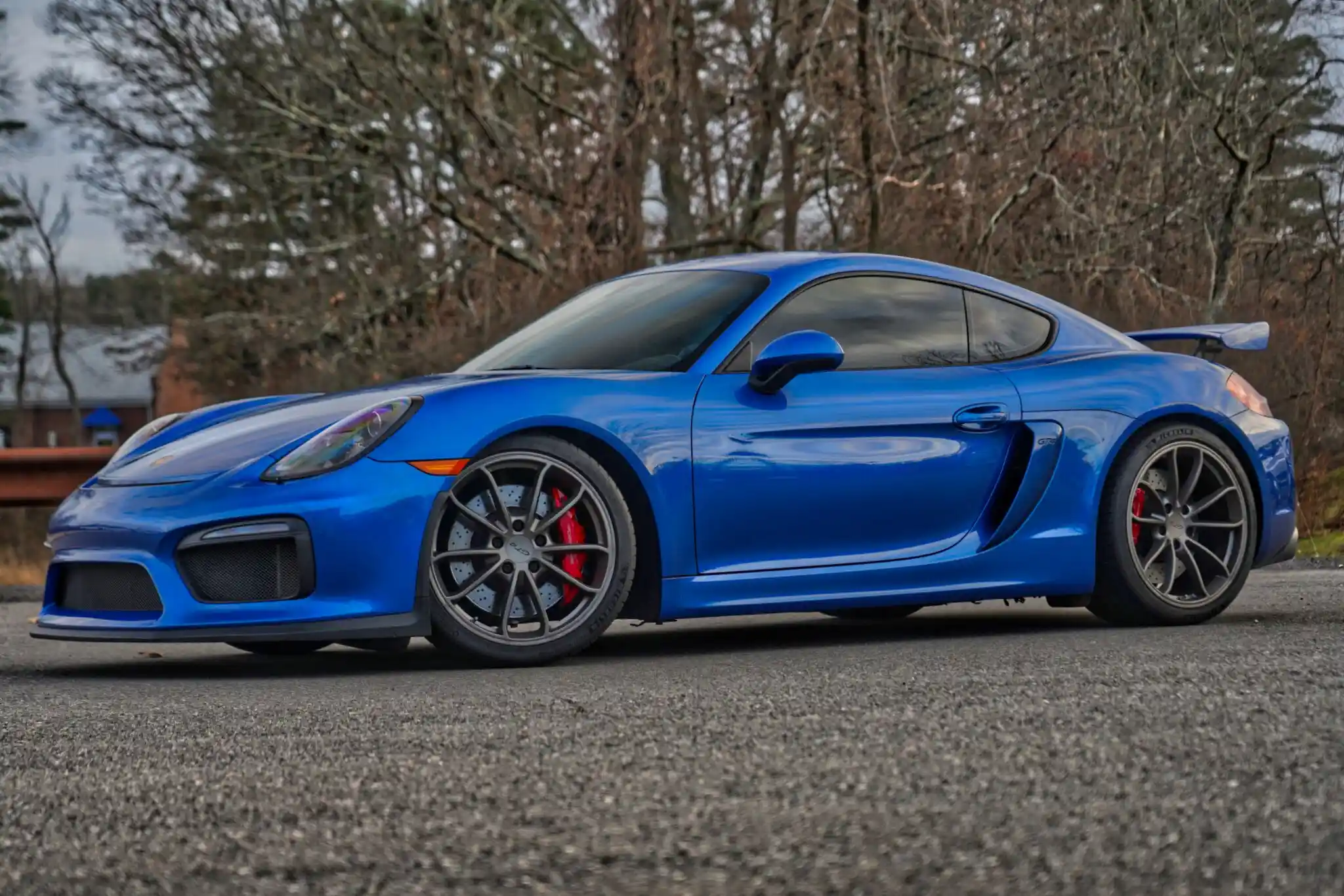
Know what to do from the first week through years of ownership. Follow our care routine, choose products for your film, and recognize when your vehicle needs professional attention.
Follow Kickin’ Customs’ no-wash guidance. Remove surface residue gently; report lifted edges or exposed adhesive immediately.
Moisture and light haze may improve as the film settles. Wait until fully cured before pressure washing.
Your complimentary three-week inspection is required for Kickin’ Customs workmanship coverage.
Use XPEL Ceramic Boost as appropriate for your film or coating, following its instructions.
ULTIMATE FUSION has a separate manufacturer-warranty inspection requirement. See the timing and records below.
Regular cleaning helps preserve the film’s appearance and keeps problems from going unnoticed. PPF is a replaceable protective layer over your paint. Dirt, salt, bug residue and other deposits still collect on its surface, where they can affect clarity, satin texture or water behavior.
A useful care routine does more than keep the vehicle looking clean. It removes abrasive dirt before contact washing, limits how long contamination sits, and gives you a chance to notice an edge or damaged area that needs attention. Care cannot prevent every impact, but it helps you get the best from the protection already installed.
This guide combines Kickin’ Customs’ installation aftercare with product-specific XPEL instructions. Our seven-day no-wash guidance applies to our installations. Keep the care instructions for your exact film and any coating with your vehicle records.

Do not wash the vehicle for the first seven days after a Kickin’ Customs PPF installation. The film is beginning to settle, installation moisture is working out, and edges need time to stabilize. Scrubbing, concentrated water pressure and cleaning chemicals add unnecessary stress during this early period.
Rain, dew and ordinary outdoor moisture are different from a wash. They do not involve a wash mitt dragging across the film or a pressure jet forcing water into an edge. Normal rain is generally okay.
Avoid automatic washes, pressure washing, vigorous wiping and picking at bubbles or edges. Do not push down a raised edge, puncture a moisture pocket or try to trim the film yourself.
Contact us immediately if an edge lifts during your first wash, starts flapping, exposes adhesive, or begins collecting dirt underneath. Leave the area alone and do not press the edge back down.
Gently remove bird droppings, bugs and sap from the film’s surface as soon as possible. Use light pressure without scrubbing, scraping or pulling at the edges so you do not disturb the curing adhesive. Reach out if a deposit will not release gently or you would like advice.
Allow approximately two to three weeks for curing and settling, while watching whether temporary conditions are improving. Temperature, humidity, storage conditions, panel shapes and installation complexity can change the pace. Cool, damp conditions may slow settling; complex edges and recesses can take longer than a simple flat panel.
Light haze, minor temporary texture and small moisture pockets or isolated bubbles can diminish as installation moisture leaves. Improvement over time matters more than expecting every panel to settle at the same speed.
Leave these areas alone. Pressing, rubbing or heating them at home can turn a settling concern into film damage.
Contact us about lifting edges, raised folds or channels, persistent moisture that is not improving, clusters of debris, cuts, tears or film that appears short of the intended coverage.
PPF installations are not completely free of imperfections. An occasional tiny speck of debris is possible even with careful preparation. We consider its size, location and effect on the overall finish when reviewing a concern.
Leave the area as it is and request an inspection. We’ll let you know if photos would help. You do not need to decide whether a concern is manufacturing, installation or accidental damage before contacting us.
Back to contentsReturn at three weeks for the complimentary inspection required for Kickin’ Customs workmanship coverage. By then, the film has had time to settle and areas needing attention are easier to assess.
We examine edges, corners, wrapped areas, bumpers, mirrors, rocker panels, sensor openings and complex body lines. We check settling, coverage alignment and any installation concerns you have noticed. Early attention can keep an accessible correction from becoming a more involved repair after dirt or movement affects the area.
Contact us immediately if an edge lifts, exposes adhesive or starts collecting dirt underneath. Do not wait for your three-week appointment. Request your follow-up below, and we’ll confirm a time with you.
This shop workmanship visit is separate from XPEL’s product warranty and ULTIMATE FUSION’s annual manufacturer-warranty inspections. Read the warranty and workmanship guide.
Back to contents
Gentle hand washing is the preferred routine after the no-wash period. Good technique matters as much as the soap: rinse off grit, keep your materials clean and avoid forcing water into film edges.
After the seven-day no-wash period, work in the shade on cool panels. Set out clean wash mitts and drying towels. Keep tools used on wheels and heavily soiled lower areas separate from those used on upper paintwork.
Use a gentle rinse to remove loose sand, salt, pollen and road grit. Dragging those particles under a mitt or towel can mark the film. Soften stuck material rather than increasing pressure against it.
Use pH-neutral automotive soap and clean, soft wash media. Work in manageable sections, starting with the roof and upper panels. Leave bumpers, lower doors, rockers and splash zones until last. Clean or change the mitt as it collects dirt.
Use light pressure around seams, corners, trim, badges, sensors and wrapped edges. Do not scrub a stubborn spot until it releases. If gentle cleaning is not working, follow the contamination guidance below.
Remove residue before it dries. Direct the flow across the surface rather than into edges or seams. Soap left behind can leave marks and interfere with how water moves across hydrophobic film.
Use clean, soft microfiber drying towels or a suitable blower. Blot or glide gently with the towel; do not drag a dirty towel over the vehicle. Dry before mineral-rich water evaporates into spots, especially on dark or satin finishes.
Finishing the first seven days does not mean the film is fully cured. Wait until full curing, usually approximately two to three weeks, before pressure washing. Keep the nozzle at least three feet from film edges and use a wide fan tip. Never aim directly into edges, seams, corners or wrapped areas. Distance alone does not make an edge-directed jet safe.
Avoid brush-style automatic washes. Their moving brushes or cloth can carry grit, mark the surface and catch an exposed edge. A touchless wash still uses chemicals and pressure, so it is not automatically a safe substitute for careful hand washing.
Back to contentsWe recommend XPEL care products designed for paint protection film, used according to the label and your film’s finish. Use mild products and clean materials for routine care; stronger cleaning is for a specific problem, not every wash.
| Product | Purpose | When and how to use it | Film and finish guidance |
|---|---|---|---|
| XPEL Rinse Free Car Wash | Rinseless washing for a lightly to mildly dirty vehicle. | After the no-wash period, mix five capfuls into one gallon of water, clean one section at a time with a wash mitt, then dry immediately with microfiber. Follow the current bottle directions. | XPEL includes it in FUSION PLUS exterior-coating care. Heavy grit, mud or winter buildup calls for a thorough rinse and wash. For STEALTH, use its satin-specific care routine rather than assuming a general detailing product is appropriate. |
| XPEL Detail Spray | Removes light dust, fingerprints and smudges between washes or during a final wipe. | Mist a clean microfiber, apply gently and wipe clean. Use on cool surfaces out of direct sun. It is not a replacement for washing a gritty vehicle. | Intended for paint and PPF; useful for gloss-film finishing and coated surfaces. Keep STEALTH care focused on maintaining satin rather than adding gloss-oriented finishing products. |
| XPEL PPF Cleaner | Targets deposits such as bug residue, tar, oil and hard-water stains. XPEL’s care guide also calls it Film Cleaner. | Use as needed on cool film in the shade. Apply to microfiber or the film, work gently, do not let it dry, and rinse thoroughly. | XPEL’s care instructions reference Film Cleaner for ULTIMATE PLUS, ULTIMATE FUSION and STEALTH. Follow the label and avoid abrasive scrubbing. Coated film also needs the coating’s care instructions. |
| XPEL Ceramic Boost | Maintenance treatment for slickness and water repellency after cleaning. | Apply to a clean, cool, dry surface. Mist, spread with microfiber and wipe clean. Use every six months as appropriate for your care plan. | XPEL’s film-specific care guidance recommends it at least every six months for ULTIMATE PLUS, ULTIMATE FUSION and STEALTH, including preservation of STEALTH’s satin finish. Follow any additional requirements for the installed coating. |
Shop XPEL Care Products Coming soon
Manufacturer instructions: XPEL product care. Use the instructions for the actual bottle and installed finish.
Back to contentsAfter the no-wash period, soften contamination and use gentle cleaning before considering stronger treatment. Do not scrape, pick or dry-scrub a spot. On fresh film, remove surface residue gently without disturbing the edges or curing adhesive. Contact us if it will not release gently or you need advice.
Remove residue promptly after a drive or when you notice it. Begin with a gentle rinse, allow a film-appropriate cleaner to soften the deposit, and lift it with clean microfiber using light pressure. Follow the product’s directions and do not let it dry on the panel.
If residue remains, repeat gentle cleaning rather than scrubbing harder. Bug residue and bird droppings can stain or mark the surface when left in place, particularly on hot panels. A mark that persists after safe cleaning needs assessment.
Address sap before it hardens. Rinse loose dirt away first so it is not dragged through the sticky deposit. Do not scrape the sap with a fingernail or blade, or try to dissolve it with aggressive household solvents.
If a gentle, film-appropriate process does not release it, arrange professional cleaning. Hardened sap can need controlled treatment; pushing harder may damage the topcoat before the sap comes off.
XPEL PPF Cleaner is intended for certain environmental deposits, including tar, when used as directed. Road paint is a different problem and may not respond to ordinary film cleaning. Do not attack either with blades, abrasive pads or concentrated solvents.
Let us assess contamination that will not release. Depending on the deposit and film condition, careful cleaning or replacement of the affected piece may be the practical choice.
A rough surface after washing can indicate material bonded to the film. Mineral spots or embedded road residue may also persist after a normal wash. Have recurring or stubborn problems inspected before attempting polishing or aggressive decontamination.
XPEL permits detailing clay for ULTIMATE PLUS and ULTIMATE FUSION, but technique and lubrication matter. Clay can leave marks when used carelessly. We recommend professional assessment for stubborn deposits and satin finishes rather than treating clay as a routine step for every film.
Keep the same gentle washing habits, then match the finishing products to your film. A satin surface, clear gloss film and a ceramic-coated surface do not all need the same finishing treatment.

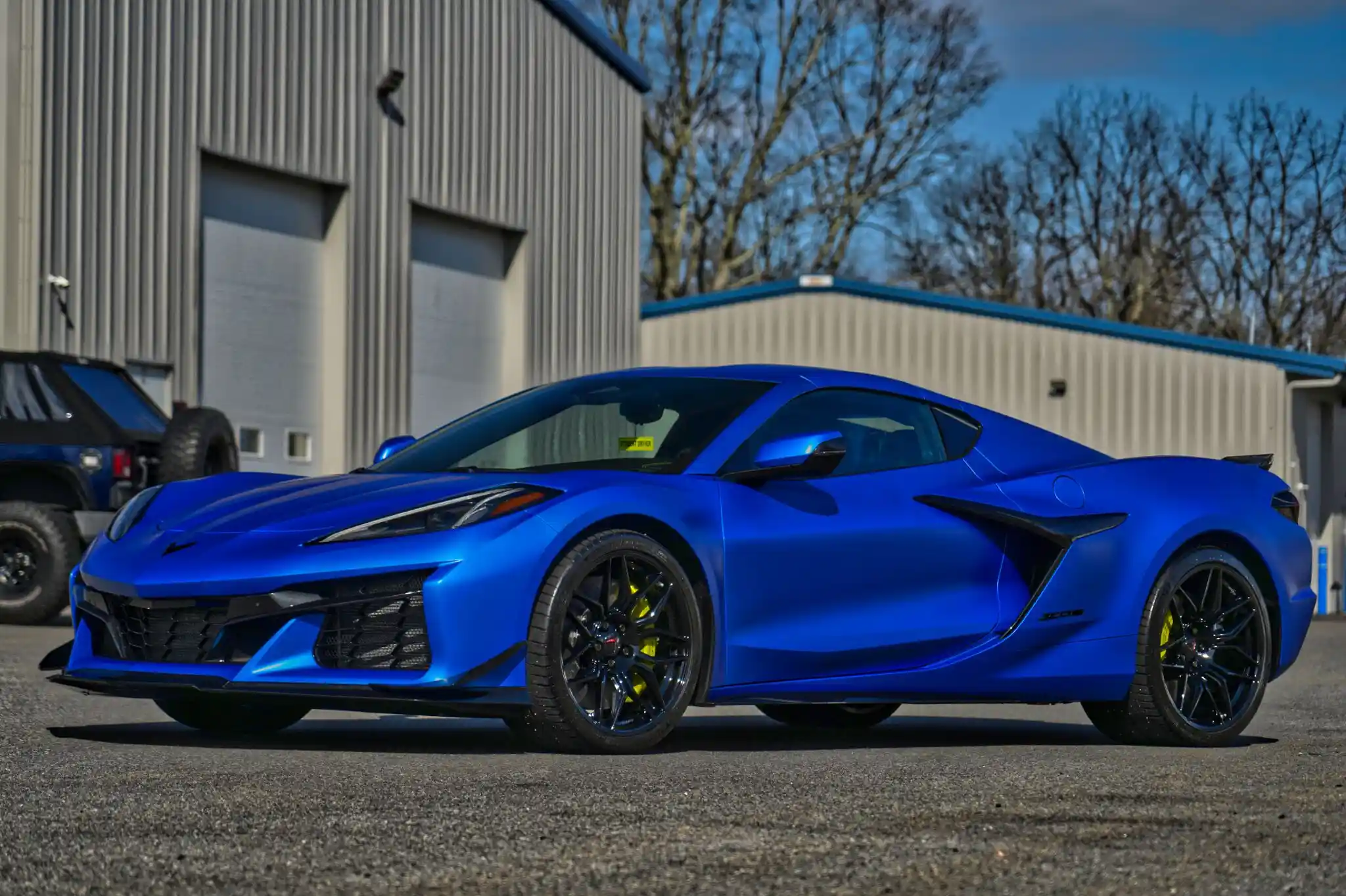
Preserve clarity with clean wash media, gentle soap and thorough drying. A film-safe final wipe can remove fingerprints or light residue; Ceramic Boost maintains the surface after it is clean.
If gloss film becomes rough, dull or difficult to wash, begin with inspection and cleaning rather than compound or a machine polish. PPF has its own topcoat. Treating it like a thick layer of paint can damage the surface.
Clean to preserve an even satin appearance. Avoid polishing, abrasive correction and gloss-enhancing waxes, which can create uneven shiny areas. Keep dirt off towels and remove spots gently instead of repeatedly rubbing one patch.
XPEL specifically includes Film Cleaner and Ceramic Boost in its STEALTH care instructions. Its recommendation for Ceramic Boost is to maintain the satin finish. Follow that film-specific guidance instead of substituting a product simply because it is marketed for added shine.
Wash and dry hydrophobic film regularly. A built-in water-repellent surface still collects salt, minerals, soap residue and road film. That layer of contamination can change how water beads or runs off, even though the protective film is still present.
Start with correct routine cleaning. If water behavior stays uneven or reduced after cleaning, request an inspection to identify the cause and appropriate maintenance. Beading alone is not a reliable diagnosis of product failure. Keep the separate annual manufacturer-warranty inspection on your calendar.
Care for both the film and the installed coating. Wash gently, dry completely and follow the coating’s maintenance and inspection requirements. Ceramic Boost may be part of that plan, but it is not a substitute for cleaning.
Film provides a physical protective layer; coating supports easier care and surface performance. A coating does not replace PPF. Before adding a coating over an existing film, confirm the installation plan and current product guidance. Read the ceramic-coating maintenance guide.
Adjust how often you clean to what the vehicle encounters. In Southeastern Massachusetts and Rhode Island, a consistent routine through salt, pollen and coastal exposure is more useful than an occasional aggressive detail.
Once the no-wash period has passed, rinse salt and brine regularly instead of allowing layers to build for weeks. Pay particular attention to bumpers, rockers, lower doors, rear quarters and wheel-splash areas. Use clean wash materials after rinsing away abrasive grit.
Choose conditions suitable for washing and drying. Do not chip ice from filmed paint or blast frozen buildup at seams. Pressure washing still requires full curing and the same three-foot distance and edge precautions.
Rinse pollen and construction dust before touching the surface. After highway drives, check the front end for bugs; also check horizontal panels for sap and bird droppings. Remove contamination promptly using the appropriate care method.
Work on cool panels in the shade. Warm weather can bake residue onto the surface and make wash water dry quickly, so dry as you work rather than leaving the vehicle to air-dry.
Inspect the front end, rockers and other exposed areas before winter. Look for lifted edges, impact damage and deposits that normal washing has not removed. Arrange care for persistent problems while they are easy to see.
If your six-month Ceramic Boost maintenance is due, apply it after cleaning and drying according to the instructions. Do not seal over contamination simply to get the vehicle ready for salt season.
Rinse away salt residue, sand and wind-driven grime after coastal exposure. Clean the lower body and splash zones as well as the panels easiest to reach. Avoid dry wiping sand from paint or film.
Outdoor parking and frequent coastal use may call for more washing between scheduled maintenance visits. Keep routine care consistent; extra layers of product do not replace removal of the contamination underneath.
Kickin’ Customs supports PPF owners from our Raynham shop, serving Southeastern Massachusetts and Rhode Island. Request an inspection if seasonal buildup will not clean off safely or you notice a change in the film.
Back to contentsHave damaged, lifting or persistently stained film inspected before trying to correct it. An assessment determines whether cleaning, maintenance, installation attention or panel replacement is appropriate.
Brush washes can drag grit across the surface and catch edges. Aggressive cleaners, abrasive pads, polishing compounds and repeated hard rubbing can mark the topcoat. Picking at a lifted edge can pull contamination underneath and make a localized concern worse.
Never use an ice scraper on filmed paint. A hood, bumper, mirror or rocker is not a glass surface. Do not peel, cut or trim film at home. Deep impacts, tears, road-paint contamination and body repairs can also require attention even when routine care has been good.
| What we find | Possible next step |
|---|---|
| Surface dirt or removable deposits | Appropriate cleaning or professional decontamination, with the process chosen for the film and finish. |
| Clean film needing routine surface maintenance | A suitable maintenance treatment after checking the surface, rather than applying more product over dirt. |
| An edge or installation concern | Inspect whether installation attention can correct it. Lifting is not automatically a replacement decision. |
| Torn, punctured, deeply gouged or irreversibly affected film | Replacement can often be limited to the affected panel. We review the surrounding film and paint history before recommending the work. |
XPEL manufacturer warranty, Kickin’ Customs workmanship coverage and No-Fault assistance are separate. Manufacturer coverage depends on the product’s written terms; our complimentary three-week inspection supports workmanship coverage.
No-Fault assistance: one-time help of up to $250 on qualifying original PPF installations of $495 or more, for the original customer. Insurance claims are excluded. Eligibility and the affected panel must be reviewed under the existing benefit terms.
Back to contentsKeep routine maintenance, the three-week shop visit and product-specific annual inspections separate. They serve different purposes. A maintenance spray does not fulfill an inspection requirement.
| When | Action | Type |
|---|---|---|
| First seven days | Follow Kickin’ Customs’ no-wash guidance. Remove surface residue gently; report lifted edges or exposed adhesive immediately. | Shop aftercare |
| Until fully cured | Avoid pressure washing. Curing usually takes approximately two to three weeks. | Shop aftercare |
| At three weeks | Return for the complimentary workmanship inspection. | Required for shop workmanship coverage |
| Regularly, after the no-wash period | Wash gently, dry and address contamination using suitable products. | Routine care |
| Every six months, where appropriate | Use Ceramic Boost as directed for the installed film or coating. | Recommended maintenance |
| Annually for ULTIMATE FUSION | Arrange the required inspection with an XPEL-certified FUSION installer. Follow the timing and recordkeeping requirements below. | Manufacturer warranty requirement |
| Whenever a concern appears | Contact the shop for advice or inspection. | As needed |
ULTIMATE FUSION: the annual inspection must be carried out by an XPEL-certified FUSION installer throughout the warranty period, within 30 days before or after the installation anniversary or previous inspection/service date. Retain proof of each inspection. Inspection, washing and decontamination charges may apply. XPEL states that missing the required inspection window voids its limited warranty. This annual requirement is separate from our complimentary three-week workmanship inspection.
Read the manufacturer’s ULTIMATE FUSION inspection terms
Back to contents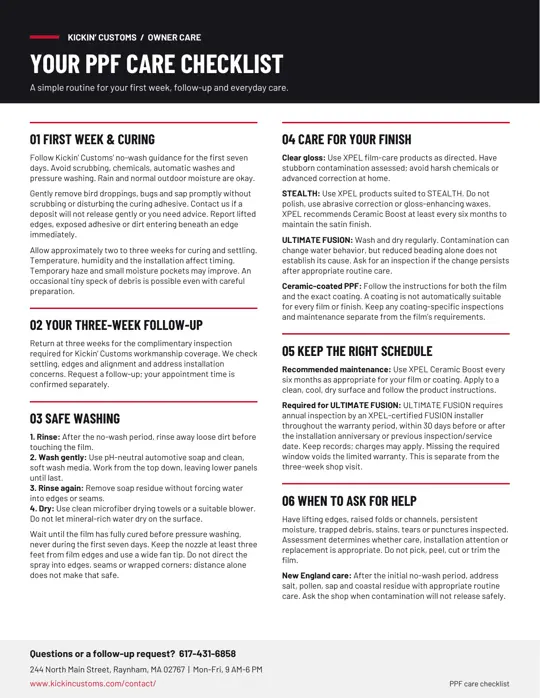
Download the one-page checklist without filling out a form. It is the short companion to this guide, covering the first week, safe washing, finish care and the separate three-week and annual inspection reminders.
Keep a copy with your vehicle records or wash supplies. Return to this guide when you need the fuller explanation or instructions for a specific concern.

Read the latest Google reviews from our customers.
Yes. Rain, dew and ordinary outdoor moisture are generally okay. Follow Kickin’ Customs’ seven-day no-wash guidance. The concern is washing pressure, friction and chemicals while the installation is settling, not normal rain.
Gently remove them as soon as possible using light pressure. Do not scrub, scrape or disturb the edges while the adhesive cures. Contact us if a deposit will not release gently or you need advice. Lifted edges, exposed adhesive or dirt entering beneath an edge need immediate attention.
Light haze, minor temporary texture and small moisture pockets or isolated bubbles may improve over approximately two to three weeks. An occasional tiny speck of debris is possible even with careful preparation. We assess its size, location and effect on the finish. Contact us immediately about lifted edges or exposed adhesive, and arrange inspection for persistent moisture, raised folds or clusters of debris.
It allows us to examine the settled film, edges, alignment and any installation concerns while early attention may help. This complimentary visit is required for Kickin’ Customs workmanship coverage and is separate from manufacturer inspection requirements.
After Kickin’ Customs’ first seven days without washing, begin gentle hand washing with clean materials. Rinse before touching the film, work from the top down and dry thoroughly. Continue to avoid pressure washing until the film is fully cured.
Gentle hand washing is preferred. Avoid brush-style washes, which can drag grit over the film and catch edges. Touchless washes still use pressure and chemicals, so they are not automatically safe. Do not use an automatic wash during the first seven days.
Wait until full curing, usually approximately two to three weeks, and never pressure wash during the first seven days. Keep the nozzle at least three feet from film edges, use a wide fan tip and never spray directly into edges, seams or wrapped corners.
Some waxes may be compatible, but heavy residue can collect along edges. Our preferred routine uses XPEL film-care products, including Ceramic Boost as directed, after proper cleaning. Do not apply gloss-enhancing wax to STEALTH or another satin finish.
Do not polish STEALTH or use abrasive correction or gloss-enhancing waxes. XPEL’s STEALTH care instructions specifically recommend Ceramic Boost at least every six months to maintain the satin finish. Follow those film-specific directions.
XPEL permits detailing clay for ULTIMATE PLUS and ULTIMATE FUSION, but lubrication and gentle technique matter. Clay can leave marks if used carelessly. If the film remains rough after washing, arrange professional assessment instead of repeatedly claying it. Do not assume the same process suits STEALTH.
No. Salt, minerals, road film and soap residue can change water behavior. Begin with correct cleaning. If the change persists, request an inspection to identify the cause and appropriate maintenance rather than diagnosing failure from beading alone.
No. Self-healing can reduce fine marks in the film’s topcoat with warmth. It does not repair tears, deep gouges, punctures, missing material, lifting edges or trapped contamination. Those conditions need assessment, not home heating or repair.
No. Have it inspected first. Cleaning, maintenance or installation attention may be appropriate. If the film cannot be restored, replacement can often be limited to the affected panel. Do not pick, peel, cut or trim it yourself.
Use it every six months as appropriate for your installed film or coating and follow its instructions. XPEL specifies at least six-monthly use for ULTIMATE PLUS, ULTIMATE FUSION and STEALTH. Clean and dry the surface first; extra product does not replace washing or required inspections.
Yes. XPEL requires an annual inspection by an XPEL-certified FUSION installer throughout the warranty period, within 30 days before or after the installation anniversary or previous inspection/service date. Keep records; charges may apply. Missing the required window voids the limited warranty. This is separate from our three-week visit.
No. Film provides a physical protective layer; coating supports easier care and surface performance. Coated PPF still needs gentle washing and drying. Follow both products’ maintenance and inspection requirements, including the instructions for the installed coating.
Request a three-week follow-up or annual FUSION inspection, ask a care question, or report a concern.
Kickin’ CustomsServing Southeastern Massachusetts and Rhode Island from our Raynham shop.
Contact the shopReview your details, complete your contact and consent choices, then submit your request. The shop confirms the appointment time separately.
You have unsaved changes. The review below still matches the request loaded in the contact form.
If the form does not load, open the contact form or contact the shop.