
Know the measured limit before you choose a shade

Massachusetts & Rhode Island
Window Tint Laws

Massachusetts and Rhode Island use different VLT rules, windshield limits, exemptions, and vehicle classifications.

The legal reading is based on
the glass and film together.

Kickin' Customs installs XPEL automotive window film in Raynham for drivers throughout Southeastern Massachusetts and Rhode Island. Before recommending film, we review registration state, vehicle type, glass location, factory reading, existing film, and approved exemption documentation.

Call 617-431-6858
Massachusetts35%minimum total VLT

Regulated side & rear glass

Rhode Island70%minimum total VLT

Standard passenger-vehicle glazing

Glass positionsGlass-position schematic. Not a shade preview.
MA & RI vehicle glass positionsFront of vehicle at left. 1 windshield, 2 front side windows, 3 side windows behind the driver, 4 rear window. Glass-position schematic. Not a shade preview. 1234 ← FRONT OF VEHICLE
  1. Windshield
  2. Front side
  3. Behind-driver side
  4. Rear glass

Windshield rules, vehicle classification, mirrors, and approved exemptions require separate review.

Serving vehicle owners since 2012
600+ five-star Google reviews
XPEL Certified Center
Tesla & Rivian network partner

The direct answer

What Is the Legal Window Tint Limit in Massachusetts and Rhode Island?

Massachusetts

Massachusetts generally requires regulated side and rear glass with aftermarket tint to maintain at least 35% total visible light transmission, or VLT. It also limits visible light reflectance to no more than 35%. Standard windshield material is limited to the uppermost six inches and may not enter the driver's direct forward viewing area.
Rhode Island

Rhode Island generally requires at least 70% total VLT on the windshield, side windows, and rear window of a passenger vehicle. Eligible trucks, buses, campers, multipurpose passenger vehicles, and other listed classes can use sunscreen material on windows behind the driver when two compliant outside mirrors provide a clear rear view.

Most important: The percentage printed on the film is not the final legal reading. The glass and film are measured together.

Two states. Different rules.

Massachusetts vs. Rhode Island Tint Rules at a Glance

Standard rules and important exceptions in MA and RI
QuestionMassachusettsRhode Island
Standard passenger-vehicle VLTAt least 35% total VLT on regulated side and rear glassAt least 70% total VLT on windshield, side windows, and rear window
WindshieldTransparent material limited to uppermost 6 inches and direct-view limitsAt least 70% total VLT, plus a transparent uppermost 6-inch strip exception
Rear glass on SUVs and trucksNo broad SUV or truck darkness exception stated in Section 9DEligible listed vehicles may use sunscreen material behind the driver with two compliant outside mirrors
Medical exemptionRMV waiver for eligible private passenger vehicles; windshield remains restricted below AS-1DMV exemption may allow darker windows; it does not apply to the windshield
Maximum statutory fineUp to $250; third or later conviction carries a license-suspension provision of up to 90 daysUp to $250 for the vehicle owner

This comparison is a starting point. Registration, vehicle classification, glass position, factory equipment, mirror configuration, measured VLT, and approved exemptions can change the answer.

Understand the meter

The Law Applies to the Glass-and-Film Combination

VLT is the percentage of visible light passing through the tested glass and film. Factory automotive glass already reduces visible light, so adding film produces a lower combined reading than the film's nominal percentage.

The formula is an estimate. Manufacturing tolerance, film batch, glass construction, coatings, meter calibration, curved glass, and test conditions can change the reading. A calibrated VLT meter on the vehicle is the practical compliance check.

A film labeled 35% will normally measure below 35% when installed on automotive glass. A light or near-clear film can also reduce a Rhode Island window below the state's 70% total threshold.

Explore the Window Tint Shade Guide →
Factory glass VLT × Film VLT75% × 50% ≈ 38%

Approximate combined VLT


Estimate only. The practical check is a calibrated meter on the actual vehicle.

Try the combination

Combined VLT estimator

Enter the factory glass and film percentages to see their approximate combined light transmission.

This is an educational estimate only. Actual vehicle measurement and the current applicable law control the decision.

Enter a number from 0 to 100 for each input.

Estimated Combined VLT≈ 38%

75% × 50% ≈ 38%

Educational Estimate Only

Massachusetts · Standard rule

Massachusetts Window Tint Law

Massachusetts General Laws Chapter 90, Section 9D prohibits window treatments that make regulated glazing nontransparent or obscure the view, then provides exceptions for compliant sunscreen material and listed vehicles.

Massachusetts passenger vehicleGlass-position schematic. Not a shade preview.
Massachusetts vehicle glass positionsFront of vehicle at left. 1 windshield, 2 front side windows, 3 side windows behind the driver, 4 rear window. Glass-position schematic. Not a shade preview. 1234 ← FRONT OF VEHICLE
  1. Windshield
  2. Front side
  3. Behind-driver side
  4. Rear glass

35% minimum total VLT on regulated side and rear glass.

35% maximum visible light reflectance. Reflectance and light transmission are different measurements.

Massachusetts does not inherit Rhode Island’s behind-driver vehicle-class exception.

Massachusetts glass-position rules
Glass PositionStandard Massachusetts RuleImportant Detail
WindshieldTransparent material only within uppermost 6 inchesCannot enter the driver's direct forward viewing area; RMV guidance also references the AS-1 line
Front side windowsAt least 35% total VLTGlass and film are measured together
Side windows behind front seatsAt least 35% total VLT under the standard film exceptionDo not assume an SUV or truck receives Rhode Island's broad rear-glass class exception
Rear windowAt least 35% total VLT under the standard film exceptionTwo outside mirrors must provide a clear view behind
Visible light reflectanceNo more than 35%Mirror-like appearance can create a separate issue

Section 9D also contains exceptions for qualifying factory glazing, certain law-enforcement and security vehicles, out-of-state registrations, specified public-livery rear glass, approved medical waivers, and certain rear-window treatments when mirror requirements are met.

Read Massachusetts General Laws, Chapter 90, Section 9D ↗

Massachusetts · Windshield

Can You Tint the Full Windshield in Massachusetts?

Not under the standard Massachusetts rule. Section 9D allows transparent material limited to the uppermost six inches, provided it does not enter the driver's direct forward viewing area. RMV guidance refers to the AS-1 line in this upper area.

The Massachusetts RMV states that a tinted-glass medical waiver permits additional tinting on front side, rear side, and rear windows only. It does not authorize windshield tint below the AS-1 line or uppermost six inches.

Quick answer: A light or near-clear full-windshield film is still not automatically legal in Massachusetts. Film darkness does not replace the glass-location rule.

Massachusetts · Medical waiver

How Does a Massachusetts Tinted-Glass Waiver Work?

The Massachusetts RMV may issue a tinted-glass waiver for an eligible private passenger vehicle when a physician certifies that the owner or insured operator is photophobic or photosensitive and needs additional tinting.

  • The vehicle must be a private passenger vehicle.
  • The diagnosed person must own the vehicle or be listed on the insurance policy as an operator.
  • The RMV requires the original application with physician certification. Photocopies and faxes are not accepted.
  • For waivers issued after January 16, 2025, the RMV states that the applicant receives a new registration with 'Vehicle with Tinted Glass Waiver' in the message field.
  • The waiver does not authorize tint below the windshield AS-1 line or uppermost six inches.

Massachusetts · Inspection & penalties

Massachusetts Inspection & Penalties

Can Noncompliant Tint Fail a Massachusetts Inspection?

Yes. Massachusetts requires registered vehicles to pass a yearly inspection, and licensed inspection stations are required to have a tint meter. Noncompliant aftermarket tint can result in an inspection rejection and may need to be removed or replaced before the vehicle passes.

Official MA vehicle inspection information ↗

What Is the Penalty for Illegal Tint in Massachusetts?

Massachusetts General Laws Chapter 90, Section 9D authorizes a fine of up to $250. On a third or subsequent conviction, Section 9D provides for license suspension for up to 90 days.

Official MA penalty provision ↗

An installation or meter reading at one point in time is not a permanent guarantee of every future inspection, roadside decision, meter, legal interpretation, or change in law.

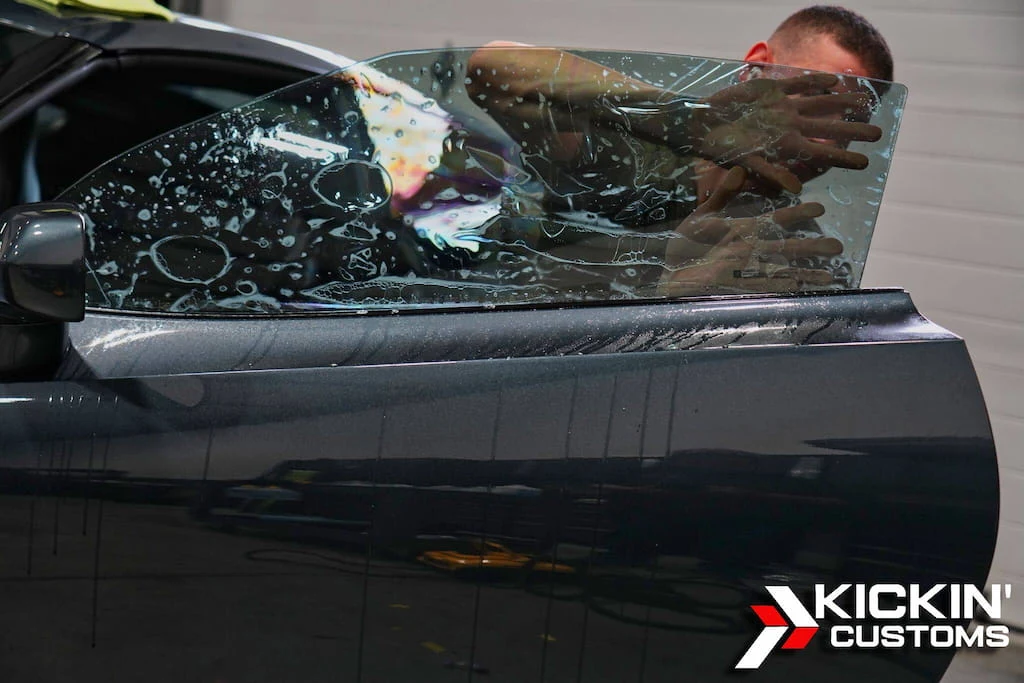
Kickin’ Customs technician applying window film to vehicle side glass in the shop
The vehicle comes firstKnow the glass.
Measure the combination.
Real window-film installation at Kickin’ Customs.

Rhode Island · Passenger vehicles

Rhode Island Window Tint Law for Passenger Vehicles

Rhode Island General Laws Chapter 31-23.3 generally prohibits aftermarket sunscreen material on regulated glazing unless an exception applies. The standard passenger-vehicle exception requires at least 70% total VLT measured through the glass and film together.

Rhode Island passenger vehicleGlass-position schematic. Not a shade preview.
Rhode Island vehicle glass positionsFront of vehicle at left. 1 windshield, 2 front side windows, 3 side windows behind the driver, 4 rear window. Glass-position schematic. Not a shade preview. 1234 ← FRONT OF VEHICLE
  1. Windshield
  2. Front side
  3. Behind-driver side
  4. Rear glass

70% minimum total VLT through passenger-vehicle windshield, side windows, and rear window.

The printed film percentage is not the final reading.

Glass and film are measured together.

Rhode Island standard passenger-vehicle rules
Glass PositionStandard Rhode Island Passenger-Vehicle RuleImportant Detail
WindshieldAt least 70% total VLTA separate transparent uppermost 6-inch strip exception also exists within direct-view limits
Front side windowsAt least 70% total VLTNear-clear film can still lower factory glass below the threshold
Rear side windowsAt least 70% total VLTPassenger cars do not receive the multipurpose-vehicle behind-the-driver exception
Rear windowAt least 70% total VLTTwo outside mirrors must provide a clear rear view when sunscreen material is used

The Rhode Island DMV warns that stock glass is often already close to 70% VLT. Adding almost any aftermarket film can reduce the combined reading below the minimum on a standard passenger vehicle.

Read official Rhode Island DMV Window Tint Laws ↗

Rhode Island · Behind the driver

Why Are Some Rhode Island Vehicles Treated Differently Behind the Driver?

Rhode Island provides a behind-the-driver exception for listed vehicle classes, including trucks, buses, trailers, mobile homes, campers, multipurpose passenger vehicles, charter buses, funeral-service vehicles, and limousines. The vehicle must have two outside mirrors meeting federal standards and adjusted to provide a clear rear view.

A multipurpose passenger vehicle is defined as a powered vehicle designed to carry ten people or fewer and constructed on a truck chassis or with special features for occasional off-road operation. Marketing language such as 'SUV' does not by itself resolve the statutory classification.

Start with the vehicle’s actual classification

An informational decision aid. This does not determine installation eligibility.

Passenger vehicle

Follow the standard passenger-vehicle rule.

70% total VLT

Windshield, side glass, and rear glass, subject to the specific exceptions.

Potential listed vehicle class

  1. Verify registration, construction, and statutory classification.
  2. Verify two compliant outside mirrors with a clear rear view.
  3. Staff review required. Review each glass position and the current source.
Potentially eligible listed vehicleVehicle class must be confirmed. Only glass behind the driver is highlighted.
Rhode Island vehicle glass positionsFront of vehicle at left. 1 windshield, 2 front side windows, 3 side windows behind the driver, 4 rear window. Vehicle class must be confirmed. Only glass behind the driver is highlighted. 1234 ← FRONT OF VEHICLE
  1. Windshield
  2. Front side
  3. Behind-driver side
  4. Rear glass
Potential Rhode Island listed-vehicle treatment
Glass PositionEligible Rhode Island Listed VehicleVerification Needed
WindshieldAt least 70% total VLT or qualifying uppermost 6-inch stripActual meter reading and windshield location
Front side windowsAt least 70% total VLTGlass and film combined
Windows behind driverBehind-the-driver sunscreen exception may applyRegistration and statutory vehicle class
Mirror requirementTwo compliant outside mirrors with clear rear viewBoth mirrors present, compliant, and adjusted

Important: Do not apply the exception to every crossover, hatchback, or vehicle commonly called an SUV without confirming its legal classification.

Review the official RI vehicle definitions & exceptions ↗

Rhode Island · Windshield

What Is Allowed on a Rhode Island Windshield?

Rhode Island's standard exception requires at least 70% total VLT through the windshield. The law separately permits transparent material limited to the uppermost six inches, provided it does not enter the driver's direct forward viewing area.

Because factory windshield glass is often already close to the threshold, a film marketed as 70% can produce a combined reading below 70%. A nominal film percentage is not proof of compliance.

Official RI windshield guidance ↗

Rhode Island · Medical exemption

How Does a Rhode Island Medical Tint Exemption Work?

A Rhode Island resident may apply when a Rhode Island-licensed physician or optometrist states that a physical condition makes darker vehicle windows medically necessary. The DMV reviews the application and may issue an exemption sticker for the driver's side window.

  • The original application must be submitted within 30 days of the medical professional's affidavit.
  • The application must be complete and notarized.
  • A leased vehicle requires a letter from the leasing company authorizing the tint.
  • The physician or optometrist must explain why ordinary sunglasses are not an adequate alternative and identify the medically necessary VLT.
  • The application identifies each specific vehicle requested for the exemption.
  • The Rhode Island DMV states that the medical exemption does not apply to the windshield.

Approval is not automatic. Do not assume an exemption is permanent, transferable, or valid for a vehicle that the DMV has not listed.

Rhode Island · Inspection & penalties

Rhode Island Inspection & Penalties

Can Noncompliant Tint Affect a Rhode Island Inspection or Road Test?

Yes. Rhode Island inspections follow the state's official motor-vehicle inspection manual, and a vehicle used for a driving skills test may have only the legal amount of tint described in Rhode Island General Laws Chapter 31-23.3.

A vehicle rejected at inspection is entitled to one free reinspection at the same station within the 30-calendar-day reinspection period. The inspection manual states that this period is not an extension of time to have the vehicle inspected or blanket permission to operate a noncompliant vehicle.

Official RI inspection manual (PDF) ↗

What Is the Penalty for Illegal Tint in Rhode Island?

Rhode Island General Laws Section 31-23.3-5 authorizes a fine of up to $250 for the owner of a vehicle with noncompliant material.

Official Rhode Island statutory penalties ↗

Registration & cross-border driving

Which State's Tint Law Applies When You Drive Across the Border?

Registration status matters, but cross-border operation should not be reduced to a one-line guarantee. Massachusetts Section 9D lists vehicles registered in another state, territory, country, or province as an exception. Rhode Island defines covered motor vehicles as vehicles registered or required to be registered there and separately exempts vehicles not required to be registered there.

Drivers remain responsible for registration, equipment, inspection, and operation. If cross-border use, commercial registration, an unusual vehicle class, or enforcement interpretation matters to the decision, confirm it with the appropriate agency or qualified legal counsel.

Where is the vehicle registered? Our intake asks about the vehicle’s registration, not just where its owner lives. A plate from another state does not guarantee immunity from every jurisdiction’s equipment or operation rules.

Federal & state context

Why Can a State Tint Rule Differ From a Factory-Glass Standard?

Federal Motor Vehicle Safety Standard No. 205 establishes glazing requirements for new vehicles and motor-vehicle equipment, including a 70% light-transmittance requirement in areas required for driving visibility. State laws separately regulate registered vehicles, owner modifications, inspection, and operation.

These legal layers are not interchangeable. A state VLT allowance does not automatically resolve every federal obligation that may apply to a manufacturer, distributor, dealer, or motor-vehicle repair business.

Official NHTSA interpretation: federal glazing & state operation rules ↗

A thoughtful review before film selection

What Information Is Needed Before a Compliance-Focused Tint Quote?

  1. Confirm registration

    Identify the state where the vehicle is registered or required to be registered.

  2. Confirm vehicle class

    Review registration and construction rather than relying only on sedan, SUV, truck, or crossover marketing language.

  3. Map the glass

    Separate windshield, front doors, windows behind the driver, fixed glass, rear window, and roof glass.

  4. Measure existing glass

    Check factory glass and existing film with a calibrated VLT meter when the threshold matters.

  5. Verify exemption documents

    Review the current state-issued waiver or sticker before treating a vehicle as exempt.

  6. Choose product and coverage

    Compare the exact XPEL product, nominal VLT, estimated combined result, visibility, and eligible location.

  7. Document the decision

    Record product, glass coverage, readings, warnings, waiver status, and customer authorization.

Kickin' Customs can explain official sources and measure the vehicle, but no shop can guarantee every future inspection, roadside meter, enforcement decision, legal interpretation, or change in law.

Request a Compliance-Focused Tint Quote

Realistic expectations

What Should Drivers Understand Before Choosing Legal Tint?

  • A nominal film percentage is not the combined meter reading after installation.
  • A shade that meets one state's standard may not meet the other state's standard.
  • Rhode Island passenger cars and eligible listed vehicles can have different behind-the-driver rules.
  • A vehicle marketed as an SUV can still require classification review.
  • A medical condition does not create an exemption until the state approves the application and issues documentation.
  • A Massachusetts waiver does not authorize windshield tint below the AS-1 line or uppermost six inches. A Rhode Island medical exemption does not apply to the windshield.
  • A legally lighter shade may provide less privacy than the driver wants.
  • Darker eligible rear glass can still reduce nighttime visibility.
  • Factory glass, film tolerance, meter calibration, and test conditions can create different readings near a threshold.
  • Existing film may need to be removed before the glass condition or reading can be confirmed.
  • Laws, forms, inspection rules, and agency guidance can change after installation.

Visit the Raynham shop

Window Tint Guidance and Installation in Raynham, Massachusetts

Kickin' Customs installs XPEL automotive window film at 244 North Main Street in Raynham for drivers throughout Southeastern Massachusetts and Rhode Island.

Our process can include registration and vehicle-class review, factory-glass measurement, physical film samples, documented coverage, and state-waiver verification when applicable. Final installation remains subject to our current compliance policy and the official rules in effect at the time of service.

See the glass. Feel the difference.

Compare physical shade samples and feel the difference on our heat display. A VLT meter helps us evaluate the actual glass.

  • XPEL Certified Center
  • Tesla & Rivian network partner
  • Computer-cut XPEL patterns with hand cutting when appropriate

Answers by state, glass & vehicle

Massachusetts and Rhode Island Window Tint Law FAQs

What is the legal tint limit in Massachusetts?

Massachusetts generally requires at least 35% total VLT on regulated side and rear glass and limits visible light reflectance to no more than 35%. Windshield material is limited to the uppermost six inches and direct-view limits.

Is 35% film automatically legal in Massachusetts?

No. The meter reads the glass and film together. Nominal 35% film will normally produce a combined reading below 35% on automotive glass.

Can Massachusetts SUVs and trucks use darker rear tint?

Massachusetts Section 9D does not contain Rhode Island's broad listed-vehicle behind-the-driver exception. Review the exact vehicle, registration, glass position, and applicable exception.

Can the full windshield be tinted in Massachusetts?

Not under the standard rule. Transparent material is limited to the uppermost six inches and cannot enter the driver's direct forward viewing area. The RMV waiver does not authorize tint below the AS-1 line.

How do I get a Massachusetts medical tint waiver?

An eligible private-passenger owner or insured operator who is medically certified as photophobic or photosensitive may submit the original physician-certified RMV application to Medical Affairs.

What is the legal tint limit for a Rhode Island passenger car?

Rhode Island generally requires at least 70% total VLT through the windshield, side windows, and rear window of a passenger vehicle.

Can 70% film be added to a Rhode Island passenger car?

A 70% film is not automatically compliant. Factory glass is often already close to 70%, so added film can reduce the combined reading below the minimum.

Can Rhode Island SUVs and trucks have darker rear windows?

Eligible listed vehicles may use sunscreen material on windows behind the driver when the statutory classification and two-mirror requirements are met.

Does every crossover count as a multipurpose passenger vehicle in Rhode Island?

No. Rhode Island defines the class by seating capacity and construction on a truck chassis or special features for occasional off-road use.

Can the full windshield be tinted in Rhode Island?

The standard rule requires at least 70% total VLT through the windshield. Because factory glass may be near that level, added film can make the combination noncompliant. A separate uppermost six-inch strip exception exists.

Does a Rhode Island medical exemption apply to the windshield?

No. The Rhode Island DMV states that medical exemptions do not apply to the windshield.

Can noncompliant tint fail a state inspection?

Yes. Aftermarket tint can be reviewed during inspection, and correction or removal may be required before the vehicle passes.

What are the penalties?

Massachusetts authorizes a fine up to $250 and license suspension of up to 90 days on a third or later conviction. Rhode Island authorizes a fine up to $250 for the vehicle owner.

Can Kickin' Customs guarantee every inspection result?

No. We can review official sources, inspect and measure the vehicle, document film and coverage, and verify waiver paperwork, but future meters, inspections, enforcement decisions, interpretations, and law changes cannot be guaranteed.

When was this page reviewed?

The official legal sources used for this page were reviewed on August 25, 2026. Confirm the current rule with the applicable state agency before relying on the page.

Official state & federal sources

Official Sources

Reviewed Through: August 25, 2026. Confirm current requirements directly with the applicable agency.

For the reinspection discussion, see the Rhode Island Official Manual for Vehicle Inspection, Sections 3.3.6 and 3.3.10.

Official RI inspection manual (PDF) ↗

Request a compliance-focused review

Choose Tint Based on the Meter, the Vehicle, and the Current Rule.

Send the year, make, model, registration state, vehicle classification if known, desired glass coverage, current tint information, and approved waiver status. Kickin' Customs will review the request, measure factory glass when needed, and explain available XPEL options and limitations before confirming a quote.

This is a compliance-focused consultation, not a guarantee of every future inspection or enforcement result. The official state source and current Kickin' Customs installation policy control the final recommendation.

Start with your vehicle

Contact information comes next in our existing Window Tint request form.

Please do not enter diagnoses, symptoms, health history, or physician records. Only approved-waiver status is needed here.

Your vehicle details will be included in the provider form’s Additional Notes. Review them before submitting.

Call the ShopCheck My State & Vehicle