
Let the Film Settle
Avoid pressure washing, automatic car washes, waxes, ceramic sprays, detail sprays and harsh cleaners during the first week.
Wrapped Right. Maintained Right.
Protect your wrap’s appearance with the right washing routine, finish-safe products, and regular checks around edges and seams.
A GOOD START FOR YOUR NEW WRAP
Do not wash your vehicle for seven days after installation. Normal rain and outdoor moisture are usually not the concern; active washing, pressure, chemicals and unnecessary rubbing can disturb newly installed film.
Avoid pressure washing, automatic car washes, waxes, ceramic sprays, detail sprays and harsh cleaners during the first week.
Do not pick at seams, inlays, overlays, lettering or corners. If you see something unusual, contact us rather than pushing, trimming or heating it.
For the first two to three weeks, continue to be gentle around bumpers, mirrors, handles, recesses and other fitted details. Follow the vehicle-specific instructions supplied at pickup.
Hand washing is preferred. Do not pressure wash during the first seven days. After the film has settled, any pressure washing must follow the selected film’s instructions: use a wide fan tip, keep a safe distance and never spray into edges, lettering, seams or recesses. Avoid automatic brush washes; touchless systems can still use harsh chemicals.
Use products confirmed safe for your exact finish. Avoid household cleaners, strong solvents, abrasive pads, stiff brushes and magic erasers. Vinyl should not receive conventional paint correction or aggressive machine polishing.
ONE ROUTINE DOES NOT SUIT EVERY SURFACE
Vinyl wrap changes a vehicle’s appearance through color, finish or printed graphics. Caring for the selected finish helps preserve that appearance.
Hand wash with mild, film-safe products. Only use a wax or sealant confirmed suitable for the selected film, and keep buildup away from edges. Do not compound or polish it like paint.
Preserve the intended low sheen with matte-safe products and gentle contact. Avoid gloss-enhancing waxes, glazes, polishing and aggressive rubbing that can create shiny patches.
Use mild soap, exceptionally clean soft towels and very light pressure. Chrome-style films can show marring, fingerprints and water spots readily. Avoid dry wiping, harsh chemicals and automatic washes.
Use pH-neutral soap and clean microfiber tools. Avoid dry wiping and aggressive chemicals. The correct care depends on both the effect and the film’s gloss, satin or matte surface.
Care for the protective laminate as well as the graphic edges. Keep lettering and printed joins clean, avoid pressure at edges, and inspect frequently used doors, handles and lower panels on working vehicles.
| What is on the film? | First action |
|---|---|
| Bird droppings & bug splatter | Soften with water and a film-safe cleaner, then lift gently with a clean microfiber towel. Remove promptly rather than grinding dried residue into the film. |
| Tree sap, tar & road paint | Do not scrape or use aggressive solvents. Try only a product confirmed compatible with the film and contact us if the contamination will not release safely. |
| Fuel spills | Remove promptly with a gentle, wrap-safe method, then clean and rinse the area. Do not let fuel sit near edges or printed graphics. |
| Salt, brine & road grime | Rinse and gently wash regularly after the initial no-wash period. Pay attention to lower doors, rockers, bumpers and rear panels. |
If contamination appears during the first week, contact us for guidance on that spot. Do not scrub it, scrape it or wash the entire vehicle early.
Winter salt, coastal residue, direct sun and outdoor parking all affect a wrap. After the first-week waiting period, regular gentle washing keeps salt and grime from accumulating around vulnerable details.
After the first seven days, rinse away loose salt and sand before touching the film. Wash off winter salt, brine and road grime regularly, especially around rockers, lower doors, rear panels and wrap edges.
Coastal salt residue and windblown sand add to cleaning needs. Never pressure wash frozen or lifting edges, and never use an ice scraper on wrapped panels. Let ice release naturally before gentle cleaning.
Hoods, roofs, trunk lids and spoilers receive more direct sun and contamination than vertical panels. Use sheltered parking when practical and inspect these areas for changes in color, gloss or flexibility.
Remove summer bug splatter, bird droppings and tree sap promptly using a film-safe method. During the first week, contact us for guidance before treating a contaminated spot.
Appearance life depends on the exact film, finish, exposure, storage and care. Plan professional removal before the film becomes badly weathered. Aging, repainted or weakened paint can be affected during removal; no wrap guarantees damage-free removal.
Vinyl wrap does not make a vehicle scratch-proof, prevent dents or repair damaged paint. It still needs regular care and eventual replacement.
Look for lifting, trapped dirt at an edge, cracking, staining or a change in the surface. Check mirrors, bumpers, handles, recesses, roof edges, lettering and high-wear areas during routine care.
| What you notice | What to do |
|---|---|
| Lifting or peeling | Stop washing that area and contact us promptly. Do not press, glue, trim, pull or heat the film. |
| A stubborn stain | Stop if gentle, compatible cleaning is not working. Keep the product name and photos ready for our review. |
| Shiny matte/satin areas | Avoid further rubbing or polishing. Let us inspect the finish before trying another product. |
| Cracking, fading or brittle film | Arrange an inspection to discuss age, exposure and whether a panel or the wrap should be removed or replaced. |
Contacting us early helps us assess the concern before repeated washing or trapped dirt makes it worse. You do not need to diagnose a warranty defect before asking for help.
| When | Care task |
|---|---|
| First 7 days | No washing; avoid chemicals and unnecessary contact. |
| First 2–3 weeks | Be gentle around fitted details and report anything unusual. |
| Every wash | Use clean soft tools, rinse fully, dry gently and check edges. |
| Every 2–3 months | Inspect seams, lower panels, lettering and high-exposure surfaces. |
| Before and after winter | Check for salt buildup, lifting, damage and uneven wear. |
| As needed | Remove contamination promptly and request an inspection when safe cleaning is not enough. |
Kickin’ Customs provides a 1-year workmanship warranty on vinyl wrap installation.
This workmanship warranty is designed to cover installation-related concerns. It does not cover damage caused by improper washing, pressure washing too close to edges, automatic brush car washes, harsh chemicals, road debris, accidents, neglect, sun exposure, fuel spills, tire shine sling, scraping, picking at edges, improper care, or improper removal.
Vinyl wrap is a cosmetic and branding film, so maintenance matters. If an issue appears, contact Kickin’ Customs early before it becomes worse. A small edge concern, seam issue, or lifting area is usually easier to inspect early than after it has collected dirt, water, salt, or repeated wash damage.
Do not try to fix a wrap issue yourself with a heat gun, razor blade, adhesive remover, pressure washer, or strong chemical. These methods can make the problem worse and may create damage that is not covered under workmanship warranty.
Proper care helps protect the appearance of the wrap and supports the quality of the installation.
Shop workmanship coverage is separate from any manufacturer material warranty, which depends on the selected film and its written terms.
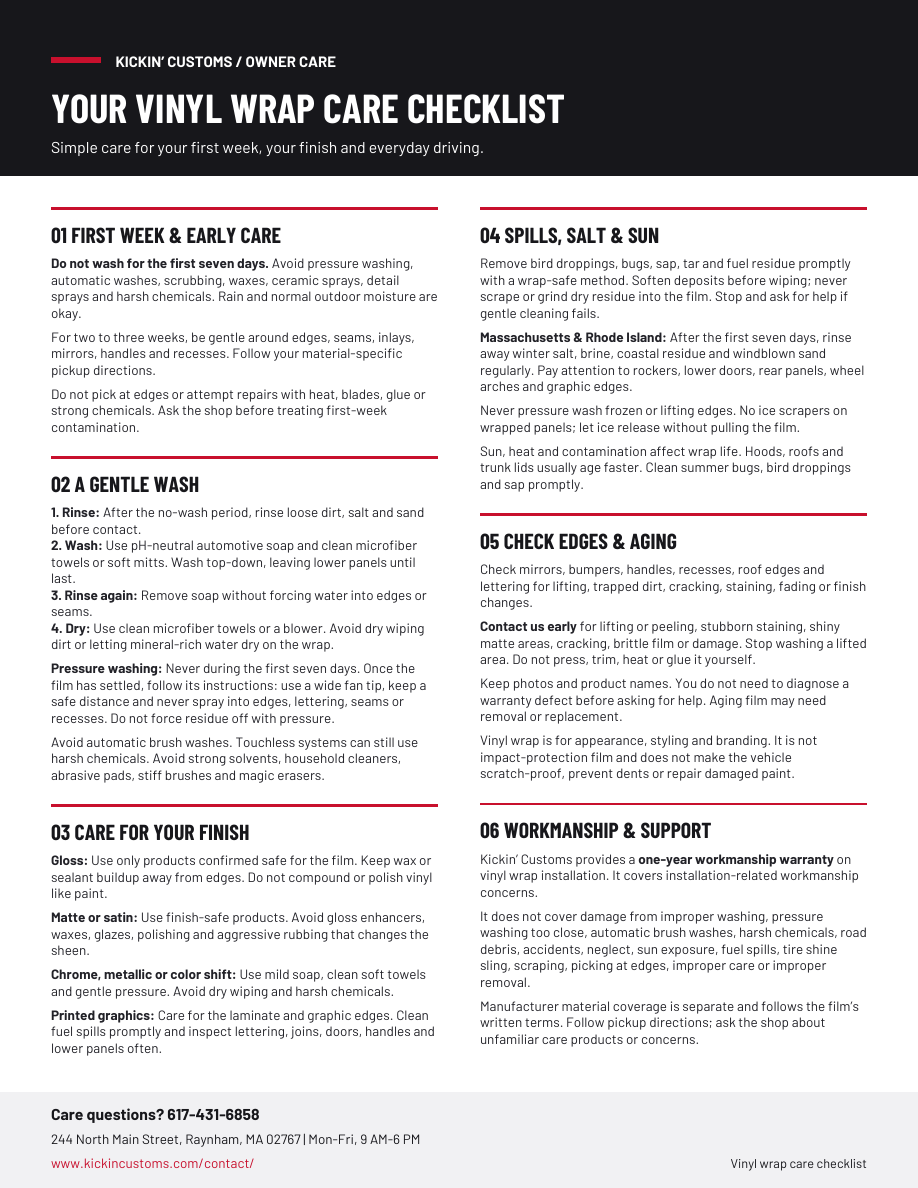
Want a simple reference guide for caring for your wrap?
Download our Vinyl Wrap Maintenance Checklist for quick reminders on washing, drying, pressure washing, matte and satin care, specialty films, commercial graphics, winter care, sun exposure, edge inspection, and when to contact Kickin’ Customs.
This checklist is designed to help you avoid common maintenance mistakes and keep your wrap looking its best.
You should wait 7 days before washing a wrapped vehicle after installation. During the first week, avoid washing, pressure washing, automatic car washes, harsh chemicals, waxes, detail sprays, ceramic sprays, and unnecessary wiping. The wrap adhesive is still settling, especially around edges, seams, inlays, overlays, bumpers, mirrors, and recessed areas.
Yes, vinyl wrap can get wet after installation. Rain and normal outdoor moisture are usually not the main concern. Washing, scrubbing, pressure washing, chemicals, and picking at edges are the bigger concerns during the early settle period.
Vinyl wrap can be pressure washed carefully after it has had time to settle, but pressure washing too close to the film can lift edges or damage the wrap. Use a wide fan tip, keep distance from edges, and avoid spraying directly into seams, lettering, overlays, inlays, bumpers, mirrors, handles, emblems, badges, sensors, recessed areas, and commercial graphic edges.
Automatic brush car washes should be avoided. Brushes can scratch, dull, lift, or catch wrap edges. They can also damage matte, satin, chrome, metallic, color-shift, and printed finishes. Touchless washes are safer than brush washes, but they may still use harsh chemicals. Hand washing is the best option.
Use a pH-neutral automotive soap and clean microfiber towels or soft wash mitts. Avoid harsh degreasers, strong solvents, abrasive cleaners, household cleaners, stiff brushes, magic erasers, and products that are not safe for vinyl film.
It depends on the wrap finish and the product. Some gloss vinyl wraps may tolerate certain wrap-safe waxes or sealants, but heavy wax buildup near edges should be avoided. Matte, satin, chrome, metallic, and color-shift wraps should not be treated with gloss-enhancing waxes unless the product is confirmed safe for that finish.
Vinyl wrap should not be polished like paint. Polishing and compounding can haze, thin, distort, or damage the film. Gloss wrap may be improved with certain wrap-safe products, but aggressive paint correction methods should not be used. Matte and satin wraps should not be polished at all because polishing can create shiny or uneven areas.
Matte and satin vinyl wrap should be cleaned with mild soap, clean microfiber towels, and matte-safe or wrap-safe products. Avoid waxes, glazes, polishes, compounds, gloss enhancers, heavy sealants, and aggressive rubbing. The goal is to clean the film without changing the finish.
Chrome vinyl wrap is more delicate than standard gloss vinyl. Use mild soap, clean microfiber towels, and gentle pressure. Avoid automatic car washes, abrasive towels, dry wiping, harsh chemicals, and pressure washing close to edges. Chrome wrap can show scratches, fingerprints, water spots, and marring more easily, so it requires careful ownership.
Metallic and color-shift vinyl wraps should be hand washed gently with pH-neutral soap and clean microfiber towels. Avoid dry wiping, automatic brush washes, harsh chemicals, and aggressive pressure washing. These finishes can show scratches, water spots, fingerprints, and uneven wear more easily than standard vinyl.
Wash commercial graphics regularly so the branding stays clean and readable. Remove fuel spills, road grime, salt, tar, bugs, and bird droppings quickly. Avoid pressure washing close to vinyl lettering, printed panel edges, seams, overlays, and logos. Fleet vehicles and work trucks should be inspected often because they usually see more mileage, washing, and abuse than personal vehicles.
Vinyl wrap is not designed to protect from rock chips like Paint Protection Film. It may provide a thin surface layer, but it does not have the thickness, impact absorption, or self-healing properties of quality PPF. If rock chip protection is the goal, Paint Protection Film is the correct product.
Vinyl wrap lifespan depends on the film, finish, vehicle condition, installation area, storage, sun exposure, driving conditions, and maintenance habits. A garage-kept vehicle with gentle hand washing may age very differently than a daily driven work truck parked outside year-round. Horizontal panels, specialty films, and neglected wraps usually age faster.
Horizontal panels receive more direct sun, heat, UV exposure, bird droppings, tree sap, standing water, and environmental contamination than vertical panels. Hoods, roofs, trunk lids, spoilers, and upper surfaces usually age faster than doors and side panels. This is normal wrap behavior and is not always an installation issue.
Yes, vinyl wrap can lift at edges if it is exposed to improper pressure washing, automatic brush washes, harsh chemicals, picking, impact, poor maintenance, or heavy contamination. Some complex areas like bumpers, mirrors, handles, spoilers, recessed areas, seams, inlays, and overlays are naturally more sensitive than flat panels.
Do not pick at it, trim it, heat it, pressure wash it, or try to glue it yourself. Contact Kickin’ Customs early so the area can be inspected. Small edge concerns are usually easier to evaluate before dirt, water, salt, or repeated washing make them worse.
Yes. Bird droppings, bug splatter, and tree sap can stain, discolor, etch, or damage vinyl wrap if ignored. They should be removed as soon as possible using a wrap-safe cleaner and clean microfiber towel. Do not grind dry residue into the film, scrape sap, or use strong solvents unless they are confirmed safe for vinyl.
Winter salt, brine, sand, and road grime can shorten wrap life if they are allowed to sit on the film for long periods. Regular rinsing and gentle washing are important during Massachusetts and Rhode Island winters, especially on lower panels, bumpers, rockers, rear doors, tailgates, and commercial graphics.
Yes, fuel spills can stain, discolor, or weaken vinyl wrap, especially around fuel doors and commercial graphics. Fuel should be wiped and cleaned carefully as soon as possible using a wrap-safe method.
Do not use an ice scraper on wrapped paint surfaces. Ice scrapers are meant for glass, not vinyl-wrapped panels. Scraping a wrapped hood, roof, mirror, bumper, spoiler, or trunk can scratch, gouge, or lift the film.
Kickin’ Customs provides a 1-year workmanship warranty on vinyl wrap installation. This covers installation-related workmanship concerns. It does not cover damage from improper washing, pressure washing too close, automatic brush washes, harsh chemicals, road debris, accidents, neglect, sun exposure, fuel spills, scraping, picking at edges, improper care, or improper removal.
Contact Kickin’ Customs if your wrap is lifting, staining, cracking, peeling, fading unevenly, becoming difficult to clean, or showing damage around edges, seams, inlays, overlays, lettering, bumpers, mirrors, handles, or commercial graphics. The earlier a concern is inspected, the better.
Ask a care question or tell us what you noticed and where. If relevant, include an approximate installation date and have photos ready. You do not need to know the film brand or decide whether it is a warranty defect.
244 North Main Street
Raynham, MA
Monday–Friday, 9 AM–6 PM
If your request details do not appear in the contact form below, copy them and paste them into its message field.
Form not loading? Open the contact form in a new tab, or call 617-431-6858.
FROM THE BLOG

Gentle washing, drying and contamination removal for life after installation.
Read the article
How exposure, storage and care affect your wrap as it ages.
Read the article
What film age, paint condition and professional removal mean for your vehicle.
Read the articleBrowse all vinyl wrap articles
For other installed products, visit our Care & Warranty hub.
CUSTOMER EXPERIENCES
Read current feedback on our work, communication, and customer experience.
COME SEE US IN RAYNHAM
Kickin’ Customs LLC · 244 North Main Street, Raynham, MA