
Real answers. Real experience.
Automotive Window Tint FAQs
113 answers · 11 topics
If you are considering window tint for your vehicle, this guide breaks down what tint actually does, how different films perform, what shade options mean, how long it lasts, what to expect after installation, and whether ceramic tint is worth the upgrade.
Every answer is based on real-world installation experience, not sales hype, so you can make the right decision for your vehicle, your comfort, and your expectations.
Real Answers. Real Protection.
Real Answers About Window Tint, Heat Rejection, Privacy, Film Options, and Long-Term Performance
Showing all 113 questions
No matching answers
Try a shorter phrase, a different word, or browse all topics.
What Window Tint Actually Is and How It Works
What Is Automotive Window Tint?
Automotive window tint is a thin film installed on the inside surface of your vehicle’s glass. Its main purpose is to improve comfort, reduce glare, add privacy, protect the interior, and enhance the vehicle’s overall appearance.
Many people think window tint is only about making the glass darker, but modern window film can do much more than that. Depending on the film type, tint can block UV rays, reject infrared heat, reduce eye strain, and make the cabin feel more comfortable during daily driving.
The key is choosing the right film for the goal. A basic film may mainly change the appearance of the glass, while a premium ceramic film can provide stronger heat rejection and long-term performance without needing to be extremely dark.
Link to this answerHow Does Window Tint Actually Work?
Window tint works by filtering different parts of sunlight before they enter the vehicle. Sunlight includes visible light, ultraviolet rays, and infrared heat. A quality film is designed to control some or all of these depending on how it is made.
Visible light affects how dark the tint looks. UV rays contribute to interior fading and sun exposure. Infrared heat is a major part of the heat you feel through the glass. Better films are designed to manage these separately, which is why two films that look equally dark can perform very differently.
This is one of the biggest misunderstandings with tint. Darkness and heat rejection are not the same thing. A high-quality ceramic film in a lighter shade can often reject more heat than a darker, lower-quality film.
Link to this answerIs Window Tint Just a Cosmetic Upgrade?
No. Window tint can improve the look of a vehicle, but it is not only cosmetic. Quality window film can also reduce heat, block UV rays, cut glare, improve privacy, and help protect the interior from long-term sun exposure.
Appearance is still an important reason people choose tint. A properly tinted vehicle often looks cleaner, more finished, and more balanced, especially when the front windows are matched to factory rear privacy glass.
The best tint jobs combine appearance and function. The vehicle should look better, feel better to drive, and hold up over time without bubbling, peeling, fading, or turning purple.
Link to this answerWhat Does VLT Mean in Window Tint?
VLT stands for Visible Light Transmission. It refers to the percentage of visible light that passes through the glass and film. The lower the VLT percentage, the darker the tint appears.
For example, a 70% film is very light and often used when someone wants heat rejection without a dark appearance. A 35% film is a lighter, more moderate shade. A 20% film gives a darker factory-style privacy look. A 5% film is very dark and often referred to as limo tint.
VLT matters because it affects appearance, privacy, glare reduction, nighttime visibility, and legal compliance. Choosing the right percentage is not just about what looks good in daylight. It should also make sense for how and where you drive.
Link to this answerDoes Darker Tint Always Mean Better Heat Rejection?
No. Darker tint does not always mean better heat rejection. This is one of the most important things to understand before choosing a film.
Darkness mainly controls visible light. Heat rejection depends more on the film’s technology. A basic dark film may reduce brightness and improve privacy, but it may not reject much infrared heat. A premium ceramic film can reject a high amount of heat even in a lighter shade.
If your main goal is privacy, shade matters. If your main goal is comfort and heat reduction, film quality matters more. The best choice depends on whether you care most about appearance, privacy, comfort, or a combination of all three.
Link to this answerWhat Is the Difference Between Factory Privacy Glass and Window Tint?
Factory privacy glass is glass that has been darkened during manufacturing, usually on the rear windows of trucks and SUVs. It provides privacy and a darker appearance, but it usually does not provide the same heat rejection as a true ceramic window film.
This is why many vehicles with dark rear glass still feel hot inside. The rear glass may look tinted, but it may not be doing much to block infrared heat. Adding ceramic film over factory privacy glass can improve comfort, UV protection, and heat rejection without necessarily changing the appearance dramatically.
For many trucks and SUVs, a common approach is matching the front windows to the rear for appearance, then adding a lighter ceramic film over the rear factory glass for performance.
Link to this answerIs Ceramic Tint Different from Regular Tint?
Yes. Ceramic tint is different from regular tint because it is designed for better heat rejection, clarity, durability, and long-term color stability. Instead of relying mainly on dye or metal, ceramic films use advanced ceramic technology to block heat without interfering with electronics.
Regular dyed films can improve appearance and reduce some glare, but they usually do not perform as well against infrared heat. Lower-quality films are also more likely to fade, discolor, bubble, or turn purple over time.
Ceramic tint is typically the better choice for customers who care about comfort, long-term performance, and a cleaner installation that holds up. It costs more than basic tint, but the difference is usually noticeable during daily driving.
Link to this answerCan Window Tint Be Clear and Still Work?
Yes. Window tint does not have to be dark to work. Clear or nearly clear ceramic films can still provide strong UV protection and heat rejection while keeping the glass close to its factory appearance.
This is especially useful for windshields, panoramic roofs, luxury vehicles, family vehicles, and customers who want comfort without a dark look. A 70% ceramic film, for example, may be barely noticeable visually but can still make a meaningful difference in cabin comfort.
Clear ceramic tint is a good option when heat and UV protection matter more than privacy.
Link to this answerWhere Is Window Tint Installed on the Vehicle?
Automotive window tint is installed on the inside surface of the glass. This protects the film from exterior weather, road debris, car washes, and normal outside wear.
The most common tint areas are the front side windows, rear side windows, rear windshield, front windshield, sunroofs, and panoramic glass roofs. Not every customer tints every piece of glass. The right setup depends on the vehicle, legal limits, comfort goals, and desired appearance.
Because the film is installed inside the glass, exterior washing does not affect the tint after installation. The main care concerns involve rolling windows down too soon, cleaning the inside glass too early, or using the wrong cleaners after the film has been installed.
Link to this answerIs Professional Window Tint Better Than DIY Tint?
Yes. Professional window tint is almost always better than DIY tint because the final result depends heavily on preparation, pattern accuracy, shrinking technique, cleanliness, and installation experience.
A professional installation should have clean edges, proper alignment, minimal contamination, good visibility, and long-term adhesion. DIY tint often struggles with dust, creases, fingers, peeling edges, uneven cuts, and poor fitment around complex glass shapes.
The film itself is only part of the result. Installation quality is what determines whether the tint looks clean, performs properly, and lasts. This is especially important on newer vehicles, luxury vehicles, frameless glass, rear windows with defrosters, and large curved back glass.
Link to this answerWhat Window Tint Helps With, And What It Does Not
What Are the Main Benefits of Automotive Window Tint?
Automotive window tint improves comfort, appearance, privacy, glare reduction, UV protection, and interior preservation. For many customers, it is one of the most noticeable upgrades they can make because it affects the vehicle every time they drive.
A quality tint can reduce harsh sunlight, make the cabin feel more comfortable, and help protect materials like leather, plastic, vinyl, screens, and trim from long-term sun exposure. It can also give the vehicle a cleaner, more finished appearance.
The biggest benefit depends on the customer. Some people care most about heat rejection. Others want privacy, glare reduction, or a better look. The right film and shade should be chosen based on what matters most to the driver.
Link to this answerDoes Window Tint Keep a Vehicle Cooler?
Yes, window tint can help keep a vehicle cooler by reducing the amount of solar energy entering through the glass. Ceramic tint is especially effective because it is designed to reject infrared heat, which is the heat you feel from the sun.
That said, tint does not stop all heat. If a vehicle sits in direct sunlight for hours, the cabin will still get hot. The difference is that a quality film can reduce heat buildup, make the sunlight feel less intense, and help the air conditioning cool the vehicle more efficiently once you start driving.
This is why ceramic tint is popular for daily drivers, vehicles with black interiors, trucks, SUVs, Teslas, luxury vehicles, and vehicles with large glass areas.
Link to this answerDoes Window Tint Block UV Rays?
Yes, high-quality automotive window tint can block up to 99% of harmful UV rays. This helps protect passengers from sun exposure and helps slow the fading, drying, and cracking of interior materials.
UV protection is one of the most important benefits of tint, even when the film is not very dark. Many ceramic films provide strong UV protection in lighter shades, which is helpful for customers who want protection without making the glass look heavily tinted.
For vehicles that are kept long-term, parked outside, or used for family driving, UV protection is a major reason to consider window tint beyond appearance alone.
Link to this answerDoes Window Tint Protect the Interior from Fading?
Yes, window tint helps protect the interior from fading by reducing UV exposure and solar heat through the glass. Over time, sunlight can fade seats, dry out leather, discolor trim, damage dashboards, and age interior surfaces faster.
Tint does not stop aging completely, but it slows down one of the biggest causes of interior wear. This is especially valuable on higher-end vehicles, vehicles with dark interiors, leather seats, delicate trim, or large windshields and panoramic glass.
If you care about keeping the inside of the vehicle looking newer for longer, window tint is one of the most practical upgrades available.
Link to this answerDoes Window Tint Reduce Glare?
Yes, window tint reduces glare from sunlight, headlights, reflections, snow, water, and bright road conditions. This can make driving more comfortable and reduce eye strain, especially during sunrise, sunset, and highway driving.
Darker films typically reduce more visible glare, but the best choice is not always the darkest option. A quality ceramic film can improve comfort while still keeping visibility reasonable.
If glare is the main concern, the goal is to choose a shade that makes daytime driving more comfortable without creating problems at night.
Link to this answerDoes Window Tint Add Privacy?
Yes, window tint can add privacy by making it harder to see into the vehicle. Darker shades provide more privacy, especially during the day when the outside light is brighter than the inside of the vehicle.
Privacy is not absolute. At night, if the interior lights are on or someone is standing close to the glass, they may still be able to see inside. The amount of privacy also depends on the tint shade, glass angle, factory glass, and lighting conditions.
Tint improves privacy, but it should not be viewed as a guarantee that no one can see into the vehicle.
Link to this answerDoes Window Tint Make a Vehicle Safer?
Window tint can provide some safety benefits, but it should not be confused with dedicated security film. Standard automotive tint can help hold broken glass together to some degree if the glass is shattered, which may reduce loose shards during a break-in or accident.
Tint can also make it harder to see valuables inside the vehicle, which may help reduce attention from potential theft. However, regular window tint is not designed to make the glass impact-resistant or prevent someone from breaking in.
If the goal is true glass reinforcement, that is a different type of product than standard automotive window tint.
Link to this answerDoes Window Tint Make a Vehicle Theft-Proof?
No. Window tint does not make a vehicle theft-proof. It can make it harder to see inside, which may reduce temptation, but it does not prevent glass from being broken or stop someone from entering the vehicle.
This is an important distinction. Tint is a privacy and comfort upgrade with some added visual deterrent value. It is not a replacement for alarms, GPS tracking, IGLA, or other vehicle security systems.
For customers concerned about theft, tint can be part of a larger protection plan, but it should not be treated as the only layer of security.
Link to this answerDoes Window Tint Eliminate All Heat?
No. Window tint reduces heat, but it does not eliminate it. Heat can still enter through the roof, windshield, body panels, air gaps, and untreated glass. A vehicle parked in direct sun will still get hot over time.
The value of window tint is that it reduces the intensity of heat coming through the glass. It can make the cabin more comfortable while driving, reduce the burning feeling from direct sunlight, and help the AC system recover faster.
The right expectation is heat reduction, not complete heat elimination.
Link to this answerWhat Does Window Tint Not Do?
Window tint does not make your vehicle completely private, completely cool, shatterproof, theft-proof, or immune to sun damage forever. It is a performance and comfort upgrade, not a magic shield.
It also does not fix poor glass condition, existing scratches, damaged defroster lines, or old failing tint underneath. If old film is bubbling, peeling, or contaminated, it usually needs to be removed before new film is installed.
When expectations are realistic, window tint is one of the most valuable upgrades for comfort, appearance, and protection. The key is choosing the right film, the right shade, and a professional installation.
Link to this answerAppearance & Real-World Expectations
Will Window Tint Change the Look of My Vehicle?
Yes, window tint will change the appearance of your vehicle, but how much depends on the shade and film selected. A darker film can give the vehicle a cleaner, more aggressive, more private look. A lighter ceramic film can improve comfort and UV protection while keeping the vehicle close to its factory appearance.
For many vehicles, tint helps the glass blend better with black trim, factory privacy glass, rooflines, and body styling. This is why even a subtle film can make the vehicle look more complete.
The right look depends on the customer. Some people want a dark, private appearance. Others want a tasteful factory-style finish. Others want heat rejection with very little visual change. Window tint can be tailored around each of those goals.
Link to this answerHow Dark Should I Tint My Windows?
The right tint shade depends on your goals, your vehicle, your driving habits, and local tint laws. If privacy and appearance are the priority, a darker shade may make sense. If nighttime visibility or legal compliance is more important, a lighter shade may be the better choice.
Many customers choose a front window shade that matches the rear factory privacy glass on trucks and SUVs. Others choose a lighter ceramic film because they want heat rejection without making the vehicle too dark.
The best answer is not always “go darker.” The best answer is choosing a shade you can comfortably live with during the day, at night, in bad weather, and during normal daily driving.
Link to this answerWill Window Tint Make It Harder to See at Night?
It can if the film is too dark for the driver or the vehicle. This is why shade selection matters. A tint that looks great in direct sunlight may feel too dark when backing up at night, driving in the rain, or using side mirrors on poorly lit roads.
Lighter films usually provide better nighttime visibility, while darker films provide more privacy and glare reduction during the day. Ceramic film helps because it can provide heat rejection without requiring an extremely dark shade.
If night driving is a concern, it is usually smarter to choose a moderate shade rather than the darkest option available.
Link to this answerCan Window Tint Look Factory?
Yes, window tint can look very close to factory when the right shade and film tone are selected. This is especially common on trucks and SUVs where the rear windows already have factory privacy glass and the customer wants the front windows to match.
Factory-style does not always mean the entire vehicle will be one exact shade. Factory privacy glass is built into the glass itself, while window tint is a film added to the inside surface. The color tone and reflectivity can vary slightly, but a professional installer can usually get the appearance very close.
For customers who want a clean OEM-style look, shade matching is one of the most common and practical tint options.
Link to this answerCan Window Tint Be Installed Over Factory Privacy Glass?
Yes, window tint can be installed over factory privacy glass. This is common on trucks, SUVs, vans, and family vehicles. Factory privacy glass gives the rear windows a darker look, but it usually does not provide the same heat rejection as a quality ceramic film.
Adding ceramic tint over factory privacy glass can improve heat rejection, UV protection, and cabin comfort. It can also make the rear glass darker if the customer wants more privacy.
The important part is choosing the right shade. Since factory glass is already dark, adding film over it will make the final result darker than the film percentage alone would suggest.
Link to this answerWhy Do My Windows Look Hazy or Cloudy After Tint?
A hazy, cloudy, or slightly distorted look after installation is normal during the curing process. Window tint is installed with a slip solution that allows the film to be positioned properly. Some moisture remains between the film and glass after installation and needs time to evaporate.
During this period, you may see small water pockets, haze, streaking, or a slightly milky appearance. This does not automatically mean there is a problem. As the film cures, the appearance becomes clearer.
Cure time depends on weather, temperature, humidity, sun exposure, film type, and the vehicle itself. Warm sunny weather usually speeds up curing, while colder or damp conditions can slow it down.
Link to this answerAre Small Bubbles Normal After Window Tint Installation?
Small moisture bubbles or pockets can be normal during the curing period. These are usually temporary and should dry out as the film bonds to the glass.
Dirt, debris, large bubbles, creases, fingers, or peeling edges are different. Those are not normal curing characteristics and may indicate an installation issue.
A few small moisture areas during curing are expected. Heavy contamination, clusters of dirt, large trapped debris, or obvious installation flaws are not the same thing.
Link to this answerWill There Be Dust or Contamination Under the Film?
A professional tint installation should be very clean, but no real-world installation environment is perfect. A tiny speck here or there can happen because tint is installed in the real world, not in a sealed laboratory.
That said, clusters of dirt, excessive dust, fibers, bug debris, sand, or obvious contamination are not acceptable. Proper cleaning, controlled installation conditions, and experienced installers make a major difference.
The goal is a clean, professional result that looks right during normal use. A quality shop should care about the details and be willing to address legitimate installation concerns.
Link to this answerWill the Tint Edges Be Visible?
On most roll-up side windows, the film is installed close to the edge of the glass so the finished result looks clean when the window is closed. On certain vehicles, dot matrix, defroster lines, ceramic borders, tight seals, or glass design can affect how the edge looks.
Rear windows, quarter windows, and windshields may have factory dot matrix or textured borders that do not allow film to lay perfectly flat in every area. This is a glass design issue, not always an installation defect.
A quality installer will make the film look as clean and consistent as possible, but some glass designs have limitations that should be understood before installation.
Link to this answerWhat Separates a Good Tint Install from a Bad One?
A good tint install should have clean edges, proper alignment, minimal contamination, smooth film, strong clarity, and no major creases, gaps, fingers, or peeling. It should look like it belongs on the vehicle.
A bad install often shows obvious dirt, uneven cuts, poor edge fitment, large gaps, contamination clusters, distorted film, peeling corners, or film that does not sit properly on the glass.
The difference comes down to preparation, cutting accuracy, shrinking technique, cleanliness, installation environment, and experience. The film brand matters, but the installer is what determines how clean the finished job looks.
Link to this answerTypes Of Automotive Window Film
What Types of Window Tint Are Available?
There are several types of automotive window tint, and they are not all built for the same purpose. The most common categories are dyed film, metalized film, carbon or color-stable film, ceramic film, and premium nano-ceramic film.
Entry-level films mainly improve appearance and reduce some glare. Higher-end films are designed to improve comfort by rejecting more heat while maintaining better clarity and long-term color stability.
The right film depends on what you want the tint to do. If the goal is mostly appearance, a color-stable option may be enough. If the goal is heat rejection and long-term performance, ceramic tint is usually the better choice.
Link to this answerWhat Is Dyed Window Tint?
Dyed window tint is a basic film that uses dye to darken the glass. It can improve appearance, add privacy, and reduce some visible glare, but it usually does not provide the same heat rejection or durability as higher-end films.
Lower-quality dyed films are more likely to fade, turn purple, bubble, or discolor over time. This is why cheap tint jobs often look fine at first but age poorly after years of sun exposure.
Dyed film can make sense for budget-focused installs, but it is not the best option for customers who care about heat rejection, long-term clarity, or maximum comfort.
Link to this answerWhat Is Color-Stable Window Tint?
Color-stable window tint is a higher-quality film designed to maintain a clean, consistent appearance over time. It is typically a better option than cheap dyed film because it resists fading and discoloration more effectively.
This type of film is a good choice for customers who want improved appearance, privacy, and UV protection without stepping all the way up to ceramic tint. It offers a clean look and better long-term color stability than basic films.
However, color-stable tint does not provide the same level of heat rejection as ceramic films. If heat reduction is the main priority, ceramic is usually worth the upgrade.
Link to this answerWhat Is Ceramic Window Tint?
Ceramic window tint is a high-performance film designed to reject heat, block UV rays, reduce glare, and maintain excellent clarity without using metal. It uses ceramic technology to target infrared heat, which is a major part of the heat you feel through the glass.
The biggest advantage of ceramic tint is that it can improve comfort without needing to be extremely dark. A lighter ceramic film can often outperform a darker basic film when it comes to heat rejection.
Ceramic tint is one of the most popular choices for modern vehicles because it offers a strong balance of appearance, comfort, durability, and signal-friendly performance.
Link to this answerWhat Is Nano-Ceramic Window Tint?
Nano-ceramic window tint is an advanced type of ceramic film that uses extremely small ceramic particles to improve heat rejection, clarity, and performance. It is designed for customers who want maximum comfort without sacrificing visibility or signal strength.
The main benefit of nano-ceramic film is that it can reject a high amount of infrared heat, even in lighter shades. This makes it ideal for windshields, panoramic roofs, luxury vehicles, electric vehicles, and daily drivers where comfort matters.
Nano-ceramic tint is typically a premium option, but it makes sense for customers who want the best performance available.
Link to this answerWhat Is the Difference Between Ceramic Tint and Regular Tint?
The difference is performance. Regular tint may darken the glass and reduce some glare, but ceramic tint is designed to reject more heat, provide better clarity, resist fading, and last longer.
A basic film mostly changes how the glass looks. A ceramic film changes how the vehicle feels. This is especially noticeable in direct sun, during summer driving, or in vehicles with black interiors and large glass areas.
If price is the only concern, regular tint may seem appealing. If comfort, durability, and long-term value matter, ceramic tint is usually the better investment.
Link to this answerDoes Ceramic Tint Interfere with Phones, GPS, Bluetooth, or Toll Transponders?
No, quality ceramic tint should not interfere with phones, GPS, Bluetooth, satellite radio, key fobs, or toll transponders. Ceramic films are non-metallic, which makes them a better fit for modern vehicles with electronics and connected systems.
Older metalized films could sometimes interfere with signals because they used metallic materials in the film construction. That is one reason many modern shops prefer ceramic and other non-metal films.
For today’s vehicles, signal-friendly film matters. Most customers do not want better heat rejection at the expense of GPS accuracy, phone reception, or electronic convenience.
Link to this answerIs Ceramic Tint Worth the Extra Cost?
For most customers who care about comfort, yes. Ceramic tint costs more than basic film because it performs better, lasts longer, and rejects more heat without needing to be extremely dark.
The value is most noticeable if you drive often, park outside, have a dark interior, carry children or pets, own a truck or SUV with large glass areas, or simply want the vehicle to feel better in the sun.
If appearance is the only goal, a less expensive film may be enough. If heat rejection and long-term performance matter, ceramic tint is usually the smarter choice.
Link to this answerWhat Is the Best Window Tint Film?
The best window tint film depends on your priorities. For maximum heat rejection, premium ceramic or nano-ceramic film is usually the best choice. For a strong balance of appearance and value, a color-stable film may be enough. For budget-only installs, basic dyed film exists, but it comes with more compromises.
At Kickin’ Customs, the recommendation is based on how the vehicle is used, how long the customer plans to keep it, how much heat reduction they want, and what appearance they prefer.
There is no single best film for every person. There is a best film for your vehicle, your budget, and your expectations.
Link to this answerWhy Do Some Window Tint Films Turn Purple?
Window tint usually turns purple when low-quality dye breaks down from UV exposure over time. As the dye fades and degrades, the film loses its original color and begins to look purple, cloudy, or uneven.
Modern premium films are designed to resist this type of discoloration. Color-stable and ceramic films are much better choices for customers who want the tint to maintain a clean, neutral appearance long term.
Purple tint is not just an appearance issue. It is usually a sign that the film is aging, failing, or made from lower-quality materials.
Link to this answerWindow Tint Shade Strategy
What Is the Best Window Tint Percentage?
The best window tint percentage depends on your goals, your vehicle, and how you drive. There is no single percentage that is perfect for everyone.
A lighter film is usually better for visibility, legal compliance, and subtle heat rejection. A darker film is better for privacy, glare reduction, and a more noticeable appearance change. Ceramic film gives you more flexibility because it can reject heat without needing to be extremely dark.
For most customers, the best tint percentage is the one that balances comfort, appearance, privacy, and safe visibility in real-world driving conditions.
Link to this answerWhat Does 70% Window Tint Look Like?
A 70% window tint is very light and usually looks close to clear. It allows most visible light to pass through, so it does not dramatically darken the glass.
This shade is commonly used on windshields, panoramic roofs, sunroofs, and vehicles where the customer wants heat rejection and UV protection without a dark appearance. With ceramic film, 70% can still provide meaningful comfort even though it is visually subtle.
This is a great option for customers who want performance without changing the look of the vehicle.
Link to this answerWhat Does 50% Window Tint Look Like?
A 50% window tint is a light shade that slightly darkens the glass while still keeping visibility very comfortable. It gives the vehicle a mild tinted appearance without looking heavily modified.
This shade can be a good choice for customers who want glare reduction and some added comfort while keeping the vehicle subtle. It may also be useful for front side windows depending on local laws and customer preference.
With ceramic film, 50% can be a strong comfort upgrade while still feeling easy to live with day and night.
Link to this answerWhat Does 35% Window Tint Look Like?
A 35% window tint is a popular moderate shade. It gives the vehicle a noticeably tinted look without being extremely dark.
Many customers choose 35% when they want a clean, factory-style appearance, better glare reduction, and improved privacy while maintaining good visibility. It is often a practical choice for people who drive at night or do not want the vehicle to feel too dark inside.
For customers who want a balanced tint, 35% is often one of the safest choices.
Link to this answerWhat Does 20% Window Tint Look Like?
A 20% window tint is darker and provides a stronger privacy look. It is commonly used when customers want the front windows on a truck or SUV to better match the rear factory privacy glass.
This shade gives the vehicle a more finished and private appearance, but it can affect nighttime visibility more than lighter options. Some drivers are completely comfortable with it, while others may prefer something lighter.
For many customers, 20% is the point where the vehicle starts to look noticeably more private and more aggressive.
Link to this answerWhat Does 5% Window Tint Look Like?
A 5% window tint is very dark and is often called limo tint. It allows very little visible light through the glass and provides the highest level of privacy during the day.
The tradeoff is visibility. A 5% film can make it harder to see at night, especially when backing up, checking mirrors, or driving in poorly lit areas. It may also create legal or inspection issues depending on where the vehicle is registered and how it is used.
This shade is best suited for customers who fully understand the visibility and legal tradeoffs before choosing it.
Link to this answerShould I Match My Front Windows to the Rear Factory Glass?
Matching the front windows to the rear factory glass is one of the most common tint requests for trucks, SUVs, and family vehicles. It gives the vehicle a cleaner, more uniform appearance because the front and rear glass no longer look mismatched.
The exact match can vary because factory privacy glass is tinted glass, while window tint is film added to the inside surface. A professional installer can usually get the shade close enough that the vehicle looks balanced and factory-style.
This is a great option for customers who mainly want appearance consistency, but it is also a good opportunity to upgrade the front glass to ceramic film for better comfort.
Link to this answerShould I Tint Over Factory Privacy Glass?
Tinting over factory privacy glass can be a smart choice if you want better heat rejection, UV protection, or additional privacy. Factory rear glass may look dark, but it usually does not perform like ceramic window film.
Adding ceramic tint over factory glass can make the rear of the vehicle more comfortable, especially for kids, pets, passengers, cargo, or long drives. It can also help make the rear glass darker if privacy is a goal.
The main thing to understand is that adding film over already-dark glass makes the final result darker. That should be considered before choosing the shade.
Link to this answerShould I Tint My Windshield?
A light ceramic windshield tint can be one of the best comfort upgrades on a vehicle because the windshield is usually the largest piece of glass and allows a lot of heat into the cabin.
Most customers who tint a windshield choose a very light film, such as 70%, to reduce heat and UV exposure without making the windshield look dark. This can make a major difference in comfort while keeping visibility clean.
Windshield tint must be chosen carefully because legal restrictions vary and visibility is critical. The goal is comfort and protection, not making the windshield dark.
Link to this answerShould I Get a Windshield Visor Strip?
A windshield visor strip can help reduce glare from low sun during morning and evening driving. It is installed across the upper portion of the windshield and is often chosen by customers who deal with harsh glare during commutes.
The benefit of a visor strip is targeted glare reduction without tinting the entire windshield. It can be especially helpful for trucks, vans, work vehicles, and vehicles with upright windshields.
A visor strip will change the appearance of the windshield, so the height and shade should be chosen carefully to keep it functional and clean-looking.
Link to this answerHow Do I Choose the Right Tint Shade?
Start by deciding what matters most. If privacy is the main goal, you may want a darker shade. If heat rejection is the main goal, film type is more important than darkness. If legal compliance and night visibility are priorities, a lighter shade may be the smarter choice.
The vehicle also matters. A small coupe, full-size SUV, black interior sedan, work truck, and family minivan may all benefit from different shade choices.
The best approach is to choose a shade that fits your actual driving habits, not just how the vehicle looks in a photo. A good installer should help you balance appearance, comfort, privacy, legality, and visibility.
Link to this answerWindow Tint Pricing, Value & Why Shops Cost Different Amounts
How Much Does Window Tint Cost?
The cost of window tint depends on the vehicle, the film selected, the number of windows being tinted, and whether old film needs to be removed first. A two-front-window match will cost less than a full vehicle. A sedan, truck, SUV, coupe, Tesla, or panoramic roof vehicle may all require different amounts of time and material.
Film type also affects price. A basic film is less expensive, while ceramic and premium ceramic films cost more because they offer better heat rejection, clarity, durability, and long-term performance.
The best way to price window tint accurately is to look at the exact vehicle, the desired coverage, and the customer’s goals. A quality quote should explain what film is being used, what windows are included, and what level of performance the customer is getting.
Link to this answerWhy Does Ceramic Tint Cost More Than Regular Tint?
Ceramic tint costs more because it performs better. It is designed to reject more infrared heat, maintain better clarity, resist fading, and last longer than basic dyed films.
The added cost is not just for a darker piece of film. It is for better comfort, better durability, better long-term appearance, and better performance in real driving conditions.
For customers who only care about appearance, a lower-cost film may be enough. For customers who want serious heat rejection and long-term value, ceramic tint is usually worth the upgrade.
Link to this answerWhy Are Some Tint Shops So Much Cheaper?
Some tint shops are cheaper because they use lower-cost film, spend less time on preparation, work in less controlled environments, or focus on speed instead of installation quality. That does not always mean the job will fail immediately, but it often increases the risk of problems later.
Cheap tint may look acceptable at first, but over time it can fade, bubble, peel, scratch, discolor, or turn purple. Poor installation can also lead to dirt under the film, uneven cuts, large gaps, fingers, creases, or peeling edges.
Window tint is one of those services where the finished result depends heavily on both the product and the installer. Saving money upfront does not help much if the film needs to be removed and replaced later.
Link to this answerIs Cheap Window Tint Worth It?
Cheap window tint may be worth it only if the customer understands the tradeoffs. It can improve appearance and add privacy, but it usually will not offer the same heat rejection, clarity, color stability, or lifespan as higher-quality film.
The problem is that cheap tint often becomes more expensive later. If it bubbles, fades, turns purple, or has to be removed, the customer pays for the original install, the removal, and the replacement.
For most customers, a quality film installed properly is the better long-term decision. It looks better, performs better, lasts longer, and avoids the frustration of having to redo the job.
Link to this answerWhat Factors Affect the Price of Window Tint?
Several factors affect the price of window tint. The biggest ones are the vehicle size, number of windows, film type, glass complexity, and whether old tint needs to be removed.
Some vehicles are more difficult because of large rear windows, tight seals, frameless glass, dot matrix borders, steep glass angles, panoramic roofs, or electronics near the glass. These details can increase installation time.
Pricing should reflect the amount of labor, skill, material, and preparation required. A simple two-front-window match is very different from a full ceramic tint package with windshield and panoramic roof coverage.
Link to this answerDoes Old Tint Removal Cost Extra?
Yes, old tint removal usually costs extra because it adds time, labor, and risk to the job. Old film can come off cleanly, but it can also separate, leave adhesive behind, or require additional cleaning before new film can be installed.
Rear window removal is especially important because of defroster lines. Even with careful professional removal, there is always some risk when old film is bonded to glass with defrosters.
New tint should usually not be installed over failing old tint. Removing the old film first gives the new installation the best chance of looking clean and lasting properly.
Link to this answerCan You Tint Over Existing Tint to Save Money?
In most cases, tinting over existing film is not recommended. If the old tint is faded, scratched, bubbling, peeling, contaminated, or poorly installed, the new film will only sit on top of those problems.
Layering film can also affect clarity, appearance, visibility, and final darkness. It may create a result that looks uneven or becomes too dark for comfortable driving.
The better approach is to remove the old tint, properly clean the glass, and install the new film directly to the glass. That gives the best long-term result.
Link to this answerIs Window Tint Worth the Money?
For most customers, yes. Window tint is one of the most practical upgrades because it improves the vehicle every time it is driven. It can make the cabin more comfortable, reduce glare, improve privacy, protect the interior, and enhance the appearance.
The value is even stronger with ceramic tint because heat rejection is something customers feel daily. It is not just an appearance upgrade. It changes the driving experience, especially in hot weather or direct sun.
Window tint is worth the money when the film quality and installation quality match the customer’s expectations. A clean, durable install has much more long-term value than the cheapest possible option.
Link to this answerShould I Pay More for a Better Tint Film?
Yes, if heat rejection, longevity, clarity, and long-term appearance matter to you. Better films are usually more stable, more comfortable, and less likely to fade or fail over time.
A premium film is especially worthwhile on vehicles you plan to keep, vehicles with large glass areas, black interiors, family vehicles, luxury vehicles, electric vehicles, and daily drivers that spend a lot of time in the sun.
If you only want a basic darker look for a short-term vehicle, a lower-tier option may be enough. If you want the tint to perform and last, it usually makes sense to invest in a better film.
Link to this answerWhat Am I Actually Paying For with Professional Window Tint?
You are paying for the film, but also for the installation process. A quality tint job requires proper glass preparation, accurate patterns, controlled installation, clean shrinking, careful handling, and experience with different vehicle glass designs.
The finished result should have clean edges, strong clarity, minimal contamination, proper alignment, and long-term adhesion. Those details come from installer skill, not just the film roll.
Professional window tint is not just about making the windows dark. It is about choosing the right film, installing it correctly, and making sure the result looks clean and performs the way it should.
Link to this answerWindow Tint Installation Process
How Is Window Tint Installed?
Window tint is installed on the inside surface of the glass. The process starts with cleaning and preparing the glass, cutting or plotting the film to the correct shape, heat-shrinking the film when needed, applying installation solution, positioning the film, and squeegeeing out moisture so the film can bond properly.
A quality installation requires patience and control. The installer has to manage dust, alignment, edges, seals, glass curves, and moisture while keeping the film clean and smooth.
When done properly, the tint should look like it belongs on the vehicle. It should have clean edges, good clarity, proper fitment, and no major creases, fingers, or contamination.
Link to this answerWhat Happens Before Window Tint Is Installed?
Before tint is installed, the glass needs to be cleaned thoroughly. Any dust, dirt, adhesive residue, oils, stickers, or contamination left on the glass can affect the final result.
This preparation step is one of the most important parts of the job. Tint is transparent, so anything trapped between the glass and film can be visible after installation. A professional installer takes the time to clean the glass, inspect the condition, and prepare the work area before applying film.
If old tint is present, it usually needs to be removed first. The glass then has to be cleaned again to remove leftover adhesive before new film can be installed properly.
Link to this answerDo You Use Computer-Cut Tint Patterns?
Yes. Professional shops often use computer-cut tint patterns for better accuracy and consistency. A plotter cuts the film to fit the specific vehicle’s glass, which reduces the need for cutting directly on the vehicle.
This is especially important on modern vehicles where trim, rubber seals, electronics, defroster lines, and delicate surfaces are close to the glass. A computer-cut pattern helps create a cleaner install while reducing risk.
Some final hand trimming or adjustment may still be needed depending on the vehicle, but plotter-cut patterns give the installation a strong foundation.
Link to this answerIs Plotter-Cut Tint Better Than Hand-Cut Tint?
In most cases, plotter-cut tint is better because it allows for consistent, vehicle-specific patterns with clean edges and less risk around the vehicle. It also helps avoid unnecessary blade use near glass, trim, seals, or other sensitive areas.
Hand-cut tint depends heavily on the installer and can still be done well by someone experienced. The concern is that poor hand cutting can lead to uneven edges, gaps, inconsistent fitment, or unnecessary risk to the vehicle.
The best approach is often a combination of accurate computer-cut patterns and skilled installer adjustment when needed. The machine helps with consistency, but the installer still determines the final quality.
Link to this answerWhy Does Window Tint Need to Be Heat Shrunk?
Many vehicle windows are curved, especially rear windshields and some side glass. Since tint film starts as a flat sheet, it often needs to be heat shrunk to match the shape of the glass.
Heat shrinking allows the film to conform properly without fingers, bunching, creases, or distortion. This step takes skill because too much heat, uneven shrinking, or poor technique can damage the film or create a poor fit.
Rear windows are usually the most obvious example. A clean one-piece rear window installation requires proper shrinking technique so the film lays smoothly across the glass.
Link to this answerHow Long Does Window Tint Installation Take?
Installation time depends on the vehicle, the number of windows, film type, glass complexity, and whether old tint needs to be removed. Two front windows may take much less time than a full vehicle with windshield and panoramic roof coverage.
Most standard full-vehicle tint installations can often be completed the same day, but the exact timing depends on the job. More complex vehicles, old film removal, large glass, tight seals, or specialty applications may require more time.
A quality shop should not rush the process just to move cars through faster. Clean prep, careful installation, and proper inspection are worth the time.
Link to this answerCan I Drive My Vehicle Right After Tint Installation?
Yes, you can drive your vehicle after the tint is installed. The film is installed on the inside of the glass, so normal driving does not prevent it from curing.
The main restriction is that you should not roll down the windows until the film has had enough time to bond. Rolling the windows down too soon can shift the film, damage the edges, or cause peeling.
The exact wait time can vary based on weather, temperature, film type, and vehicle design, but customers are usually given aftercare instructions before leaving.
Link to this answerWhy Can’t I Roll My Windows Down After Tint?
You should not roll your windows down right after tint because the film needs time to bond to the glass. During the early curing period, the film is still settling and moisture is still evaporating.
Rolling the window down too soon can catch the film edge against the seal and cause it to lift, crease, or peel. Even if the tint looks dry from the outside, the adhesive may not be fully set yet.
Keep movable windows closed for 3–5 days in normal conditions, or 5–7 days during below-freezing temperatures or colder winter conditions.
Link to this answerWhat Is Normal After Window Tint Installation?
After installation, it is normal to see some haze, small moisture pockets, light streaking, or a slightly cloudy appearance while the film cures. This happens because window tint is installed with solution, and some moisture remains between the film and glass temporarily.
As the film dries, the moisture evaporates and the tint becomes clearer. Warm sunny weather usually speeds this up, while cold or damp weather can slow it down.
Normal curing should not be confused with dirt, large debris, hard creases, peeling edges, or heavy contamination. Those are different concerns and should be inspected if they remain visible.
Link to this answerWhat Can Go Wrong During a Poor Tint Installation?
Poor tint installation can lead to dirt under the film, uneven edges, large gaps, fingers, creases, peeling corners, poor visibility, and premature failure. Many of these issues come from poor preparation, rushing, low-quality film, or lack of experience.
The most common problems are usually not caused by the tint itself. They come from how the film was handled, cut, shrunk, positioned, and finished.
A clean tint job takes the right environment, the right tools, and the right installer. The difference between a cheap tint job and a professional tint job is often most visible around the edges, corners, rear glass, and long-term durability.
Link to this answerDurability, Longevity & Failure Points
How Long Does Window Tint Last?
The lifespan of window tint depends on the film quality, installation quality, climate, sun exposure, and how the vehicle is maintained. A premium ceramic film can last many years when installed and cared for properly, while lower-quality films may show signs of failure much sooner.
The biggest difference is usually seen over time. Cheap tint may look acceptable when it is first installed, but it is more likely to fade, discolor, bubble, scratch, or peel as it ages.
If long-term appearance and performance matter, choosing a better film and a better installer is usually the smarter investment.
Link to this answerDoes Window Tint Fade Over Time?
Low-quality window tint can fade over time, especially when exposed to strong sunlight every day. As the film breaks down, it may become lighter, uneven, cloudy, or discolored.
Premium films are designed to resist fading and maintain a cleaner appearance for much longer. Ceramic and color-stable films are much better choices for customers who want the tint to look consistent over time.
Fading is one of the main reasons cheap tint often costs more in the long run. Once the film fades, the only real fix is removal and replacement.
Link to this answerWhy Does Window Tint Turn Purple?
Window tint usually turns purple when lower-quality dyes break down from UV exposure. As the dye fades and degrades, the film loses its original color and starts to look purple, faded, or uneven.
This is most common with cheap dyed films or older tint technology. Modern premium films are designed to resist color change and maintain a more neutral appearance.
Purple tint is not normal for a quality film. It is usually a sign that the film has aged poorly or was made from lower-quality materials.
Link to this answerWhy Does Window Tint Bubble?
Window tint can bubble for a few different reasons. Early after installation, small moisture pockets can be normal while the film cures. Those should dry out over time.
True bubbling is different. Bubbles that appear later are usually caused by adhesive failure, poor installation, contamination, low-quality film, or age. Once the adhesive starts failing, the film can separate from the glass and create bubbles that do not go away.
Permanent bubbling is not something that can usually be fixed in place. In most cases, the old film needs to be removed and replaced.
Link to this answerWhy Does Window Tint Peel?
Window tint can peel when the edges do not bond properly, the film was installed poorly, the glass was not cleaned well, the film was disturbed too soon after installation, or the adhesive fails over time.
Peeling often starts at the edges of roll-up windows, corners, dot matrix areas, or spots where the film is repeatedly contacted. Rolling windows down too soon after installation can also cause edge lifting.
A quality install should have properly finished edges and strong adhesion. If peeling happens early, it should be inspected to determine whether it is related to curing, care, installation, or material failure.
Link to this answerCan Window Tint Scratch?
Yes, window tint can scratch because it is installed on the inside surface of the glass where it can be contacted by seat belts, jewelry, tools, cargo, pets, children, cleaning products, or abrasive towels.
Quality films have scratch-resistant coatings, but they are not scratch-proof. Sharp objects, dirty towels, rough cleaning pads, and careless contact can still damage the surface.
The best way to prevent scratches is to clean the film with soft microfiber towels, avoid abrasive products, and be careful around the inside of the windows.
Link to this answerCan Window Tint Crack or Delaminate?
Window tint can crack, separate, or delaminate if it is low-quality, aged, exposed to harsh conditions, or failing from adhesive breakdown. Delamination happens when layers of the film begin to separate from each other.
This is more common with old or cheap film. It may show up as bubbling, haziness, distortion, cloudy patches, or film that looks like it is separating internally.
Premium films are designed to resist these issues, but no film lasts forever. If a film reaches the end of its useful life, removal and replacement is usually the best solution.
Link to this answerWhat Are the Most Common Window Tint Failures?
The most common window tint failures are bubbling, peeling, fading, discoloration, scratching, adhesive failure, contamination, edge lifting, and poor clarity.
Some failures are caused by low-quality film. Others are caused by poor installation or improper care. For example, purple tint is usually a material quality issue, while dirt under the film is usually an installation issue.
A good shop should be able to explain what caused the problem and whether it is covered by warranty, related to damage, or simply the result of old film reaching the end of its life.
Link to this answerIs Window Tint Permanent?
No. Window tint is not permanent. It is designed to last for years, but it can be removed and replaced when needed.
Removal should be done carefully, especially on rear windows with defroster lines. Old adhesive, brittle film, and defroster grids can make removal more time-consuming and risky.
The fact that tint is removable is helpful because it allows customers to change shades, upgrade film quality, replace damaged film, or correct a previous poor installation.
Link to this answerWhat Is the Biggest Factor in How Long Window Tint Lasts?
The biggest factors are film quality, installation quality, and care. Even a premium film can fail early if the glass is not prepared properly or the installation is rushed. A lower-quality film can also fail even if it was installed cleanly.
Daily sun exposure, parking conditions, climate, cleaning habits, and how the vehicle is used all play a role. Vehicles that sit outside constantly may put more stress on the film than garage-kept vehicles.
The best long-term result comes from using a quality film, installing it properly, allowing it to cure correctly, and maintaining it with tint-safe cleaning products.
Link to this answerWindow Tint Maintenance & Care
How Do I Care for Window Tint After Installation?
After window tint is installed, the most important thing is to let the film cure properly. The adhesive needs time to bond to the glass, and the moisture used during installation needs time to evaporate.
During this period, avoid rolling the windows down, cleaning the inside of the glass, or touching the film edges. The tint may look slightly hazy, cloudy, or have small moisture pockets at first. That is normal and usually improves as the film dries.
Following the aftercare instructions is one of the easiest ways to protect the installation and avoid edge lifting or other preventable issues.
Link to this answerHow Long Should I Wait Before Rolling My Windows Down?
Keep movable windows closed for 3–5 days in normal conditions, or 5–7 days during below-freezing temperatures or colder winter conditions.
Rolling the windows down too soon can catch the film edge against the window seal and cause peeling, shifting, or damage before the adhesive has fully bonded.
Even if the tint looks dry from the outside, moisture can still be trapped between the film and glass. Waiting is a simple step that helps the film cure correctly.
Link to this answerCan I Wash My Car After Getting Window Tint?
Yes, you can wash the outside of the vehicle after window tint is installed because the film is installed on the inside surface of the glass. Exterior washing will not directly affect the tint.
The main thing to avoid is cleaning the inside of the windows too soon. The film needs time to cure before the interior glass is wiped, sprayed, or touched.
If the vehicle needs an exterior wash, that is usually fine. Just avoid aggressive interior cleaning, window movement, or anything that could disturb the film while it is still settling.
Link to this answerWhen Can I Clean the Inside of My Tinted Windows?
Wait 7 days before cleaning the film-facing inside glass. If haze or moisture remains, allow more drying time before cleaning; cold or damp conditions can extend drying time.
Cleaning too early can interfere with the edges or leave marks while the film is still drying. Once the tint has cured, cleaning is simple as long as the right products are used.
If there is still visible haze or moisture, it is usually better to wait before cleaning the inside glass.
Link to this answerWhat Should I Use to Clean Tinted Windows?
Use a tint-safe, ammonia-free glass cleaner and a clean microfiber towel. The cleaner should be gentle enough for film and should not contain harsh chemicals that can damage or discolor the tint over time.
Microfiber towels are important because rough towels, paper towels, dirty rags, or abrasive pads can scratch the film. The inside surface of tinted glass should be cleaned carefully, not scrubbed aggressively.
A good rule is to treat tinted windows more like a protected surface than raw glass. Gentle cleaning keeps the film clearer and helps it last longer.
Link to this answerWhat Cleaners Should I Avoid on Window Tint?
Avoid ammonia-based glass cleaners, harsh chemicals, abrasive pads, razor blades, scraper tools, and rough towels on the inside of tinted windows. These can damage the film, scratch the surface, affect clarity, or shorten the lifespan of the tint.
Many household glass cleaners are designed for regular glass, not window film. The problem is not always immediate. Over time, the wrong cleaner can contribute to discoloration, haze, or film damage.
When in doubt, use a cleaner specifically labeled as tint-safe or a gentle window film-safe cleaning method.
Link to this answerCan I Use a Razor Blade on Tinted Windows?
No. Do not use a razor blade on tinted windows. The tint is installed on the inside surface of the glass, and a blade can easily scratch, cut, or permanently damage the film.
This matters most when removing stickers, inspection residue, suction cup marks, pet nose marks, or stubborn spots on the inside glass. What might be safe on raw glass can ruin window film.
If something is stuck to the tinted side of the glass, use a safe cleaner and microfiber towel. If it will not come off, it is better to ask a professional than risk cutting the film.
Link to this answerDoes Window Tint Need Regular Maintenance?
Window tint is very low maintenance. Once it is cured, it mainly needs occasional cleaning with safe products and reasonable care around the inside glass.
There is no polishing, waxing, coating, or special service required for the inside film. The biggest long-term maintenance factors are avoiding harsh cleaners, not scratching the film, and being careful with seat belts, pets, cargo, and sharp objects near the glass.
A quality tint should stay clean and clear with basic care.
Link to this answerCan Seat Belts Scratch Window Tint?
Yes, seat belts can scratch window tint if they hit the inside glass repeatedly or snap back against the film. This is especially common on coupes, trucks, and vehicles where the belt sits close to the window.
Most quality films have a scratch-resistant coating, but that does not mean they are scratch-proof. A hard plastic or metal seat belt buckle can still mark the surface if it contacts the film with enough force.
Being mindful when releasing seat belts can help prevent avoidable scratches and chips in the tint.
Link to this answerCan Pets or Kids Damage Window Tint?
Yes, pets and kids can damage window tint if they scratch, rub, pick, or press objects against the inside glass. Dog claws, toys, car seats, seat belt buckles, and hard objects can all mark or damage the film.
This does not mean tint is fragile. It simply means the film is a finished surface and should be treated with care. Most normal use is fine, but sharp or repeated contact can cause scratches.
For family vehicles, SUVs, and pet-friendly vehicles, ceramic tint is still a great upgrade. It just needs basic common-sense care like any other interior surface.
Link to this answerWhat Should I Avoid Doing After Window Tint?
Avoid rolling the windows down too soon, cleaning the inside glass too early, touching or picking at edges, using ammonia-based cleaners, using blades or abrasive pads, and letting hard objects scrape against the film.
You should also avoid assuming that haze or small moisture pockets mean something is wrong immediately after installation. Tint needs time to cure, and some temporary visual changes are normal.
Most tint issues after installation are preventable with proper care during the first few days.
Link to this answerSpecialty Window Tint Applications
Can You Tint the Front Windshield?
Yes, the front windshield can be tinted with a light ceramic film when the goal is heat rejection, UV protection, and glare reduction without making the windshield look dark. Windshield tint is usually done with a high VLT film that keeps visibility clear while reducing the amount of heat coming through the largest piece of glass on the vehicle.
This is one of the most noticeable comfort upgrades because the windshield allows a lot of sunlight into the cabin. A light ceramic film can make the dashboard, steering wheel, and front seats feel less intense in direct sun.
Windshield tint should be chosen carefully because visibility and legal limits matter. The goal is comfort and protection, not reducing safe forward visibility.
Link to this answerCan You Tint a Windshield Without Making It Look Dark?
Yes, a windshield can be tinted with a very light ceramic film that is close to clear. This allows customers to get heat rejection and UV protection without the windshield having a dark appearance.
This is especially helpful for luxury vehicles, daily drivers, family vehicles, and customers who want performance without attracting attention. A light ceramic windshield film can be subtle visually but still make a noticeable difference in comfort.
For many customers, this is the best way to reduce cabin heat while keeping the vehicle looking clean and practical.
Link to this answerCan You Tint a Sunroof or Panoramic Roof?
Yes, sunroofs and panoramic roofs can often be tinted with ceramic film to reduce overhead heat, glare, and UV exposure. This is especially helpful on vehicles with large glass roofs because the sun can make the cabin feel hot even when the side windows are tinted.
Most customers choose a lighter ceramic film for roof glass so the cabin still feels open while reducing heat. Others choose a darker shade if they want more sun control and less brightness from above.
Panoramic roof tint should be approached carefully because every roof design is different. Glass size, curvature, existing factory shading, and interior sunshade design all affect the best film choice.
Link to this answerCan You Tint Over Factory Privacy Glass?
Yes, tint can be installed over factory privacy glass. This is common on SUVs, trucks, vans, and family vehicles that already have dark rear glass from the factory.
Factory privacy glass provides a darker look, but it usually does not perform like ceramic window film. Adding ceramic tint over the factory glass can improve heat rejection, UV protection, and comfort for rear passengers.
The main thing to remember is that film over factory privacy glass will make the final result darker. The shade should be selected carefully so the vehicle does not become darker than the customer wants.
Link to this answerCan You Tint Just the Front Two Windows?
Yes, tinting just the front two windows is one of the most common automotive tint services. Many trucks and SUVs come with rear privacy glass, but the front windows are left clear. Tinting the front two windows helps the vehicle look more balanced and finished.
This option is often called a front window match. The goal is to get the front windows close to the rear factory glass in shade and appearance.
A front window match can be done with different film types. If comfort matters, ceramic film is usually the better choice because it adds performance, not just appearance.
Link to this answerCan Window Tint Help Family Vehicles?
Yes, window tint is a great upgrade for family vehicles, SUVs, and minivans. It can make the cabin more comfortable, reduce glare for passengers, help protect children from UV exposure, and keep the interior cooler during daily driving.
Ceramic tint is especially useful for families because rear passengers often sit near large glass areas. It can help reduce the harsh sun that hits car seats, booster seats, leather, screens, and interior trim.
For family vehicles, the best setup is usually not just the darkest possible tint. It is the right combination of visibility, comfort, privacy, and heat rejection.
Link to this answerCan Window Tint Help Pets in the Vehicle?
Yes, window tint can help make a vehicle more comfortable for pets by reducing direct sunlight, glare, UV exposure, and cabin heat. This is especially helpful in SUVs, wagons, hatchbacks, and vehicles where pets ride in the rear cargo area.
Tint does not make it safe to leave pets in a parked vehicle during hot weather. The cabin can still become dangerous, even with ceramic film. Tint helps reduce heat, but it does not replace responsible temperature control.
For customers who travel with pets often, ceramic tint is a smart comfort upgrade, especially on rear glass and large cargo-area windows.
Link to this answerDo You Tint Trucks and Work Vehicles?
Yes, window tint can be installed on pickup trucks, work trucks, cargo vans, delivery vehicles, and commercial-use vehicles. Tint can help reduce heat, improve comfort, reduce glare, and create a more uniform appearance.
For work vehicles, comfort can make a big difference. Drivers often spend long hours in the vehicle, and reducing heat and glare can make the day more manageable.
Ceramic tint is a strong choice for work vehicles because it improves comfort without relying only on dark shades. This is useful when visibility, safety, and practicality matter.
Link to this answerDo You Offer Fleet Window Tinting?
Yes, fleet window tinting is available for businesses that want consistent appearance, driver comfort, privacy, and heat reduction across multiple vehicles. This can include company trucks, vans, service vehicles, delivery vehicles, and commercial fleets.
Fleet tinting can help create a cleaner, more professional look while improving comfort for drivers who spend a lot of time on the road. It can also help protect vehicle interiors from sun exposure over time.
The best approach depends on the number of vehicles, vehicle types, scheduling needs, and whether the goal is appearance, comfort, privacy, or all three.
Link to this answerCan You Tint RVs, Camper Vans, or Trailers?
Yes, window tint can be installed on many RVs, camper vans, travel trailers, sprinter vans, and recreational vehicles. These vehicles often have large glass areas, which can create significant heat buildup and UV exposure.
Ceramic tint can make living and travel spaces more comfortable, reduce glare, improve privacy, and help protect interior materials from fading. This is especially valuable for vehicles used during summer travel or long road trips.
The exact process depends on the glass type, window size, access, seals, and vehicle layout. Larger specialty vehicles may require more planning than a standard passenger vehicle.
Link to this answerLegal, Warranty & Real Buyer Questions
Is Window Tint Legal?
Window tint can be legal, but it depends on the state, the window being tinted, and the final visible light transmission of the glass. Tint laws usually set limits for how dark the front side windows, rear windows, back glass, and windshield can be.
The important thing to understand is that the final measurement is not just the film percentage. Factory glass already has some darkness, so adding film changes the total amount of light passing through the window.
Because tint laws can vary and enforcement can change, customers should choose a shade they are comfortable owning and driving every day. We can explain common options and how they typically affect appearance, visibility, and compliance, but the final choice should be made with the customer’s use case and local requirements in mind.
Link to this answerWill Window Tint Pass Inspection?
Whether window tint passes inspection depends on the tint laws and inspection requirements where the vehicle is registered. If the final tint level is darker than what is allowed, it may create an inspection issue.
This is why shade selection matters before installation. A film that looks great may still be too dark for a legal inspection depending on the glass and state requirements.
If passing inspection is a priority, the safest approach is to stay within the legal limit and choose a higher-performing ceramic film instead of relying on a darker shade for comfort.
Link to this answerWhat Happens If My Tint Is Too Dark?
If your tint is too dark for your state’s law, you may risk tickets, inspection failure, or being required to remove the film. In some cases, customers may need to retint the vehicle with a lighter shade to meet requirements.
The other concern is visibility. Very dark tint can look good during the day but become harder to live with at night, especially when backing up, checking mirrors, or driving in bad weather.
Before choosing a darker shade, it is important to understand both the legal and practical tradeoffs. Tint should improve the vehicle, not create constant frustration.
Link to this answerShould I Choose Legal Tint or Darker Tint?
That depends on your priorities, but legal tint is usually the smarter choice for daily drivers. It reduces the risk of inspection problems, tickets, and forced removal while still allowing you to improve comfort and appearance.
If heat rejection is your main goal, you do not need to go illegal or extremely dark. A quality ceramic film can provide strong performance in lighter shades.
Darker tint may provide more privacy and glare reduction, but it also comes with more visibility and compliance concerns. The right choice should match how you actually use the vehicle.
Link to this answerIs There a Warranty on Window Tint?
Yes, quality window films typically come with a manufacturer-backed warranty against issues like bubbling, peeling, fading, discoloration, adhesive failure, and delamination when the film is installed and maintained properly.
The details depend on the film line, manufacturer, vehicle use, and warranty terms. This is why it is important to know what brand and film you are getting, not just that a shop says “lifetime warranty.”
A real warranty should be tied to a real film manufacturer, proper installation, and clear coverage terms. A vague lifetime warranty without a trusted product behind it does not mean much.
Link to this answerWhat Does a Window Tint Warranty Usually Cover?
A window tint warranty usually covers manufacturer or material defects such as bubbling, peeling, fading, discoloration, cracking, adhesive failure, or delamination. These are issues related to the film failing under normal conditions.
Warranty coverage usually does not cover accidental scratches, damage from seat belts, pets, tools, cleaning mistakes, broken glass, illegal tint removal, or damage caused by misuse.
This is an important distinction. A warranty protects against film failure, not every possible thing that can happen to a window after installation.
Link to this answerDo You Offer Accidental Damage Coverage for Window Tint?
Yes, accidental damage coverage may be available as an added option for window tint installations. This type of coverage is designed for real-world accidents such as scratches, seat belt damage, or broken glass where the film needs to be replaced.
Accidental damage coverage is different from the manufacturer film warranty. The manufacturer warranty covers film defects, while accidental damage coverage helps with unexpected damage caused during normal ownership.
This can be a smart option for family vehicles, work vehicles, daily drivers, pet owners, or anyone who wants added peace of mind after the installation.
Link to this answerWill Window Tint Turn Purple?
Quality window tint should not turn purple. Purple tint is usually caused by low-quality dyed film breaking down from UV exposure over time.
Modern color-stable and ceramic films are designed to maintain a cleaner, more neutral appearance. They resist fading and discoloration much better than cheap films.
If you have ever seen old purple tint, that is usually a sign of lower-quality film or older tint technology. Choosing the right film from the beginning helps avoid that problem.
Link to this answerIs Window Tint Worth It?
For most customers, yes. Window tint is one of the most practical upgrades because it improves comfort, appearance, privacy, UV protection, and glare reduction every time the vehicle is used.
The value is strongest when the right film is matched to the customer’s goals. If you want heat rejection, ceramic tint is usually worth the upgrade. If you mainly want appearance, a color-stable film may be enough.
The only time tint feels like a bad investment is when expectations are wrong or the installation quality is poor. A properly installed film from a trusted brand is usually a smart long-term upgrade.
Link to this answerShould I Get Window Tint from the Dealership?
In most cases, it is better to work directly with a professional tint shop. Dealership tint is often outsourced, bundled into a package, or sold without much detail about film type, installer, warranty, or performance.
That does not mean every dealership tint job is bad, but customers often do not know exactly what film is being installed or who is installing it. With a dedicated shop, you can ask about film options, heat rejection, shade strategy, warranty, removal, and installation quality directly.
Window tint is highly dependent on the installer. It is worth choosing the shop based on product quality, experience, cleanliness, and reputation, not just convenience.
Link to this answerWhy Should I Not Just Pick the Cheapest Tint?
The cheapest tint usually comes with tradeoffs. It may use lower-quality film, have weaker heat rejection, fade sooner, scratch easier, or be installed with less attention to detail.
The issue is not just the first install. If cheap tint fails, it has to be removed before it can be replaced. That adds cost, time, and risk, especially on rear glass with defroster lines.
Window tint is something you see and feel every day. Choosing a better film and better installation usually saves frustration later.
Link to this answerKeep exploring
More window tint guidance
What Is Ceramic Window Tint and How Does It Work?
Ceramic window tint helps reduce heat, glare, and UV exposure while improving driving comfort. Learn how ceramic film works and why it is different from basic tint.
Read the guide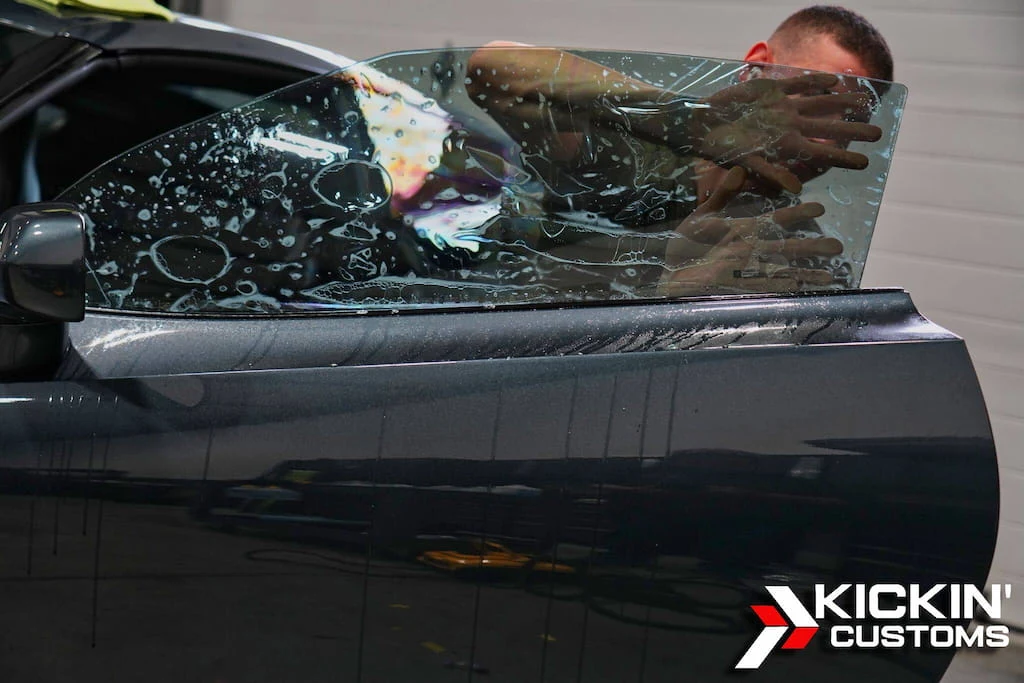
What to Expect After Window Tint Installation
Learn what is normal after window tint installation, including haze, moisture, cure time, windows-up timing, when tint clears, and when to contact Kickin’ Customs.
Read the guideStill Have Questions About Window Tint?
Every vehicle, driver, and tint setup is different.
By this point, you should have a clear understanding of what automotive window tint does, how ceramic tint works, what shade percentages mean, how tint is installed, what affects pricing, and what to expect long term.
The right choice now comes down to your vehicle, your comfort goals, your privacy expectations, your visibility preferences, and how you actually use the vehicle.
If you are unsure which film or shade makes the most sense, we can walk you through the options. Some customers want maximum heat rejection. Some want a clean factory-style match. Some want more privacy. Others want a light ceramic film that keeps the vehicle looking nearly stock while making it more comfortable to drive.
There is no one-size-fits-all answer. The goal is to match the right film and shade to your vehicle, your budget, and your expectations.
Ready to Choose the Right Window Tint for Your Vehicle?
Kickin’ Customs offers professional automotive window tint installation using high-quality film options designed for comfort, clarity, UV protection, heat rejection, and long-term appearance.
Whether you are tinting a brand-new vehicle, matching the front windows to factory rear glass, upgrading to ceramic tint, adding windshield heat rejection, or replacing old failing film, we can help you choose the right setup.
A good tint job should look clean, perform well, and last. That starts with the right product, the right installer, and the right recommendation for how you actually drive.
Serving drivers throughout Southeastern Massachusetts and Rhode Island with professional automotive window tint installation, ceramic window tint options, windshield tint, front window matches, and full-vehicle tint packages.
Step 2 of 2
Your Contact Details
Your preferences have changed. Your current contact form has been kept. Use Edit Request to review them.
If the embedded form is unavailable, open the secure contact form or contact the shop.