
The short answer
Boats live in one of the harshest environments of any vehicle.
Salt.
Sun.
Water spots.
Dock contact.
Shoes.
Fishing gear.
Coolers.
Fenders.
Mooring lines.
Fuel spills.
Bird droppings.
Constant cleaning.
Even well-kept boats take abuse every time they are used, washed, trailered, docked, stored, or exposed to the sun.
That is why marine protection is not just about making a boat look better. It is about making the surfaces easier to maintain and helping preserve the areas that take the most wear.
At Kickin’ Customs in Raynham, MA, we offer marine paint protection film, marine window film, and marine ceramic coatings for boat owners across Massachusetts, Rhode Island, Cape Cod, South Coast, Buzzards Bay, Plymouth, Dartmouth, Fall River, New Bedford, Wareham, and surrounding boating areas.
Each product solves a different problem.
Marine PPF helps protect high-contact painted or gelcoat areas from scratches, scuffs, dock rash, and repeated impact.
Marine window film helps with heat, glare, privacy, and comfort around glass.
Marine ceramic coating helps with gloss, easier cleaning, salt exposure, waterline grime, UV exposure, and maintenance.
Together, they can help keep a boat cleaner, better protected, and easier to own.
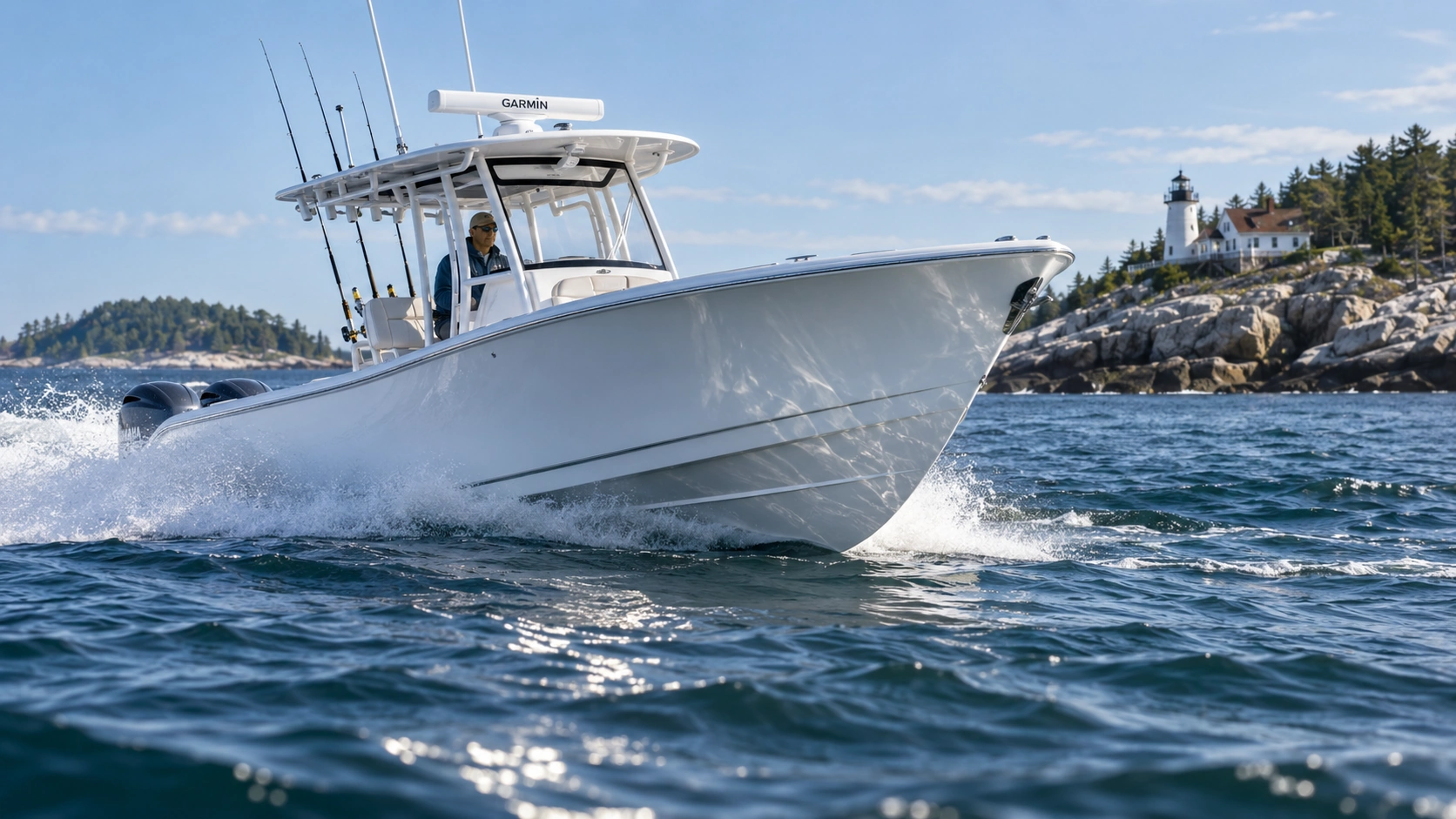
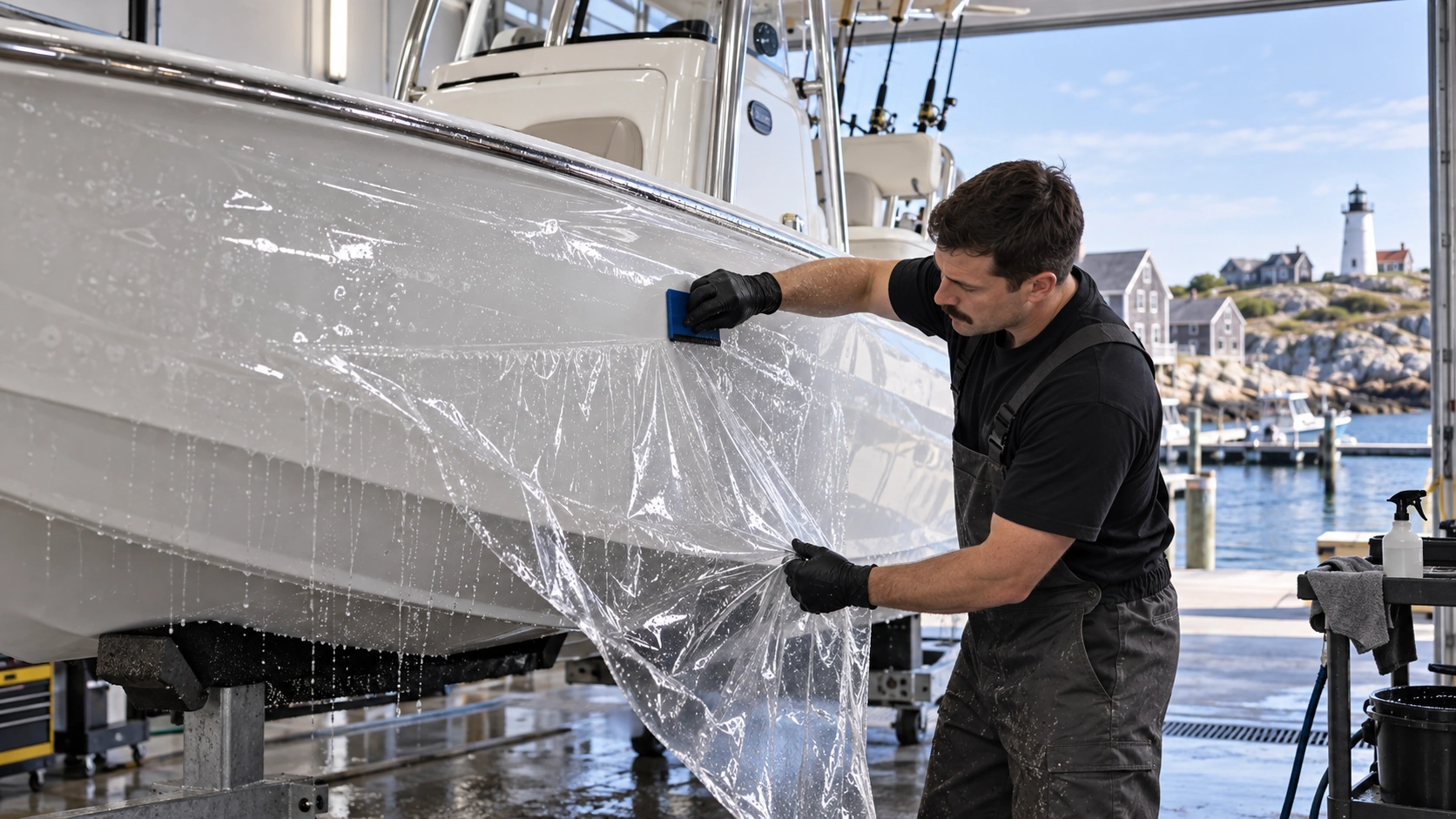
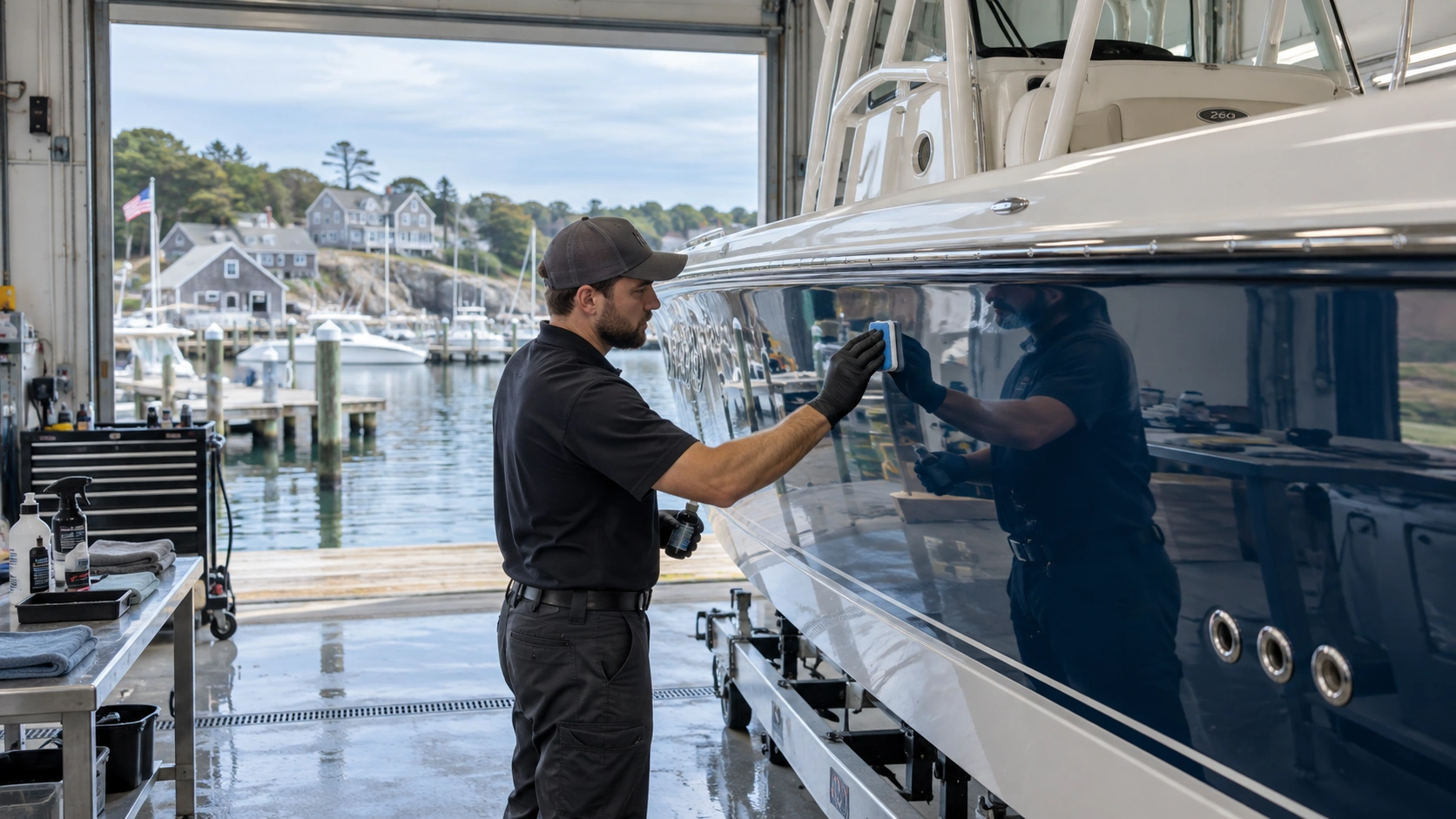
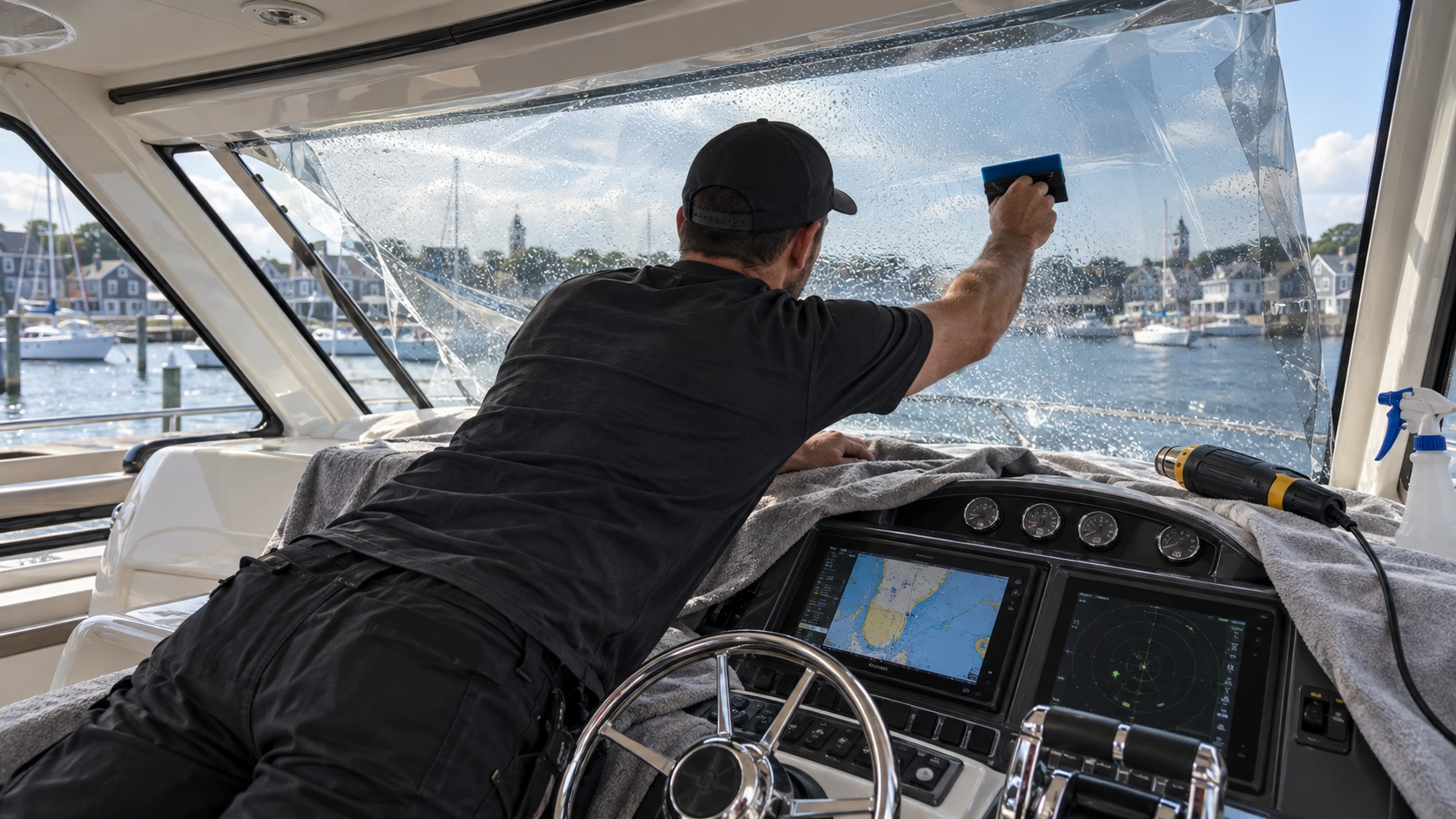
Marine imagery shown in this guide is illustrative.
Marine PPF and surface wear
Marine Protection Is Different From Automotive Protection
Marine protection and automotive protection share some similar product ideas, but boats are exposed to a different environment.
A car deals with road debris, weather, bugs, and washing.
A boat deals with salt water, fresh water, sun reflection, dock contact, ropes, wet feet, fish blood, sunscreen, fuel, waterline grime, oxidation, mildew, and constant exposure.
The products also need to be selected around the surface.
Boats may have gelcoat, paint, glass, acrylic, metal, vinyl, fiberglass, nonskid, clear panels, and other materials.
That is why the right product matters.
Marine protection should be matched to the surface and the way the boat is used.
What Is Marine Paint Protection Film?
Marine paint protection film, also called marine PPF, is a clear protective film applied to certain boat surfaces to help protect against scratches, scuffs, dock contact, abrasion, and repeated wear.
It is often used on high-contact areas.
That may include transoms, swim platforms, steps, entry points, bow areas, gunnels, hull sides, rub zones, boarding areas, and other surfaces that see regular contact.
Marine PPF is not meant to cover every problem on a boat.
It is best used strategically in the areas that get touched, bumped, rubbed, or abused most often.
For many boat owners, that is exactly where protection matters most.
What Marine PPF Helps Protect Against
Marine PPF helps protect against everyday physical wear.
● Dock rash.
● Light scuffs.
● Boarding scratches.
● Cooler contact.
● Fishing gear.
● Shoes.
● Rope rub.
● Fender rub.
● Transom contact.
● Swim platform abuse.
● High-traffic areas.
Boat owners know how quickly these areas can show wear.
Even careful owners deal with contact. People board the boat. Gear gets moved. Lines rub. Kids climb in and out. Coolers slide. Fenders swing. The boat touches docks.
Marine PPF adds a sacrificial layer over the surface so the film takes the abuse instead of the boat finish.
Marine PPF for Dock Rash
Dock rash is one of the most common reasons boat owners consider marine PPF.
Even with careful docking, boats touch things.
Wind, current, wake, tide changes, and crowded marinas can all create contact.
A small rub against a dock, piling, fender, or another surface can leave marks on painted or gelcoat areas.
Marine PPF can help protect vulnerable zones from light contact and repeated rubbing.
It does not make the boat impossible to damage, but it can reduce the risk of visible wear in the areas that see contact most often.
Marine PPF for Swim Platforms and Boarding Areas
Swim platforms and boarding areas take constant abuse.
People climb in and out.
Feet drag across the surface.
Coolers and bags get set down.
Towels, fishing gear, boards, and ladders move around.
These areas are high-contact by nature.
Marine PPF can help protect selected painted or gelcoat surfaces around swim platforms, steps, and boarding zones where scuffs and scratches are common.
For boats that see family use, sandbar trips, fishing, diving, tubing, or frequent swimming, these areas are worth protecting.
Marine PPF for Transoms
Transoms are another strong marine PPF area.
They can see contact from docks, platforms, ropes, fenders, fishing gear, water toys, and people boarding from the stern.
A transom can also be highly visible, so scratches and scuffs stand out.
Marine PPF can help protect high-contact transom areas without changing the look of the boat dramatically.
For painted transoms, dark finishes, and high-value boats, this can be especially useful.
Marine PPF for High-Contact Zones
Not every part of a boat needs film.
The best marine PPF plans usually focus on high-contact zones.
These are the areas that get touched, rubbed, stepped on, leaned against, loaded, unloaded, or bumped regularly.
That may include:
● Boarding areas.
● Gunnels.
● Transoms.
● Swim platforms.
● Steps.
● Hull sides near docks.
● Bow contact points.
● Fishing gear areas.
● Cooler zones.
● Trailer contact areas.
● Rope and fender rub areas.
Protecting the right areas can make more sense than trying to cover the entire boat.
What Marine PPF Does Not Do
Marine PPF is protective, but it has limits.
It does not make the boat indestructible.
It does not stop heavy impact damage.
It does not replace careful docking.
It does not fix existing gelcoat damage.
It does not replace proper boat maintenance.
It does not protect areas where film is not installed.
It is a sacrificial protective layer.
That means it is designed to take wear that would otherwise affect the boat’s surface.
For boat owners, the value is in protecting the areas most likely to get marked up.
Marine ceramic coatings
What Is Marine Ceramic Coating?
Marine ceramic coating is a liquid-applied protective coating designed to bond to properly prepared boat surfaces.
It can help create gloss, slickness, easier cleaning, and improved resistance to salt, grime, UV exposure, and environmental buildup.
Marine ceramic coating is popular because boat maintenance can be exhausting.
● Salt sticks.
● Water spots build up.
● Waterline grime forms.
● Gelcoat oxidizes.
● Surfaces lose gloss.
● Cleaning takes time.
A ceramic coating does not mean the boat never needs washing. It means the surface can be easier to clean and maintain when cared for properly.
What Marine Ceramic Coating Helps With
Marine ceramic coating can help with several common boat ownership problems.
● Easier washing.
● Improved gloss.
● Slicker surfaces.
● Reduced grime bonding.
● Salt cleanup.
● Waterline maintenance.
● UV exposure resistance.
● Stain resistance.
● General surface preservation.
For many boat owners, the biggest benefit is easier cleaning.
A properly coated surface can release dirt, salt, and grime more easily than an unprotected surface.
That matters because boats are cleaned constantly.
If cleaning is easier, ownership becomes less frustrating.
Marine Ceramic Coating vs Wax
Traditional wax has been used on boats for a long time.
Wax can add gloss and short-term protection, but it wears down and usually needs frequent reapplication.
Marine ceramic coating is a more advanced protection option.
It is designed to last longer than traditional wax when installed and maintained properly.
It can also provide better slickness, easier cleaning, and stronger resistance to environmental buildup.
That does not mean ceramic coating eliminates maintenance.
It does not.
It means the maintenance process can become easier and the surface can stay cleaner with the right care.
Ceramic Coating for Gelcoat
Gelcoat can oxidize, stain, dull, and become harder to clean over time.
Marine ceramic coating can help protect properly prepared gelcoat by adding a slick, protective layer.
This can make washing easier and help maintain gloss longer.
Preparation matters.
A worn or oxidized surface may need cleaning, polishing, or correction before coating. Coating over tired gelcoat does not magically restore it.
The final result depends heavily on the condition of the surface before coating.
For boats with gelcoat, prep is a major part of the job.
Ceramic Coating for Painted Boats
Painted boats can benefit from ceramic coating because paint can be sensitive to sun, salt, washing, dock contact, and water spots.
A ceramic coating can help preserve gloss and make the surface easier to clean.
Painted surfaces also benefit from marine PPF in high-contact zones.
A good plan may use ceramic coating over broad painted areas and PPF in impact or contact zones.
The coating helps with maintenance and gloss.
The film helps with physical wear.
Together, they provide different types of protection.
Ceramic Coating for Metal and Brightwork
Certain metal areas may also benefit from proper protection depending on the material and product used.
Salt exposure can be tough on metal surfaces.
Rails, fittings, towers, trim, and other brightwork may require regular cleaning and care.
Marine ceramic coatings may help some surfaces clean more easily and resist buildup.
Surface compatibility matters, so not every coating belongs on every material.
A professional installer should evaluate the surface before recommending a coating.
The goal is to choose the right protection for the right material.
What Marine Ceramic Coating Does Not Do
Marine ceramic coating is often misunderstood.
It does not stop scratches the way PPF does.
It does not make the boat maintenance-free.
It does not prevent every water spot.
It does not eliminate washing.
It does not fix oxidation by itself.
It does not replace proper prep.
It does not make salt harmless.
It helps make the surface easier to maintain and better protected, but the boat still needs care.
Realistic expectations matter.
Ceramic coating is a maintenance upgrade, not a force field.
Window film and cabin comfort
What Is Marine Window Film?
Marine window film is applied to certain boat glass to help reduce heat, glare, UV exposure, and improve comfort or privacy depending on the film.
Boats often have intense glare because sunlight reflects off water.
That can make the helm, cabin, salon, or enclosed areas uncomfortable.
Marine window film can help reduce glare and heat while improving comfort for passengers and the operator.
It may also improve privacy depending on the film selected.
The right film depends on the glass, boat style, visibility needs, and use of the space.
Marine Window Film for Glare Control
Glare is a major issue on the water.
Sunlight reflects off the water, fiberglass, metal, white interiors, docks, and other boats.
That glare can make it harder to see, relax, navigate, or enjoy the boat.
Marine window film can help reduce glare through glass areas.
This can make enclosed helm areas, cabins, salons, and other glass-heavy spaces more comfortable.
Glare control is not only about comfort.
It can also reduce eye fatigue during long days on the water.
Marine Window Film for Heat Reduction
Boat interiors can get hot quickly.
Cabins, salons, pilot houses, enclosed helms, and glass-heavy areas can trap heat during sunny days.
Marine window film can help reduce solar heat entering through glass.
This can make the space more comfortable and may help reduce the load on air conditioning systems in applicable boats.
The benefit is especially noticeable on boats with large glass, dark interiors, limited ventilation, or long sun exposure.
For summer boating, heat control can make a big difference.
Marine Window Film for UV Protection
UV exposure matters on boats.
The sun is intense, and reflection off water can increase exposure.
Marine window film can help reduce UV entering through glass, which can help protect interior surfaces, upholstery, flooring, dashboards, electronics, and trim.
It can also make enclosed spaces more comfortable.
UV protection is especially valuable for boats with cabins, salons, enclosed helms, and expensive interior finishes.
Like residential film, marine window film does not stop every form of fading, but it can reduce UV exposure.
Marine Window Film for Privacy
Marine window film can improve privacy depending on the film and lighting conditions.
This can be useful for cabins, heads, salons, sleeping areas, and docked boats.
Privacy expectations are important.
Reflective or darker films may improve daytime privacy when the outside is brighter than the inside.
At night, when lights are on inside and it is darker outside, privacy can change.
For areas where privacy is critical, film choice should be discussed carefully.
Marine privacy needs vary based on boat layout and how the space is used.
Compare and combine protection
Marine PPF vs Marine Ceramic Coating
Marine PPF and marine ceramic coating are different products.
PPF is a physical film designed to protect selected surfaces from scratches, scuffs, and abrasion.
Ceramic coating is a liquid-applied coating designed to improve gloss, slickness, cleaning, and resistance to grime, salt, and UV exposure.
PPF is better for impact and contact zones.
Ceramic coating is better for maintenance and gloss.
If you are worried about dock rash, PPF is the stronger choice.
If you are worried about cleaning and waterline grime, coating is the stronger choice.
Many boats benefit from both.
Marine Window Film vs Marine Ceramic Coating
Marine window film and marine ceramic coating also solve different problems.
Window film is applied to glass to help with heat, glare, UV exposure, and privacy.
Ceramic coating is applied to exterior or selected surfaces to help with gloss and easier cleaning.
If the helm, cabin, or salon gets hot and bright, window film may be the answer.
If the hull, topside, or gelcoat is difficult to clean, ceramic coating may be the answer.
The right product depends on the problem.
Marine Window Film vs Marine PPF
Marine window film and marine PPF are different.
Window film goes on glass.
PPF goes on painted or gelcoat surfaces where physical wear is a concern.
If the issue is glare through glass, use window film.
If the issue is dock contact, scratches, or boarding scuffs, use PPF.
Both can be used on the same boat, but they are installed on different surfaces for different reasons.
When a Full Marine Protection Package Makes Sense
A full marine protection package may make sense for boats that are high-value, heavily used, recently purchased, newly detailed, freshly painted, recently restored, or difficult to maintain.
A good package may include PPF on high-contact areas, ceramic coating on broad exterior surfaces, and window film on glass areas where heat and glare are problems.
This creates protection in multiple ways.
Film protects contact zones.
Coating helps with cleanup and gloss.
Window film improves comfort through glass.
For many boat owners, that combination is stronger than choosing only one product.
Marine Protection Before the Season
Before the boating season is a great time to consider protection.
The boat can be cleaned, polished if needed, coated, filmed, and prepared before heavy use begins.
This helps start the season with protected surfaces.
It can also make maintenance easier as the season continues.
If a boat is already heavily oxidized, stained, or damaged, prep work may be needed first.
The earlier protection is added, the better chance it has to preserve the surfaces before wear becomes obvious.
Marine Protection After Detailing
Marine protection often makes sense after detailing.
If the boat has already been cleaned, polished, corrected, or restored, coating or PPF can help preserve that work.
A freshly polished gelcoat surface can start oxidizing again if left unprotected.
A high-contact transom or swim platform can start getting scuffed as soon as the boat is used.
Protection after detailing helps lock in the work and reduce future wear.
For boat owners paying for quality detailing, protection is a smart follow-up.
Marine Protection for New Boats
New boats are strong candidates for protection.
A new boat may look great at delivery, but it will not stay untouched for long.
Docking, boarding, cleaning, trailering, sun exposure, and normal use begin immediately.
Marine PPF can protect high-contact areas before they get scratched.
Ceramic coating can help preserve gloss and make cleanup easier from the start.
Window film can improve comfort and glare control early.
For new boats, protection is often easier before damage and oxidation develop.
Marine Protection for Used Boats
Used boats can also benefit from protection, but prep matters more.
A used boat may have oxidation, scratches, staining, water spots, old wax, dock rash, or surface wear.
Before applying PPF or coating, the surface may need cleaning, polishing, correction, or repair.
Film and coating do not hide poor prep.
They protect what they are applied over.
For used boats, a proper inspection helps determine what can be improved and what should be protected.
Marine Protection and Realistic Expectations
Marine protection is valuable, but expectations need to be realistic.
PPF can reduce scratches and scuffs in protected areas, but it does not stop heavy damage.
Ceramic coating can make cleaning easier, but it does not eliminate cleaning.
Window film can reduce heat and glare, but it does not remove every visibility challenge.
Salt still needs to be rinsed.
The boat still needs maintenance.
Surfaces still need care.
The point is to make ownership easier and protect the areas that matter most.
Professional Installation Matters
Marine protection requires careful installation.
Boat surfaces are not always flat or simple.
Curves, edges, gelcoat texture, access, hardware, ladders, rails, cleats, and trim all affect installation.
PPF needs proper surface prep and fitment.
Ceramic coating needs proper cleaning and prep before application.
Window film needs correct glass evaluation and clean installation.
Professional installation matters because marine surfaces are expensive and highly visible.
The goal is protection that looks clean and performs properly.
Questions to Ask Before Choosing Marine Protection
Before choosing marine PPF, window film, or ceramic coating, ask:
Where does the boat get scratched or scuffed?
Does the boat rub docks, fenders, ropes, or gear?
Are swim platforms, transoms, or boarding areas showing wear?
Is the boat hard to clean?
Does salt or waterline grime stick quickly?
Does the gelcoat or paint lose gloss?
Is heat or glare an issue through the glass?
Do you want more privacy in the cabin or salon?
Is the boat new, recently detailed, or already oxidized?
Do you want targeted protection or a full package?
These answers help build the right plan.
Conditions and boat use
Marine Protection for Salt Exposure
Salt exposure is one of the biggest reasons boats need protection.
Salt can dry on surfaces, create buildup, contribute to staining, and make cleaning more frequent.
It gets on paint, gelcoat, glass, metal, upholstery, and hardware.
Marine ceramic coating can help make salt cleanup easier on coated surfaces.
Marine window film can help reduce heat and UV through glass.
Marine PPF can protect high-contact surfaces from physical wear.
Each product helps with a different part of the saltwater environment.
Marine Protection for Sun Exposure
Sun exposure is constant on the water.
UV rays, heat, and bright reflection can affect nearly every surface on a boat.
● Gelcoat can dull.
● Paint can age.
● Upholstery can fade.
● Interiors can heat up.
● Glass can create glare.
● Passengers can become uncomfortable.
Marine coatings, film, and window film all help manage different parts of sun exposure.
Ceramic coating helps maintain exterior surfaces.
Window film helps through glass.
PPF helps high-contact areas stay protected from physical wear.
Marine Protection for Cleaning
Cleaning is one of the biggest parts of boat ownership.
After a day on the water, the boat may need rinsing, washing, wiping, drying, and detailing.
Salt, grime, fish residue, sunscreen, water spots, bird droppings, and dock dirt all add up.
Marine protection helps by making surfaces easier to clean.
Ceramic coating can make grime release more easily.
PPF protects high-contact areas from scuffs and wear.
Window film helps reduce heat and glare through glass areas.
The goal is not to eliminate cleaning.
The goal is to make cleaning less painful and protect the surfaces being cleaned constantly.
Marine Protection for Gelcoat
Gelcoat is common on boats and needs proper care.
It can oxidize, stain, fade, chalk, and lose gloss when neglected.
Marine ceramic coating can help preserve properly prepared gelcoat and make cleaning easier.
Marine PPF can protect selected gelcoat areas from scratches and scuffs.
The right choice depends on the surface and the problem.
Coating is better for broad maintenance and gloss.
PPF is better for physical contact zones.
For many boats, both can make sense.
Marine Protection for Painted Surfaces
Painted boats can be beautiful, but they can also show wear.
Dark paint, metallic paint, custom paint, and high-gloss finishes may show scratches, scuffs, water spots, and dock contact more easily.
Marine PPF can protect high-contact painted areas.
Marine ceramic coating can help with gloss and easier cleaning.
The two products are not the same.
PPF protects against physical wear.
Coating helps with maintenance and surface behavior.
Together, they can help preserve the finish.
Marine Protection for High-Use Boats
High-use boats benefit strongly from marine protection.
The more often a boat is used, the more contact and cleaning it sees.
● Family boats.
● Fishing boats.
● Wake boats.
● Center consoles.
● Cabin cruisers.
● Day boats.
● Charter boats.
● Performance boats.
● Yacht tenders.
Boats used weekly or throughout the season take more abuse than boats used occasionally.
Marine protection helps reduce wear in the areas that see the most action.
Marine Protection for Family Boats
Family boats see constant contact.
Kids climb in and out.
Coolers move around.
Towels, shoes, sand, toys, boards, and gear end up everywhere.
Swim platforms and boarding areas get used constantly.
Marine PPF can help protect high-contact surfaces.
Ceramic coating can make cleanup easier.
Window film can make enclosed areas more comfortable.
For family boats, protection is about keeping the boat easier to enjoy and easier to clean after a day on the water.
Marine Protection for Fishing Boats
Fishing boats have their own type of wear.
Rods, reels, tackle boxes, coolers, fish blood, bait, hooks, shoes, pliers, knives, and cleaning routines all affect the boat.
High-contact zones can get scratched or scuffed.
Surfaces can get stained.
Glass can have glare.
Marine PPF can help protect areas that see gear contact.
Ceramic coating can help with easier cleanup.
Window film can help with glare and heat through glass.
For fishing boats, marine protection is practical.
Marine Protection for Wake Boats and Day Boats
Wake boats and day boats often see heavy passenger use.
People board from docks, swim platforms, ladders, and beaches.
Coolers, bags, boards, ropes, and gear move constantly.
These boats often have high-contact areas that benefit from PPF.
Ceramic coating can help with cleanup after lake, river, or saltwater use.
Window film can improve comfort in areas with glass exposure.
For boats used for watersports and social days, protection helps reduce visible wear.
Marine Protection for Center Consoles
Center consoles are exposed to sun, salt, spray, gear, and constant use.
They may also have painted hull sides, gelcoat, glass, metal, electronics, and high-contact surfaces.
Marine ceramic coating can help with cleaning and gloss.
Marine PPF can protect contact zones.
Marine window film may help on applicable glass or enclosure areas.
For center console owners, protection is about keeping the boat cleaner and reducing wear from heavy use.
Marine Protection for Cabin Cruisers
Cabin cruisers often have more glass and more interior surfaces than smaller boats.
Heat, glare, privacy, and UV exposure through glass can become more noticeable.
Marine window film can help improve comfort in cabins, salons, and enclosed helm areas.
Ceramic coating can help exterior maintenance.
PPF can protect high-contact surfaces near boarding areas, swim platforms, and transoms.
For cabin cruisers, marine protection can improve comfort and ownership.
Marine Protection for High-Value Boats
High-value boats are strong candidates for protection.
The more expensive the boat, the more important surface preservation and maintenance become.
Marine PPF can protect vulnerable contact zones.
Marine ceramic coating can help with cleaning and gloss.
Marine window film can improve comfort and reduce glare.
Protection does not eliminate maintenance, but it can help preserve the boat and reduce the stress of everyday use.
For high-value boats, a layered protection plan makes sense.
Final Thoughts
Marine protection film, tint, and coatings all help boat owners in different ways.
Marine paint protection film helps protect high-contact areas from scratches, scuffs, dock rash, rope rub, fender rub, and boarding wear.
Marine ceramic coating helps improve gloss, slickness, salt cleanup, UV resistance, and easier maintenance.
Marine window film helps reduce heat, glare, UV exposure, and daytime privacy concerns through glass areas.
At Kickin’ Customs in Raynham, MA, we offer marine protection solutions for boat owners across Massachusetts, Rhode Island, Cape Cod, South Coast, Buzzards Bay, Plymouth, Dartmouth, Fall River, New Bedford, Wareham, and surrounding boating areas.
Boats will always need maintenance.
But the right protection can make that maintenance easier and help preserve the surfaces that take the most abuse.
Frequently Asked Questions
What is marine paint protection film?
Marine paint protection film is a clear protective film applied to selected boat surfaces to help protect against scratches, scuffs, dock rash, and high-contact wear.
Is marine PPF good for boats?
Yes, marine PPF can be very useful on boats, especially on transoms, swim platforms, boarding areas, dock contact zones, and other high-wear surfaces.
What does marine ceramic coating do?
Marine ceramic coating helps improve gloss, slickness, easier cleaning, salt cleanup, waterline grime resistance, and surface maintenance.
Is marine ceramic coating better than wax?
Marine ceramic coating generally lasts longer than traditional wax and can make cleaning easier, but it still requires maintenance.
What does marine window film do?
Marine window film can help reduce heat, glare, UV exposure, and daytime privacy concerns through boat glass.
Does marine protection eliminate maintenance?
No. Marine protection makes maintenance easier, but boats still need regular washing, rinsing, cleaning, and care.
Can marine PPF and ceramic coating be used together?
Yes. PPF and ceramic coating protect in different ways. PPF helps with physical wear, while ceramic coating helps with cleaning and gloss.
Should marine protection be installed on a new boat?
Yes, new boats are strong candidates because protection can be added before dock rash, scratches, oxidation, and heavy wear begin.
Plan your next step
Want to protect your boat from sun, salt, dock rash, glare, and cleaning headaches? Contact Kickin’ Customs in Raynham, MA to compare marine PPF, marine ceramic coatings, marine window film, and targeted boat protection packages.
