
The short answer
Marine protection is only as good as the way it is maintained.
Marine paint protection film, marine window tint, and marine ceramic coatings can all help protect a boat, improve appearance, reduce wear, and make cleaning easier.
But none of them make a boat maintenance-free.
Boats still need to be washed.
Salt still needs to be removed.
Glass still needs to be cleaned safely.
Coated surfaces still need proper care.
Film edges still need to be respected.
Marine protection helps the owner maintain the boat with less aggressive cleaning, less surface abuse, and better long-term appearance.
At Kickin’ Customs in Raynham, MA, we offer marine protection services for boat owners across Massachusetts and Rhode Island, including XPEL Marine Paint Protection Film, marine ceramic coatings, marine window film, and marine graphics.
The goal is simple:
Protect the boat, wash it properly, remove salt early, inspect it regularly, and avoid products or tools that can damage the protection you paid for.
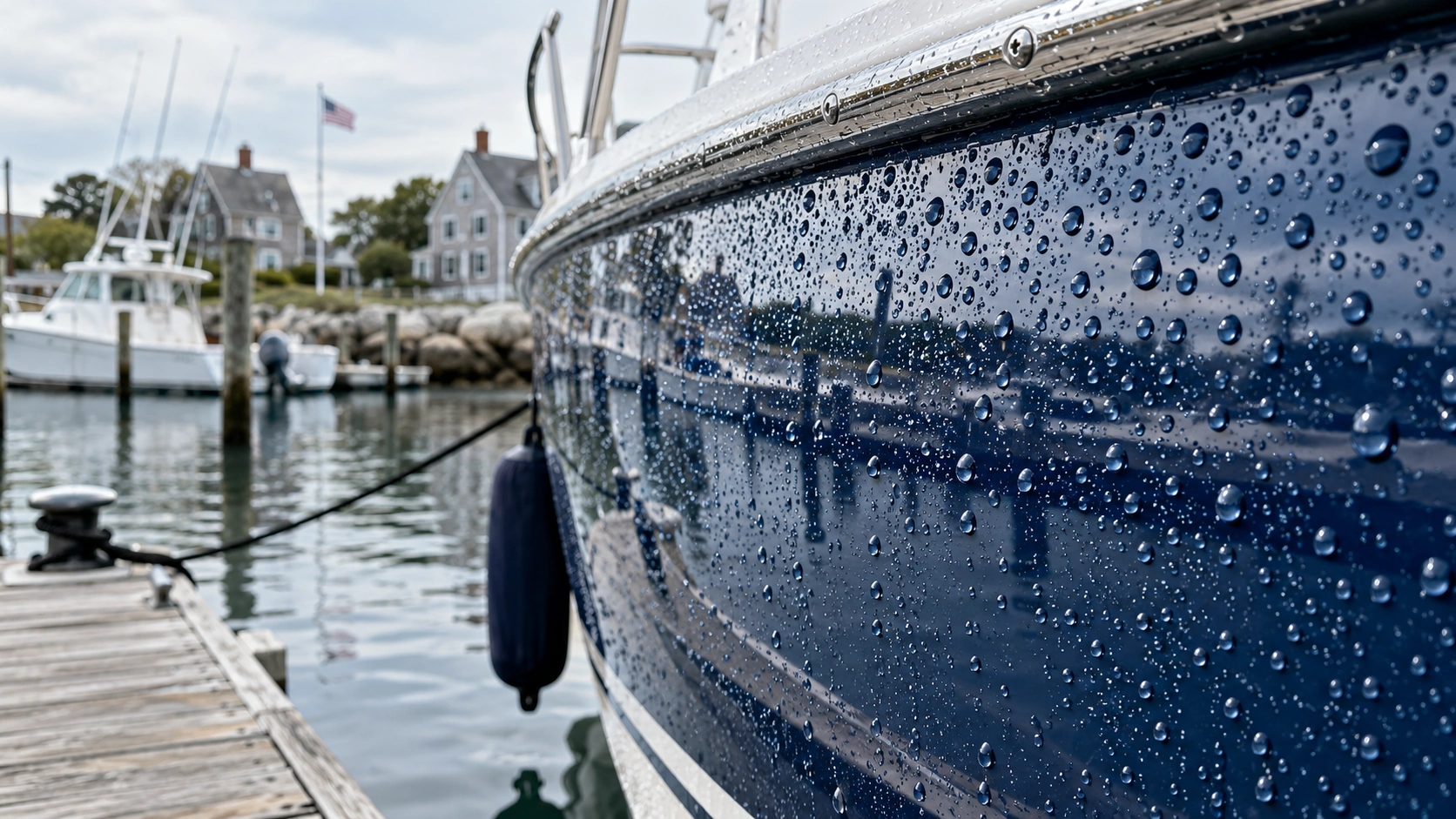
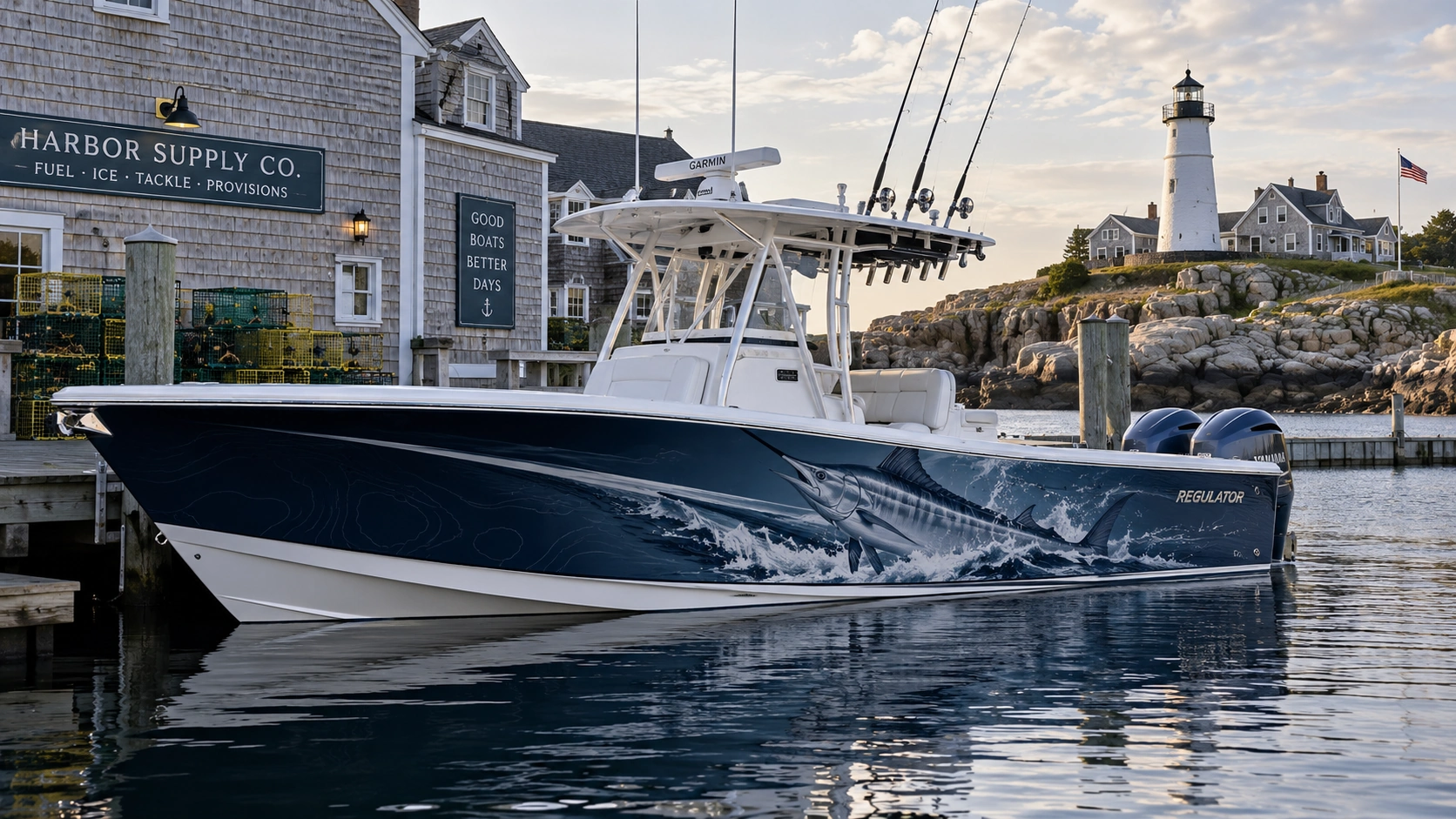
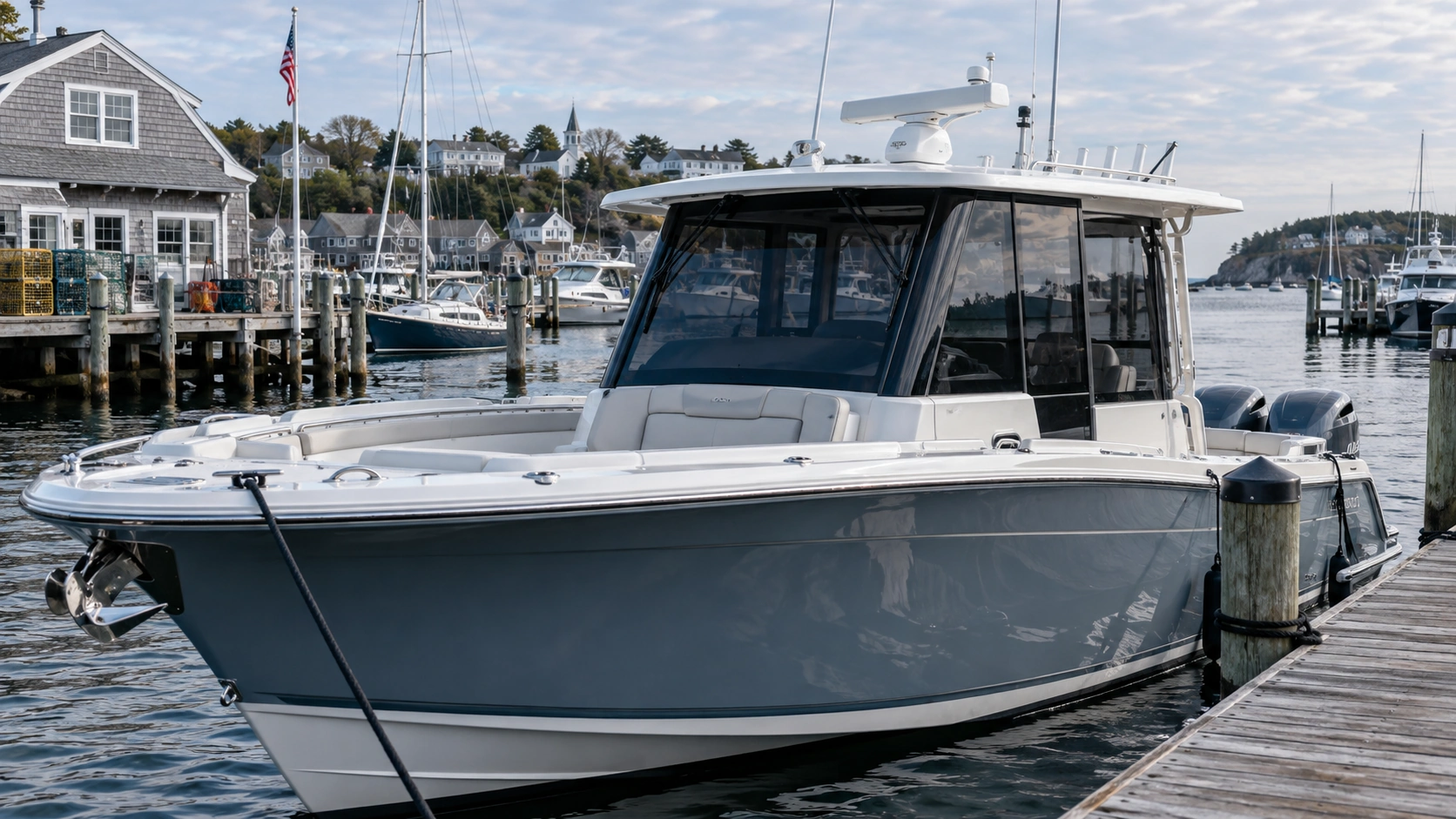
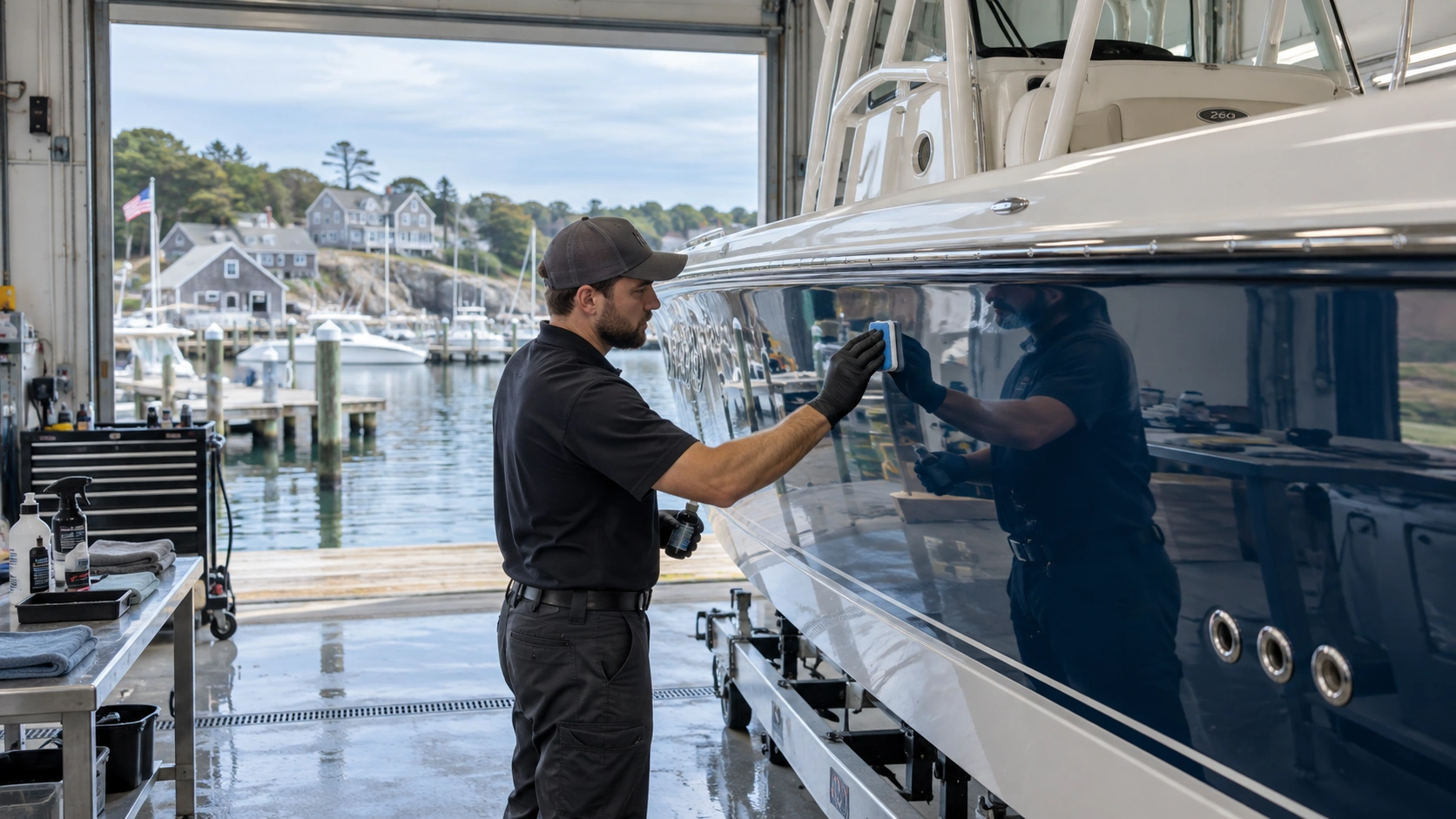
Marine imagery shown in this guide is illustrative.
Wash, rinse and dry
Marine Protection Does Not Replace Washing
This is the most important expectation.
Marine PPF, tint, and ceramic coating do not eliminate maintenance.
They make maintenance easier.
A protected boat still deals with salt, sun, bird droppings, fish residue, sunscreen, dock grime, water spots, fuel residue, dirt, pollen, mildew, and seasonal storage contamination.
If that buildup sits too long, it can still affect the surface.
Protection gives you a better starting point.
It can make grime release easier, reduce the need for harsh cleaning, and help protect high-wear areas.
But the owner still needs a routine.
A boat that is protected but ignored can still age poorly.
Salt Removal Is the First Priority
For Cape Cod, SouthCoast, and Rhode Island boat owners, salt is one of the biggest maintenance concerns.
Salt does not only sit on the hull.
It can settle on glass, painted surfaces, engine cowlings, metal hardware, rails, trim, decks, vinyl, PPF, coating, and trailer surfaces.
If salt dries on the surface, it can leave residue, promote corrosion on metal parts, dull finishes, and make future cleaning harder.
After saltwater use, rinse the boat thoroughly with fresh water.
Do not wait for salt to sit for days.
The sooner salt is removed, the easier the boat is to maintain.
Rinse Before You Wash
Before washing any protected boat surface, rinse first.
A proper rinse helps remove loose salt, sand, grit, dirt, and debris before you touch the surface with a mitt, towel, brush, or sponge.
This matters because salt and sand can be abrasive.
If you start wiping before rinsing, you can drag grit across the film, coating, tint, graphics, or gelcoat.
Rinsing first is simple, but it is one of the best ways to reduce unnecessary scratching.
Start from the top and work down.
Flush areas where salt collects, including around hardware, steps, engine areas, crevices, rails, transom areas, swim platforms, and trailer contact zones.
Use Boat-Safe, Film-Safe Cleaning Products
Use mild, boat-safe cleaners that are appropriate for the surface you are cleaning.
For XPEL marine film or other XPEL protection products, use XPEL-approved or XPEL-compatible care products whenever possible.
The reason is simple.
The boat may have multiple protected surfaces, and not every cleaner is safe for every film, coating, tint, graphic, or trim material.
Harsh cleaners can damage film, weaken coatings, stain surfaces, dry out materials, or leave residue.
If a product is too aggressive for a protected finish, it should not be used.
When in doubt, use the gentler option and ask before trying something stronger.
Avoid Harsh Degreasers
Harsh degreasers can be a problem on marine protection.
They may be useful in certain mechanical areas, but they should not be treated as general-purpose cleaners for PPF, tint, coating, graphics, or finished surfaces.
A strong degreaser can reduce slickness, damage film appearance, affect adhesive edges, strip protection, or dry out nearby surfaces.
Boats often get grime, fuel residue, sunscreen, and dock dirt, so it is tempting to reach for a strong cleaner.
Do not start there.
Use mild cleaners first.
If a specific stain needs stronger treatment, contact the installer for a safe approach.
Avoid Abrasive Brushes and Pads
Abrasive tools are one of the fastest ways to damage marine protection.
Avoid scouring pads, stiff brushes, harsh scrub pads, steel wool, rough sponges, dirty towels, magic-eraser style pads, and aggressive scrubbing tools on protected surfaces.
These can scratch film, dull tint, mar coated surfaces, damage graphics, and create wear marks.
Use soft wash mitts, clean microfiber towels, soft marine brushes where appropriate, and gentle cleaning techniques.
Boats need regular cleaning, but that cleaning should not beat up the surfaces.
Frequent gentle cleaning is better than occasional aggressive cleaning.
Use Clean Towels and Wash Mitts
Clean tools matter.
A microfiber towel or wash mitt that has grit in it can scratch like sandpaper.
Use clean towels.
Use clean mitts.
Rinse them often.
Do not drop them on the ground and then keep using them.
Do not use the same dirty towel on the hull, deck, glass, coating, and tint.
Separate towels by task whenever possible.
A towel used around metal hardware, fuel areas, trailer parts, or dirty lower hull sections should not be used on glass film or polished surfaces.
Good washing habits protect the protection.
Wash From Cleanest to Dirtiest
When washing a boat, work from cleaner areas to dirtier areas.
Start higher and cleaner.
Move lower as you go.
The lower hull, transom, waterline, trailer areas, engine areas, and heavily exposed zones usually hold more grime.
If you clean dirty lower sections first and then use the same tools on high-visibility areas, you increase the chance of scratching or contamination.
This matters for marine PPF and ceramic coatings because the surface may look cleaner than it really is.
Use a methodical wash process.
The goal is to remove contamination without dragging it around.
Dry the Boat After Washing
Drying matters, especially in hard water areas.
If water dries on the surface, it can leave mineral spots.
Marine ceramic coatings help water bead and sheet, but they do not make water spots impossible.
Marine PPF can also show spotting if mineral-heavy water dries on it repeatedly.
After rinsing and washing, dry the boat with clean microfiber towels, a soft drying towel, or safe drying tools.
Pay attention to glass, film, dark surfaces, engine cowlings, coated areas, and high-visibility zones.
The cleaner and drier the surface stays, the better the protection will look.
Do Not Pressure Wash Film Edges Aggressively
Pressure washers can be useful for rinsing boats, but they need to be used carefully around film edges, graphics, tint edges, seals, and trim.
Do not blast directly into PPF edges.
Do not aim high pressure into film corners.
Do not get extremely close to the edge of installed film.
Do not use a narrow high-pressure tip against protected surfaces.
Pressure can lift edges or force water where it does not belong.
Use common sense.
Rinse with distance and control.
Protection film is durable, but edges should still be respected.
Caring for marine film and coatings
Marine PPF Maintenance Basics
Marine PPF is a clear protective film layer installed on selected boat surfaces.
It can help protect against scuffs, minor abrasions, dock rub, fender contact, UV exposure, and everyday wear.
To maintain marine PPF:
Rinse salt off regularly.
Wash with a mild safe soap.
Use soft towels or mitts.
Avoid abrasive tools.
Avoid harsh chemicals.
Do not scrub film edges aggressively.
Remove contaminants early.
Inspect film after dock contact.
Use XPEL-approved or compatible products on XPEL film.
Marine PPF is there to take abuse, but proper washing helps it look better longer.
Remove Contaminants Early from Marine PPF
Marine PPF can be exposed to bird droppings, fish blood, sunscreen, fuel residue, bug splatter, salt, algae, dock grime, and tannin stains.
Remove contamination as soon as reasonably possible.
Do not let strong contaminants bake in the sun for days.
The longer they sit, the more likely they are to stain or require aggressive cleaning.
Start with a safe cleaner and soft towel.
Do not scrape.
Do not use harsh solvents unless specifically approved for the film and surface.
If a contaminant is stubborn, ask the installer before using stronger products.
Inspect Marine PPF Edges
Marine PPF edges should be inspected periodically.
Look for lifting, contamination buildup, dock-rub damage, scratches, tears, or areas that have taken repeated abuse.
High-contact boat areas may wear faster than protected automotive panels because boats see docks, lines, fenders, shoes, gear, and wet traffic.
If an edge starts lifting, do not pick at it.
Do not pull it.
Do not tape it down.
Take photos and contact the installer.
Small issues are easier to address early.
What If Marine PPF Gets Scuffed?
A scuff on marine PPF does not automatically mean the surface underneath is damaged.
That is part of the reason the film is there.
The film acts as a protective layer.
Minor marks may improve with cleaning, warmth, or proper maintenance depending on the film and type of mark.
Deeper damage may stay visible or require replacement of that section.
If a protected area takes dock contact or gear damage, inspect it.
If the film took the damage instead of the boat surface, it may have done its job.
Do Not Polish Marine PPF Like Bare Gelcoat
Do not treat marine PPF like bare gelcoat.
Aggressive compounds, rotary polishing, abrasive cleaners, and strong correction methods can damage film.
If film has haze, staining, or marks, ask what products and techniques are approved before polishing or compounding.
A boat detailer who is used to correcting gelcoat may not automatically know how to treat PPF.
If your boat has XPEL Marine PPF, tell whoever is cleaning or detailing the boat that film is installed.
That prevents accidental damage.
Marine Ceramic Coating Maintenance Basics
Marine ceramic coating helps create a slick, hydrophobic surface that can make washing easier and help maintain gloss.
To maintain marine ceramic coating:
Rinse salt after use.
Wash regularly with a safe soap.
Avoid harsh degreasers.
Avoid abrasive brushes.
Dry after washing.
Remove bird droppings and contaminants early.
Do not let hard water dry repeatedly.
Inspect water behavior.
Use approved maintenance products when needed.
A coating is not armor.
It does not stop scratches.
It does not replace PPF.
It helps the surface clean easier and resist bonding contamination better than an unprotected surface.
Do Not Let Salt Sit on Ceramic Coating
A ceramic coating helps with water behavior, but it does not mean salt can be ignored.
Salt should still be rinsed off after use.
If salt dries repeatedly on the coating, it can leave residue, spotting, and buildup.
Over time, that buildup can reduce the coating’s slickness and hydrophobic behavior.
The coating may still be there, but it may feel like it is not performing because contamination is sitting on top of it.
Regular rinsing and washing keep the coating working the way it should.
Avoid Strong Cleaners on Ceramic Coating
Strong cleaners can reduce coating performance.
Harsh degreasers, acidic cleaners, alkaline cleaners, abrasive compounds, and aggressive marine cleaners may affect slickness, water behavior, or surface appearance.
Use mild cleaners for routine maintenance.
Save stronger cleaners for specific problems and only use them when they are safe for the coating and surface.
The point of a ceramic coating is to reduce the need for aggressive cleaning.
If you constantly need harsh cleaners, the wash routine may need to change.
Watch the Coating’s Water Behavior
Marine ceramic coating performance is often easy to see.
Water should bead, sheet, or release more easily than on an unprotected surface.
If water stops behaving the same way, the coating may be contaminated.
That does not always mean the coating is gone.
It may mean the surface needs a proper maintenance wash or decontamination.
Salt, minerals, soap residue, grime, sunscreen, oxidation, and other buildup can sit on top of the coating.
If performance drops, have it inspected before assuming it failed.
Tint, graphics and exposed surfaces
Marine Tint Maintenance Basics
Marine window film can help reduce heat, glare, and UV exposure through compatible glass.
To maintain marine tint:
Let it cure before cleaning.
Use soft microfiber towels.
Use mild non-ammonia glass cleaner.
Avoid abrasive pads.
Avoid razor blades.
Avoid harsh chemicals.
Do not scrape the film.
Do not soak edges.
Do not apply stickers, suction cups, or tape directly to the film unless approved.
Marine window film is installed to improve comfort and visibility, so clarity matters.
The wrong cleaning method can scratch or damage the film.
Let Marine Tint Cure Before Cleaning
After marine window film is installed, it needs time to cure.
Moisture is used during installation, and that moisture needs time to dry.
During curing, the film may show haze, small water pockets, or a slightly cloudy appearance.
This is normal.
Cure time depends on the film, glass, temperature, humidity, sun exposure, and boat storage conditions.
Do not clean the inside of the tinted glass too early.
Do not press on moisture pockets.
Do not pick at edges.
Let the film dry properly.
If something looks unusual, contact the installer instead of trying to fix it yourself.
Use Non-Ammonia Cleaner on Marine Tint
Tinted marine glass should be cleaned with a mild non-ammonia cleaner or a cleaner specifically safe for window film.
Ammonia-heavy cleaners and harsh chemicals can affect film over time.
Use a clean microfiber towel and gentle pressure.
Do not use paper towels that feel rough.
Do not use scouring pads.
Do not scrape the film with a blade.
A soft, film-safe cleaning process keeps the tint clearer and reduces the chance of scratches.
Avoid Scraping Tinted Glass
Never use a razor blade on marine window film.
This matters if there is tape, salt residue, sticker adhesive, bird droppings, or other buildup on the glass.
A blade can cut the film instantly.
If something is stuck to tinted glass, use a safe cleaning method or contact the installer.
This is especially important for boats because people may attach temporary stickers, permits, marina decals, or tape to glass.
Adhesive removal from film needs caution.
Be Careful with Stickers, Decals, and Suction Cups
Avoid placing stickers, tape, decals, suction cups, or adhesive products directly on marine window film unless the installer confirms it is safe.
Removing them later can damage the film, leave adhesive, or require cleaning methods that are too aggressive for tint.
If the boat needs permits, marina stickers, labels, or temporary decals, discuss placement first.
Whenever possible, avoid placing adhesive on the film side of the glass.
Planning sticker placement prevents problems later.
Marine Graphics Maintenance
Marine graphics also need proper care.
Wash them gently.
Avoid harsh solvents.
Avoid abrasive pads.
Avoid pressure washing directly at graphic edges.
Avoid picking at corners.
Remove salt and grime regularly.
If graphics are new, allow the adhesive to settle before aggressive washing.
Boat graphics live in sun, salt, wind, washing, and storage conditions.
They need better care than indoor decals.
If graphics are installed with PPF, tint, or coating, the wash routine should protect all of those surfaces together.
Safe Washing Around Graphics and Film
Graphics and PPF both have edges.
Those edges should not be blasted with high pressure or scrubbed aggressively.
When washing near edges, use a soft mitt or towel and wipe with the edge, not against it.
Do not dig at the edge.
Do not use a hard brush to remove grime near the edge.
Do not catch corners with a towel and pull.
If buildup forms near an edge, soften it with safe cleaner and rinse gently.
Edge care is one of the biggest long-term maintenance habits.
Cleaning Engine Cowlings with PPF or Coating
Engine cowlings are highly visible and often protected with PPF, coating, or both.
They also collect salt, sun exposure, fingerprints, water spots, and service-related marks.
Clean them gently.
Rinse salt first.
Use a mild soap.
Use soft microfiber.
Avoid abrasive compounds.
Avoid strong degreasers on protected exterior cowling surfaces.
Do not pressure wash film edges.
If the cowling has PPF, treat it like film.
If it has coating, treat it like a coated surface.
If it has both, use the gentlest approach.
Cleaning Boarding Areas and Steps
Boarding areas, steps, swim platforms, and transom walk-throughs see heavy foot traffic.
They collect sand, salt, sunscreen, dirt, and grime.
If these areas are protected with PPF or coating, rinse thoroughly before wiping.
Sand is abrasive.
Do not scrub with rough pads.
Do not use aggressive deck cleaners on protected smooth surfaces unless approved.
Some textured surfaces may require different care than smooth film or coating areas.
The right maintenance method depends on the surface.
When in doubt, separate cleaning methods by material.
Cleaning Hull Sides and High-Contact Areas
Hull sides can collect salt, scum lines, dock rub, fender marks, water spots, and grime.
If the hull is coated, use mild maintenance washes and avoid heavy compounds unless correction is planned.
If certain areas have PPF, avoid blasting edges and avoid abrasive scrubbing.
If the boat has both film and coating, treat the surface gently.
For stubborn waterline grime, use safe products and do not assume every hull cleaner is safe for film or coating.
Many marine cleaners are strong.
Check before using them on protected areas.
Docking, storage and contaminants
What to Do After Dock Contact
After dock contact, inspect the area.
Look for scuffs, film marks, edge damage, coating transfer, scratches, or deeper impact.
If marine PPF is installed, the film may have taken the abuse.
Clean the area gently and inspect again.
Do not immediately compound or scrape the film.
If the damage is minor, it may improve.
If the film is torn or heavily scuffed, replacement of that section may be needed.
The important thing is to check the protected area early.
Repeated dock contact can wear any protection over time.
What to Do After Trailering
After trailering, rinse and inspect the boat.
Trailering can add road grime, bugs, tar, brake dust, strap marks, ramp residue, and debris.
Pay attention to bow areas, lower hull sections, trailer contact points, steps, transom, and engine cowlings.
If the boat has PPF in these areas, clean gently and check for damage.
If the boat is coated, do not let bugs or road grime sit for long.
If graphics or film edges are near strap points, inspect them.
Trailering is hard on boats, even before they hit the water.
What to Do Before Seasonal Storage
Before storage, clean the boat thoroughly.
Do not store the boat with salt, grime, bird droppings, fish residue, sunscreen, or dirty water sitting on protected surfaces.
Wash, rinse, dry, and inspect.
If PPF has lifted edges or damage, address it before storage.
If coating performance has dropped, schedule maintenance.
If tint has issues, inspect it before the boat is wrapped or stored.
If graphics are lifting, deal with them before months of weather and cover contact make the issue worse.
Storage should start with a clean, inspected boat.
What to Do After Seasonal Storage
After storage, inspect before the season starts.
Look for:
● Film edge lifting.
● PPF scuffs.
● Coating water behavior.
● Water spots.
● Glass film clarity.
● Tint edge concerns.
● Graphic lifting.
● Mildew or staining.
● Bird dropping damage.
● Cover abrasion.
● Dirt buildup.
Storage covers and shrink wrap can protect the boat, but they can also trap moisture, rub against surfaces, or hide issues.
A spring inspection helps catch problems before the boat is back in regular use.
Keep Covers Clean
Boat covers can affect protected surfaces.
A dirty cover can rub grit into the boat.
A loose cover can move in the wind and create abrasion.
A wet cover can trap moisture.
If a cover contacts PPF, coating, graphics, or tinted glass areas, make sure it is clean and properly fitted.
A cover should protect the boat, not sand the surface over time.
This is especially important during seasonal storage and trailering.
Cover care is part of surface care.
Avoid Letting Bird Droppings Sit
Bird droppings can be harsh on marine surfaces.
Remove them as soon as possible using a safe cleaner and soft towel.
Do not scrape dried droppings aggressively.
Soften the residue first.
Bird droppings can affect gelcoat, paint, coating, film, graphics, and glass if left too long, especially in direct sun.
Marine protection can help, but it is not a reason to ignore contamination.
Fast removal is always better.
Remove Sunscreen and Lotion Residue
Sunscreen is everywhere on boats.
It can transfer from hands, arms, legs, towels, cushions, glass, rails, painted areas, and interior surfaces.
Some sunscreen residue can be stubborn or leave greasy marks.
Clean it early with a safe product.
Do not attack it with harsh chemicals unless they are approved for the surface.
Sunscreen buildup can reduce coating slickness, make film look dirty, and leave smears on tint or glass.
Regular gentle cleaning keeps it from becoming a bigger problem.
Remove Fish Blood and Bait Residue Early
Fishing boats need extra attention.
Fish blood, bait residue, scales, salt, and grime should be cleaned early.
Do not let organic residue dry onto film, coating, graphics, or smooth interior surfaces.
Rinse first.
Use a safe cleaner.
Use soft tools on protected surfaces.
More aggressive cleaning may be needed on non-protected fishing surfaces, but do not assume the same brush or cleaner should be used everywhere.
A fishing boat can still have protected zones that need gentler care.
Avoid Strong Acidic Hull Cleaners on Protected Surfaces
Some marine hull cleaners are very aggressive.
They may be useful for certain stains or waterline buildup, but they should not be used casually on PPF, tint, graphics, coated surfaces, or sensitive trim.
Strong acids can damage protection or reduce performance.
If a protected area needs heavy cleaning, ask before using aggressive products.
A coating or film should reduce the need for harsh cleaning, but it does not make the surface chemical-proof.
Use the right cleaner for the right surface.
Avoid Compound and Polish Unless Planned
Compounding and polishing are correction steps, not routine maintenance.
They can remove oxidation and defects from gelcoat or paint, but they can also affect coatings, film, graphics, and edges.
Do not compound over marine PPF unless the product and method are approved.
Do not polish tinted film.
Do not aggressively polish graphics.
Do not assume a coated surface should be compounded without re-coating afterward.
If correction is needed, plan it professionally.
Routine maintenance should be wash-focused, not compound-focused.
Use the Right Products on XPEL Film
If your boat has XPEL Marine Paint Protection Film, use XPEL-approved or installer-approved care products on that film.
Kickin’ Customs cannot verify every random cleaner, spray, soap, degreaser, wax, solvent, or marine chemical a customer may have on board.
Marine cleaning shelves are full of strong products.
Some may be safe for bare gelcoat but not ideal for film.
Some may be fine for metal but not for tint.
Some may be useful on non-protected areas but too aggressive for coating.
When XPEL film is installed, keep the care system simple and compatible.
That protects the investment.
Care supplies and inspection
Keep a Basic Boat Care Kit
A simple care kit can help owners maintain protected surfaces properly.
A good kit may include:
Mild boat-safe soap.
Clean microfiber towels.
Soft wash mitt.
Film-safe glass cleaner.
Drying towels.
Detail spray or maintenance product approved for the protection installed.
Soft brush for appropriate non-film surfaces.
Separate dirty-work towels.
A dedicated bag or bin for clean towels.
The goal is to avoid grabbing the wrong cleaner or dirty towel when the boat needs a quick wash.
Good maintenance is easier when the right products are on hand.
Separate Towels by Surface
Use separate towels for different areas.
Tinted glass should not be cleaned with the same towel used on the waterline.
Coated paint or gelcoat should not be wiped with a towel used on trailer parts.
PPF should not be cleaned with a towel full of sand.
Interior surfaces should not share towels with greasy mechanical areas.
This may sound excessive, but boats get dirty in different ways.
Separating towels reduces the chance of dragging contamination onto sensitive surfaces.
Inspection Schedule During Boating Season
A simple inspection routine helps.
After each use, rinse salt and obvious grime.
Weekly or after heavy use, wash and inspect high-contact areas.
Monthly during the season, inspect PPF edges, coating behavior, tint clarity, graphics edges, engine cowlings, dock contact areas, and high-touch zones.
Before storage, do a full wash and inspection.
After storage, inspect again before the season starts.
The goal is not to overthink it.
The goal is to catch issues early.
Signs Marine PPF Needs Attention
Marine PPF may need attention if you see:
● Lifting edges.
● Dirt building under an edge.
● Tears.
● Deep scuffs.
● Heavy dock rub.
● Staining that does not clean.
● Scratches that remain visible.
● Impact damage.
● Film peeling.
Areas that feel rough or contaminated.
If the film has protected the surface from damage, replacement of that section may be needed over time.
That is normal for high-wear marine applications.
Signs Marine Coating Needs Maintenance
Marine ceramic coating may need maintenance if you see:
Reduced water beading.
Reduced water sheeting.
Surface roughness.
Harder washing.
Water spots.
Salt residue that does not release easily.
Loss of slickness.
Heavy contamination.
These signs do not always mean the coating is gone.
They may mean the coating is dirty or clogged with contamination.
A maintenance wash or decontamination service may restore performance.
Have it inspected before assuming failure.
Signs Marine Tint Needs Attention
Marine tint may need attention if you see:
Peeling edges.
Bubbling after cure.
Scratches.
Haze that does not improve.
Adhesive marks.
Film damage from stickers.
Cuts from scraping.
Edge damage from cleaning.
Unusual distortion.
Some haze during cure may be normal.
Damage from abrasive cleaning is not.
If tinted glass looks wrong after the expected cure period, contact the installer.
Signs Marine Graphics Need Attention
Marine graphics may need attention if you see:
Lifting corners.
Cracked vinyl.
Fading.
Scratches.
Edge dirt.
Peeling.
Damage from pressure washing.
Adhesive failure.
Salt buildup near edges.
Graphics live a tough life in the marine environment.
If a graphic starts lifting, do not pick at it.
Inspect it early.
Small edge concerns are easier to address before water, sun, and cleaning make them worse.
Cleaning Around Hardware
Boat hardware creates cleaning challenges.
Cleats, rails, hinges, latches, rub rails, handles, lights, vents, and trim can trap salt and dirt.
Rinse these areas well.
But when cleaning around protected film or graphics near hardware, avoid digging at edges with brushes or tools.
Salt can collect around hardware and film edges.
Soften and rinse buildup rather than scraping.
If hardware removal is ever needed near installed film or graphics, be careful not to tear or lift the protection.
Cleaning Around Rub Rails
Rub rails see a lot of abuse.
They may contact docks, pilings, fenders, trailer guides, and other boats.
If PPF, coating, or graphics are installed near rub rails, clean those areas carefully.
Do not force towels into edges.
Do not use harsh brushes against film.
Do not pressure wash directly into adjacent film edges.
Rub rail areas are naturally high-wear zones.
They should be inspected often, especially after docking incidents.
Cleaning Around Fenders and Lines
Fenders and lines protect the boat, but they can also create rub marks.
Salt, sand, and dirt trapped between a fender and boat surface can act like an abrasive.
Clean fenders and lines periodically.
Inspect the areas where they contact the boat.
If marine PPF is installed in fender contact areas, it can help protect the surface, but it still needs cleaning.
A dirty fender rubbing against dirty film can still create wear.
Protection helps, but clean contact points matter.
Cleaning Glass with Marine Window Film
Marine window film should be cleaned from the film side with care.
Use a soft microfiber towel and mild non-ammonia cleaner.
Do not use blades.
Do not use abrasive pads.
Do not use harsh chemicals.
Do not scrub edges.
If the exterior side of the glass is not filmed, it may still need safe cleaning depending on coatings, salt, and glass condition.
Know which side has the film.
Clean that side like a finished surface.
If the boat has interior tinted glass, make sure anyone cleaning the cabin knows the film is installed.
Cleaning Coated Glass
Some boats may have glass coatings in addition to or instead of window film.
Glass coating and window film are different.
A coating may be applied to certain glass surfaces to improve water behavior and cleaning.
Window film is installed to reduce heat, glare, or UV exposure through the glass.
Do not treat tinted film like coated bare glass.
If a glass surface has tint, avoid scraping and harsh chemicals.
If a glass surface has coating, clean it with coating-safe products.
The owner should know what is installed on each surface.
Avoid Automatic Brush Washing
Ceramic coating is not just something that should be wiped onto dirty or damaged paint.
The surface needs to be properly cleaned, decontaminated, and prepped before coating. If the vehicle has swirl marks, oxidation, water spots, staining, or light defects, those may need to be addressed before the coating is applied.
This is why paint correction or polishing is often part of the process.
The coating locks in the condition of the surface. If the paint looks clean and properly prepped before coating, the result is usually much better. If the paint is coated while defects are still present, those defects may remain visible under the coating.
At Kickin’ Customs, coating recommendations depend on the vehicle’s age, paint condition, color, use, and the customer’s expectations.
Communicate with Detailers and Marinas
If someone else washes, details, stores, wraps, services, or transports the boat, tell them what is installed.
Tell them if the boat has XPEL Marine PPF.
Tell them if it has marine ceramic coating.
Tell them if the glass has window film.
Tell them if graphics are new.
Tell them which cleaners and tools to avoid.
Many issues happen because a third party cleans the boat like it is unprotected.
A simple conversation can prevent unnecessary damage.
Do Not Assume Every Marine Cleaner Is Safe
Marine cleaners can be strong.
Some are designed for heavy oxidation, waterline stains, rust, mildew, fuel residue, bilge areas, or non-skid decks.
That does not mean they belong on PPF, tint, coating, graphics, or every finished surface.
Read labels.
Ask the installer.
Use approved products.
Start mild.
Use stronger products only where they are appropriate.
A cleaner that is useful in one part of the boat can be harmful in another.
Build a routine for your boat
Maintenance After Long Runs
After a long saltwater run, the boat deserves a thorough rinse and wash.
Pay attention to forward-facing surfaces, glass, engine cowlings, console areas, windshield frames, rails, transom areas, and waterline zones.
Salt spray can travel farther than expected.
If the boat has PPF, inspect impact zones.
If it has coating, rinse and dry.
If it has tint, clean glass gently when needed.
If it has graphics, check edges after heavy spray or trailering.
Long runs are part of boating, but they increase maintenance needs.
Maintenance After Fishing Trips
Fishing trips require quicker cleanup.
Fish blood, bait, scales, salt, and gear marks should not sit.
Rinse and clean high-use areas early.
Use safe products around protected surfaces.
Do not scrub PPF with stiff brushes used on decks.
Do not use harsh deck cleaners on coated or filmed smooth areas without approval.
If the boat has a mix of rough fishing surfaces and protected glossy surfaces, clean them differently.
Fishing boats are used hard, but protected areas still need proper care.
Maintenance After Sandbar Days
Sandbar days create different contamination.
Sand, sunscreen, drinks, food, towels, wet bags, anchors, and foot traffic all move across the boat.
Sand is abrasive.
Before wiping any protected surface, rinse it thoroughly.
Pay attention to steps, swim platforms, seating areas, transom walk-throughs, and glass.
Sunscreen residue should be cleaned early.
If the boat has film or coating in high-contact areas, check for scuffs and residue.
A fun day on the water can still leave a lot behind.
Maintenance After Dockside Dining or Raft-Ups
Dockside dining, fuel dock stops, and raft-ups create extra contact.
People board from different angles.
Fenders move.
Lines rub.
Coolers, bags, and shoes hit surfaces.
After these events, inspect docking zones and boarding areas.
Marine PPF can help protect these high-contact areas, but repeated contact still adds up.
Clean fender marks early.
Remove salt and grime.
Check film edges.
Do not wait until the end of the season to inspect the areas that get used every weekend.
Maintenance for Boats Stored in Slips
Boats stored in slips are constantly exposed.
Even if they are not used daily, they still see sun, salt air, bird droppings, dock grime, moisture, and fender contact.
Slip-kept boats should be rinsed and inspected regularly.
Protected surfaces still need maintenance.
Covers should be checked.
Fender contact areas should be cleaned.
Glass should be kept clear.
Coated surfaces should be washed before buildup becomes stubborn.
A boat sitting in a slip can age even when it is not running.
Maintenance for Trailered Boats
Trailered boats have different needs.
They see road grime, ramps, bunks, rollers, straps, bugs, and debris.
After trailering, inspect bow areas, lower hull, transom, steps, engine cowlings, and any areas near straps or contact points.
Rinse the trailer too.
Saltwater ramps expose trailers and boats to salt.
If the boat is protected with PPF or coating, keeping road grime and salt from sitting will help the protection perform longer.
Trailered boats may be out of the water, but they still get abused.
Maintenance for Boats Stored Outside
Outdoor storage exposes boats to sun, rain, snow, wind, bird droppings, pollen, tree sap, moisture, and cover movement.
If the boat is protected with film, coating, tint, or graphics, inspect it before and after long storage periods.
Make sure covers are clean and fitted properly.
Do not store the boat dirty.
Do not allow contaminants to sit under a cover for months.
A boat that is clean going into storage is easier to bring back in spring.
Protection helps, but storage prep still matters.
Maintenance for Indoor-Stored Boats
Indoor storage is easier on surfaces, but it does not eliminate maintenance.
Boats should still be cleaned before storage.
Salt should still be removed.
Film, tint, coatings, and graphics should still be inspected.
Indoor storage can reduce UV and weather exposure, but contamination left on the surface can still cause issues.
The best approach is clean, dry, inspected, and protected before storage.
Indoor storage is a benefit, not an excuse to skip care.
How Often Should Marine Protection Be Maintained?
Maintenance frequency depends on use.
A boat used every weekend in saltwater needs more frequent care than a boat used occasionally in freshwater.
A slip-kept boat needs more routine rinsing than a garage-kept trailer boat.
A fishing boat needs quicker cleanup than a light-use cruiser.
As a general mindset:
Rinse after saltwater use.
Wash regularly during the season.
Dry when possible.
Inspect monthly.
Address contamination early.
Inspect before and after storage.
The more the boat is used, the more consistent the care should be.
Why Inspections Matter
Inspections help protect the investment.
They can catch edge lifting, stains, water spots, coating contamination, tint issues, dock scuffs, graphic lifting, and high-wear areas before they become bigger problems.
A boat has many surfaces and many contact points.
It is easy to miss an issue until it becomes obvious.
Regular inspections are simple.
Walk the boat.
Look at high-contact areas.
Check film edges.
Look at glass.
Feel coated surfaces.
Look for spots, scuffs, and residue.
Small issues are easier to handle early.
What Owners Should Avoid
Avoid these habits:
Letting salt sit for days.
Wiping dry salt or sand.
Using dirty towels.
Using abrasive brushes on film or tint.
Using harsh degreasers everywhere.
Using acidic hull cleaners on protected surfaces.
Pressure washing film edges.
Scraping tint with blades.
Compounding over PPF.
Using random solvents on XPEL film.
Letting bird droppings bake in the sun.
Ignoring edge lifting.
Storing the boat dirty.
These habits can shorten the life of protection.
What Owners Should Do
Use these habits instead:
Rinse after salt exposure.
Wash with safe cleaners.
Use clean microfiber towels.
Dry high-visibility surfaces.
Remove contaminants early.
Use XPEL-approved products on XPEL film.
Tell detailers what is installed.
Inspect film edges.
Protect fender contact areas.
Clean glass with non-ammonia cleaner.
Avoid abrasive tools.
Schedule maintenance when coating performance drops.
Inspect before storage.
Start each season with a clean boat.
These habits help marine protection perform better.
Why Professional Maintenance Helps
A professional maintenance visit can help keep marine protection performing.
This may include inspection, safe washing, decontamination, coating maintenance, film inspection, tint inspection, graphics review, and recommendations for replacement or refresh.
For larger boats, high-value boats, saltwater boats, and heavily used boats, professional maintenance can save time and prevent mistakes.
The goal is not to upsell unnecessary work.
The goal is to keep the protection doing its job.
A trained installer knows what failure, damage, contamination, and normal wear look like.
When to Schedule a Maintenance Visit
Schedule a maintenance visit if:
Coating water behavior drops.
PPF edges are lifting.
Film is scuffed or damaged.
Tint looks hazy after cure.
Graphics are lifting.
Water spots are heavy.
The boat was hit at a dock.
The boat is going into storage.
The boat is coming out of storage.
A third-party cleaner used harsh products.
The boat has been heavily used all season.
Marine protection should be checked when something changes.
Why Kickin’ Customs for Marine Protection Maintenance
Kickin’ Customs installs and supports marine protection for boat owners across Massachusetts and Rhode Island.
Our marine services include XPEL Marine Paint Protection Film, marine ceramic coatings, marine window film, and marine graphics.
We understand that boats deal with salt, sun, marinas, docks, trailering, storage, and constant cleaning.
We help owners choose the right protection and maintain it properly.
A good marine protection package should come with realistic care instructions.
That is how the boat stays easier to clean and better protected over time.
Final Thoughts
Marine PPF, tint, and ceramic coatings can make boat ownership easier, but they still need proper maintenance.
Rinse salt early.
Wash with safe products.
Use soft towels and mitts.
Avoid harsh cleaners.
Avoid abrasive tools.
Respect film and graphic edges.
Clean tint with mild non-ammonia cleaner.
Use XPEL-approved or compatible products on XPEL film.
Inspect the boat regularly.
Address small issues before they become larger ones.
At Kickin’ Customs in Raynham, MA, we install and maintain marine PPF, marine ceramic coatings, marine window film, and marine graphics for boat owners across Cape Cod, SouthCoast Massachusetts, and Rhode Island.
Protection helps your boat handle the season.
Maintenance helps that protection keep performing.
Frequently Asked Questions
How do you maintain marine PPF?
Rinse salt off regularly, wash with mild safe soap, use soft towels or mitts, avoid abrasive tools, avoid harsh chemicals, do not pressure wash film edges aggressively, and inspect the film after dock contact or heavy use.
Can I pressure wash marine PPF?
Use caution. Do not aim high pressure directly at film edges, corners, graphics, or seals. Keep distance and use a controlled rinse instead of blasting the film.
What products should I use on XPEL Marine PPF?
Use XPEL-approved or installer-approved products on XPEL Marine PPF. Avoid random harsh marine cleaners, solvents, degreasers, or abrasive products unless they are confirmed safe.
How do you maintain marine ceramic coating?
Rinse after saltwater use, wash with mild coating-safe soap, dry when possible, avoid harsh degreasers, remove contaminants early, and inspect water behavior during the season.
Does marine ceramic coating eliminate washing?
No. Marine ceramic coating makes washing easier, but salt, dirt, bird droppings, fish residue, sunscreen, and water spots still need to be removed.
How do you clean marine window tint?
Use a clean microfiber towel and mild non-ammonia glass cleaner. Avoid razor blades, abrasive pads, harsh chemicals, and aggressive edge cleaning.
How long should marine tint cure before cleaning?
Cure time depends on film type, glass, temperature, humidity, sun exposure, and storage conditions. Follow the installer’s guidance before cleaning the film side of the glass.
Can I put stickers or decals on marine window film?
Avoid placing stickers, tape, suction cups, or decals directly on the film unless the installer confirms it is safe. Removing adhesive later can damage the tint.
How often should I inspect marine protection?
Inspect high-contact areas regularly during the season, especially after docking, trailering, fishing trips, raft-ups, and storage. Check film edges, coating behavior, tint clarity, and graphics edges.
Who maintains marine PPF, tint, and coatings in Massachusetts and Rhode Island?
Kickin’ Customs installs and supports marine PPF, marine ceramic coatings, marine window film, and marine graphics from our shop in Raynham, MA for boat owners across Cape Cod, SouthCoast Massachusetts, and Rhode Island.
Plan your next step
Keep your boat protection performing through salt, sun, docks, trailering, and storage. Contact Kickin’ Customs in Raynham, MA for marine PPF, marine ceramic coating, marine window film, marine graphics, inspections, and maintenance guidance for Cape Cod, SouthCoast, and Rhode Island boat owners.
