
Start With the First Few Days
Keep the film undisturbed while it bonds and dries. Vehicle-specific instructions provided at pickup take precedence over this general guide. Use the window-up timing below, and contact us if an edge lifts or the film looks damaged.
The First Few Days After Window Tint Installation
The first few days after window tint installation are the most important.
During this period, the film is still curing and the adhesive is still bonding to the glass. Moisture used during installation needs time to evaporate through the film. Until that process is complete, the windows should be treated carefully.
Do not roll the windows down too soon. Do not clean the inside of the glass aggressively. Do not pick at edges, bubbles, water pockets, or small marks. Do not use ammonia-based glass cleaner or harsh chemicals. Do not press suction cups, stickers, decals, mounts, passes, or accessories directly onto freshly tinted glass.
If something looks hazy, streaky, cloudy, or slightly uneven during the first few days, that does not automatically mean there is a problem. In many cases, the film is simply curing.
How Long Should You Keep Windows Up After Tint?
Window-up time depends heavily on temperature, weather, humidity, season, and how the vehicle is stored after installation.
In warmer weather, window tint usually cures faster. In colder weather, especially during Massachusetts and Rhode Island winters, tint can take longer to dry and should be treated more carefully.
Use the guidance below for both movable windows and the rear defroster. Keep the rear defroster off for the same period that the windows must stay up. Follow any vehicle-specific instructions provided at pickup.
Summer Weather Cure Time
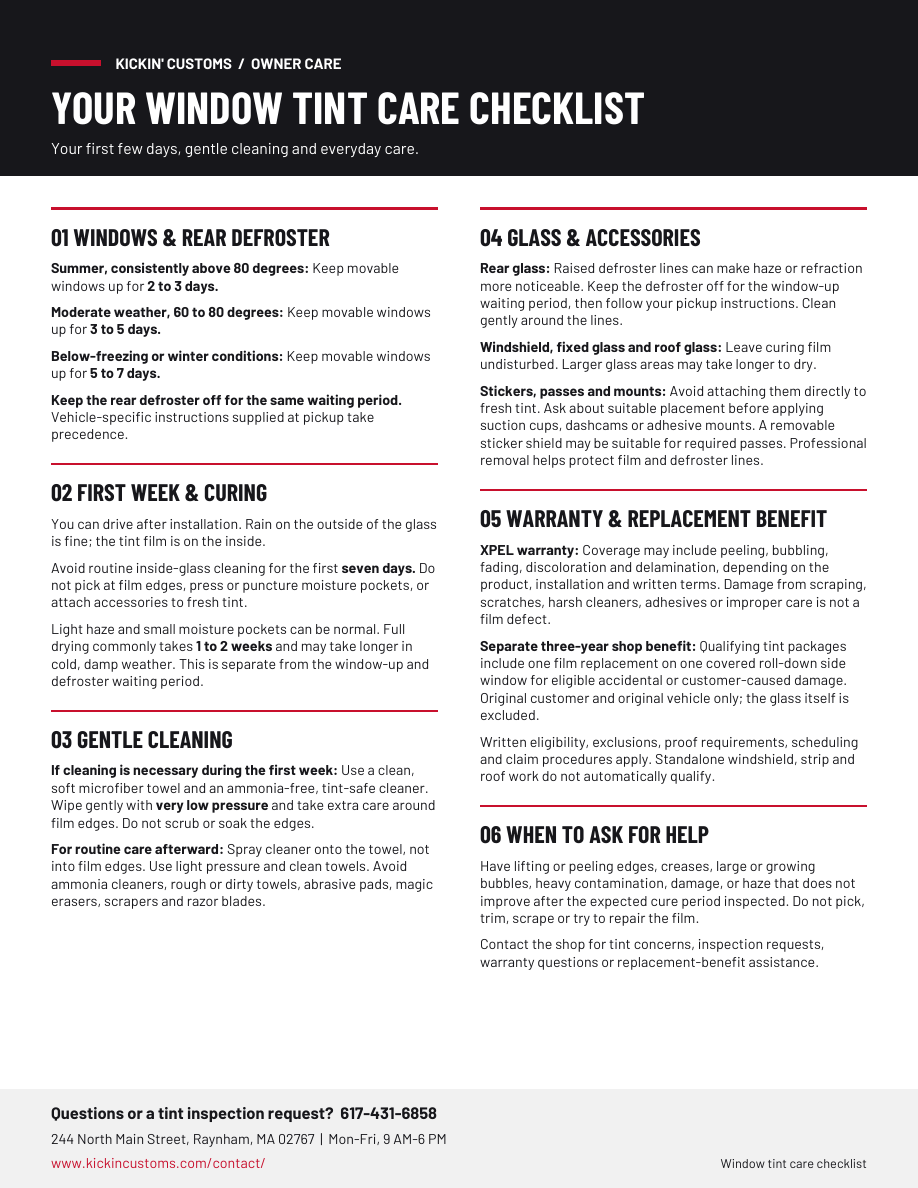
Keep windows up for 2 to 3 days when temperatures are consistently above 80 degrees.
Warm weather usually helps window tint cure faster, but the film still needs time to bond. Avoid rolling the windows down too soon, cleaning the inside of the glass, pressing on moisture pockets, or placing stickers or accessories on the film during the early cure period.
Spring and Fall Cure Time
Keep windows up for 3 to 5 days when temperatures are generally between 60 and 80 degrees.
Moderate weather usually requires more patience than hot summer weather. The film may look finished, but moisture and adhesive still need time to settle. Keep the windows up, avoid cleaning the inside of the glass, and let the film cure without unnecessary contact.
Winter Weather Cure Time
Keep windows up for 5 to 7 days during below-freezing temperatures or colder winter conditions.
Cold weather slows drying and bonding. During Massachusetts and Rhode Island winters, haze, moisture pockets, or a cloudy appearance may take longer to clear. Keep the windows up longer, avoid cleaning the film, keep the rear defroster off for the same 5 to 7 days, and do not use accessories or stickers directly on the tint during the cure period.
Driving After Your Tint Installation
You can drive your vehicle after installation. Keep movable windows closed and the rear defroster off for the waiting period that applies to the weather and your pickup instructions.
Rain on the outside of the windows is fine because the film is installed on the inside. Avoid routine cleaning of the tinted interior glass for seven days so the fresh film stays undisturbed.
Normal Curing or a Concern?
Usually Normal While Drying
- Light haze or temporary cloudiness.
- Small moisture pockets that gradually shrink.
- Slight variation around raised defroster lines.
Most tint settles over 1–2 weeks. Cold, damp conditions and larger glass areas can take longer. Leave moisture pockets alone.
Contact Us for Inspection
- A lifting edge, peeling or a crease.
- A large or growing bubble, or heavy contamination.
- Visible damage or haze that does not improve beyond expected curing.
Do not press, puncture, trim or scrape the film.
Ask About My TintWhat Is Not Normal After Window Tint Cures?
Some curing symptoms are normal at first, but certain issues should not remain after the film has had enough time to dry.
After the tint has fully cured, large bubbles, peeling edges, creases, fingers, dirt clusters, heavy contamination, film movement, or obvious adhesive failure should be inspected.
A tiny speck here or there can happen with any real-world window tint installation. Glass, seals, doors, felt, weatherstripping, and vehicle interiors are not sterile environments. However, clusters of debris, major contamination, lifting edges, or visible defects that do not improve after curing should be reviewed.
If you are unsure whether something is normal curing or a concern, contact Kickin’ Customs before touching, picking, scraping, or trying to fix the film yourself.
Clean Gently After the Initial Cure Period
Wait seven days before routine cleaning of the film-facing inside glass, and follow any longer guidance supplied for your installation. If cleaning is necessary during the first week, use a clean, soft microfiber towel and an ammonia-free, tint-safe cleaner. Wipe gently with very low pressure and take extra care around film edges. Do not scrub or soak the edges.
- Use an ammonia-free cleaner labeled safe for automotive window tint.
- Spray a clean, soft microfiber towel rather than soaking film edges.
- Wipe gently with light pressure, especially at edges and defroster lines.
- Avoid rough or dirty towels, abrasive pads, harsh chemicals, scrapers and razor blades.
If you used an unsuitable cleaner once, stop using it and ask us about any visible concern. Do not try to remove marks with aggressive rubbing.
Ask Before Attaching Accessories
Ask us before attaching adhesive or suction-mounted accessories directly to tinted glass, especially when they may later need to be removed. This includes passes, stickers, transponders and dashcam mounts.
Placement and removal methods matter. A removable protective interface may be appropriate for a required sticker so its adhesive is not bonded directly to the film. Keep accessories off the film during curing unless we have approved the installation.
Window Tint Care by Glass Area
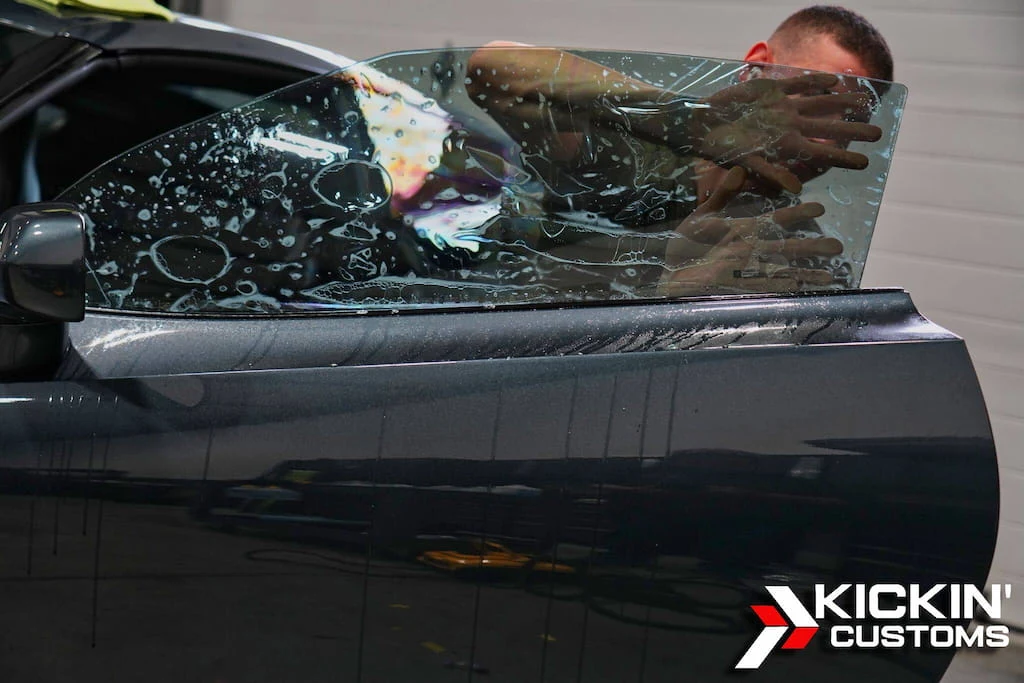
Different windows can cure, wear, and clean differently depending on their size, shape, movement, and exposure. Door glass, rear windows, windshields, quarter glass, and sunroofs all have slightly different care concerns after tint installation.
Use the tabs below to review the care instructions that apply to the tinted glass on your vehicle.
Door Windows
Door windows need the most patience after tint installation because they move up and down through window seals.
Keep the windows up for the recommended cure period based on temperature. Rolling door windows down too soon can cause the film to shift, peel, bunch, crease, or pull away from the glass before the adhesive has fully bonded.
Once cured, clean door glass gently with ammonia-free cleaner and a soft microfiber towel. Avoid rough wiping near the top edge of the film, and do not pick at corners or edges.
Rear Windows and Defroster Lines
Rear window tint can take longer to fully cure because the film is installed over the rear defroster lines.
The defroster lines are raised off the glass, which means the film does not sit on a perfectly flat surface. During installation, the squeegee cannot make full glass-level contact in those raised areas the same way it can on a smooth side window. Because of that, small amounts of moisture, haze, or visual distortion around the defroster lines may take longer to dry.
Keep the rear defroster off for the same waiting period as the roll-down windows: 2 to 3 days in summer temperatures above 80 degrees, 3 to 5 days in moderate weather, or 5 to 7 days in winter conditions. Follow any different vehicle-specific instructions provided at pickup. This waiting period is separate from the time it takes for all curing haze and moisture to clear.
Some refraction, light distortion, or visual change around rear defroster lines can be normal on certain vehicles and may be unavoidable because of how the film lays over the raised defroster grid.
Once cured, clean the rear window carefully with ammonia-free cleaner and a soft microfiber towel. Avoid heavy pressure, abrasive pads, magic erasers, razor blades, or scrapers on the inside of the rear glass. If rear window tint ever needs to be removed later, there is always some risk to the defroster lines, so proper care helps reduce the chance of needing removal or replacement.
Windshields and Windshield Strips
Windshield tint and windshield strips should be treated carefully, especially during the early cure period.
Avoid mounting suction cups, dashcam pads, toll transponders, parking stickers, car wash stickers, gate access stickers, temporary decals, or adhesive accessories directly onto fresh windshield tint. These items can mark the film, pull at the tint, or create removal issues later.
If you need to display a parking pass, car wash sticker, gate access sticker, apartment or HOA decal, beach sticker, or temporary permit, use a protective removable sticker shield instead of applying the sticker directly to the tint. This allows the sticker to be removed more cleanly later and reduces the chance of damaging the film.
If the windshield has tint, clean it gently with ammonia-free cleaner and a soft microfiber towel. Windshield tint is touched, wiped, and viewed more often than most other windows, so gentle cleaning matters.
Quarter Windows and Fixed Windows
Quarter glass, small fixed windows, and cargo-area glass do not roll down, but they still need time to cure.
Because these windows do not move, the main concerns are haze, moisture pockets, edge picking, suction cups, stickers, and cleaning too soon. Avoid touching or cleaning the inside of the glass during the early cure period.
Once cured, clean with ammonia-free cleaner and a soft microfiber towel. Be careful around tight corners, edges, and trim. Avoid placing stickers, parking passes, car wash stickers, gate access stickers, or temporary permits directly onto the tint film. Use a removable sticker shield when a sticker needs to be displayed.
Sunroofs and Panoramic Glass
Sunroofs and panoramic glass can take longer to cure because they are larger glass areas and may receive more direct sun and heat.
Do not clean the inside of the tinted glass during the early cure period. Avoid pressing on moisture pockets, wiping aggressively, or attaching suction cups, stickers, decals, or accessories to the film.
Once cured, clean gently with ammonia-free cleaner and soft microfiber towels. Large glass panels may show haze or moisture patterns longer during curing, especially in colder weather or shaded storage.
Recommended Window Tint Maintenance Products
The right maintenance products make window tint easier to care for and help reduce avoidable damage.
For tinted windows, use ammonia-free glass cleaner, soft microfiber towels, and gentle cleaning methods. If you need to display parking stickers, car wash stickers, gate access stickers, apartment or HOA decals, beach stickers, or temporary passes on tinted glass, use a removable sticker shield so the sticker is not bonded directly to the tint film.
Kickin’ Customs carries maintenance products and accessories that can help you care for your tint properly after installation.
Window Tint Warranty and Replacement Benefit
XPEL automotive window films include warranty coverage against certain film defects such as peeling, bubbling, fading, discoloration, and delamination depending on the film, installation, and warranty terms.
Warranty coverage should not be confused with damage caused by improper care. Film damage caused by rolling windows down too soon, scraping, scratching, stickers, suction cups, harsh cleaners, abrasive towels, impact damage, or customer-caused damage may not be covered under standard film warranty.
Qualifying tint packages include the three-year Kickin’ Customs Window Film Replacement Benefit: one film replacement on one covered roll-down side window for eligible accidental or customer-caused damage. It applies to the original customer and original vehicle, excludes the glass itself, and is separate from XPEL’s manufacturer defect warranty. Written eligibility, exclusions, proof requirements, scheduling, and claim procedures apply. Standalone windshield, strip, and roof work are not automatically qualifying services.
If there is a concern with your tint, contact Kickin’ Customs before trying to fix it yourself. Do not pick at the film, trim an edge, scrape the glass, press bubbles, or use chemicals to test the issue.
Window Tint Maintenance Schedule
A simple maintenance schedule helps your window tint cure properly and stay clean long-term.
First Few Days: Keep movable windows up and the rear defroster off for 2 to 3 days in summer, 3 to 5 days in moderate weather, or 5 to 7 days in winter. Avoid unnecessary contact, stickers, suction cups and pressure on moisture pockets.
First Week: Avoid routine cleaning of the inside tinted glass for seven days. If cleaning is necessary sooner, use a clean, soft microfiber towel with very low pressure and take extra care around the film edges. Avoid ammonia-based cleaners, harsh chemicals, paper towels, rough towels, and aggressive wiping.
After Cure: Clean with ammonia-free glass cleaner or tint-safe cleaner and a soft microfiber towel. Spray cleaner onto the towel instead of directly onto the film.
Regularly: Clean fingerprints, smudges, and haze gently. Avoid abrasive tools, scrapers, stickers, suction cups, and harsh cleaners.
As Needed: Contact Kickin’ Customs if the tint has peeling, large bubbles, heavy contamination, creases, lifting edges, scratches, damage, or anything that does not improve after curing.
Window tint maintenance is mostly about patience, gentle cleaning, and avoiding the wrong products. The table below gives you a simple reference for what to do after installation, when to roll the windows down, how to clean the film, and when to contact Kickin’ Customs.
Use this as a quick guide for protecting the film while it cures and keeping your tinted windows clean long-term.
| When | What to do | Why it matters |
|---|---|---|
| Over 80 degrees | Keep windows up 2-3 days | Allows the film to bond during faster warm-weather curing |
| 60 to 80 degrees | Keep windows up 3-5 days | Gives the adhesive more time to cure in moderate conditions |
| Winter Weather | Keep windows up 5-7 days | Cold weather slows drying and bonding |
| First week | Avoid routine inside cleaning; if necessary, use a clean, soft towel with very low pressure | Gentle contact and care around edges reduce the risk of disturbing fresh tint |
| During curing | Leave haze and moisture alone | Moisture usually clears as the film dries |
| While windows must stay up | Keep the rear defroster off for the same 2-3, 3-5 or 5-7 days | Matches the initial waiting period for the weather and your pickup instructions |
| After cure | Use ammonia-free cleaner | Helps prevent film damage and discoloration |
| Every cleaning | Use soft microfiber towels | Reduces scratching, haze, and surface marks |
| Always | Avoid scrapers and razor blades | Prevents scratches, cuts, and lifted film |
| Always | Avoid stickers directly on tint | Helps prevent adhesive residue and film damage during removal |
| Always | Use sticker shields when needed | Allows parking, car wash & gate access passes to be removed cleanly |
| As needed | Contact Kickin’ Customs | Allows concerns to be inspected before they worsen |
Download the Window Tint Maintenance Checklist
Want a simple reference guide for caring for your window tint?
Download our Window Tint Maintenance Checklist for quick reminders on window-up timing, curing, haze, moisture pockets, safe cleaning, ammonia-free products, rear defroster care, windshield tint care, sticker shields, and when to contact Kickin’ Customs.
This checklist is designed to help you avoid common tint care mistakes and let the film cure properly.
Window Tint Maintenance for Massachusetts and Rhode Island Drivers
Kickin’ Customs installs and supports automotive window tint for drivers throughout Massachusetts and Rhode Island. Our shop in Raynham serves customers from Taunton, Plymouth, Fall River, New Bedford, Dartmouth, Cape Cod, the South Shore, Providence, Warwick, Cranston, and surrounding areas.
New England weather can affect window tint curing. Cold temperatures, winter conditions, humidity, rain, snow, shaded parking, and garage storage can all slow the drying process. A vehicle tinted in July may cure much faster than a vehicle tinted in January.
This is why window-up timing and patience matter. In warm weather, the film may settle quickly. In colder weather, haze, moisture pockets, or a cloudy appearance may take longer to clear.
Whether your vehicle has XPEL PRIME Color Stable, XPEL PRIME XR Black, or XPEL PRIME XR Plus, proper aftercare helps the film cure correctly and keeps the windows looking clean long-term.
New England Window Tint Care
Winter Window Tint Curing
Winter tint installations need extra patience.
Cold weather slows adhesive bonding and moisture evaporation. If your vehicle is tinted during winter in Massachusetts or Rhode Island, keep the windows up longer and expect the film to take more time to fully cure.
Haze, light moisture pockets, or a cloudy appearance can last longer in winter than they would in summer. This does not automatically mean something is wrong.
Summer Window Tint Curing
Summer heat usually helps window tint cure faster. When temperatures are consistently above 80 degrees, keep movable windows up and the rear defroster off for 2 to 3 days.
Even during warm weather, avoid rolling windows down too soon, cleaning the inside of the glass too early, or pressing on moisture pockets. Heat can speed up curing, but the film still needs time to bond.
Humidity, Rain, and Garage Storage
Humidity, rain, and shaded garage storage can slow the curing process.
A vehicle that sits outside in warm sun may dry faster than one stored in a cool garage. Rain outside the vehicle is usually not the main concern, but damp conditions can extend cure time.
If the film still has haze or moisture during the normal cure period, give it time before assuming there is a problem.
Window Tint Maintenance FAQs
Can I drive immediately after getting window tint?
Yes. You can drive after installation while keeping movable windows up for the advised period. Leave the inside film undisturbed and follow the instructions provided at pickup.
How long should I keep my windows up after tint?
Keep movable windows up for 2 to 3 days in summer temperatures consistently above 80 degrees, 3 to 5 days in moderate weather, and 5 to 7 days during below-freezing or winter conditions. Keep the rear defroster off for the same period. Follow any vehicle-specific instructions provided at pickup.
Can window tint get wet after installation?
The outside of the glass can get wet. Rain or exterior washing is not usually the issue. The tint is installed on the inside of the glass, so the main concern is avoiding cleaning, soaking, wiping, or disturbing the interior film before it cures.
Is haze normal after window tint?
Yes, haze can be normal while window tint cures. Haze is often caused by moisture trapped between the film and glass. It should improve as the film dries. Cold weather, humidity, shaded parking, and larger windows can make haze last longer.
Are bubbles normal after window tint?
Small moisture pockets can be normal during the curing process. They usually improve as the film dries. Large bubbles, growing bubbles, bubbles that remain after curing, or bubbles caused by dirt or debris should be inspected.
How long does window tint take to cure?
Most window tint cures within 1 to 2 weeks, but cure time can vary. Winter conditions, cold weather, humidity, shaded parking, and large windows can extend cure time to 2 weeks or longer.
Why does window tint take longer to cure in winter?
Cold temperatures slow moisture evaporation and adhesive bonding. Damp weather and shaded parking can extend drying, so winter haze or small moisture pockets may take longer to clear. Keep movable windows up for 5 to 7 days in winter conditions.
Can I use my rear defroster after window tint?
Keep the rear defroster off for as long as the windows must stay up: 2 to 3 days in summer temperatures above 80 degrees, 3 to 5 days in moderate weather, or 5 to 7 days in winter conditions. Follow your vehicle-specific pickup instructions.
Rear window tint is installed over raised defroster lines, so those areas can take longer to fully dry. The raised lines also prevent the film from being squeegeed flat against the glass the same way it can on a smooth window. Because of that, light haze, moisture, or refraction around the defroster lines can be normal on some vehicles during and after curing.
After that waiting period, the rear defroster can be used normally unless your pickup instructions say otherwise. Haze or moisture around the raised lines may take longer to clear. Clean the rear window gently and avoid scrapers, razor blades, abrasive pads or aggressive pressure. If removal becomes necessary, have it handled professionally because rear defroster lines can be damaged.
When can I clean tinted windows?
Wait seven days before routine cleaning of the inside tinted glass. If cleaning is necessary during the first week, use a clean, soft microfiber towel and an ammonia-free, tint-safe cleaner. Wipe gently with very low pressure, take extra care around the edges, and do not scrub or soak them.
What cleaner should I use on tinted windows?
Use an ammonia-free cleaner labeled safe for automotive window tint and a clean, soft microfiber towel. Spray the towel rather than soaking film edges. Avoid scrapers, abrasive pads, rough or dirty towels, and harsh chemicals.
Can I use Windex on tinted windows?
Choose by the cleaner’s label, not just its brand. Use only an ammonia-free cleaner labeled safe for automotive window tint, with a clean, soft microfiber towel. If you are unsure whether a product is suitable, ask us before using it.
Can I scrape tinted windows?
No. Do not use razor blades, scrapers, abrasive pads, or magic erasers on tinted glass. These can scratch, cut, gouge, or lift the film.
Does automotive window tint scratch?
Yes. Rough or dirty towels, abrasive pads, scrapers and everyday contact can scratch the film. Clean gently with a soft microfiber towel and tint-safe cleaner, and avoid picking at edges.
Can I put stickers, passes, or suction cups on window tint?
Ask us before attaching adhesive or suction-mounted accessories directly to tinted glass, especially if they may later be removed. A removable protective interface may be suitable for a required sticker. Avoid placing accessories on the film during curing unless we have approved the installation.
Can I install a dashcam on tinted glass?
Dashcams and adhesive mounts can damage tint if applied directly to the film or removed later. If you need a dashcam, transponder, or mount, ask Kickin’ Customs where it should be placed before attaching it to tinted glass.
Does XPEL window tint have a warranty?
XPEL automotive window films include warranty coverage against certain film defects such as peeling, bubbling, fading, discoloration, and delamination depending on the film, installation, and warranty terms.
What is the Window Film Replacement Benefit?
Qualifying tint packages include the three-year Kickin’ Customs Window Film Replacement Benefit. It provides one film replacement on one covered roll-down side window for eligible accidental or customer-caused damage, for the original customer and original vehicle. The glass itself is excluded. This benefit is separate from XPEL’s manufacturer defect warranty, is not a same-day guarantee, and remains subject to written eligibility, exclusions, proof requirements, scheduling, and claim procedures. Standalone windshield, strip, and roof work are not automatically qualifying services.
What should I do if my tint is peeling or bubbling?
Do not pick at it, press it, trim it, scrape it, or try to fix it yourself. Contact Kickin’ Customs so the tint can be inspected. Some curing signs are normal, but peeling, large bubbles, or lifting edges should be reviewed.
Why does my windshield tint look different while curing?
Windshield tint can show haze, moisture, or slight distortion during curing because of the size and angle of the glass. This often improves as the film dries. If it does not improve after the expected cure period, contact Kickin’ Customs.
When should I contact Kickin’ Customs about my window tint?
Contact Kickin’ Customs if your tint has peeling edges, large bubbles, heavy contamination, creases, scratches, lifting, damage, or haze that does not improve after curing. It is better to have the film inspected before trying to fix it yourself.
Related Window Tint Resources
Find warranty information, replacement-benefit terms and a guide to understanding your tinted windows.

XPEL Window Tint Warranty
Understand covered film defects, warranty terms and how to request help.
Explore the resource
Kickin’ Customs Window Film Replacement Benefit
Review the separate three-year benefit, qualifying damage and the steps for requesting a film replacement.
Explore the resource
Window Tint Shade Guide
Learn how shade percentages, factory glass and lighting affect the appearance of tinted windows.
Explore the resourceComparing services? Explore Window Tint Services.
More Window Tint Reading
What to Expect After Window Tint Installation
Understand normal haze, moisture and what to watch for after installation.
Read the articleHow to Clean Tinted Windows Safely
Choose tint-safe cleaners and gentle methods that help protect the film.
Read the articleAre Bubbles or Haze Normal After Window Tint?
Learn which changes should improve during curing and when to ask for help.
Read the article