
Wait
Begin cleaning only when your installation handoff and exact product instructions permit it. A pane that looks dry is not proof that the system has finished curing.
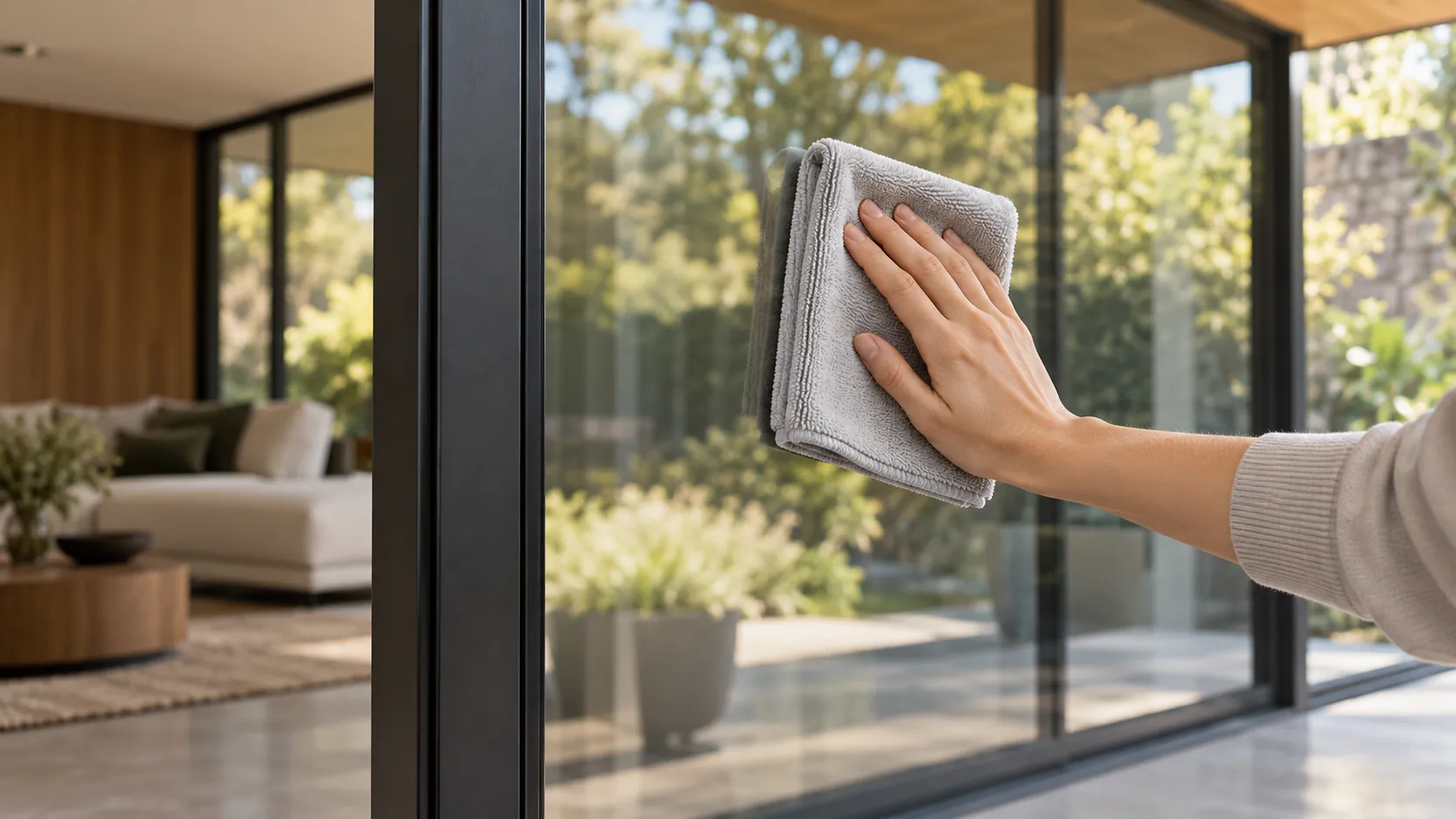
Find the care basics, recognize changes that need attention and ask for help with the architectural film already on your glass.
Begin cleaning only when your installation handoff and exact product instructions permit it. A pane that looks dry is not proof that the system has finished curing.
Use an ammonia-free cleaner approved for your film, a clean microfiber and light pressure. Keep grit and hard edges away from the film.
Avoid blades, abrasive pads, picking, puncturing or peeling. Protect film edges, seams, decorative cuts and any attachment.
Pause if an edge lifts, material loosens, residue is unknown or glass appears damaged. Ask for guidance before trying a repair.
| What you notice | The useful next step |
|---|---|
| Temporary haze, moisture or minor visual differences | These can occur while mounting solution dries. Follow the handoff, observe without pressing or picking, and ask if the appearance worsens or differs from the guidance. |
| Worsening appearance, lifting, damage or contamination | Stop work and contact us. Keep safe photos and note when the change appeared. Do not press, trim, puncture or glue the area. |
| Cracks, leaks, unstable glass or changed attachment | Restrict unsafe access and involve appropriate property or glass support. Do not assume the film makes the opening safe to touch. |
Drying time varies. Follow the care instructions we gave you for your specific film rather than a generic number online.
A symptom is not a diagnosis or a warranty decision. Neither “every spot is normal” nor “every spot is a defect” is a safe assumption.
The film, temperature, humidity, sunlight and airflow affect drying. Glass type and whether the film is inside or outside also matter. For security systems, materials that connect film to the frame may have a separate cure schedule. A dry appearance is not proof that cleaning or full performance is approved.
Check your microfiber for grit before cleaning, since trapped dirt can scratch the film. Use only ammonia-free cleaners approved for your film. If you are unsure which cleaner to use, ask us before cleaning.
Do not add stickers, suction cups, tape or adhesives without approval. Avoid unknown solvents, pressure washing, heating, polishing, caulking, trimming and DIY film removal unless the exact written product and project instructions specifically authorize the method. A scratch-resistant finish is not scratch-proof.
| Film / placement | Protect these details |
|---|---|
| Solar & privacy | Watch scratches, lifting and changed appearance. Tell us about new shading, heat sources or lighting. Reduced privacy after dark is not automatically a film defect. |
| Decorative & frosted | Protect fine cuts, patterns, logos and seams. Do not scrub across or pick at small details. |
| Safety & security | The film, edges, attachment, frame, gaskets, sealants, glass, doors and locks form the documented system. Observe without pressing, pulling or testing components. Do not cut, repaint, reseal or alter attachment yourself. |
| Anti-graffiti | Keep the pane or asset ID, exposed side, damage history and safe photos. Cleaning or replacement requires product and substrate review. Follow the property’s written replacement trigger. |
| Exterior film | Follow the exact exterior-product instructions for weather, dirt, deposits, edges and approved seals. Arrange safe professional access. Do not climb or reach unsafe glass. |
Interior film also needs protection from furniture, pets, signs, window treatments and nearby work. Inspection timing, exterior service life and replacement follow the product, exposure, condition and written maintenance plan.
Routine service messages are not an emergency response channel. Document only from a safe position when the situation permits it.
Tell anyone cleaning the windows or working nearby that film is installed. Share the care instructions and ask us before work could damage the film, its edges or its connection to the frame.
Signs, fixtures, shades, heat sources, frame work, locks or glass replacement can affect the installation. Ask for review before another trade changes film or attachment.
Cracks, fogging between panes, leaking frames and water intrusion may need window or building-repair help. Film does not repair these conditions.
Use a planned professional process. Old adhesive, aged coatings and damaged surfaces can complicate removal. Damage-free removal, patch repairs or an exact match to older panes are not guaranteed.
Record damage, cleaning products, contamination, service visits and replacement materials. Individual pane replacement may be possible after review. Inspection, cleaning, removal or replacement costs follow the actual work, not a universal service fee.
Proper care supports the installation and its records. It does not guarantee warranty coverage; the exact product, cause, exclusions and written terms still control.
Understand warranty reviewTell cleaners, painters, contractors, sign installers, glazing, security, HVAC and facilities teams that film is installed. Share the exact film, treated face, window or area names, install date, cure status and care limits.
Keep window records, inspection schedules and the written maintenance plan available to facilities staff and relevant trades. Attachment materials, exterior access and future glass replacement may need specialist review.
Wait until the instructions for your exact film and the installation handoff say you can clean it. Drying time varies, and a generic number online is not permission to start. Ask us if you are unsure which film or instructions apply.
Temporary haze, moisture or small visual differences can occur as installation moisture dries. Do not press, puncture, heat or peel the film. Contact us if it gets worse, lifts, appears damaged or differs from the drying guidance you received.
Use only an ammonia-free cleaner approved for your film. Follow the care instructions provided with your installation, and ask us if you are unsure which cleaner to use.
No. Use only ammonia-free cleaners approved for your film, and follow the care instructions provided with your installation.
Use a clean microfiber and check it for grit before cleaning. Trapped dirt can scratch the film. Avoid paper towels unless your film’s care instructions approve them. Stop if the microfiber drags or catches an edge.
No. Blades, hard scrapers and abrasive pads can scratch, cut or lift film. Ask for service with paint, adhesive, deposits or stubborn contamination.
Do not pressure wash film or its edges unless the exact product and written instructions approve the method and equipment settings. Difficult outdoor access or heavy buildup needs professional review.
Contact us about lifting edges, worsening bubbles or haze, scratches, discoloration, chemical contact or other damage. Moving attachment, disturbed frames or seals, cracks, leaks and impact need prompt appropriate review. Do not test or alter the area.
Keep people away. Do not push, pull, peel or remove filmed glass. Use the appropriate emergency, property, glass-repair, security, insurance and film support for the actual hazard. Routine messages are not an emergency response channel.
Most visible damage cannot be repaired invisibly in place. The affected window or design area may need professional removal, a check of the surface underneath, replacement film, drying and updated records.
You do not need every record to begin. Tell us what you know and we will explain the next step.
Our Raynham team serves Southeastern Massachusetts and Rhode Island.
Add your contact details and check Your Message before submitting. Nothing is sent until you submit the contact form.
Add your contact details and check Your Message before submitting. Nothing is sent until you submit the contact form.
If the form does not load, open Contact Us or continue with your details.


Plan visual separation, design and branding around the glass.
Read article ↗