

Care Starts With Your Pickup Instructions
Regular, gentle cleaning helps your coating stay easier to maintain. Start with the instructions for the product on each surface: the initial dry period, time before washing, and continued curing are different stages.
This guide is for owners in Raynham, Southeastern Massachusetts, and Rhode Island. Keep your installation details handy and use the sections below for your coated surfaces. Explore the coating products if you need help identifying them.
The First Week and Your Pickup Plan
For our paint and compatible PPF coating installations, wait seven days before washing. This is Kickin’ Customs’ shop aftercare guidance, not one universal technical cure time for every product.
Avoid automatic washes, pressure washing, unnecessary wiping, waxes, detail sprays, drying aids, and harsh chemicals during that period. Handle the finish gently for approximately two to three weeks. Temperature, humidity, product, and surface affect curing; a finish can look complete before it has finished settling.
Rain Is Different From Washing
Follow the initial no-water period provided at pickup. Glass and wheel coatings, for example, have product-specific dry times. Once that dry period has passed, normal rain exposure is permitted, but washing should still wait until the applicable no-wash period has ended.
Do not dry-wipe a dirty, rain-wet vehicle: dragging grit across fresh coating can mark the finish. Avoid unnecessary rubbing and ask us about persistent mineral residue. After the no-wash period, dry a properly washed and rinsed surface with clean, soft microfiber towels or a suitable blower instead of letting wash water evaporate.
Contamination Cannot Wait a Week
Remove bird droppings, bugs, sap, and other harmful surface contamination promptly and gently. Soften the affected area using a safe method suited to the fresh coating. Do not scrub or scrape. Contact us if it will not come off gently so we can help without disturbing the finish.
Follow the remaining dry period and pickup plan when driving home. Avoid parking beneath trees and unnecessary chemical or dirt exposure during early care. Avoid sprinkler spray throughout ownership, since mineral-rich water can leave spots even after the coating has cured.

How to Wash and Dry a Ceramic-Coated Vehicle
Once washing is permitted, clean materials and a thorough rinse do most of the work. Coating helps residue release; it cannot prevent marks caused by dragging grit across the finish.
- Choose a cool surface. Work out of direct sun where practical so soap and water do not dry too quickly.
- Rinse before touching. Remove loose sand, salt, and dirt. Give lower doors, bumpers, rockers, rear panels, and wheel areas extra attention.
- Use the two-bucket method. Use a clean, soft mitt with two buckets: one for coating-safe, pH-neutral wash solution and one for clean rinse water. Rinse the mitt before returning it to the wash solution, replace dirty rinse water, and keep wheel-cleaning tools separate.
- Work from the top down. Save the dirtiest lower areas for last. Use gentle contact and keep the surface lubricated.
- Rinse thoroughly. Remove loosened residue and cleaner without letting them dry on the vehicle.
- Dry the clean surface. Use clean, soft microfiber drying towels or a blower. Mineral-heavy water can leave deposits when it evaporates, even on a surface that beads well.
Hard water and sprinklers can leave spots. Address deposits early with safe cleaning; arrange an inspection if they persist. Deep etching and loose surface minerals do not need the same treatment.
How Often Should You Wash?
Once your initial care instructions permit washing, XPEL’s general exterior-care guidance recommends weekly cleaning with XPEL Rinse Free Car Wash. Adjust the method to the contamination: heavily gritty or salt-covered surfaces need thorough rinsing first. Follow the product directions and your pickup plan.
Can a Ceramic-Coated Vehicle Go Through a Car Wash?
Automatic brush washes can drag dirt and grit across the finish, creating swirls or wear. Careful hand washing gives you more control over the materials and pressure.
Touchless washes avoid brush contact but may rely on stronger chemicals. They are not automatically harmless, particularly with repeated use. Follow your coating’s wash guidance and avoid any automatic wash during the initial no-wash period.
Water Spots, Roughness, or Reduced Beading?
Water repellency does not remove minerals from water. Deposits from hard water, sprinklers or road spray can become harder to remove after sitting on warm panels, so address new spots early rather than letting them remain for days or weeks.
| What you notice | Safe first step | When to contact us |
|---|---|---|
| Mineral spots | After the permitted wash period, wash and dry properly. Avoid direct sun and sprinkler exposure. | Spots remain after gentle cleaning, or the finish appears etched. Do not start polishing at home. |
| Roughness or stubborn road film | Wash with appropriate products and clean materials. Do not use an abrasive pad to force it smooth. | The surface stays rough or difficult to clean. It may need professional decontamination or another correction. |
| Reduced beading or slickness | Remove ordinary dirt and cleaner residue with a proper wash. | Performance remains changed after cleaning, or the appearance is uneven. Buildup, wear, or a compromised coating may be involved. |
XPEL Ceramic Boost can refresh a clean, compatible surface, but it does not remove heavy contamination or repair coating damage. Improved beading after applying Boost does not confirm that the original coating is intact. We assess persistent concerns before recommending maintenance or reapplication.
XPEL Ceramic Coating Maintenance Products
Use products designed for the coating and actual finish. These are maintenance aids, not substitutes for clean wash tools or prompt contamination removal.
| Product | Purpose | Where and when |
|---|---|---|
| XPEL Rinse Free Car Wash | A rinseless wash option for appropriate routine or lighter cleaning. | Use as directed on suitable exterior surfaces. Rinse heavily gritty or salt-covered areas first rather than wiping debris across them. |
| XPEL Detail Spray | Light smudges, fingerprints, and a finishing wipe on suitable clean exterior surfaces. | Use after safe cleaning, following the label. It is not a dry-wipe solution for a heavily dirty vehicle. |
| XPEL Ceramic Boost | Refreshes gloss, slickness, and water behavior on a clean compatible finish. | Kickin’ Customs recommends it every six months where appropriate for paint and compatible PPF. Check finish suitability first; this is not an automatic instruction for glass, upholstery, WPF, or every matte surface. |
Follow the label and your pickup care plan. Read XPEL’s product-care guidance.
Avoid Cleaning That Changes the Finish
- Abrasive compounds, harsh household cleaners, magic erasers, strong solvents, and aggressive scrubbing.
- Repeated use of harsh high-pH washes or heavy residue-leaving waxes.
- Gloss-enhancing waxes, glazes, and normal paint polishing on matte or satin finishes.
Wax is usually unnecessary over a coating and may mask its water behavior or leave residue. Polishing can reduce or remove the coating. If you see marks, inspect the cause first: contamination may need cleaning rather than polishing, and any corrected area may need coating reapplied.
Bugs, Sap, Tar, and Road Grime
Bugs and Bird Droppings
Ceramic coating helps reduce how strongly contamination bonds to the surface, but it does not make the vehicle immune to staining, etching, or buildup.
Bug splatter and bird droppings should be removed as soon as possible. The longer contamination sits, the more likely it is to stain, etch, clog, or weaken the coating’s surface behavior.
For bugs, rinse the area first, use a coating-safe cleaner, allow the contamination to soften, and wipe gently with a clean microfiber towel. Do not scrub aggressively with a dry towel or rough bug sponge.
For bird droppings, act quickly. Bird droppings are acidic and can damage many vehicle surfaces, including ceramic coated paint. Remove them gently and avoid grinding dry residue into the finish.
Tree Sap
For tree sap, avoid scraping. Sap can harden and become difficult to remove without damaging the surface.
Use a safe cleaner and patience. If the sap has been sitting for a long time, professional removal may be the safer option.
Road Tar, Road Paint, and Heavy Road Grime
For road tar and road paint, do not use harsh solvents, razor blades, abrasive pads, or aggressive rubbing on the coated surface.
If normal cleaning does not remove the contamination, have the vehicle inspected before making the problem worse.
Road film, iron fallout, and heavy grime can also clog the surface and reduce slickness or water behavior. If the coating feels rough after washing, the surface may need decontamination.
Ceramic Coating Care by Surface
Open the surface guidance that matches your installation. The products do not share one universal dry period, cleaner, or maintenance treatment.
Paint and Compatible PPF
Follow the shop’s seven-day no-wash and approximately two-to-three-week gentle-care plan where supplied. After washing is permitted, hand wash with clean materials, dry properly, and remove contamination promptly. Use Ceramic Boost every six months only where appropriate to the film and coating.
Film has its own edges and a separate protective topcoat. Do not apply ordinary paint-polishing methods to existing film. After the applicable cure and no-wash periods, follow the PPF manufacturer’s pressure-washer nozzle guidance. Kickin’ Customs recommends keeping the nozzle at least three feet from film edges. Never concentrate high-pressure spray directly at an exposed edge. Read the PPF care guide for coated-film owners.
Wheels and Calipers
XPEL’s current Wheel & Caliper technical sheet specifies 24 hours before water exposure and three days to full cure. Confirm any remaining dry period at pickup.
Let hot wheels and brakes cool before washing. Use a finish-safe cleaner and soft dedicated tools, rinse thoroughly, and dry. Brake dust, salt, and road residue still build up, so clean regularly rather than letting them sit for weeks. Avoid harsh acids, aggressive brushes, and abrasive metal polish. Wheel coating and care details.
Exterior Glass
FUSION PLUS GLASS requires at least 24 hours before water exposure at 72°F or warmer, or 48 hours in cooler conditions. The listed full cure is 48 hours. Your pickup instructions account for conditions.
The windshield can lose water repellency sooner than side and rear glass because it sees wiper friction, washer fluid and repeated road spray.
Once cured, clean with suitable glass cleaner and clean microfiber. Dry after washing; keep wiper blades clean and replace worn ones. Avoid unnecessary wiping across dry or dirty glass, but always use wipers when visibility requires. Persistent streaking or reduced beading can warrant cleaning, maintenance, or reapplication. Glass coating details.
These instructions apply to coated bare glass. Windshield protection film has separate care instructions.
Matte and Satin Finishes
Use products compatible with the actual coating and low-sheen surface. Normal gloss polishing, gloss-enhancing waxes, and aggressive rubbing can create uneven shine. Do not assume that a care product suitable for glossy paint is suitable here.
Wash gently and dry carefully once permitted. Have new shiny areas, staining, or uneven appearance inspected before attempting correction.
Interior Upholstery and Separate Interior Film
FUSION PLUS UPHOLSTERY v2 is for suitable leather, vinyl, fabric, and carpet; it does not automatically treat screens or every plastic panel. Alcantara and suede are excluded. Its listed dry time is 60 minutes and cure time is 24 hours; keep treated areas dry for at least 24 hours and follow pickup instructions.
Clothing dye, sunscreen, cosmetics, food and body oils can still mark treated upholstery. Address contamination promptly rather than assuming the coating makes the material stain-proof.
Vacuum grit and blot spills promptly. Use the specified interior cleaner on appropriate non-fabric materials, with a hidden-area test. Avoid strong steam, harsh scrubbing, solvents, and oily dressings.
Have sticky, shiny, stained or discolored areas inspected before trying stronger cleaners.
Interior PPF is a separate product with its own cleaning and edge instructions. Compare the interior services.
Exterior Plastic & Trim
Suitable exterior plastic and rubber trim treated with XPEL FUSION PLUS PLASTIC & TRIM need their own care plan. The XPEL technical sheet lists 24 hours before water exposure and three days to full cure. Keep treated areas dry for that initial period and follow your pickup instructions.
Once washing is permitted, use a compatible mild automotive cleaner and clean, soft washing materials. Rinse away salt, dirt and road film. Avoid abrasive pads, aggressive rubbing, harsh chemicals and unapproved trim dressings. Do not assume paint-specific maintenance sprays suit every trim finish.
Ask Kickin’ Customs about persistent discoloration, staining or uneven appearance before attempting corrective cleaning.
New England Ceramic Coating Care
From Route 24 and I-95 commuting to Cape Cod and coastal Rhode Island driving, local exposure affects the care your vehicle needs. Adjust cleaning to the contamination you see while respecting the initial dry and no-wash periods for your installed products.
Winter Salt and Brine
Rinse and wash regularly when conditions allow. Focus on lower doors, rockers, bumpers, rear quarters, wheels, arches, and splash zones. Rinse sand away before contact washing. Salt and road film can change water behavior, but persistent roughness after cleaning deserves inspection.
Coastal Exposure
Salt film and wind-driven sand collect on outdoor vehicles near the water. Wash exterior surfaces consistently, paying attention to lower panels, wheels, glass, mirrors, and rear areas. Dry clean surfaces instead of leaving salty moisture to evaporate.
Spring and Summer
Do not dry-wipe pollen or construction dust. Rinse first or use an appropriate rinseless method. Remove bugs after highway trips, bird droppings promptly, and sap before it hardens. Work on cool panels because summer heat bakes residue on faster.
Fall Preparation
Clean away leaves and residue and check the finish before salt season. If a proper wash leaves roughness or uneven appearance, arrange an assessment. A suitable maintenance product can follow cleaning when appropriate; do not use it to cover up a persistent problem.
XPEL Coating Inspections and Maintenance Records
Book the required annual inspection with your original certified installer. For products with an annual clause, use the 30-day window before or after the installation or previous inspection/service anniversary stated in your warranty. Confirm the due date from your records; a routine wash does not automatically reset it.
Keep proof of installation and each inspection. Charges may apply. XPEL states that missing the required window voids the applicable limited warranty. Contact XPEL first if another installer is needed. LITE’s document has no separate annual clause, so confirm its paperwork and care requirements with the original installer.
Signature and Signature Complete include the first annual maintenance wash. This included wash is separate from the manufacturer’s product-specific formal inspection requirements. It does not mean that inspections, decontamination, reapplication or ongoing maintenance services are complimentary.
Your seasonal look over the finish is different from a formal warranty inspection. See the product-specific inspection and warranty details.
Request a Coating InspectionCeramic Coating Maintenance Schedule
Use this as a quick reference alongside the detailed guidance and your product-specific pickup instructions.
Scroll the table sideways to view all timing and care details.
| When | What to do | Why It Matters |
|---|---|---|
| Before water exposure | Complete the dry period for each installed product. | Respects the installed product’s initial dry period. |
| First seven days, paint / compatible PPF shop guidance | No washing; remove harmful surface contamination promptly and gently. | Limits unnecessary washing and handling of the fresh coating. |
| Approximately two to three weeks, same shop guidance | Handle gently during continued settling. | Provides gentle handling during the shop’s recommended early-care period. |
| Routine exterior cleaning, once washing is permitted | XPEL recommends weekly cleaning with Rinse Free Car Wash as a starting point. Rinse heavy grit or salt first, adjust to contamination, and follow product directions and your pickup plan. | Helps limit contamination buildup. This is general care guidance, not a new shop warranty condition. |
| At each wash | Rinse first, use clean materials, wash from the top down, rinse, and dry. | Reduces grit transfer and mineral deposits. |
| As contamination appears | Remove bugs, droppings, sap, and road residue safely; request help if it will not release. | Limits prolonged contact that can cause staining or etching. |
| Every six months, applicable surfaces | Use Ceramic Boost where suited to the finish and care plan. | Refreshes surface behavior on a clean, compatible finish. |
| Seasonally | Check for buildup, roughness, changes in water behavior, and uneven appearance. | Helps identify buildup or changes needing attention. |
| Annual inspection, products with that requirement | Book within the applicable 30-day anniversary window, confirm the recorded due date, and retain inspection proof. | Maintains the inspection record required by the relevant warranty. |
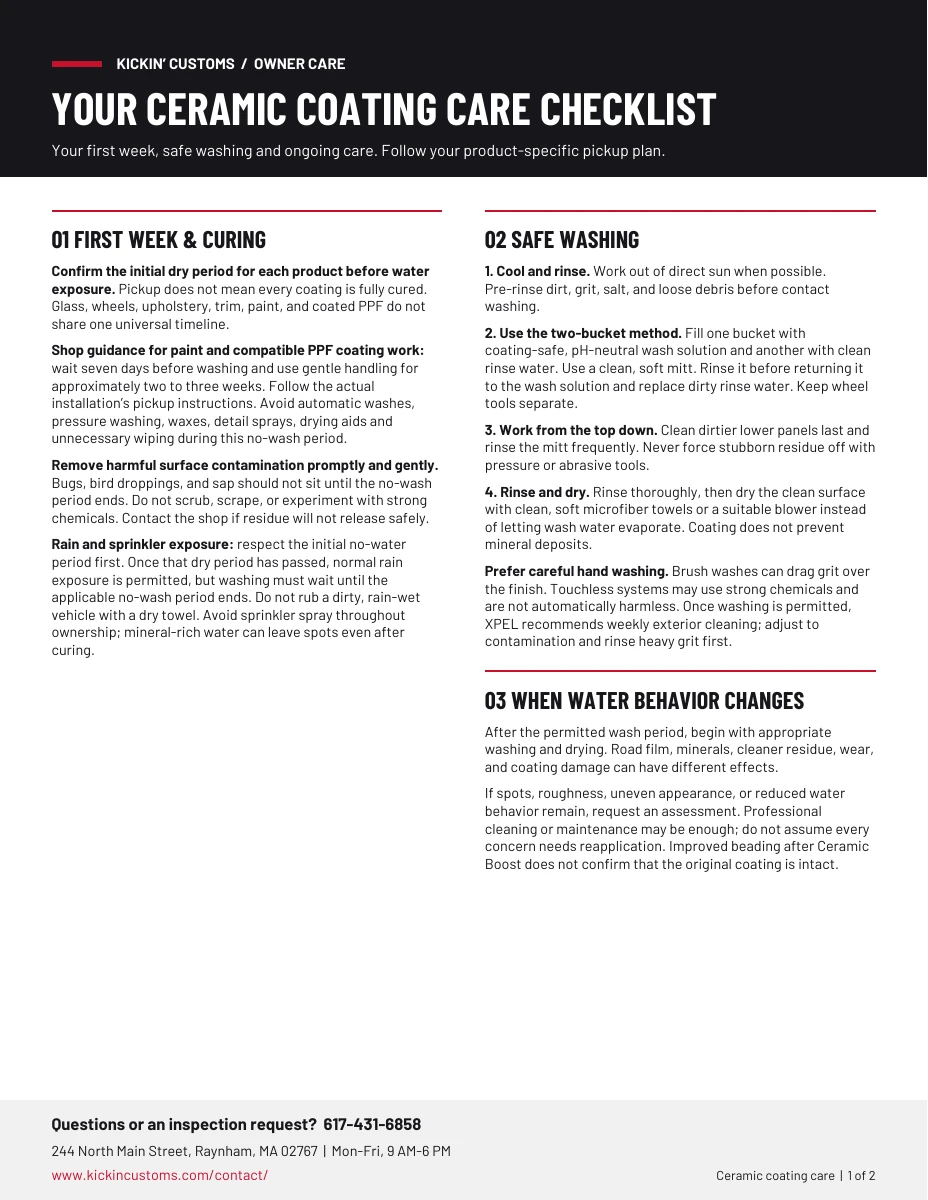
Download Your Care Checklist
A short printable companion with product-specific pickup reminders. Available without an inquiry form.

Ceramic Coating Maintenance FAQs
How long should I wait to wash after ceramic coating?
For the paint and compatible PPF coating work covered by our shop guidance, wait seven days before washing. Follow your pickup instructions for the specific products; glass, wheels, upholstery, and trim have separate dry and cure requirements.
Can a fresh coating get wet in the rain?
Follow its initial dry period first. Once water exposure is permitted, rain is different from washing. Do not rub a dirty, rain-wet vehicle with a dry towel. Avoid sprinklers and mineral-heavy water, and contact us if fresh contamination will not release gently.
Does pickup mean the coating is fully cured?
No. Products cure at different rates. Kickin’ Customs recommends gentle handling for approximately two to three weeks for its paint and compatible PPF coating work. Your product-specific pickup instructions control water exposure and other early care.
Can I drive after pickup?
Yes, once the vehicle is released with its pickup instructions. Respect any remaining dry period and avoid unnecessary contamination, sprinklers, and harsh cleaning during early care.
Hand wash, touchless, or brush wash?
Careful hand washing is preferred. Brush washes can drag grit across the finish. Touchless washes avoid brush contact but may use strong chemicals; they are not automatically harmless to the coating.
What soap should I use on ceramic-coated paint and PPF?
Use a pH-neutral automotive wash suited to your coating. XPEL Rinse Free Car Wash is useful for appropriate lighter cleaning when used as directed; heavily gritty or salt-covered surfaces need thorough rinsing first.
How often should I wash a ceramic-coated vehicle?
Once your initial care instructions permit washing, XPEL recommends weekly exterior cleaning with Rinse Free Car Wash. Rinse heavily gritty or salt-covered surfaces first and adjust the method to the contamination. Follow the product directions and your pickup plan; this is general care guidance, not a new shop warranty condition.
Can coated surfaces still get water spots?
Yes. Coating does not remove minerals from water. Wash out of direct sun where practical, rinse thoroughly, and dry clean surfaces with a soft clean towel or blower. Have persistent spots assessed before using stronger chemicals or polish.
Why has my ceramic coating stopped beading water?
Road film, residue, minerals, and other buildup can change water behavior. Wear or coating damage can also be involved. Start with a proper wash after curing, then arrange an inspection if the surface remains rough, flat, or difficult to clean.
How often should I use Ceramic Boost?
Our shop recommendation is every six months on the paint and compatible PPF surfaces for which it is appropriate. Follow the finish and product directions. Do not automatically apply this recommendation to glass, upholstery, windshield film, or every matte finish.
Does Ceramic Boost prove my coating is still intact?
No. It can refresh surface feel and water behavior on a clean compatible finish. It is not a coating-integrity test or a cure for damage, heavy contamination, or every loss of performance.
Should I wax or polish a coated vehicle?
Wax is usually unnecessary and can mask water behavior or leave residue. Polishing can reduce or remove coating. Have marks assessed first because surface deposits may need cleaning rather than correction. Never use normal gloss polishing on matte or satin finishes.
How should I remove bugs, bird droppings, or sap?
Remove them promptly and gently, including during the no-wash period. Soften residue with an appropriate safe method and avoid dry scrubbing or scraping. Contact us if it will not release gently, especially on fresh coating.
What about tar, road paint, or bonded contamination?
Do not experiment with solvents, abrasive pads, razors, or aggressive rubbing. Arrange an assessment when routine cleaning cannot remove it. Professional decontamination may be sufficient; the coating is not automatically failed.
How do I care for coated wheels and glass?
Let wheels cool before cleaning, use finish-safe products and soft dedicated tools, and rinse and dry thoroughly. Clean glass with suitable cleaner and microfiber, maintain the wiper blades, and use them when visibility requires. Follow each product’s separate initial dry period.
Are professional maintenance visits required?
Formal inspections are required by the applicable product warranty; optional maintenance is a separate service. Many owners handle routine washing themselves. Persistent spots, staining, roughness, uneven appearance, or changed performance warrant professional assessment.
How do I keep track of warranty inspections?
Book with the original certified installer using the due date in your installation and service records. The products with annual clauses specify a 30-day window before or after the relevant anniversary. See the warranty guide for product differences, LITE, records, and possible charges.
Does coating replace physical paint protection?
No. Coating makes suitable surfaces easier to clean and supports their finish. PPF is a separate physical layer for reducing damage from road debris. Coating does not make a vehicle scratch-proof.