A starting direction for a conversation, not a final product or glass approval.
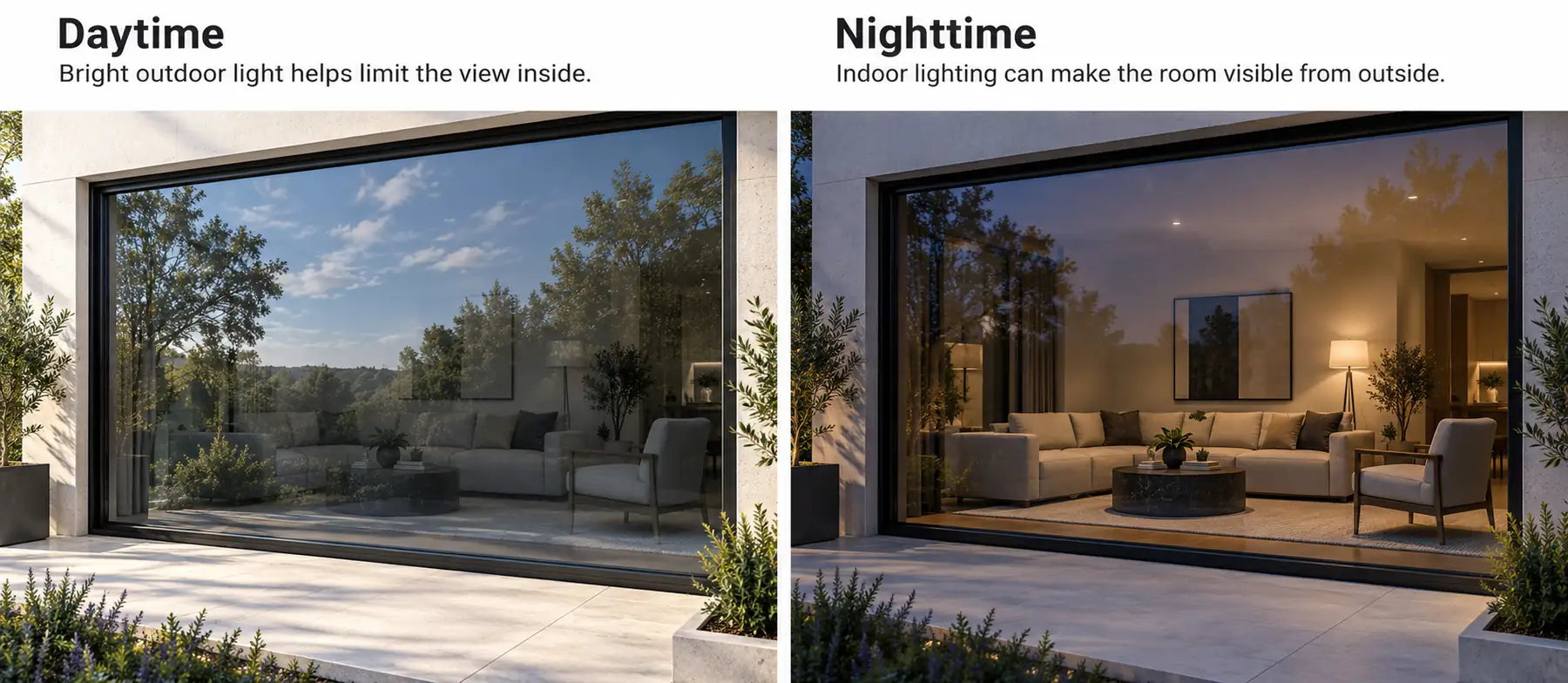
The lighting can reverse the result
Daytime privacy is not nighttime privacy.
Reflective film can help limit the view into a room when it is brighter outside than inside. After dark, indoor lights can make the room easier to see from outside and create reflections when you look out. Shade, clouds, nearby buildings, outdoor lights, viewing angle and distance can change the result.
Choose the kind of separation
Six approaches. Different tradeoffs.
Approach
What it can do
What to keep in mind
Reflective daytime screening
What it can doMay preserve an outward view when outdoors is brighter.
What to keep in mindLighting dependent; can weaken or reverse after dark.
Darker / tinted film
What it can doReduce visible light and make some views less prominent.
What to keep in mindDarkness is not a privacy guarantee; daylight and outward view change.
Frosted / dusted film
What it can doObscure clear detail while allowing varying amounts of light.
What to keep in mindNo clear outward view. Shapes, shadows or movement may show when close or backlit.
Opaque / Black Out
What it can doBlock the normal view through the covered area.
What to keep in mindReview daylight loss, appearance, heat absorption, edges and seams.
Controlled observation
What it can doSupport a specific viewing direction under managed lighting.
What to keep in mindNot a permanent one-way barrier. Doors, light leaks, monitors and angles can defeat the intended lighting relationship.
Patterns / partial bands
What it can doBlur the view where the room or design needs it.
What to keep in mindClear areas, logos and uncovered glass remain possible lines of sight.
Controlled observation requires real-use testing and managed conditions. It is not a universal room or camera-privacy solution.
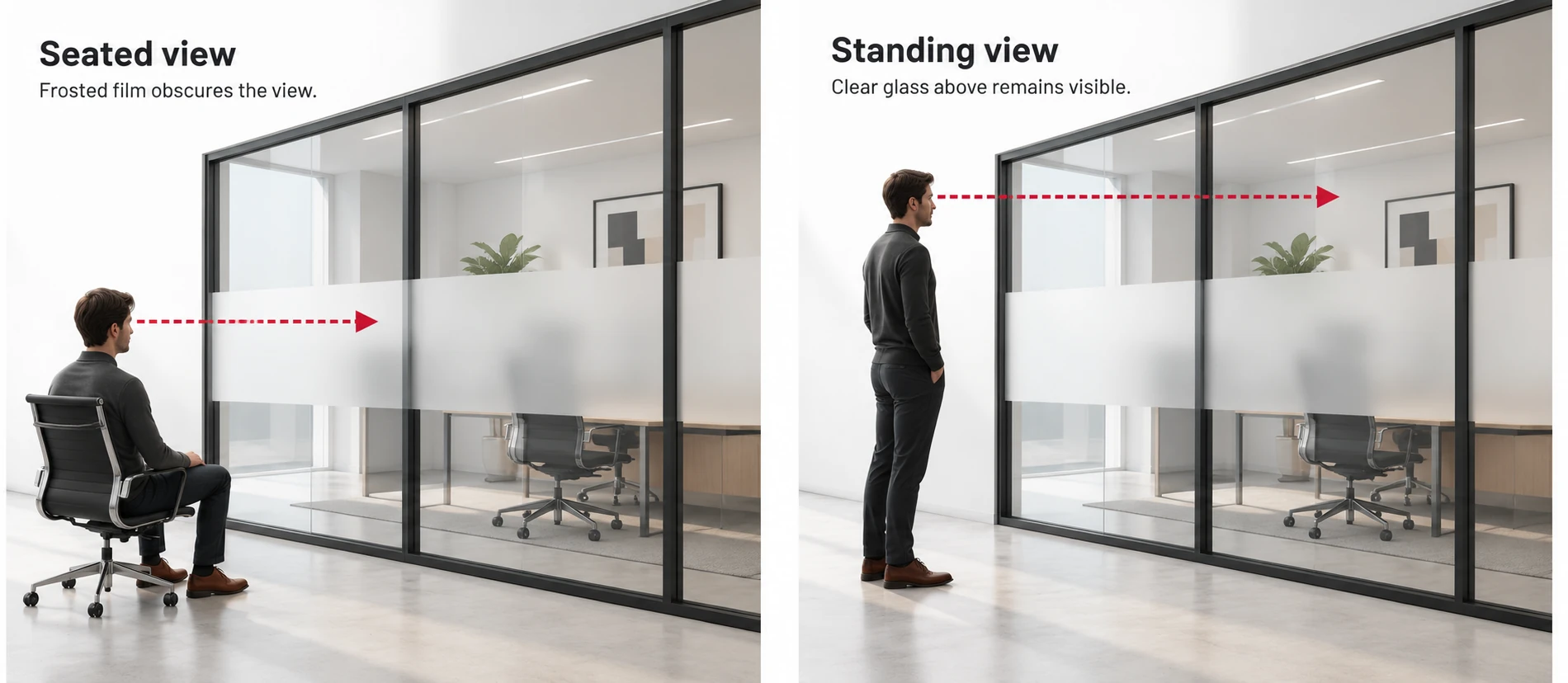
Identify whose view needs to be obscured and from which side. Check seated, standing, close-range and alternate positions under actual lighting. Doors, sidelights, glass above doors, clear logo areas and adjacent untreated panes can create another sightline.
The amount and placement of coverage also change how much daylight and outward view you keep.
Frosted finishes blur detail, but a nearby person, strong backlighting or movement may still produce a visible silhouette. Test the actual material and placement for the room.
Opaque coverage needs a complete plan.
Blocking the covered area also changes daylight and appearance. Review absorption on the actual glass, plus gaps, edges, seams and untreated openings.
Use the room’s real schedule
Match the plan to the space.
Space
Practical starting point
Review before choosing
Living areas
Practical starting pointDaytime screening, possibly with shades.
Review before choosingNighttime lamps, street lighting, facade, outward view and window treatments.
Bathrooms / bedrooms
Practical starting pointFrost, opaque coverage or adjustable shades.
Review before choosingBacklighting, silhouettes, sleep needs, wet-area location, glass safety markings, cleaning and emergency exits.
Entry doors / sidelights
Practical starting pointFrost, bands, patterns or approved opaque coverage.
Review before choosingSightline height, hardware, divided panes, pets, clear gaps and exterior appearance.
Offices / conference rooms
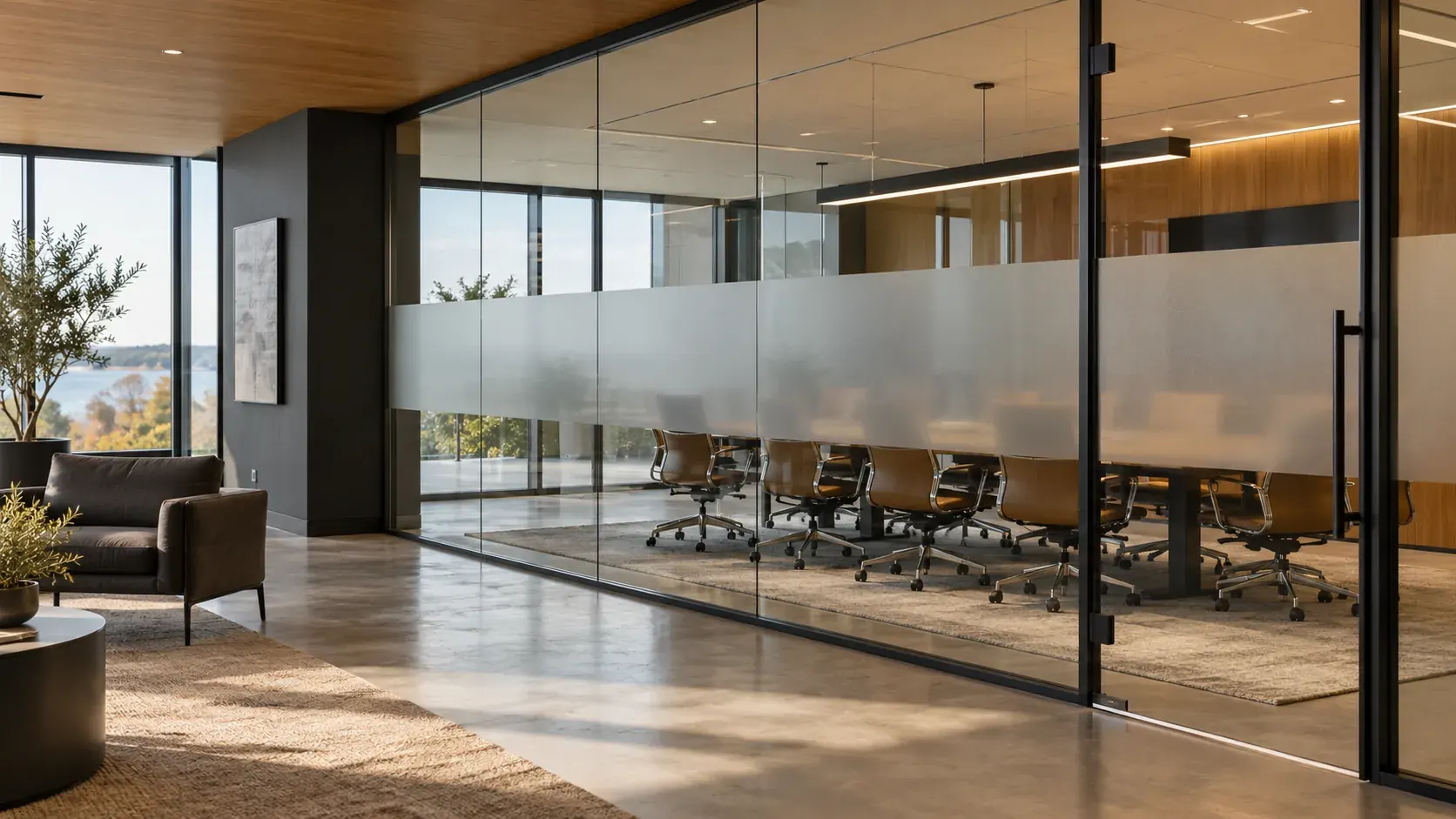
Practical starting pointFull or partial frosted coverage.
Review before choosingSeated and standing views, doors, glass above doors, lighting, branding and operating hours.
Clinics / treatment rooms
Practical starting pointObscured privacy under intended lighting.
Review before choosingRoom use plus separate operational, acoustic and regulatory requirements.
Stockrooms / back-of-house
Practical starting pointApproved opaque or view-blocking coverage.
Review before choosingDaylight loss, heat absorption, seams, access and untreated openings.
Try it in the light you will use
Test privacy when you need it.
Choose a sample
Compare the intended film and coverage on the actual glass.
Check the positions
Look from the relevant sides and seated, standing and close-range positions.
Check the time
Review actual daylight, room lighting and backlighting, including after dark when needed.
A daytime test cannot approve nighttime privacy. A small sample or a camera image does not reproduce every window, viewing position or exposure.
Shades, blinds or curtains can stay open for a daytime view and close when you need privacy. They can work alongside film, especially when privacy after dark matters.
Check for gaps around the edges. The treatment also needs to suit your glass and film, allow ventilation and avoid trapping too much heat against the window.
Choose the look for your building.
Check how the film looks from inside and outside, next to untreated or replacement glass. Color, reflections and evening lighting can make neighboring windows look different.
If your landlord, homeowners association, lease or historic-district rules require approval, you or your property manager will need to arrange it unless we agree otherwise in writing.
When a different type of glass may be needed
Electrically controlled privacy glass needs power, controls and servicing, and some types have a visible haze. Replacement or specialty glass may be a better fit for damaged windows, failed seals or a project that needs a permanent change. Window film cannot repair damaged glass or failed seals.
We check what type of windows you have, their coatings and condition, and how much sun they receive. These details help us choose a suitable film and plan safe access.
The right answer may be another film, more review, another system or no installation.
Drying time varies. Temporary haze or moisture may occur; wait for the installer-approved cleaning period. Use approved cleaner and clean, soft, nonabrasive tools. Avoid blades, scrapers and anything that can lift an edge.
Coverage follows the exact film, property use, installation, required records and current written XPEL terms. There is no one warranty for every architectural project.
Not reliably when the room is brighter than outdoors. Reflective privacy can weaken or reverse after dark. Use shades, curtains, frosted film, opaque film or another suitable method when nighttime privacy matters.
Can I see out while people cannot see in?
Sometimes, usually when outside is much brighter than inside. It is not a permanent one-way effect. Check it under the actual daytime and nighttime lighting.
What is the best film for bathroom privacy?
Frosted, dusted or opaque film is often a better starting point than reflective film. Check a sample for shadows and silhouettes, and confirm that the glass, wet-area location and cleaning needs suit the film.
Will frosted film show silhouettes?
It can, especially with a person close to the glass or strong light behind them. The film, pattern and coverage also matter. A sample in the actual room helps you judge the result.
Does darker window film guarantee privacy?
No. Darker film reduces light, but people or detail may still be visible, particularly at close range or when the room is brighter than outdoors.
Can privacy film block the view completely?
An approved opaque or Black Out film can block the normal view through the area it covers. Gaps, seams, clear glass, doors and adjacent windows can still provide another view.
Can I keep natural light and still add privacy?
Yes. Frosted, patterned and selected reflective films keep different amounts of daylight. The choice also depends on whether you need to see out, want nighttime privacy or prefer a particular look from outside.
Can privacy film be installed halfway up a window?
Yes. Partial bands are common on doors, sidelights, offices and conference rooms. The height should suit actual seated and standing views, room layout and distance. The edge between film and clear glass remains visible.
Can privacy film be used on office glass walls?
Yes, on suitable glass. Frosted, patterned, partial or opaque film can separate views. We plan around doors, hardware, surrounding glass, safety markings, lighting, branding and possible changes in room use.
How much does privacy window film cost?
The price depends on the film, window size and number, coverage, preparation and safe access. Existing film, design work and scheduling also matter. See Pricing & Consultation for how we prepare your quote.