
Real answers. Real experience.
Windshield Protection Film FAQs
112 answers · 10 topics
Considering windshield protection film for your vehicle? This guide explains how XPEL's clear exterior film helps reduce rock chips, cracks, and pitting from everyday road debris. Explore installation, pricing, optical clarity, wiper care, durability, warranty coverage, and limitations, so you can decide whether protecting your windshield makes sense for your vehicle and driving habits.
Real Answers About Windshield Protection Film, Backed by Real-World Experience
Showing all 112 questions
No matching answers
Try a shorter phrase, a different word, or browse all topics.
What Windshield Protection Film Actually Is and How It Works
What Is Windshield Protection Film?
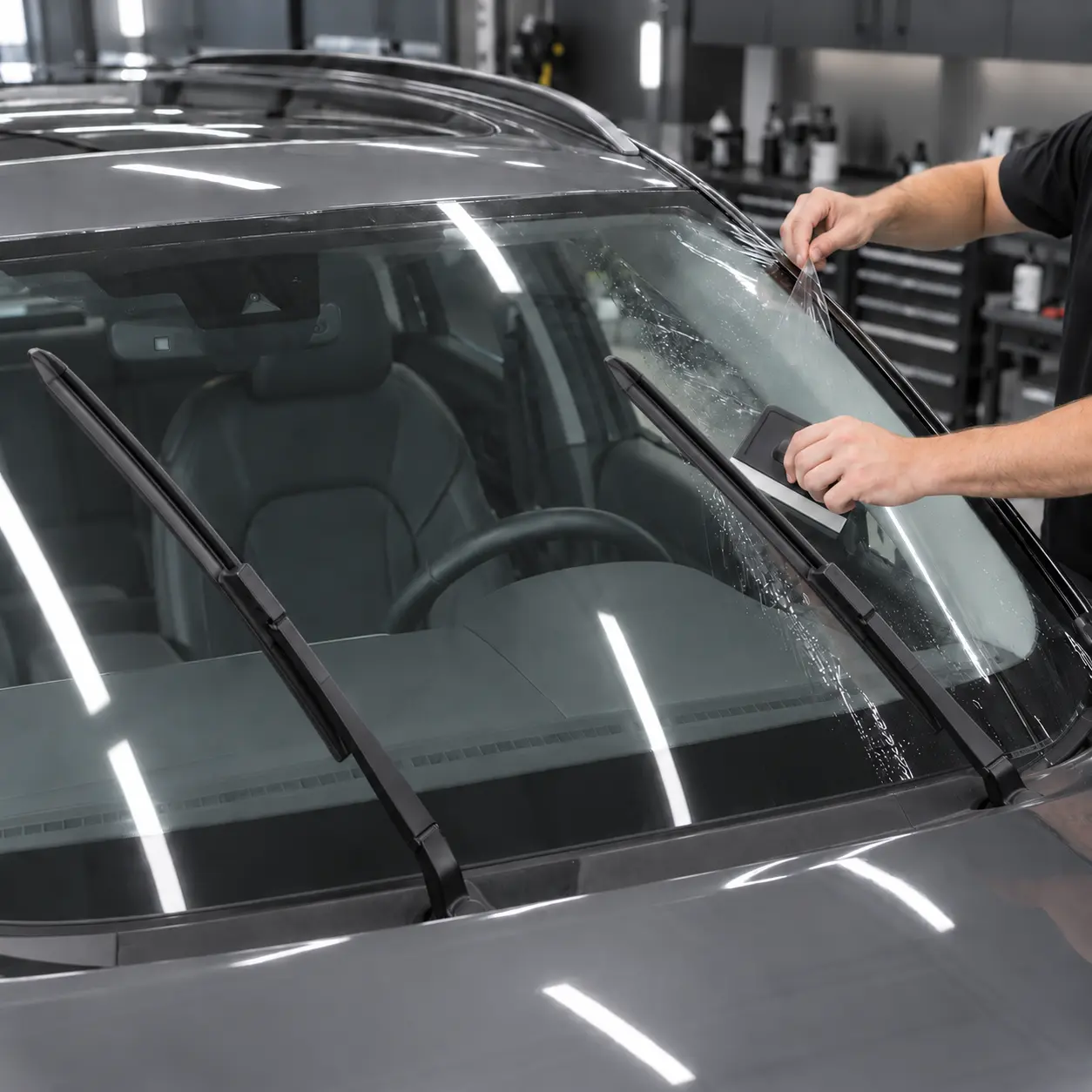
Windshield protection film is a clear protective film installed on the outside surface of the windshield to help reduce damage from rock chips, sand, salt, gravel, and other road debris.
It is similar in concept to paint protection film, but it is engineered for glass use. The goal is to add a sacrificial layer over the windshield so the film takes some of the abuse that would normally hit the glass directly.
At Kickin’ Customs, we explain windshield protection film as added defense, not a guarantee. It can greatly reduce the risk of common windshield damage, but it does not make glass indestructible.
Link to this answerHow Does Windshield Protection Film Work?
Windshield protection film works by creating a clear impact-absorbing layer over the glass. When small stones, sand, salt, or road debris hit the windshield, the film helps absorb and spread some of that impact before it reaches the glass underneath.
The film also acts as a sacrificial surface. Instead of the windshield taking every scratch, pit, and light impact directly, the film takes the wear first.
This is why windshield protection film is valuable for daily drivers, highway vehicles, exotic cars, luxury vehicles, trucks, and vehicles with expensive glass. It helps protect one of the most vulnerable and costly pieces of glass on the vehicle.
Link to this answerIs Windshield Protection Film Installed Inside or Outside the Glass?
Windshield protection film is installed on the outside surface of the windshield. That is the side exposed to road debris, rocks, sand, salt, bugs, wipers, weather, and impact.
This is different from window tint, which is typically installed on the inside surface of the glass. Windshield protection film is not designed mainly for shade or heat rejection. It is designed to protect the outside of the windshield from physical wear and impact.
Because it is installed outside, it will experience real-world abuse. That means proper care, maintenance, and realistic lifespan expectations matter.
Link to this answerIs Windshield Protection Film the Same as Window Tint?
No. Windshield protection film is not the same as window tint. Window tint is installed on the inside of the glass and is designed for heat rejection, UV protection, glare reduction, privacy, and comfort.
Windshield protection film is installed on the outside of the glass and is designed to reduce damage from road debris and impact. It is clear, protective, and focused on preserving the windshield.
Some customers choose both. A light ceramic windshield tint can improve comfort from the inside, while windshield protection film helps protect the outside of the glass.
Link to this answerIs Windshield Protection Film the Same as Paint Protection Film?
Windshield protection film and paint protection film are similar in concept, but they are not the same product. Paint protection film is made for painted surfaces. Windshield protection film is made for exterior glass.
Both products act as sacrificial protection layers, but glass and paint have different requirements. Windshield film needs to maintain optical clarity, resist wiper wear, handle weather exposure, and remain safe to see through while driving.
This is why the correct product matters. A film designed for paint should not simply be used as a windshield protection film unless it is specifically engineered and approved for that type of application.
Link to this answerWhat Does Windshield Protection Film Protect Against?
Windshield protection film helps protect against common road debris such as small stones, sand, salt, gravel, road grit, and light impact damage. It can also help reduce pitting and surface wear that builds up over time from daily driving.
This is especially useful for vehicles driven on highways, behind trucks, through construction zones, on winter roads, or in areas where sand and salt are common.
The film is meant to reduce risk. It gives the windshield an added layer of defense against the types of damage that commonly lead to chips, pits, and cracks.
Link to this answerWhat Does Windshield Protection Film Not Protect Against?
Windshield protection film does not make the windshield unbreakable. Large rocks, severe impacts, high-speed debris, edge hits, existing glass damage, stress cracks, and structural impacts can still damage the windshield.
It also does not repair glass that is already chipped, cracked, delaminated, or damaged. The windshield needs to be in good condition before film is installed.
This expectation matters. Windshield film is strong protection, but it is not magic. It reduces the chance of damage from common road debris, but no film can guarantee that glass will never chip or crack.
Link to this answerWhy Do People Install Windshield Protection Film?
People install windshield protection film because windshield replacement has become expensive, inconvenient, and more complicated than it used to be. Many newer vehicles have advanced driver assistance cameras, rain sensors, heads-up displays, heated glass, specialty glass, and calibration requirements.
A windshield chip or crack can turn into a much bigger issue than just replacing a piece of glass. Depending on the vehicle, replacement may involve parts availability, insurance claims, recalibration, aftermarket glass concerns, and downtime.
For customers who own high-end vehicles, newer vehicles, rare vehicles, or vehicles with expensive windshields, windshield protection film can be a smart preventive upgrade.
Link to this answerIs Windshield Protection Film Clear?
Yes, windshield protection film is designed to be clear so the driver can see through the windshield safely. Optical clarity is one of the most important parts of the product.
That said, windshield film is still a physical layer installed over glass. The quality of the film, installation, windshield condition, maintenance, and wiper care all affect how clear the final result looks over time.
A proper windshield film installation should be clean, clear, and comfortable to drive with. If visibility is poor, distorted, hazy, or distracting, the vehicle should be inspected.
Link to this answerIs Windshield Protection Film Worth It?
Windshield protection film is worth it for customers who want to reduce the risk of windshield chips, cracks, pitting, and expensive glass replacement. It is especially valuable on vehicles with costly windshields, hard-to-find glass, driver assistance systems, heads-up displays, or frequent highway use.
It may not be necessary for every vehicle. If the windshield is inexpensive to replace and the vehicle rarely sees highway driving, the value may be lower.
For many newer, luxury, exotic, performance, and daily-driven vehicles in New England, windshield protection film makes sense because road debris, salt, sand, and construction zones are a constant threat.
Link to this answerWhat Windshield Protection Film Helps With, And What It Does Not
What Does Windshield Protection Film Help With?
Windshield protection film helps reduce the risk of chips, cracks, pitting, and surface wear caused by common road debris. It adds a clear protective layer to the outside of the windshield so stones, sand, salt, and grit hit the film before they hit the glass.
This is especially valuable for vehicles that see a lot of highway driving, construction zones, winter roads, gravel, sand, or traffic behind trucks. Windshields take a lot of abuse, and much of that damage starts small before becoming a larger crack.
At Kickin’ Customs, we explain windshield protection film as prevention, not perfection. It greatly improves your odds against everyday windshield damage, but it cannot guarantee that glass will never break.
Link to this answerDoes Windshield Protection Film Prevent Rock Chips?
Windshield protection film can help prevent many common rock chips, especially smaller impacts from stones, sand, salt, and road grit. The film absorbs part of the impact and creates a sacrificial layer over the glass.
That said, not every rock chip can be prevented. A large rock, sharp debris, high-speed impact, or edge impact can still damage the windshield even with film installed.
The goal is risk reduction. If the vehicle sees frequent highway use or has expensive glass, windshield protection film can be a smart way to reduce the chance of damage.
Link to this answerDoes Windshield Protection Film Prevent Cracks?
Windshield protection film can help reduce the chance of cracks by preventing or reducing the chips that often turn into cracks. Many windshield cracks start as small impact points. If the film helps stop that initial chip, it may also help prevent the crack that would have followed.
However, windshield film cannot stop every crack. Glass can still crack from severe impacts, edge stress, temperature changes, existing damage, structural pressure, or a strong hit that overwhelms the film.
This is why expectations matter. Windshield protection film can make a major difference, but it should not be sold as a guarantee that the windshield can never crack.
Link to this answerDoes Windshield Protection Film Help with Sand and Pitting?
Yes, windshield protection film can help reduce sandblasting and pitting. Over time, windshields collect tiny pits from sand, salt, road grit, and debris hitting the glass at speed. This can make the windshield look hazy, especially when driving into sunlight or headlights.
The film acts as the wear surface instead of the glass. As the vehicle is driven, the film takes much of that daily abuse.
This is one of the underrated benefits of windshield protection film. It is not only about stopping one big rock. It is also about reducing the slow wear that makes a windshield look aged and difficult to see through over time.
Link to this answerDoes Windshield Protection Film Help in Winter?
Yes, windshield protection film can be especially useful in winter because roads are often covered with salt, sand, gravel, and debris. Snowplows, trucks, potholes, and winter road treatment can all increase the amount of material being thrown at the windshield.
In Massachusetts and Rhode Island, winter driving can be hard on glass. Even if a rock chip does not happen right away, constant sand and salt can wear the windshield down over time.
Windshield protection film gives the glass an added layer of defense during the season when road debris is often at its worst.
Link to this answerDoes Windshield Protection Film Help on the Highway?
Yes, highway driving is one of the best use cases for windshield protection film. Higher speeds make impacts more severe, and vehicles are more likely to throw stones, sand, salt, and road debris into the windshield.
If you spend a lot of time behind trucks, commuting on highways, driving through construction zones, or traveling long distances, your windshield has a higher chance of taking damage.
For daily commuters and long-distance drivers, windshield protection film can be worth it because the risk is repeated over and over again.
Link to this answerDoes Windshield Protection Film Help with Construction Zones?
Yes, windshield protection film can help reduce damage from construction zones because those areas often have loose gravel, sand, dust, uneven pavement, debris, and trucks entering or leaving the road.
Construction areas are one of the most common places where windshields get hit. Even careful drivers cannot always avoid debris kicked up by other vehicles.
The film gives the windshield a better chance of surviving those common impacts, although severe debris can still cause damage.
Link to this answerDoes Windshield Protection Film Protect Against Wiper Scratches?
Windshield protection film can help reduce direct wear to the glass from wipers, but the film itself can be scratched or worn by poor wiper blades, dirt, dry wiping, ice scraping, or contaminated glass.
Because the film is installed on the outside of the windshield, the wipers ride over the film. That means wiper condition becomes very important.
If the wipers are old, torn, dirty, or dragging grit across the surface, they can damage the film. Proper wiper care helps extend the life and clarity of windshield protection film.
Link to this answerDoes Windshield Protection Film Stop All Windshield Damage?
No. Windshield protection film does not stop all windshield damage. It is designed to reduce the risk of common road debris damage, but it cannot make glass indestructible.
Large impacts, sharp debris, severe rock strikes, existing cracks, edge hits, stress cracks, and extreme force can still damage the windshield. No film can honestly guarantee that a windshield will never chip, crack, or break.
The value is that windshield protection film gives the glass an extra layer of defense. It improves the odds in your favor, especially against the everyday debris that commonly damages windshields.
Link to this answerWhat Does Windshield Protection Film Not Do?
Windshield protection film does not repair existing glass damage, make the windshield unbreakable, replace safe driving, eliminate the need for windshield care, or guarantee that every impact will be stopped.
It also does not replace insurance or make windshield replacement impossible in the future. If the windshield takes a severe hit or already has damage, replacement may still be needed.
The best way to understand windshield protection film is simple. It is a sacrificial layer designed to reduce damage, extend windshield life, and make expensive glass less vulnerable to everyday road abuse.
Link to this answerWindshield Protection Film Appearance & Real-World Expectations
Can You See Windshield Protection Film?
Windshield protection film is designed to be clear and difficult to notice when installed properly. From a normal driving position, the goal is for the film to protect the glass without distracting the driver or changing the overall look of the vehicle.
That said, windshield film is still a physical layer on top of the glass. Depending on the windshield shape, lighting, film condition, installation, and edge placement, you may be able to see the film edge or slight visual differences in certain conditions.
A proper install should be clean, clear, and comfortable to drive with. It should not create distracting haze, distortion, or visibility issues during normal use.
Link to this answerWill Windshield Protection Film Affect Visibility?
A quality windshield protection film should maintain clear visibility when installed properly on clean, healthy glass. Optical clarity is one of the most important parts of the product because the windshield is the driver’s main view of the road.
Visibility can be affected by poor film quality, poor installation, old windshield damage, worn wipers, dirt, scratches, haze, or improper maintenance. The condition of the windshield before installation also matters.
At Kickin’ Customs, we treat windshield film differently than cosmetic film because driver visibility is critical. The goal is protection without creating a distracting driving experience.
Link to this answerDoes Windshield Protection Film Cause Glare?
Windshield protection film should not create major glare when installed properly, but glare can still come from the windshield condition, lighting, sun angle, dirty glass, worn wipers, haze, scratches, or contamination on the film surface.
Any windshield can create glare if it is dirty, pitted, or scratched. Windshield protection film helps reduce future pitting to the glass, but the film itself still needs to be maintained so it stays clear.
If glare becomes noticeable after installation, the film and windshield should be inspected. Sometimes the issue is residue, wiper wear, contamination, or maintenance-related rather than the film itself.
Link to this answerWill Windshield Protection Film Look Different at Night?
A properly installed windshield protection film should be comfortable to drive with at night. However, night driving can reveal issues more easily because headlights, streetlights, rain, and reflections make windshield clarity more noticeable.
If the film is dirty, scratched, hazy, or installed poorly, nighttime glare or distortion may be more noticeable than during the day. This is why film quality, installation quality, and wiper care matter.
Customers should understand that windshield film needs to be kept clean and maintained. Clear visibility is not just about the product. It is also about care after installation.
Link to this answerCan Windshield Protection Film Have Edges?
Yes, windshield protection film can have visible edges depending on the windshield shape, film pattern, installation method, and how close the film is installed to the edge of the glass.
Some windshields allow very clean edge placement. Others have tight trims, sensors, camera housings, dot matrix areas, deep lower edges, or shapes that limit how the film can be finished.
A visible edge does not automatically mean the install is bad. The key is that the edge should be clean, secure, and placed in a way that makes sense for the windshield.
Link to this answerWill Windshield Protection Film Cover the Entire Windshield?
In many cases, windshield protection film is installed to cover the main exposed area of the windshield, but the exact coverage depends on the windshield design, sensor areas, trim, mirror housing, camera systems, and installation pattern.
Some vehicles have large camera housings, rain sensors, heads-up display areas, or complex edges that affect coverage. A professional installer needs to account for those details before installation.
The goal is to protect the most important exposed glass while maintaining visibility, sensor function, and a clean installation.
Link to this answerWill Windshield Protection Film Affect Rain Sensors or Cameras?
Windshield protection film is installed on the outside of the windshield, while many rain sensors and cameras are mounted behind or inside the glass. In many vehicles, the film can be installed without interfering with normal operation, but vehicle-specific sensors and camera areas need to be considered.
Some vehicles have advanced driver assistance cameras, lane systems, automatic wipers, heads-up displays, and sensor housings that make windshield work more complicated. The film needs to be installed with those systems in mind.
A professional installation should account for the vehicle’s technology. The goal is to protect the windshield without creating issues with visibility or factory systems.
Link to this answerWill Windshield Protection Film Affect a Heads-Up Display?
Windshield protection film should not normally affect a heads-up display when the correct film is installed properly, but HUD clarity can depend on the vehicle, windshield, film quality, installation, and viewing angle.
Heads-up displays are sensitive because they rely on the windshield as part of the projection system. If there is distortion, haze, or poor film clarity, the HUD may be more noticeable than on a vehicle without HUD.
If a vehicle has a heads-up display, that should be discussed before installation. The installer should understand that optical clarity matters even more on these vehicles.
Link to this answerDoes Windshield Protection Film Change the Color of the Glass?
Windshield protection film is designed to be clear and should not noticeably darken the windshield like window tint. Its purpose is protection, not shade or privacy.
There may be subtle visual differences depending on the film and lighting, but the windshield should still look natural and clear. If a customer wants heat rejection or glare reduction, light ceramic windshield tint is a separate product installed on the inside of the glass.
Windshield protection film protects the outside. Windshield tint improves comfort from the inside. They solve different problems.
Link to this answerWhat Should a Proper Windshield Protection Film Install Look Like?
A proper windshield protection film installation should look clean, clear, and consistent. The film should be aligned properly, the main viewing area should be clear, and the edges should be finished neatly based on what the windshield allows.
It should not have major trapped contamination, distracting haze, heavy distortion, lifting edges, large bubbles, or visible defects that interfere with driving.
The best windshield film installs balance protection, clarity, and realistic expectations. The film should do its job without making the driver constantly notice it.
Link to this answerWindshield Protection Film Coverage, Vehicle Types & Best Use Cases
What Vehicles Benefit Most from Windshield Protection Film?
The vehicles that benefit most from windshield protection film are vehicles with expensive windshields, high replacement costs, advanced driver assistance systems, heads-up displays, heated glass, rare glass, hard-to-source glass, or frequent highway use.
Luxury vehicles, exotic cars, performance vehicles, newer trucks, SUVs, Teslas, Rivians, Porsches, Corvettes, and high-end daily drivers are all strong candidates because windshield replacement can be expensive and complicated.
At Kickin’ Customs, we usually recommend windshield protection film when the cost, inconvenience, or risk of replacing the glass is high enough to justify prevention. The more expensive or complicated the windshield is, the more sense protection makes.
Link to this answerIs Windshield Protection Film Worth It on a New Vehicle?
Yes, windshield protection film can be a smart upgrade on a new vehicle because the windshield is still in its best condition. Installing the film early helps protect the glass before chips, pits, scratches, and road wear build up.
This is especially important on newer vehicles with cameras, sensors, heated glass, rain sensors, or heads-up displays. A windshield replacement on a modern vehicle can involve more than just swapping glass. Calibration, parts availability, and glass quality all matter.
If you plan to keep the vehicle and want to reduce the chance of windshield damage, installing film early is usually the best timing.
Link to this answerIs Windshield Protection Film Worth It on a Used Vehicle?
Windshield protection film can be worth it on a used vehicle if the windshield is still in good condition. The glass should be inspected before installation because film should not be installed over major chips, cracks, heavy pitting, deep scratches, or damaged glass.
If the windshield already has significant wear, the film may not look as clear and may not perform the way it should. In some cases, replacing the windshield first may make more sense before adding protection.
For used vehicles with clean glass, windshield protection film can still be a strong upgrade, especially if the vehicle is driven often, parked outside, or has expensive glass.
Link to this answerIs Windshield Protection Film Worth It on a Daily Driver?
Yes, windshield protection film can be very useful on a daily driver. Daily drivers see the most road debris because they are constantly exposed to highways, traffic, trucks, construction zones, winter sand, salt, and everyday driving conditions.
A windshield chip can happen at any time. The more miles you drive, the more chances the glass has to get hit.
For daily drivers in Massachusetts and Rhode Island, this is one of the strongest reasons to consider windshield protection film. Local roads, winter treatment, construction, and highway traffic all increase windshield risk.
Link to this answerIs Windshield Protection Film Worth It on a Highway Vehicle?
Yes, highway vehicles are one of the best use cases for windshield protection film. Windshield impacts are more common at highway speeds because road debris hits harder and vehicles are often traveling behind trucks, trailers, and other traffic.
Even small stones can chip or crack glass at speed. Over time, sand and grit can also pit the windshield and reduce clarity.
If you commute daily, travel frequently, or drive long distances, windshield protection film can help reduce the risk of common glass damage.
Link to this answerIs Windshield Protection Film Worth It on a Tesla?
Yes, windshield protection film can be worth it on a Tesla because Tesla windshields can be expensive, large, and tied into advanced camera systems depending on the model. A windshield replacement may involve more than just the cost of glass.
Many Tesla owners also drive frequently, commute, or rely heavily on factory cameras and driver assistance features. Protecting the windshield helps reduce the risk of chips, cracks, and the inconvenience of replacement.
For Tesla owners who already invest in paint protection film, ceramic tint, or ceramic coating, windshield protection film fits naturally as another protection layer.
Link to this answerIs Windshield Protection Film Worth It on a Luxury or Exotic Vehicle?
Yes, windshield protection film is often worth it on luxury and exotic vehicles because the windshield can be expensive, difficult to source, and more complicated to replace. Some vehicles have specialty glass, heads-up displays, sensors, heated elements, or limited parts availability.
A cracked windshield on a high-end vehicle is not always a quick repair. It may involve insurance, parts delays, calibration, concerns about factory glass versus aftermarket glass, and downtime.
For these vehicles, the value of windshield protection film is not only preventing damage. It is also reducing the chance of a costly and frustrating replacement process.
Link to this answerIs Windshield Protection Film Worth It on a Truck or SUV?
Yes, windshield protection film can be worth it on trucks and SUVs, especially if they are daily-driven, used for work, driven on highways, or exposed to construction zones, dirt roads, gravel, winter roads, and job sites.
Trucks and SUVs often have large, upright windshields that can take a lot of abuse. Work trucks may also follow other vehicles, trailers, equipment, or crews through rougher environments.
If the vehicle is used for work or towing, windshield protection film can be a practical way to reduce glass damage and downtime.
Link to this answerIs Windshield Protection Film Worth It on a Leased Vehicle?
Windshield protection film can be worth it on a leased vehicle if the windshield is expensive, the vehicle is driven often, or the customer wants to reduce the chance of damage during the lease term.
A lease does not prevent windshield problems. The customer still has to deal with chips, cracks, insurance claims, replacement concerns, and lease return condition.
The decision depends on the lease length, vehicle type, driving habits, and replacement cost. If the vehicle has advanced glass or is frequently driven on highways, windshield protection film may still make sense.
Link to this answerShould I Install Windshield Protection Film Before or After a Windshield Replacement?
If the windshield is already damaged and needs to be replaced, the best time to install windshield protection film is after the new windshield has been installed and the glass is ready for film. This allows the film to protect a clean, new surface.
If the current windshield is in good condition, the film can be installed before damage happens. That is usually the ideal scenario because the goal is prevention.
The windshield should always be inspected first. Film should not be treated as a repair for damaged glass. It works best when installed over clean, healthy glass.
Link to this answerWindshield Protection Film Pricing, Value & Why It Costs What It Costs
How Much Does Windshield Protection Film Cost?
The cost of windshield protection film depends on the vehicle, windshield size, glass shape, film used, installation complexity, and whether the vehicle has sensors, cameras, specialty glass, or other windshield technology.
Some windshields are simple and straightforward. Others are large, curved, expensive, or surrounded by trim, mirror housings, camera modules, rain sensors, heated elements, and heads-up display technology. Those details can affect the installation process.
Windshield protection film should be viewed as a preventive protection upgrade. The value is not only the film itself. It is reducing the risk of expensive windshield replacement, recalibration, downtime, and glass-related headaches.
Link to this answerWhy Is Windshield Protection Film Expensive?
Windshield protection film is expensive because it is a specialty product installed on one of the most important pieces of glass on the vehicle. The film needs to be clear, durable, shaped correctly, installed cleanly, and safe to see through every day.
A windshield is not the same as a side window or painted body panel. The driver looks through it constantly, so optical clarity and installation quality matter heavily.
The price reflects the product, installation skill, windshield size, pattern accuracy, surface preparation, and the care needed to install the film without creating visibility issues.
Link to this answerWhy Do Windshield Protection Film Prices Vary by Vehicle?
Prices vary by vehicle because windshields vary a lot. Some are small and flat compared to others. Some are huge, deeply curved, or packed with sensors and camera housings. Some vehicles have expensive or rare glass that makes protection more valuable.
A Tesla windshield, Porsche windshield, Corvette windshield, exotic car windshield, or luxury SUV windshield may require a different level of attention than a basic commuter vehicle.
The vehicle’s windshield shape and technology affect both the install and the value of protecting it. The more expensive or difficult the windshield is to replace, the more sense the protection usually makes.
Link to this answerIs Windshield Protection Film Cheaper Than Replacing a Windshield?
In many cases, windshield protection film costs less than replacing a modern windshield, especially on vehicles with advanced driver assistance systems, heated glass, rain sensors, cameras, heads-up displays, or specialty glass.
Windshield replacement can involve more than the glass itself. There may be calibration, labor, insurance involvement, waiting for parts, aftermarket glass concerns, and downtime.
The film does not guarantee you will never need a windshield replacement, but it can reduce the chance of common damage. For many customers, that prevention is worth the investment.
Link to this answerIs Windshield Protection Film Worth It If I Have Glass Coverage?
It can be. Glass coverage may help with replacement cost, but it does not remove the inconvenience of a damaged windshield. You may still have to deal with scheduling, claims, parts availability, calibration, rental or downtime, and concerns over whether replacement glass matches the original quality.
Insurance also does not always make the process painless. Some customers would rather reduce the chance of needing a claim in the first place.
Windshield protection film is about prevention. Glass coverage is about what happens after the damage. They solve different problems.
Link to this answerIs Windshield Protection Film Worth It for an Expensive Windshield?
Yes, windshield protection film is usually worth serious consideration when the windshield is expensive to replace. The more costly or complicated the glass is, the more value protection has.
Modern windshields can include cameras, sensors, acoustic layers, heating elements, heads-up display compatibility, rain sensors, and special glass shapes. Replacing them can be expensive and inconvenient.
If the windshield is a major cost or difficult to source, protecting it before damage happens is usually smarter than waiting for a rock chip or crack.
Link to this answerIs Windshield Protection Film Worth It for a Daily Driver?
Yes, windshield protection film can be worth it for a daily driver because daily-driven vehicles see constant road debris. Every commute, highway trip, winter road, construction zone, and truck in front of you creates another chance for glass damage.
A daily driver does not have to be exotic to benefit from protection. If the vehicle is used often and windshield damage would be frustrating or expensive, the film can make sense.
The value comes from reducing the odds of common damage over time. The more miles you drive, the more opportunities the windshield has to get hit.
Link to this answerWhy Would I Protect My Windshield Instead of Just Replacing It If It Breaks?
Replacing a windshield is not always simple anymore. Many modern vehicles require calibration, specialty glass, careful sensor handling, and proper installation to keep factory systems working correctly.
There is also the issue of originality. Some customers prefer to keep their factory windshield as long as possible, especially on newer, luxury, exotic, or specialty vehicles.
Windshield protection film helps preserve the original glass and reduce the risk of needing replacement. It is not guaranteed to stop every impact, but it can help avoid many of the common chips and cracks that lead to replacement.
Link to this answerIs Windshield Protection Film Worth It on a Cheaper Vehicle?
It depends. If the windshield is inexpensive to replace and the vehicle is not driven much, windshield protection film may not be the highest-value upgrade.
However, if the vehicle is driven daily, used for work, parked outside, or sees a lot of highway driving, the protection may still make sense. Even on a less expensive vehicle, windshield damage can be frustrating and inconvenient.
The best decision depends on windshield replacement cost, driving habits, vehicle use, and how much the customer wants to avoid glass damage.
Link to this answerWhat Am I Actually Paying For with Windshield Protection Film?
You are paying for a clear protective film, but also for the installation process, surface preparation, pattern fitment, optical clarity, edge finishing, and the experience needed to install film on exterior glass.
A windshield film installation needs to be clean and precise because the driver looks through the windshield every time the vehicle is used. Poor installation can create haze, edges, distortion, lifting, or visibility concerns.
The real value is protection and prevention. Windshield protection film gives the glass a sacrificial layer so everyday road debris has to get through the film before reaching the windshield.
Link to this answerWindshield Protection Film Installation Process
How Is Windshield Protection Film Installed?
Windshield protection film is installed on the outside surface of the windshield. The glass is cleaned, prepared, and inspected before the film is applied. The film is then positioned, shaped, and installed so it lays properly across the windshield while maintaining clear visibility.
The process is more technical than a basic window film installation because the windshield is curved, exposed to wipers, and directly in the driver’s line of sight. The film needs to be installed cleanly and carefully so it protects the glass without creating distractions.
At Kickin’ Customs, we treat windshield protection film as a precision protection service. The finished install needs to protect well, look clean, and remain comfortable to drive with.
Link to this answerDoes the Windshield Need to Be Cleaned Before Film Installation?
Yes, the windshield needs to be thoroughly cleaned before film installation. Dirt, road film, bugs, wax, glass coatings, sap, tar, water spots, and other contamination can interfere with the installation and final clarity.
Because the film is installed on the outside of the glass, surface preparation is very important. Any contamination left behind can affect how the film lays, bonds, or looks.
A windshield can look clean from a distance and still have contamination on the surface. Proper cleaning and inspection are part of a professional windshield protection film installation.
Link to this answerCan Windshield Protection Film Be Installed Over Chips or Cracks?
No, windshield protection film should not be installed over chips, cracks, or damaged glass. The film is designed to help prevent new damage, not repair existing damage.
If the windshield already has a chip or crack, that damage should be addressed before film is installed. In some cases, a small chip may be repairable. In other cases, windshield replacement may be the better option before adding protection.
Installing film over damaged glass can create poor results and does not stop existing damage from spreading. The best foundation for windshield protection film is clean, healthy glass.
Link to this answerCan Windshield Protection Film Be Installed Over Pitted Glass?
It depends on how pitted the windshield is. Light wear may be acceptable in some cases, but heavy pitting can affect clarity and final appearance because the film sits over the existing glass condition.
Windshield protection film does not erase pitting. If the glass already has thousands of tiny pits, haze, or heavy sandblasting, those defects may still be visible after installation.
This is why inspection matters. If the windshield is already heavily worn, replacing the glass before installing film may provide a better final result.
Link to this answerHow Long Does Windshield Protection Film Installation Take?
Installation time depends on the vehicle, windshield size, glass shape, film pattern, prep work, and how complex the windshield area is. Some vehicles are more straightforward, while others require more time because of large glass, tight edges, sensors, camera housings, or difficult curves.
The installation should not be rushed. A windshield is one of the most important visibility areas on the vehicle, so cleanliness, clarity, edge placement, and final inspection all matter.
A proper install includes prep, film application, finishing, and customer education before the vehicle leaves.
Link to this answerCan Windshield Protection Film Be Installed Same Day?
Yes, windshield protection film can often be installed the same day, depending on scheduling, vehicle condition, and product availability. However, the windshield needs to be inspected first to make sure the glass is a good candidate.
If the windshield is chipped, cracked, heavily pitted, contaminated, or coated with a product that needs removal, additional prep or glass replacement may be needed before installation.
The best timing is before damage happens. Installing film on clean, undamaged glass usually gives the best result.
Link to this answerWill Windshield Protection Film Affect My Vehicle’s Cameras or Sensors?
Windshield protection film can usually be installed without affecting cameras or sensors when the vehicle is evaluated and the film is installed properly. Many modern vehicles have forward-facing cameras, rain sensors, lane systems, automatic wipers, and other windshield-mounted technology.
Those systems need to be considered before installation. Sensor housings, camera zones, mirror areas, and dot matrix sections can affect how the film is placed and finished.
The goal is to protect the windshield while maintaining normal visibility and factory system function. Vehicle-specific details matter.
Link to this answerCan Windshield Protection Film Be Installed on a Windshield with Ceramic Tint?
Yes, windshield protection film can often be installed on a windshield that also has ceramic tint because the two films are installed on opposite sides of the glass. Windshield protection film goes on the outside. Ceramic windshield tint goes on the inside.
These products solve different problems. Ceramic tint helps with heat rejection, UV protection, and comfort. Windshield protection film helps reduce chips, cracks, pitting, and exterior glass damage.
If both are being installed, the services should be planned carefully so the vehicle gets the right film in the right place.
Link to this answerCan Windshield Protection Film Be Installed on a Vehicle with a Heads-Up Display?
Yes, windshield protection film can often be installed on vehicles with heads-up displays, but the product, windshield, and installation quality matter. A HUD relies on the windshield for visual projection, so clarity is extremely important.
Any haze, distortion, poor film quality, or installation issue may be more noticeable on a HUD-equipped vehicle. That does not mean the vehicle cannot be protected. It means the installation needs to be handled carefully.
Customers with heads-up displays should mention it before installation so expectations and compatibility can be discussed.
Link to this answerWhat Happens After Windshield Protection Film Is Installed?
After windshield protection film is installed, the customer should be given care instructions. Because the film is installed on the outside of the glass, it needs time to settle and should be treated carefully at first.
The customer should understand when to use the wipers, how to clean the film, what products to avoid, and how to care for the windshield long term. Wiper condition is especially important because the blades ride directly over the film.
A good handoff matters. The film protects the windshield, but the customer’s care habits affect clarity, appearance, and lifespan.
Link to this answerWhat Can Go Wrong with a Poor Windshield Protection Film Installation?
A poor windshield protection film installation can lead to haze, distortion, trapped contamination, lifting edges, poor visibility, wiper chatter, uneven appearance, or premature wear.
Because the windshield is directly in the driver’s view, small issues can be more noticeable than they would be on a painted panel or side glass. Installation quality matters heavily.
A proper install should look clean, clear, and comfortable to drive with. If the film distracts the driver or affects visibility, it should be inspected.
Link to this answerWindshield Protection Film Durability, Longevity & Failure Points
How Long Does Windshield Protection Film Last?
Windshield protection film lifespan depends on the product, driving conditions, weather exposure, wiper use, maintenance habits, and how much abuse the windshield sees. Because the film is installed on the outside of the glass, it lives in a harsh environment.
The film is exposed to wipers, rain, snow, ice, sun, road salt, sand, bugs, washer fluid, and constant airflow. A vehicle that spends most of its time on highways or outside in New England weather will usually wear the film faster than a garage-kept weekend vehicle.
The best way to think about windshield protection film is as a sacrificial wear layer. It is meant to take damage so the glass underneath has a better chance of surviving.
Link to this answerDoes Windshield Protection Film Wear Out?
Yes, windshield protection film wears out over time. It is designed to protect the windshield, which means the film itself takes the abuse from wipers, road debris, weather, bugs, sand, and salt.
As the film ages, it may show wear, light scratches, haze, reduced slickness, wiper marks, or surface damage. This is normal because the film is protecting the glass from the damage the windshield would otherwise receive directly.
The goal is not for the film to last forever. The goal is for the film to protect the windshield during its service life and be replaced when it is worn.
Link to this answerWhat Causes Windshield Protection Film to Wear Faster?
Windshield protection film can wear faster from heavy highway driving, winter sand and salt, old wiper blades, dry wiping, ice scraping, harsh chemicals, automatic car washes, poor cleaning habits, and leaving bugs or contaminants on the film too long.
Wipers are one of the biggest factors because they move across the film constantly. If the wiper blades are dirty, torn, hardened, or dragging grit, they can scratch or wear the film.
New England roads can be tough on windshield film because of winter treatment, construction debris, temperature swings, and rough road conditions. Proper care helps, but the film is still a wear item.
Link to this answerCan Windshield Protection Film Scratch?
Yes, windshield protection film can scratch. It is a protective surface, not scratch-proof glass. Wipers, ice scrapers, dirt, sand, road grit, harsh towels, and dry wiping can all scratch the film.
The important thing is that the film is taking the abuse instead of the windshield. Scratches on the film may be frustrating, but they are usually better than permanent scratches or pitting in the glass.
To reduce scratching, keep the windshield clean, replace worn wiper blades, avoid dry wiping, and use proper cleaning products and soft towels.
Link to this answerCan Windshield Protection Film Get Hazy?
Yes, windshield protection film can become hazy if it is worn, scratched, contaminated, cleaned with harsh products, damaged by wipers, or near the end of its service life. Haze can also be more noticeable at night, in direct sun, or when headlights hit the windshield.
Sometimes haze is just surface contamination and can be cleaned. Other times, haze is actual wear in the film and may mean the film needs to be replaced.
Because driver visibility matters, haze should not be ignored. If the film becomes distracting or difficult to see through, it should be inspected.
Link to this answerCan Windshield Protection Film Peel or Lift?
Windshield protection film can peel or lift if the edges are damaged, contaminated, pressure washed too aggressively, scraped, poorly installed, or exposed to harsh conditions. Edges are usually the most vulnerable part of the installation.
Lifting can also happen if the windshield shape is difficult, if the film is stressed, or if the vehicle is cleaned too aggressively around the edges.
A proper installation reduces the risk, but maintenance still matters. Customers should avoid picking at edges, blasting edges with pressure washers, or using aggressive tools near the film.
Link to this answerCan Windshield Protection Film Yellow?
Quality windshield protection film should be designed to stay clear during normal use, but any exterior film can age over time from sun exposure, weather, road grime, chemicals, and wear.
If a film starts to discolor, look cloudy, or lose clarity, it may be worn, contaminated, or reaching the end of its service life. This is especially important on windshields because even small clarity issues can affect driving comfort.
A windshield film should be inspected if it starts to look visibly aged. The point of the product is protection, but it still needs to remain clear enough for safe driving.
Link to this answerCan Windshield Protection Film Be Damaged by Wipers?
Yes, wipers can damage windshield protection film if they are old, torn, dirty, hardened, or dragging grit across the surface. Since the film is installed on the outside of the windshield, the wipers ride directly over it every time they are used.
This does not mean wipers cannot be used. It means wiper condition matters more after film is installed. Clean, soft, properly functioning wiper blades help extend the life and clarity of the film.
We usually recommend replacing worn wiper blades and avoiding dry wiping whenever possible. The cleaner the glass and blades are, the better the film will hold up.
Link to this answerCan Windshield Protection Film Be Damaged by Ice Scrapers?
Yes, ice scrapers can damage windshield protection film. A hard scraper can scratch, gouge, or catch the edge of the film if used aggressively.
This is important for New England drivers because winter ice removal is part of normal life. Once windshield protection film is installed, the windshield should be treated more carefully than bare glass.
Remote start, proper defrosting, soft snow removal, and careful winter habits can help reduce the need for aggressive scraping. The film protects the glass, but it still needs to be protected from harsh tools.
Link to this answerCan Windshield Protection Film Be Removed?
Yes, windshield protection film can be removed when it reaches the end of its service life, becomes worn, or needs replacement. Removal should be done carefully so the glass is cleaned properly afterward.
Because the film is installed on the outside of the windshield, removal and replacement are part of the long-term ownership expectation. It is not meant to be a permanent layer that stays on the windshield forever.
If the film has protected the glass from chips, pitting, and wear during its lifespan, it has done its job. Replacing the film is usually much better than replacing an expensive windshield.
Link to this answerCan Windshield Protection Film Be Replaced?
Yes, windshield protection film can be replaced. If the film becomes worn, scratched, hazy, damaged, or reaches the end of its useful life, it can be removed and a new piece can be installed if the windshield underneath is still in good condition.
This is one of the biggest advantages of using a sacrificial film. Instead of replacing the windshield every time it takes abuse, the film can be replaced when needed.
The windshield should be inspected before replacement film is installed. If the glass underneath is chipped, cracked, or damaged, that needs to be addressed first.
Link to this answerWhat Are the Most Common Windshield Protection Film Failure Points?
The most common windshield protection film failure points are edge lifting, wiper wear, scratches, haze, contamination, impact damage, and premature wear from harsh cleaning or winter scraping.
Some of these are normal wear over time. Others can come from poor installation or improper maintenance. A clean install and good care habits make a major difference.
The windshield is one of the harshest places to install film because it is constantly exposed and constantly used. That is why realistic expectations are important from the beginning.
Link to this answerIs Windshield Protection Film Permanent?
No, windshield protection film is not permanent. It is a replaceable protective layer designed to take damage and wear so the windshield underneath has a better chance of staying intact.
This is different from thinking of it as a lifetime product. Windshield film lives outside the vehicle and is exposed to daily abuse, so it has a realistic service life.
A good windshield protection film installation should be viewed as preventive maintenance for expensive glass. When the film wears out, it can be replaced before the windshield takes unnecessary damage.
Link to this answerWindshield Protection Film Maintenance & Care
How Do You Maintain Windshield Protection Film?
Windshield protection film should be maintained with gentle cleaning, good wiper care, proper washer fluid, and careful winter habits. Because the film is installed on the outside of the windshield, it is exposed to everything the glass normally sees.
The most important maintenance habit is keeping the windshield and wiper blades clean. Dirt, sand, salt, and grit can get trapped under the wipers and drag across the film, causing scratches or haze over time.
At Kickin’ Customs, we explain windshield film as a wear layer. It is designed to take abuse, but how you care for it will affect how long it stays clear and performs well.
Link to this answerCan I Use My Windshield Wipers with Windshield Protection Film?
Yes, you can use your windshield wipers with windshield protection film. The film is designed to be used on the outside of the windshield where the wipers operate.
That said, wiper condition matters. Old, torn, dirty, or hardened wiper blades can scratch or wear the film faster. If the blades are dragging grit, sand, or salt across the surface, the film can become marked or hazy.
For best results, use clean, good-quality wiper blades and replace them when they start streaking, chattering, or wearing unevenly.
Link to this answerShould I Replace My Wipers After Installing Windshield Protection Film?
Yes, replacing the wipers is usually a smart idea after installing windshield protection film, especially if the current blades are old, dry, streaking, or contaminated. New wiper blades help reduce the chance of scratching the film right away.
The wipers make constant contact with the film, so they play a major role in long-term clarity. A worn blade can damage the film much faster than normal driving alone.
This is one of the simplest ways to protect the investment. Fresh film and bad wipers are not a good combination.
Link to this answerCan I Use Regular Windshield Washer Fluid?
In most cases, normal automotive windshield washer fluid can be used, but harsh chemicals, heavy-duty additives, or aggressive glass cleaners should be avoided unless they are approved for the film.
The safest approach is to use a quality washer fluid and avoid anything that leaves residue, streaking, or chemical buildup. If a product seems overly aggressive, it is better not to use it.
Windshield film is durable, but it is still a coated film surface. Using the right products helps maintain clarity and reduce premature wear.
Link to this answerCan I Use Glass Cleaner on Windshield Protection Film?
You can clean windshield protection film, but you should use a film-safe cleaner and a soft microfiber towel. Avoid harsh solvents, abrasive glass cleaners, ammonia-heavy products, razor blades, steel wool, scrubbing pads, and anything designed to aggressively strip glass.
Bare glass can tolerate some products and tools that film cannot. Once the windshield is protected with film, the cleaning process should be more careful.
If the film is dirty, clean it gently and repeat the process if needed. Aggressive scrubbing can create more damage than the contamination you are trying to remove.
Link to this answerCan I Use an Ice Scraper on Windshield Protection Film?
You should avoid using a hard ice scraper aggressively on windshield protection film. Ice scrapers can scratch, gouge, or catch the edge of the film, especially if used with heavy pressure.
In winter, it is better to use remote start, defrost, soft snow removal, and patience whenever possible. If ice needs to be removed, the process should be gentle and controlled.
This is especially important in Massachusetts and Rhode Island because ice scraping is common. Windshield protection film can handle real driving conditions, but sharp tools and aggressive scraping can shorten its life.
Link to this answerWhat Happens When PPF Reaches the End of Its Life?
A soft snow brush can be used carefully, but stiff bristles, dirty brushes, hard plastic edges, and aggressive scraping should be avoided. Anything dragged across the film can potentially scratch it if grit, ice, or salt is present.
Snow should be removed gently, especially near the film edges. If the brush is dirty or packed with road grit, it can act like sandpaper.
The best winter habit is to loosen snow and ice with heat and defrost first, then remove it gently instead of forcing it off the windshield.
Link to this answerCan I Pressure Wash Windshield Protection Film?
Pressure washing should be done carefully around windshield protection film. Do not place the pressure washer nozzle too close to the film, and do not spray directly into the edges.
High pressure aimed at the film edge can cause lifting or damage. This is especially true if the film already has a lifted corner, nick, or worn edge.
A gentle rinse is fine, but aggressive pressure washing is unnecessary. The goal is to clean the film, not test how much abuse the edge can handle.
Link to this answerCan I Go Through an Automatic Car Wash with Windshield Protection Film?
Automatic car washes can be used with caution, but they are not always ideal for windshield protection film. Brush-style washes can drag dirt, grit, and chemicals across the windshield, which may wear or scratch the film faster.
Touchless washes are generally safer than brush washes, but the chemicals can still vary. Some automatic washes use strong cleaners that may not be ideal for exterior film long term.
For best longevity, hand washing and gentle cleaning are better. If the vehicle does go through automatic washes often, the film may show wear sooner.
Link to this answerHow Soon Can I Wash the Windshield After Film Installation?
You should wait until the film has had time to settle before washing or cleaning the windshield aggressively. The exact waiting period depends on the product, installation conditions, weather, and shop instructions.
During the early period after installation, the film edges and adhesive are still settling. Heavy cleaning, aggressive wiper use, pressure washing, or scraping too soon can create problems.
The safest approach is to follow the specific aftercare instructions given at pickup. Early care makes a difference in how well the film sets up.
Link to this answerWhat Should I Avoid After Installing Windshield Protection Film?
Avoid aggressive ice scraping, old wiper blades, dry wiping, harsh chemicals, abrasive towels, steel wool, razor blades, pressure washing edges, dirty snow brushes, and letting bugs, sap, or road grime sit too long.
You should also avoid treating the windshield like bare glass. Film is strong, but it has different care requirements than glass.
The better you maintain the film, the longer it will stay clear and useful. Most premature wear comes from poor wipers, harsh cleaning, winter scraping, and abrasive contact.
Link to this answerDoes Windshield Protection Film Need Maintenance Appointments?
Windshield protection film can benefit from periodic inspection, especially if the vehicle is driven often, parked outside, or used heavily in winter. An inspection can check for edge lifting, wiper wear, scratches, haze, or impact damage.
This does not mean the film is failing. It simply helps catch issues early before they become more noticeable.
For customers who drive a lot, a quick check during other service visits can help determine whether the film is still in good condition or nearing replacement.
Link to this answerXPEL Windshield Protection Film Warranty, Replacement & Real-World Expectations
Does XPEL Windshield Protection Film Come with a Warranty?
Yes. XPEL Windshield Protection Film comes with a 1-year or 12,000-mile warranty, whichever comes first. This warranty is designed to cover manufacturer-related defects, not every possible type of windshield damage or road impact.
That distinction matters. XPEL Windshield Protection Film is installed on the outside of the windshield, where it is exposed to rocks, sand, salt, wipers, bugs, rain, snow, road grime, washer fluid, and winter conditions. It lives in one of the harshest areas of the vehicle.
At Kickin’ Customs, we explain the warranty honestly. The film is designed to reduce the risk of windshield chips, cracks, pitting, and road damage, but it is still a wear layer and should not be viewed as an unbreakable guarantee.
Link to this answerWhat Does the XPEL Windshield Protection Film Warranty Cover?
The XPEL Windshield Protection Film warranty is focused on manufacturer defects during the warranty period. This may include covered issues such as peeling or other manufacturer-related failures, based on XPEL’s warranty terms.
The warranty is not the same as windshield insurance. It does not mean that every rock strike, scratch, chip, crack, wiper mark, or impact-related issue is automatically covered.
A product warranty and impact protection are two different things. The warranty covers qualifying product defects. The film itself is there to reduce the chance of damage from normal road debris.
Link to this answerDoes the XPEL Warranty Cover Rock Chips?
XPEL Windshield Protection Film is designed to help reduce rock chips, but the warranty should not be understood as a promise that every rock chip is covered or that the windshield can never be damaged.
A small stone, sand, or common road debris may be absorbed by the film and never reach the glass. A large rock, sharp debris, high-speed strike, or edge impact may still damage the film or the windshield underneath.
The value of the product is risk reduction. If the film takes the hit and saves the windshield, it did its job. That does not mean every impact becomes a warranty claim.
Link to this answerDoes XPEL Windshield Protection Film Guarantee My Windshield Will Not Crack?
No. XPEL Windshield Protection Film does not guarantee that your windshield will never crack. No windshield film can honestly make that promise.
The film helps reduce the chance of chips and cracks caused by common road debris, but glass can still break from severe impacts, edge hits, stress cracks, existing damage, temperature changes, or force that exceeds what the film can absorb.
The right expectation is that XPEL Windshield Protection Film improves your odds. It gives the windshield a sacrificial protective layer, but it cannot make glass indestructible.
Link to this answerWhat Happens If a Rock Damages the XPEL Film but Not the Glass?
If a rock damages the film but the windshield underneath survives, the film has done its job. The purpose of windshield protection film is to take abuse before the glass does.
Depending on the location and severity of the damage, the film may be left alone, inspected, or replaced if the damage affects visibility, clarity, or appearance. If the impact is directly in the driver’s line of sight, replacement may be the better option.
A damaged film is usually much better than a cracked windshield, especially on vehicles with expensive glass, cameras, sensors, heads-up displays, or calibration requirements.
Link to this answerWhat Happens If the Windshield Cracks with XPEL Film Installed?
If the windshield cracks with XPEL film installed, the windshield will still need to be evaluated for repair or replacement. Some impacts are simply strong enough to damage the glass, even with protection installed.
The film may still have reduced the severity of the impact or protected against other damage during its service life. A single severe hit does not mean the film had no value.
Windshield protection film improves the odds against common road debris. It does not eliminate every possible windshield replacement scenario.
Link to this answerDoes the XPEL Warranty Cover Haze, Scratches, or Wiper Marks?
Coverage depends on the cause. If haze, peeling, or failure is related to a qualifying manufacturer defect, warranty coverage may apply under XPEL’s terms. If the issue is caused by worn wipers, dry wiping, aggressive ice scraping, harsh chemicals, dirty towels, road grit, or normal exterior wear, that may not be treated as a manufacturer defect.
This is one of the biggest real-world expectations with windshield protection film. Because the wipers ride directly over the film, maintenance habits matter.
If the film becomes hazy, scratched, or difficult to see through, it should be inspected. Sometimes the issue is contamination or cleaning-related. Other times, the film may be worn and ready for replacement.
Link to this answerDoes the XPEL Warranty Cover Windshield Replacement Costs?
No. The XPEL Windshield Protection Film warranty should not be viewed as windshield replacement coverage. It is a product warranty for the film, not an insurance policy for the glass.
If the windshield cracks or breaks from a severe impact, the windshield may still need to be replaced. The film does not automatically pay for new glass, calibration, labor, or related replacement costs.
This is why windshield protection film and glass coverage serve different purposes. The film helps reduce the chance of damage. Insurance helps financially if replacement is needed.
Link to this answerCan XPEL Windshield Protection Film Be Replaced?
Yes. XPEL Windshield Protection Film can be removed and replaced when it becomes worn, damaged, hazy, scratched, or reaches the end of its useful life.
This is part of the product’s purpose. It acts as a sacrificial layer over the windshield. Over time, the film takes the abuse from wipers, road debris, sand, salt, bugs, and weather so the glass underneath has a better chance of staying intact.
If the windshield underneath is still in good condition, replacing the film can extend protection without replacing the glass.
Link to this answerShould I Replace XPEL Windshield Protection Film Before It Gets Too Worn?
Yes. Windshield protection film should be replaced before it becomes overly worn, hazy, scratched, lifted, or distracting to drive through. Visibility always comes first.
The film is exposed to constant wiper movement and road abuse, so it should be treated as a replaceable wear layer. Waiting too long can make the windshield less pleasant to look through and may reduce the benefit of the protection.
A worn film has still provided value if it helped protect the windshield during its lifespan. Replacement is part of maintaining the protection.
Link to this answerIs XPEL Windshield Protection Film a One-Time Install?
No. XPEL Windshield Protection Film should not be viewed as a permanent one-time installation. It has a 1-year or 12,000-mile warranty, and its real-world lifespan depends heavily on driving conditions, wiper use, maintenance, weather, road debris, and how the vehicle is stored and driven.
This is different from body paint protection film, which is installed on painted panels and usually sees a different type of wear. Windshield film lives directly under wipers and constant road exposure.
The best expectation is that windshield protection film is a replaceable exterior protection layer. It protects the glass during its service life, then can be replaced when needed.
Link to this answerWhat Is the Biggest Warranty Misunderstanding with XPEL Windshield Protection Film?
The biggest misunderstanding is thinking the 1-year or 12,000-mile warranty means the windshield can never chip, crack, or break. That is not what the warranty means.
The warranty is for qualifying film-related defects. The protection benefit is that the film helps reduce the chance of common road debris damage. Those are related, but they are not the same thing.
At Kickin’ Customs, we want customers to understand the product clearly before installation. XPEL Windshield Protection Film is a strong protection upgrade, especially for expensive glass, but it is still a sacrificial wear layer, not a guarantee against every possible impact.
Link to this answerWindshield Protection Film Comparisons & Real Buyer Questions
Is Windshield Protection Film Better Than Replacing the Windshield?
Windshield protection film is not better than windshield replacement if the glass is already cracked, unsafe, or heavily damaged. In that case, the windshield may need to be replaced first.
Where windshield protection film makes sense is before the damage happens. The goal is to reduce the chance of chips, cracks, pitting, and road wear so the factory windshield can stay in place longer.
For many modern vehicles, windshield replacement is not as simple as it used to be. Cameras, sensors, calibration, heads-up displays, heated glass, rain sensors, and specialty glass can make replacement expensive and inconvenient. Windshield protection film is a prevention strategy, not a repair strategy.
Link to this answerIs Windshield Protection Film Better Than Glass Insurance?
Windshield protection film and glass insurance solve different problems. Glass insurance may help pay for replacement after damage happens. Windshield protection film helps reduce the chance of damage in the first place.
Even with glass coverage, a cracked windshield can still be frustrating. You may have to schedule replacement, deal with parts availability, handle calibration, wait for service, and trust that the replacement glass and installation are done correctly.
Windshield protection film is for customers who would rather lower the risk of dealing with that process. Insurance is still useful, but prevention has its own value.
Link to this answerIs Windshield Protection Film Better Than Ceramic Glass Coating?
Windshield protection film and ceramic glass coating are completely different products. Windshield protection film is a physical protective layer designed to reduce chips, cracks, pitting, and impact damage from road debris. Ceramic glass coating is a liquid coating designed to improve water repellency and make the glass easier to clean.
A glass coating can help with rain behavior, visibility in wet conditions, and easier bug or grime removal. It does not provide the same impact protection as windshield protection film.
If your main concern is rock chips and cracks, windshield protection film is the better option. If your main concern is water behavior and easier cleaning, glass coating is the better option. Some customers may benefit from both, depending on the vehicle and use.
Link to this answerIs Windshield Protection Film Better Than Windshield Tint?
Windshield protection film and windshield tint are not the same product. Windshield protection film is installed on the outside of the glass to help prevent damage from road debris. Windshield tint is installed on the inside of the glass to reduce heat, glare, and UV exposure.
If your main issue is cracked glass, chips, pitting, or expensive windshield replacement, windshield protection film is the right conversation. If your main issue is heat, sun comfort, glare, or interior protection, ceramic windshield tint is the right conversation.
They can work together because they protect different sides of the glass. One protects the outside from impact. The other improves comfort from the inside.
Link to this answerIs Windshield Protection Film the Same as Clear Bra?
Windshield protection film is similar in concept to clear bra or paint protection film because it acts as a sacrificial protective layer. However, it is not the same product.
Clear bra or paint protection film is designed for painted panels like hoods, bumpers, fenders, mirrors, doors, and rocker panels. Windshield protection film is designed specifically for exterior automotive glass and must maintain clear visibility through the windshield.
The products may sound similar because both are clear protective films, but they are engineered for different surfaces and different types of wear.
Link to this answerIs Windshield Protection Film Worth It If I Already Have PPF?
Yes, windshield protection film can still be worth it even if the vehicle already has paint protection film. PPF protects painted surfaces from rock chips, scratches, and road debris. Windshield protection film protects the glass.
Many customers protect the hood, bumper, fenders, mirrors, and rocker panels, but leave the windshield exposed. The problem is that the windshield often takes the same road abuse as the front end of the vehicle.
If you are already investing in PPF to protect the vehicle, windshield protection film is a logical next layer, especially on vehicles with expensive or hard-to-replace glass.
Link to this answerIs Windshield Protection Film Worth It If I Do Not Drive Much?
It depends. If the vehicle is rarely driven, never sees highways, and has an inexpensive windshield, windshield protection film may not be the highest-priority upgrade.
However, low mileage does not mean zero risk. A windshield can chip during one highway trip, one construction zone drive, or one unlucky hit from road debris. This is especially true on expensive vehicles where even occasional use can still expose the glass to damage.
The decision comes down to windshield replacement cost, vehicle value, driving environment, and how much you want to avoid the inconvenience of glass damage.
Link to this answerShould I Install Windshield Protection Film Before a Road Trip?
Yes, windshield protection film can be a smart upgrade before a road trip, especially if the route involves highways, trucks, construction zones, winter roads, gravel, or long-distance driving.
Road trips expose the windshield to more mileage and more opportunities for damage in a short period of time. The more time spent at highway speed, the higher the chance of debris impact.
If the windshield is expensive or the vehicle is newer, high-end, rare, or already protected with PPF, adding windshield protection film before a major trip can make sense.
Link to this answerIs Windshield Protection Film Worth It on a Tesla, Porsche, Corvette, or Exotic Vehicle?
Yes, windshield protection film is often worth it on vehicles like Teslas, Porsches, Corvettes, exotic cars, luxury vehicles, and performance vehicles because windshield replacement can be expensive, inconvenient, and more complicated than a basic glass swap.
These vehicles may have large glass, specialty glass, camera systems, heads-up displays, heated elements, or calibration requirements. Replacement may also involve concerns about OEM glass, aftermarket glass quality, parts availability, and downtime.
For vehicles like these, protecting the original windshield can be much more appealing than waiting for damage and dealing with replacement later.
Link to this answerIs Windshield Protection Film Worth It for Highway Commuters?
Yes, windshield protection film is one of the strongest upgrades for highway commuters. Highway driving creates constant exposure to rocks, sand, salt, road grit, and debris from trucks and traffic.
A commuter may drive the same roads every day, but every trip creates another chance for windshield damage. Even small debris at highway speed can cause chips, cracks, or pitting.
For customers who spend a lot of time on highways in Massachusetts, Rhode Island, or New England overall, windshield protection film can be a very practical way to reduce glass damage risk.
Link to this answerWhat Is the Biggest Mistake People Make with Windshield Protection Film?
The biggest mistake is thinking windshield protection film makes the windshield unbreakable. It does not. It reduces risk, protects against common road debris, and acts as a sacrificial layer, but severe impacts can still damage the glass.
Another mistake is treating the film like bare glass. Aggressive ice scraping, old wipers, dry wiping, harsh cleaners, and pressure washing the edges can all shorten the film’s life.
The best results come from understanding what the film is designed to do, installing it on clean healthy glass, and maintaining it properly after installation.
Link to this answerWhat Should I Look for in a Windshield Protection Film Installer?
Look for an installer who understands exterior glass film, optical clarity, windshield shape, edge finishing, wiper wear, sensor areas, heads-up displays, and realistic warranty expectations.
Windshield protection film is not the same as tinting a side window or installing PPF on a hood. The windshield is directly in the driver’s line of sight, so clarity and installation quality matter heavily.
At Kickin’ Customs, we use XPEL Windshield Protection Film and explain the product honestly. It is a strong protection upgrade, but it needs proper installation, proper care, and realistic expectations to perform well.
Link to this answerWhat Is the Biggest Mistake People Make with PPF?
Choosing based on price instead of quality.
PPF is highly dependent on installation. A poor install will not look right and may fail early.
Choosing the right installer is just as important as choosing the right film.
Link to this answerWhat Should I Look for in a PPF Shop?
Focus on:
Installation quality
Experience
Consistency of work
Attention to detail
Clean, well-lit work area
Not all PPF installs are the same. The difference is in the execution.
Link to this answerKeep exploring
More windshield protection film guidance
How Windshield Protection Film Works: What It Can and Cannot Protect
Learn how XPEL Windshield Protection Film works, what it protects against, its limitations, maintenance, warranty, and pricing from Kickin’ Customs in Raynham, MA.
Read the guideHow to Maintain Windshield Protection Film
Learn how to maintain XPEL Windshield Protection Film with proper cleaning, wiper care, safe products, inspection, and WPF Restore at 6 months.
Read the guideStill Have Questions About Windshield Protection Film?
Every vehicle has a different windshield risk.
By this point, you should have a clear understanding of what windshield protection film does, how XPEL Windshield Protection Film works, what it helps protect against, what it does not guarantee, how it wears over time, and what to expect from the 1-year or 12,000-mile XPEL warranty.
The right choice comes down to your vehicle, windshield replacement cost, driving habits, highway use, glass technology, and how much you want to reduce the chance of chips, cracks, pitting, and windshield replacement.
Ready to Protect Your Windshield?
Windshield protection film is a smart upgrade for customers who want to reduce the risk of expensive windshield damage. It is especially valuable for vehicles with advanced driver assistance cameras, heads-up displays, heated glass, rain sensors, specialty glass, large windshields, or hard-to-source replacement glass.
It is also a strong option for daily drivers, highway commuters, trucks, SUVs, Teslas, Porsches, Corvettes, luxury vehicles, exotics, and vehicles already being protected with paint protection film.
The film does not make the windshield unbreakable, but it gives the glass a clear sacrificial layer against common road debris.
Let Kickin’ Customs Help You Decide If Windshield Protection Film Makes Sense
At Kickin’ Customs, we do not present windshield protection film as a miracle product. We present it as a practical protection layer for customers who want to reduce windshield damage risk.
Some vehicles make a lot of sense for windshield protection film because the windshield is expensive, large, advanced, or difficult to replace. Other vehicles may not need it as badly if the windshield is inexpensive and the vehicle rarely sees highway driving.
The best recommendation depends on the vehicle and how it is used. We would rather explain the realistic value than oversell the product.
Windshield Protection Film Should Be Built Around Real Expectations
A proper windshield protection film install should be clear, clean, and comfortable to drive with. It should help reduce damage from common road debris, sand, salt, gravel, and everyday windshield abuse.
It should not be sold as a guarantee against every chip, crack, or severe impact. Large rocks, edge hits, existing glass damage, stress cracks, and extreme impacts can still damage the windshield.
When installed properly and cared for correctly, XPEL Windshield Protection Film can be a very smart way to help preserve expensive glass and reduce the chance of dealing with replacement.
Get Help Protecting Your Windshield the Right Way
If you are unsure whether windshield protection film is worth it for your vehicle, the best next step is to look at the windshield itself, the vehicle technology, the replacement cost, and how the vehicle is driven.
If the windshield is expensive, difficult to replace, tied into advanced safety systems, or constantly exposed to highway debris, protection is worth serious consideration.
Whether you drive a daily commuter, Tesla, Rivian, Porsche, Corvette, exotic, luxury SUV, work truck, or high-end vehicle, Kickin’ Customs can help you decide whether XPEL Windshield Protection Film is the right protection layer for your windshield.
Serving drivers throughout Southeastern Massachusetts with professional paint protection film installation.
Step 2 of 2
Your Contact Details
Your preferences have changed. Your current contact form has been kept. Use Edit Request to review them.
If the embedded form is unavailable, open the secure contact form or contact the shop.