
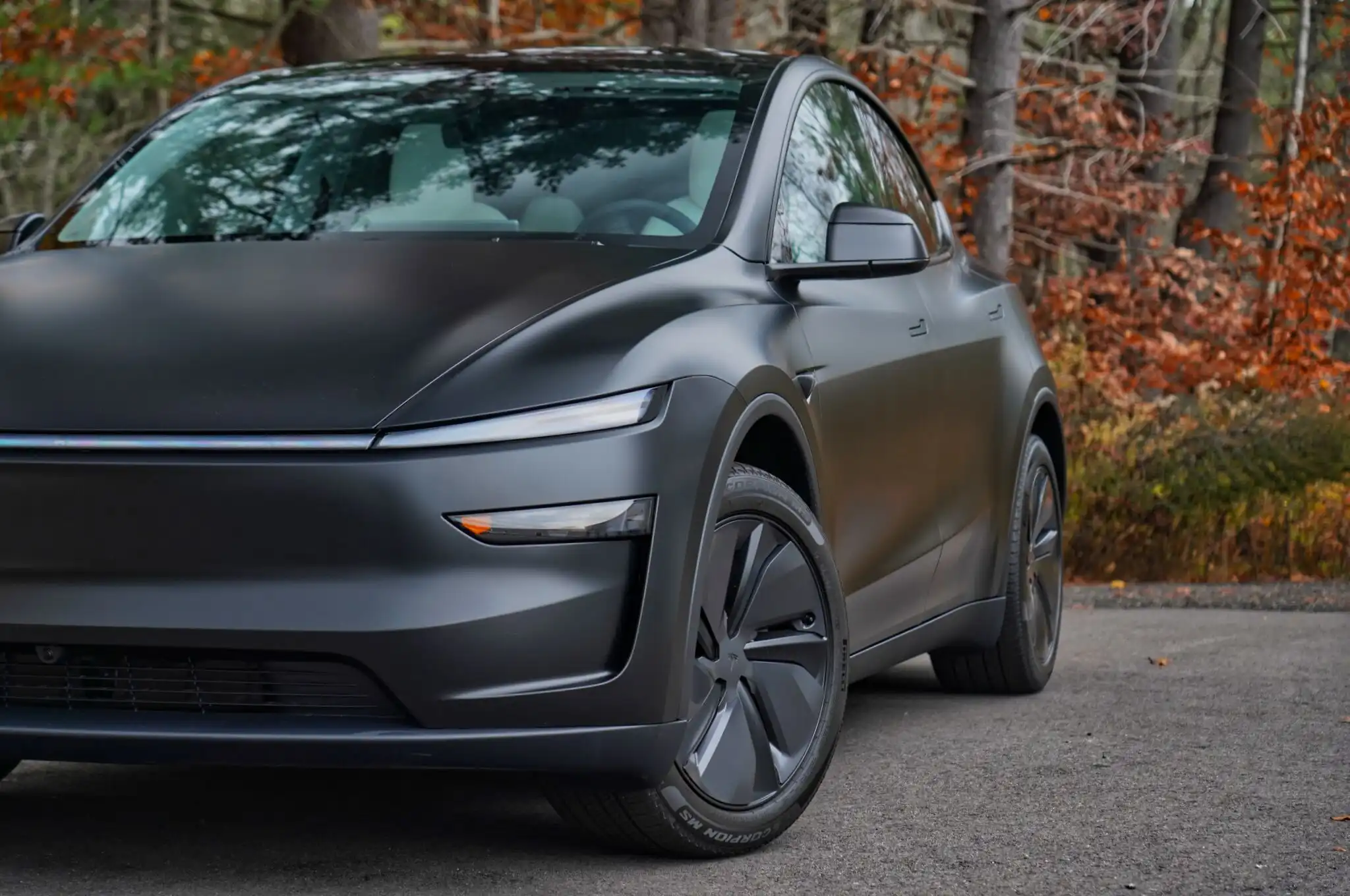
The short answer
Tesla and EV owners usually think about paint protection film, ceramic tint, ceramic coating, and wheel protection.
The windshield is easy to overlook.
That can be a mistake.
Many electric vehicles have large windshields, panoramic glass, expensive glass assemblies, advanced camera systems, sensors, and driver-assistance technology mounted around the windshield area. On some vehicles, a windshield replacement is not just a piece of glass. It can involve parts availability, calibration, downtime, insurance claims, and a larger repair process than owners expect.
That is why windshield protection film has become a serious conversation for Tesla and EV owners.
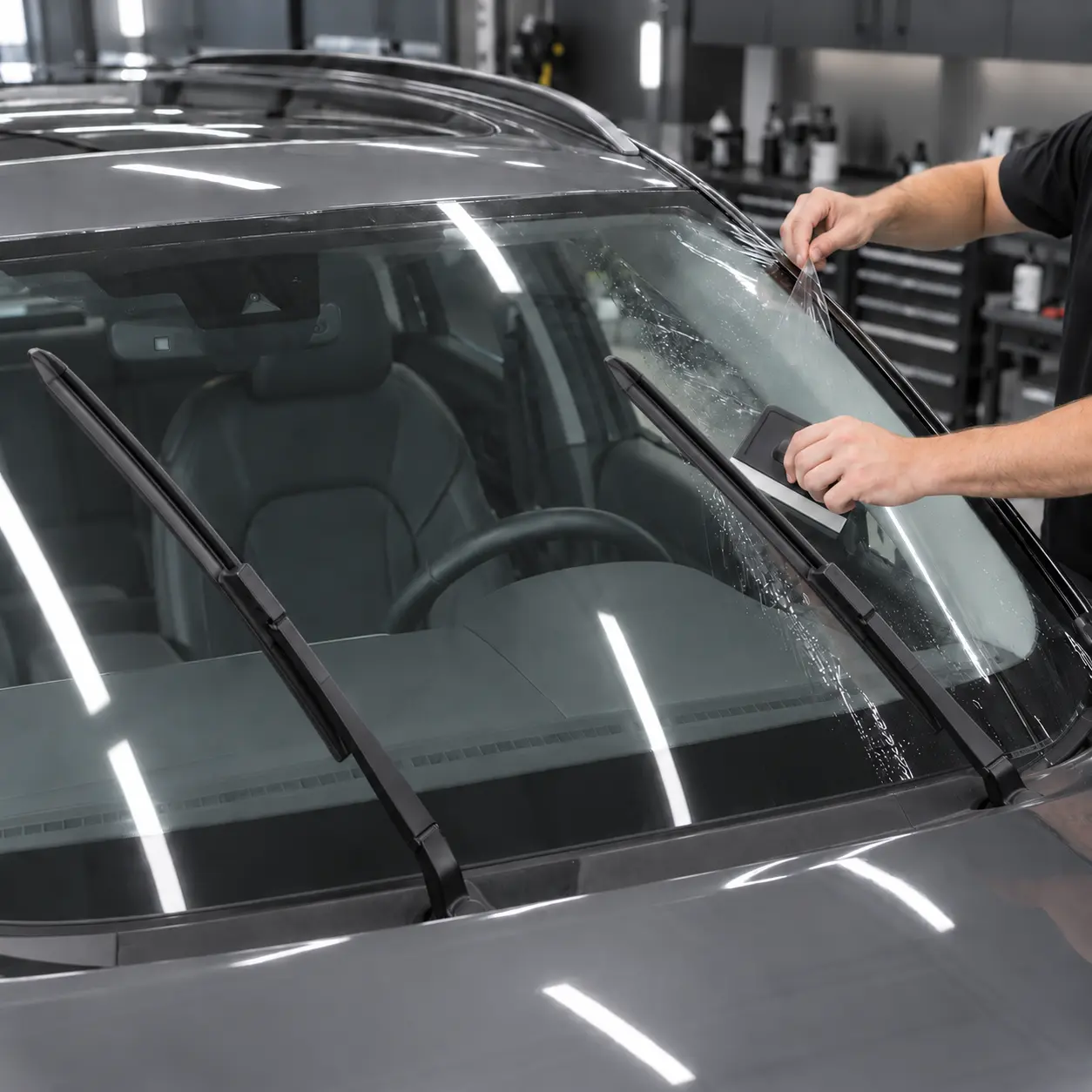
Windshield protection film is a clear exterior film installed on the outside of the windshield. Its goal is to help absorb everyday road impacts, reduce chips, reduce glass damage, and add a sacrificial layer between the windshield and road debris.
It does not make the windshield unbreakable.
It does not guarantee that a crack can never happen.
But for EV owners who drive highways, commute daily, take road trips, or want to reduce the chance of windshield damage, it can be a smart upgrade.
At Kickin’ Customs in Raynham, MA, we install XPEL windshield protection film, paint protection film, ceramic window tint, ceramic coatings, and EV protection packages for Tesla, Rivian, Lucid, Ford, Hyundai, Kia, BMW, Mercedes, and other EV owners across Massachusetts and Rhode Island.
Glass exposure and film benefits
Why Tesla and EV Windshields Matter
EV windshields are not always simple or cheap to replace.
Many modern EVs use large glass panels and integrated technology. Cameras, sensors, rain detection, defrost systems, mirror mounts, and driver-assistance components can all be tied into the windshield area.
On some vehicles, replacing the windshield may also require camera calibration or additional service steps.
Even when insurance covers the replacement, the process can still be inconvenient.
The vehicle may need to be scheduled.
Glass may need to be ordered.
Calibration may be needed.
The vehicle may be down longer than expected.
For Tesla and EV owners who rely on their vehicle every day, windshield damage can become more than a small inconvenience.
Windshield protection film helps reduce that risk by adding a sacrificial exterior layer over the glass.
Large Glass Means More Exposure
One reason windshield protection film makes sense for EVs is simple: many EVs have a lot of glass.
Tesla models, Rivian vehicles, Lucid vehicles, and other EVs often feature large windshields, large glass roofs, and modern glass-heavy designs.
The larger the glass area, the more surface is exposed to road debris, bugs, sand, salt, and impact.
A large windshield gives great visibility and a clean cabin feel, but it also creates a larger target.
Highway driving makes that even more important.
Small rocks, tire-thrown debris, winter sand, construction grit, and road salt can all hit the windshield at speed.
Windshield protection film gives that large glass surface an extra layer of defense.
EVs Are Often Daily Driven
Many Tesla and EV owners use their vehicles every day.
They commute, run errands, drive to work, travel with family, take highway trips, and rack up miles quickly.
That daily use creates more exposure.
More miles usually means more chances for a rock chip.
More highway time means more chances for debris impact.
More winter driving means more sand, salt, slush, and road grime.
More construction zones mean more loose debris.
Windshield protection film is most useful when the vehicle actually gets driven.
For garage-kept weekend cars, it may still make sense.
For daily driven EVs, the argument is stronger.
If the windshield is constantly exposed, protecting it early is easier than dealing with damage later.
Highway Driving Increases Windshield Risk
Highway driving is one of the biggest reasons Tesla and EV owners consider windshield protection film.
At highway speed, even a small stone can hit hard.
Following trucks, driving behind construction vehicles, passing through road work, winter highways, and heavy traffic can all increase risk.
EVs are also quiet, which can make windshield impacts feel even more noticeable. You may hear the sharp tick of debris hitting the glass before you see the chip.
Windshield protection film helps create a sacrificial layer between the road debris and the windshield.
The film can take the abuse first.
This does not mean every impact is stopped.
A severe impact can still damage glass.
But reducing everyday chips and small impact damage is exactly why the film exists.
Windshield Protection Film Is Not Window Tint
Windshield protection film and windshield tint are different products.
Windshield tint is installed on the inside of the glass. It is mainly used for heat rejection, glare reduction, UV protection, and cabin comfort.
Windshield protection film is installed on the outside of the glass. It is designed to help protect the windshield from exterior road damage.
A Tesla or EV can have both.
For example, an owner may choose XPEL PRIME XR Plus ceramic tint on the windshield for heat rejection and XPEL windshield protection film on the outside for impact reduction.
The tint helps cabin comfort.
The windshield protection film helps protect the glass.
They are installed for different reasons and solve different problems.
Windshield Protection Film Is Not Glass Coating
Windshield protection film is also different from ceramic coating for glass.
A glass coating can improve water behavior and make the windshield easier to clean.
Windshield protection film is a physical exterior layer designed to help absorb road impacts.
A glass coating can help with rain, bugs, and cleaning.
It does not provide the same physical barrier as film.
If your concern is water beading and easier cleaning, glass coating makes sense.
If your concern is rock chips and windshield damage, windshield protection film is the stronger product.
Some owners may consider both, but the products are not interchangeable.
The important thing is choosing the right product for the actual problem.
What Windshield Protection Film Can Do
Windshield protection film can help reduce chips, pitting, and damage from everyday road debris.
It can add a sacrificial layer to the outside of the windshield.
It can help protect expensive glass.
It can reduce the chance of small impacts turning into immediate glass damage.
It can help preserve visibility by reducing surface wear from normal road exposure.
It can be especially helpful for vehicles that see frequent highway miles, winter roads, construction zones, and long commutes.
For Tesla and EV owners, the value is not just the windshield itself.
The value is reducing the chance of a larger replacement process.
The film is there to take abuse so the windshield has a better chance of surviving normal road use.
What Windshield Protection Film Cannot Do
Windshield protection film cannot make glass indestructible.
It cannot guarantee that a windshield will never crack.
It cannot stop every rock, especially large debris or severe impacts.
It cannot repair existing cracks.
It cannot fix a windshield that is already badly pitted, scratched, or damaged.
It cannot prevent damage from inside the vehicle.
It cannot eliminate the need for wiper care and proper cleaning.
This is important because expectations matter.
Windshield protection film is impact reduction, not impact immunity.
A severe hit can still break glass.
But for normal road debris and smaller impacts, the film can make a meaningful difference.
Why Windshield Replacement Can Be More Complicated on EVs
Modern EV windshields are often tied into more systems than older vehicles.
A simple windshield replacement may become more involved because of camera systems, sensors, driver-assistance features, glass availability, calibration, and installation requirements.
Even if the replacement is covered by insurance, it can still create downtime and frustration.
Some owners also prefer not to replace original factory glass unless they have to.
Factory glass fitment, electronics, calibration, and installer quality can all become concerns.
Windshield protection film helps reduce the chance of needing that process in the first place.
It is not a guarantee.
But it can be a smart protective step for owners who want to avoid unnecessary windshield replacement.
Tesla, Rivian and other EVs
Tesla Windshield Protection Film
Tesla owners are some of the most common candidates for windshield protection film.
Tesla vehicles often have large windshields, glass-heavy designs, and advanced camera systems.
Model 3, Model Y, Model S, Model X, and Cybertruck owners may all consider windshield protection depending on driving habits, road conditions, and replacement concerns.
Tesla owners also tend to invest in protection early.
Many already choose paint protection film, ceramic tint, and ceramic coating when the vehicle is new.
Windshield protection film fits naturally into that same ownership mindset.
If the paint is worth protecting, the windshield may be worth protecting too.
Model 3 Windshield Protection
Tesla Model 3 owners often use their vehicles as daily drivers and commuters.
That means highway miles, construction zones, winter roads, and daily exposure.
A windshield chip on a Model 3 can be frustrating because the vehicle is often relied on for daily transportation.
Windshield protection film can make sense for Model 3 owners who drive often, follow highways, or want added protection from road debris.
It is especially useful when combined with full front PPF and ceramic tint.
The front end gets protection from chips.
The windshield gets exterior impact reduction.
The cabin gets heat rejection from ceramic tint.
Together, the vehicle becomes easier to live with.
Model Y Windshield Protection
Tesla Model Y owners are strong candidates for windshield protection film because the Model Y is often used as a family vehicle, commuter, road trip vehicle, and daily driver.
It sees real-world use.
Highway miles, school runs, winter weather, road trips, construction areas, and daily errands all increase exposure.
The Model Y also has a large windshield and a glass-heavy cabin feel.
For many owners, protecting the windshield is part of protecting the whole vehicle.
A common package may include full front PPF, ceramic tint, ceramic coating, and windshield protection film.
The goal is not just appearance.
The goal is reducing long-term ownership headaches.
Model S and Model X Windshield Protection
Model S and Model X owners may be especially sensitive to windshield replacement concerns because these vehicles are higher-end and can have larger, more complex glass areas.
The Model X windshield in particular is known for its large glass design.
Large glass creates great visibility, but it also creates more exposure.
For owners who drive highways, take road trips, or keep the vehicle long-term, windshield protection film can be worth considering.
The higher the replacement concern, the stronger the case for protection.
Luxury EVs should be protected like luxury vehicles.
The windshield is part of that conversation.
Cybertruck Windshield Protection
Cybertruck owners may also consider windshield protection film because the vehicle is large, unique, and likely to be used in a variety of driving environments.
A truck-style EV may see highways, work sites, towing, dirt roads, winter roads, and outdoor use.
The windshield is large and exposed.
Road debris from trucks, construction areas, and winter driving can create risk.
Windshield protection film can be a practical add-on for Cybertruck owners who want to protect the glass from daily road abuse.
It also pairs well with ceramic tint, PPF, and coating services.
For a vehicle that already gets attention, reducing avoidable glass damage makes sense.
Rivian Windshield Protection Film
Rivian R1T and R1S owners are also strong candidates.
Rivians are often used for adventure, commuting, family use, winter driving, dirt roads, camping, road trips, and outdoor activities.
That means more exposure to gravel, sand, branches, road debris, salt, and harsh weather.
Rivian glass can be expensive and the vehicle has advanced technology integrated around the windshield area.
Windshield protection film can help reduce risk from road debris and everyday impacts.
It fits well with the way many Rivian owners use their vehicles.
If the vehicle is going to see real adventure use, protecting the windshield is a practical decision.
Lucid and Other Luxury EVs
Lucid, Mercedes EQ, BMW i, Audi e-tron, Porsche Taycan, Hyundai IONIQ, Kia EV, Ford Lightning, Hummer EV, and other electric vehicles can also benefit from windshield protection film.
The more expensive or complex the glass, the more sense protection can make.
Luxury EVs often have large glass surfaces, advanced driver-assistance systems, head-up displays, cameras, and premium replacement costs.
Windshield protection film is not only for Tesla.
It is for any EV owner who wants to reduce the chance of windshield damage and avoid unnecessary replacement issues.
The vehicle does not need to be exotic to justify protection.
It just needs enough risk and value.
Clarity, cameras and daily use
Windshield Protection Film and Camera Systems
Many EVs use forward-facing camera systems mounted near the windshield.
These systems are important for driver-assistance features, safety systems, and convenience functions.
Windshield damage or replacement can create complications when cameras need to be recalibrated or when the glass has to be handled carefully around sensor areas.
Windshield protection film does not change the fact that these systems exist.
It helps reduce the chance that road debris will create damage requiring replacement.
The film must be installed carefully and professionally.
Visibility, clarity, and proper fitment matter.
A windshield protection film installation should never be treated like a random accessory.
It needs to be done correctly.
Clarity Matters
Windshield protection film must be clear.
The windshield is not the same as a side panel or bumper.
You are looking through it every time you drive.
That means clarity, installation quality, cleanliness, and maintenance are critical.
A poor installation can create distortion, visible contamination, edge issues, wiper concerns, or an annoying driving experience.
A good installation should preserve normal visibility while adding exterior protection.
The product and installer matter.
This is one of the reasons to choose a professional shop familiar with film installation.
On EVs with large glass, any issue is easier to notice.
Clarity has to be taken seriously.
Wiper Performance Matters
Windshield protection film lives under the wipers.
That means wiper condition matters.
Old wipers, dirty wipers, damaged blades, or debris trapped under the blade can wear the film faster or create marks.
EV owners should maintain wiper blades properly after windshield protection film installation.
Keep the windshield clean.
Keep the wipers clean.
Replace blades when they are worn.
Avoid dragging dry, dirty wipers across the film when possible.
Do not scrape aggressively across the film.
Windshield protection film is durable, but it is still a film surface.
The way it is maintained affects how it performs and how long it looks clear.
Winter Use and Windshield Film
Winter driving is one of the strongest use cases for windshield protection film in Massachusetts and Rhode Island.
Salt, sand, slush, brine, plow debris, gravel, and dirty spray all hit the windshield during winter.
Even small grit can create pitting over time.
Windshield protection film adds a sacrificial layer that can help reduce that wear.
Winter care still matters.
Use safe ice removal habits.
Do not scrape aggressively with damaged tools.
Do not drag dirt or grit across the film.
Keep the wipers clean and replace worn blades.
The film helps protect the windshield, but winter maintenance still needs common sense.
Summer Use and Windshield Film
Summer creates a different type of windshield abuse.
Bugs, road tar, construction dust, pollen, hard water, road trips, highway driving, and long sunny days all affect the glass.
Bug impacts can be stubborn.
Highway trips create more debris exposure.
Construction zones can throw sand and small stones.
Windshield protection film can help reduce everyday impact damage and surface wear.
It can also make certain cleaning situations easier when maintained properly.
Summer road trips are a good reason to install windshield protection film before damage happens.
Once a windshield is chipped or cracked, protection becomes a different conversation.
Windshield Protection Film and Road Trips
EV owners often take longer road trips than people expect.
Charging networks, route planning, and newer EV range have made road trips more common.
Long highway stretches mean more debris exposure.
A single road trip behind trucks, construction zones, or winter-treated roads can chip a windshield quickly.
Windshield protection film is especially useful before long trips.
It is not a guarantee, but it can reduce the risk of small impacts damaging the glass.
For owners planning road trips, commuting long distances, or driving to ski areas, beaches, cities, and job sites, windshield film can be a smart preventive upgrade.
Windshield Protection Film and New EV Ownership
The best time to install windshield protection film is when the vehicle is new or the windshield is still in good condition.
A clean, newer windshield gives the film a better surface.
It also protects the glass before chips, cracks, scratches, or pitting build up.
Many Tesla and EV owners already protect the vehicle early with PPF, tint, and coating.
Windshield protection film should be considered at the same time.
Once the windshield is damaged, the options become more limited.
A cracked windshield cannot be saved by film.
Protection works best before damage happens.
Can Windshield Film Be Installed on Used EVs?
Yes, windshield protection film can be installed on used EVs if the glass is in suitable condition.
The windshield should be inspected first.
If the glass is already cracked, heavily chipped, deeply scratched, badly pitted, or damaged, film may not make sense.
A used windshield with light wear may still be a candidate, but expectations need to be clear.
The film will not erase existing damage.
It protects the surface that is already there.
For used EVs, inspection matters before installation.
If the glass is healthy enough, film can still be a useful upgrade.
Impact, visibility and sensors
Does Windshield Film Prevent Cracks?
Windshield protection film can help reduce the chance of chips and cracks from everyday road debris, but it cannot guarantee that cracks will never happen.
This is the most important expectation.
A small stone may be absorbed by the film.
A larger rock, sharp debris, severe impact, existing glass weakness, or edge hit can still crack the windshield.
No honest shop should claim windshield protection film makes glass impossible to break.
The goal is risk reduction.
For Tesla and EV owners, that reduction can still be valuable.
You are trying to reduce the chance of damage, not make the windshield invincible.
Does Windshield Film Help With Pitting?
Windshield protection film can help reduce surface wear and pitting from sand, salt, grit, and small debris.
This matters because pitted glass can create glare, especially at night or in direct sun.
EV owners who drive highways or winter roads may notice windshield wear over time.
The film creates a sacrificial layer that takes the abuse before the glass does.
It will not fix existing pitting.
It can help reduce new wear.
For owners who plan to keep the vehicle long-term, reducing windshield pitting can be part of preserving the driving experience.
Does Windshield Film Affect Visibility?
A properly installed windshield protection film should be clear and suitable for normal driving visibility.
However, installation quality matters.
The windshield is a critical viewing surface, so dirt, distortion, poor edges, improper fitment, or bad maintenance can become annoying quickly.
This is why windshield protection film should be installed by a professional shop.
It is also why aftercare and wiper maintenance matter.
If a customer is extremely sensitive to windshield clarity, that should be discussed before installation.
The film is designed to be clear, but it is still a physical layer over the glass.
Expectations should be honest.
Does Windshield Film Affect Sensors?
Windshield protection film is installed on the outside of the windshield, while many cameras and sensors are mounted behind the glass inside the vehicle.
The film should be installed with proper fitment and clarity in mind.
Because modern EVs rely on camera systems, professional installation is important.
The goal is to protect the glass without interfering with the driver’s normal visibility or the vehicle’s systems.
Vehicle-specific factors should be considered before installation.
If the vehicle has advanced cameras, sensors, rain sensors, or head-up display features, those should be discussed during the planning stage.
A careful installation matters more on modern vehicles.
Does Windshield Film Affect Rain Sensors?
Rain sensors are typically mounted near the windshield area and may rely on glass behavior to detect moisture.
Because windshield protection film changes the exterior surface, it is important that the product is installed properly and maintained correctly.
In most cases, customers should expect normal use, but any vehicle-specific sensitivity should be discussed ahead of time.
The wipers and rain behavior can also be affected by film condition, wiper condition, washer fluid, contamination, and maintenance.
Clean film and good wipers matter.
If something feels different after installation, the shop should inspect it rather than guessing.
Does Windshield Film Affect Head-Up Display?
Some EVs and luxury vehicles have head-up display systems.
The windshield and optical clarity matter on those vehicles.
Windshield protection film is installed on the exterior, but any vehicle with a head-up display should be discussed before installation so expectations are clear.
If the customer is sensitive to reflections, clarity, or optical behavior, that should be part of the consultation.
A professional installer should understand that modern windshields are not all the same.
Technology, glass type, curvature, and driver expectations all matter.
For vehicles with head-up displays, clarity should be taken seriously.
Combine services and maintain the film
Windshield Protection Film and Ceramic Tint
Tesla and EV owners often combine windshield protection film with ceramic window tint.
These products do different jobs.
Ceramic tint on the windshield can reduce heat, glare, and UV exposure inside the cabin.
Windshield protection film on the exterior helps reduce the risk of rock chips and road debris damage.
Together, they can improve comfort and protection.
This is especially useful on EVs because cabin heat matters.
A cooler cabin can feel more comfortable and may reduce how hard the climate system has to work.
For Tesla and EV owners, windshield tint and windshield protection film can be part of a complete glass-focused package.
Windshield Protection Film and PPF
Many EV owners already understand paint protection film.
They install PPF on front bumpers, hoods, fenders, mirrors, headlights, rocker panels, and rear quarters to protect against road debris.
Windshield protection film follows the same logic, but for the glass.
The front of the vehicle takes the most abuse.
That includes the bumper, hood, headlights, mirrors, and windshield.
A Tesla or EV protection package may include full front PPF, windshield protection film, ceramic tint, and ceramic coating.
Each product protects a different surface.
PPF protects paint.
Windshield film protects glass.
Ceramic tint improves comfort.
Ceramic coating improves maintenance.
Windshield Protection Film and Ceramic Coating
Ceramic coating and windshield protection film are not the same product.
Ceramic coating can make surfaces easier to clean and improve water behavior.
Windshield protection film adds a physical layer over the glass.
Some windshield protection films may have water behavior or maintenance products associated with them, but the main reason to install the film is impact reduction.
If a customer wants the windshield easier to clean, glass coating can be discussed.
If a customer wants the windshield better protected from road debris, windshield protection film is the better conversation.
For some vehicles, a complete exterior protection plan may include both coating and film in the correct places.
Maintenance After Windshield Protection Film
Windshield protection film needs proper maintenance.
Use clean wiper blades.
Keep the glass and film clean.
Avoid harsh chemicals unless they are approved for the film.
Avoid abrasive pads.
Avoid aggressive scraping.
Do not drag dry dirt across the film.
Use proper washer fluid.
Address bugs, sap, and contamination in a reasonable amount of time.
If the film receives a hard impact, inspect it.
If the film becomes damaged, heavily worn, or visually distracting, replacement may be needed.
The film is sacrificial.
That means it is meant to take abuse so the windshield has a better chance.
XPEL WPF Restore
Windshield protection film maintenance matters because the film sits in a difficult environment.
Wipers move across it.
Road grime lands on it.
Bugs hit it.
Weather affects it.
At Kickin’ Customs, we recommend XPEL WPF Restore at around 6 months as part of a proper maintenance plan for XPEL windshield protection film.
This helps maintain the film surface and supports the ownership experience.
Like any protective product, the better it is maintained, the better it can perform.
Windshield protection film should not be treated like regular bare glass.
It is a protective layer that needs the right care.
Warranty Expectations
XPEL windshield protection film comes with a 12-month or 12,000-mile warranty.
That warranty is for manufacturer defects.
It should not be confused with a guarantee that the windshield will never crack.
This is important.
The warranty does not mean every impact is covered.
Windshield protection film reduces risk, but it does not change physics.
A severe impact can still damage the glass.
A film warranty and a glass replacement guarantee are not the same thing.
Customers should understand this before installation.
The value of the film is in reducing everyday damage risk and helping the windshield survive normal road exposure.
Decide when film makes sense
When Windshield Protection Film Makes the Most Sense
Windshield protection film makes the most sense when the windshield is expensive, large, hard to replace, or tied into advanced technology.
It also makes sense when the vehicle sees frequent highway driving, winter roads, construction zones, road trips, or daily use.
Tesla and EV owners often check several of these boxes.
Large glass.
Modern camera systems.
Daily driving.
Highway mileage.
Expensive replacement concerns.
Strong interest in vehicle protection.
That combination is why windshield protection film is becoming more popular in the EV world.
It is not for every owner, but it is worth discussing for the right vehicle.
When Windshield Protection Film May Not Be Worth It
Windshield protection film may not be worth it for every EV owner.
If the vehicle is rarely driven, mostly garage-kept, or the windshield is already heavily damaged, the value may be lower.
If the owner expects the film to prevent every crack, expectations need to be reset.
If the customer does not want to maintain wipers or care for the film properly, the ownership experience may not be ideal.
If the vehicle is being sold soon, the investment may not make sense.
The product is best for owners who understand risk reduction, drive enough to justify it, and want to reduce the chance of windshield damage.
Best Time to Install Windshield Protection Film
The best time to install windshield protection film is when the windshield is new or still in good condition.
This is often shortly after buying the vehicle.
For Tesla and EV owners, this may be at the same time as ceramic tint, paint protection film, and ceramic coating.
Installing early helps protect the glass before road damage starts.
Waiting until after the first crack is too late.
The film cannot save a windshield that is already broken.
For new EVs, windshield protection film should be part of the early protection conversation.
Windshield Protection Film for Massachusetts and Rhode Island Roads
Massachusetts and Rhode Island roads can be rough on windshields.
Highways, winter sand, salt, plow debris, construction zones, potholes, trucks, and daily traffic all create windshield risk.
Tesla and EV owners in the area often drive Route 24, I-495, I-95, I-93, Route 3, Route 44, Route 140, and local roads that see heavy traffic and road treatment.
Those conditions can lead to chips, pitting, and windshield wear.
Windshield protection film is not just for exotic cars or track cars.
It can make sense for daily driven EVs that see real New England roads.
Full EV Protection Package
Windshield protection film is often one piece of a bigger EV protection plan.
For a Tesla or EV owner, a complete package may include ceramic window tint, full front PPF, windshield protection film, ceramic coating, wheel coating, and glass-related care.
Each service has a different purpose.
Ceramic tint improves comfort.
PPF protects paint.
Windshield film protects glass.
Ceramic coating improves maintenance.
Wheel coating helps with brake dust and road grime.
The right package depends on the vehicle, driving habits, budget, and ownership plans.
Not every EV needs everything.
But the windshield should at least be part of the conversation.
Final Thoughts
Windshield protection film can be a smart upgrade for Tesla and EV owners.
Modern EVs often have large glass, expensive windshield replacement concerns, camera and sensor systems, highway exposure, and daily driving use.
A clear exterior windshield film helps add a sacrificial layer between the glass and the road.
It can help reduce chips, pitting, and damage from everyday debris.
It cannot guarantee that a windshield will never crack.
It cannot stop every severe impact.
But for many Tesla, Rivian, Lucid, Ford, Hyundai, Kia, BMW, Mercedes, and other EV owners, the risk reduction can be worth it.
At Kickin’ Customs in Raynham, MA, we install XPEL windshield protection film, ceramic window tint, paint protection film, ceramic coatings, and EV protection packages for drivers across Massachusetts and Rhode Island.
If you want to protect your Tesla or EV windshield before damage happens, contact Kickin’ Customs and we can help you decide whether XPEL windshield protection film makes sense for your vehicle.
Frequently Asked Questions
Is windshield protection film worth it for Tesla owners?
Yes, it can be worth it for Tesla owners who drive often, use highways, deal with winter roads, or want to reduce the risk of windshield chips and damage.
Does windshield protection film prevent cracks?
Windshield protection film can help reduce the chance of chips and cracks from everyday road debris, but it cannot guarantee that a windshield will never crack.
Can windshield protection film be installed on a Tesla?
Yes. Windshield protection film can be installed on Tesla windshields when the glass is in suitable condition and the film is installed professionally.
Is windshield protection film the same as windshield tint?
No. Windshield tint is installed inside the glass for heat, glare, and UV benefits. Windshield protection film is installed outside the glass to help reduce impact damage.
Does windshield protection film affect visibility?
A properly installed windshield protection film should maintain normal driving visibility, but installation quality and maintenance matter because the windshield is a critical viewing surface.
Does windshield protection film affect Tesla cameras?
The film is installed on the outside of the windshield, but modern camera systems make professional installation and clarity important. Vehicle-specific concerns should be discussed before installation.
Can windshield protection film be installed on Rivian vehicles?
Yes. Rivian R1T and R1S owners can consider windshield protection film, especially if the vehicle is used for highway driving, winter roads, road trips, or outdoor activities.
Can windshield protection film be installed on a used EV?
Yes, if the windshield is in suitable condition. If the glass is already cracked, heavily chipped, deeply scratched, or badly pitted, the film may not make sense.
How long is XPEL windshield protection film warrantied?
XPEL windshield protection film has a 12-month or 12,000-mile warranty for manufacturer defects. This is not the same as a guarantee against all windshield cracks.
What maintenance does windshield protection film need?
Maintain it with clean wipers, safe cleaning products, proper washer fluid, gentle cleaning, and careful ice removal. At Kickin’ Customs, we recommend XPEL WPF Restore around 6 months.
Plan your next step
Want to reduce the chance of windshield chips and damage on your Tesla or EV? Contact Kickin’ Customs in Raynham, MA and we can help you decide whether XPEL windshield protection film belongs in your EV protection package.
