
The short answer
Corvette owners usually know they want paint protection film. The harder question is how much coverage makes sense.
Should you protect the full front only? Should you add rockers and lower doors? Should you go all the way to full body PPF?
There is no single answer for every Corvette. A weekend Stingray, a daily driven C8, a Z06 with wide tires, an E-Ray used for long trips, and a garage-kept collector-style build may all need different coverage.
At Kickin’ Customs in Raynham, we help Corvette owners choose XPEL paint protection film packages based on how the vehicle is actually used. The goal is not to oversell coverage. The goal is to protect the areas most likely to get damaged while matching the owner’s budget, expectations, and long-term plans.
Compare full front and full body
Why Corvettes Benefit So Much From PPF
A Corvette is not shaped like a normal sedan. It sits low, has wide painted surfaces, aggressive body lines, exposed rocker panels, large fenders, side intake areas, and performance tires that can throw debris along the sides of the car.
That makes paint protection film one of the most valuable upgrades for Corvette ownership.
Kickin’ Customs installs XPEL paint protection film, including XPEL Ultimate Plus, XPEL Stealth, and XPEL Ultimate Fusion.
PPF helps protect painted surfaces from:
● Rock chips
● Road debris
● Bug staining
● Light scratches
● Sandblasting
● Road rash
● Salt and grit exposure
● Daily wash-related wear
For a Corvette, PPF is not just about keeping the car pretty. It helps protect the areas that are expensive, visible, and frustrating to repair later.
What Is Full Front PPF?
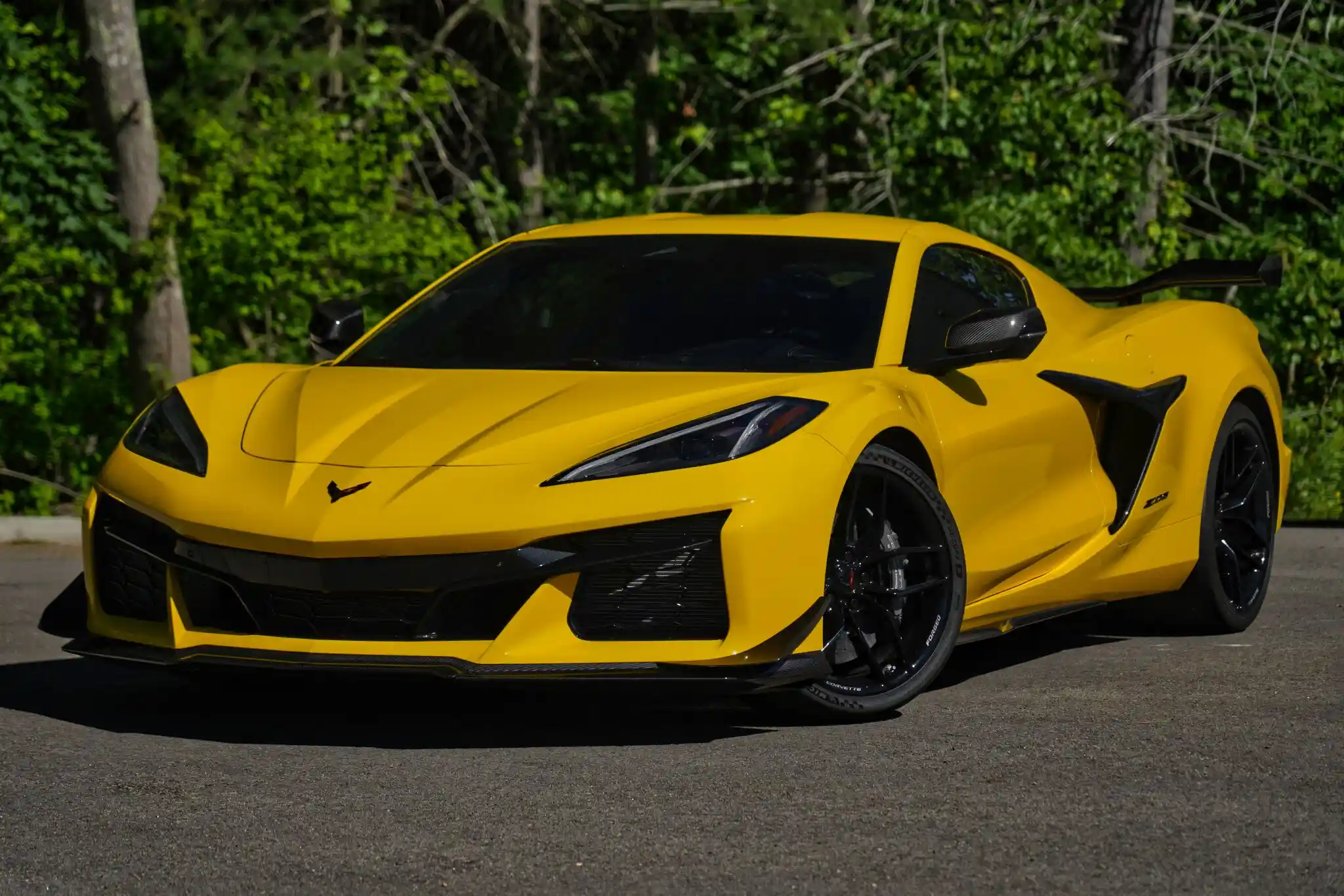
Full front PPF is the most common starting point for Corvette owners. It protects the areas that take the most direct impact during normal driving.
A full front Corvette PPF package usually includes:
Front bumper
Full hood
Full fenders
Mirrors
Headlights
These areas see the most abuse from highway debris, bugs, sand, stones, and road grime.
Why Full Front PPF Makes Sense
Full front PPF makes sense because the front of the Corvette takes the first hit. Whether the car is driven on highways, backroads, cruises, or weekend trips, the bumper and hood are constantly exposed.
The C8 front bumper is especially vulnerable because it is low, wide, and painted. Once that bumper is chipped, touch-up paint can be difficult to make look clean. Repainting is possible, but many Corvette owners prefer to avoid repainting original panels when protection could have been installed early.
Full hood and full fender coverage also looks cleaner than partial coverage. On a Corvette, partial film lines can be noticeable because the hood and fenders are large visual surfaces.
What Full Front PPF Does Not Cover
Full front PPF is a strong package, but it does not protect every vulnerable area.
It usually does not include:
● Rocker panels
● Lower doors
● Side intake areas
● Rear quarter impact zones
● A-pillars
● Leading roof edge
● Rear bumper load areas
● Full door panels
● Rear bumper sides
● Rear deck areas
That is why many Corvette owners start with full front PPF, then add targeted coverage based on the car’s risk areas.
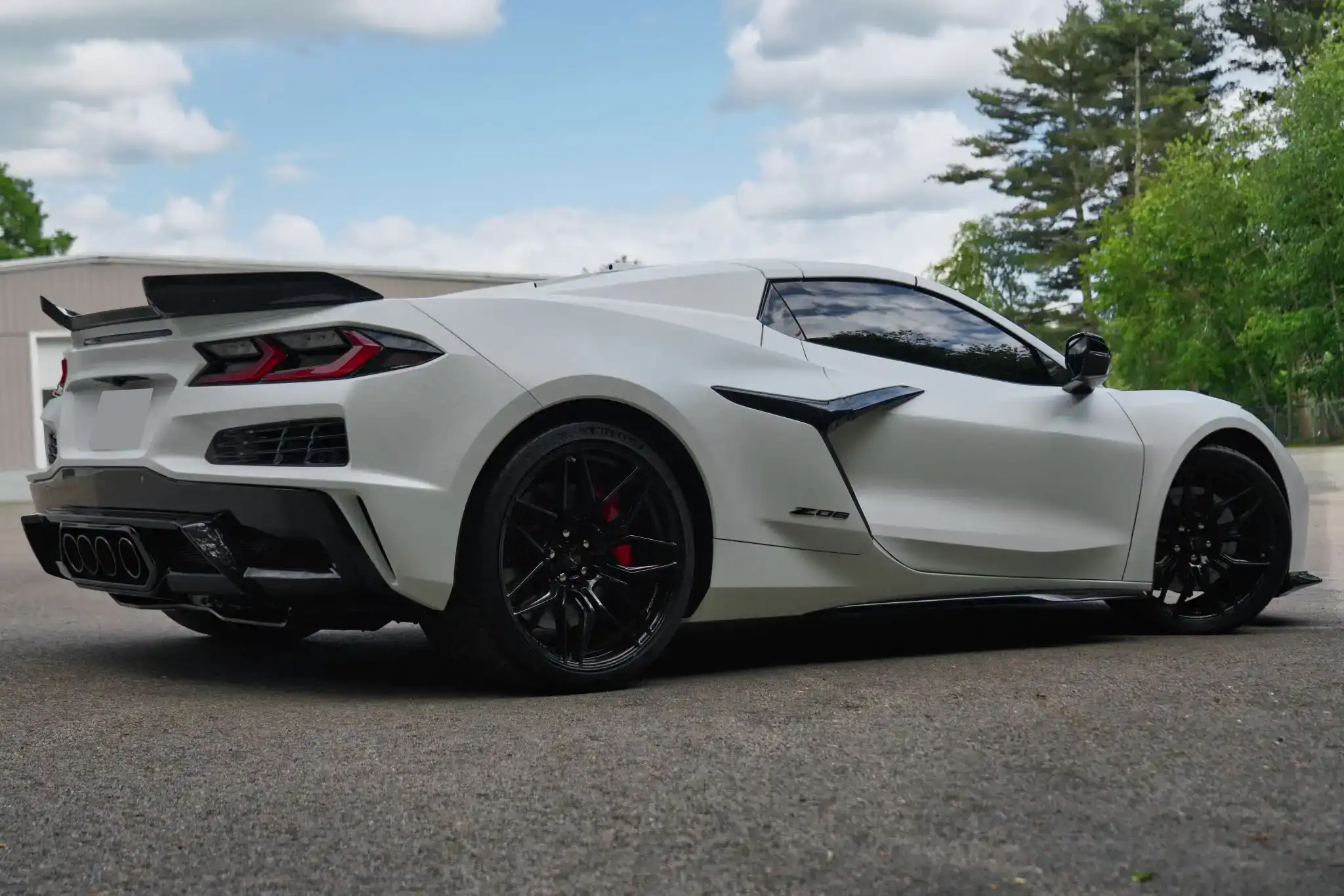
On a C8, the rocker panels and lower doors are especially important. Tire spray, road grit, and stones can get thrown down the sides of the car. Full front PPF will not solve that problem by itself.
What Is Full Body PPF?
Full body PPF protects nearly every painted exterior panel on the vehicle. Instead of only covering the front impact areas, full body coverage adds protection across the doors, quarters, rear bumper, roof sections, deck areas, and other painted panels.
For Corvette owners who want the most complete exterior protection, full body PPF is the highest-level option.
Full body PPF is especially popular with owners who:
Plan to keep the car long-term
Own a Z06, E-Ray, or high-option build
Have a rare or difficult color
Want the cleanest ownership experience
Drive the car often
Want to reduce wash-related wear
Prefer consistent protection across the whole vehicle
Want to preserve the original finish as much as possible.
Why Full Body PPF Can Be Worth It on a Corvette
A Corvette is not just a commuter car for most owners. It is often a passion purchase, a performance vehicle, a weekend car, a long-term keeper, or something the owner has waited years to buy.
Full body PPF makes sense when the owner wants the entire car protected, not only the front end.
It helps protect against:
● Parking lot scuffs
● Light scratches
● Road debris along the sides
● Wash marks
● Bug staining
● Rear quarter impact
● Door contact
● Cargo or travel-related marks
● General wear from real use
Full body PPF also creates a more consistent surface. The entire vehicle is protected and maintained in a similar way, which can make long-term care easier.
Rockers, model variants and paint
Full Front Plus Rockers: The Sweet Spot for Many Corvette Owners
Not every Corvette needs full body PPF. For many owners, the best value is full front plus rockers and lower doors.
This gives protection to the highest-risk areas without covering every panel.
A strong extended Corvette PPF package may include:
Full front PPF
Rocker panels
Lower doors
A-pillars
Leading roof edge
Side intake areas
Rear quarter impact zones
This type of package is often the sweet spot for C8 owners because it protects the areas that take the most abuse during real driving.
If the car is a Stingray used on weekends, this may be enough. If the car is a Z06 or E-Ray with wider tires and more aggressive use, the case for extended coverage becomes even stronger.
Why Rocker Panels Change the Decision
Rocker panels are one of the biggest reasons Corvette owners should not stop at basic front-end coverage without a conversation.
The C8’s shape and tire placement can send debris down the sides of the car. Wider tires and spirited driving can make this worse. Over time, the rocker panels and lower doors can become chipped, scuffed, or sandblasted.
For many Corvette owners, adding rocker panel PPF is a practical move even if they do not choose full body PPF.
This is especially true for:
● C8 Stingray owners who drive often
● Z51 cars
● Z06 owners
● E-Ray owners
● Cars with wider wheels or tires
● Cars driven on highways or backroads
● Cars driven in New England road conditions.
Full Body PPF for Z06 and E-Ray Models
Z06 and E-Ray Corvettes deserve a more serious protection conversation. These cars usually have higher performance capability, wider tire setups, more aggressive driving potential, and higher ownership expectations.
On these models, full body PPF may make more sense than it would on a lightly driven base Stingray.
The wider tires can throw more debris. The car may be driven harder. The owner may care more about long-term preservation. The value of the vehicle may also justify more complete coverage.
For Z06 and E-Ray owners, we would usually discuss full body PPF, or at minimum, full front plus extended rocker, lower door, side intake, and rear quarter coverage.
Full Body PPF for Dark Colors
Color matters.
Dark-colored Corvettes can show chips, scratches, and wash marks more easily than lighter colors. Black, dark gray, deep blue, and other darker finishes tend to reveal wear quickly.
Full body PPF can make sense for owners who want to protect those finishes more completely.
That does not mean lighter colors do not need protection. Chips and road rash still happen. But darker colors can make damage more visible, which may push owners toward more coverage.
Full Body PPF for Special Colors and Long-Term Ownership
If the Corvette has a special color, rare spec, custom order, or sentimental value, full body PPF becomes easier to justify.
The same is true if the owner plans to keep the car for a long time.
A leased or short-term vehicle may not need full body coverage. A Corvette that the owner plans to keep for years may deserve a more complete protection plan from the beginning.
The best time to install PPF is when the paint is still clean and undamaged. Waiting until chips and scratches appear limits what the film can do.
Coatings, glass and radiator protection
Where Ceramic Coating Fits In
Ceramic coating does not replace PPF, but it pairs very well with it.
Kickin’ Customs offers XPEL ceramic coatings, including 1-year, 4-year, and 8-year options.
PPF protects against impact. Ceramic coating helps with gloss, slickness, water behavior, and easier cleaning.
For a Corvette, coating can be applied over:
● Paint
● PPF
● Wheels
● Calipers
● Glass
When applied over PPF, ceramic coating can make bug removal and washing easier. This is especially useful on the front bumper, hood, mirrors, rocker panels, and lower doors.
If you choose full front PPF, coating can help maintain the rest of the paint. If you choose full body PPF, coating can make the film easier to care for.
Where Ceramic Tint and Windshield Film Fit In
A Corvette protection package should not stop at painted panels.
Ceramic window tint helps reduce heat, glare, and UV exposure inside the cabin. For C8 owners, windshield tint is especially useful because it can help reduce cabin heat and dashboard exposure.
Kickin’ Customs installs XPEL PRIME window tint, including Color Stable, XR Black, and XR Plus.
XPEL windshield protection film is also worth considering. It is installed on the outside of the windshield and helps reduce the risk of certain chips, cracks, and pitting from road debris.
Together, PPF, ceramic tint, windshield protection film, and ceramic coating create a more complete Corvette ownership package.
Should You Add Radiator Guards?
For C8 owners, radiator guards should be part of the conversation.
The C8 has front cooling openings that can collect stones, leaves, bugs, and road debris. Scrape Armor radiator guards help protect those exposed cooling areas while still allowing airflow.
Radiator guards do not replace PPF. They solve a different problem. PPF protects painted surfaces. Radiator guards help protect vulnerable cooling areas.
For many C8 owners, especially Z06 and E-Ray owners, radiator guards are a smart add-on alongside PPF.
Choose your Corvette coverage
Best Choice: Full Front or Full Body?
Here is the practical way to think about it.
Choose Full Front PPF If:
You want to protect the highest-impact areas.
You drive the car casually or on weekends.
You want meaningful protection without full vehicle coverage.
You are focused mainly on bumper, hood, fender, mirror, and headlight protection.
You may add rocker panels separately.
Choose Full Front Plus Rockers If:
You drive the car often.
You own a C8 and want side impact protection.
You want the best value for real-world protection.
You are concerned about tire spray and lower body damage.
You want more than a basic front-end package without going full body.
Choose Full Body PPF If:
You want the most complete exterior protection.
You own a Z06, E-Ray, special color, or high-option Corvette.
You plan to keep the car long-term.
You want more protection against scratches, wash wear, and side impact.
You want a more consistent protected surface across the entire vehicle.
Protecting Your Corvette at Kickin’ Customs
Choosing between full front and full body PPF comes down to how you use the Corvette and how protected you want it to be.
At Kickin’ Customs in Raynham, we install XPEL paint protection film for Corvette owners who want the right coverage, not a generic package. We can help you compare full front PPF, extended rocker coverage, full body PPF, ceramic coating, windshield protection film, ceramic tint, and Scrape Armor radiator guard options.
For some owners, full front PPF is enough. For many C8 owners, full front plus rockers is the better fit. For long-term owners, Z06 drivers, E-Ray owners, and special builds, full body PPF may be the smartest choice from the start.
Frequently Asked Questions
Is full front PPF enough for a Corvette?
Full front PPF is a strong starting point because it protects the bumper, hood, fenders, mirrors, and headlights. Many C8 owners should also consider rocker panels and lower doors.
Is full body PPF worth it on a Corvette?
Full body PPF can be worth it for long-term owners, Z06 and E-Ray owners, special colors, darker finishes, and owners who want the most complete exterior protection.
Should C8 Corvette owners add rocker panel PPF?
Yes, rocker panel PPF is strongly worth considering. The C8’s shape and tire placement can throw debris along the lower sides of the car.
Does ceramic coating replace PPF?
No. Ceramic coating helps with gloss, slickness, water behavior, and easier cleaning. PPF is the better choice for rock chip and impact protection.
Should I install PPF before ceramic coating?
Yes. If you are doing both, PPF should usually be installed first. Ceramic coating can then be applied over the paint and film.
Plan your next step
Not sure if your Corvette needs full front, extended coverage, or full body PPF? Contact Kickin’ Customs in Raynham to review XPEL paint protection film options and build the right package for your Corvette.
