
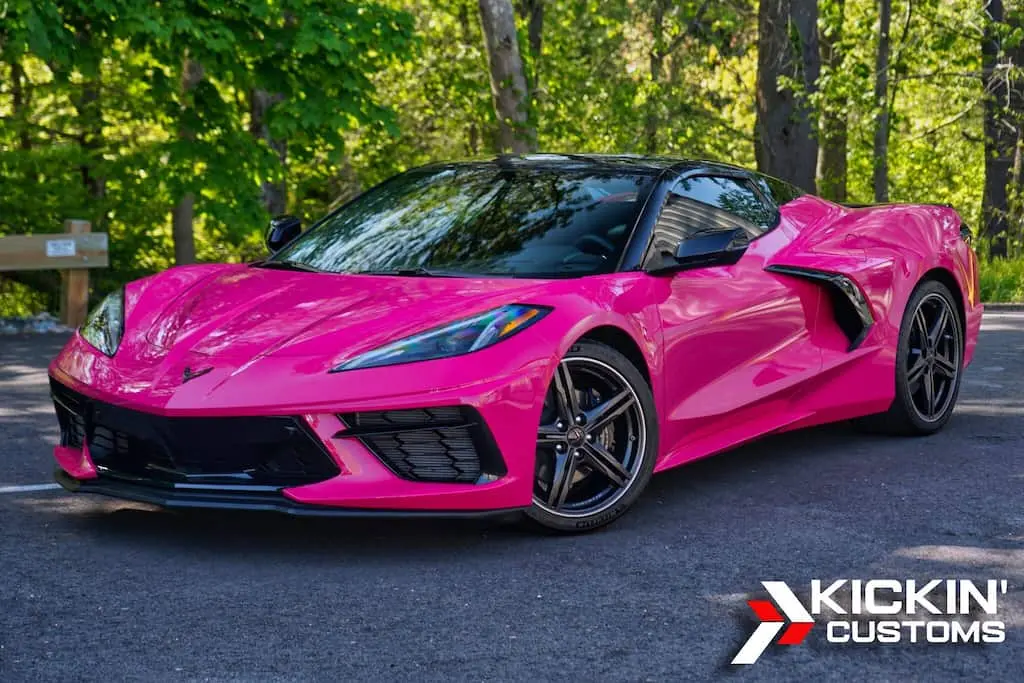
The short answer
Color change wrap and color paint protection film can both change the look of a vehicle.
That is where the similarities start.
It is also where the confusion starts.
A traditional color change wrap is usually a vinyl film installed over the vehicle for appearance. It is style-first. It can change the color, finish, theme, accents, and overall personality of the vehicle without repainting it.
Color paint protection film, often called color PPF, is a colored urethane film designed to change the look of the vehicle while also adding the impact protection benefits of paint protection film.
Both can make a vehicle look completely different.
But they are not built for the same customer, the same budget, or the same purpose.
At Kickin’ Customs in Raynham, MA, we install vinyl wraps, accent wraps, commercial wraps, paint protection film, and color PPF options for drivers across Massachusetts and Rhode Island. The right choice depends on whether your main goal is style, protection, durability, cost, or a combination of all four.
Vinyl and color PPF compared
What Is a Color Change Wrap?
A color change wrap is a vinyl film installed over painted panels to change the vehicle’s appearance.
This is the classic wrap most people think of when they hear the term vehicle wrap.
The goal is style.
A vinyl wrap can turn a white car satin black, a black truck gloss green, a silver SUV matte gray, or a factory color into something more personal.
Vinyl wrap films come in many colors and finishes, including gloss, satin, matte, metallic, pearl, color shift, carbon fiber style, brushed metal style, textured finishes, and printed designs.
At Kickin’ Customs, we work with quality wrap film brands such as Avery, Oracal, KPMF, 3M, Hexis, Cheetah Wrap, and EVOLV.
A color change wrap is usually the best option when the customer wants a dramatic visual change at a lower cost than repainting or full color PPF.
What Is Color Paint Protection Film?
Color paint protection film is a colored version of paint protection film.
Instead of being clear, the film has color or finish built into it.
The biggest difference is the material and purpose.
Color PPF is made to provide paint protection while changing the vehicle’s appearance. It is thicker and more protective than traditional vinyl wrap film.
It can help protect against rock chips, road debris, light scuffs, bug impacts, and everyday road wear in a way traditional vinyl wrap is not designed to do.
Color PPF can also have self-healing properties, depending on the film. That means light surface marks in the film can recover with heat.
This makes color PPF a stronger choice for customers who want a color change but also care about protecting the paint underneath.
Color PPF is the protection-focused color change option.
The Main Difference Is Style vs Protection
The easiest way to understand the difference is this:
● Vinyl wrap is style-first.
● Color PPF is protection-first.
A vinyl color change wrap is mainly about the look. It is a cosmetic restyle that gives the vehicle a new color, new finish, or new personality.
Color PPF is about changing the look while also adding physical paint protection.
That does not mean vinyl wrap has no practical value. It can still protect paint from light surface exposure and minor wear compared to uncovered paint. But it is not designed to take rock chips and road debris the same way paint protection film is.
If your main goal is appearance, vinyl wrap usually makes more sense.
If your main goal is appearance plus real paint protection, color PPF is the better product.
Vinyl Wrap Is Usually More Affordable
Cost is one of the biggest reasons customers choose vinyl wrap.
A full color change vinyl wrap is usually less expensive than a full color PPF installation.
That makes vinyl the more practical option for many customers who want a new look without committing to the higher cost of color paint protection film.
At Kickin’ Customs, full color change wrap pricing starts at $4495, while smaller accents and partial wraps can start much lower depending on the project.
Color PPF is a bigger investment because the material is more expensive, the film is thicker, the install can be more involved, and the product offers more protection.
The price difference matters.
If the customer mainly wants the vehicle to look different, vinyl is often the smarter budget choice.
If the customer wants protection and style together, color PPF may justify the higher cost.
Color PPF Usually Offers More Protection
Color PPF offers a higher level of physical protection than traditional vinyl wrap.
That is the main reason it costs more.
Paint protection film is designed to absorb more road abuse. It helps protect paint from rock chips, sand, salt, bugs, light scuffs, and road debris.
That matters on front bumpers, hoods, mirrors, rocker panels, lower doors, rear quarters, and high-impact areas.
A vinyl wrap can cover the paint, but it is not built to be a rock-chip protection product.
If you drive highways, own a performance car, have wide tires, follow trucks, drive winter roads, or want to protect expensive paint, color PPF has a major advantage.
It gives you the color change and the protection in one product.
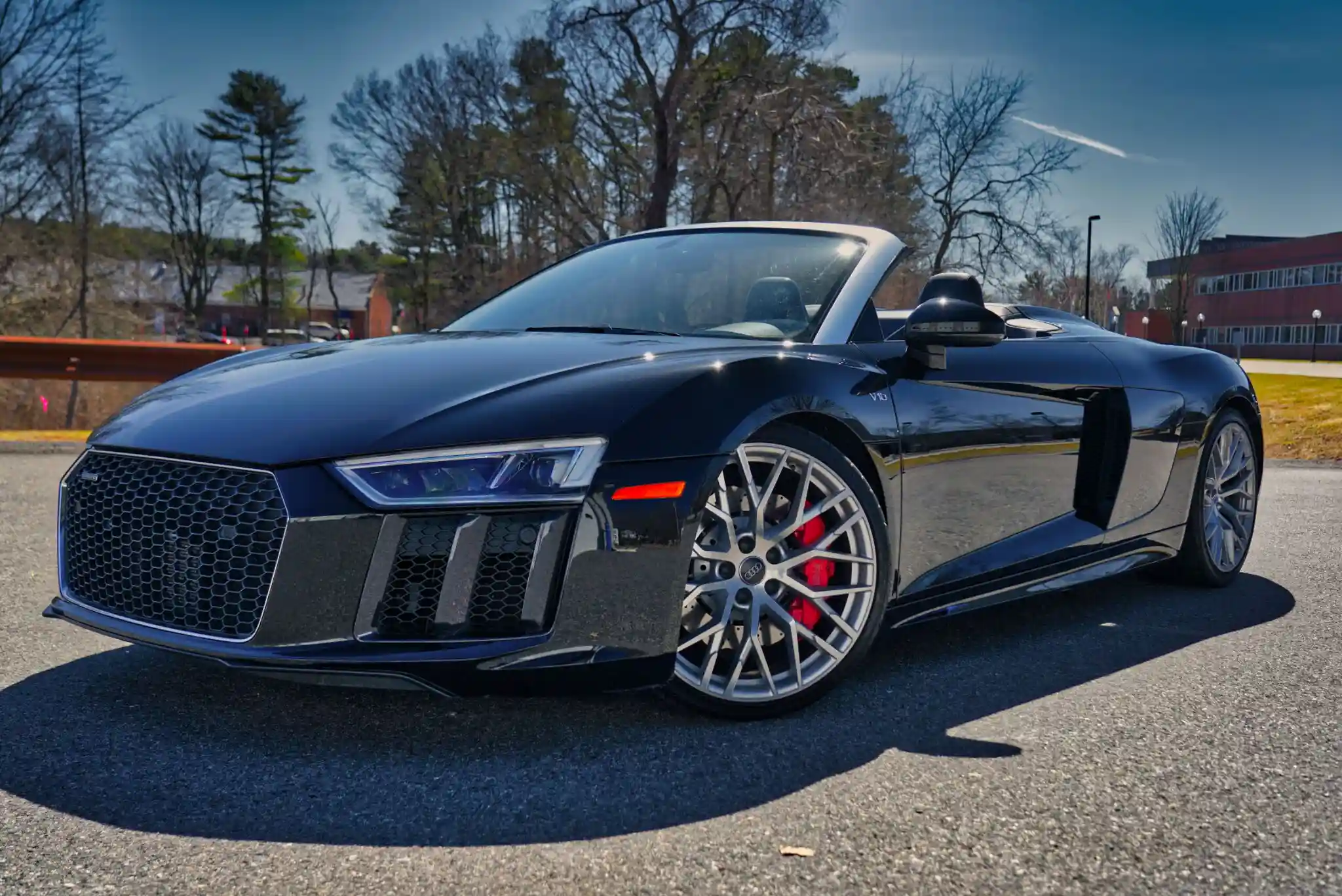
Finish, protection and durability
Vinyl Wrap Has More Style Options
Vinyl wrap usually wins when it comes to variety.
There are more vinyl colors, textures, finishes, and creative options available.
If you want a specific satin blue, brushed metal, gloss orange, carbon fiber accent, printed graphic, commercial design, chrome delete, roof wrap, hood stripe, or custom partial design, vinyl often gives you more flexibility.
Vinyl is also easier to use for accents, graphics, lettering, and partial styling.
This is why vinyl remains the go-to choice for style-first builds.
If the goal is to create a unique look, change the vehicle’s personality, or add custom design elements, vinyl wrap is usually the better creative tool.
Color PPF has grown a lot, but vinyl still offers a wider style library.
Color PPF Has Better Impact Resistance
Color PPF has the advantage when impact protection matters.
Because it is a paint protection film, it is built to protect the paint from physical road damage better than vinyl.
This matters most on vehicles that are driven hard, driven often, or exposed to harsh road conditions.
Performance cars, luxury vehicles, EVs, trucks, SUVs, exotics, and black vehicles can all benefit from the added protection.
A vinyl wrap can change the look of the vehicle, but a rock chip can still damage through it more easily than it would through PPF.
If you are trying to avoid chips on a new or high-value vehicle, color PPF is the stronger option.
Self-Healing Is a Major Difference
Many paint protection films have self-healing properties.
This means light surface marks in the film can recover with heat.
That does not mean the film is impossible to damage. It does not mean deep cuts disappear. It does not mean the vehicle can be abused.
But it does help with light surface marks and everyday wear.
Traditional vinyl wrap does not self-heal in the same way.
Vinyl can scratch, stain, scuff, or show wear over time. Some finishes are more delicate than others, especially matte, satin, chrome, and textured finishes.
If the customer wants a color change that is more resistant to surface wear, color PPF has an advantage.
Self-healing is one of the reasons color PPF is often viewed as the premium color change option.
Durability Depends on Product, Exposure, and Maintenance
Durability is not a simple one-size answer.
A quality vinyl wrap can last for years when installed and maintained properly, but lifespan depends heavily on the film, finish, color, climate, sun exposure, washing habits, storage, and whether the panels are vertical or horizontal.
Horizontal panels like hoods, roofs, and trunks usually see more sun and weather exposure than side panels.
Matte, satin, chrome, color shift, and specialty films can also have different care expectations.
Color PPF generally offers stronger durability and protection because it is built as a urethane paint protection film.
That said, color PPF still needs proper care.
No film lasts forever.
Both products perform best when they are maintained correctly and installed professionally.
Vinyl Wrap Is Easier to Justify for Short-Term Style
Vinyl wrap makes sense when the customer wants a style change for a few years.
Maybe they are bored with the factory color.
Maybe they want a new look without repainting.
Maybe they want to personalize a lease, a daily driver, a weekend car, or a show vehicle.
Maybe they want to change the look now and change it again later.
Vinyl is usually the better choice for that type of customer.
It gives flexibility.
You can do a full color change, partial wrap, roof wrap, mirrors, chrome delete, stripes, hood accents, graphics, or commercial branding.
For style experiments and shorter-term changes, vinyl is hard to beat.
Color PPF Is Easier to Justify for Long-Term Protection
Color PPF makes sense when the customer wants the new look to also protect the vehicle.
This is especially true if the vehicle is new, high-value, performance-oriented, luxury, or something the owner plans to keep.
A customer may love the look of a color change but not want to give up the protection benefits of PPF.
Color PPF solves that problem.
It can restyle the vehicle while also protecting the original paint underneath.
This is useful for customers who would otherwise consider full body PPF but want a different color or finish.
If you are already considering a major protection package, color PPF may make more sense than vinyl.
Color PPF Costs More for a Reason
Color PPF is usually more expensive than vinyl because it does more.
The material costs more.
The product is thicker.
The installation can be more involved.
The protection level is higher.
The film can offer self-healing and impact protection that vinyl does not.
That extra cost is not just because it is new or trendy.
It is because the product is serving two purposes at once.
It changes the appearance and protects the paint.
For customers who only care about color, vinyl is usually enough.
For customers who want color plus protection, color PPF can be worth the difference.
Vinyl Wrap Is Not Paint Protection Film
This is one of the most important points.
Vinyl wrap is not paint protection film.
A vinyl wrap may provide a thin layer between the paint and the outside world, but it should not be sold or understood as a true rock-chip protection product.
It is not designed to absorb impact the way PPF is.
It is not the product we would recommend if the main goal is protecting a new hood, bumper, rocker panels, lower doors, or performance car front end from road debris.
If protection is the main goal, choose PPF.
If style is the main goal, choose vinyl.
If you want both, consider color PPF.
Color PPF Is Not a Cheap Wrap Alternative
Color PPF should not be viewed as a cheaper vinyl wrap.
It is usually the more expensive option.
It is best for customers who value the protection side of the product.
If the customer just wants a different color at the lowest cost, color PPF is probably not the right fit.
If the customer wants a major restyle on a high-value vehicle and wants to protect the paint at the same time, color PPF becomes much more logical.
The value comes from combining two goals.
Style and protection.
That is the reason to choose it.
Installation, care and removal
Which Looks Better?
Both can look excellent when installed properly.
Vinyl wrap has a huge range of finishes and can create very creative looks.
Color PPF can offer a deeper, more paint-like appearance depending on the film and finish.
The better-looking option depends on the specific color, finish, vehicle, install quality, and owner preference.
For some builds, vinyl is the obvious choice because the desired color or finish only exists in vinyl.
For other builds, color PPF may look more premium while also protecting the paint.
The appearance should be judged by the actual film sample, vehicle shape, lighting, and desired outcome.
The installer matters too.
A good product can still look bad if installed poorly.
Installation Quality Matters With Both
Both vinyl wrap and color PPF require professional installation.
Modern vehicles have complex bumpers, sensors, cameras, tight edges, trim, body lines, handles, mirrors, badges, and panel gaps.
A quality install requires experience with film behavior, stretching, shrinking, edges, relief cuts, disassembly, reassembly, and realistic panel planning.
Vinyl and PPF install differently.
PPF is thicker and behaves differently than vinyl.
Vinyl is thinner and often more flexible for complex styling, but it still has limitations.
Poor installation can lead to lifting, distortion, visible cuts, overstretching, adhesive lines, rough edges, wrinkles, and premature failure.
The film choice matters.
The install quality matters just as much.
Vehicle Shape Affects the Decision
The shape of the vehicle can influence whether vinyl or color PPF makes more sense.
Some vehicles have easier body lines and large flat panels.
Others have aggressive bumpers, deep recesses, tight corners, vents, wide fenders, complex mirrors, and difficult trim.
Vinyl may be better for certain complex style projects because of color availability and flexibility.
Color PPF may be better for vehicles where protection is the priority, especially on high-impact panels.
Some projects may combine both.
A vehicle could receive color PPF on high-impact areas and vinyl accents elsewhere.
The right plan depends on the vehicle’s shape, film choice, coverage, and goals.
Maintenance Expectations Are Different
Both vinyl wrap and color PPF need maintenance.
A wrapped vehicle should be washed carefully with safe products and soft towels.
Avoid aggressive pressure washing near edges. Avoid automatic brush washes. Avoid harsh chemicals. Avoid abrasive scrubbing.
Vinyl finishes can be more sensitive depending on the film. Matte, satin, chrome, and textured finishes need extra care.
Color PPF is generally more durable, but it still needs safe washing and proper care.
Do not treat either product like permanent paint.
Film is still film.
It needs maintenance, careful washing, and realistic expectations.
The better the care, the better the film will look over time.
Ceramic Coating Can Help Both
Ceramic coating can be added over some vinyl wraps and paint protection films when the correct product is used for the surface.
On color PPF, ceramic coating can improve slickness, water behavior, and ease of cleaning.
On vinyl, coating may also help maintenance, but the product selection must match the wrap finish.
Not all coatings are appropriate for every film type.
Matte and satin finishes need special care because the wrong product can change the appearance.
At Kickin’ Customs, we prefer to match products to the film surface instead of guessing.
If easy maintenance matters, coating should be discussed during the planning stage.
Can Vinyl Wrap Be Removed?
Yes, vinyl wrap can be removed, but removal depends on film quality, age, installation, paint condition, sun exposure, and maintenance.
High-quality film installed properly on healthy factory paint is usually more predictable to remove than cheap film or old film that has been neglected.
Leaving vinyl on too long can make removal more difficult.
Horizontal panels and heavily sun-exposed areas may age faster.
If a wrap is failing, cracking, or heavily baked, removal can become time-consuming.
This is one reason to use quality film and follow realistic replacement timelines.
Vinyl wrap is meant to be temporary compared to paint.
It should be treated that way.
Can Color PPF Be Removed?
Yes, color PPF can usually be removed when installed properly over healthy paint.
As with vinyl, removal depends on paint condition, film age, installation quality, exposure, and care.
Because PPF is thicker and more adhesive than vinyl, removal should be done carefully.
Color PPF is usually chosen with longer-term protection in mind, but it is still a film and can be removed when needed.
If the paint underneath is original, healthy, and properly cared for, film removal is usually more predictable.
If the vehicle has repainted panels, poor paintwork, or existing damage, removal risk can increase.
This should be discussed before installation.
Repainted Panels Need Caution
Repainted panels are important to discuss before any wrap or PPF project.
Vinyl wrap and paint protection film both rely on adhesion.
If a panel has been repainted poorly, not cured properly, or has weak paint adhesion, film removal can create risk.
This applies to both vinyl and color PPF.
Factory paint is usually more predictable.
Repainted panels are case-by-case.
Customers should disclose any known paintwork before installation.
A wrap or PPF shop cannot guarantee the condition of unknown prior paintwork.
This is part of setting realistic expectations.
Match your vehicle and goals
Vinyl Wrap for Leased Vehicles
Vinyl wrap can make sense for leased vehicles when the customer wants temporary style.
Because vinyl is usually more affordable than color PPF, it may be easier to justify on a vehicle that will be returned later.
However, lease rules, paint condition, wrap duration, and removal timing all matter.
The film should be removed before it becomes too old or difficult to remove.
The customer should also understand that any film installed on a leased vehicle needs to be removed properly before turn-in if the lease requires it.
For short-term style, vinyl is usually the more practical choice.
Color PPF may be harder to justify unless protection is a major priority.
Color PPF for High-Value Vehicles
Color PPF makes more sense on high-value vehicles.
If the vehicle is expensive to repaint, has rare paint, has soft paint, has aggressive body lines, or is likely to see road debris, color PPF can be a strong option.
This applies to Porsche, Corvette, BMW M, Mercedes-AMG, Audi RS, Ferrari, Lamborghini, McLaren, Bentley, Rolls Royce, Tesla, Rivian, Range Rover, and other higher-end vehicles.
For these owners, the extra cost of color PPF may be easier to justify because the film changes the look while protecting the original finish.
If you were already considering full body PPF, color PPF becomes even more interesting.
Vinyl Wrap for Style Builds
Vinyl wrap is still the best choice for many style builds.
If the goal is a dramatic color, a special finish, an accent package, a chrome delete, roof wrap, commercial design, stripe package, printed livery, or short-term visual change, vinyl is usually the right product.
It is flexible, creative, and cost-effective compared to color PPF.
This is why vinyl remains popular for cosmetic customization.
A customer may not need rock-chip protection on every panel.
They may simply want the vehicle to look different.
For that customer, vinyl is the practical choice.
Color PPF for Protection Builds
Color PPF is best when the customer wants style and protection in one package.
It is especially useful for customers who are already shopping for PPF but want a color change too.
Instead of installing clear film over the factory paint, color PPF changes the look while protecting the panels.
This makes sense for new vehicles, performance cars, luxury vehicles, exotics, EVs, trucks, SUVs, and long-term ownership.
Color PPF is not just a wrap.
It is a protection product with style built in.
That is the difference.
Can You Combine Vinyl and Color PPF?
Yes, some projects can combine both.
A vehicle could receive color PPF on major painted panels and vinyl accents on the roof, mirrors, trim, stripes, or graphics.
A customer could use PPF on high-impact areas and vinyl for styling elsewhere.
A commercial vehicle could use PPF in vulnerable areas and printed vinyl graphics for branding.
The combination depends on the project.
The important thing is to plan the materials correctly.
Vinyl and PPF behave differently, age differently, and require different expectations.
A good shop should explain what each material is doing on the vehicle.
Which Is Better for Full Vehicle Color Change?
For a full vehicle color change, vinyl is usually the more budget-friendly and flexible option.
It has more colors and finishes, and the overall cost is usually lower.
Color PPF is better when the customer wants full vehicle color change plus paint protection.
If the vehicle is high-value, new, long-term owned, or driven in conditions where protection matters, color PPF may be worth it.
If the customer wants style at a more reasonable cost, vinyl wrap is usually the better fit.
The best choice depends on the reason for the color change.
Style only points toward vinyl.
Style plus protection points toward color PPF.
Which Is Better for Partial Accents?
Vinyl is usually better for partial accents.
Roof wraps, mirror wraps, hood accents, stripes, chrome deletes, trim blackout, and small styling changes are usually done with vinyl.
It is more cost-effective and gives more finish options.
Color PPF is usually not the first choice for small accent work unless the area also needs protection.
For example, a customer might use PPF on rocker panels for protection and vinyl on the roof for style.
The material should match the job.
Not every style change needs color PPF.
Which Is Better for Performance Cars?
Performance cars often benefit from color PPF if the owner wants a color change and protection.
Wide tires, sticky tires, low ride height, aggressive body shapes, and highway driving can all increase paint damage risk.
For Corvettes, Porsches, BMW M cars, Mercedes-AMG models, Audi RS vehicles, Mustangs, Camaros, Ferraris, Lamborghinis, McLarens, and similar vehicles, color PPF can be a strong option.
Vinyl wrap still makes sense if the customer wants style at a lower cost or a specialty finish that is not available in color PPF.
The decision depends on whether protection is part of the goal.
Which Is Better for Trucks and SUVs?
For trucks and SUVs, the answer depends on use.
Vinyl wrap is a strong choice for style changes, roof accents, chrome deletes, commercial branding, stripes, and custom looks.
Color PPF is a stronger choice if the truck or SUV is new, expensive, black, used year-round, or exposed to road debris.
Trucks and SUVs also have large panels, which affects cost.
A full color PPF install on a large SUV will be a major investment.
A vinyl wrap may be more practical for customers focused on appearance.
Color PPF makes sense when protection justifies the extra cost.
Which Is Better for EVs?
EVs can go either way.
Tesla, Rivian, Lucid, BMW i, Mercedes EQ, Hyundai IONIQ, Kia EV, and other EVs often have smooth panels, large painted bumpers, and modern body lines that look great in both vinyl and color PPF.
Vinyl is a good option for style-first EV owners who want a new look or accents.
Color PPF is a strong option for EV owners who want to protect the original paint while changing the color.
Many EV owners also choose ceramic tint, PPF, and ceramic coating as part of a complete package.
If the EV is new and long-term owned, color PPF may be worth considering.
If the goal is creative styling at lower cost, vinyl is usually the better choice.
Which Is Better for Daily Drivers?
For daily drivers, the right choice depends on budget and how much protection matters.
Vinyl can make a daily driver look completely different without repainting.
Color PPF can change the look while offering stronger protection against daily road abuse.
If the vehicle sees highways, winter roads, construction areas, and tight parking lots, the protection side of color PPF becomes more valuable.
If the vehicle is mostly a style project and the owner understands vinyl maintenance, vinyl may be enough.
Daily drivers see real wear.
That makes color PPF attractive, but not always necessary.
Which Is Better for Commercial Vehicles?
Commercial vehicles usually make more sense with vinyl.
Business logos, lettering, printed graphics, partial wraps, and full commercial wraps are usually done with vinyl film.
Vinyl is the better material for advertising because it can be printed, customized, layered, and designed around branding.
Color PPF is usually not needed for standard commercial graphics.
That said, certain commercial vehicles may benefit from PPF in high-impact areas, especially if they are newer or higher-value.
For branding, vinyl is the standard choice.
For protection, PPF is the better product.
Maintain your chosen film
Maintenance for Vinyl Wrap
Vinyl wrap should be washed carefully.
Use safe wash products, clean microfiber towels, and gentle technique.
Avoid automatic brush washes.
Avoid pressure washing too close to edges.
Avoid harsh chemicals, abrasive pads, and aggressive scrubbing.
Matte, satin, chrome, color shift, and textured films need extra care.
Do not treat vinyl like paint.
Wax, polish, and coating products should only be used if they are appropriate for the specific film finish.
A vinyl wrap can look great for years when cared for properly.
Poor maintenance can shorten its life quickly.
Maintenance for Color PPF
Color PPF also needs proper care.
Wash with safe products and clean microfiber towels.
Avoid aggressive pressure washing near edges.
Avoid automatic brush washes.
Remove bugs, bird droppings, sap, tar, and hard water in a reasonable amount of time.
Color PPF is more protective than vinyl, but it is not indestructible.
Ceramic coating can be added over many PPF surfaces to improve slickness, water behavior, and cleaning ease.
If the film is XPEL or another specific manufacturer, use products that are safe for that film.
The goal is to protect the protection.
Which One Should You Choose?
Choose vinyl wrap if your main goal is style, color change, accents, graphics, chrome delete, commercial branding, or a lower-cost visual transformation.
Choose color PPF if your main goal is style plus real paint protection, self-healing behavior, impact resistance, and longer-term durability.
Vinyl is the style-first option.
Color PPF is the protection-focused color change option.
Neither is automatically better for every customer.
They are different tools.
The right choice depends on your vehicle, budget, driving habits, paint condition, desired finish, ownership length, and protection goals.
Final Thoughts
Color change wrap and color paint protection film can both transform a vehicle.
But they are not the same product.
Vinyl wrap is the better choice for style-first projects, more finish options, accent packages, commercial graphics, chrome deletes, and budget-conscious color changes.
Color PPF is the better choice when the customer wants a color change with real paint protection, self-healing behavior, and stronger impact resistance.
At Kickin’ Customs in Raynham, MA, we help customers choose between vinyl wraps, color PPF, clear PPF, ceramic coatings, and accent packages based on the vehicle and the goal of the project.
If you are not sure whether a color change wrap or color paint protection film makes more sense, contact Kickin’ Customs and we can walk you through the best options for your vehicle, budget, style, and protection needs.
Frequently Asked Questions
What is the difference between a color change wrap and color PPF?
A color change wrap is usually vinyl and is mainly for appearance. Color PPF changes the appearance while also adding paint protection film benefits like impact resistance and self-healing behavior.
Is color PPF better than vinyl wrap?
Color PPF is better for protection. Vinyl wrap is usually better for style variety and budget. The better option depends on whether appearance or protection matters more.
Does vinyl wrap protect against rock chips?
Vinyl wrap may provide light surface coverage, but it is not designed to protect against rock chips like paint protection film.
Does color PPF protect against rock chips?
Yes, color PPF is designed as paint protection film, so it offers stronger protection against road debris and rock chips than vinyl wrap.
Is color PPF more expensive than vinyl wrap?
Yes, color PPF is usually more expensive because the material is thicker, more protective, and often offers self-healing properties.
Does vinyl wrap self-heal?
Traditional vinyl wrap does not self-heal like many paint protection films. Vinyl can scratch, scuff, and show wear depending on the film and finish.
Can color PPF be removed?
Yes, color PPF can usually be removed when installed properly over healthy paint. Removal should be done carefully by an experienced shop.
Can vinyl wrap be removed?
Yes, vinyl wrap can be removed, but removal depends on film quality, age, installation, paint condition, and exposure.
Which lasts longer, vinyl wrap or color PPF?
Color PPF generally offers stronger long-term durability and protection. Vinyl wrap lifespan depends heavily on the film, finish, sun exposure, maintenance, and panel orientation.
Can you ceramic coat color PPF?
Yes, ceramic coating can often be installed over color PPF to improve slickness, water behavior, and ease of cleaning when the correct product is used.
Plan your next step
Not sure whether your vehicle needs a color change wrap or color paint protection film? Contact Kickin’ Customs in Raynham, MA and we can help you compare vinyl wrap, color PPF, clear PPF, and accent package options based on your style, budget, and protection goals.
