
The short answer
A vinyl wrap does not always have to mean wrapping the entire vehicle.
Sometimes the right answer is a full color change. Other times, a roof wrap, hood wrap, mirror caps, stripes, chrome delete, or smaller accent package creates the look the owner wants without covering every panel.
That is the difference between a full wrap and a partial wrap.
A full wrap changes the overall color or finish of the vehicle. A partial wrap changes specific areas for contrast, style, branding, or budget control.
At Kickin’ Customs in Raynham, MA, we install full and partial vinyl wraps for customers across Massachusetts and Rhode Island. Some customers want a complete transformation. Others want a cleaner, sportier, more custom appearance without committing to a full color change.
The right choice depends on the vehicle, the color, the body lines, the budget, and how dramatic you want the change to be.
Full and partial wraps compared
What Is a Full Vinyl Wrap?
A full vinyl wrap covers the majority of the vehicle’s painted exterior panels with vinyl film.
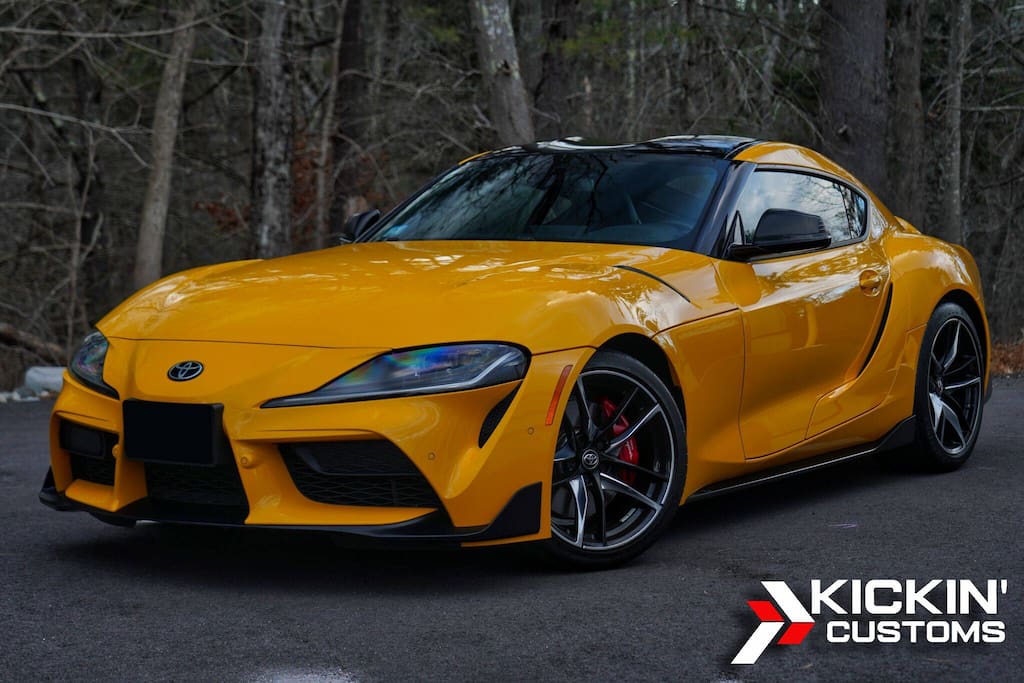
The goal is usually to make the vehicle look like a completely different color or finish. A white vehicle can become satin black. A gray vehicle can become gloss green. A black vehicle can become matte bronze. A factory color can be changed into something much more personal.
Full wraps are popular when the owner wants the strongest visual change.
They are also popular when the factory color feels too common or the owner wants a finish that was not available from the manufacturer.
A full wrap is the best choice when the goal is a true color change.
What Is a Partial Vinyl Wrap?
A partial wrap covers selected areas instead of the entire vehicle.
This can include the roof, hood, mirrors, spoiler, trim, pillars, stripes, lower accents, chrome delete, commercial graphics, or other specific sections.
Partial wraps are used to add contrast, sharpen the vehicle’s appearance, or create a custom look without changing the whole color.
For many vehicles, a partial wrap can make a big difference.
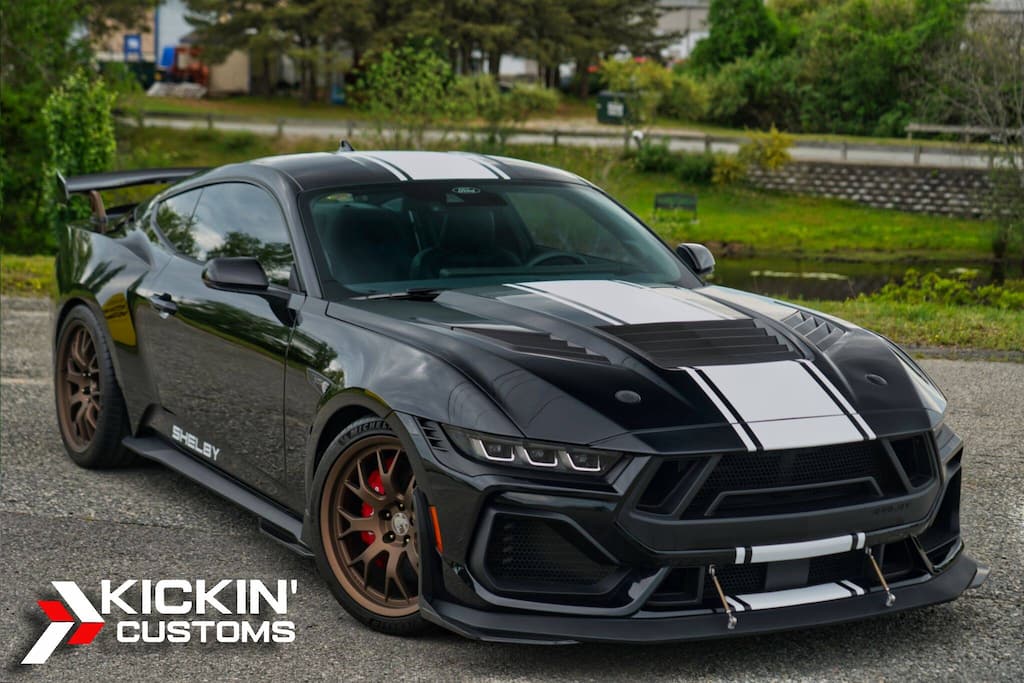
A black roof on a white SUV can change the profile. Satin mirror caps can add contrast. Hood accents can make a performance car feel more aggressive. A chrome delete can modernize a luxury vehicle. Stripes can give a muscle car or sports car more personality.
Partial wraps are often the better choice when the owner wants style, not a complete transformation.
Full Wraps Create the Biggest Visual Change
If you want the vehicle to look completely different, a full wrap is usually the answer.
A full color change affects every angle of the vehicle. The side profile changes. The front end changes. The rear view changes. The whole vehicle feels like a different build.
This is why full wraps are popular on sports cars, EVs, trucks, SUVs, luxury vehicles, and custom projects.
A full wrap also gives the owner access to colors and finishes that factory paint may not offer. Satin, matte, metallic, color shift, gloss, textured, and specialty films can all create a look that stands out from standard factory options.
If the vehicle still looks too stock with small accents, a full wrap may be the better fit.
Partial Wraps Give Strong Impact Without Going All In
Partial wraps are great when the vehicle already has a color you like, but it needs more personality.
Instead of covering every panel, a partial wrap works with the factory color.
This is often the right move on vehicles that already have a clean paint color, but need contrast. A black roof on a white vehicle, satin black hood accents on a performance car, or gloss black trim on a chrome-heavy SUV can change the look without making the vehicle feel overdone.
Partial wraps can also be easier to update later.
If the owner gets tired of stripes, roof accents, or mirror caps, those pieces can usually be removed or replaced without changing the entire vehicle.
Budget Is a Major Difference
Full wraps cost more than partial wraps because they require more film, more time, more prep, more panel coverage, and more installation detail.
A full color change wrap is a major project. Large panels, bumpers, mirrors, door handles, trim, badges, body lines, spoilers, and edges all affect the amount of time involved.
Partial wraps are usually more budget-friendly because they focus on specific areas.
That does not mean partial wraps are simple or cheap. A detailed hood, complex roof, deep mirror cap, or stripe layout still requires skill and time. But compared to a full wrap, partial work usually lets the customer create visual impact at a lower investment.
For many owners, partial wrap work is the best balance between cost and style.
Current starting prices
| Package or coverage | Starting price |
|---|---|
| Full color change | $4495 |
| Two-tone wrap | $1795 |
| Accents | $495 |
| Stripes | $995 |
| Chrome delete | $495 |
Starting prices vary with the vehicle, film, preparation, disassembly and agreed coverage. Final pricing is confirmed after reviewing the project.
Color changes and accent coverage
Full Wraps Are Best for a True Color Change
If the owner wants the vehicle to be a new color, a full wrap makes the most sense.
A partial wrap cannot make the vehicle feel like it changed colors. It can only add contrast or accents to the original paint.
For example, if you have a silver car and want it to look satin blue, that is a full wrap conversation. If you like the silver but want a black roof and mirrors, that is a partial wrap conversation.
The goal should decide the package.
If you want transformation, choose full wrap.
If you want enhancement, choose partial wrap.
Partial Wraps Are Best for Accents
Partial wraps are ideal for accent styling.
Common accent wrap areas include roofs, hoods, mirrors, spoilers, splitters, diffusers, rocker accents, trim pieces, door handles, pillars, and emblems.
These areas can create contrast without taking over the whole vehicle.
Accent wraps are especially popular on vehicles that already have strong body lines. A well-placed accent can make the vehicle look lower, wider, sportier, cleaner, or more finished.
The key is restraint.
Not every panel needs vinyl. Sometimes one or two well-chosen accents look better than adding too much.
Roof Wraps Are One of the Most Popular Partial Wraps
Roof wraps are popular because they can change the stance of the vehicle without changing the whole color.
A gloss black roof can create a panoramic-style look on many cars and SUVs. It can also tie together black trim, tinted windows, black wheels, or other accents.
Roof wraps work especially well on white, silver, gray, red, blue, and bright-colored vehicles because the contrast is easy to see.
They are also a good option for customers who want a custom look but are not ready for a full wrap.
A roof wrap is simple in concept, but the installation still needs care. Antennas, moldings, glass edges, roof rails, sunroofs, and body lines can all affect the job.
Hood Wraps Can Change the Personality of the Vehicle
A hood wrap can make a vehicle look more aggressive, more performance-focused, or more custom.
Some customers choose satin black or matte black for a muscle car or sports car. Others choose carbon-style film for a performance accent. Some use hood sections as part of a stripe package.
Hood wraps are popular on Mustangs, Camaros, Challengers, Corvettes, trucks, Jeeps, BMWs, Porsches, and other vehicles where the hood is a major visual feature.
The finish choice matters.
A gloss black hood can look sleek. A satin or matte hood can look more aggressive. A carbon-style hood can add a motorsport feel.
The right choice depends on the vehicle’s style.
Mirror Wraps Add Small But Noticeable Contrast
Mirror caps are a smaller accent, but they can have a strong effect.
They help tie together other black, satin, carbon-style, or color accents on the vehicle. Mirror wraps are often paired with roof wraps, chrome delete, stripes, or trim accents.
They are also useful when the owner wants a subtle change without making the vehicle look heavily modified.
Mirror caps can be tricky because of their shape. Curves, tight edges, sensors, turn signals, and housing design can affect installation.
A small part can still require careful work.
Chrome Delete Is a Partial Wrap With a Big Effect
Chrome delete is one of the most common partial wrap services.
Many vehicles come with chrome window trim, grille trim, door handles, badges, roof rails, and bumper accents. Some owners like the factory chrome. Others feel it makes the vehicle look dated or too bright.
A chrome delete uses vinyl film to change chrome trim to gloss black, satin black, matte black, or another finish.
This can modernize the vehicle quickly.
Chrome delete is popular on trucks, SUVs, luxury vehicles, EVs, and performance vehicles. It pairs well with window tint, black wheels, roof wraps, and other styling upgrades.
Stripes Can Add Style Without a Full Wrap
Stripes are another strong partial wrap option.
They can be subtle or bold depending on the vehicle and design. Racing stripes, side stripes, hood stripes, rocker stripes, pinstripes, and custom layouts can all change the look without wrapping every panel.
Stripes work well on performance cars, muscle cars, sports cars, trucks, and specialty builds.
The layout matters. Stripe width, spacing, color, finish, placement, and alignment all affect the final look.
A good stripe package should fit the vehicle’s body lines, not fight them.
Partial Wraps Are Good for Testing a Style
Some customers are unsure if they want a full wrap.
A partial wrap can be a good starting point.
A roof, mirrors, hood, stripes, or chrome delete can let the owner try a custom look without committing to a full color change. If they love the direction, they can always consider a larger wrap project later.
This is especially helpful for customers who are new to vinyl wrap.
A smaller project can show how the film looks, how it changes the vehicle, and how maintenance feels before going all in.
Planning and maintenance
Full Wraps Require More Planning
A full wrap should be planned carefully.
Film choice, finish, vehicle color, body shape, trim, badges, door handles, mirrors, bumpers, panel gaps, and existing paint condition all matter.
Some colors and finishes are more forgiving than others. Some vehicles have deep bumpers, complex curves, textured plastics, aggressive scoops, or tight edges that make installation more involved.
Full wraps also require realistic expectations around hidden areas.
A standard full wrap changes the visible exterior. It usually does not make every door jamb, engine bay area, trunk channel, and hidden edge look like factory paint. If the original color is very different from the wrap color, some areas may still show when doors, hood, or trunk are opened.
That should be discussed before the job starts.
Partial Wraps Also Need Good Design Choices
Partial wraps may involve less coverage, but design matters even more.
Because the factory paint remains visible, the vinyl needs to complement the original color.
A partial wrap should look intentional. It should not look like random pieces were added without a plan.
The best partial wraps follow body lines, trim lines, roof lines, or factory styling cues. They create contrast in a way that feels natural to the vehicle.
This is where experience matters. The right accent can make the vehicle look better. The wrong accent can make it look unfinished.
Full Wraps Have More Maintenance Responsibility
A full wrap covers more surface area, which means more vinyl to maintain.
The entire exterior needs to be washed carefully with wrap-safe products and clean microfiber towels. Automatic brush washes should be avoided. Harsh chemicals, abrasive towels, strong degreasers, and aggressive scrubbing can damage the film.
Bug splatter, bird droppings, sap, salt, and road grime should be removed quickly.
Matte, satin, metallic, textured, and color-shift films may need more careful maintenance than standard gloss films.
A full wrap looks best when the owner is willing to care for it properly.
Partial Wraps Still Need Maintenance
Partial wraps need care too.
Even if only the roof, hood, mirrors, stripes, or trim are wrapped, those areas still need proper washing and protection.
Edges should not be scrubbed aggressively. Pressure washers should not be aimed directly into edges. Harsh chemicals should be avoided.
This matters because partial wraps often sit on high-touch or high-exposure areas. Hoods collect bugs and sun. Roofs collect heat and weather. Mirrors take debris. Trim pieces see frequent cleaning.
A smaller wrap still needs proper maintenance.
Choose for your vehicle
Which Option Is Better for Daily Drivers?
For daily drivers, partial wraps often make sense when the owner wants a cleaner look without committing to a full color change.
Roof wraps, chrome delete, mirror caps, and light accents can make a daily driver feel more custom without creating as much maintenance responsibility as a full wrap.
A full wrap can still be worth it on a daily driver if the owner wants a complete color change and understands the maintenance.
Daily exposure matters. Vehicles parked outside, driven through winter, or washed often will put more wear on the film.
The right choice depends on how much change the owner wants and how the vehicle is used.
Which Option Is Better for Trucks and SUVs?
Trucks and SUVs can benefit from either full or partial wraps.
A full wrap can completely change the look of a truck or SUV, especially on larger vehicles with bold body lines.
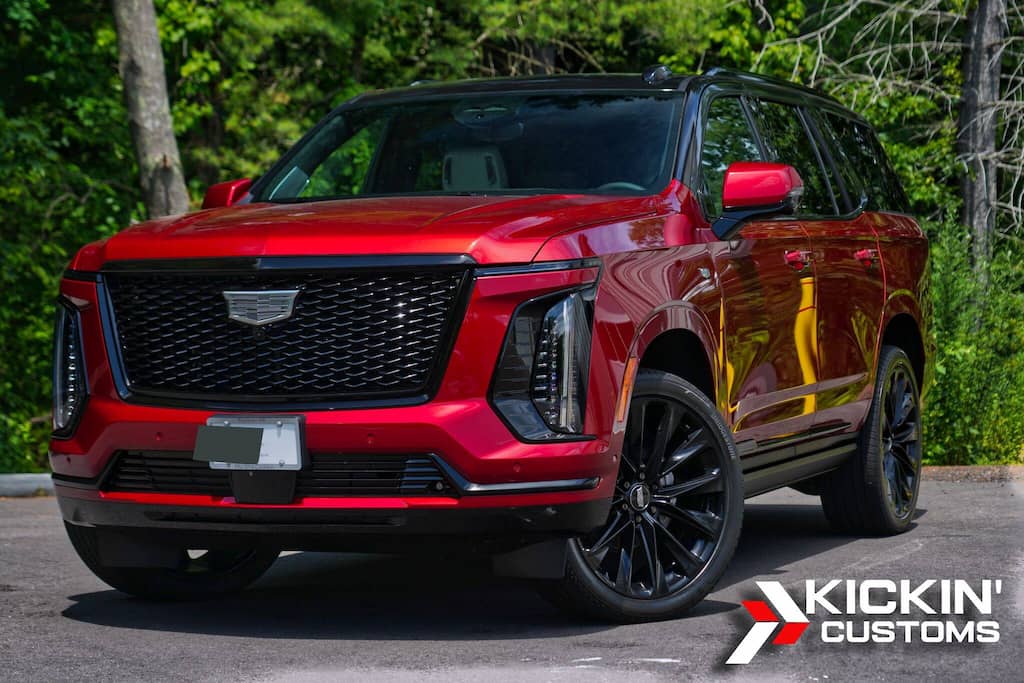
Partial wraps are also popular because trucks and SUVs have many areas that work well for accents. Roof wraps, hood wraps, bed accents, tailgate graphics, lower accents, chrome delete, mirrors, and commercial graphics can all have strong visual impact.
For many truck and SUV owners, a chrome delete plus window tint and a few accents creates a clean look without the cost of a full wrap.
Which Option Is Better for EVs?
EVs are strong candidates for both full and partial wraps.
Tesla, Rivian, Lucid, Hyundai IONIQ, Kia EV, BMW i models, Mercedes EQ models, and other EVs often have clean body lines that work well with full color changes.
A full wrap can help an EV stand out from similar factory colors.
Partial wraps can also be effective. Black roofs, mirror accents, pillar accents, chrome delete, and subtle trim changes can make an EV look more finished without changing the entire color.
Many EV owners pair wrap with ceramic tint, paint protection film, and ceramic coating depending on their goals.
Which Option Is Better for Performance Cars?
Performance cars often look great with either option.
A full wrap can create a bold transformation. A partial wrap can add the right amount of aggression without covering the whole vehicle.
Hood accents, roof wraps, stripes, mirror caps, spoilers, splitters, and rocker accents are common on performance vehicles.
For Corvettes, Porsches, BMW M cars, Mustangs, Camaros, Challengers, Audi RS models, Mercedes AMG models, and similar vehicles, the body lines usually help guide the design.
The best wrap choice should enhance the vehicle’s shape, not distract from it.
Which Option Is Better for Business Vehicles?
For business vehicles, partial wraps and commercial graphics are often the most practical choice.
A full commercial wrap can create a strong brand presence, but many businesses do not need the entire vehicle covered. Door logos, rear window graphics, quarter panel graphics, tailgate lettering, or partial side graphics can still make the vehicle professional and easy to recognize.
The best commercial wrap is not always the busiest design.
Readability matters. Contact information, services, branding, and layout should be clear from a distance.
For business vehicles, the right amount of coverage depends on budget, brand style, and how the vehicle is used.
Make your coverage decision
When a Full Wrap Makes More Sense
A full wrap makes more sense when you want a complete color change, a major transformation, a specialty finish, or a custom look that affects the entire vehicle.
It also makes sense when the factory color is not what you want and small accents will not be enough.
If you want people to see the vehicle and think it is a different color, choose a full wrap.
When a Partial Wrap Makes More Sense
A partial wrap makes more sense when you like the factory color but want more contrast, style, or detail.
It also makes sense when budget matters, when you want a smaller change, or when you want to test a look before committing to a full wrap.
Partial wraps are ideal for roofs, hoods, mirrors, stripes, chrome delete, trim accents, spoilers, and commercial graphics.
If you want the vehicle to look sharper without changing everything, choose a partial wrap.
Final Thoughts
Full wraps and partial wraps both have a place.
A full wrap is the right choice when you want a complete color change or a major visual transformation.
A partial wrap is the right choice when you want contrast, accents, stripes, chrome delete, roof styling, hood styling, or commercial graphics without wrapping every panel.
At Kickin’ Customs in Raynham, MA, we install full and partial vinyl wraps for customers across Massachusetts and Rhode Island. Whether you want a full color change, roof wrap, hood wrap, mirror caps, stripes, chrome delete, or business graphics, we can help you choose the right level of coverage for your vehicle.
The best wrap is not always the biggest one. It is the one that matches your style, budget, vehicle, and expectations.
Frequently Asked Questions
What is the difference between a full wrap and a partial wrap?
A full wrap covers most of the vehicle’s exterior panels to create a color change or complete transformation. A partial wrap covers selected areas like the roof, hood, mirrors, stripes, trim, or commercial graphics.
Is a full wrap worth it?
A full wrap is worth it if you want a complete color change, specialty finish, or major visual transformation without repainting the vehicle.
Is a partial wrap worth it?
A partial wrap is worth it if you want visual impact without the cost or commitment of a full wrap. Roof wraps, hood wraps, mirror wraps, stripes, and chrome delete can make a big difference.
Can I wrap just my roof?
Yes. Roof wraps are one of the most popular partial wrap options and can create a clean contrast look, especially on white, gray, silver, red, blue, or bright-colored vehicles.
Can I wrap just my hood?
Yes. Hood wraps are popular for performance styling, contrast, carbon-style accents, and custom designs.
Is chrome delete considered a partial wrap?
Yes. Chrome delete is a type of partial wrap that changes chrome trim to gloss black, satin black, matte black, or another finish.
Does a full wrap cover door jambs?
A standard full wrap usually focuses on the visible exterior panels. Door jambs, engine bay areas, trunk channels, and hidden areas are separate considerations and should be discussed before the project.
Which is better for my vehicle, full wrap or partial wrap?
Choose a full wrap if you want a complete transformation. Choose a partial wrap if you want accents, contrast, budget control, or a smaller visual change.
Plan your next step
Not sure if your vehicle needs a full wrap or a few well-placed accents? Contact Kickin’ Customs in Raynham, MA to discuss full color changes, roof wraps, hood wraps, mirror caps, stripes, chrome delete, and commercial graphics.
