
The short answer
Windshield protection film is worth considering if your vehicle has expensive glass, driver assistance cameras, rain sensors, heating elements, heads-up display features, or a windshield that would be frustrating to replace.
Modern windshields are not simple pieces of glass anymore.
Many vehicles now have cameras, sensors, calibration requirements, specialty glass, acoustic layers, heating elements, tint bands, and built-in technology tied to safety systems. A cracked windshield may not be as simple as calling a glass company and moving on.
For some vehicles, replacement can be expensive. For others, downtime, recalibration, OEM glass availability, insurance claims, and repair quality become the bigger frustration.
At Kickin’ Customs in Raynham, MA, we install XPEL windshield protection film for customers across Massachusetts and Rhode Island who want to reduce the chance of chips, cracks, and unexpected windshield replacement headaches.
Windshield protection film does not make glass unbreakable. But for the right vehicle and driver, it can be a smart layer of prevention.
Windshield protection and cost
What Is Windshield Protection Film?
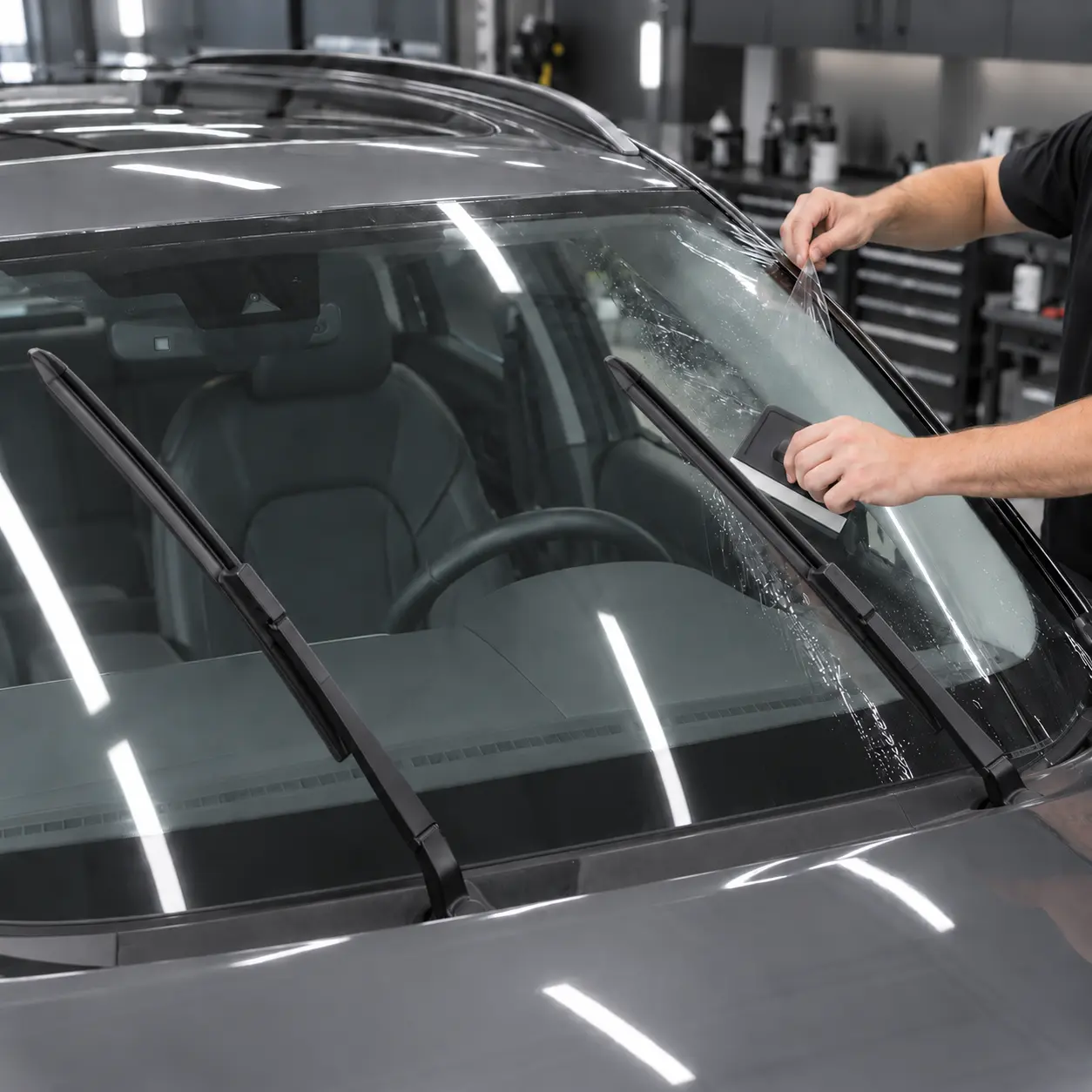
Windshield protection film is a clear protective film installed on the outside of the windshield.
Its purpose is to help absorb and reduce damage from small road debris, stones, sand, salt, and impact that would normally hit the glass directly.
Think of it as a sacrificial layer for the windshield.
Instead of the glass taking the full hit, the film takes the impact first. If the film gets damaged, it may have done its job by helping protect the windshield underneath.
Windshield protection film is not the same as window tint. It is not installed for privacy or heat rejection. It is installed to help protect the glass from chips, pitting, and cracks caused by normal road use.
Current starting prices
| Package or coverage | Starting price |
|---|---|
| Qualifying short windshield | $350 |
| Standard / larger windshield | $550 |
Windshield size, shape, glass condition and product fitment determine eligibility and final pricing. Film is a sacrificial protective layer and does not guarantee against cracks.
Why Modern Windshields Are So Expensive
Windshields used to be simpler.
On many modern vehicles, the windshield is connected to more than visibility. It can be part of the vehicle’s safety and driver assistance systems.
Many vehicles now have forward-facing cameras mounted near the rearview mirror. These cameras may support lane keep assist, adaptive cruise control, emergency braking, automatic high beams, collision warning, traffic sign recognition, and other features.
When the windshield is replaced, those systems may need calibration.
That can turn a simple glass replacement into a larger process involving the correct glass, proper installation, calibration equipment, extra time, and sometimes dealership involvement.
This is one of the main reasons windshield protection film has become more relevant.
Windshield Replacement Is Not Always Simple
A windshield replacement can create several problems at once.
The glass needs to be available. The right version needs to be ordered. The installer needs to remove the damaged glass, prep the opening, install the new glass, allow proper cure time, and confirm that the vehicle’s systems work correctly.
If the vehicle has advanced driver assistance systems, calibration may be required.
If the vehicle uses specialty glass, OEM glass may be preferred or required.
If there are rain sensors, cameras, heated glass, acoustic glass, HUD glass, or other features, the replacement may be more expensive and more sensitive to get right.
That is why many owners would rather prevent windshield damage than deal with replacement after the fact.
Highway Driving Makes Windshield Damage More Likely
Windshield damage is common for highway drivers.
At highway speed, small stones, sand, salt, and road debris can hit the windshield with enough force to chip or crack the glass. Construction zones, trucks, winter roads, and vehicles with aggressive tires can make the problem worse.
A small chip can turn into a crack quickly, especially with temperature changes.
New England weather does not help. Cold mornings, hot defrosters, freezing temperatures, potholes, road salt, and sudden temperature swings can all make windshield damage more frustrating.
If you spend a lot of time on Route 24, Route 495, Route 95, Route 93, Route 3, Route 44, Route 138, the Mass Pike, or highways throughout Massachusetts and Rhode Island, windshield protection film can make sense.
Benefits and limitations
Windshield Protection Film Is Prevention
Windshield protection film is not a repair product.
It is designed to be installed before the windshield is chipped or cracked.
Once the glass is already cracked, film is not going to fix the damage. If the windshield has existing chips, pitting, cracks, scratches, or other defects, those need to be evaluated before installation.
The goal is to reduce the chance of future damage.
Like paint protection film, windshield film is a preventive layer. It gives the surface a better chance against the road.
Does Windshield Protection Film Stop Every Crack?
No.
Windshield protection film does not make glass unbreakable.
A large enough rock, heavy impact, sharp object, accident, or direct hit can still damage the windshield. No film can guarantee that glass will never crack.
The value is risk reduction.
Windshield protection film helps protect against many common small impacts that can create chips, stars, and cracks during normal driving.
For owners with expensive windshields, frequent highway use, or vehicles that are difficult to service, reducing that risk can be worth it.
Why EV Owners Consider Windshield Protection Film
EVs are strong candidates for windshield protection film.
Tesla, Rivian, Lucid, Hyundai IONIQ, Kia EV, BMW i models, Mercedes EQ models, and other EVs often have large glass areas, camera-based safety systems, and expensive replacement concerns.
Tesla and Rivian owners in particular often think about windshield protection because these vehicles are commonly daily driven, used on highways, and equipped with camera systems tied to driver assistance features.
A cracked windshield on an EV can be more than an inconvenience. It can involve glass availability, service scheduling, calibration, and downtime.
For EV owners who want to avoid that process when possible, windshield protection film is worth considering.
Why Luxury Vehicles Benefit From Windshield Protection Film
Luxury vehicles often have expensive glass.
BMW, Mercedes-Benz, Audi, Porsche, Land Rover, Range Rover, Lexus, Cadillac, Bentley, Rolls Royce, and other premium vehicles may have acoustic glass, HUD compatibility, rain sensors, cameras, heated glass, or specialty windshield options.
Replacement can be expensive, and using the wrong glass can create fitment, clarity, electronics, or feature concerns.
For luxury vehicle owners, windshield protection film can help reduce the chance of dealing with replacement and calibration issues.
It is especially useful when the windshield is costly, difficult to source, or tied to multiple vehicle systems.
Why Performance Cars Benefit From Windshield Protection Film
Performance cars often see conditions that increase glass damage risk.
Low ride height, highway driving, spirited driving, track travel, rallies, wide tires, and group drives can all increase exposure to road debris.
Corvettes, Porsches, BMW M cars, Mercedes AMG models, Audi RS models, Mustangs, Camaros, Challengers, Lamborghinis, Ferraris, McLarens, and similar vehicles can have expensive glass and sensitive trim around the windshield.
For performance vehicles, windshield protection film can be part of a larger protection package with paint protection film, ceramic coating, and ceramic window tint.
PPF protects the paint. Windshield film protects the glass. Ceramic coating helps maintenance. Tint improves comfort.
Why Trucks and SUVs Benefit From Windshield Protection Film
Trucks and SUVs see a lot of road exposure.
They sit higher, travel often, tow, commute, go through work zones, drive in winter conditions, and may follow trailers, contractors, trucks, or traffic that throws debris.
Windshield chips are common on daily driven trucks and SUVs.
Ford, Chevy, GMC, RAM, Toyota, Jeep, Lexus, Cadillac, BMW, Mercedes, Range Rover, Rivian, and other truck and SUV owners may benefit from windshield protection film if they drive frequently or have expensive glass.
For owners who use their vehicles for work, family, towing, commuting, or long-distance driving, avoiding windshield downtime can matter.
Glass condition and replacement
Windshield Film Can Help Reduce Pitting
Windshield damage is not always a large crack.
Over time, windshields can become pitted from sand, salt, dust, road debris, and small impacts. This can make the glass look worn, especially when driving into sunlight or at night with headlights coming toward you.
Windshield protection film helps shield the glass from direct exposure to that fine debris.
The film itself may wear over time, but that is part of its job. It is the sacrificial layer taking the abuse instead of the windshield.
For owners who care about clarity and keeping the original glass in better condition, that can be valuable.
Original Glass Can Matter
Many owners prefer to keep the original factory windshield when possible.
Factory glass may fit better, match the vehicle features properly, and avoid concerns about aftermarket glass quality, distortion, trim fitment, camera brackets, acoustic performance, or HUD compatibility.
A windshield replacement can be done correctly, but some owners do not want to introduce the risk if they can avoid it.
Windshield protection film is one way to help preserve the original glass for longer.
This matters most on newer vehicles, luxury vehicles, EVs, and vehicles with advanced driver assistance systems.
Insurance Claims Can Still Be a Hassle
Some windshield damage may be covered by insurance, depending on the policy and state.
But even when insurance helps, the process can still be annoying.
You may need to file a claim, schedule the replacement, confirm glass availability, arrange calibration, deal with downtime, and make sure the replacement is done correctly.
Some owners also prefer to avoid unnecessary claims when possible.
Windshield protection film does not remove every risk, but it may reduce the chance of needing to go through that process for common road debris damage.
Calibration Can Add Time and Cost
Advanced driver assistance systems often rely on cameras mounted to or near the windshield.
When the windshield is replaced, those cameras may need to be recalibrated so the vehicle’s systems read the road correctly.
Calibration may require special equipment, controlled conditions, road testing, dealership service, or a qualified glass provider.
This can add cost and time to the replacement process.
Windshield protection film does not affect the need for calibration if the windshield still needs replacement later, but it may help reduce the likelihood of needing replacement from common small impacts.
Downtime Matters
Even if the cost is manageable, downtime can still be frustrating.
If the windshield cracks, you may need to pause your schedule, call insurance, find the right glass, book the installation, wait for cure time, schedule calibration, and avoid driving the vehicle until the work is complete.
For business owners, commuters, parents, contractors, and anyone who relies on their vehicle daily, downtime matters.
Windshield protection film is valuable because it is installed proactively. You are not waiting until the damage happens.
Windshield Film Is Especially Valuable on New Vehicles
New vehicles are great candidates for windshield protection film.
The glass is clean, original, and usually in its best condition. Installing film early helps protect the windshield before chips, cracks, pitting, and scratches build up.
This is similar to installing paint protection film on new paint.
The earlier the protection is installed, the more damage it can help prevent.
If you are already protecting a new vehicle with PPF, ceramic coating, or window tint, windshield protection film is worth adding to the conversation.
Complementary protection and care
Windshield Film Pairs Well With PPF
Windshield protection film and paint protection film solve similar problems on different surfaces.
PPF protects painted areas from road debris, rock chips, bug acids, salt, sand, and road rash.
Windshield protection film helps protect the windshield from chips, pitting, and cracks caused by road debris.
If the front bumper, hood, mirrors, headlights, and rocker panels need protection, the windshield probably sees road exposure too.
For highway drivers, EV owners, luxury vehicles, trucks, and performance cars, pairing PPF with windshield protection film can create a more complete front-end protection package.
Windshield Film Pairs Well With Ceramic Tint
Windshield protection film and ceramic window tint are different products.
Windshield protection film is installed on the outside of the windshield for impact protection.
Ceramic window tint is installed on the inside of the glass for heat rejection, glare reduction, UV protection, and comfort.
Many customers choose both.
The protection film helps protect the outside glass surface. The ceramic tint improves the driving experience from inside the cabin.
For customers with expensive windshields or large glass areas, combining both can make sense.
Windshield Film Pairs Well With Ceramic Coating
Ceramic coating protects paint and makes the exterior easier to wash.
Windshield protection film protects the windshield from road debris.
They do different jobs, but they support the same goal: keeping the vehicle in better condition and reducing maintenance frustration.
A customer who already cares enough to coat the paint may also care about preserving expensive glass.
This is especially true on luxury vehicles, EVs, performance cars, and daily drivers.
What Windshield Protection Film Does Not Do
Windshield protection film has limits.
It does not make glass unbreakable.
It does not stop every crack.
It does not repair existing chips.
It does not make old, pitted glass look new.
It does not replace safe driving distance.
It does not remove the need for proper wiper care.
It does not prevent damage from large objects, accidents, heavy impacts, or extreme abuse.
The film is a risk-reduction product. It helps protect against common road debris damage, but it cannot prevent every possible windshield issue.
Wiper Care Matters
Windshield protection film is exposed to wipers, weather, road grime, washing, ice, and debris.
Proper wiper care matters.
Old or damaged wiper blades can scratch or wear the film faster. Dirt trapped under the blades can also create marks. Harsh scraping, dry wiping, and aggressive snow or ice removal can shorten film life.
If windshield protection film is installed, the owner should keep wiper blades clean and replace them when needed.
The film protects the glass, but it still needs proper care.
Winter Care Matters
New England winter conditions can be rough on windshield film.
Salt, sand, ice, snow, freezing rain, wipers, defrosters, and scraping can all affect the surface.
Windshield protection film should be treated carefully during winter. Avoid aggressive scraping when possible. Clear snow gently. Keep the windshield and wipers clean. Do not drag debris across the film.
The film is designed to take abuse, but better care helps it perform and last longer.
How Long Does Windshield Protection Film Last?
Windshield protection film lifespan depends on driving habits, mileage, weather, wiper condition, maintenance, storage, and road exposure.
A garage-kept vehicle driven occasionally will have a different experience than a daily commuter that sees highway miles, winter salt, and frequent wiper use.
Kickin’ Customs installs XPEL windshield protection film, which carries a 12-month or 12,000-mile warranty.
The film should be viewed as sacrificial protection. It may wear, mark, or take damage over time because that is part of its job.
Is It Worth It for Every Vehicle?
Windshield protection film is not necessary for every vehicle.
If the vehicle is older, has inexpensive glass, rarely sees highway driving, or already has a worn windshield, the value may be lower.
It makes more sense when the windshield is expensive, the vehicle is new, the owner drives often, or glass replacement would create cost, calibration, downtime, or OEM glass concerns.
It is especially worth considering for Teslas, Rivians, luxury vehicles, performance cars, trucks, SUVs, and high-mileage commuters.
Like any protection product, the value depends on what you are trying to avoid.
Final Thoughts
Windshield protection film can be worth it if your vehicle has expensive glass, advanced driver assistance cameras, calibration requirements, or frequent highway exposure.
It helps reduce the risk of chips, cracks, pitting, and windshield replacement headaches caused by common road debris.
It does not make glass unbreakable, and it does not stop every possible crack. But for the right vehicle, it can be a smart preventive layer.
At Kickin’ Customs in Raynham, MA, we install XPEL windshield protection film for customers across Massachusetts and Rhode Island. If you drive a Tesla, Rivian, luxury vehicle, performance car, truck, SUV, or daily commuter, windshield protection film is worth considering before the first chip happens.
Protecting the windshield early can help avoid bigger problems later.
Frequently Asked Questions
Is windshield protection film worth it?
Yes, windshield protection film can be worth it if your vehicle has expensive glass, cameras, sensors, calibration requirements, or frequent highway exposure.
Does windshield protection film stop cracks?
Windshield protection film can help reduce the risk of chips and cracks from common road debris, but it does not make glass unbreakable or stop every crack.
Is windshield protection film the same as window tint?
No. Windshield protection film is installed on the outside of the windshield to help protect the glass. Window tint is installed on the inside of the glass for heat rejection, UV protection, glare reduction, and comfort.
Can windshield protection film be installed on a Tesla?
Yes. Teslas are strong candidates for windshield protection film because they often have large glass areas, camera-based systems, and expensive replacement concerns.
Can windshield protection film be installed on a Rivian?
Yes. Rivian owners may benefit from windshield protection film because the vehicles are often daily driven, used for travel, and equipped with expensive glass and driver assistance technology.
Does windshield protection film affect visibility?
A quality windshield protection film should be clear when installed properly. The windshield condition, film quality, installation, wiper condition, and maintenance all affect the ownership experience.
How long does windshield protection film last?
Lifespan depends on mileage, wiper use, road conditions, weather, storage, and maintenance. Kickin’ Customs installs XPEL windshield protection film, which carries a 12-month or 12,000-mile warranty.
Can windshield protection film be installed over damaged glass?
Existing chips, cracks, scratches, and pitting should be inspected first. Windshield protection film is meant for prevention, not repair.
Plan your next step
Protect your windshield before the first chip becomes a replacement. Contact Kickin’ Customs in Raynham, MA to discuss XPEL windshield protection film for your Tesla, Rivian, luxury vehicle, truck, SUV, performance car, or daily driver.
