

The short answer
Window tint does not fully cure the moment it is installed.
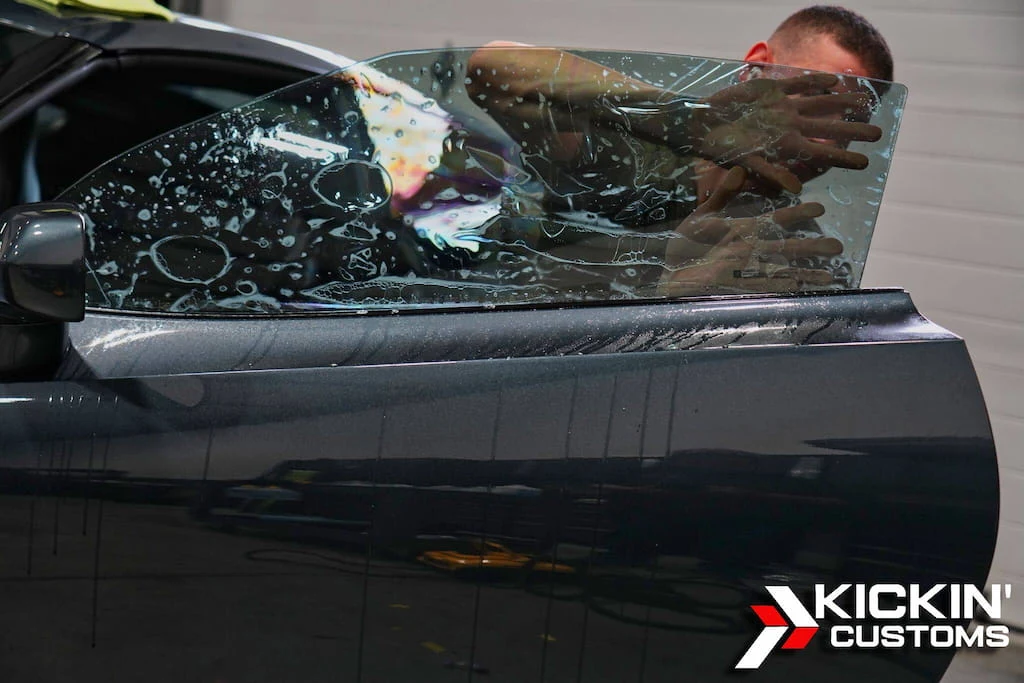
After installation, moisture from the application process needs time to evaporate from between the film and the glass. The adhesive also needs time to bond properly. During this period, the tint may look hazy, cloudy, streaky, or slightly uneven in certain lighting.
This is usually normal.
At Kickin’ Customs in Raynham, MA, we install XPEL window tint for vehicles across Massachusetts and Rhode Island. Whether your vehicle received ceramic tint, front window tint, windshield tint, full vehicle tint, XPEL PRIME XR Black, XR Plus, or Color Stable film, cure time is part of the process.
The exact timing depends heavily on weather, temperature, humidity, glass type, film type, and how much sunlight the vehicle sees after installation.
Curing and seasonal timing
What Does Window Tint Curing Mean?
Window tint is installed using moisture and application solution.
That solution allows the film to be positioned properly on the inside of the glass before the adhesive fully bonds. Once the film is installed, some of that moisture remains between the tint and the glass.
Curing is the process of that moisture evaporating and the adhesive settling.
As the tint cures, the film becomes clearer. Haze improves. Small moisture pockets shrink. The overall appearance becomes more uniform.
That process takes time.
The tint may look good at pickup, but that does not mean it is fully cured. Fresh tint should be treated carefully even if it already looks clean.
General Window Tint Cure Time
As a general rule, window tint can take several days to a few weeks to fully cure.
In warm, sunny weather, the process is usually faster. In cold, damp, or cloudy weather, it can take much longer.
A vehicle tinted in July may clear quickly. A vehicle tinted in January may take weeks to fully dry.
This does not mean anything is wrong. It simply means moisture evaporation is slower when the glass is cold and there is less heat and sunlight to help the film cure.
Summer Window Tint Cure Time
Summer is usually the fastest season for window tint curing.
Warm temperatures, stronger sunlight, and hotter glass help moisture evaporate more quickly. In many cases, tint may look much clearer within a few days during summer weather.
That does not always mean it is fully cured.
Even in summer, some moisture or haze can remain longer depending on the vehicle, film, glass angle, humidity, and how much sun exposure the vehicle gets.
A realistic summer expectation is that the tint may look noticeably clearer within 3 to 5 days, with full curing potentially taking longer.
During humid summer weather, curing can still slow down. Heat helps, but heavy moisture in the air can affect how quickly the film fully clears.
Spring and Fall Window Tint Cure Time
Spring and fall are more variable.
Some days are warm and sunny. Other days are cool, damp, cloudy, or rainy. This can make window tint cure time less predictable.
In these seasons, tint may take 1 to 2 weeks to fully clear, and sometimes longer if the weather stays damp or the vehicle is parked indoors most of the time.
Cool mornings, rainy stretches, and lower sun angle can all slow evaporation.
This is common in New England. A vehicle tinted in April, May, October, or November may cure very differently from one tinted in the middle of summer.
The key is to judge the tint by improvement over time, not by how it looks immediately after installation.
Winter Window Tint Cure Time
Winter is usually the slowest season for window tint curing.
Cold glass, freezing temperatures, short days, weaker sunlight, and damp weather all slow moisture evaporation. If the vehicle is parked outside overnight or kept in a cold garage, the film can take longer to fully clear.
In winter, window tint may take 2 to 4 weeks or longer to fully cure depending on conditions.
This is especially true for rear windows, windshields, larger glass panels, and vehicles that do not get much sun exposure.
During winter curing, haze and small moisture pockets may remain visible longer than customers expect. That does not automatically mean there is a problem.
If the appearance is gradually improving, the film may simply need more time.
Moisture and early care
Why Moisture Causes Haze After Tint
Haze is one of the most common signs of fresh tint.
The haze usually comes from moisture trapped between the film and the glass. As that moisture evaporates, the haze should improve.
This haze can be more noticeable in direct sunlight, under bright shop lighting, at night with headlights, or when looking through the glass at certain angles.
Windshield tint can make curing haze more noticeable because you are looking through that glass every time you drive. Rear windows can also show moisture around defroster lines while the film cures.
In most cases, this is part of the normal drying process.
Are Small Bubbles Normal During Cure Time?
Small dots, pockets, or bubbles after tint installation are often moisture pockets, not air bubbles.
These can appear during the curing period and gradually shrink or disappear as the tint dries.
Do not press them. Do not poke them. Do not heat them. Do not try to push them out with your fingers, towels, cards, or tools.
Trying to force moisture out can damage the film, create marks, or disturb the adhesive.
If small pockets remain after the expected cure period, contact Kickin’ Customs so the window can be inspected.
Keep Your Windows Up While Tint Cures
After window tint installation, keep your windows up for 3 to 5 days.
This is important because the adhesive is still fresh. Rolling the windows down too soon can move the film, damage the lower edge, peel the tint, or create marks before the film has bonded properly.
Even if the tint looks dry, the lower edge may still be vulnerable.
This matters most on side windows because the film travels into the door when the glass rolls down. The weather seals and sweeps inside the door can disturb fresh tint if it has not had enough time to cure.
If you accidentally roll a window down too soon and notice peeling, shifting, or edge damage, contact us.
Wait Before Cleaning Tinted Windows
Do not clean the inside of tinted windows for 7 days after installation.
Fresh tint should be left alone while the adhesive begins to bond. Cleaning too soon can disturb the film, leave streaks, affect edges, or move moisture around before the film has settled.
After 7 days, use an ammonia-free glass cleaner and a clean microfiber towel.
Avoid ammonia-based cleaners, paper towels, razor blades, scrapers, abrasive pads, and harsh chemicals. These can damage the film or shorten its life.
Spray the towel instead of soaking the window. This gives you better control and helps prevent cleaner from pooling along the film edges.
Glass type and parking
Does Ceramic Tint Take Longer to Cure?
Ceramic window tint still needs to cure.
XPEL PRIME XR Black and XR Plus ceramic films offer strong heat rejection, glare reduction, UV protection, and comfort, but they still use adhesive. Moisture still needs to evaporate from beneath the film.
The curing rules are the same.
Keep the windows up. Avoid cleaning too soon. Expect haze or moisture during the curing period. Give the film more time in cold or damp weather.
Ceramic tint performs better than basic film in several ways, but it still needs proper aftercare after installation.
Does Windshield Tint Take Longer to Cure?
Windshield tint can appear to take longer because it is more noticeable.
The windshield is large, angled, and directly in your line of sight. Any temporary haze, moisture, or streaking may be easier to see compared to a side window.
Sun glare, headlights, rain, and low-angle light can make curing moisture more visible.
This does not automatically mean the windshield tint has a problem.
The windshield still needs time for moisture to evaporate and for the film to fully clear. If visibility feels unsafe or something looks abnormal, contact Kickin’ Customs. Otherwise, allow the film time to cure naturally.
Rear Window Tint and Defroster Lines
Rear windows can also take extra time to fully clear.
Rear glass often has curves, defroster lines, tighter access, and more surface area than side windows. Moisture can sometimes be visible around defroster lines during the curing process.
Avoid using the rear defroster while the film is still curing, especially early after installation, unless the shop advises otherwise.
Once the tint is cured, the rear defroster can be used normally.
The concern is not the defroster forever. The concern is using heat too early while the adhesive and moisture are still settling.
Parking Conditions Affect Cure Time
Where the vehicle is parked after installation can affect cure time.
A vehicle parked outside in warm sunlight may cure faster than one parked in a shaded garage. A vehicle parked in a cold garage during winter may take longer to clear.
This does not mean you need to bake the vehicle in the sun or force the process.
Let the tint cure naturally. Do not use heat guns, household heaters, or other methods to speed up curing. Too much heat in the wrong place can damage the film or create other issues.
Normal sunlight and time are usually enough.
Do Not Try to Speed Up the Cure
It can be tempting to try to speed things up if the tint looks hazy.
Do not.
Do not press on moisture pockets. Do not run excessive heat on the glass. Do not use a hair dryer or heat gun. Do not wipe the inside glass repeatedly. Do not roll the windows down to “air it out.”
Window tint cure time is not something to force.
The film needs time for moisture to evaporate and adhesive to bond. Interfering with that process can create problems that would have been avoidable.
Know when to get help
How to Tell If Tint Is Curing Normally
Tint is usually curing normally if the haze, moisture, or small pockets gradually improve over time.
The glass should look clearer as days pass. Moisture should shrink. The film should become more uniform.
Normal curing is about improvement.
What you do not want to see is peeling, shifting, creasing, large bubbles that do not change, dirt that is clearly trapped, or an area that gets worse instead of better.
If something looks concerning, take a photo and contact Kickin’ Customs. We can help determine whether it looks like normal curing or something that should be inspected.
When Should You Be Concerned?
You should contact the shop if the film peels, if an edge lifts, if the window was rolled down too soon and the film moved, if a large bubble does not improve, if the tint looks scratched or creased, or if the haze does not improve after a reasonable cure period.
You should also contact us if visibility feels unsafe, especially on windshield tint.
Most fresh tint concerns are normal curing, but it is always better to ask before touching the film or trying to fix it yourself.
Why Patience Matters After Tint
The first week after tint installation is about protecting the film while it bonds.
The next few weeks are about letting moisture leave the glass.
Patience during this period can prevent avoidable damage. Rolling windows down too early, cleaning too soon, pressing on bubbles, applying stickers, or using harsh cleaners can all create problems.
The film needs time. The more carefully it is treated during curing, the better the final result.
Stickers Should Not Go Directly on Fresh Tint
During the curing period, do not apply stickers directly to tinted windows.
This includes parking permits, car wash stickers, gate access stickers, apartment decals, school permits, workplace stickers, and membership tags.
Stickers can create problems later when they need to be removed. They may pull on the tint, leave adhesive residue, damage the film, or leave a visible mark.
For customers who need stickers, we recommend using a sticker shield style product whenever possible. This allows the sticker to be displayed without bonding directly to the tint.
This is especially important on freshly installed film.
Final Thoughts
Window tint cure time depends on the season, weather, temperature, humidity, sunlight, glass type, and film type.
In summer, tint may look much clearer within a few days, though full curing can still take longer. In spring and fall, curing may take 1 to 2 weeks or more depending on weather. In winter, tint can take 2 to 4 weeks or longer to fully clear.
Haze, cloudiness, and small moisture pockets can be normal while the film cures.
Keep your windows up for 3 to 5 days. Do not clean the inside of the windows for 7 days. Avoid using harsh cleaners. Avoid stickers directly on tint. Give the film extra time during cold or damp Massachusetts and Rhode Island weather.
At Kickin’ Customs in Raynham, MA, we install XPEL window tint for daily drivers, trucks, SUVs, EVs, luxury vehicles, performance cars, and family vehicles.
The tint needs time to cure. The right aftercare helps it finish properly.
Frequently Asked Questions
How long does window tint take to cure?
Window tint can take several days to a few weeks to fully cure depending on season, temperature, humidity, sunlight, glass type, and film type.
How long does window tint take to cure in summer?
In summer, tint may look much clearer within 3 to 5 days, but full curing can still take longer depending on humidity, vehicle storage, and glass type.
How long does window tint take to cure in winter?
In winter, tint can take 2 to 4 weeks or longer to fully cure because cold glass, shorter days, and weaker sunlight slow moisture evaporation.
Is haze normal while window tint cures?
Yes. Haze or cloudiness can be normal while moisture evaporates from between the film and the glass.
Are bubbles normal after window tint?
Small moisture pockets can be normal during curing. Large bubbles, peeling, creases, or areas that do not improve should be checked.
How long should I keep my windows up after tint?
Keep windows up for 3 to 5 days after tint installation to avoid damaging the lower edge or moving the film before the adhesive sets.
When can I clean tinted windows?
Wait 7 days before cleaning the inside of tinted windows. After that, use an ammonia-free cleaner and a clean microfiber towel.
Can I use my rear defroster after tint?
Avoid using the rear defroster while the film is still curing, especially early after installation. Once the tint is cured, the defroster can be used normally.
Does ceramic tint cure faster than regular tint?
Ceramic tint still needs time to cure. It may offer better performance, but moisture still needs to evaporate and the adhesive still needs to bond.
Plan your next step
Give your new tint the time and care it needs to cure properly. Contact Kickin’ Customs in Raynham, MA for XPEL window tint installation, ceramic tint upgrades, aftercare support, or tint inspection services.
