

The short answer
Parking lots are one of the most frustrating places for vehicle damage.
Parking lots are one of the most frustrating places for vehicle damage.
You can park carefully.
You can stay away from other cars.
You can choose the end spot.
You can come back 20 minutes later and still find a door ding, bumper scuff, hit-and-run damage, broken glass, vandalism, or a mystery mark that nobody wants to take responsibility for.
That is why more vehicle owners are asking about dashcams for parking lot protection.
A dashcam does not stop every incident.
It does not prevent someone from opening a door into your car.
It does not physically stop vandalism.
It does not make theft impossible.
But a properly installed dashcam can help record certain events, provide context, and give owners more information than they would have otherwise.
At Kickin’ Customs in Raynham, MA, we install Momento dashcams, Drone XC dashcams, DroneMobile GPS tracking, Compustar PRO alarms, IGLA immobilizers, remote starts, window tint, paint protection film, ceramic coatings, and other vehicle protection services for drivers across Massachusetts and Rhode Island.
For parking lot protection, dashcams are best understood as an evidence layer.
They help show what happened.
When paired with alarms, DroneMobile alerts, GPS tracking, and IGLA, they become part of a complete vehicle security package.
What parking footage can show
Why Parking Lots Are So Risky
Parking lots create risk because vehicles are exposed to people, traffic, carts, other doors, distracted drivers, tight spaces, and limited accountability.
Damage can happen quickly.
Someone opens a door too hard.
A cart rolls into the vehicle.
A driver backs into the bumper.
Someone clips the corner and leaves.
A person keys the paint.
A thief breaks a window.
A vehicle gets bumped while parked.
A truck or SUV gets hit in a crowded lot.
The frustrating part is that many parking lot incidents happen when the owner is nowhere near the vehicle.
By the time you return, the other person may be gone.
Without video, you may have no idea what happened.
A dashcam can help fill in some of that gap.
What a Parking Mode Dashcam Does
A parking mode dashcam is designed to monitor the vehicle while it is parked.
Instead of only recording while you are driving, parking mode allows the camera to watch for certain events after the engine is off.
Depending on the dashcam, setup, settings, battery condition, and installation, parking mode may record based on impact, motion, radar detection, security system triggers, or other activity.
The purpose is simple:
Record useful footage when something happens around the parked vehicle.
This can be helpful for hit-and-runs, vandalism, parking impacts, break-ins, suspicious activity, and certain theft attempts.
Parking mode is one of the main reasons professional dashcam installation is worth considering.
A plug-in camera that only records while driving may not help when your vehicle is damaged while parked.
Dashcams and Door Dings
Door dings are one of the most common parking lot complaints.
A person parks next to you, opens their door too hard, hits your panel, and leaves.
A dashcam may help if the event happens within the camera’s view or if impact recording captures useful activity.
However, door dings can be tricky.
A front-facing dashcam may not see the side of the vehicle.
A rear camera may not capture the exact contact point.
A side impact may or may not create enough motion to trigger recording depending on the system and sensitivity.
That does not mean a dashcam is useless for door dings.
It means expectations should be realistic.
A dashcam can help, especially with front, rear, or wide-angle coverage, but it may not catch every side impact perfectly.
Dashcams and Hit-and-Runs
Hit-and-runs are one of the strongest reasons to install a dashcam.
If someone bumps your parked vehicle and drives away, video can be extremely useful.
A dashcam may record the other vehicle, direction of travel, timing, and possibly a plate or identifying details depending on camera angle, lighting, distance, motion, and video quality.
Parking mode is especially important here because the owner is usually not in the vehicle when the incident happens.
Without parking mode, the camera may not record anything while the vehicle is off.
For hit-and-run concerns, front and rear camera coverage is usually better than front-only.
If the damage happens behind the vehicle, a front-only camera may miss the most important part.
Dashcams and Vandalism
Vandalism is another reason parking mode matters.
⦁Keying.
⦁Scratches.
⦁Broken mirrors.
⦁Broken glass.
⦁Paint damage.
⦁Tampering.
Suspicious activity around the vehicle.
A dashcam may record the person approaching, leaving, or interacting with the vehicle depending on camera angle and placement.
It may not catch every angle.
It may not show every side panel.
It may not record if the event is outside the camera’s view or if the system is not triggered.
But when it does capture useful footage, it can provide important context.
For owners of high-value vehicles, luxury vehicles, performance cars, trucks, EVs, and vehicles with fresh PPF, tint, coatings, or wraps, dashcam coverage is worth discussing.
Dashcams and Break-Ins
A dashcam can be useful during a break-in, especially when paired with parking mode and alarm sensors.
If someone breaks glass, opens a door, or enters the vehicle, a dashcam may record part of the event depending on its view.
A front and rear system may capture more context than a front-only camera.
An interior camera may be useful for certain vehicles and use cases.
However, a dashcam does not replace a car alarm.
A dashcam records.
A Compustar PRO alarm detects and alerts.
A glass break sensor can help detect window entry.
A shock sensor can detect impact.
DroneMobile can send smartphone alerts depending on the system and plan.
Together, these layers are much stronger than a camera alone.
Dashcams and Parking Impacts
Parking impacts happen often.
A vehicle backs into yours.
A cart hits the bumper.
Someone taps your car while maneuvering.
A truck brushes a corner.
A driver misjudges a space.
A dashcam with parking mode may capture these events if the impact triggers recording and the action is within view.
This can help show when the damage occurred and what caused it.
Impact recording is one of the most important dashcam parking features.
However, sensitivity needs to be set properly.
Too sensitive can create constant nuisance recordings.
Not sensitive enough may miss smaller events.
Professional setup matters because the goal is to capture real incidents without filling the card with useless clips.
Dashcams and Shopping Cart Damage
Shopping carts are a parking lot nightmare.
They can roll into doors, bumpers, fenders, and quarter panels.
A dashcam may capture the cart or the person who let it go if the event happens within the camera’s field of view.
But just like door dings, cart damage can happen on the side of the vehicle, outside the camera’s main view.
That is why dashcams should not be oversold as perfect side-body protection.
They are evidence tools, not force fields.
For customers worried about carts and dings, PPF is also worth discussing.
Paint protection film helps protect the paint from certain impacts and abrasions.
A dashcam helps record certain events.
Both serve different purposes.
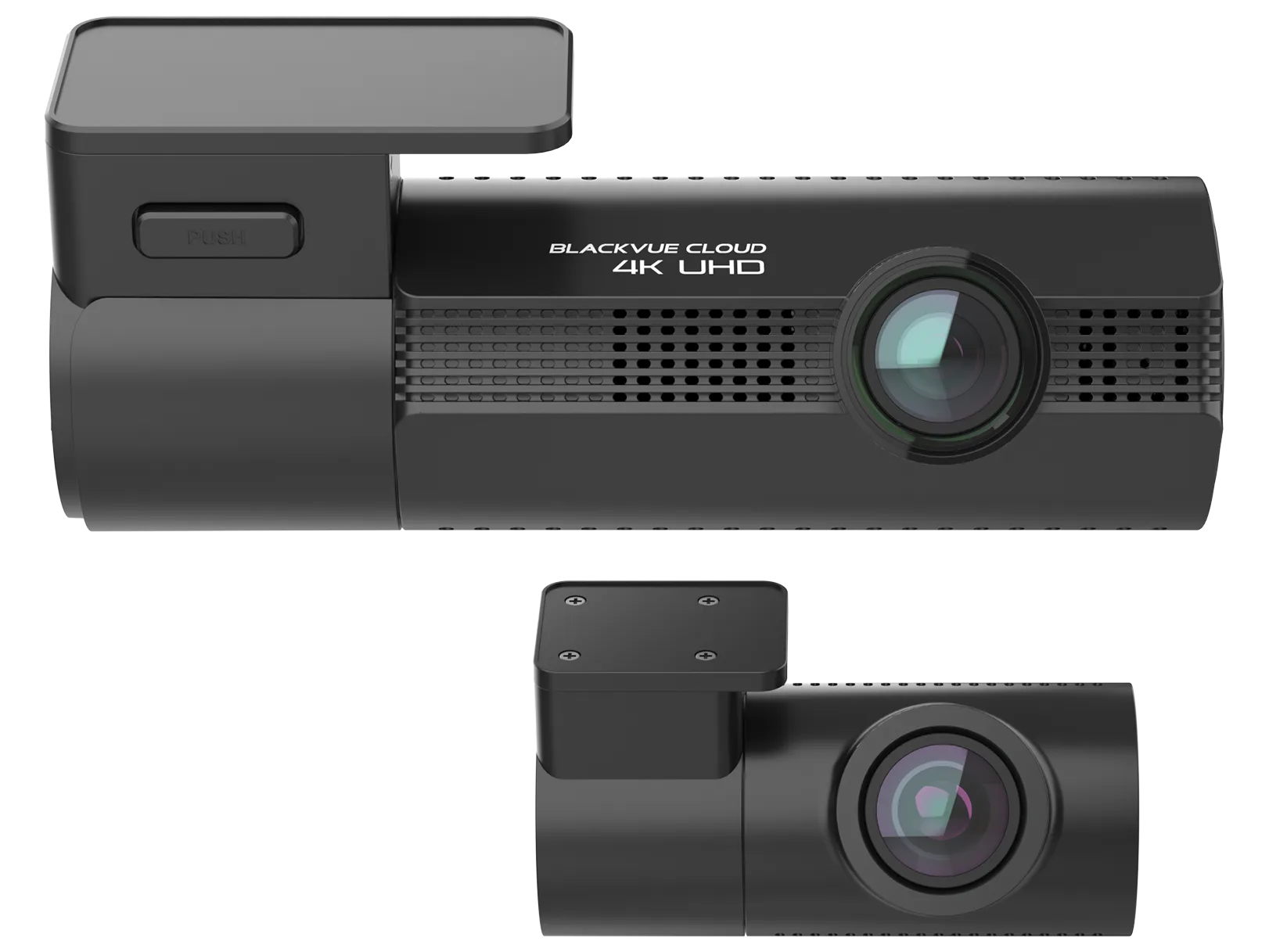
Evidence and surface protection
Dashcams and Paint Protection Film
Dashcams and paint protection film protect the vehicle in different ways.
PPF helps protect painted surfaces from certain physical damage.
A dashcam helps document certain events.
For example, if a shopping cart hits a bumper covered in PPF, the film may help reduce paint damage.
If a dashcam records the cart rolling into the vehicle, the owner may also have evidence of what happened.
One is physical protection.
One is video documentation.
For customers who care about parking lot damage, both services can make sense.
Paint protection film helps with the surface.
A dashcam helps with the story.
That is why many high-value vehicle owners consider both.
Dashcams and Ceramic Coatings
Ceramic coatings and dashcams also solve different problems.
A ceramic coating helps with gloss, slickness, washability, water behavior, and easier maintenance.
⦁It does not stop door dings.
⦁It does not stop rock chips.
⦁It does not stop vandalism.
⦁It does not record incidents.
A dashcam records certain events.
If a parking lot incident happens, the dashcam may provide context.
The coating may make the vehicle easier to clean afterward, but it is not an impact protection product.
Customers sometimes combine ceramic coating, PPF, tint, and dashcams because they want the vehicle protected from different risks.
Appearance protection and security protection are separate categories.
Dashcams and Window Tint
Window tint can support privacy and comfort, but it does not replace a dashcam.
Ceramic tint can help reduce heat and protect the interior.
Privacy-style tint can make it harder for people to see inside depending on shade and lighting.
But tint does not record a break-in, parking impact, or hit-and-run.
A dashcam provides video evidence.
For vehicles parked in public lots, a combination of ceramic tint and dashcam coverage can make sense.
Tint helps with comfort and visibility into the vehicle.
The dashcam helps document activity.
For customers who leave vehicles parked outside or in public areas often, this combination is worth considering.
Parking mode and power
What Parking Mode Means
Parking mode means the dashcam can monitor while the vehicle is parked and off.
Different dashcams handle parking mode differently.
⦁Some record continuously.
⦁Some record when impact is detected.
⦁Some use motion detection.
⦁Some use radar-based low-power modes.
⦁Some work with a vehicle security system.
⦁Some rely on battery protection settings.
⦁Some require hardwiring.
⦁Some use an external battery pack.
The exact behavior depends on the product and installation.
This is important because “parking mode” does not mean every camera records everything around the vehicle all night from every angle.
Customers should understand how their specific system works.
A professional shop should explain the settings, limits, and battery considerations.
Why Hardwiring Matters
Hardwiring a dashcam allows it to operate properly with parking mode.
A basic plug-in dashcam may only work when the vehicle’s accessory outlet has power.
If that outlet shuts off when the vehicle is off, the camera may stop recording.
For parking protection, the dashcam usually needs a dedicated installation.
Hardwiring can allow the camera to receive power while parked while using voltage cutoff or battery protection settings depending on the system.
This is one reason professional installation matters.
A dashcam should be installed cleanly, powered correctly, and configured properly.
A loose wire hanging from a windshield plug is not the same as a well-planned parking mode installation.
Battery Management Matters
Battery management is one of the most important parts of parking mode.
A dashcam needs power to record while the vehicle is off.
That power comes from somewhere.
If the system is not managed properly, it can drain the vehicle battery.
A properly installed dashcam should include battery protection settings, low-power parking modes, or other power management strategies depending on the product.
Battery age, driving habits, weather, vehicle electronics, and how long the vehicle sits all matter.
A daily-driven truck is different from a weekend sports car.
A garage-kept collector car is different from a family SUV used every day.
A professional installer should discuss battery expectations before installation.
Parking mode is useful, but it needs to be set up responsibly.
Low-Voltage Cutoff
Low-voltage cutoff is designed to help protect the vehicle battery.
The idea is that the dashcam can stop recording when the battery reaches a set voltage level.
This helps reduce the chance of draining the battery too far.
The exact setting and behavior depend on the product and installation.
Lower voltage settings may allow longer recording time but create more battery risk.
Higher voltage settings may protect the battery better but reduce parking mode duration.
There is a balance.
Customers should understand that parking mode is not unlimited.
The vehicle battery, settings, weather, and driving routine all affect how long the dashcam can monitor while parked.
ECO Parking Mode
Some Momento dashcams include ECO parking mode designed to reduce battery consumption while parked.
Instead of recording heavily at all times, ECO-style parking features can use lower-power detection strategies to help extend parking surveillance.
This is especially useful for owners who want parking protection without unnecessary battery drain.
For many vehicles, a smarter parking mode is better than constant recording.
It helps focus recording around activity that matters.
It also helps preserve vehicle battery life.
Customers should still understand that no parking mode is unlimited.
Battery condition, usage, settings, temperature, and driving frequency all matter.
ECO parking mode is helpful, but battery management should still be discussed during installation.
Drone XC Parking Mode
Drone XC is another dashcam option that can be part of a connected security package.
Drone XC is designed around security integration, connected features, GPS, and parking mode behavior depending on setup and service.
When paired with the right system, Drone XC can support a smarter approach to parked vehicle monitoring.
This can be useful for owners who want dashcam recording, alerts, GPS-related features, and a more connected ownership experience.
Drone XC may make sense for customers already considering DroneMobile, Compustar PRO alarms, GPS tracking, and security alerts.
For parking lot protection, the value is not only video.
It is video plus awareness.
Motion Recording vs Impact Recording
Motion recording and impact recording are not the same.
Motion recording is triggered by movement within the camera’s view.
Impact recording is triggered by physical force or shock.
Both can be useful.
Motion recording may capture someone walking near the vehicle.
Impact recording may capture a bump, hit, or collision.
However, motion recording can also create more clips in busy parking lots.
People walking by, cars driving past, and shadows can create activity.
Impact recording may reduce extra clips but may miss events that do not create enough force.
The right setting depends on the parking environment and product.
Professional setup helps balance useful recording with unnecessary storage use.
Continuous Recording vs Event Recording
Some dashcams can record continuously while driving and switch to event-based parking mode when parked.
Continuous recording is useful while driving because it captures the full road context.
Event recording is often more practical while parked because it saves storage and power.
A dashcam that tries to record everything all night can use more battery and fill storage faster.
Event-based recording can be more efficient, but it depends on triggers.
The customer should know how their camera handles parked events.
Does it record before and after impact?
Does it use motion?
Does it use radar?
Does it work with alarm triggers?
Does it save events separately?
These details matter.
Camera coverage and vehicle needs
Front-Only vs Front and Rear Dashcams
A front-only dashcam is better than no dashcam, but front and rear coverage is often better for parking lot protection.
Many parking lot incidents happen behind the vehicle or as another driver backs out.
A rear camera can help capture events that a front camera would miss.
For SUVs, trucks, luxury vehicles, family vehicles, and performance cars, front and rear coverage is usually a better recommendation.
However, even front and rear does not fully cover both sides of the vehicle.
That is important to explain.
Dashcams improve coverage.
They do not see everything.
The goal is to capture more useful evidence, not promise full 360-degree protection from every angle.
Interior Cameras
Interior cameras can be useful for certain vehicles and use cases.
⦁Rideshare vehicles.
⦁Fleet vehicles.
⦁Work vehicles.
⦁Family vehicles.
⦁Vehicles with valuables inside.
⦁Vehicles used by multiple drivers.
A front and rear system may be enough for many owners, but an interior camera can add another perspective.
For break-ins, an interior camera may capture more activity inside the cabin.
For business vehicles, it may help document driver behavior or incidents depending on company policy.
Interior camera use should be handled responsibly and transparently.
For most personal vehicles, the decision depends on privacy comfort and security needs.
Not every customer needs an interior camera.
Dashcams for Trucks
Trucks are strong candidates for parking mode dashcams.
Many trucks are parked outside.
Many are used for work.
Many carry tools.
Many have expensive wheels and tires.
Many are large enough to be hit in parking lots.
Many are theft targets.
A dashcam can help record hit-and-runs, parking impacts, vandalism, break-ins, and suspicious activity.
A Compustar PRO alarm can detect tampering.
DroneMobile GPS can help with alerts and tracking.
IGLA can help prevent unauthorized driving.
For truck owners, a dashcam is one of the most practical security and evidence upgrades available.
It protects more than the paint.
It protects the story of what happened.
Dashcams for SUVs
SUVs are also strong candidates for dashcams.
Family SUVs, luxury SUVs, work SUVs, and EV SUVs spend a lot of time in parking lots.
Schools.
Sports fields.
Grocery stores.
Gyms.
Restaurants.
Hotels.
Work lots.
Public garages.
A dashcam can help record parking lot incidents and driving events.
Front and rear coverage is usually worth considering because SUVs are often hit from different angles.
For family vehicles, dashcams can also help document road incidents, parking impacts, and suspicious activity.
When paired with ceramic tint, PPF, alarms, DroneMobile, GPS, and IGLA, a dashcam becomes part of a larger protection plan.
Dashcams for Luxury Vehicles
Luxury vehicles deserve strong parking lot protection.
BMW, Mercedes-Benz, Audi, Lexus, Porsche, Cadillac, Range Rover, Bentley, Rolls Royce, and similar vehicles are expensive to repair.
A small parking lot impact can become a costly repair.
A hit-and-run can create insurance headaches.
A vandalism incident can be extremely frustrating.
A dashcam can help document certain events.
PPF can help protect the paint.
Ceramic coating can help with maintenance.
A Compustar PRO alarm can detect tampering.
DroneMobile can add alerts and GPS.
IGLA can help prevent unauthorized driving.
For luxury vehicles, dashcams are a practical part of ownership.
Dashcams for Performance Cars
Performance cars attract attention.
Corvette, Camaro, Mustang, Challenger, Charger, BMW M, Mercedes-AMG, Audi RS, Porsche, Cadillac V-Series, Ferrari, Lamborghini, McLaren, and similar vehicles may be parked carefully but still attract people, cameras, door dings, vandalism, and careless drivers.
A dashcam can help document what happens when the owner is away.
Parking mode is especially useful because many incidents happen while the vehicle is parked.
Front and rear cameras are strongly worth considering.
A performance vehicle may also benefit from PPF, ceramic coating, window tint, Compustar PRO alarms, DroneMobile GPS, and IGLA.
If the car is worth protecting visually, it is worth documenting too.
Dashcams for EVs
EVs often already have some built-in camera features, but owners should still compare factory capability with their actual needs.
Tesla, Rivian, Lucid, Ford Lightning, Hummer EV, BMW i, Mercedes EQ, Hyundai IONIQ, Kia EV, and other EVs may have factory camera systems, apps, or security features.
Those may be helpful.
However, not every factory setup provides the same parking recording, storage, alerts, GPS integration, or aftermarket security options.
A dedicated dashcam may still make sense depending on the vehicle and owner expectations.
EV owners often invest in ceramic tint, PPF, coatings, and windshield protection film.
Dashcams, GPS tracking, alarms, and IGLA should also be part of the protection conversation.
Dashcams for Work Vehicles
Work vehicles can benefit heavily from dashcams.
A work truck or van may be hit in a parking lot.
It may be damaged at a job site.
It may be broken into.
It may be driven by employees.
It may carry tools and equipment.
A dashcam can record driving incidents, parking impacts, and certain security events depending on the setup.
For businesses, dashcams can also help with insurance discussions, driver accountability, and incident documentation.
When paired with GPS tracking, alarms, and IGLA, a dashcam becomes part of a business vehicle protection package.
A work vehicle is not just transportation.
It is an asset that helps generate revenue.
Dashcams for Fleet Vehicles
Fleet vehicles need documentation.
If a vehicle is involved in an accident, a dashcam may help explain what happened.
If a vehicle is damaged in a parking lot, footage may help provide context.
If an employee reports an incident, video may help support the conversation.
Fleet vehicles may also benefit from GPS tracking, alarm alerts, and vehicle status features.
A small fleet does not need to be large for dashcams to make sense.
Even two or three business vehicles can create risk.
Dashcams can protect the business, the driver, and the vehicle.
The right setup depends on the type of vehicles, how they are used, and what the business wants to document.
Footage, installation and limitations
Dashcams and Insurance Claims
Dashcam footage can be useful during an insurance claim, but it does not guarantee a specific outcome.
The footage quality, angle, timestamp, visibility, plate capture, impact view, and incident details all matter.
If the camera captures a hit-and-run clearly, that can be helpful.
If the footage only shows a vague motion or partial vehicle, it may still provide context.
For parking lot damage, evidence can make the conversation easier.
Without footage, the owner may have no idea when or how the damage happened.
A dashcam is not an insurance policy.
It is a documentation tool.
When it captures the right moment, it can be extremely valuable.
Dashcams and Police Reports
Dashcam footage may also support a police report after theft, vandalism, hit-and-run, or suspicious activity.
Clear footage can help show timing, vehicle direction, physical description, vehicle color, or other details.
However, owners should not try to recover a stolen vehicle themselves or confront someone based on an alert or recording.
Safety comes first.
If a crime occurs, footage can be shared with the appropriate authorities and insurance company as needed.
The dashcam’s job is to record.
The owner’s job is to stay safe and respond responsibly.
This is especially important with theft, vandalism, or suspicious activity.
Dashcams and License Plate Capture
Many customers ask whether a dashcam can capture license plates.
Sometimes yes.
Sometimes no.
Plate capture depends on resolution, distance, angle, lighting, motion, weather, glare, speed, camera settings, and placement.
A high-quality dashcam improves the chance of useful footage, but it does not guarantee perfect plate capture in every situation.
Nighttime parking lots, headlights, reflections, dirty glass, tinted glass, rain, snow, and motion can all affect clarity.
This is why expectations should be realistic.
A dashcam can provide important evidence, but it should not be sold as a perfect plate-reading system.
Professional installation and camera quality both matter.
Dashcams and Memory Cards
A dashcam depends on storage.
The memory card stores footage.
Over time, older footage may be overwritten as new footage is recorded.
This is normal.
Customers should understand how long footage is retained, how event clips are saved, and how to retrieve video when needed.
A high-endurance memory card is usually important because dashcams write data constantly.
Cheap cards may fail sooner.
If an incident happens, the owner should save the clip as soon as possible.
Do not wait days or weeks and assume the footage will still be there.
A dashcam is only helpful if the footage is available when needed
Dashcams and Video Retrieval
Video retrieval should be part of the customer handoff.
Owners should know how to access footage.
Some dashcams use Wi-Fi and an app.
Some use removable memory cards.
Some allow event file browsing.
Some connected systems may offer app-based features depending on the product and service.
The owner should know:
How to view footage.
How to download footage.
How to save an event.
How to remove the memory card if needed.
How to avoid overwriting an important clip.
How to identify the correct file.
A dashcam is much more useful when the owner knows how to retrieve footage quickly.
Dashcams and Professional Installation
⦁Professional dashcam installation matters.
⦁The camera needs proper placement.
⦁The wiring should be hidden and protected.
⦁The system should be powered correctly.
⦁Parking mode should be set up properly.
⦁Battery protection should be configured.
⦁Rear camera wiring should be routed cleanly.
⦁The camera angle should be tested.
⦁The app should be explained.
⦁The customer should understand memory card use.
A rushed or plug-in installation may not provide the parking protection the owner expects.
At Kickin’ Customs, dashcams are part of a larger electronics and security offering.
That means we can discuss parking mode, alarms, GPS tracking, IGLA, remote start, and battery management together.
Dashcam Placement Matters
Camera placement affects what the dashcam can record.
A front camera should be placed where it has a clear view without blocking the driver.
A rear camera should be placed where it can capture the rear view properly.
Wires should be routed safely.
The camera should not interfere with sensors, mirrors, airbags, trim, or visibility.
Modern vehicles may have driver-assistance cameras, rain sensors, mirror housings, and complex windshield areas.
Professional placement matters.
The goal is to capture useful footage without creating clutter or safety issues.
A dashcam should look clean, work properly, and feel like it belongs in the vehicle.
Dashcams and Battery Health
Parking mode depends heavily on battery health.
A weak vehicle battery may reduce parking mode time or create starting issues.
Cold weather can also reduce battery performance.
Short trips may not recharge the battery enough.
Vehicles with many electronics may be more sensitive.
Weekend vehicles may sit too long.
This is why battery condition and vehicle use should be discussed before installation.
A daily driver may handle parking mode differently than a garage-kept sports car.
An external battery pack may be worth discussing for certain customers.
The best setup depends on the vehicle, parking habits, and how long the owner wants parking coverage.
Dashcams and External Battery Packs
Some customers may benefit from an external dashcam battery pack.
A battery pack can power the dashcam during parking mode without relying as heavily on the vehicle’s main battery.
This can be useful for customers who want longer parking coverage, park for long periods, drive shorter trips, or have battery-sensitive vehicles.
Not every customer needs one.
But it is worth discussing for certain use cases.
Parking mode is always a balance between coverage and power management.
An external battery pack can improve that balance in the right situation.
The decision depends on the vehicle, camera, driving routine, and desired parking protection.
What Dashcams Do Not Do
Dashcams are useful, but they do not do everything.
They do not prevent every incident.
They do not stop door dings.
They do not physically protect paint.
They do not stop glass from breaking.
They do not stop wheel theft.
They do not prevent a vehicle from being driven away.
They do not replace GPS tracking.
They do not replace IGLA.
They do not replace a car alarm.
They do not see every angle.
They do not guarantee license plate capture.
They do not record forever without power and storage.
A dashcam is an evidence layer.
It works best with other protection and security layers.
When a Dashcam Is Worth Adding
A dashcam is worth adding if you park in public lots, drive daily, own a high-value vehicle, worry about hit-and-runs, park at work, live in an apartment, use a work truck, drive a family SUV, or want better documentation after incidents.
It is especially worth it for vehicles with fresh PPF, ceramic coating, tint, wraps, expensive wheels, or custom upgrades.
If you would be frustrated not knowing what happened after damage, a dashcam makes sense.
If you park outside often, parking mode makes sense.
If you use the vehicle for business, dashcams are even easier to justify.
Evidence matters.
When a Dashcam May Not Be Enough
A dashcam may not be enough if your main concern is theft prevention.
For drive-away theft, IGLA is the stronger layer.
For break-ins, a Compustar PRO alarm and DroneMobile alerts are important.
For recovery, DroneMobile GPS tracking matters.
For paint damage, PPF matters.
For wheel theft, tilt sensors matter.
For video evidence, dashcams matter.
Each product has a role.
If you only install a dashcam, you may have footage of a problem but no alert, no GPS location, no immobilization, and no physical protection.
That is why the strongest security packages are layered.
Dashcam, Alarm, GPS, and IGLA Together
A complete security package may include a dashcam, Compustar PRO alarm, DroneMobile GPS, and IGLA.
The dashcam records events.
The alarm detects tampering.
DroneMobile sends alerts and provides GPS tracking options.
IGLA helps prevent unauthorized driving.
Together, these layers cover more risk than any one product alone.
If someone hits the vehicle, the dashcam may record it.
If someone breaks glass, the alarm may detect it.
If the vehicle moves, GPS may help locate it.
If someone tries to drive away, IGLA helps stop unauthorized use.
That is layered protection.
Good Habits Still Matter
Even with a dashcam, good habits still matter.
Park carefully.
Avoid tight spaces when possible.
Do not leave valuables visible.
Lock the vehicle.
Keep windows closed.
Use secure parking when available.
Keep the windshield and camera lens clean.
Save important footage quickly.
Keep the memory card healthy.
Understand parking mode limits.
Do not rely on the dashcam to see every angle.
Do not confront someone based on an alert or recording.
Use alarms, GPS, IGLA, PPF, tint, and other layers where needed.
Products help, but habits still matter.
Final Thoughts
Dashcams can be extremely useful for parking lot protection, but they should be understood honestly.
A dashcam can help record parking impacts, hit-and-runs, vandalism, break-ins, suspicious activity, and certain incidents.
Parking mode makes the dashcam more useful when the vehicle is off.
Battery management matters because parking mode needs power.
Front and rear coverage usually gives better protection than front-only.
Professional installation helps make the system cleaner, safer, and more reliable.
But a dashcam is still an evidence layer.
It does not replace PPF, alarms, GPS tracking, DroneMobile alerts, or IGLA.
At Kickin’ Customs in Raynham, MA, we install Momento dashcams, Drone XC dashcams, DroneMobile GPS tracking, Compustar PRO alarms, IGLA immobilizers, remote starts, and full layered vehicle security packages for drivers across Massachusetts and Rhode Island.
If you want parking lot protection, hit-and-run documentation, vandalism recording, or a complete dashcam and security package, contact Kickin’ Customs and we can help you choose the right setup for your vehicle.
Frequently Asked Questions
Are dashcams good for parking lot protection?
Yes, dashcams can be very useful for parking lot protection, especially when they include parking mode. They can help record hit-and-runs, impacts, vandalism, and suspicious activity depending on camera view and settings.
Can a dashcam catch door dings?
Sometimes. A dashcam may catch a door ding if the event happens within the camera’s view or triggers recording. However, side impacts can be difficult to capture with front and rear cameras alone.
Can a dashcam record while the car is off?
Yes, with parking mode and proper installation, many dashcams can record while the vehicle is parked and off. Battery management is important.
Will parking mode drain my battery?
Parking mode uses power, so battery management matters. A properly installed system should use battery protection settings, low-power modes, or other power strategies depending on the camera and vehicle.
Do I need a front and rear dashcam?
Front and rear coverage is usually better than front-only, especially for parking lot protection. A rear camera can capture incidents that happen behind the vehicle.
Does a dashcam prevent theft?
No. A dashcam records certain events, but it does not physically stop theft. For theft prevention, consider IGLA, Compustar PRO alarms, DroneMobile GPS tracking, and other security layers.
Does a dashcam replace a car alarm?
No. A dashcam records events. A car alarm detects and alerts. They work best together.
Does a dashcam replace GPS tracking?
No. A dashcam records video. GPS tracking helps locate the vehicle if it moves. Both solve different problems.
Is a dashcam worth it for a luxury vehicle?
Yes. Dashcams are worth considering for luxury vehicles because repair costs are high and parking lot incidents can be frustrating without evidence.
Who installs parking mode dashcams near Raynham, MA?
Want help documenting parking lot damage, hit-and-runs, vandalism, or suspicious activity around your vehicle? Contact Kickin’ Customs in Raynham, MA and we can help you choose a Momento or Drone XC dashcam package with parking mode, battery management, GPS tracking, alarms, and IGLA vehicle security.
Plan your next step
Protect your investment before the damage happens. Contact Kickin’ Customs in Raynham, MA to build a custom protection plan for your ultra luxury, exotic, or high-performance vehicle.
