
The short answer
A front dashcam is useful.
A front and rear dashcam system is usually better.
The right choice depends on how you drive, where you park, what you want documented, and how much coverage you expect from the system.
A front dashcam records what happens in front of the vehicle. That is valuable for forward accidents, sudden stops, lane changes, traffic lights, road rage, and general driving documentation.
A front and rear dashcam records both the front and the rear. That adds coverage for rear-end accidents, tailgating, parking lot hits, hit-and-runs, and incidents behind the vehicle.
At Kickin’ Customs in Raynham, MA, we install dashcams for customers across Massachusetts and Rhode Island who want clean installation, reliable footage, and the right setup for daily drivers, family vehicles, work trucks, luxury vehicles, EVs, and performance cars.
If you are already investing in a dashcam, the question is simple:
Do you only want to see what happened in front of you, or do you want more of the story?
What each camera can show
What Is a Front Dashcam?
A front dashcam is mounted near the windshield and records forward-facing footage.
This is the most common dashcam setup.
It captures the road ahead, traffic lights, lane changes, sudden stops, road rage incidents, vehicles cutting you off, and accidents that happen in front of the vehicle.
For many drivers, a front dashcam is a major upgrade over having no camera at all.
If an accident happens in front of you, the footage may help show what occurred.
It can document your lane position, traffic flow, road conditions, light status, and the actions of other drivers.
What Is a Front and Rear Dashcam?
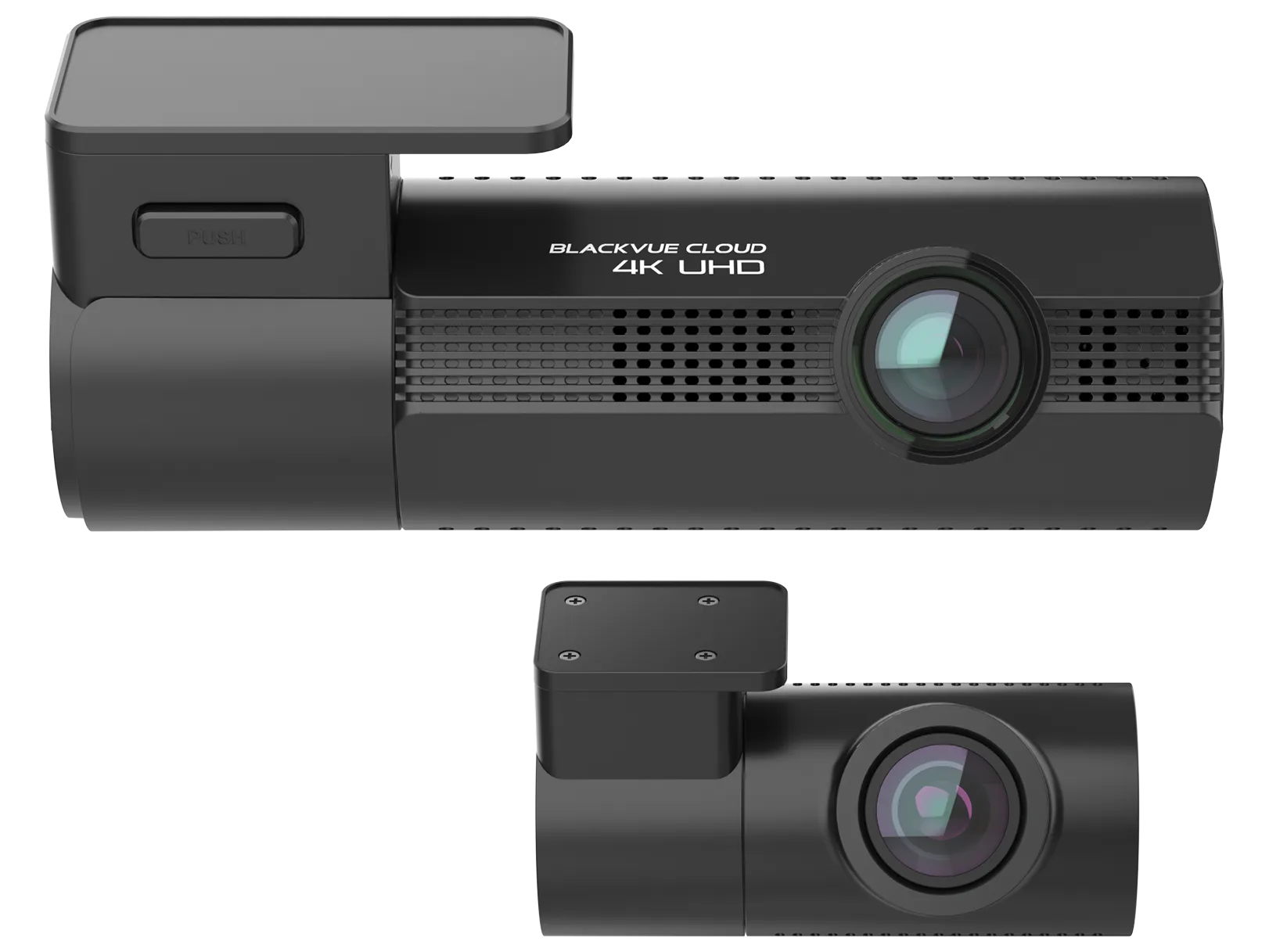
A front and rear dashcam system includes a front camera and a rear camera.
The front camera records the road ahead.
The rear camera records what happens behind the vehicle.
This gives you more complete coverage.
A rear camera can help document rear-end accidents, tailgating, parking lot incidents, hit-and-runs, and vehicles approaching from behind.
For many customers, front and rear coverage is the better setup because accidents and parking damage do not only happen in front of the vehicle.
The rear camera fills a major blind spot.
The Front Camera Tells One Side of the Story
A front camera is valuable, but it only records one direction.
If another vehicle cuts in front of you, runs a red light, stops suddenly, or causes an accident ahead, the front camera may capture the important details.
But if someone rear-ends you, backs into you, tailgates you, or hits the back of your parked vehicle, the front camera may not capture enough.
It may still show the vehicle moving from impact, but it may not show the actual vehicle that hit you.
This is why front-only systems have limits.
They are useful, but they do not tell the full story in every situation.
The Rear Camera Adds Context
A rear camera adds important context.
It can show what was happening behind the vehicle before an impact.
Was the driver following too closely?
Did the vehicle fail to stop?
Did someone hit you and leave?
Did another vehicle back into you in a parking lot?
Did someone approach the rear of the vehicle while parked?
That rear view can matter during accident documentation and insurance conversations.
If you are rear-ended, having rear footage can be much more useful than trying to explain what happened with no video.
Rear-End Accidents
Rear-end accidents are one of the biggest reasons to choose a front and rear dashcam.
A front camera may show your vehicle stopping, but it may not show the vehicle behind you failing to stop.
A rear camera can document that.
It may show the following vehicle, traffic conditions, distance, impact, and whether the driver was behaving aggressively or distracted.
Rear-end accidents often seem simple, but footage can still help.
It can show whether you stopped normally, whether traffic ahead was slowing, and what happened behind you.
For commuters and daily drivers, rear coverage is worth considering.
Tailgating and Aggressive Driving
Tailgating is another reason rear coverage matters.
A front camera records what is ahead, but it does not show the driver riding your bumper behind you.
If an aggressive driver is following too closely, brake-checking after passing, or creating a road rage situation, rear footage may help document the behavior.
This can be useful if the situation escalates or if an accident occurs.
A front and rear dashcam gives you a better record of the full road environment.
Road rage and aggressive driving do not always happen in front of the vehicle.
Parking Lot Incidents
Parking lots are one of the strongest arguments for front and rear dashcams.
A vehicle can be hit from any direction while parked.
Someone can back into the front bumper.
Someone can hit the rear bumper.
A shopping cart can strike the vehicle.
A vehicle can scrape a corner.
A person can walk behind the vehicle and cause damage.
A front-only dashcam may capture some parking incidents, but it will not cover the rear.
A front and rear setup improves the odds of capturing useful footage depending on camera angle, parking mode, storage, lighting, and where the impact happens.
Hit-and-Runs
Hit-and-runs are frustrating because the other person leaves before you can get information.
A dashcam gives you a better chance of documenting the event.
With front-only coverage, you may capture a vehicle leaving if it passes in front of the camera.
With front and rear coverage, you have a better chance of capturing activity behind the vehicle too.
This can be especially useful in parking lots, street parking, apartment complexes, work lots, schools, gyms, restaurants, and shopping centers.
No dashcam can guarantee every plate or detail will be captured perfectly, but more coverage gives you a better chance
Driving and vehicle needs
Family Vehicles
Family vehicles are strong candidates for front and rear dashcams.
SUVs, minivans, trucks, and crossovers are used constantly.
They handle school, daycare, sports, appointments, errands, travel, grocery runs, and commuting.
They are also often parked in busy areas where parking lot damage can happen.
A front and rear dashcam can help document accidents, rear-end collisions, school pickup issues, parking lot incidents, and hit-and-runs.
For parents, the value is simple:
The vehicle carries your family. More documentation is usually better than le
Work Trucks
Work trucks are another strong fit for front and rear coverage.
A work truck may be on the road all day, parked at job sites, backed into driveways, parked at supply houses, left in work lots, or used by employees.
Incidents can happen from the front or rear.
A rear camera is especially helpful for trucks because the rear of the vehicle is often exposed to backing incidents, trailer activity, job site traffic, and parking lot contact.
If the truck is used for business, footage can protect more than the vehicle.
It can help protect the workday, customer schedule, tools, and company liability conversations.
High-Value Vehicles
High-value vehicles are strong candidates for front and rear dashcams.
Luxury SUVs, performance cars, EVs, high-trim trucks, exotics, and specialty vehicles can be expensive to repair and stressful to damage.
If the vehicle is worth protecting with paint protection film, ceramic coating, ceramic tint, windshield protection film, GPS tracking, IGLA, or alarms, it is worth thinking about camera coverage too.
Front-only recording is useful, but front and rear recording provides better documentation.
For high-value vehicles, the added rear camera is usually easy to justify.
Daily Drivers
Daily drivers benefit from front and rear coverage because they are exposed constantly.
They are parked at home, work, schools, apartments, gyms, restaurants, shopping centers, hotels, commuter lots, and parking garages.
They are used in traffic, bad weather, rush hour, and crowded roads.
A front dashcam helps with forward incidents.
A rear dashcam helps with rear-end accidents, tailgating, and rear parking incidents.
If you drive the vehicle every day, the odds of something happening eventually are higher.
More coverage makes sense.
Luxury Vehicles
Luxury vehicles often need cleaner, more complete protection.
A front and rear dashcam can help document road incidents, parking lot damage, vandalism, rear-end accidents, and hit-and-runs.
This matters on vehicles like Range Rover, Land Rover, Mercedes-Benz, BMW, Audi, Lexus, Cadillac, Porsche, Genesis, Volvo, Bentley, Rolls Royce, and similar models.
Owners of these vehicles often care about clean installation too.
A professionally installed front and rear dashcam can provide better coverage without messy wires or cheap-looking interior clutter.
Performance Cars
Performance cars often attract attention.
Corvettes, Mustangs, Camaros, Hellcats, BMW M cars, Mercedes AMG models, Audi RS models, Porsches, Lamborghinis, Ferraris, McLarens, and similar vehicles can benefit from front and rear recording.
A front camera documents what happens ahead.
A rear camera can document tailgating, aggressive drivers, rear-end accidents, and parking lot incidents.
Performance cars are often recognizable, and people may drive differently around them.
A front and rear dashcam helps protect the owner from relying only on memory when something happens.
EVs
EVs are also strong front and rear dashcam candidates.
Tesla, Rivian, Lucid, Hyundai IONIQ, Kia EV models, BMW i models, Mercedes EQ models, Ford Lightning, GMC Hummer EV, and other EVs are often high-value and daily driven.
Many EVs are parked in public charging areas, work lots, garages, apartments, and shopping centers.
A front and rear dashcam can help document road incidents, parking damage, charging area incidents, and hit-and-runs.
For EV owners already investing in tint, PPF, coatings, WPF, GPS tracking, or IGLA, front and rear dashcam coverage fits the same protection mindset.
Coverage choices and parking mode
Front-Only Dashcam Benefits
A front-only dashcam still has value.
It is usually more affordable than a front and rear system.
It is simpler to install.
It records the most common view drivers think about first: the road ahead.
It can help with accidents, traffic lights, lane changes, unsafe drivers, road rage, and general driving documentation.
For customers who want a simple starting point, a front dashcam is much better than no dashcam.
The main limitation is coverage.
It does not record what happens behind the vehicle.
Front and Rear Dashcam Benefits
A front and rear dashcam system adds more complete documentation.
It can help with rear-end accidents, tailgating, rear parking lot impacts, hit-and-runs, and events behind the vehicle.
It gives a better view of the full situation.
For many owners, the rear camera is worth it because rear-end collisions and parking lot incidents are common.
The added cost and installation are usually justified when the vehicle is valuable, used daily, parked outside, used for work, or used by family.
More coverage means fewer blind spots.
When Front-Only Makes Sense
A front-only dashcam may make sense if the customer wants the most affordable setup, mainly cares about forward-driving incidents, rarely parks in public areas, or is installing a dashcam on a lower-risk vehicle.
It may also make sense if the vehicle layout makes rear camera installation more difficult or if the owner simply wants a basic camera.
A front-only system is not a bad choice.
It is just a limited one.
For some owners, that is enough.
For others, front and rear coverage is the smarter long-term decision.
When Front and Rear Makes Sense
A front and rear dashcam makes sense if the vehicle is daily driven, high-value, parked outside, used for work, used by family, parked in public lots, or frequently driven in traffic.
It also makes sense if the owner is worried about rear-end accidents, hit-and-runs, tailgating, parking lot damage, road rage, or insurance disputes.
If you want better documentation, front and rear is usually the better choice.
Many customers who start with front-only later wish they had rear coverage too.
Parking Mode and Front-Only Setups
Parking mode can still be useful with a front-only dashcam.
The camera may capture activity in front of the vehicle, impacts, movement, or certain events depending on the camera and setup.
But front-only parking coverage is limited.
If the vehicle is hit from behind or someone approaches from the rear, a front-only camera may not capture what you need.
Parking mode is helpful, but camera direction still matters.
If parking incidents are a major concern, front and rear coverage is usually the better choice.
Parking Mode and Front and Rear Setups
Parking mode becomes more useful with front and rear coverage.
The vehicle has two camera views instead of one.
This can improve the chance of capturing parking lot impacts, hit-and-runs, vandalism, or suspicious activity around the vehicle.
Camera angle, lighting, storage, impact sensitivity, and power setup still matter.
No dashcam captures every possible angle.
But front and rear coverage gives you a better chance of useful footage.
For parking mode customers, front and rear is usually the stronger option.
Installation, video and power
Rear Camera Installation
A rear camera needs to be installed properly.
The wiring should be routed cleanly from the front camera to the rear of the vehicle. The rear camera should be mounted in a position that gives a useful view without blocking visibility or looking messy.
This is especially important on SUVs, hatchbacks, trucks, EVs, luxury vehicles, and vehicles with rear glass that opens separately.
A poor rear camera installation can look bad or create reliability issues.
Professional installation makes a difference.
The goal is clean wiring, secure mounting, and useful camera placement.
Clean Wiring Matters
Dashcam wiring should not hang across the windshield, dashboard, pillars, or rear glass.
A clean installation hides the wiring and makes the system feel like it belongs in the vehicle.
This matters even more with front and rear systems because there is more wiring involved.
A clean install protects the look of the interior and reduces distractions.
At Kickin’ Customs, clean dashcam installation is a major part of the value.
The system should protect the vehicle without making the cabin look cluttered.
Camera Placement Matters
Dashcam placement matters because the camera needs a clear view.
The front camera is usually mounted near the windshield behind or near the mirror area, depending on the vehicle and camera.
The rear camera is usually mounted near the rear glass.
Placement should avoid blocking the driver’s view, interfering with sensors, creating glare issues, or looking messy.
Modern vehicles may have rain sensors, camera housings, advanced driver assistance systems, mirror electronics, and tint that affect placement.
Professional installation helps choose the right location.
Video Quality Matters
Whether you choose front-only or front and rear, video quality matters.
Better footage can help show traffic lights, lane position, other vehicles, road conditions, and surrounding details.
No camera can guarantee perfect license plate capture in every situation.
Speed, lighting, weather, glare, dirty glass, camera angle, headlight reflection, and distance all matter.
But choosing a quality dashcam improves your chances of useful footage.
A cheap camera with poor night performance may not be helpful when you need it most.
Night Recording Matters
Night recording is especially important in New England.
It gets dark early in winter, and many people drive before sunrise or after sunset.
Parking incidents also often happen in darker lots, garages, driveways, and streets.
A front and rear dashcam should perform well in low light.
If the rear camera has poor night performance, it may not capture useful details after dark.
When choosing a system, night recording should be part of the conversation, not an afterthought.
Storage Matters More With Two Cameras
Front and rear dashcams record more footage than front-only systems.
That means storage matters.
A two-channel system may use storage faster because it is saving both front and rear video.
Loop recording helps manage this by overwriting older footage, but storage capacity still affects how much history is available.
If an event happens, the owner should save the footage before it gets overwritten.
Using the right memory card and understanding how footage is stored are important parts of dashcam ownership.
App Access Matters
App access can make a dashcam easier to live with.
Depending on the model, app access may allow the owner to view footage, download clips, change settings, or check events from the phone.
This is especially useful with front and rear systems because there may be more footage to review.
Instead of removing the memory card and using a computer, the owner may be able to find and save clips through the app.
A dashcam is more useful when the owner can actually access the footage easily.
Impact Detection Matters
Impact detection helps the dashcam save event footage when the vehicle is hit or bumped.
This is useful while driving and while parked, depending on the system and settings.
For front and rear systems, impact detection can help preserve footage from both directions.
This can matter in parking lots, rear-end accidents, and hit-and-runs.
The system still needs proper setup.
Sensitivity should be useful without saving constant false events.
Battery Protection Matters
Parking mode uses power.
That means battery protection matters, especially for front and rear systems.
A properly installed dashcam should be configured to reduce the risk of draining the vehicle battery too far.
Many hardwired systems include voltage cutoff or parking mode settings designed to protect the battery.
This is important because a dashcam should not leave the owner stranded.
Professional installation helps balance parking mode protection with vehicle battery health
Choose a setup for your routine
Front and Rear for Trucks
Trucks are strong candidates for front and rear dashcams.
They are larger, often parked outside, used for work, and exposed in job sites, driveways, supply houses, and parking lots.
A rear camera can help document rear impacts, trailer area incidents, tailgating, and parking lot damage.
For work trucks, front and rear footage can also help with customer sites, employee use, and accident documentation.
If the truck carries tools or equipment, adding a dashcam alongside alarm and GPS tracking can make even more sense.
Front and Rear for SUVs
SUVs are strong candidates because they are often family vehicles, luxury vehicles, EVs, or daily drivers.
They are used constantly and parked in busy areas.
A rear camera can help capture rear-end accidents, parking lot hits, and activity around the rear hatch.
For family SUVs, front and rear coverage provides better documentation for the vehicle most people rely on every day.
For luxury SUVs, the added coverage is usually worth it because repair costs and vehicle value are higher.
Front and Rear for Family Vehicles
Family vehicles benefit from more coverage.
School pickup, daycare, sports, errands, vacations, and daily driving create constant exposure.
A front and rear dashcam can document accidents, rear-end collisions, parking incidents, and hit-and-runs.
This can help during insurance conversations and give the family a better record of what happened.
When the vehicle carries kids and is used every day, front and rear coverage is usually the smarter choice.
Front and Rear for Work Vehicles
Work vehicles are often on the road more than personal vehicles.
They may be used by employees, parked at job sites, parked at customer homes, or driven in traffic all day.
A front and rear dashcam can help document incidents from both directions.
For business owners, footage may be useful for accident conversations, customer disputes, job site incidents, and insurance documentation.
Work vehicles also benefit from GPS tracking and alarm systems.
Together, those layers can protect the vehicle and business operations.
Front and Rear for High-Value Vehicles
High-value vehicles usually deserve front and rear coverage.
If the vehicle is expensive to repair, difficult to replace, or heavily protected with PPF, tint, coating, windshield protection film, GPS tracking, IGLA, or alarms, a front-only dashcam may feel incomplete.
The rear camera adds another layer of documentation.
For luxury vehicles, EVs, performance cars, and high-trim trucks or SUVs, the added camera is usually a small part of the total protection package.
Front and Rear for Vehicles Parked Outside
Vehicles parked outside benefit from front and rear dashcams because parking incidents can happen from multiple directions.
Driveways, apartment lots, condo lots, work lots, street parking, hotels, schools, gyms, restaurants, shopping centers, and public garages all create exposure.
A front camera only watches one side.
A front and rear system improves coverage while parked.
If the vehicle spends a lot of time outside, rear coverage is worth considering.
Front and Rear for Apartment Parking
Apartment and condo parking often creates more risk.
Vehicles are parked in shared lots, sometimes far from the owner, and often outside overnight.
A front and rear dashcam with parking mode can help document certain incidents while the vehicle is parked.
This is useful for hit-and-runs, rear impacts, suspicious activity, and parking lot damage.
No dashcam covers every angle, but front and rear coverage is stronger than front-only in shared parking environments.
Front and Rear for Highway Commuters
Highway commuters can benefit from rear coverage because rear-end accidents and tailgating are common.
A front camera shows traffic ahead.
A rear camera shows what is happening behind you.
This can be useful if traffic stops suddenly and someone hits you from behind.
It can also help document aggressive drivers, unsafe following, and road rage behavior.
For people who commute daily on highways, front and rear coverage is a practical upgrade.
Front and Rear for Road Rage Incidents
Road rage does not always happen ahead of you.
An aggressive driver may follow too closely, flash lights, swerve behind you, or continue following after an interaction.
A rear camera can document that behavior.
A front-only camera may miss the most important part.
If you are concerned about road rage or aggressive drivers, front and rear coverage gives a better record of the full situation.
This is especially useful for commuters, family vehicles, and work vehicles
Why Some Customers Start Front-Only
Some customers choose front-only because it is less expensive.
That is understandable.
A front dashcam is still a good upgrade. It records the most important driving view and can help with many accident situations.
For budget-focused customers, front-only may be the right starting point.
But it is important to understand what you are giving up.
If the incident happens behind the vehicle, front-only footage may not be enough.
Why Many Customers Choose Front and Rear
Many customers choose front and rear because they want better coverage from the beginning.
They do not want to install a dashcam and later wish they had a rear camera.
This is especially true for customers with high-value vehicles, work vehicles, family vehicles, trucks, SUVs, EVs, performance cars, or vehicles parked outside.
If documentation is the goal, more coverage usually makes sense.
A front and rear dashcam gives you a better chance of capturing the event that matters.
Dashcams and Layered Security
A dashcam is one layer of vehicle protection.
It records.
A car alarm detects and alerts.
DroneMobile GPS tracks location.
IGLA helps stop unauthorized driving.
Remote start adds comfort and convenience.
For customers with high-value vehicles, work trucks, family vehicles, and daily drivers, these layers can work together.
A dashcam helps show what happened.
The other systems help detect, alert, locate, or prevent.
The right package depends on the vehicle and owner concerns.
What Front and Rear Dashcams Do Not Do
A front and rear dashcam still has limits.
It does not record every angle around the vehicle.
It does not prevent accidents.
It does not stop theft.
It does not replace an alarm.
It does not replace GPS tracking.
It does not replace IGLA.
It does not guarantee every license plate will be readable.
It records based on camera angle, lighting, storage, power, settings, and visibility.
That is why expectations matter.
A front and rear system gives better coverage, but it is not a 360-degree shield.
Questions to Ask Before Choosing
Before choosing front-only or front and rear, ask:
Do I drive daily?
Do I park outside?
Do I park in public lots?
Do I worry about rear-end accidents?
Do I commute on highways?
Do I use the vehicle for work?
Is the vehicle high-value?
Is it a family vehicle?
Do I want parking mode?
Do I want better hit-and-run coverage?
Do I want the cleanest install from the start?
If the answer to several of these is yes, front and rear coverage is probably the better choice.
Professional Installation Matters
A front and rear dashcam should be installed professionally.
The front camera should be mounted properly.
The rear camera should have a useful view.
The wiring should be hidden.
Parking mode should be set up correctly if included.
Battery protection should be configured.
The customer should know how to access footage.
At Kickin’ Customs, we install dashcams with a focus on clean wiring, reliable operation, practical camera placement, and customer training.
A dashcam should look clean and work when needed.
Final Thoughts
A front dashcam is useful, but a front and rear dashcam system is usually the better choice for customers who want more complete documentation.
Front-only coverage helps with forward accidents, lane changes, traffic lights, unsafe drivers, and road rage in front of the vehicle.
Front and rear coverage adds protection for rear-end accidents, tailgating, parking lot hits, rear hit-and-runs, and incidents behind the vehicle.
At Kickin’ Customs in Raynham, MA, we install dashcams for customers across Massachusetts and Rhode Island who want clean installation and the right coverage for their vehicle.
If the vehicle is a daily driver, family vehicle, work truck, luxury vehicle, EV, performance car, or high-value vehicle, front and rear coverage is usually worth the upgrade.
When something happens, more footage is better than wishing you had another angle.
Frequently Asked Questions
Is a front dashcam enough?
A front dashcam is useful and much better than no camera, but it only records what happens in front of the vehicle.
Is a front and rear dashcam worth it?
Yes, front and rear coverage is worth it for many vehicles because it helps document rear-end accidents, tailgating, parking lot incidents, and hit-and-runs behind the vehicle.
Does a rear dashcam help with rear-end accidents?
Yes. A rear dashcam can show the vehicle behind you, the impact, and what happened before the collision.
Does a rear dashcam help while parked?
Yes, when paired with parking mode and proper setup, a rear camera may help capture certain parking incidents behind the vehicle.
Is front and rear dashcam coverage better for work trucks?
Yes. Work trucks benefit from front and rear coverage because they are on the road often, parked at job sites, and exposed to incidents from multiple directions.
Is front and rear dashcam coverage better for family vehicles?
Yes. Family vehicles are used daily and parked in busy areas, making front and rear coverage a smart option.
Can a dashcam record every angle around the vehicle?
No. A front and rear dashcam gives better coverage than front-only, but it does not record every angle around the vehicle.
Does front and rear dashcam installation look messy?
It should not when installed professionally. A clean installation hides wiring and keeps the system looking neat.
Plan your next step
Not sure if front-only or front and rear dashcam coverage is right for your vehicle? Contact Kickin’ Customs in Raynham, MA to compare dashcam setups, parking mode, app access, GPS tracking, alarms, and layered security options.
