
The short answer
Boats deal with sunlight differently than cars and buildings.
On the water, sunlight comes from above, through the glass, and back up from the water surface.
That means boat owners often deal with heavy glare, bright reflection, cabin heat, eye strain, sun exposure, and uncomfortable enclosed areas.
Marine window tint can help.
The right marine window film can reduce heat, control glare, improve cabin comfort, help reduce UV exposure, add privacy, and make time on the water more enjoyable.
It is not only about looks.
It is about making the boat easier to use.
At Kickin’ Customs in Raynham, MA, we install marine window tint, marine paint protection film, marine ceramic coatings, and related surface protection services for boat owners across Massachusetts, Rhode Island, Cape Cod, Buzzards Bay, Plymouth, Dartmouth, New Bedford, Fall River, Wareham, and surrounding coastal areas.
If your boat gets too hot, too bright, or uncomfortable in the cabin or helm area, marine window tint may be worth considering.
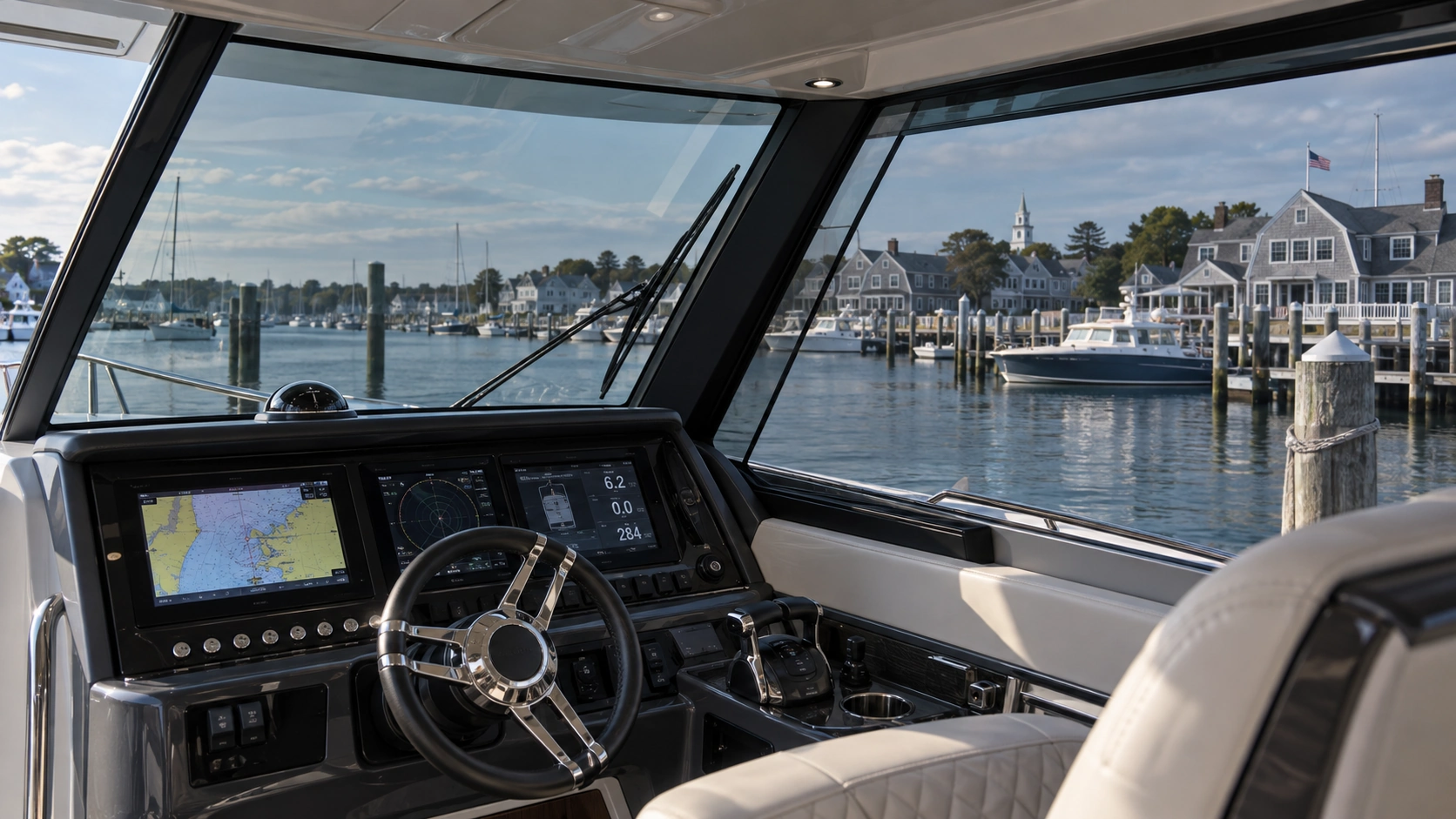
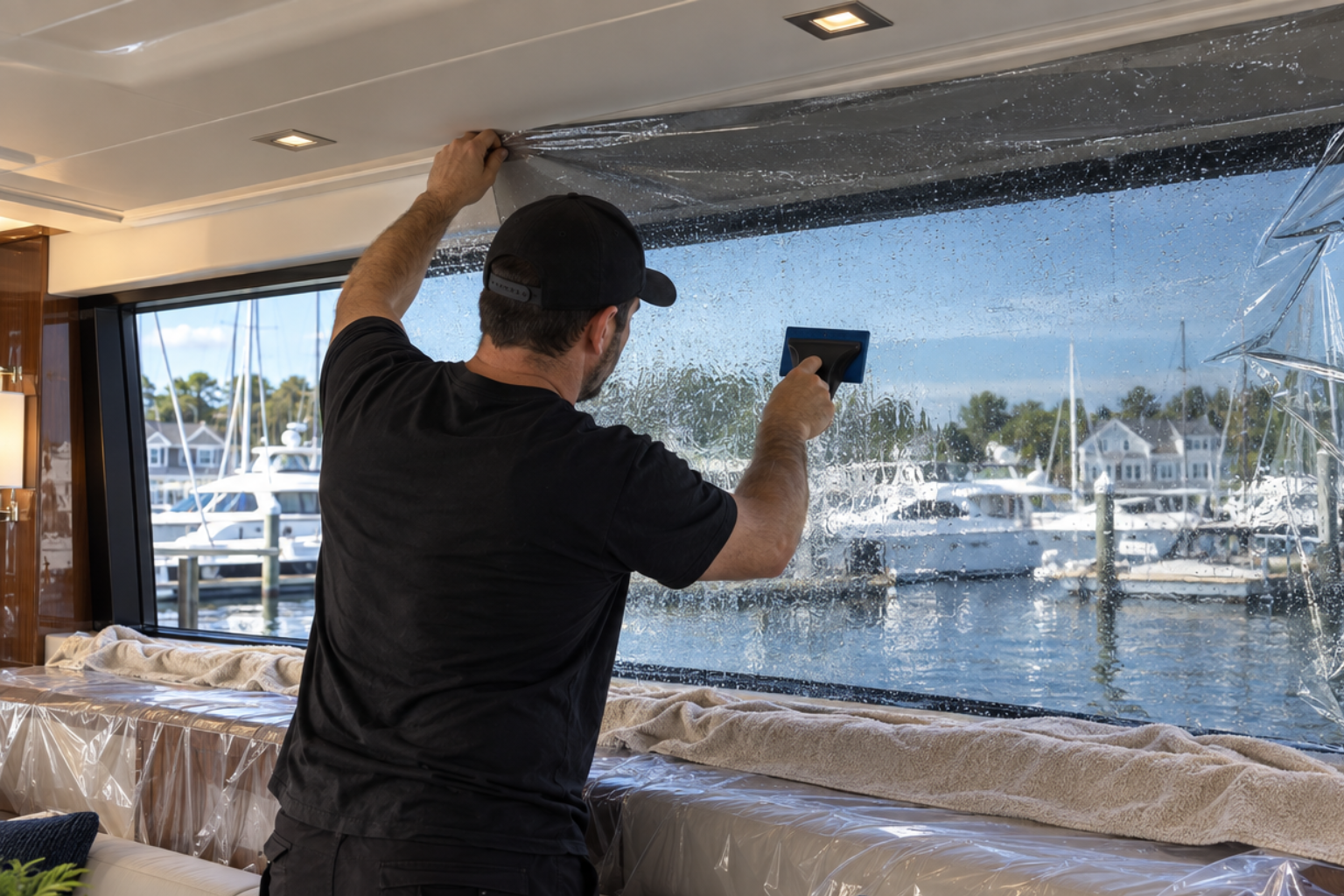
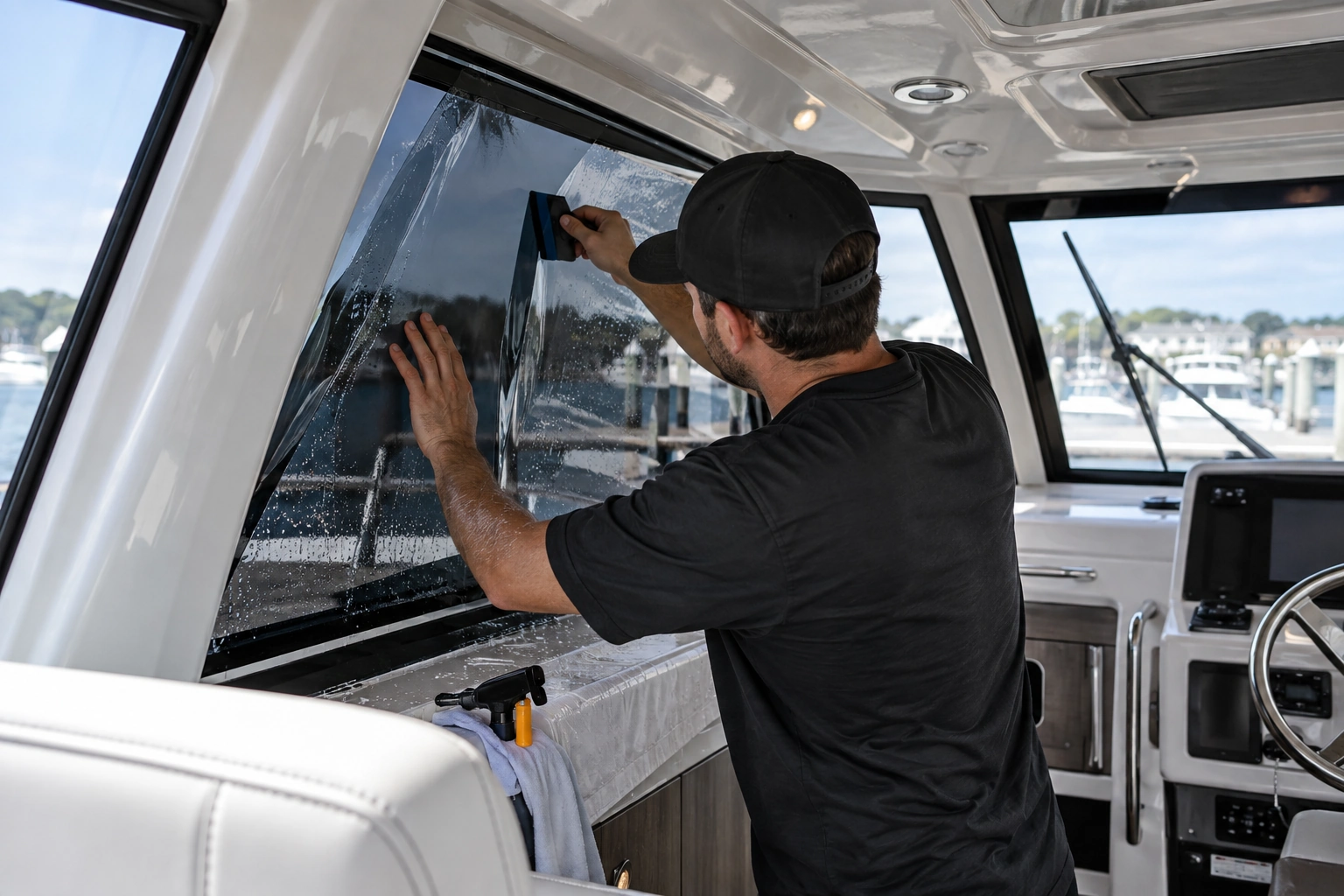
Marine imagery shown in this guide is illustrative.
Heat, glare and visibility
What Is Marine Window Tint?
Marine window tint is window film designed for boat and watercraft glass.
It is installed on compatible marine glass to help manage sun exposure, heat, glare, UV, privacy, and comfort.
Marine tint is not the same conversation as standard automotive tint.
Boats have different glass shapes, different exposure, different moisture conditions, different use patterns, and different visibility needs.
A vehicle is usually viewed through glass from a fixed driver position on a road.
A boat may be navigated around docks, buoys, waves, swimmers, reflections, other vessels, and changing light conditions.
That means tint shade, visibility, and product selection need to be chosen carefully.
The goal is comfort without creating visibility problems.
Why Boats Need a Different Tint Conversation
Boat tint is not just car tint applied to a boat.
Marine conditions are different.
Boats deal with:
Water reflection.
Salt air.
Humidity.
Constant sun exposure.
Cabin heat.
Curved or angled glass.
Framed marine glass.
Changing visibility conditions.
Docking and navigation needs.
Coast Guard and local visibility expectations.
Different types of glass and enclosures.
Some surfaces may be glass.
Others may be acrylic, polycarbonate, clear vinyl, canvas enclosure panels, or other marine materials.
Not every clear surface should be tinted the same way.
A professional marine tint installer should evaluate what material is actually on the boat before recommending film.
The Glare Problem on the Water
Glare is one of the biggest reasons boat owners ask about marine tint.
On the water, glare can come from multiple directions.
Direct sunlight hits the glass.
Sunlight reflects off the water.
Bright sky reflects off the windshield.
Chrome, white gelcoat, fiberglass, docks, and nearby boats can all add brightness.
This can make the helm uncomfortable, especially during long rides or late-day sun.
Glare can also make displays, gauges, navigation screens, fish finders, and phones harder to see.
Marine window film can help reduce glare so the cabin and helm feel easier on the eyes.
That does not replace sunglasses or good visibility habits, but it can make the boat more comfortable to operate and enjoy.
Heat Reduction and Cabin Comfort
Cabin heat is another major reason to tint boat windows.
Boats with enclosed cabins, hardtops, pilothouses, windshields, side glass, or large glass areas can heat up quickly in the sun.
The cabin may feel stuffy.
Seats and surfaces may get hot.
Passengers may avoid certain areas.
Air conditioning may have to work harder if the boat has it.
Even when the boat is moving, enclosed glass areas can trap heat.
Marine ceramic window film can help reduce solar heat entering through compatible glass.
That can make the cabin feel more comfortable during long days on the water.
For boat owners who spend time docked, anchored, cruising, or fishing, comfort matters.
UV Exposure on Boats
Sun exposure is constant on the water.
Boat owners and passengers are exposed to sunlight from above and reflected sunlight from the water.
Marine window film can help reduce UV exposure through tinted glass.
This can support passenger comfort and help protect interior surfaces.
UV exposure can contribute to fading and wear on upholstery, trim, flooring, electronics, dash materials, cabin finishes, curtains, and interior surfaces.
Window film is not a complete sun protection plan.
People still need sunscreen, shade, clothing, sunglasses, and good sun habits.
But reducing UV through compatible glass is still a valuable part of making the boat more comfortable and protecting interior materials.
Marine Tint and Privacy
Marine tint can also add privacy.
This is especially useful for boats with cabins, cuddy areas, heads, sleeping areas, storage spaces, or dockside visibility concerns.
Privacy can matter when the boat is:
Docked at a marina.
Tied up near other boats.
Stored in a yard.
Anchored near other vessels.
Used overnight.
Parked on a trailer.
Moored near a busy area.
Tint can make it harder for people to see inside during certain lighting conditions.
However, privacy expectations should be realistic.
Like automotive and architectural films, visibility can change depending on lighting.
If it is brighter outside than inside, privacy is usually stronger.
If the cabin is lit at night and it is dark outside, people may see in more easily.
Marine Tint and Visibility
Visibility is one of the most important marine tint considerations.
A boat owner should never choose film based only on how dark it looks.
On a boat, visibility matters for docking, navigating, spotting hazards, reading water conditions, seeing other boats, and operating safely in changing light.
A film that feels comfortable at noon may feel too dark at dusk.
A film that looks good at the marina may not be ideal in fog, rain, shadow, or low light.
This is why shade selection matters.
The goal is to reduce heat and glare while preserving safe visibility.
A professional installer should help the owner choose a film that fits the boat, glass location, and how the vessel is used.
Clear, Light, or Dark Marine Tint?
Marine tint does not always need to be dark.
Some boat owners want the darkest look possible, but that is not always the best choice on the water.
A lighter ceramic film can still provide heat rejection and UV reduction while preserving more visibility.
A medium shade may provide a good balance of comfort, privacy, and appearance.
A darker film may look sharp and reduce glare, but it may not be right for every window or every boat.
The best shade depends on the glass location and how the boat is used.
Windshields and helm visibility need more caution.
Cabin side glass may allow more flexibility.
Privacy areas may allow different choices.
Glass locations and boat types
Marine Tint for Boat Windshields
Boat windshields need careful tint selection.
They are directly tied to visibility and navigation.
A windshield that is too dark can create problems in low light, cloudy conditions, fog, rain, dawn, dusk, or tight docking situations.
For many boats, a lighter marine film is the better choice for windshield areas.
The goal is to reduce glare and heat without hurting the operator’s ability to see.
This is not the place to choose film only for style.
Boat owners should consider when and how they operate the vessel.
Daytime cruising is different from early morning fishing.
Docking in bright sun is different from coming back at dusk.
Visibility needs to come first.
Marine Tint for Side Glass
Side glass often gives boat owners more flexibility than windshield glass.
Cabin side windows, hardtop side glass, and enclosed seating areas may benefit from darker or more privacy-oriented film depending on visibility needs.
Side glass can contribute heavily to cabin heat and glare.
Tinting these areas can improve comfort for passengers and reduce sun exposure inside the cabin.
It can also improve privacy when docked or moored.
The right shade depends on the boat design.
A small cabin cruiser may need a different approach than a center console with windshield and side wings.
A pilothouse may need different film than a yacht salon.
Each boat should be evaluated individually.
Marine Tint for Cabins
Cabins can get hot quickly.
Large side glass, front glass, skylights, and sun exposure can make the interior uncomfortable.
Marine window tint can help reduce heat and glare inside the cabin.
It can also improve privacy and reduce UV exposure to upholstery, cabinetry, flooring, electronics, and interior finishes.
Cabin tint is especially useful for boats with:
Cuddy cabins.
Pilothouses.
Express cruisers.
Cabin cruisers.
Yachts.
Sportfishing boats.
Day boats with enclosed areas.
Overnight boats.
The cabin should feel comfortable, not like a greenhouse.
The right film can make time inside the boat much more enjoyable.
Marine Tint for Hardtops and Pilothouses
Hardtops and pilothouses often have large glass areas.
This gives excellent visibility, but it can also create major heat and glare issues.
On a sunny day, the helm area can become uncomfortable for the captain and passengers.
Marine tint can help reduce glare on navigation screens, gauges, controls, and electronics.
It can also reduce heat buildup in enclosed helm areas.
For pilothouse boats, shade selection is especially important because the operator may rely heavily on the glass for visibility.
A balanced ceramic marine film can improve comfort without making the boat feel closed in.
The goal is better usability, not just a darker look.
Marine Tint for Center Consoles
Many center consoles have windshields, side glass, hardtop enclosures, or clear panels around the helm.
These boats spend long hours in direct sun.
The helm can feel bright and hot, especially during offshore runs, fishing trips, and long cruising days.
Marine tint may help reduce glare and heat in the helm area when installed on compatible glass.
However, many center consoles also use clear vinyl, acrylic, or polycarbonate enclosure panels that require special consideration.
Not every material is suitable for standard tint.
A professional installer should confirm the surface before recommending film.
For center consoles, marine tint should be approached with visibility and material compatibility in mind.
Marine Tint for Cruisers
Cruisers often benefit heavily from marine tint.
They may have larger cabin glass, side windows, windshields, and enclosed areas that build heat during the day.
Tint can make cruising, relaxing, and overnight use more comfortable.
It can reduce the amount of heat coming through the glass.
It can reduce glare in seating areas.
It can add privacy at the marina.
It can help protect interiors from UV exposure.
Cruisers are often used for longer trips and more time aboard, so comfort matters.
A properly selected marine film can make the boat feel more livable.
For cabin cruisers, tint is often both a comfort upgrade and an appearance upgrade.
Marine Tint for Yachts
Yachts often have large glass areas and high-end interiors.
That makes marine tint especially valuable.
Large windows look impressive, but they also allow heat, glare, and UV exposure into living spaces.
Tint can improve comfort in salons, staterooms, helm stations, and seating areas.
It can also help protect upholstery, wood, flooring, electronics, and interior finishes.
Privacy can also be important at marinas and docks.
A yacht tint installation needs careful planning.
Glass size, access, interior finishes, shade selection, exterior appearance, and visibility all matter.
A professional marine tint job should look clean, intentional, and appropriate for the vessel.
Marine Tint for Fishing Boats
Fishing boats often spend long days in harsh sun.
The glare can be intense, especially offshore or in open water.
Marine tint may help reduce glare and heat around the helm, cabin, or enclosed areas.
This can make long days more comfortable.
For fishing boats, visibility is extremely important.
Operators need to see water conditions, other boats, lines, buoys, docks, weather changes, and obstacles.
A lighter or balanced film may be better than a dark film in areas tied to navigation.
Fishing boats may also have mixed materials, including glass, acrylic, or clear enclosure panels.
Surface compatibility should always be confirmed first.
Marine Tint for Wake Boats and Surf Boats
Wake boats and surf boats often have stylish windshields and passenger areas exposed to strong sun.
Tint can improve appearance, reduce glare, and add comfort for passengers.
It can also reduce UV exposure through compatible glass.
These boats are often used on bright summer days, so heat and glare reduction can make a noticeable difference.
Shade choice should still consider visibility for the driver.
Docking, towing riders, watching the water, and operating around other boats require clear vision.
A clean marine tint installation can make a wake boat or surf boat look sharper while improving comfort.
The goal is style with function.
Marine Tint for Sailboats
Sailboats can also benefit from marine tint in cabins, hatches, and glass areas where compatible.
Cabins may heat up while docked or moored.
Glare can affect comfort below deck.
Privacy can matter when tied up near other boats.
UV exposure can affect interior materials.
Marine window film may help reduce heat and glare through compatible glass.
However, sailboats may have acrylic, polycarbonate, or other non-glass panels that need careful review.
Not every clear panel should receive standard window film.
A professional evaluation is important.
For sailboats, tint should improve comfort while respecting the materials and the way the boat is used.
Marine Tint for Docked Boats
Boats spend a lot of time sitting.
At the marina.
At the dock.
On a mooring.
In a boatyard.
On a trailer.
During that time, sunlight continues to hit the glass and interior.
Marine tint can help reduce heat buildup and UV exposure while the boat is not being used.
It can also add privacy when the boat is docked near others.
For boat owners who spend weekends aboard, tint can make the cabin more comfortable when arriving at the dock.
Instead of opening the boat to a hot, harsh interior, the space may feel more controlled.
Dockside comfort is one of the underrated benefits of marine tint.
Interiors, electronics and privacy
Marine Tint and Interior Protection
Boat interiors are expensive.
Upholstery, cushions, vinyl, flooring, wood, trim, electronics, dashboards, curtains, and cabin finishes all take abuse from sun and heat.
Marine tint can help reduce UV exposure and solar heat through compatible glass.
This may help slow fading and wear.
It is not a complete solution because fading and aging can also come from heat, visible light, salt, moisture, cleaning chemicals, use, and material quality.
But reducing sun exposure through the glass is still helpful.
For boats with high-end interiors, marine tint is a practical part of long-term protection.
It works well alongside ceramic coatings, PPF, covers, routine cleaning, and seasonal maintenance.
Marine Tint and Electronics
Modern boats often have expensive electronics.
Navigation screens.
Radar displays.
Fish finders.
Chartplotters.
Autopilot controls.
Stereo screens.
Switch panels.
Tablets.
Phones.
Digital gauges.
Glare can make these screens harder to read.
Heat and sun exposure can also be hard on helm areas and electronics over time.
Marine window tint can help reduce harsh light and solar heat through compatible glass.
This can make the helm more comfortable and help screens remain easier to see in bright conditions.
Tint does not replace proper screen brightness, shading, or electronics care.
But it can make the environment around the helm less harsh.
Marine Tint and Radio, GPS, and Electronics Signals
Marine owners often worry about whether tint will affect electronics signals.
This is an important question because boats rely on GPS, radio, cellular, Bluetooth, navigation systems, and communication equipment.
Film selection matters.
Modern ceramic marine films are often preferred because they can provide heat rejection without the signal interference concerns associated with some metallic films.
Before installation, the product should be selected with marine electronics in mind.
The owner should discuss the boat’s equipment, antenna placement, and signal needs with the installer.
The goal is comfort and heat rejection without creating problems for communication or navigation equipment.
Marine Tint and Privacy at the Marina
Marinas can be crowded.
Boats are often docked side by side.
People walk past.
Neighbors can see into cabins.
Restaurants, docks, and slips may create constant visibility.
Marine tint can improve privacy while the boat is docked.
This can make the cabin feel more comfortable.
It can also make stored items less visible from outside.
Privacy does not mean the boat becomes invisible.
Lighting still matters.
At night, interior lights may reduce privacy.
But for daytime dock use, tint can make a noticeable difference.
For boat owners who spend time aboard at the marina, privacy is one of the most practical reasons to tint.
Marine Tint and Appearance
Marine tint can also improve appearance.
A clean tint installation can make a boat look more finished, modern, and cohesive.
It can reduce the fishbowl look of clear glass.
It can complement dark trim, hardtops, hull colors, canvas, and hardware.
However, appearance should not be the only consideration.
A boat still needs safe visibility.
A dark look may not be appropriate for every glass location.
A professional installer should help choose a film that improves appearance without hurting function.
The best marine tint looks good and makes the boat more comfortable to use.
Style and performance should work together.
Visibility and glass compatibility
Marine Tint and Legal or Safety Considerations
Boat tint should always be chosen with visibility and safe operation in mind.
Requirements and expectations can vary based on the type of vessel, location, and how the boat is operated.
Boat owners should avoid choosing a film that makes navigation harder, especially on windshields or helm glass.
Visibility in low light, fog, rain, heavy chop, and docking situations should be considered.
If the boat is used commercially, chartered, inspected, or subject to specific regulations, the owner should confirm requirements before installation.
The safest approach is to select a film that improves comfort while preserving practical visibility.
Tint should help the boating experience, not create a safety concern.
Marine Glass Considerations
Marine glass needs to be evaluated before tint is installed.
Some boats have tempered glass.
Some have laminated glass.
Some have curved glass.
Some have framed glass.
Some have coated glass.
Some have acrylic or polycarbonate panels.
Some have clear vinyl enclosure panels.
Not every clear surface is tintable with standard window film.
Installing the wrong film on the wrong material can create appearance, adhesion, distortion, or durability problems.
That is why professional inspection matters.
Before quoting or installing, the installer should identify what material is being tinted.
Marine tint is not one-size-fits-all.
The product needs to match the surface.
Tinting Acrylic, Polycarbonate, and Clear Vinyl
Many boats use clear materials that are not traditional glass.
Acrylic panels.
Polycarbonate panels.
Clear vinyl enclosure panels.
Isinglass-style enclosure panels.
Canvas enclosure windows.
These materials may scratch more easily, flex differently, expand differently, or react differently to adhesives than glass.
Standard window film may not be appropriate.
This is why boat owners should not assume every clear panel can be tinted.
If the boat has non-glass surfaces, those areas need a separate conversation.
A professional installer should explain what can be tinted, what should not be tinted, and what alternative options may be available.
Marine tint success depends heavily on material compatibility.
Marine Tint and Curved Glass
Curved marine glass can be more difficult to tint than flat glass.
Some boat windshields and cabin windows have compound curves, tight corners, frames, gaskets, and hardware that make installation challenging.
The film needs to fit properly.
Edges need to be clean.
Visibility needs to remain clear.
A poor installation can create distortion, lift points, or an unprofessional look.
This is one reason professional marine tint installation matters.
Boats often have more complex glass than they appear to from a distance.
A good marine tint installer needs patience, product knowledge, and experience with difficult glass shapes.
Exposure and complementary protection
Marine Tint and Saltwater
Saltwater environments are harsh.
Salt, humidity, sun, and constant moisture exposure can affect many parts of a boat.
Marine window film needs to be installed and maintained properly.
After installation, the film should be cleaned with safe products and soft materials.
Harsh chemicals, abrasive pads, or aggressive scraping should be avoided.
Owners should follow care instructions and be mindful of salt buildup.
A clean installation and proper maintenance help the film last longer and look better.
For saltwater boats, marine tint should be treated as part of the overall maintenance routine.
The boat lives in a tougher environment than a car.
Marine Tint and Seasonal Use
In Massachusetts and Rhode Island, many boats are seasonal.
They may be launched in spring, used heavily in summer, hauled in fall, and stored over winter.
Marine tint should be considered with that seasonal cycle in mind.
Spring is a good time to improve comfort before peak boating season.
Summer tint installations can help during the hottest months, but scheduling may be tighter.
Fall or winter work may make sense during storage or off-season maintenance.
Boat owners often plan tint, coatings, PPF, detailing, electronics, and maintenance together.
The off-season can be a good time to prepare the boat for a better next season.
Marine Tint and Ceramic Coating
Marine tint and ceramic coating solve different problems.
Marine tint helps with heat, glare, privacy, UV exposure, and comfort through glass.
Marine ceramic coating helps protect and maintain exterior surfaces by improving slickness, water behavior, and cleanup.
Tint makes the cabin or helm more comfortable.
Coating makes surfaces easier to wash and maintain.
For boat owners, the two services pair well because both reduce maintenance and improve enjoyment.
A boat that is more comfortable and easier to clean is more enjoyable to own.
Tint protects the glass experience.
Coating supports the surface maintenance experience.
Both can be part of a larger marine protection plan.
Marine Tint and Paint Protection Film
Marine paint protection film also solves a different problem than tint.
Marine PPF helps protect high-impact and wear areas from scratches, scuffs, docks, fenders, gear, and regular use.
Marine tint helps with sun, glare, heat, privacy, and comfort through glass.
A boat may benefit from both.
For example:
Tint for cabin comfort.
PPF for high-contact areas.
Ceramic coating for easier cleaning.
Glass coating for water behavior.
Marine surface protection works best when each product is used for the right purpose.
The goal is not one product doing everything.
The goal is a boat that is easier to use, easier to maintain, and better protected.
Marine Tint vs Covers and Shades
Boat covers, shades, and canvas enclosures are still useful.
They can block sun, protect interiors, and cover the boat when not in use.
Marine tint does not replace every cover or shade.
Instead, tint helps improve comfort through the glass during normal use.
A cover may protect the boat at the dock.
A shade may block overhead sun.
Tint helps reduce heat and glare through the windows.
These products work together.
For many boat owners, the best setup includes covers for storage, shades for overhead sun, and marine tint for glass exposure.
The combination can make the boat more comfortable and better protected.
Marine Tint vs Sunglasses
Sunglasses are still important on the water.
Marine tint does not replace polarized sunglasses or responsible sun protection.
But tint can reduce the amount of glare and brightness entering through the glass.
That can make the helm and cabin more comfortable for everyone, not just the person wearing sunglasses.
Passengers may benefit from reduced glare.
Cabin areas may feel cooler.
Screens may be easier to view.
Interior surfaces may be less exposed.
Think of marine tint as part of the comfort system.
Sunglasses protect your eyes directly.
Tint helps control the environment inside the boat.
Marine Tint and Night Use
Boat owners who operate at night should be especially cautious with shade selection.
A film that feels comfortable during the day may reduce visibility at night.
This matters for windshields, helm glass, and forward-facing glass.
If the boat is used at night, early morning, dusk, or in changing weather, the owner should choose film carefully.
A lighter film may be more appropriate in critical visibility areas.
Cabin or privacy glass may allow different film choices.
The installer should know how the boat is used.
Marine tint should improve the boating experience throughout the owner’s real use, not just during bright midday sun.
Marine Tint and Docking
Docking is one of the most important visibility situations.
The operator needs to see docks, pilings, lines, other boats, people, current, wind, and tight spaces.
Tint should not make docking harder.
For boats with windshield tint, film shade must be selected with docking visibility in mind.
This is especially important in marinas, narrow slips, crowded harbors, and evening returns.
A tint shade that looks great at the dock may not be ideal when operating in low light.
Professional guidance matters.
Comfort is important, but visibility and control matter more.
The best marine tint choice balances both.
Marine Tint and Navigation Screens
Glare on navigation screens can be frustrating.
Screens can wash out in bright sunlight.
Reflections can make displays harder to read.
Marine tint can help reduce some of the harsh light entering through glass, which may make screen visibility more comfortable.
However, screen visibility also depends on screen brightness, angle, anti-glare coatings, helm layout, and overhead shade.
Tint is one part of the solution.
It can improve the environment around the helm, but it does not replace proper electronics placement or screen settings.
For boat owners with expensive electronics, tint can be a valuable comfort upgrade around the helm area.
What Marine Tint Does Not Do
Marine tint is useful, but it has limits.
It does not eliminate all heat.
It does not remove all glare.
It does not replace safe navigation habits.
It does not replace sunglasses, sunscreen, shade, or covers.
It does not make the cabin fully private in every lighting condition.
It does not protect gelcoat, hull sides, metal, or non-glass surfaces.
It does not replace ceramic coating or PPF.
It does not work on every clear marine material.
It does not make every boat glass legal or safe to darken.
It does not fix poor ventilation.
It does not replace air conditioning.
Marine tint is a comfort and sun-control upgrade.
It should be chosen realistically.
Selection, installation and care
When Marine Tint Is Worth It
Marine tint is worth considering if your boat has heat, glare, privacy, or sun exposure issues.
It is especially useful for boats with cabins, hardtops, windshields, side glass, enclosed helm areas, large glass panels, or dockside privacy concerns.
It makes sense for:
Cabin cruisers.
Yachts.
Center consoles with compatible glass.
Pilothouse boats.
Sportfishing boats.
Wake boats.
Surf boats.
Sailboats with compatible glass.
Day boats with enclosed glass areas.
Boats used for long days on the water.
If the boat feels too hot, too bright, or too exposed, tint can make ownership more enjoyable.
When Marine Tint May Not Be the Right Fit
Marine tint may not be right for every boat or every surface.
If the boat has mostly clear vinyl enclosure panels, acrylic, polycarbonate, or non-glass materials, standard window film may not be appropriate.
If the owner operates heavily at night or in low-light conditions, darker windshield tint may not be suitable.
If the glass is damaged, heavily scratched, coated, or incompatible, installation may not be recommended.
If the owner expects complete privacy or total heat elimination, expectations need to be reset.
A professional installer should be honest.
Sometimes tint is a great solution.
Sometimes another product or approach makes more sense.
Why Professional Marine Tint Installation Matters
Professional installation matters because boats are difficult environments.
Glass shapes can be complex.
Frames and gaskets can make access challenging.
Curved windshields require skill.
Material compatibility must be confirmed.
Visibility and shade selection are important.
Saltwater maintenance should be explained.
The finished install needs to look clean from inside and outside.
A poor marine tint installation can be distracting, distorted, or short-lived.
A professional installation should look intentional and work with the boat’s design.
At Kickin’ Customs, we treat marine tint as part of a full surface protection conversation, including marine coatings, marine PPF, glass protection, and seasonal care.
Questions to Ask Before Tinting Boat Windows
Before tinting boat windows, ask:
Is the surface glass, acrylic, polycarbonate, or clear vinyl?
Where is glare the worst?
Where is the cabin getting hottest?
Is privacy the main goal?
Is the boat used at night?
Is the boat used early morning or late evening?
Does the owner need maximum helm visibility?
Are there navigation screens affected by glare?
Is the boat saltwater or freshwater?
Is the boat kept at a marina, trailer, mooring, or lift?
Are there existing scratches or old film?
Would ceramic coating or PPF also help?
The answers help determine the right film and installation plan.
Marine Tint Maintenance
Marine tint needs proper care.
After installation, the film needs time to cure.
The owner should avoid cleaning the film too soon.
Once cured, cleaning should be done with safe products and soft microfiber towels.
Avoid abrasive pads, harsh chemicals, scrapers, and aggressive cleaning.
Saltwater boats should be rinsed and maintained regularly.
If the boat has cleaning crews, detailers, or marina staff caring for it, they should know the windows have film installed.
Proper maintenance helps keep the film clear and clean.
Marine environments are harsh, so care instructions matter.
Final Thoughts
Marine window tint can make a boat more comfortable, more private, and easier to enjoy.
It can reduce glare on the water.
It can reduce heat entering through compatible glass.
It can help protect interiors from UV exposure.
It can improve dockside privacy.
It can make helm areas and cabins feel less harsh during sunny days.
But marine tint should be chosen carefully.
Visibility matters.
Glass type matters.
Boat use matters.
Night use matters.
Material compatibility matters.
Professional installation matters.
At Kickin’ Customs in Raynham, MA, we install marine window tint, marine paint protection film, marine ceramic coatings, and related surface protection services for boat owners across Massachusetts, Rhode Island, Cape Cod, Buzzards Bay, Plymouth, Dartmouth, New Bedford, Fall River, Wareham, and surrounding coastal areas.
If your boat gets too hot, too bright, or too exposed on the water, contact Kickin’ Customs and we can help you choose the right marine window tint for comfort, glare reduction, privacy, and long days on the water.
Frequently Asked Questions
Is marine window tint different from car tint?
Yes. Marine window tint is selected for boat glass, water glare, marine exposure, visibility needs, and cabin comfort. Boats require a different conversation than cars.
Can marine tint reduce glare on the water?
Yes. Marine window film can help reduce glare from sunlight and water reflection, making the cabin or helm area more comfortable.
Can marine tint reduce boat cabin heat?
Yes. Ceramic marine window film can help reduce solar heat entering through compatible glass, which can improve cabin and helm comfort.
Does marine tint protect against UV?
Marine window film can help reduce UV exposure through compatible glass, which can support passenger comfort and help protect interior surfaces.
Can I tint a boat windshield?
In some cases, yes, but windshield tint needs careful shade selection because visibility and safe operation are critical.
Can marine tint be installed on clear vinyl or isinglass?
Standard window film may not be appropriate for clear vinyl, isinglass-style panels, acrylic, or polycarbonate. The material should be inspected before recommending film.
Will marine tint affect GPS or radio signals?
Product selection matters. Modern ceramic marine films are often preferred because they can provide heat rejection without the same signal concerns as some metallic films.
Does marine tint give privacy at night?
Privacy depends on lighting. If the cabin is lit at night and it is darker outside, visibility into the boat may increase. Frosted or other privacy solutions may be needed for stronger privacy.
Is darker marine tint always better?
No. A darker film is not always better on a boat. Visibility, night use, docking, and navigation all matter. Lighter ceramic films may be the better choice in some areas.
Who installs marine window tint near Raynham, MA?
Kickin’ Customs in Raynham, MA installs marine window tint, marine ceramic coatings, marine PPF, and related protection services for boat owners across Massachusetts, Rhode Island, Cape Cod, Buzzards Bay, Plymouth, Dartmouth, New Bedford, Fall River, and Wareham.
Plan your next step
Want your boat to feel cooler, more comfortable, and less harsh in direct sun? Contact Kickin’ Customs in Raynham, MA and we can help you choose marine window tint for glare reduction, heat rejection, privacy, UV protection, and better comfort on the water.
