
The short answer
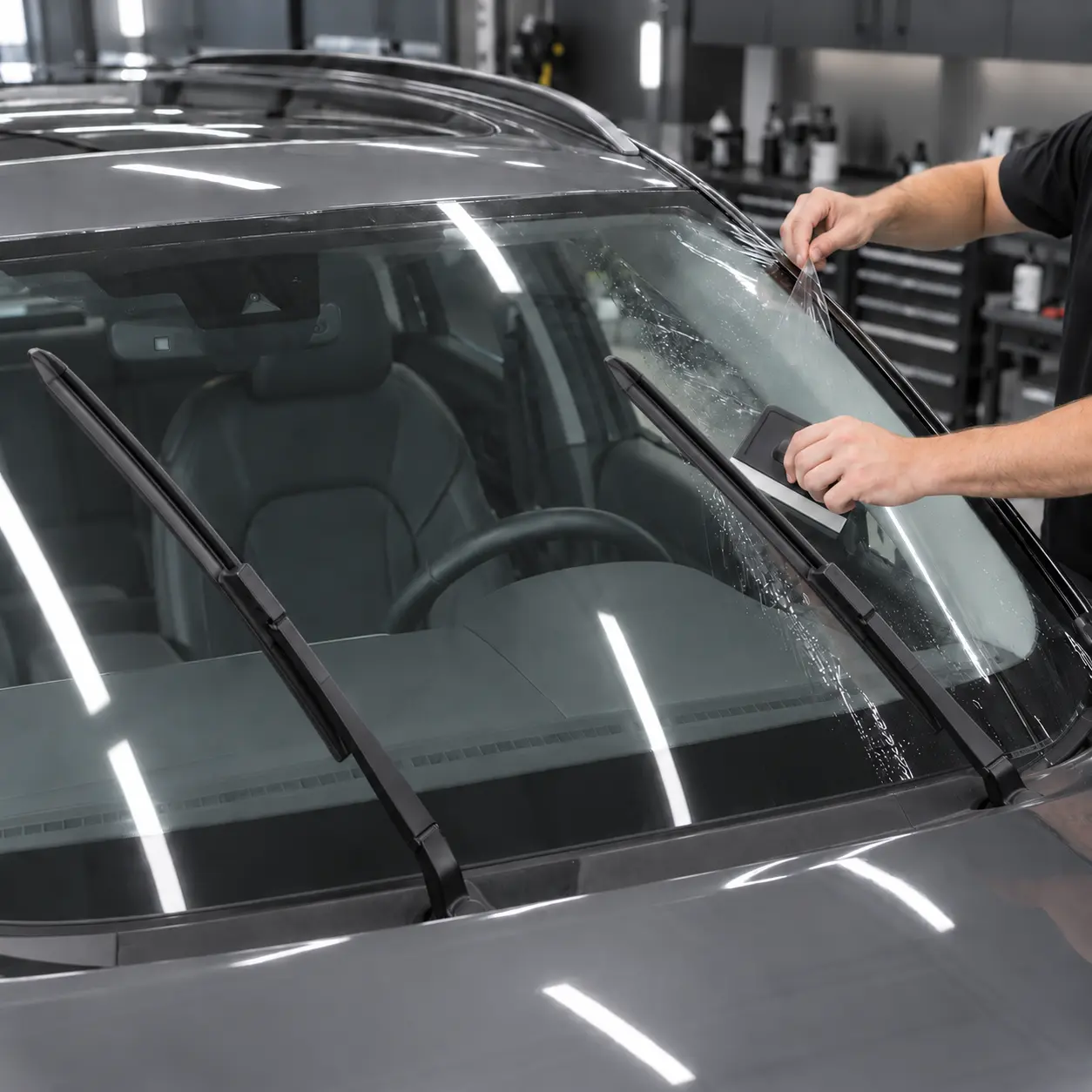
Windshield protection film is a clear, replaceable layer installed on the outside of the windshield. Its job is to take the first contact from smaller road debris and reduce the chance that an impact reaches the glass with enough force to create a chip or crack.
At Kickin' Customs in Raynham, Massachusetts, we install XPEL Windshield Protection Film for drivers who want another layer between expensive windshield glass and everyday road exposure. The important expectation is simple: the film reduces risk. It does not make the windshield unbreakable, and it cannot guarantee that every rock strike will be stopped.
That distinction matters because modern windshields can be expensive to replace, particularly when cameras, sensors, heating elements, heads-up displays, acoustic glass, or calibration requirements are involved.
How the film works
What Is Windshield Protection Film?
XPEL Windshield Protection Film, often shortened to WPF, is a transparent thermoplastic polyurethane film designed specifically for automotive windshields. It is applied to the exterior surface of the glass, unlike automotive window tint, which is normally installed on the inside.
Think of it as a sacrificial wear layer. The windshield remains the structural glass beneath it. The film sits above that glass and is intended to absorb and spread some of the energy from smaller debris before that debris directly contacts the windshield.
- Installed on the outside of the windshield
- Designed to help reduce chips, pitting, and cracks from road debris
- Optically clear from the driver's viewing position
- Engineered to function with windshield wipers
- Replaceable when worn or damaged
- Designed for compatible windshield cameras and sensors when properly installed
WPF is not the same product as paint protection film applied to body panels, and it is not the same as ceramic glass coating. Each product solves a different problem.
How Does Windshield Protection Film Actually Work?
A windshield is already made from laminated safety glass, but the outer glass surface is still exposed to gravel, sand, tire debris, road construction material, winter grit, and objects kicked up by vehicles ahead.
When a small object strikes an unprotected windshield, its force is concentrated directly onto the glass. Depending on the object, speed, angle, temperature, and location of the impact, the result may be nothing visible, a small pit, a repairable chip, or a crack that spreads.
Windshield protection film adds another material above the glass. Instead of the object immediately contacting the windshield surface, the film receives the initial impact. The flexible TPU layer can absorb and distribute part of that energy across a slightly larger area. That can reduce the severity of some strikes before the force reaches the glass.
The film may show the evidence of that job. A strong hit can mark, cut, pit, or damage the film. That is not necessarily a product failure. The film is intended to be the replaceable surface rather than the windshield itself.
The Three-Layer Idea: Impact, Sacrifice, Replacement
1. Road debris reaches the windshield
A rock, gravel fragment, or other small road object travels toward the exterior glass.
2. The film receives the first contact
The TPU protection layer absorbs and distributes some of the impact energy before the object directly contacts bare glass.
3. The film can be replaced
If the WPF becomes worn or damaged, it can be professionally removed and replaced while leaving the windshield in place, assuming the glass itself remains serviceable.
Does Windshield Protection Film Prevent Every Chip or Crack?
No. This is the most important limitation to understand before buying it.
WPF can reduce the likelihood and severity of many impacts, but there is no film that can control the size, shape, speed, angle, or force of every object on the road. A large rock, sharp object, severe strike, edge impact, or collision can still damage both the film and the windshield beneath it.
The correct way to think about WPF is risk reduction, not a guarantee. XPEL also treats the film as a sacrificial layer, and its limited warranty covers qualifying film defects rather than rock chips or windshield breakage.
For an owner who expects the windshield to become impossible to damage, this is the wrong product expectation. For an owner who wants to reduce exposure and preserve costly original or specialty glass, it can make a lot of sense.

Which vehicles benefit
Why Modern Windshields Are Worth Protecting
Windshield replacement is no longer always a simple glass swap. Depending on the vehicle, the windshield may be tied into advanced driver-assistance systems, cameras, rain sensors, heating elements, acoustic layers, antennas, heads-up-display areas, or other vehicle-specific technology.
Replacement can also mean disturbing the original windshield seal and then completing any required calibration or system checks. WPF does not eliminate the possibility of replacement, but it gives owners a proactive way to reduce the exposure that can lead to it.
It is particularly worth considering on vehicles with upright glass, expensive specialty windshields, frequent highway mileage, performance use, winter road exposure, or a history of repeated windshield damage.
Which Vehicles Benefit Most From WPF?
Any vehicle can encounter road debris, but some use cases make windshield protection easier to justify.
- Jeep Wrangler, Jeep Gladiator, Mercedes-Benz G-Class, Toyota Land Cruiser, Lexus GX 550, and other vehicles with short or upright windshields
- Performance and exotic vehicles with expensive or specialty replacement glass
- Luxury vehicles with cameras, sensors, acoustic glass, heads-up displays, or complex calibration requirements
- Daily drivers that spend significant time on highways
- Vehicles driven through active construction areas or roads with loose aggregate
- New vehicles whose owners want to preserve original glass and the original windshield seal
- Vehicles exposed to New England winter grit, sand, salt, and freeze-thaw conditions
A vehicle does not need to be exotic for WPF to make sense. The better question is what a windshield replacement would involve on that specific vehicle and how much road exposure it sees.
Clarity and compatibility
Will You See Windshield Protection Film While Driving?
XPEL designs its windshield protection film for optical clarity from inside the vehicle. When the film is properly installed and maintained, the goal is for the driver to look through the windshield normally without the product becoming a distraction.
It is still a physical exterior layer, so it should not be marketed as visually identical to bare glass from every angle. The perimeter can be visible on close inspection, and XPEL notes that slight rainbowing can be visible from outside the vehicle when viewed through polarized sunglasses.
As the film ages, wiper condition, contamination, road exposure, cleaning technique, and maintenance can also affect how the surface looks. This is another reason WPF should be treated as a serviceable wear item rather than a permanent glass coating.
What About Cameras, Sensors, and Driver-Assistance Systems?
XPEL states that its WPF is designed not to reduce driver visibility or interfere with compatible windshield-sensor performance when properly installed.
That does not mean every unusual configuration should be assumed compatible without review. Aftermarket cameras, externally mounted equipment, non-standard replacement glass, specialty sensor systems, and uncommon windshield designs should be identified before installation.
At Kickin' Customs, fitment begins with the exact year, make, model, trim, windshield condition, and any known glass replacement or aftermarket equipment.
WPF vs. Ceramic Glass Coating vs. Window Tint
| Product | Where It Goes | Primary Job | Rock-Chip Protection |
|---|---|---|---|
| Windshield Protection Film | Exterior windshield | Sacrificial impact layer | Designed to reduce risk |
| Glass Ceramic Coating | Exterior glass | Water behavior and easier cleaning | Not its primary purpose |
| Automotive Window Tint | Inside the glass | Heat, glare, UV, privacy, appearance | Not designed for impact protection |
These products can complement one another, but they should not be sold as interchangeable. A ceramic coating can improve how water behaves on glass, but it does not replace the physical sacrificial layer provided by WPF.
Installation and pricing
How Is Windshield Protection Film Installed?
The film is installed on the exterior of the windshield. The basic process is straightforward, but the quality of the result depends heavily on glass condition, preparation, fitment, and installation technique.
- Vehicle and glass review: We confirm the year, make, model, trim, windshield design, and any known replacement glass or specialty features.
- Windshield inspection: Chips, cracks, scratches, heavy pitting, previous film, coatings, contamination, wiper damage, and glass condition are reviewed before installation.
- Preparation: The exterior glass is thoroughly cleaned and prepared so contamination is not trapped beneath the film.
- Wiper access: The wipers are lifted as needed so the installer can properly access the lower windshield area and work the film beneath the normal resting zone.
- Film installation: The WPF is positioned, formed, and finished on the exterior glass according to the windshield shape and product requirements.
- Final inspection and care review: We inspect the finished film and explain initial cure, wiper care, cleaning, WPF Restore, and warranty expectations.
WPF does not repair existing chips or cracks. If damage is already present, glass repair or replacement may be required before film installation.
How Much Does Windshield Protection Film Cost?
Kickin' Customs uses two public starting-price categories based primarily on windshield size and fitment. We confirm the exact category from the vehicle rather than requiring customers to measure the glass themselves.
| Windshield Type | Starting Price | Typical Fit |
|---|---|---|
| Qualifying short / upright windshield | $350 | Examples include Wrangler, Gladiator, Land Cruiser, GX 550, and G-Class fitments when eligible |
| Standard / larger windshield | $550 | Most other passenger cars, SUVs, trucks, EVs, luxury vehicles, and performance vehicles |
Starting prices assume serviceable glass and standard installation conditions. Larger glass, unusual curvature, specialty features, difficult access, existing film, heavy contamination, or other vehicle-specific conditions can change the final quote.
Maintenance and replacement
How Long Does Windshield Protection Film Last?
There is no single service-life number that applies to every vehicle. Mileage, climate, parking, road conditions, wiper use, winter exposure, cleaning habits, and maintenance all affect how long the exterior film remains serviceable.
This is also where warranty and lifespan need to be separated. XPEL currently provides a 1-year/12,000-mile limited product warranty for qualifying installations, but that is not a promise that every installation will need replacement at one year or that the film will remain unchanged until a fixed future date.
The practical approach is to inspect the film as it ages and replace it when wear, damage, optical condition, or performance makes replacement appropriate.
How Do You Maintain Windshield Protection Film?
WPF lives in a harsh location. It sees windshield wipers, road grit, bugs, winter contamination, sun, rain, washing, and constant airflow. Maintenance matters more here than it does on many other protected surfaces.
- Avoid washing the vehicle for at least 48 hours after installation so the film can settle and adhere properly
- Keep the windshield and wiper blades clean and free of grit
- Replace worn, damaged, or contaminated wiper blades regularly
- Use a soft microfiber towel and film-safe cleaning products
- Avoid harsh chemicals, abrasive pads, and aggressive polishing
- Keep pressure-washer spray at least about 36 inches from the film and avoid directing high pressure at the edges
- Do not use sharp ice scrapers or metal tools on the film
- Address bird droppings, bugs, sap, and other contamination promptly
XPEL WPF Restore is designed to refresh hydrophobic behavior, slickness, clarity, and durability. Kickin’ Customs uses an approximately six-month Restore interval as the primary maintenance checkpoint, with additional maintenance adjusted for vehicle use and conditions.
What Does the XPEL WPF Warranty Cover?
Qualifying XPEL Windshield Protection Film installations currently include a 1-year/12,000-mile limited product warranty, subject to XPEL’s published eligibility requirements, exclusions, care requirements, and claim procedures.
The warranty addresses qualifying film defects. It should not be interpreted as insurance against rock impacts, windshield chips, cracks, glass breakage, normal exterior wear, wiper damage, or misuse.
That distinction matches the role of the product: WPF is designed to be the sacrificial layer that takes exposure before the windshield, so signs of impact and wear can occur on the film during normal use.
Can Windshield Protection Film Be Removed and Replaced?
Yes. Replaceability is one of the central advantages of the concept. When the film becomes worn or damaged, it can be professionally removed and a new piece installed if the underlying windshield is still in suitable condition.
XPEL states that the film can be removed without leaving adhesive residue on the windshield. Professional removal is still the recommended path so the glass, edges, sensors, trim, and surrounding components can be handled correctly.
Frequently asked questions
Is windshield protection film installed inside or outside?
Outside. XPEL WPF is installed on the exterior surface so it receives road debris before the windshield glass.
Can WPF stop a rock from cracking my windshield?
It can reduce the likelihood or severity of many impacts, but it cannot guarantee that a rock will not chip or crack the glass. Impact size, shape, speed, angle, and location all matter.
Does WPF repair an existing windshield chip?
No. The film does not repair or hide existing glass damage. The windshield must be inspected first, and repair or replacement may be required before installation.
Can windshield wipers scratch the film?
Yes. Dirt, sand, damaged rubber, or worn blades can mark the film. Keeping the blades and film clean and replacing wipers regularly is important.
Can I use an ice scraper on WPF?
Avoid sharp or hard ice scrapers on the film. XPEL recommends de-icing methods that do not mechanically scratch the surface.
Will WPF affect cameras or sensors?
XPEL states that the product is designed not to reduce visibility or interfere with compatible windshield sensors when properly installed. Unusual aftermarket or specialty systems should be reviewed first.
Can WPF be installed over a windshield coating?
XPEL states that it can be installed over an existing windshield coating when the surface is properly cleaned and prepared. The coating should still be disclosed before installation.
How often should WPF Restore be used?
Kickin’ Customs uses approximately six months as the primary Restore checkpoint. Heavier mileage, winter exposure, or other demanding conditions can justify more frequent maintenance based on current XPEL guidance.
Does the warranty cover rock chips?
No. The limited warranty covers qualifying film defects, not road impacts, windshield chips, cracks, or breakage.
Is WPF the same as ceramic coating?
No. WPF is a physical exterior film intended to reduce impact risk. Ceramic glass coating primarily changes surface behavior, including water repellency and easier cleaning.
Plan your next step
Is Windshield Protection Film Worth It?
It makes the most sense when the cost, inconvenience, or originality of the windshield makes prevention valuable to you. That can include a brand-new vehicle, an upright SUV that seems to collect chips, a luxury or performance vehicle with expensive glass, or a daily driver that spends hours on the highway.
The value is not that the windshield becomes impossible to damage. The value is that a replaceable exterior film gets the first chance to take the hit.
If you are considering WPF, send Kickin' Customs the year, make, model, trim, whether the windshield is original or replaced, and a clear exterior photo. We can confirm fitment, the appropriate starting-price category, and any glass-condition concerns before scheduling.
