

The short answer
Storefront glass is one of the first things customers notice.
It lets people see your business.
It shows your displays.
It brings in natural light.
It makes the space feel open.
But storefront glass can also create problems.
Too much heat.
Too much glare.
Faded displays.
Uncomfortable waiting areas.
Too much visibility into private areas.
Harsh sunlight on products.
Screen glare at checkout.
A front entrance that feels unfinished.
Commercial storefront window film can help solve many of these issues without replacing the glass.
Depending on the product, storefront window film can help with sun control, privacy, decorative design, branding, UV protection, glare reduction, customer comfort, and professional appearance.
At Kickin’ Customs in Raynham, MA, we install commercial flat glass window film for storefronts, offices, retail spaces, medical offices, schools, public buildings, restaurants, salons, studios, gyms, and commercial properties across Massachusetts and Rhode Island.
For businesses with large front glass, window film can be both practical and visual.
Storefront glass and sun control
What Is Storefront Window Film?
Storefront window film is architectural film installed on flat commercial glass.
It is used on storefront windows, glass doors, display windows, entryways, interior partitions, waiting areas, and customer-facing glass.
Depending on the product selected, storefront window film can help with:
Heat reduction.
Glare control.
UV protection.
Decorative privacy.
Branding.
Frosted designs.
Display protection.
Professional appearance.
Safety and security options.
Anti-graffiti protection.
Not every storefront needs the same film.
A retail store may need sun control and display protection.
A medical office may need privacy.
A gym may need glare reduction.
A salon may need heat control.
A restaurant may need customer comfort.
The best film depends on how the storefront is used.
Why Storefront Glass Creates Problems
Storefront glass is designed for visibility.
That is good for business.
Customers can see the space.
Products can be displayed.
Natural light can enter.
The business can feel open and approachable.
But visibility and sun exposure come with tradeoffs.
Large glass panels can allow heat to build up inside.
Direct sunlight can create glare.
Displays can fade.
Employees may avoid certain areas.
Customers may feel too warm near the windows.
Products may be exposed to UV.
People outside may see areas you would rather keep private.
Blinds or paper signs can make the storefront look messy.
Window film helps manage these issues while keeping the storefront clean and professional.
Sun Control for Storefronts
Sun control is one of the most common reasons businesses install storefront window film.
Direct sunlight through front glass can make the space uncomfortable, especially during certain times of day.
A retail shop may get harsh afternoon sun.
A restaurant may have uncomfortable front seating.
A salon may have too much heat near styling stations.
A medical office waiting room may feel hot by the windows.
A gym may have glare and heat on front-facing equipment.
Solar control window film can help reduce the amount of heat coming through the glass.
This can make the space more comfortable for customers and employees.
It can also reduce the need to keep blinds or shades closed all day.
Glare Control for Retail and Customer Spaces
Glare can make a storefront less usable.
Customers may struggle to see displays.
Employees may have glare on checkout screens.
Restaurant guests may avoid window seating.
Reception screens may be hard to read.
Salon mirrors may reflect harsh sunlight.
Gym members may deal with glare on machines or mirrors.
Commercial window film can help reduce glare while still allowing natural light into the space.
That is the advantage.
The storefront can stay bright and visible without feeling harsh.
For many businesses, glare reduction is not only about comfort.
It affects how customers interact with the space.
A more comfortable space can feel more professional and inviting.
Customer Comfort Matters
A storefront should feel welcoming.
If customers walk in and feel heat coming off the glass, that affects the experience.
If they sit in a waiting area with sun in their face, that affects the experience.
If displays are washed out by glare, that affects the experience.
If the front counter is too hot for employees, that affects the business.
Storefront window film can help make the front of the business more comfortable.
This matters for:
Retail shops.
Restaurants.
Salons.
Spas.
Medical offices.
Dental offices.
Professional offices.
Gyms.
Studios.
Showrooms.
Pet care businesses.
Customer waiting areas.
The better the space feels, the better the business presents itself.
Protecting Displays and Products
Storefront displays are exposed to sunlight every day.
UV exposure, heat, visible light, and material quality can all contribute to fading and wear.
Window film can help reduce UV exposure through the glass, which may help protect displays, signs, flooring, furniture, product packaging, artwork, and interior finishes.
This can matter for:
Retail displays.
Clothing.
Furniture.
Artwork.
Flooring.
Signage.
Product boxes.
Waiting room furniture.
Merchandise near front glass.
Window film is not a perfect solution for all fading, because fading can come from several sources.
But reducing UV exposure is still a valuable layer of protection for storefronts with sun-exposed displays.
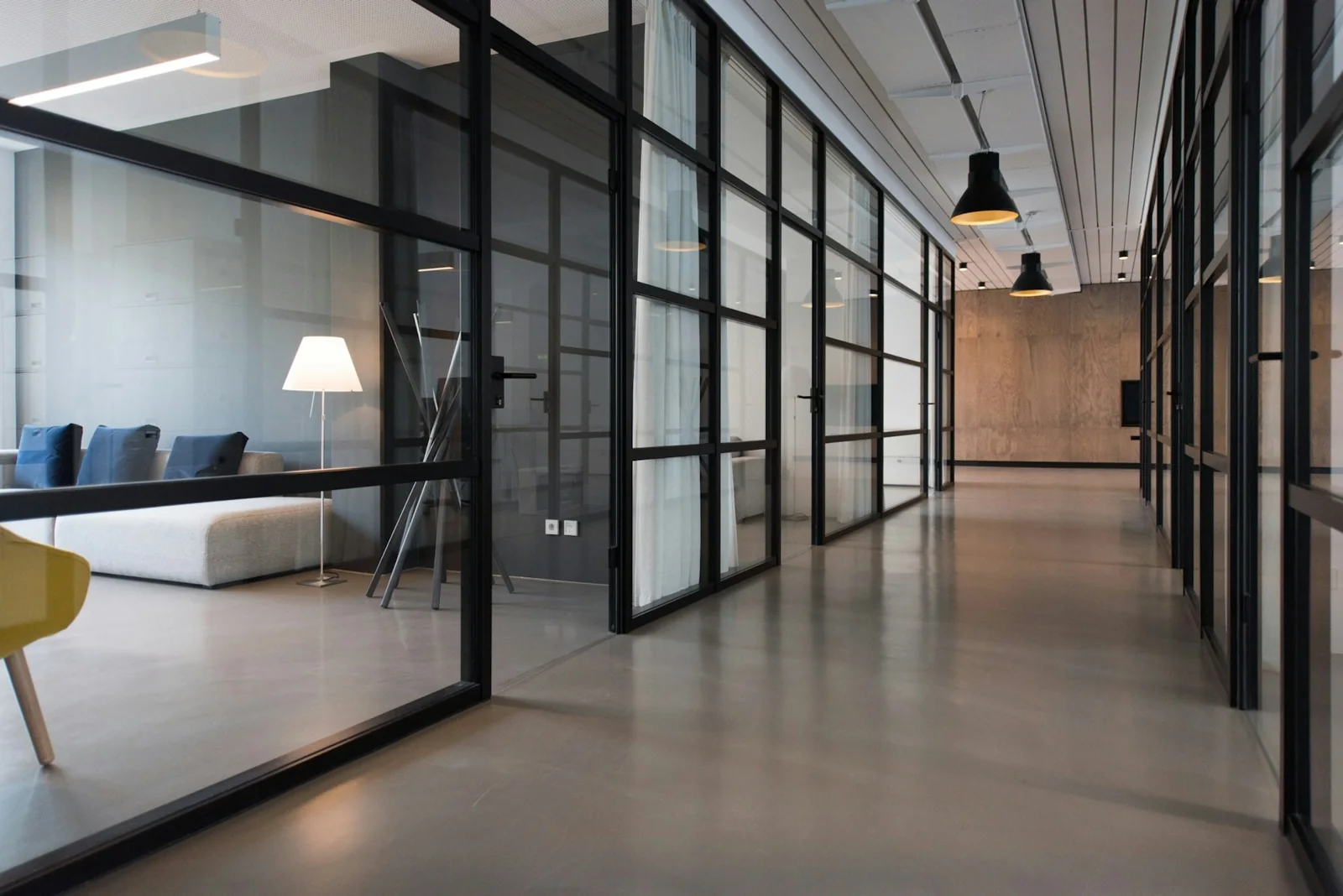
Privacy, decoration and branding
Storefront Privacy Film
Some storefronts need visibility.
Others need privacy.
Many need a balance of both.
Privacy window film can help reduce visibility into certain areas without making the storefront look temporary or closed off.
This can be useful for:
Medical offices.
Dental offices.
Salons.
Spas.
Massage studios.
Gyms.
Yoga studios.
Conference rooms near the front.
Employee areas.
Consultation rooms.
Back office areas.
Glass doors.
Street-facing waiting rooms.
Privacy film can be full coverage, partial coverage, frosted, decorative, patterned, reflective, or custom.
The right choice depends on the business.
Daytime Privacy vs Night Privacy
Storefront privacy expectations need to be clear.
Some privacy films work best during the day when the outside is brighter than the inside.
At night, if the lights are on inside and it is darker outside, visibility can change.
This matters for storefronts.
A reflective or darker solar film may provide daytime privacy but not full nighttime privacy.
If full privacy is needed day and night, frosted film, decorative film, opaque film, blinds, shades, or a layered solution may be needed.
This is why product selection matters.
A storefront facing a busy road has different needs than a medical office with private consultation rooms.
Privacy should be designed around real lighting conditions.
Decorative Window Film for Storefronts
Decorative window film can turn plain glass into part of the business design.
Instead of using paper signs, temporary coverings, or heavy blinds, decorative film can create a cleaner and more intentional look.
Common options include:
Frosted film.
Privacy bands.
Gradient designs.
Patterns.
Custom cut designs.
Logo elements.
Branding accents.
Door graphics.
Interior glass designs.
Decorative film can be used on exterior storefront windows, entry doors, interior partitions, conference rooms, consultation rooms, and waiting areas.
For businesses that want privacy and appearance, decorative film is often a better fit than plain tint.
Frosted Storefront Window Film
Frosted film is one of the most common storefront privacy options.
It creates a clean, etched-glass style appearance without replacing the glass.
Frosted film can be used for full privacy or partial privacy.
For example, a storefront may use frosted film on the lower portion of the glass to block sight lines while leaving the upper glass open.
A medical office may use frosted film on waiting room glass.
A salon may use frosted film on treatment room glass.
A conference room may use frosted bands to create privacy while keeping the space open.
Frosted film is practical, clean, and professional.
It is one of the best options when privacy matters.
Privacy Bands for Storefront Glass
Privacy bands are a smart option when full coverage is not needed.
Instead of covering the entire glass panel, a band of frosted or decorative film can be placed at eye level.
This blocks direct sight lines while keeping the storefront open and bright.
Privacy bands work well for:
Offices.
Conference rooms.
Medical spaces.
Reception areas.
Salons.
Fitness studios.
Glass doors.
Waiting rooms.
Interior partitions.
They can also be customized with logos, patterns, or design elements.
For many storefronts, a privacy band gives the best balance of openness and privacy.
The space still feels connected, but customers and staff feel less exposed.
Branding With Storefront Window Film
Storefront window film can support branding without overwhelming the glass.
A business may use film to add:
Logo elements.
Business hours.
Frosted patterns.
Custom privacy bands.
Brand colors.
Decorative accents.
Window graphics.
Door identification.
Subtle design elements.
This can help the storefront look more finished and professional.
The key is balance.
The glass should still serve the business.
A retail store may want visibility into displays.
A medical office may want privacy.
A restaurant may want warmth and comfort.
A gym may want privacy without hiding the space completely.
Branding film should support the customer experience, not clutter the window.
Storefront Film vs Window Graphics
Storefront film and window graphics can overlap, but they are not always the same thing.
Commercial window film is often used for heat, glare, UV, privacy, decorative appearance, or safety.
Window graphics are often used for branding, logos, promotions, and signage.
A storefront may use both.
For example, a business may install solar film for heat and glare, then add decorative branding on selected glass panels.
Or a medical office may use frosted film for privacy and cut logo graphics for branding.
Or a retail space may use clear UV film to protect displays and separate vinyl graphics for promotions.
The best solution depends on the goal.
Privacy, sun control, branding, and signage should be planned together.
Storefront Film vs Blinds and Shades
Blinds and shades can help, but they are not always ideal for storefronts.
They can block visibility.
They can look inconsistent from outside.
They can collect dust.
They can get damaged.
They may stay closed all day.
They can make a business feel less inviting.
Window film is cleaner and more permanent.
It manages light, privacy, or appearance directly on the glass.
For some businesses, blinds are still useful for full privacy or after-hours coverage.
But for daily sun control and appearance, film often looks better.
A storefront should look professional even when nobody is adjusting the shades.
Window film helps create that consistency.
Match your business and displays
Storefront Film for Retail Shops
Retail shops rely on glass to attract attention.
Customers often decide whether to enter based on what they see from outside.
That means storefront film needs to be chosen carefully.
Too much privacy can hide the store.
Too much darkness can reduce product visibility.
Too much glare can make displays hard to see.
Too much sun can fade merchandise.
The right film should support retail visibility while improving comfort and protection.
A lighter solar film may work well for heat and glare.
A clear UV film may help protect displays.
Decorative accents may support branding.
Frosted film may be used only where privacy is needed.
Retail storefronts need balance.
Storefront Film for Restaurants and Cafes
Restaurants and cafes often have customer seating near front glass.
Natural light is great, but direct sun can make those seats uncomfortable.
Customers may avoid window seats during certain times of day.
Glare may affect menus, counters, screens, and the overall atmosphere.
Window film can help improve comfort without fully blocking the view.
Solar film can reduce heat.
Glare reduction can make the space feel softer.
Decorative film can add style.
Frosted film can create privacy near certain seating areas.
For restaurants, the goal is not only performance.
It is mood, comfort, and customer experience.
The glass should help the space feel inviting.
Storefront Film for Salons and Spas
Salons and spas often need a balance of visibility and privacy.
The business may want to look open from the outside, but clients may not want to feel exposed during services.
Sun can also create heat and glare near chairs, mirrors, treatment rooms, and waiting areas.
Storefront film can help with:
Privacy.
Comfort.
Glare control.
Heat reduction.
Branding.
Decorative appearance.
A frosted privacy band may work well on street-facing glass.
Solar film may help reduce heat through front windows.
Decorative film can support the brand and make the space feel more polished.
For salons and spas, comfort and privacy are both part of the customer experience.
Storefront Film for Medical and Dental Offices
Medical and dental offices often need storefront privacy.
Patients should not feel like they are sitting in a fishbowl.
Reception areas, waiting rooms, treatment rooms, and consultation areas may all need privacy.
At the same time, the office still needs to look clean and professional.
Storefront window film can help create that balance.
Frosted film can block direct visibility.
Privacy bands can keep the space open while protecting sight lines.
Solar film can reduce heat and glare in waiting areas.
Security film may be considered for certain public-facing glass.
For medical and dental offices, film selection should be practical, professional, and patient-focused.
Storefront Film for Gyms and Fitness Studios
Gyms and fitness studios often have large front glass.
That can help show energy and activity, but it can also create privacy and glare issues.
Members may not want to feel exposed from the street.
Mirrors and equipment can create glare.
Sun can heat the front of the space.
Window film can help improve the experience.
Frosted or gradient film can add privacy while keeping the space bright.
Solar film can reduce heat.
Decorative branding can make the glass look more polished.
For yoga studios, training spaces, and boutique fitness studios, privacy and comfort are especially important.
The right film helps the space feel intentional, not exposed.
Storefront Film for Professional Offices
Professional offices often want a clean and polished storefront.
Law offices, accounting firms, real estate offices, financial offices, insurance agencies, and consulting offices may not want full visibility into the space.
They may also need comfort and glare reduction near desks or reception areas.
Storefront film can help create a more professional look.
Frosted film can provide privacy.
Decorative film can add branding.
Solar film can reduce heat and glare.
Privacy bands can block sight lines without making the office feel closed off.
For professional offices, window film can make a leased or owned commercial space feel more finished without major construction.
Storefront Film for Showrooms
Showrooms need visibility, but they also need sun control.
Automotive showrooms, furniture stores, design centers, product displays, and specialty retailers often rely on front glass to display inventory.
Too much sun can create heat, glare, and fading concerns.
Window film can help manage the exposure while keeping the showroom visible.
The film should be chosen carefully so displays still look good from outside and inside.
A high-reflective film may not be right if product visibility is the priority.
A lighter solar or UV-focused film may be better.
Showrooms need performance without hiding the reason people walk in.
Storefront Film for Banks and Financial Offices
Banks, credit unions, financial offices, and insurance agencies may need privacy, security, and professional appearance.
Customers may discuss personal information.
Employees may work near front glass.
Screens may be visible from outside.
Sun glare may affect workstations.
Window film can help reduce visibility into sensitive areas while keeping the building presentable.
Frosted film, privacy bands, decorative film, and solar control film may all be used depending on the space.
Security film may also be worth discussing for certain public-facing glass.
For financial spaces, window film can help create comfort and discretion.
Storefront Film for Schools and Public Buildings
Schools, municipal buildings, libraries, and public facilities often have storefront-style glass at entrances and offices.
These spaces may need glare reduction, privacy, comfort, and safety options.
Solar film can help reduce heat and glare.
Frosted or decorative film can improve privacy for offices or interior glass.
Security film may be considered for certain doors and public-facing glass areas.
The right product depends on the building’s goals.
A school office has different needs than a public library entrance.
A municipal office has different needs than a conference room.
Commercial window film allows the solution to be tailored to the space
Display Windows and Product Fading
Storefront display windows can expose merchandise to sunlight for hours every day.
That can contribute to fading, discoloration, and wear over time.
Window film can help reduce UV exposure, which may help protect displayed products, packaging, flooring, and furniture.
However, fading is caused by more than UV.
Heat, visible light, material quality, and time can all play a role.
That is why window film should be presented as a protective layer, not a complete guarantee.
For stores with sun-facing display windows, film can still be a very smart investment.
It helps reduce one major source of fading while keeping the display visible.
Comfort, protection and installation
Storefront Window Film and HVAC Comfort
Storefront glass can make HVAC comfort difficult.
The front of the business may feel hot while the back feels normal.
Customers near the windows may feel uncomfortable.
Employees at the front desk may complain about afternoon heat.
The thermostat may not reflect what people feel near the glass.
Solar control window film can help reduce heat entering through the windows, which can make the space feel more balanced.
This may also help reduce the burden on the cooling system.
However, it should be explained realistically.
Window film does not fix a failing HVAC system.
It helps reduce solar heat through the glass.
That can improve comfort.
Storefront Window Film and Energy Costs
Commercial storefront window film may help with energy efficiency by reducing solar heat gain through glass.
This can support HVAC relief, especially in sun-exposed spaces.
However, energy savings vary.
The building size, glass type, sun exposure, film selected, thermostat habits, HVAC condition, insulation, and business hours all matter.
A storefront with full afternoon sun may see a bigger comfort difference than a shaded storefront.
The most reliable benefit is usually comfort.
Less heat near the glass.
Less glare.
More usable customer space.
Possible energy savings are a bonus, but they should not be overpromised.
The film should first solve the daily problem.
Storefront Window Film for Security Concerns
Some storefronts also ask about safety and security film.
Security film is designed to help hold broken glass together and slow down entry.
It does not make glass unbreakable.
It does not replace locks, alarms, cameras, lighting, or security procedures.
But it can be useful for certain storefronts concerned about smash-and-grab incidents, break-ins, storms, or glass retention.
Security film is different from standard solar or decorative film.
If security is the main goal, the product and installation method need to be selected specifically for that purpose.
For high-risk storefronts, security film can be part of a larger security plan.
Storefront Window Film for Anti-Graffiti Protection
Anti-graffiti film is another option for commercial glass.
It is commonly used as a sacrificial layer.
If the surface gets scratched, etched, or damaged, the film may be replaced instead of replacing the glass.
This can be useful for storefronts, schools, public buildings, elevators, transit areas, and high-traffic commercial spaces.
Anti-graffiti film is different from solar film and decorative film.
It is focused on surface protection.
For storefronts in areas with vandalism, scratching, or glass etching concerns, anti-graffiti film may be worth discussing.
Like security film, it should be selected based on the actual problem.
Choosing the Right Storefront Film
The right storefront film depends on your goals.
If the space is too hot, choose a solar control film.
If glare is the issue, choose a glare reduction film.
If privacy is the priority, consider frosted, decorative, reflective, or patterned film.
If branding matters, use custom decorative film or graphics.
If display fading is a concern, consider UV protection.
If break-ins are a concern, discuss security film.
If scratching or vandalism is a concern, discuss anti-graffiti film.
A storefront may need more than one film type.
For example, solar film on the front glass, frosted film on side panels, and decorative branding on the entrance door.
Clear, Neutral, Reflective, or Frosted?
Storefront films can look very different.
Clear films are useful when appearance should change as little as possible.
Neutral films can reduce heat and glare without an overly reflective look.
Reflective films can provide stronger daytime privacy and solar performance, but they change the exterior appearance more.
Frosted films are best for privacy and design.
Decorative films can add patterns, bands, logos, or visual texture.
The right choice depends on the business.
A retail store may need more visibility.
A medical office may need more privacy.
A salon may need a softer look.
A showroom may need display clarity.
The film should fit the brand and function of the space.
Storefront Film and Local Sign Rules
Some storefront window film and graphics may need to follow local sign ordinances, landlord rules, lease restrictions, or property management guidelines.
This is especially true for branded graphics, large coverage, signage, logos, or films that significantly change the exterior appearance.
A business owner should check before installing if the property has restrictions.
This matters in shopping plazas, mixed-use buildings, commercial complexes, historic areas, and leased spaces.
Window film can be subtle, decorative, or bold.
The business should know what is allowed before choosing the final design.
A professional installation plan should account for both appearance and property requirements.
Why Professional Installation Matters
Storefront glass is highly visible.
Poor installation stands out.
Crooked cuts, uneven edges, trapped debris, poor alignment, and wrong product selection can make the storefront look unprofessional.
Commercial glass panels are often large.
Doors may have hardware, gaskets, handles, stickers, decals, and existing graphics.
The installer may need to work around business hours, customers, employees, displays, counters, furniture, alarms, and access limitations.
Professional installation helps make the film look intentional and clean.
It also helps ensure the correct product is used for the glass and goal.
A storefront is part of the brand.
The installation should reflect that.
What to Expect During a Storefront Film Quote
A good storefront film quote should start with questions.
What problem are you trying to solve?
Is the space too hot?
Is glare the issue?
Do you need privacy?
Do you want branding?
Do you want people to still see inside?
Are displays fading?
Is security a concern?
Is vandalism a concern?
Is the glass leased or owned?
Are there landlord restrictions?
What time of day is the sun worst?
Is the storefront customer-facing during installation?
From there, the film can be selected around the real need.
The best solution may be solar, privacy, decorative, security, anti-graffiti, or a combination.
Final Thoughts
Storefront window film can improve how a business looks, feels, and functions.
It can reduce heat.
It can cut glare.
It can improve customer comfort.
It can protect displays from UV exposure.
It can add privacy.
It can support branding.
It can make the storefront look cleaner and more professional.
It can also be part of a larger security or anti-graffiti plan depending on the product selected.
For retail shops, restaurants, offices, salons, spas, gyms, medical offices, showrooms, and customer-facing businesses, storefront glass should work for the business, not against it.
At Kickin’ Customs in Raynham, MA, we install commercial storefront window film, privacy film, decorative film, solar control film, safety and security film, and anti-graffiti film for businesses across Massachusetts and Rhode Island.
If your storefront glass is creating heat, glare, privacy, fading, comfort, or appearance problems, contact Kickin’ Customs and we can help you choose the right commercial window film for your business.
Frequently Asked Questions
What is storefront window film?
Storefront window film is commercial flat glass film installed on business windows, doors, display glass, and interior glass to help with heat, glare, privacy, branding, UV protection, security, or appearance.
Can storefront window film reduce heat?
Yes. Solar control window film can help reduce heat coming through storefront glass, which can improve comfort near windows and customer area.
Can storefront window film reduce glare?
Yes. Commercial window film can help reduce glare on screens, displays, counters, seating areas, and customer spaces.
Can storefront window film protect displays from fading?
Window film can help reduce UV exposure, which may help slow fading, but fading can also be caused by heat, visible light, material quality, and time.
Can storefront window film add privacy?
Yes. Storefront privacy can be improved with frosted film, reflective film, darker film, decorative film, privacy bands, or custom designs depending on the level of privacy needed.
Does privacy window film work at night?
Some privacy films work best during the day when it is brighter outside than inside. If full nighttime privacy is needed, frosted film, decorative film, blinds, shades, or opaque solutions may be better.
Can window film be used for storefront branding?
Yes. Decorative film, frosted designs, logo elements, privacy bands, and custom graphics can help support branding while improving the appearance of storefront glass.
Is security film the same as storefront tint?
No. Security film is designed for glass retention and added resistance after impact. Solar or privacy films are usually designed for heat, glare, privacy, or appearance.
Can storefront film be installed without closing my business?
Often, yes. Installation can usually be planned around business hours, access needs, customer flow, and disruption level.
Who installs storefront window film near Raynham, MA?
Kickin’ Customs in Raynham, MA installs commercial storefront window film, privacy film, decorative film, solar control film, safety and security film, and anti-graffiti film for businesses across Massachusetts and Rhode Island.
Plan your next step
Does your storefront glass create too much heat, glare, fading, or visibility into private areas? Contact Kickin’ Customs in Raynham, MA and we can help you choose storefront window film for sun control, privacy, branding, display protection, and a cleaner professional appearance.
