
The short answer
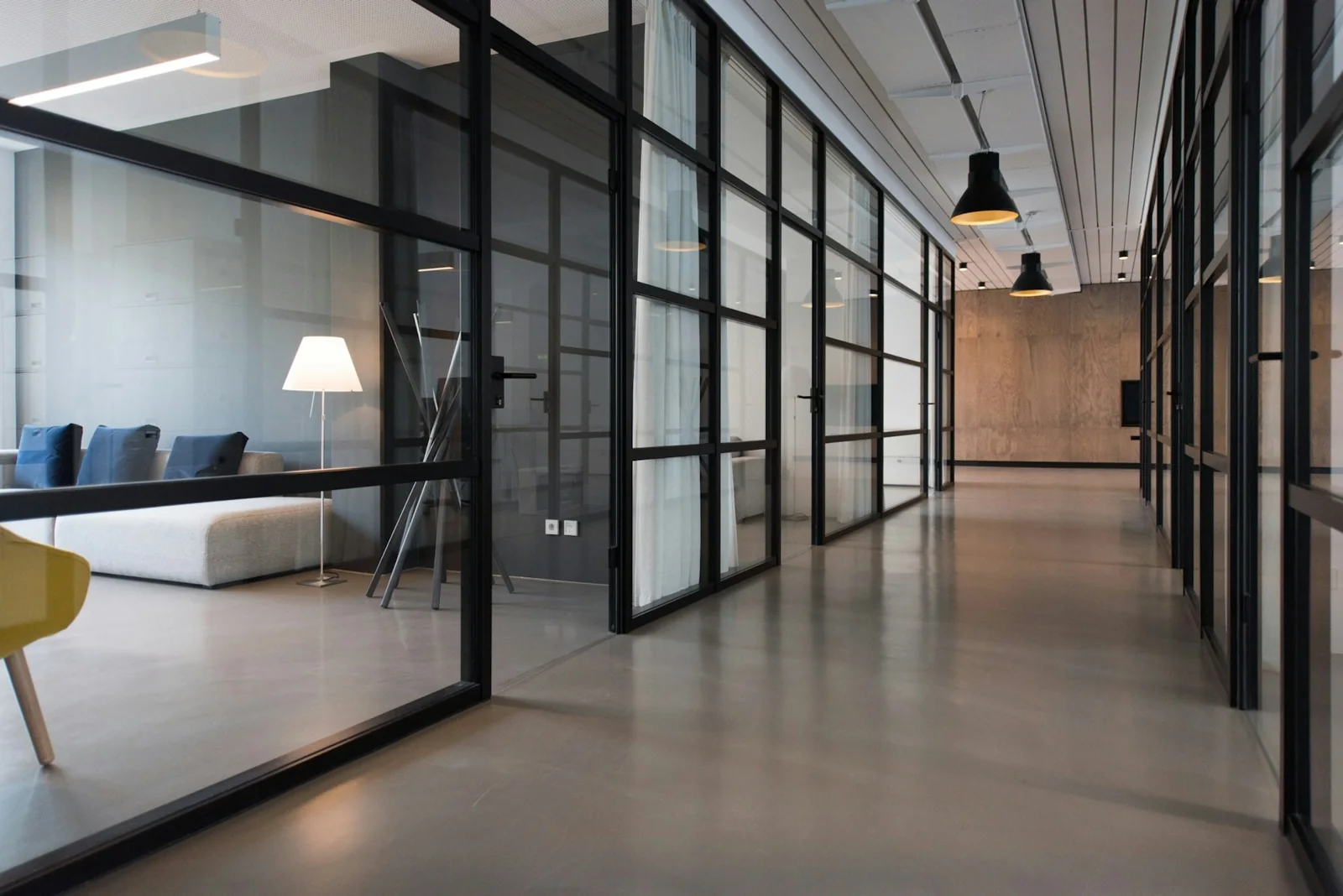
Glass can make an office or commercial space feel open, modern, and professional.
But too much clear glass can also create problems.
Conference rooms feel exposed.
Private offices lack privacy.
Employees feel watched.
Customers can see into areas they should not.
Glass partitions look plain.
Storefronts need a more finished appearance.
Interior glass walls need branding or visual separation.
Decorative window film can help solve these problems without replacing the glass or building permanent walls.
For offices and commercial spaces, decorative film can create privacy, add style, support branding, define rooms, improve sight lines, and make glass look more intentional.
At Kickin’ Customs in Raynham, MA, we install commercial flat glass window film for offices, storefronts, conference rooms, medical offices, schools, public buildings, retail spaces, restaurants, salons, gyms, and commercial properties across Massachusetts and Rhode Island.
If your commercial glass looks too plain, too exposed, or too unfinished, decorative window film may be the cleanest solution.
Decorative film and privacy
What Is Decorative Window Film?
Decorative window film is a flat glass film designed to change the appearance and function of glass.
Instead of using clear glass everywhere, decorative film can create frosted, etched, patterned, privacy, branded, or custom-designed effects.
It can be used on exterior storefront glass, interior glass walls, conference room partitions, office doors, reception areas, consultation rooms, waiting rooms, and commercial entryways.
Common decorative film applications include:
● Frosted glass appearance.
● Privacy bands.
● Full privacy panels.
● Custom logos.
● Branding accents.
● Gradient designs.
● Patterns.
● Door identification.
● Glass partition designs.
● Conference room privacy.
Decorative film is not only about style.
It is about making glass work better for the people using the space.
Why Businesses Use Decorative Window Film
Businesses use decorative window film because it solves practical problems while improving appearance.
A plain glass conference room may look modern, but it may not feel private.
A storefront may look open, but customers may be able to see too far into the business.
A medical office may need discretion.
A salon may need privacy near service areas.
A professional office may want a more polished look.
A school or public building may need visual separation on glass panels.
Decorative film gives businesses a flexible way to improve glass without major construction.
It is often faster, cleaner, and more affordable than replacing glass or adding permanent walls.
The right film can make a space feel finished.
Decorative Film vs Solar Window Film
Decorative film and solar window film are not the same.
Solar window film is mainly used for heat rejection, glare reduction, UV protection, and comfort.
Decorative window film is mainly used for privacy, design, branding, and visual separation.
Some decorative films may provide UV protection, glare reduction, or a small comfort benefit depending on the product, but their main purpose is appearance and privacy.
This distinction matters.
If your office is too hot, a solar film may be the better choice.
If your conference room feels exposed, decorative film may be the better choice.
If you need both, a combination may be used.
Commercial window film should be selected based on the problem, not just the look.
Decorative Film vs Security Film
Decorative film and security film also serve different purposes.
Decorative film changes the appearance of glass.
Security film is designed to help hold broken glass together and delay entry after impact.
Decorative film can improve privacy and style, but it should not be sold as a security upgrade unless the product is specifically designed for that purpose.
If a storefront or commercial building is concerned about smash-and-grab attempts, broken glass retention, or after-hours security, safety and security film should be discussed separately.
Some businesses may need decorative film for interior glass and security film for public-facing exterior glass.
The right solution depends on the building and risk.

Offices and commercial applications
Frosted Window Film for Offices
Frosted window film is one of the most popular decorative options for offices.
It creates an etched-glass look without replacing the glass.
Frosted film is clean, modern, and professional.
It can be used for full privacy or partial privacy.
Common office uses include:
● Conference rooms.
● Private offices.
● Glass doors.
● Reception areas.
● Meeting rooms.
● Consultation rooms.
● Interior partitions.
● Street-facing glass.
Frosted film is popular because it blocks direct visibility while still allowing light through.
That means the office can feel private without feeling closed off.
For many businesses, frosted film is the best balance of privacy and openness.
Privacy Bands for Conference Rooms
Privacy bands are one of the most practical uses of decorative film.
Instead of covering the entire glass wall, a band of frosted or patterned film can be installed at eye level.
This blocks the direct sight line while preserving the open look of the glass.
Privacy bands work especially well in conference rooms, meeting rooms, private offices, medical spaces, and interior glass partitions.
A privacy band can be simple and clean.
It can also include custom patterns, logos, gradients, or brand elements.
For many offices, privacy bands are better than full coverage because they solve the visibility issue without making the room feel boxed in.
Decorative Film for Conference Rooms
Conference rooms often need privacy, but full walls may not fit the design of the space.
Clear glass looks open, but it can make meetings feel exposed.
Employees may feel uncomfortable discussing private topics when everyone walking by can see inside.
Decorative film can make the conference room more usable.
Frosted bands can block direct sight lines.
Full frosted panels can create stronger privacy.
Gradient film can create a softer transition.
Custom branding can make the room feel more polished.
Decorative film can also help identify the room and make the glass more visible, reducing the chance of someone walking into a clear panel.
For conference rooms, decorative film improves both function and design.
Decorative Film for Glass Partitions
Glass partitions are common in modern offices, medical spaces, retail spaces, and commercial interiors.
They help divide rooms while keeping the space open.
But plain glass partitions can feel too exposed or unfinished.
Decorative film can add privacy and visual structure.
It can be used to create:
● Privacy bands.
● Full frosted walls.
● Custom patterns.
● Brand accents.
● Room identification.
● Partial coverage.
● Design consistency throughout the office.
This is especially useful when a space has several glass offices or meeting rooms.
A consistent film design can make the whole office look more intentional.
Instead of random blinds or temporary coverings, the glass becomes part of the design.
Decorative Film for Private Offices
Private offices often need more privacy than open work areas.
Clear glass can make a private office feel exposed, especially if it faces a hallway, lobby, or shared workspace.
Decorative film can improve privacy without removing the glass.
A frosted band can block eye-level views.
Full frosted film can provide stronger privacy.
A custom design can add a professional touch.
This is useful for executive offices, client meeting rooms, financial offices, legal offices, medical consultation rooms, and human resources spaces.
The goal is not always to hide the room completely.
Often, the goal is to make the office feel comfortable while keeping the open design of the building.
Decorative Film for Reception Areas
Reception areas are the first impression of many businesses.
Glass near the front desk, waiting room, or entrance should look professional and functional.
Decorative film can help create a cleaner visual experience.
It can add privacy behind the reception desk.
It can make interior glass safer and more visible.
It can display a logo or design element.
It can separate waiting areas from staff areas.
It can soften the view into back offices.
Reception areas should feel organized, not exposed.
Decorative window film can help create that polished look without major renovations.
For customer-facing businesses, the front glass should support the brand.
Decorative Film for Storefronts
Storefronts often need a mix of visibility, privacy, and branding.
A retail store may want customers to see inside.
A medical office may want privacy.
A salon may want both.
A gym may want members to feel less exposed.
A restaurant may want decorative accents without blocking the whole window.
Decorative film can be used on storefront glass to create partial privacy, custom branding, frosted lower panels, logo elements, or a more finished entrance.
The film should be chosen carefully.
Too much coverage can hide the business.
Too little coverage may not solve the privacy problem.
For storefronts, decorative film should support both the customer experience and the exterior appearance.
Decorative Film for Medical Offices
Medical offices often need privacy and professionalism.
Patients may be sitting in waiting areas.
Staff may be working behind glass.
Consultation rooms may need discretion.
Treatment areas should not feel exposed.
Decorative film can help create privacy without making the office feel closed or dark.
Common medical office uses include:
● Waiting room privacy.
● Reception desk privacy.
● Interior glass partitions.
● Treatment room glass.
● Consultation rooms.
● Office doors.
● Hallway-facing glass.
Frosted film and privacy bands are often good choices because they reduce visibility while still allowing light through.
For medical spaces, decorative film should feel clean, simple, and professional.
Decorative Film for Dental Offices
Dental offices often use glass to create a bright, modern space.
But treatment rooms, consultation areas, and reception areas may need privacy.
Decorative film can help block direct views into sensitive areas.
It can also improve the overall design of the office.
A frosted band can create privacy on hallway-facing glass.
A full frosted panel can be used where stronger privacy is needed.
A custom logo or pattern can help reinforce branding near the entrance.
Dental offices should feel comfortable and polished.
Decorative film helps create privacy without making the space feel heavy or closed in.
Decorative Film for Salons and Spas
Salons and spas need to balance openness with customer comfort.
Clients may not want to feel exposed from the street, lobby, or hallway.
Treatment rooms, styling areas, waxing rooms, massage rooms, and waiting areas may all need some level of privacy.
Decorative film can help create that privacy while supporting the look of the business.
Frosted film can soften street-facing glass.
Privacy bands can block eye-level views.
Decorative patterns can add style.
Logo elements can make the entrance look more professional.
For salons and spas, the visual feel of the space matters.
Decorative film can make glass feel more intentional and comfortable.
Decorative Film for Gyms and Fitness Studios
Gyms and fitness studios often use large glass fronts or interior partitions.
That glass can make the space feel open, but it can also make members feel too visible.
Yoga studios, Pilates studios, personal training spaces, martial arts studios, and boutique fitness centers may benefit from decorative film.
A privacy band can block street-level views.
Gradient film can create a softer look.
Frosted film can improve privacy near workout areas.
Branding elements can make the glass part of the design.
For gyms, privacy does not always mean hiding the entire space.
It often means making members feel more comfortable while keeping the business visible and inviting.
Decorative Film for Restaurants and Cafes
Restaurants and cafes can use decorative film to improve atmosphere and comfort.
Glass partitions between seating areas can be softened with frosted or patterned film.
Front windows can include branding or decorative accents.
Private dining rooms can gain privacy without losing light.
Waiting areas can feel more separated from the dining space.
Decorative film can also be used to create a more upscale or finished appearance.
For restaurants, the goal is usually mood and customer experience.
The film should match the style of the space.
A clean frosted band may work for one restaurant.
A custom pattern may fit another.
The design should support the brand.
Decorative Film for Schools and Public Buildings
Schools, libraries, municipal buildings, and public facilities often use interior and exterior glass.
Decorative film can help create privacy, improve visibility, and define spaces.
It can be used for:
Administrative offices.
Counseling rooms.
Conference rooms.
Library rooms.
Interior partitions.
Entry glass.
Reception areas.
Public-facing offices.
Decorative film can help reduce the fishbowl feeling of glass spaces while still keeping natural light.
It can also make glass panels easier to see.
For schools and public buildings, product selection should consider privacy, safety, durability, maintenance, and the way the building is used every day.
Decorative Film for Banks and Professional Offices
Banks, credit unions, financial offices, law firms, insurance agencies, accounting offices, and real estate offices often need discretion.
Clients may discuss sensitive information.
Employees may work on screens near glass.
Meeting rooms may need privacy.
Decorative film helps create a more professional environment.
A frosted conference room band can block sight lines.
A private office can be softened without fully closing it off.
A logo or brand pattern can make the space feel more established.
For professional offices, decorative film should look clean and mature.
The best designs usually feel subtle, not busy.
Privacy and presentation should work together.
Decorative Film for Interior Glass Doors
Interior glass doors are common in offices and commercial spaces.
They can look modern, but they may also be too clear.
Decorative film can improve privacy and visibility.
A frosted panel can identify the door.
A custom room name can be added.
A logo or pattern can match the rest of the office.
A privacy band can prevent direct views into the room.
This is useful for conference rooms, private offices, treatment rooms, consultation rooms, and staff areas.
Decorative film also helps people notice the glass door more easily.
That can be helpful in spaces where clear glass is hard to see.
Branding, coverage and visibility
Decorative Film for Branding
Decorative film is a strong branding tool when used correctly.
It can make a space feel more custom without overwhelming it.
Branding options may include:
● Logos.
● Frosted logo cutouts.
● Patterns based on brand elements.
● Privacy bands with brand shapes.
● Door graphics.
● Room names.
● Accent lines.
● Custom conference room designs.
● Subtle storefront elements.
● The key is restraint.
● Not every pane of glass needs a logo.
● Not every room needs a bold pattern.
Good decorative film design should support the space, not clutter it.
For commercial spaces, the best branding often feels integrated, clean, and intentional.
Decorative Film vs Vinyl Lettering
Decorative film and vinyl lettering are not always the same thing.
Decorative film is often used to cover larger glass areas for privacy, style, or design.
Vinyl lettering is often used for business names, hours, logos, or required information.
Many businesses use both.
For example, a storefront door may use vinyl lettering for business hours and decorative film for privacy.
A conference room may use frosted film for privacy and cut vinyl for the room name.
A medical office may use frosted privacy film and a separate logo graphic on the entry glass.
The best result comes from planning the whole glass design together.
Privacy, branding, signage, and function should work as one system.
Full Coverage vs Partial Coverage
Decorative film can be installed as full coverage or partial coverage.
Full coverage is better when stronger privacy is needed.
Partial coverage is better when the space should still feel open.
A full frosted panel may be right for a treatment room, consultation room, or private office.
A partial privacy band may be better for a conference room or hallway glass.
A gradient design may be better when the goal is a softer transition.
A custom pattern may be best for brand style.
The right coverage depends on the room.
There is no universal answer.
The film should match the privacy need and the look of the space.
Why Privacy Bands Are Often the Best Choice
Privacy bands are popular because they solve the most common problem without overdoing it.
Most offices do not need to hide the entire room.
They need to block direct eye-level views.
A privacy band can do that while keeping light and openness.
It also reduces the amount of film needed compared with full coverage.
Privacy bands can be simple, frosted, patterned, branded, or custom cut.
They are especially useful for:
Conference rooms.
Private offices.
Hallways.
Waiting areas.
Consultation rooms.
Glass partitions.
Storefront interiors.
Privacy bands create a finished look without making the glass feel heavy.
Clear Glass Safety and Visibility
Clear glass can sometimes be too invisible.
People may not notice a glass wall, door, or partition, especially in a bright office or public building.
Decorative film can help make glass more visible.
A simple frosted band or pattern can show where the glass is without blocking the entire view.
This can be useful in schools, offices, public buildings, gyms, medical offices, and commercial interiors.
The film does not need to be complicated.
Sometimes a clean band is enough.
This is another practical benefit of decorative film.
It improves the way people move through the space.
Decorative Film and Natural Light
One reason businesses choose decorative film instead of walls is natural light.
A wall blocks light.
Frosted or decorative film can create privacy while still allowing light to pass through depending on the product.
This helps keep the office brighter and more open.
That is especially useful for interior glass partitions and conference rooms.
The goal is to create privacy without making the space feel smaller.
A frosted or privacy film can make a room feel more comfortable while preserving the modern glass design.
This balance is one of the biggest advantages of decorative film.
Decorative Film and Night Privacy
Privacy expectations should always be discussed.
Frosted film and opaque film can provide stronger privacy in many lighting conditions.
Reflective or darker films may provide more daytime privacy when the outside is brighter than the inside, but nighttime conditions can change visibility.
Decorative film is often a better choice when privacy is needed consistently because it physically obscures the view.
However, not all decorative films provide the same level of privacy.
A light pattern may still allow people to see shapes or movement.
A dense frosted film may block much more.
The correct product depends on the privacy level needed.
Decorative Film and Custom Designs
Custom decorative film can be designed around the business.
A simple frosted band may be enough for some offices.
Other spaces may want custom graphics, logos, patterns, or brand-specific accents.
Custom design can be useful for:
● Corporate offices.
● Showrooms.
● Medical offices.
● Gyms.
● Salons.
● Restaurants.
● Schools.
● Professional offices.
● Storefronts.
The design should be planned around the glass size, sight lines, lighting, brand, and room use.
A design that looks good on a computer may not work perfectly on a large glass wall.
● Scale matters.
● Spacing matters.
● Visibility matters.
Professional planning helps avoid awkward results.
Decorative Film and Brand Consistency
Decorative film can help make a commercial space feel consistent.
Instead of each room having a different blind, shade, or temporary covering, the whole office can use the same design language.
For example, every conference room may have the same frosted band.
Private offices may use a slightly taller version.
The lobby may include the company logo.
Glass doors may use matching room names.
This creates a cleaner and more professional environment.
Brand consistency does not have to be loud.
Often, the most polished designs are simple.
The goal is to make the space look planned, not patched together.
Building use, removal and durability
Decorative Film for Leased Commercial Spaces
Decorative film can be a great option for leased commercial spaces.
Many tenants cannot modify walls or replace glass.
Film can improve privacy and appearance without major construction.
It can often be removed or updated more easily than permanent glass changes, depending on the product and condition.
This makes it useful for businesses that want a custom look without rebuilding the space.
Leased offices, retail suites, medical offices, salons, studios, and professional spaces can all benefit.
Before installation, tenants should check lease terms, landlord rules, and property management requirements.
Some buildings may have restrictions on exterior appearance or signage.
Decorative Film for Owned Commercial Buildings
Owned commercial buildings also benefit from decorative film.
The owner has more flexibility to create a long-term design.
Decorative film can be used to upgrade older glass, improve privacy, modernize interiors, and make the building feel more finished.
It can also help standardize the appearance across multiple rooms or tenants.
For building owners, decorative film can be a practical improvement without major remodeling.
It can improve the look of common areas, offices, lobbies, conference rooms, and storefront suites.
If the building is being leased to tenants, decorative film can make the space more appealing and usable.
Glass should help sell the space, not create privacy problems.
Decorative Film for New Builds and Remodels
Decorative film is also useful during new builds and remodels.
Architects and designers often include glass for openness and light.
But once the business moves in, privacy needs become more obvious.
Film can fine-tune the space after construction.
It can create privacy where needed.
It can add branding after the tenant is known.
It can correct visibility problems.
It can make conference rooms more usable.
It can make storefront glass feel more finished.
For remodels, decorative film can update the appearance of glass without replacing panels.
It is a flexible final layer that can make a new space work better.
Decorative Film for Existing Glass
Many businesses already have glass that is not working for them.
Maybe the office came with clear partitions.
Maybe the conference room is too exposed.
Maybe the storefront feels unfinished.
Maybe the previous tenant had old graphics.
Maybe the glass is too plain.
Decorative film can upgrade existing glass without removing it.
This is one of the biggest advantages.
The glass stays.
The look changes.
The function improves.
For businesses that need privacy or branding quickly, decorative film is often a practical solution.
A professional installer can evaluate the glass, remove old film if needed, and recommend the right product.
Can Decorative Film Be Removed?
In many cases, decorative window film can be removed by a professional.
Removal difficulty depends on the film, age, adhesive, glass condition, installation, sun exposure, and time on the glass.
This makes decorative film more flexible than etched glass or sandblasted glass.
If the business changes branding, moves rooms around, updates the layout, or gets a new tenant, the film may be changed.
That flexibility is one reason film is popular for commercial interiors.
However, removal should be done carefully.
Scraping, aggressive chemicals, or improper methods can damage surfaces, gaskets, or surrounding materials.
Professional removal is usually the best option.
Decorative Film vs Etched Glass
Decorative film can create an etched-glass look without permanently altering the glass.
True etched or sandblasted glass can look beautiful, but it is permanent and often more expensive.
Decorative film offers a similar visual effect with more flexibility.
● It can be updated.
● It can be removed.
●vIt can include custom patterns.
● It can be installed on existing glass.
For many commercial spaces, decorative film is the more practical option.
It gives the business the look of custom glass without replacing or permanently modifying the panels.
This is especially valuable for leased spaces and offices that may change over time.
Decorative Film and Maintenance
Decorative film is generally easy to maintain, but it still needs proper care.
After installation, the film needs time to dry and cure.
During that time, haze or moisture may be visible depending on the product and conditions.
Cleaning should be done with safe, non-abrasive materials.
Avoid aggressive scrapers, harsh pads, and chemicals that are not recommended for film.
If the business uses a cleaning service, they should be told that window film has been installed.
This is especially important in commercial spaces where glass may be cleaned often.
Proper maintenance helps the film look better and last longer.
Decorative Film and Durability
Decorative film durability depends on the product, glass location, exposure, cleaning habits, traffic level, and installation quality.
Interior decorative film usually has less environmental exposure than exterior storefront film.
High-traffic areas may need more careful cleaning and maintenance.
Glass doors and lower panels may be touched more often.
Public buildings, schools, gyms, and retail spaces may see more wear than private offices.
This should be considered during product selection.
If the glass is in a high-contact area, the film design and placement should account for that.
Professional installation and proper care help protect the finished look.
Product selection and installation
Why Product Selection Matters
Decorative film is visual, so design matters.
Height, spacing, pattern, scale, and alignment all affect the finished result.
A privacy band installed too low may not block sight lines.
A band installed too high may feel awkward.
A logo that is too large can dominate the glass.
A pattern that is too busy can make the office feel cluttered.
A design that ignores door handles, mullions, frames, or furniture can look off.
Professional planning helps avoid these issues.
Good decorative film should look intentional.
It should feel like part of the space, not an afterthought.
Why Professional Installation Matters
Professional installation matters because decorative film is highly visible.
Crooked lines show.
Rough cuts show.
Misaligned patterns show.
Trapped debris shows.
Poor edge work shows.
Glass partitions, storefront panels, and conference room walls are often viewed up close.
That means the installation needs to be clean.
Commercial jobs also require planning around business hours, furniture, customers, employees, doors, hardware, and access.
At Kickin’ Customs, we approach decorative commercial film with a focus on product selection, clean installation, and practical expectations.
The finished glass should improve the space, not distract from it.
What to Expect During the Quote Process
A decorative window film quote should start with the purpose of the glass.
Is the goal privacy?
Branding?
Style?
Conference room comfort?
Customer-facing appearance?
Patient privacy?
Employee comfort?
Room separation?
Storefront design?
From there, the film type, coverage, height, and design can be planned.
Important details include:
Glass size.
Glass location.
Interior or exterior application.
Sight lines.
Lighting.
Business hours.
Customer traffic.
Cleaning routine.
Brand requirements.
Landlord or property rules.
The more specific the goal, the better the final recommendation.
Decorative film should be planned, not guessed.
Installation Timing for Commercial Spaces
Installation timing should be planned around the business.
Some offices can be installed during normal hours.
Others may need early morning, evening, weekend, or phased installation.
Conference rooms may need to be scheduled around meetings.
Medical offices may need privacy maintained.
Retail businesses may need display areas cleared.
Restaurants and salons may need installation between appointments or service times.
Furniture and desks may need to be moved away from the glass.
The installer should know what access is needed before the job begins.
Commercial installation is not only about applying film.
It is about minimizing disruption while delivering a clean result.
Common Decorative Film Mistakes
One common mistake is using too much film.
Covering every glass panel completely can make a space feel closed off.
Another mistake is using too little film.
A privacy band that misses the sight line does not solve the problem.
Another mistake is choosing a design that is too busy for the space.
Another is ignoring nighttime lighting.
Another is forgetting about door handles, frames, mullions, and furniture.
Another is choosing film only by appearance and not by privacy level.
Another is using temporary decals instead of proper commercial film.
Decorative film should be designed around function first.
The appearance should support that function.
What Decorative Window Film Does Not Do
Decorative window film is useful, but it has limits.
It does not replace security film.
It does not make glass unbreakable.
It does not always provide heat rejection like solar film.
It does not solve every glare issue.
It does not guarantee full privacy unless the right product and coverage are used.
It does not replace blinds in every situation.
It does not make poor glass layouts perfect.
It does not eliminate the need for good design planning.
It does not last forever without proper care.
Decorative film works best when expectations are clear.
It is a privacy, design, branding, and visual separation solution.
Final Thoughts
Decorative window film is one of the cleanest ways to improve offices and commercial spaces with glass.
It can add privacy.
It can create frosted glass style.
It can define conference rooms.
It can improve glass partitions.
It can support branding.
It can make storefronts feel more finished.
It can help customers and employees feel more comfortable.
It can make a space look more intentional without replacing glass or building walls.
For offices, medical spaces, salons, gyms, restaurants, schools, public buildings, storefronts, and professional spaces, decorative film is a practical upgrade.
At Kickin’ Customs in Raynham, MA, we install decorative window film, frosted window film, privacy bands, commercial flat glass film, solar film, safety and security film, and anti-graffiti film for businesses across Massachusetts and Rhode Island.
If your commercial glass needs privacy, branding, or a cleaner professional appearance, contact Kickin’ Customs and we can help you choose the right decorative window film for your space.
Frequently Asked Questions
What is decorative window film?
Decorative window film is a flat glass film used to add privacy, style, branding, patterns, frosted glass effects, or visual separation to commercial and residential glass.
Is frosted window film good for offices?
Yes. Frosted window film is popular for offices because it adds privacy while still allowing light through, making it useful for conference rooms, private offices, glass doors, and partitions.
Can decorative film be used on conference rooms?
Yes. Decorative film is commonly used on conference rooms to create privacy bands, frosted panels, custom designs, logos, or gradient effects.
Does decorative window film block all visibility?
It depends on the product and coverage. Some films provide strong privacy, while others only soften or partially obscure the view.
Can decorative film include a logo?
Yes. Decorative film can often be customized with logos, brand patterns, privacy bands, room names, and other design elements.
Is decorative film the same as security film?
No. Decorative film is mainly for privacy and appearance. Security film is designed to help hold broken glass together and delay entry after impact.
Can decorative window film be removed?
In many cases, yes. Decorative film can often be professionally removed or replaced, depending on the product, age, adhesive, glass condition, and installation.
Is decorative film better than etched glass?
Decorative film is often more flexible than etched glass because it can create a similar look without permanently changing the glass. It can also be removed or updated more easily.
Can decorative film be used in leased office space?
Yes, decorative film is often a good option for leased commercial spaces, but tenants should confirm landlord and property rules before installation.
Who installs decorative window film near Raynham, MA?
Kickin’ Customs in Raynham, MA installs decorative window film, frosted window film, privacy bands, storefront film, office film, safety and security film, and commercial flat glass film across Massachusetts and Rhode Island.
Plan your next step
Need more privacy, branding, or a cleaner look for office glass, conference rooms, storefronts, or commercial partitions? Contact Kickin’ Customs in Raynham, MA and we can help you choose decorative window film, frosted film, privacy bands, and custom commercial glass designs for your space.
