
The short answer
Boats in New England live a harder life than most people realize.
Even when they are not being used, they are still exposed.
Salt air sits on surfaces. Sun beats down on gelcoat, paint, upholstery, trim, glass, and vinyl. Docks and pilings create contact points. Fenders rub. Shoes, coolers, fishing gear, bags, ropes, and passengers wear down high-touch areas. Trailering adds road grime, bugs, straps, gravel, and debris. Seasonal storage can trap dirt, moisture, and buildup if the boat is not cleaned and protected properly.
For boat owners around Cape Cod, the SouthCoast, Buzzards Bay, New Bedford, Dartmouth, Wareham, Plymouth, Fall River, Newport, Narragansett, Providence, and coastal Rhode Island, protection is not just about making the boat look better.
It is about making the boat easier to own.
At Kickin’ Customs in Raynham, MA, we offer marine protection services for boats and watercraft, including XPEL Marine Paint Protection Film, marine window film, marine ceramic coatings, and marine graphics for customers across Massachusetts and Rhode Island.
The local environment is exactly why boat protection matters.
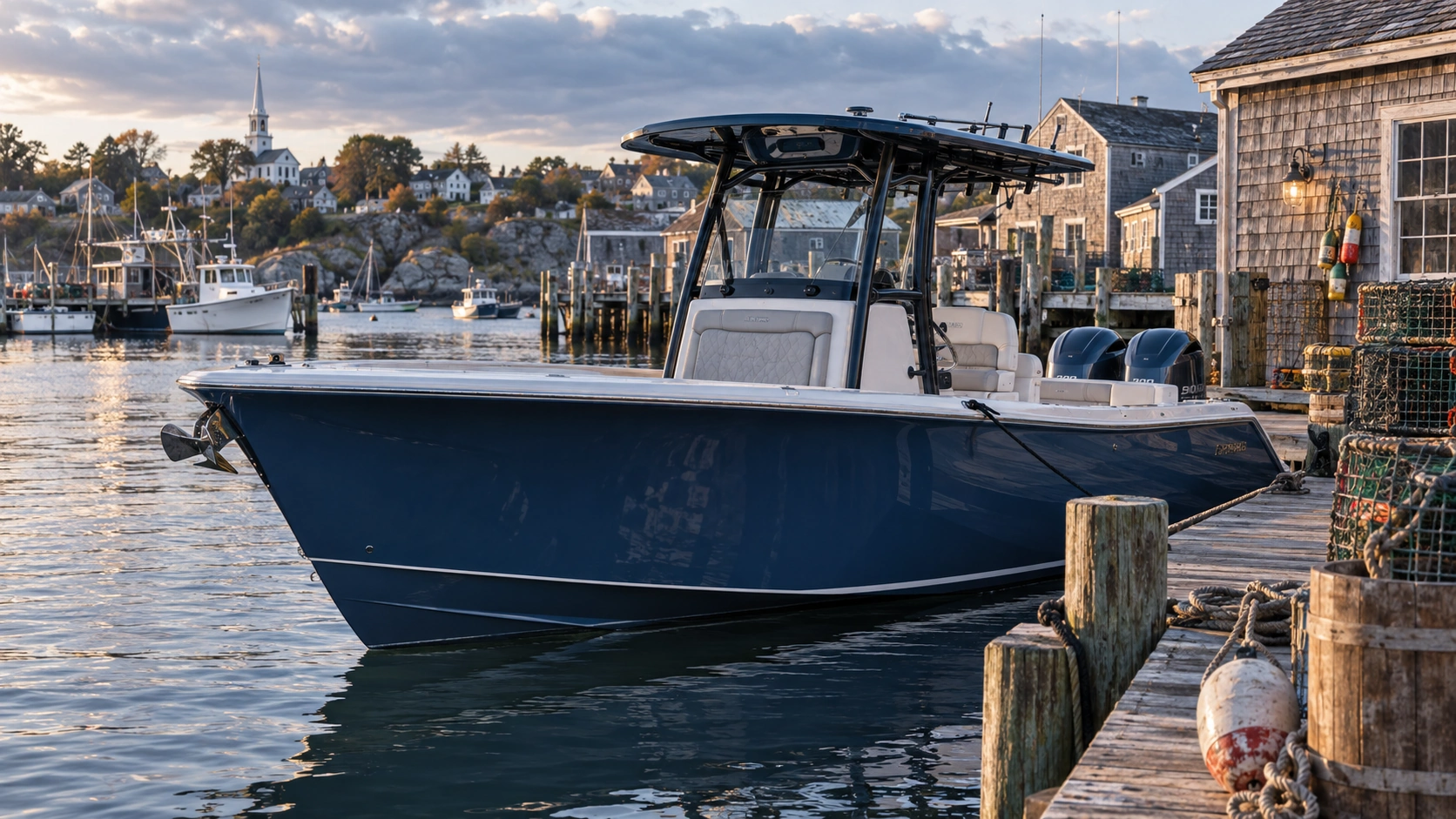
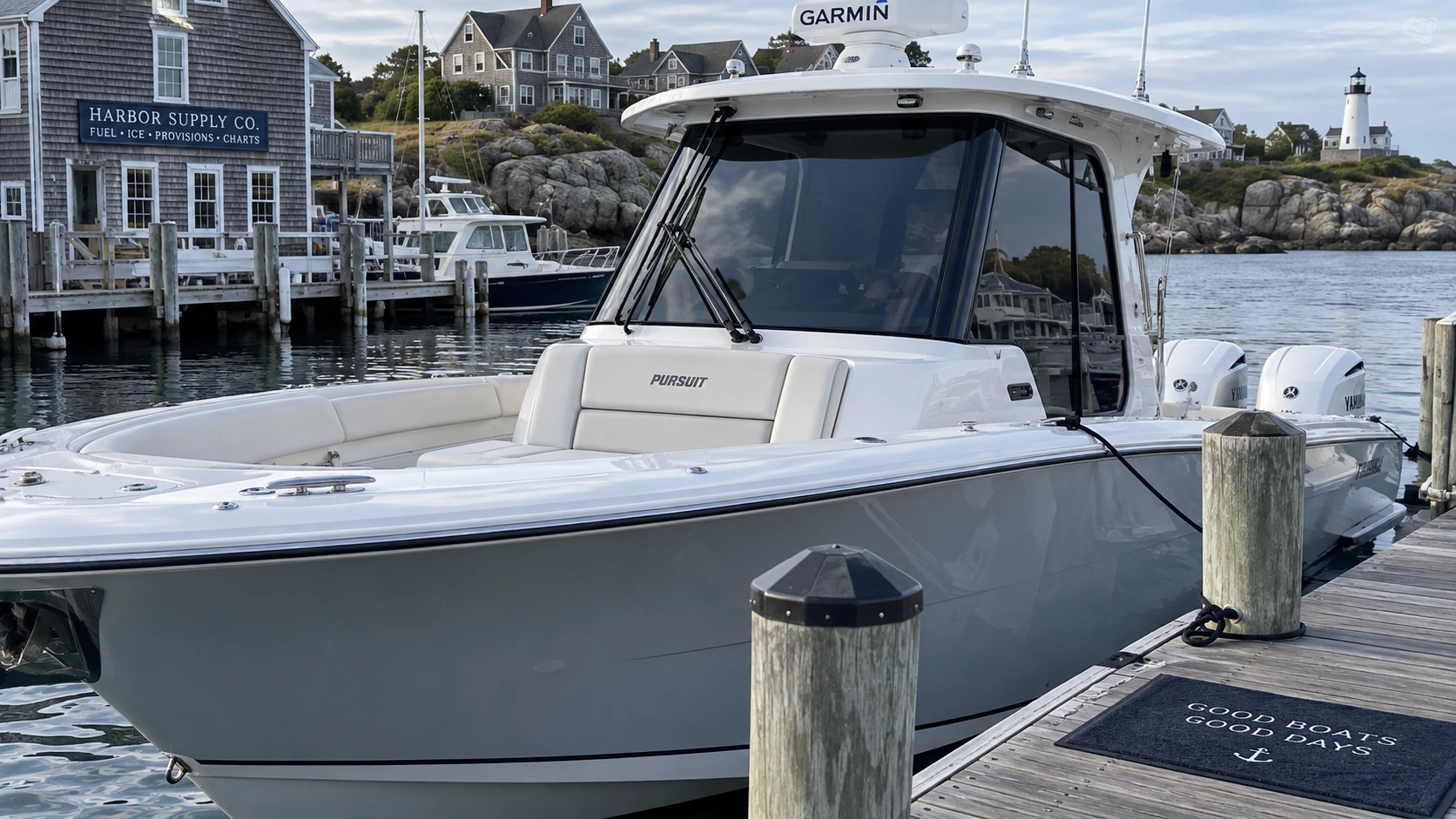
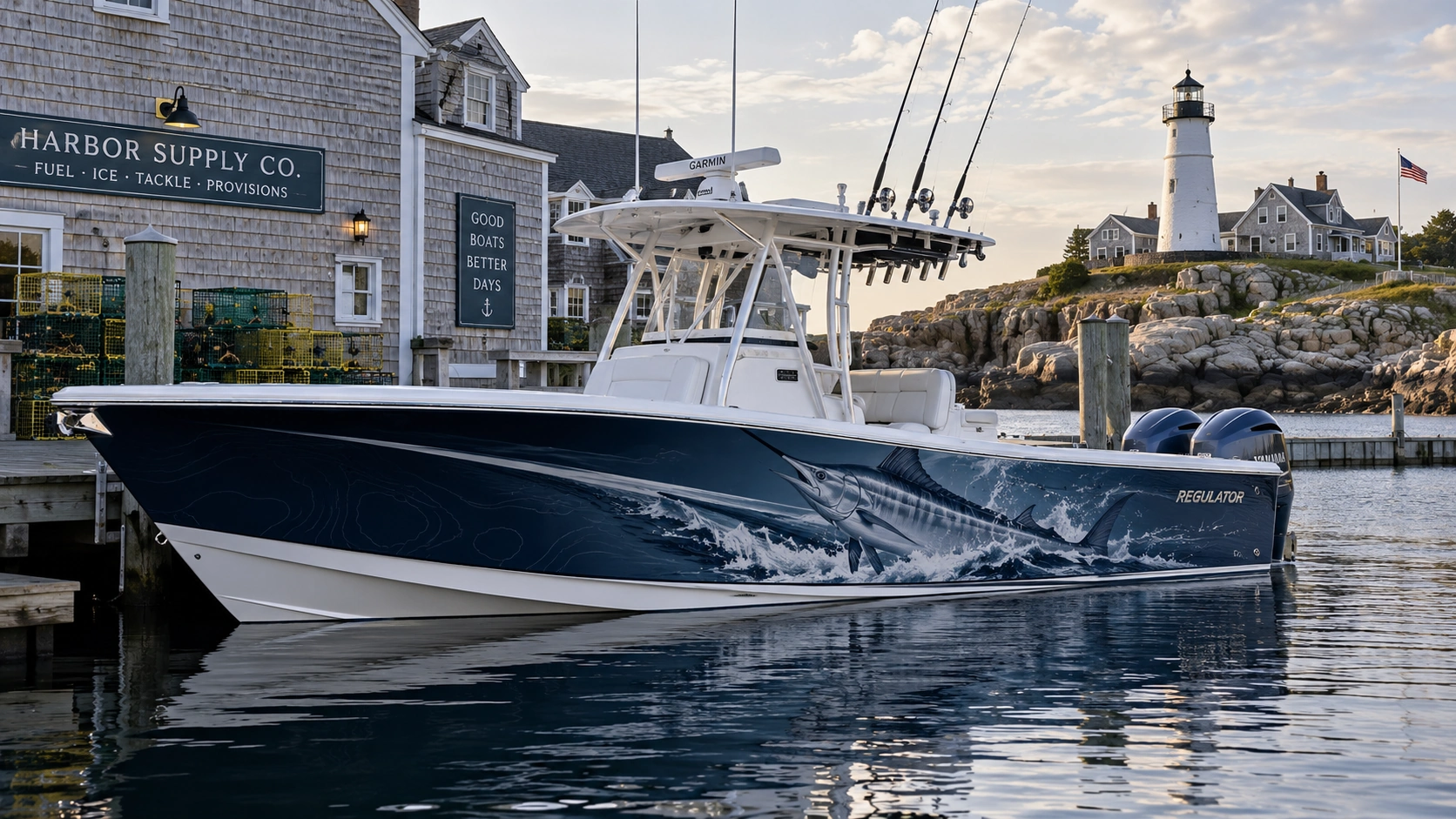
Marine imagery shown in this guide is illustrative.
Regional conditions and exposure
Why Boats Need Different Protection Than Cars
A boat is not just a car that floats.
It deals with different exposure, different materials, different cleaning needs, and different wear patterns.
Automotive protection products are designed around roads, parking lots, weather, paint, and daily driving.
Marine protection needs to account for saltwater, docks, shoes, passengers, fishing gear, boarding areas, sun exposure, wet surfaces, hull contact, seasonal storage, and aggressive cleaning.
Marine protection is about protecting the surfaces that take the most abuse.
That can include hull areas, painted sections, gelcoat, transoms, gunwales, steps, swim platforms, engine cowlings, interior surfaces, glass, electronics screens, and other high-contact zones.
The goal is not to make the boat maintenance-free.
The goal is to make the boat easier to clean, easier to maintain, and better protected from the type of wear boats actually see.
Local Boating Conditions Are Hard on Surfaces
Cape Cod, SouthCoast, and Rhode Island boating conditions can be tough.
Many boats live near saltwater. Some sit in slips. Some are stored at marinas. Some are trailered every weekend. Some are used for fishing. Some are used for family cruising. Some run through Buzzards Bay, Cape Cod Bay, Narragansett Bay, the Cape Cod Canal, Vineyard Sound, the Sakonnet River, Mount Hope Bay, and the waters around Newport, Dartmouth, Westport, Wareham, Plymouth, Sandwich, Falmouth, Mashpee, and New Bedford.
That means the boat may see salt spray, sun, wind, dock contact, bird droppings, fish blood, sunscreen, sand, wet gear, rope friction, and constant washdowns.
Protection matters because these surfaces are not exposed once in a while.
They are exposed all season.
Salt Air Is Always Working
Salt exposure does not only happen when waves splash the boat.
Salt air is part of the marine environment.
A boat stored at a marina, kept near the coast, or parked near saltwater can still collect salt residue on surfaces.
That salt can contribute to corrosion, staining, oxidation, and surface wear over time.
Painted surfaces, metal trim, hardware, glass, vinyl, electronics screens, and exposed edges can all be affected by the marine environment.
Marine protection does not replace proper washing or mechanical maintenance.
But the right protection can make surfaces easier to clean and less vulnerable to everyday marine exposure.
Sun Exposure Is a Major Issue
New England boaters wait all winter for boating season.
When the season arrives, boats can spend long days in direct sun.
That sun exposure can fade gelcoat, dull painted surfaces, heat up interiors, age vinyl, stress plastics, and make glass areas uncomfortable.
Marine PPF can help protect covered surfaces from UV-related fading and everyday wear.
Marine ceramic coatings can add slickness, gloss, hydrophobic behavior, and easier cleaning.
Marine window film can help reduce heat, glare, and UV exposure through glass where appropriate.
For boats that sit uncovered, sit at docks, or spend long days on the water, sun exposure is one of the biggest reasons to protect key surfaces early.
Dock Rash Is Real
Dock rash is one of the most common reasons boat owners look into protection.
Even careful owners deal with real-world contact.
Wind pushes the boat. Current moves it. Passengers step on and off. Fenders shift. Lines rub. Docks sit at different heights. Pilings, bumpers, cleats, and other boats can all create contact.
Marine PPF can help protect high-contact painted or gelcoat surfaces from scuffs, rub marks, and minor abrasions.
It is especially useful around areas that see repeated contact.
The goal is to protect the boat before the wear becomes permanent.
Dock rash is easier to prevent than repair.
Trailering Adds Another Layer of Wear
Many SouthCoast, Cape Cod, and Rhode Island boat owners trailer their boats.
Trailering adds a completely different type of exposure.
The boat may see road debris, bugs, tar, straps, rollers, bunks, saltwater ramps, gravel, and repeated loading and unloading.
Bow areas, lower hull sections, transoms, trailer contact points, steps, and boarding areas can all take abuse.
A boat that is trailered to different ramps may see more physical contact than one that stays in a slip.
Marine protection can help reduce wear in the areas most likely to get hit, rubbed, stepped on, or contaminated during transport.
Marinas Create Their Own Exposure
A marina is convenient, but it is not a bubble.
Boats at marinas deal with salt air, dock lines, bumpers, foot traffic, sun, bird droppings, fuel dock exposure, neighboring boats, cleaning products, and constant moisture.
If the boat stays uncovered or partially covered, the exposure adds up.
Marina-kept boats often benefit from protection on high-visibility and high-contact areas.
Marine ceramic coating can help make routine washdowns easier.
Marine PPF can help protect rub zones and wear areas.
Marine window film can help improve comfort and reduce glare inside enclosed areas where appropriate.
The more time the boat spends sitting outside, the more protection matters.
Seasonal Storage Can Affect Appearance
Seasonal storage is part of New England boating.
Boats may spend months wrapped, covered, stored outside, stored inside, blocked, trailered, or shrink-wrapped.
If a boat goes into storage dirty, salty, stained, or unprotected, those issues can sit for months.
Spring cleanup becomes harder.
A protected boat is usually easier to bring back into shape after storage.
Marine ceramic coatings can help surfaces release dirt and grime more easily.
Marine PPF can help protect wear areas that might otherwise show scuffs or dulling.
Proper pre-storage cleaning and inspection still matter.
Protection is not a replacement for winterization, but it can support better long-term appearance.
Film, coatings and window tint
Marine PPF for Boats
Marine paint protection film is a clear protective film designed to protect high-wear boat surfaces.
It can be installed on selected areas that are exposed to scuffs, rubbing, abrasion, UV exposure, and daily use.
Marine PPF is especially useful on:
Hull sides.
Bow areas.
Gunwales.
Transoms.
Engine cowlings.
Steps.
Swim platforms.
Boarding areas.
High-touch interior surfaces.
Areas near docks and fenders.
Areas that get rubbed by lines, gear, or passengers.
Marine PPF is not for every inch of every boat.
It is most useful where the boat sees repeated contact and visible wear.
What Marine PPF Helps With
Marine PPF helps protect against minor abrasions, scuffs, rub marks, dock contact, gear contact, UV exposure, and everyday wear.
It can also make protected surfaces easier to maintain because the original surface is covered by a sacrificial film layer.
If the film takes the abuse, the surface underneath has a better chance of staying cleaner and better preserved.
This matters on painted boats, gelcoat, engine cowlings, and high-contact surfaces.
Marine PPF is not magic.
It does not stop every impact or eliminate maintenance.
But it can protect the surfaces that normally take visible abuse.
Marine PPF for Docking Areas
Docking areas are some of the best candidates for marine PPF.
The same spots often get rubbed again and again.
Fenders move. Lines shift. People step over the side. Coolers and bags drag across surfaces. Salt and grime sit in contact areas.
Protecting those spots can help reduce visible wear.
Instead of waiting until scuffs and rub marks are already present, boat owners can protect the high-risk areas early.
For Cape Cod, SouthCoast, and Rhode Island boaters who use busy marinas, fuel docks, restaurants, raft-ups, and ramps, docking-related protection can make a lot of sense.
Marine PPF for Engine Cowlings
Engine cowlings are highly visible and often expensive to repair or refinish.
They sit in sun, salt, spray, and regular handling.
They can get scratched during cleaning, service, trailering, storage, and dockside use.
Marine PPF can help protect the cowling from minor abrasions, fading, and wear.
For boats with large outboards, twin engines, triple engines, or high-end painted cowlings, this can be a smart protection area.
The cowling is one of the first things people notice on the back of a boat.
Keeping it cleaner and better protected helps the whole boat look cared for.
Marine PPF for Steps and Boarding Areas
Steps and boarding areas take constant abuse.
Shoes, sand, wet feet, coolers, bags, fishing gear, pets, and passengers all move through these areas.
That creates scuffs and dulling over time.
Marine PPF can help protect certain smooth, compatible surfaces from wear in these high-contact areas.
This can be useful around transom walk-throughs, swim platforms, boarding steps, and interior transition areas.
The key is choosing the right areas and making sure the surface is appropriate for film.
Protection should follow the way people actually use the boat.
Marine Ceramic Coatings
Marine ceramic coating is another important layer of protection.
A coating creates a slick, hydrophobic surface that can make cleaning easier and help protect against environmental exposure.
On boats, ceramic coatings are often used to help with gloss, water behavior, easier washing, UV exposure, oxidation resistance, and surface cleanup.
Coatings do not stop scratches or impact the way PPF can.
They do not replace washing.
They do not make the boat maintenance-free.
But they can make maintenance easier, especially during a saltwater boating season.
For boat owners who are tired of fighting grime, water spots, salt residue, and dulling, marine ceramic coating can be a strong option.
Marine Coatings for Gelcoat and Paint
Gelcoat and painted boat surfaces need regular care.
They can oxidize, fade, dull, stain, and collect contaminants.
Marine ceramic coatings can help preserve gloss and make routine cleaning easier.
For boats used in saltwater, that easier cleanup is valuable.
The less grime bonds to the surface, the easier the boat is to wash after use.
This is especially helpful for owners who use their boats often during the season.
A coating does not replace proper washing or periodic inspection, but it can make regular maintenance less frustrating.
Marine Coatings for Metal and Trim
Marine environments are tough on metal and trim.
Salt, moisture, sun, and cleaning chemicals all contribute to wear.
Marine ceramic coatings may be used on certain compatible metal, painted, or finished surfaces to help make them easier to clean and maintain.
The exact surfaces should be evaluated before application.
Not every surface should be coated the same way.
Boats have many material types, including gelcoat, paint, powder coat, stainless, aluminum, glass, vinyl, plastics, and textured surfaces.
The right product should match the surface.
Marine Window Film
Marine window film can improve comfort on boats with glass cabins, enclosures, pilothouses, windshields, salon glass, or other appropriate flat or curved glass areas.
The main goals are usually heat reduction, glare reduction, UV protection, and comfort.
Sunlight through marine glass can make interior spaces hot and uncomfortable.
Glare can make screens harder to see and long days on the water more tiring.
Marine window film can help reduce those issues where the glass is suitable for installation.
For owners who cruise, fish, entertain, or spend long days aboard, comfort matters.
Marine Window Film for Glare
Glare can be a major issue on the water.
Sun reflects off the water, deck, glass, and bright surfaces.
That can make visibility harder and make screens more difficult to read.
Marine window film can help reduce glare through treated glass, depending on film selection and glass layout.
This can be especially helpful in enclosed helm areas, cabins, and pilothouses.
The goal is not to make the glass too dark or unsafe.
The goal is to improve comfort while maintaining clear visibility.
Film selection should be handled carefully.
Marine Window Film for Heat
Cabins and enclosed areas can get hot quickly.
Sun through glass adds heat, especially when the boat is docked or sitting still.
Marine window film can help reduce heat entering through the glass, making the space more comfortable for passengers and owners.
This is useful for cruising boats, center consoles with enclosed areas, pilothouses, yachts, cabin boats, and any vessel where glass contributes to interior heat.
Heat reduction is not only about comfort.
It can also help reduce stress on interior materials, seating, electronics, and finishes.
Marine Window Film for UV Protection
UV exposure can fade and age interior surfaces.
Marine window film can help reduce UV exposure through treated glass, protecting upholstery, trim, flooring, dashboards, electronics areas, and interior finishes.
This matters on boats that sit in sun for long periods.
UV damage is gradual, but once fading and deterioration show up, it can be expensive to correct.
Marine window film is not a full cover or storage solution, but it can reduce UV exposure through the glass.
For long-term appearance, that matters.
Marine Graphics and Lettering
Boat protection is not only about clear film and coatings.
Marine graphics and lettering can update the look of a boat, add registration numbers, boat names, branding, striping, accents, or commercial identity.
For local boat owners, marine graphics can be part of a refresh or ownership upgrade.
The same planning matters:
Salt exposure.
UV exposure.
Cleaning.
Dock contact.
Storage.
Installation quality.
Marine graphics should be designed and installed with the marine environment in mind.
A boat graphic lives a different life than a wall decal or indoor sign.
Your location and boat
Why Cape Cod Boat Owners Should Consider Protection
Cape Cod boat owners deal with strong sun, salt air, busy marinas, docks, moorings, trailering, seasonal storage, and coastal exposure.
Boats around Falmouth, Sandwich, Mashpee, Barnstable, Yarmouth, Dennis, Chatham, Harwich, Orleans, Bourne, and nearby areas see constant environmental stress during the season.
Marine PPF can protect high-wear areas.
Marine coatings can make washdowns easier.
Marine window film can improve comfort and reduce UV exposure through glass.
For Cape Cod boaters, protection is about keeping the boat easier to maintain through a busy season.
Why SouthCoast Boat Owners Should Consider Protection
SouthCoast boating includes Buzzards Bay, New Bedford, Dartmouth, Westport, Fairhaven, Marion, Mattapoisett, Wareham, Fall River, and nearby coastal communities.
Many owners trailer their boats, use ramps, fish, cruise, dock at marinas, or run through saltwater all season.
These boats see road exposure, dock contact, salt spray, sun, gear, and storage cycles.
Marine protection can help reduce visible wear in the areas that take the most abuse.
For SouthCoast owners, the boat often works hard.
Protection helps keep it looking better while making maintenance more manageable.
Why Rhode Island Boat Owners Should Consider Protection
Rhode Island boaters have access to Narragansett Bay, Newport, Jamestown, Providence, Warwick, Bristol, Barrington, Portsmouth, Tiverton, Westerly, South County, and nearby coastal waters.
The boating culture is strong, but so is the exposure.
Salt air, marinas, docks, moorings, sun, wind, and trailering all affect boat surfaces.
High-end boats, fishing boats, cruisers, center consoles, and family boats can all benefit from protection depending on use.
Marine PPF, marine coatings, marine tint, and graphics can help Rhode Island owners keep their boats cleaner, more comfortable, and better protected during the season.
Protection for Center Consoles
Center consoles are used hard.
They may be used for fishing, family cruising, sandbar trips, offshore runs, marina stops, and trailering.
They often have exposed surfaces, outboards, decks, gunwales, consoles, glass, seating, and high-contact zones.
Marine PPF can help protect rub areas, cowlings, and smooth high-wear surfaces.
Marine ceramic coatings can make the exterior easier to clean.
Marine window film can help reduce glare and heat where glass allows.
For center consoles in Cape Cod, SouthCoast, and Rhode Island waters, protection should be practical and targeted.
Protection for Fishing Boats
Fishing boats see gear abuse.
Rods, reels, coolers, tackle boxes, hooks, nets, bait, fish blood, boots, and saltwater all create wear.
Protection should focus on surfaces that are constantly touched, dragged over, stepped on, or cleaned aggressively.
Marine PPF can be useful on certain smooth wear areas.
Marine ceramic coating can help with easier cleanup.
Marine window film can help with glare and cabin comfort where applicable.
Fishing boats are working boats, even when they are used recreationally.
Protection should support that use, not get in the way of it.
Protection for Cruisers and Yachts
Cruisers and yachts often have more glass, more interior surfaces, larger painted areas, more seating, more trim, and more owner expectations.
They are also more expensive to clean, repair, and maintain.
Marine window film can improve interior comfort.
Marine ceramic coatings can make large exterior surfaces easier to wash.
Marine PPF can protect boarding areas, steps, cowlings, transoms, and high-wear sections.
Marine graphics can update the look or refresh the vessel’s identity.
For larger boats, protection is not only cosmetic.
It can reduce maintenance time and preserve the appearance of a major investment.
Protection for Personal Watercraft
Personal watercraft see heavy use in a small package.
They are launched, trailered, tied up, boarded, beached, and exposed to sun and salt.
Marine PPF can help protect painted or gelcoat areas that get scuffed during use.
Marine ceramic coatings can make washing easier.
Graphics can personalize the look.
Because personal watercraft are handled often, high-contact protection can make sense.
The right package depends on how the owner uses it, where it is stored, and how often it is in saltwater.
Protection for New Boats
The best time to protect a boat is often when it is new or freshly corrected.
Once surfaces are already scratched, oxidized, stained, or faded, more prep may be needed before film or coating.
New boats are great candidates because the surfaces are still in better condition.
Marine PPF can protect vulnerable areas before damage starts.
Marine coating can help maintain gloss and make cleaning easier from the beginning.
Marine tint can improve comfort before the first hot season.
Protection is easier when it starts early.
Protection for Used Boats
Used boats can still benefit from marine protection, but surface condition matters.
If the boat has oxidation, staining, scratches, previous repairs, old graphics, adhesive residue, or worn gelcoat, prep may be needed first.
Marine coating should not be applied over neglected surfaces without proper cleaning and prep.
Marine PPF should not be installed over failing surfaces, loose paint, heavy oxidation, or damaged areas without realistic expectations.
Used boats may need inspection, correction, or cleanup before protection.
The goal is to protect a surface worth protecting.
Seasonal care and exposed areas
Protection Before the Season
Spring is a smart time to plan marine protection.
Before the boat goes into regular use, owners can address cleaning, correction, film, coating, tint, and graphics.
Starting the season with protection makes regular washdowns easier and helps reduce new wear.
This is also a good time to inspect previous protection, replace damaged film, update graphics, or refresh coatings.
Waiting until mid-season may still work, but the boat may already have salt, grime, sunscreen, dock wear, and oxidation starting.
Early protection gives the boat a better chance.
Protection During the Season
Marine protection can still be installed during the boating season depending on scheduling, boat condition, access, and weather.
The boat needs to be clean, dry, and properly prepared for film, tint, coating, or graphics.
If the boat is actively used, the owner should plan for downtime.
Film and coatings need proper installation conditions and cure considerations.
Marine tint needs proper glass preparation and dry time.
During the season, protection work should be scheduled carefully so the boat is ready for use and not rushed.
Protection Before Storage
Before winter storage, the boat should be cleaned, inspected, and protected as needed.
Salt, grime, bird droppings, mildew, fish residue, and contaminants should not sit on surfaces all winter.
If protection is already installed, this is a good time to inspect it.
If film is damaged, it can be addressed.
If coating needs maintenance, it can be refreshed.
If graphics are failing, they can be planned for replacement.
Seasonal storage is not just about the engine and shrink wrap.
Surface condition matters too.
Why Washing Still Matters
Marine protection does not eliminate washing.
Salt still needs to be removed.
Dirt still builds up.
Bird droppings still need attention.
Sunscreen, fish residue, grime, and water spots can still affect the surface.
The benefit of protection is that washing can become easier and less aggressive.
A protected surface may release grime better and require less scrubbing.
That is important because aggressive cleaning can create damage over time.
The goal is not no maintenance.
The goal is better maintenance.
Why Harsh Cleaning Can Hurt Boats
Many boat owners use strong cleaners because marine grime is frustrating.
But harsh chemicals, abrasive brushes, aggressive compounds, and repeated scrubbing can wear down surfaces.
They can dull gelcoat, damage film, affect graphics, strip protection, and shorten the life of coatings.
Marine protection helps reduce the need for aggressive cleaning.
That is a major benefit.
If the boat is easier to clean after each use, the owner is less likely to attack the surface with strong methods later.
Gentle, consistent care is better than harsh correction after neglect.
Why Inspection Matters
Boats should be inspected regularly during the season.
Look for scuffs, scratches, film edge issues, coating behavior changes, water spots, stains, dock rash, graphics lifting, tint concerns, and areas that are taking more abuse than expected.
Early inspection helps prevent small issues from becoming larger ones.
If a protected area takes damage, the film may have done its job.
If a coating starts losing hydrophobic behavior, maintenance may be needed.
If tint or graphics are damaged, they can be addressed before the issue spreads.
Protection works best when owners pay attention.
Common Areas Worth Protecting
Not every boat needs the same package, but common protection areas include:
Hull sides.
Bow impact zones.
Gunwales.
Transoms.
Swim platforms.
Boarding steps.
Engine cowlings.
Smooth interior panels.
High-contact walkways.
Areas near cleats and lines.
Glass and cabin windows.
Electronics screens.
Areas near fenders.
Trailer contact zones.
The right package should follow the boat’s real use.
A fishing boat and a cruiser do not need the same protection map.
Compare options and plan protection
Marine PPF vs Marine Ceramic Coating
Marine PPF and marine ceramic coating do different jobs.
Marine PPF is a physical film layer that helps protect against scuffs, minor abrasions, dock rash, rub marks, and surface wear.
Marine ceramic coating is a liquid-applied protective layer that adds slickness, gloss, hydrophobic behavior, and easier cleaning.
If the concern is physical contact, PPF is the stronger choice.
If the concern is easier washdowns, gloss, and water behavior, ceramic coating is the stronger choice.
Many boats benefit from both.
PPF protects the high-impact areas.
Coating helps maintain larger surfaces.
Marine Tint vs Marine Coating
Marine window film and marine ceramic coating also do different jobs.
Marine tint is installed on compatible glass to reduce heat, glare, and UV exposure through the glass.
Marine coating is applied to compatible surfaces to improve slickness, gloss, and cleaning behavior.
If the cabin is hot or glare is a problem, tint is the answer.
If the exterior surface is hard to clean, coating is the answer.
If the boat has both comfort issues and maintenance issues, both may be worth considering.
Marine Graphics vs Protection Film
Marine graphics change appearance, branding, name, numbers, stripes, or style.
Marine PPF protects surfaces.
These can work together, but they are not the same.
A boat may need new graphics for appearance and marine PPF in wear areas for protection.
The order of installation matters.
Surface prep matters.
Film compatibility matters.
If graphics and protection are both planned, the project should be discussed as one package instead of separate decisions.
Why Professional Installation Matters
Marine protection requires professional installation.
Boats have curves, edges, hardware, seams, textured surfaces, glass shapes, wet-use areas, and different materials.
Film, tint, coatings, and graphics all need the right prep and conditions.
A rushed installation can lead to poor adhesion, lifting, contamination, short life, or poor appearance.
Professional installation also helps with product choice.
The right installer should explain where protection makes sense, where it does not, how to maintain it, and what to expect over time.
Why Regional Experience Matters
A local marine protection plan should reflect local use.
Cape Cod owners may deal with marinas, moorings, sun, and salt exposure.
SouthCoast owners may deal with Buzzards Bay conditions, ramps, trailering, fishing use, and dock contact.
Rhode Island owners may deal with Narragansett Bay, Newport marinas, longer days aboard, salt air, and seasonal storage.
The environment changes how a boat wears.
Protection should match that reality.
A boat used twice a month on a lake does not need the same plan as a saltwater boat used every weekend in New England.
Why Boat Protection Helps Resale
A cleaner, better-maintained boat is easier to present when it is time to sell or trade.
Buyers notice faded gelcoat, dock rash, scratched cowlings, worn steps, damaged graphics, cloudy glass, and neglected surfaces.
Marine PPF can help protect high-wear areas.
Marine coatings can help maintain gloss and easier cleanup.
Marine tint can protect interiors and improve comfort.
Good protection does not guarantee resale value, but it can help preserve appearance.
For boats, appearance is part of perceived care.
Why Boat Protection Saves Time
Boat ownership already takes time.
Fueling, washing, covering, storing, loading, unloading, maintenance, repairs, and seasonal prep all add up.
Protection can help reduce the time spent fighting surface grime and visible wear.
A coated surface can be easier to clean.
A protected area can resist scuffs better.
Tint can make interior areas more comfortable.
Graphics and film can keep the boat looking sharper with less correction.
For many owners, the biggest benefit is not just appearance.
It is less frustration.
What Boat Protection Does Not Do
Boat protection has limits.
Marine PPF does not stop every gouge, hard impact, or severe dock hit.
Marine ceramic coating does not prevent scratches or eliminate washing.
Marine window film does not replace shades, covers, or proper visibility judgment.
Marine graphics do not protect like PPF.
No protection product replaces proper washing, storage, inspection, maintenance, or careful operation.
Protection reduces risk and maintenance burden.
It does not make a boat immune to the marine environment.
Realistic expectations matter.
The Best Boat Protection Plan
The best boat protection plan is not always the biggest package.
It is the smartest package for how the boat is used.
For some owners, that may be marine ceramic coating on the exterior.
For others, it may be PPF on high-contact dock areas and engine cowlings.
For others, it may be marine window film for cabin comfort.
For others, it may be graphics, tint, PPF, and coating together.
The right package depends on:
Where the boat is used.
How often it is used.
Where it is stored.
Whether it is trailered.
What surfaces are already damaged.
What the owner wants to prevent.
How much maintenance the owner wants to reduce.
Final Thoughts
Boat protection matters in Cape Cod, SouthCoast, and Rhode Island because the local environment is tough.
Salt air, sun exposure, docks, marinas, trailering, ramps, storage, bird droppings, fishing gear, passengers, and seasonal use all affect the way a boat ages.
Marine PPF can help protect high-wear surfaces.
Marine ceramic coating can make cleaning easier and help maintain gloss.
Marine window film can reduce heat, glare, and UV exposure through compatible glass.
Marine graphics can update appearance and identity.
At Kickin’ Customs in Raynham, MA, we install marine PPF, marine ceramic coatings, marine window film, and marine graphics for boat owners across Cape Cod, SouthCoast Massachusetts, and Rhode Island.
The goal is simple:
Protect the boat before the season beats it up.
Make maintenance easier.
Keep the boat looking better longer.
And spend more time enjoying the water instead of fighting the damage it leaves behind.
Frequently Asked Questions
Why do boats in Cape Cod, SouthCoast, and Rhode Island need protection?
Boats in these areas deal with salt air, sun exposure, docks, marinas, trailering, seasonal storage, and heavy summer use. Protection helps reduce wear and make maintenance easier.
What is marine paint protection film?
Marine paint protection film is a clear protective film installed on selected boat surfaces to help protect against scuffs, minor abrasions, dock rash, UV exposure, and everyday wear.
Is marine PPF good for dock rash?
Yes. Marine PPF can be a strong option for areas that see dock contact, fender rub, line contact, boarding wear, and other repeated surface contact.
What does marine ceramic coating do?
Marine ceramic coating adds a slick, hydrophobic protective layer that can improve gloss, water behavior, and cleaning ease on compatible boat surfaces.
Does ceramic coating replace washing?
No. Marine ceramic coating does not eliminate washing. It helps make washing easier and can reduce how aggressively the boat needs to be cleaned.
What does marine window film help with?
Marine window film can help reduce heat, glare, and UV exposure through compatible glass, improving comfort in cabins, enclosed helm areas, and other glass-heavy spaces.
Can marine protection be installed on used boats?
Yes, but surface condition matters. Used boats may need cleaning, correction, oxidation removal, old graphic removal, or prep before film, coating, tint, or graphics are installed.
When is the best time to protect a boat?
Before the boating season is ideal because the boat starts the season protected. Protection can also be installed during the season or before storage depending on condition and scheduling.
Does boat protection work for trailered boats?
Yes. Trailered boats can benefit from protection because they see road debris, ramps, straps, bunks, rollers, loading, unloading, and repeated handling.
Who installs marine PPF, tint, and coatings in Massachusetts and Rhode Island?
Kickin’ Customs installs marine PPF, marine ceramic coatings, marine window film, and marine graphics from our shop in Raynham, MA for boat owners across Cape Cod, SouthCoast Massachusetts, and Rhode Island.
Plan your next step
Protect your boat before salt, sun, docks, and storage take their toll. Contact Kickin’ Customs in Raynham, MA to discuss marine PPF, marine ceramic coatings, marine window film, marine graphics, and custom boat protection packages for Cape Cod, SouthCoast Massachusetts, and Rhode Island owners.
