
The short answer
Some rooms look great until the sun hits them.
A living room with big windows can become too hot by afternoon.
A sunroom can feel unusable in the summer.
A home office can have constant screen glare.
A TV room can be bright at the wrong time of day.
A kitchen, dining room, or open floor plan can feel uncomfortable because one wall of glass lets in too much heat and harsh light.
Residential window film helps solve those problems by improving the way sunlight comes through the glass.
At Kickin’ Customs in Raynham, MA, we install residential window film for homeowners across Massachusetts and Rhode Island who want better heat control, glare reduction, comfort, privacy, and interior protection without replacing their windows.
For many homes, window film is one of the easiest ways to make sunny rooms more comfortable.
Heat and glare at home
Why Heat and Glare Become a Problem at Home
Natural light is one of the reasons people love large windows.
The problem is that sunlight does not only bring brightness.
It also brings heat, glare, UV exposure, and discomfort.
A room can look beautiful in the morning but become hard to use by afternoon. The couch may feel hot. The TV may be hard to see. The office monitor may have constant reflections. The AC may struggle in one part of the house while the rest of the home feels fine.
This is especially common in homes with large windows, sliding doors, sunrooms, open layouts, high ceilings, and strong sun exposure.
Residential window film helps control the sunlight before it turns into a comfort proble
What Residential Window Film Does
Residential window film is applied directly to existing glass.
Depending on the film selected, it can help reduce solar heat, cut glare, reject UV exposure, improve daytime privacy, and make the glass perform better.
This does not mean the room becomes dark or closed off.
The right film can improve comfort while still allowing natural light and preserving the view.
That is one of the biggest reasons homeowners choose window film instead of relying only on blinds, shades, or curtains.
Window film helps you manage sunlight without losing the reason you liked the windows in the first place.
Heat Control Window Film
Heat control window film is designed to reduce the amount of solar heat entering through the glass.
This can make sunny rooms feel more comfortable, especially during spring and summer.
It is useful for rooms that heat up faster than the rest of the house.
That may include living rooms, sunrooms, kitchens, dining rooms, bedrooms, home offices, bonus rooms, and finished basements with walkout glass.
If one room always feels warmer than the thermostat says it should, the glass may be part of the problem.
Window film can help reduce that heat load
Glare Reduction Window Film
Glare reduction window film helps soften harsh sunlight.
This can make a major difference in rooms where screens, TVs, workstations, or seating areas are affected by direct light.
Glare is not only annoying. It can make a space harder to use.
You may close the blinds every afternoon.
You may avoid working at a certain desk.
You may rearrange furniture because the TV reflects the windows.
You may squint while reading or cooking.
Window film can reduce glare while keeping the room brighter and more open than fully closed blinds or curtains.

Match the room and exposure
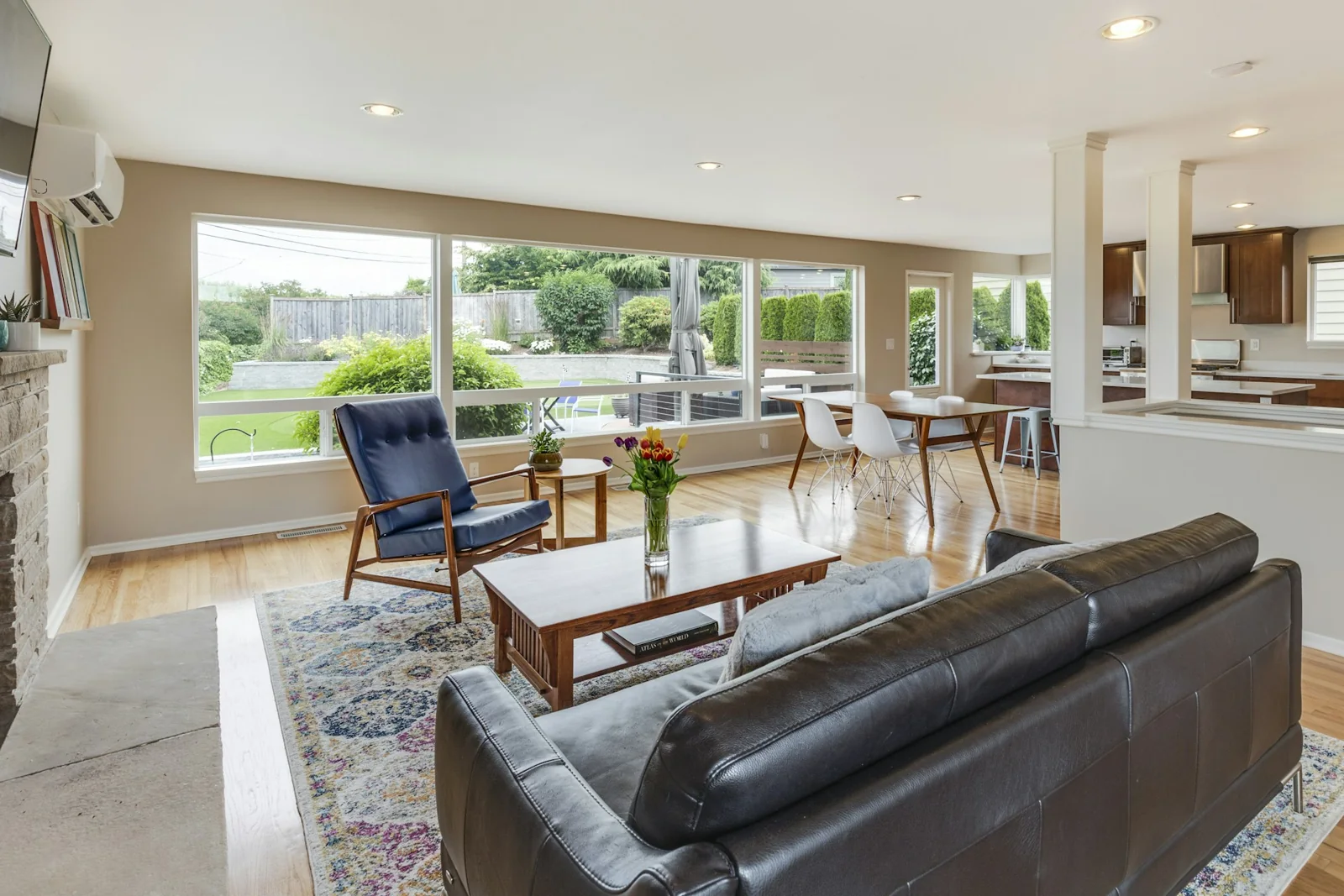
Window Film for Sunny Living Rooms
Living rooms are one of the most common places homeowners notice heat and glare.
Large front windows, rear-facing glass, sliders, picture windows, and open floor plans can make the living room uncomfortable during certain times of day.
The room may be too bright for watching TV.
The couch may get hit with direct sunlight.
Guests may avoid certain seats.
The AC may cool the rest of the home while the living room still feels warm.
Residential window film can help make the living room more usable without covering the windows all day.
Window Film for TV Glare
TV glare is one of the simplest reasons to consider window film.
If sunlight reflects across the screen, the room becomes frustrating to use.
Blinds can help, but they may block the view and make the room feel closed.
Glare reduction film can soften the light so the TV is easier to see during the day.
This is especially useful in family rooms, living rooms, finished basements, media rooms, and open spaces where the TV faces windows.
If you keep closing the blinds just to watch TV, window film may be worth considering.
Window Film for Sunrooms
Sunrooms are built around glass, which is exactly why they often become uncomfortable.
They can get hot, bright, and harsh during warmer months.
A sunroom may look beautiful but only feel usable in the morning or evening.
Residential window film can help reduce heat and glare while preserving the open feel of the space.
This can make the room more comfortable for relaxing, reading, entertaining, working, or enjoying the view.
For many homeowners, film helps turn the sunroom from a seasonal room into a space they use more often.
Window Film for Home Offices
Home offices have made glare and heat more noticeable than ever.
When you sit in the same room for hours, sunlight problems become harder to ignore.
A window that once seemed fine may now create constant monitor glare, heat buildup, eye strain, or distractions.
Residential window film can help reduce screen glare, soften bright light, improve comfort, and provide daytime privacy depending on the film.
It can also help keep the room feeling open and professional without closing the blinds all day.
For work-from-home spaces, window film can make the room easier to use every day.
Window Film for Computer Screen Glare
Computer screen glare is different from general brightness.
Even a room that feels pleasant can still create reflections on a monitor.
This is common when a desk faces a window, sits beside a window, or is located in a bright room with large glass.
Glare reduction film can reduce harsh reflections and improve screen visibility.
This can help with work, video calls, reading, design work, schoolwork, gaming, and general productivity.
If you constantly adjust your monitor, move your chair, or close blinds during the day, window film can help.
Window Film for Kitchens and Dining Rooms
Kitchens and dining rooms often have bright sun exposure.
Morning light may be beautiful, but afternoon heat and glare can make the space uncomfortable.
A dining table may sit in direct sun.
Cabinets may heat up.
The kitchen may feel warmer than the rest of the house.
Window film can help reduce solar heat and soften harsh light while keeping the room bright.
This is especially useful in homes with open kitchens, large sliders, breakfast nooks, bay windows, and dining rooms with large glass.
The goal is comfort without losing natural light.
Window Film for Bedrooms
Bedrooms can also benefit from heat and glare control.
A bedroom with strong morning sun can heat up early.
A bedroom with afternoon sun can feel warm before bedtime.
Street-facing bedrooms may also feel exposed during the day.
Residential window film can help reduce heat, glare, and daytime visibility depending on the film selected.
It does not replace shades or curtains for full darkness or nighttime privacy, but it can make the room more comfortable during daylight hours.
For bedrooms that get too hot or too bright, film can be a practical upgrade.
Window Film for Large Windows
Large windows can be beautiful, but they often bring in a lot of heat and glare.
The larger the glass area, the more sunlight enters the room.
This is especially noticeable in modern homes, waterfront homes, renovated homes, homes with high ceilings, and homes with open living spaces.
Residential window film helps improve comfort without covering the glass.
That means homeowners can keep the view, keep the natural light, and reduce the harshness of the sun.
For oversized glass, film can be one of the most practical solutions.
Window Film for Sliding Glass Doors
Sliding glass doors are another common source of heat and glare.
They are large, often face patios or decks, and may bring strong sun into kitchens, dining rooms, living rooms, bedrooms, or finished basements.
A slider can make one part of the home hotter than the rest.
Window film can help reduce heat and glare through the glass while still allowing the door to function normally.
It can also improve daytime privacy depending on the film selected.
For homes with large sliders, residential window film is often worth considering.
Window Film for Open Floor Plans
Open floor plans are especially affected by sunlight.
When one wall of glass gets strong sun, the heat and glare can spread through the entire space.
A bright kitchen may affect the dining area.
A sunny living room may affect the whole first floor.
An open room with high ceilings may feel harder to cool.
Window film helps control the problem at the source by reducing heat and glare at the glass.
This can make the full open space feel more comfortable without adding bulky window treatments.
Window Film for Rooms With Afternoon Sun
Afternoon sun can be one of the hardest problems to manage.
It is often hotter, lower, and more direct than morning light.
West-facing rooms can become uncomfortable later in the day, especially in spring and summer.
This is when homeowners often notice TV glare, hot furniture, warm floors, and AC imbalance.
Residential window film can help reduce the impact of afternoon sun.
If one side of the home becomes uncomfortable every afternoon, film can make that space easier to live in.
Window Film for Rooms With Morning Sun
Morning sun can also be a problem.
East-facing bedrooms, kitchens, breakfast areas, offices, and living spaces may get bright early light.
For some homeowners, that light is pleasant.
For others, it creates heat, glare, and discomfort.
Window film can soften morning sun without fully blocking it.
This is useful when you still want a bright room but do not want harsh light or heat buildup early in the day.
Window Film for Rooms With High Sun Exposure
Some rooms simply get hit harder by the sun.
The direction of the glass, roof overhangs, nearby trees, window size, glass type, and seasonal sun angle all matter.
A room with high sun exposure can feel uncomfortable even if the rest of the house is fine.
Residential window film allows homeowners to target those specific problem areas.
You do not need to film every window in the home.
In many cases, the best approach is to start with the windows causing the most heat and glar
Light, shade and privacy
Heat Control Without Replacing Windows
Window replacement can be expensive.
If the windows are in good condition but the room is too hot or too bright, residential window film may be a more practical solution.
Window film improves the performance of existing glass.
It does not fix broken seals, leaks, cracked glass, failed windows, or poor insulation.
But when the problem is sunlight, heat, glare, or UV exposure, film can help without the cost and disruption of replacing the windows.
For many homeowners, that makes window film a smart middle ground.
Glare Control Without Losing the View
One of the biggest advantages of window film is glare control without fully losing the view.
Blinds, shades, and curtains can block glare, but they also block the outdoors.
If you have a nice backyard, pool, garden, wooded view, water view, patio, deck, or open property, you may not want to close the room off all day.
Window film can reduce glare while still keeping the room connected to the outside.
This is especially useful for homes where the view is part of the reason the windows are there.
Comfort Without Heavy Window Treatments
Not every room looks good with heavy curtains or blinds.
Modern homes, minimalist interiors, large glass walls, sunrooms, and open floor plans often look better with clean glass.
Window film provides comfort without adding bulky window treatments.
It can help reduce heat and glare while preserving the design of the space.
This is one reason homeowners choose film for modern residential glass.
The goal is to improve how the room feels without changing the whole look of the home.
Does Window Film Make the Room Dark?
Window film does not have to make a room dark.
There are different film options with different levels of visible light, reflectivity, and performance.
Some films are darker and better for stronger glare reduction.
Some films are lighter and more subtle.
Some films are reflective.
Some are more neutral.
The right choice depends on whether the priority is heat control, glare reduction, daytime privacy, view preservation, or appearance.
A good installation starts with choosing the right film for the room.
Choosing the Right Shade
Choosing the right shade matters.
If the film is too light, it may not solve the glare problem enough.
If the film is too dark, the room may feel different than the homeowner wanted.
The right shade depends on the room’s use, sun exposure, view, privacy needs, and personal preference.
A TV room may need more glare control.
A living room with a view may need a lighter balance.
A home office may need enough glare reduction for screens without making the space feel closed.
Film choice should match the room.
Reflective Film for Heat and Glare
Reflective window film can be useful for heat reduction, glare control, and daytime privacy.
It reflects more sunlight, which can improve comfort during bright conditions.
Reflective film often creates a more noticeable appearance from the outside during the day.
That can be a benefit if daytime privacy is desired.
However, reflective daytime privacy has night limitations. When lights are on inside and it is dark outside, visibility may reverse.
Reflective film can be a great option, but expectations should be clear before installation.
Neutral Film for a Softer Look
Neutral window films are designed to reduce heat and glare while keeping a more balanced appearance.
They may be less mirror-like than reflective films.
This can be a good option for homeowners who want improved comfort without dramatically changing the look of the glass.
Neutral films can work well in living rooms, offices, bedrooms, and areas where preserving the home’s exterior appearance matters.
The right option depends on performance goals and appearance preferences.
Privacy and Glare Control Together
Many homeowners want both privacy and glare control.
That can be possible, but the film choice matters.
A darker or more reflective solar film can improve daytime privacy while reducing glare.
Frosted film can improve privacy, but it usually removes the clear view.
A lighter solar film may preserve the view better but provide less privacy.
The right choice depends on which goal matters more.
If the homeowner wants daytime privacy and glare reduction while keeping some view, solar privacy film may make sense.
If the homeowner wants privacy above all else, frosted film may be better.
Night Privacy Still Needs a Plan
Window film can help with daytime privacy, but night privacy is different.
When interior lights are on and it is dark outside, reflective privacy can reduce or reverse.
For night privacy, homeowners may still need blinds, shades, curtains, or frosted film depending on the room.
This is important in bedrooms, bathrooms, front rooms, and street-facing spaces.
A good window film consultation should explain the difference between daytime privacy and nighttime privacy clearly.
Heat and glare control film can help during the day, but it may not replace every privacy solution.
UV, cooling and home design
UV Protection Comes With Many Films
Many residential window films also help reduce UV exposure.
This is important because UV rays contribute to fading and interior damage over time.
Hardwood floors, furniture, rugs, artwork, photos, cabinetry, and fabrics can all be affected by sunlight.
Heat and visible light also contribute to fading, so no film stops fading completely.
But reducing UV exposure is still an important protective benefit.
For sunny rooms with expensive interiors, window film helps with both comfort and long-term protection.
Protecting Interiors While Improving Comfort
Heat and glare are immediate problems.
Interior fading is a long-term problem.
Residential window film can help with both.
A room may feel better right away because the sunlight is less harsh.
Over time, reduced UV exposure can also help protect floors, furniture, rugs, artwork, and finishes.
This is why window film is especially useful in living rooms, sunrooms, dining rooms, offices, and rooms with large glass.
It improves how the room feels today and helps protect what is inside the room over time.
Window Film and Air Conditioning
Residential window film can help reduce solar heat entering through glass, which may make sunny rooms easier to cool.
This can be helpful when one room overheats and forces the AC to work harder.
Actual energy impact depends on the home, window size, film type, sun exposure, HVAC system, insulation, thermostat settings, and daily habits.
The most noticeable benefit for many homeowners is comfort.
The room feels less harsh.
The temperature feels more balanced.
The AC may not feel like it is fighting the sun as much in that area.
Window Film and Room Balance
One of the biggest comfort complaints in homes is temperature imbalance.
The thermostat may say the house is comfortable, but one room still feels hot.
This often happens when sunlight is hitting one side of the home more than the rest.
Window film can help reduce the heat entering that specific room.
That can make the home feel more balanced.
It does not replace a properly functioning HVAC system, but it can help with solar heat problems that HVAC alone may not solve well.
Window Film and Natural Light
Residential window film does not mean you have to give up natural light.
The right film can reduce harshness while still keeping the room bright.
This is one of the biggest reasons homeowners like it.
You can keep the sunlight, view, and open feel while reducing the parts that make the room uncomfortable.
The goal is not always to make the room darker.
The goal is to make the light more manageable.
Window Film for Homes With Views
Homes with views are ideal candidates for carefully chosen window film.
A homeowner may not want blinds or curtains because they want to see the backyard, water, woods, pool, patio, garden, or landscape.
Window film can help reduce heat and glare without fully blocking the view.
This makes it useful for waterfront homes, wooded lots, homes with pools, modern homes, and homes with large rear-facing glass.
If the view matters, film selection should focus on comfort and clarity together.
Window Film for New Construction Homes
New construction homes often feature larger glass, open layouts, and modern designs.
That can create beautiful spaces, but it can also create heat and glare problems.
Homeowners may realize after moving in that certain rooms are uncomfortable during specific times of day.
Residential window film can help fine-tune the home after construction.
It improves comfort without changing the windows or adding heavy treatments.
For new homes with large glass, window film is a practical upgrade.
Window Film for Renovated Homes
Renovated homes often add bigger windows, sliders, open walls, sunrooms, or brighter living spaces.
That extra light can improve the look of the home, but it may also introduce heat and glare.
Window film helps control those side effects.
It allows the homeowner to keep the bright, modern look while making the space easier to live in.
For renovated kitchens, living rooms, offices, and additions, window film can be a smart finishing touch.
Window Film for Waterfront Homes
Waterfront homes can have intense glare because sunlight reflects off water.
The view is beautiful, but the light can be harsh.
Residential window film can help reduce glare while preserving visibility.
This is useful for homes near lakes, ponds, rivers, bays, harbors, coastal areas, and pools.
If the home was built to enjoy the view, closing the blinds all day defeats the purpose.
Window film can help manage the light without losing the scenery.
Window Film for Pool-Facing Glass
Pool-facing glass can also create glare and heat.
Sunlight reflects off water, patios, concrete, pavers, and outdoor furniture.
Large sliders and rear windows facing a pool area can make the interior brighter and hotter.
Window film can help reduce glare and heat while keeping the pool view open.
This is useful for living rooms, kitchens, dining rooms, sunrooms, finished basements, and bedrooms facing pool areas.
For homes designed around outdoor living, film can improve comfort inside.
Window Film for Homes Close to Neighbors
Homes close to neighbors often have daytime privacy concerns along with heat and glare.
A room may face another house, sidewalk, driveway, deck, patio, or street.
Window film can help reduce visibility from outside during the day depending on the film and lighting.
At the same time, it can reduce glare and heat.
This is useful for first-floor rooms, home offices, bedrooms, living rooms, and entry areas.
The right film should balance comfort, privacy, appearance, and view.
Compare alternatives and plan installation
Window Film vs Shades for Heat and Glare
Shades can block sunlight, but they also block the view and natural light.
Window film works directly on the glass, reducing heat and glare before the sunlight fills the room.
Many homeowners use both.
Film handles the daily sun exposure.
Shades provide extra control, privacy, or room darkening when needed.
This combination can work especially well in bedrooms, TV rooms, and street-facing spaces.
Window film does not always replace shades, but it can make them less necessary during the day.
Window Film vs Curtains for Sunny Rooms
Curtains can help with heat and glare, but they change the room visually.
They can make a room feel heavier, darker, or more closed.
Window film keeps the glass cleaner and more open.
For homeowners who prefer a modern or simple look, film can be a better fit.
Curtains may still be helpful for nighttime privacy or full light blocking, but film can reduce the need to close them during the day.
The best solution depends on the room and design style.
Window Film vs Exterior Shade
Exterior shade can be effective, but it is not always practical.
Trees, awnings, pergolas, exterior screens, and overhangs can help reduce sun exposure, but they may be expensive, seasonal, blocked by layout, or not allowed by the property.
Window film is applied directly to the glass, making it a cleaner option for many homes.
It can be especially helpful where exterior changes are not realistic.
For condos, townhomes, HOAs, and homes where the exterior appearance must stay consistent, film may be easier to consider.
Professional Film Selection Matters
Not every residential film is right for every window.
Glass type, sun exposure, window age, pane construction, seal condition, and film type all matter.
A film that works well on one window may not be the right choice for another.
Professional film selection helps reduce problems and improve results.
The installer should understand the homeowner’s goals, inspect the glass, discuss appearance, and recommend an appropriate option.
The goal is not just to install film.
The goal is to solve the heat and glare problem correctly.
Professional Installation Matters
Residential window film installation takes more than patience.
The glass must be cleaned properly.
The film must be cut cleanly.
The installation should reduce contamination as much as practical.
Edges should be neat.
The installer should understand film handling, glass, light, and cure time.
Poor installation can leave bubbles, debris, peeling edges, or an uneven appearance.
Professional installation gives the homeowner a cleaner result and better long-term experience.
What to Expect After Installation
After window film is installed, it may need time to cure.
During this period, small haziness, moisture, or visual changes may be present depending on the film, glass, weather, and room conditions.
The film should not be cleaned immediately unless instructed.
Homeowners should follow aftercare instructions and use film-safe cleaning products once the film is ready.
Cure time can vary based on temperature, humidity, film type, sun exposure, and glass type.
A proper installer should explain what to expect.
How to Clean Residential Window Film
Residential window film should be cleaned gently after it has cured.
Use a soft microfiber towel or non-abrasive cloth.
Use a cleaner that is safe for window film.
Avoid scraping tools, abrasive pads, harsh chemicals, or ammonia-heavy cleaners unless the film manufacturer specifically allows the product.
The goal is to keep the film clean without damaging the surface.
Proper cleaning helps the film look better and last longer.
When Heat and Glare Film Is Worth It
Heat and glare control film is worth it when a room is uncomfortable because of sunlight.
If you avoid using a room at certain times of day, film may be worth it.
If the TV is hard to see, film may be worth it.
If your home office has constant monitor glare, film may be worth it.
If your sunroom gets too hot, film may be worth it.
If a large glass wall makes the AC struggle, film may be worth it.
The value is in making the home easier to use.
When Heat and Glare Film May Not Be Enough
Window film is not always the full solution.
If the HVAC system is undersized, windows are failing, insulation is poor, seals are broken, or the room has major air leakage, film may only solve part of the comfort issue.
If the homeowner wants complete blackout, film will not replace blackout shades.
If the goal is full night privacy, daytime reflective film alone is not enough.
Residential window film is powerful, but it should be matched to the right problem.
Questions to Ask Before Choosing Window Film
Before choosing residential window film, ask:
Which room gets too hot?
What time of day is the sun the strongest?
Is the main issue heat, glare, privacy, fading, or all of them?
Do you want to preserve the view?
Do you want the glass to look reflective, neutral, or darker?
Do you still need night privacy?
Are there TVs or computer screens affected by glare?
Are floors, furniture, rugs, or artwork exposed to sunlight?
Are the windows single pane, dual pane, or specialty glass?
Do you want to film one room or multiple areas?
These answers help choose the right film.
Final Thoughts
Residential window film is one of the best solutions for homes with too much heat and glare from sunlight.
It can help make sunny rooms more comfortable, reduce TV and screen glare, improve home office usability, soften harsh afternoon sun, protect interiors from UV exposure, and preserve natural light better than closing blinds all day.
At Kickin’ Customs in Raynham, MA, we install residential window film for homeowners across Massachusetts and Rhode Island who want better comfort, better light control, and cleaner glass performance.
If your living room, sunroom, home office, kitchen, bedroom, or open floor plan gets too hot or too bright, the glass may be the problem.
The right window film can make the space easier to enjoy.
Frequently Asked Questions
Does residential window film reduce heat?
Yes. Certain residential window films can help reduce solar heat entering through the glass, making sunny rooms more comfortable.
Does window film reduce glare?
Yes. Glare reduction window film can soften harsh sunlight and make it easier to watch TV, work on a computer, read, or use bright rooms.
Is window film good for sunrooms?
Yes. Sunrooms often benefit from window film because they have large glass areas and high sun exposure.
Will window film make my room too dark?
Not necessarily. Window film comes in different shades and performance levels. Some films are darker, while others are lighter and more subtle.
Can window film help a home office?
Yes. Window film can reduce screen glare, heat buildup, and harsh sunlight in home offices and work-from-home spaces.
Does window film help with TV glare?
Yes. Glare reduction film can make TV rooms and living rooms more comfortable during bright times of day.
Does window film provide privacy too?
Some films can improve daytime privacy depending on the film and lighting conditions. Night privacy usually still requires blinds, shades, curtains, or frosted film.
Is professional installation worth it?
Yes. Professional installation helps with film selection, glass compatibility, clean installation, and long-term results.
Plan your next step
Tired of sunny rooms that get too hot or too bright? Contact Kickin’ Customs in Raynham, MA to compare residential window film options for heat reduction, glare control, daytime privacy, UV protection, and home comfort.
