
The short answer
Paint protection film is designed to protect your vehicle from rock chips, road debris, bug acids, salt, sand, tire sling, and light surface wear.
But after installation, the film still needs time to cure.
During that curing period, some customers may notice a small edge, corner, or tight area that looks like it has moved slightly. In certain cases, a very small amount of edge movement can be normal while the film settles.
That does not mean every lifting edge is normal. It also does not mean you should ignore it.
At Kickin’ Customs in Raynham, MA, we install XPEL paint protection film on vehicles throughout Massachusetts and Rhode Island. Our goal is to help customers understand what is expected during curing, what should be checked, and why the 3-week follow-up inspection is such an important part of the process.
Curing and edge movement
Why PPF Edges Can Move During Curing
Paint protection film is installed wet.
The installation solution allows the film to be positioned, aligned, stretched, and worked into place before it fully bonds to the paint. After installation, the film continues to dry, settle, and cure over the next 2 to 3 weeks.
During that time, the adhesive is still bonding. Moisture is still evaporating. Edges are still tightening. Curved areas are still settling into their final position.
Because of that, a small amount of edge movement can sometimes happen during the curing process.
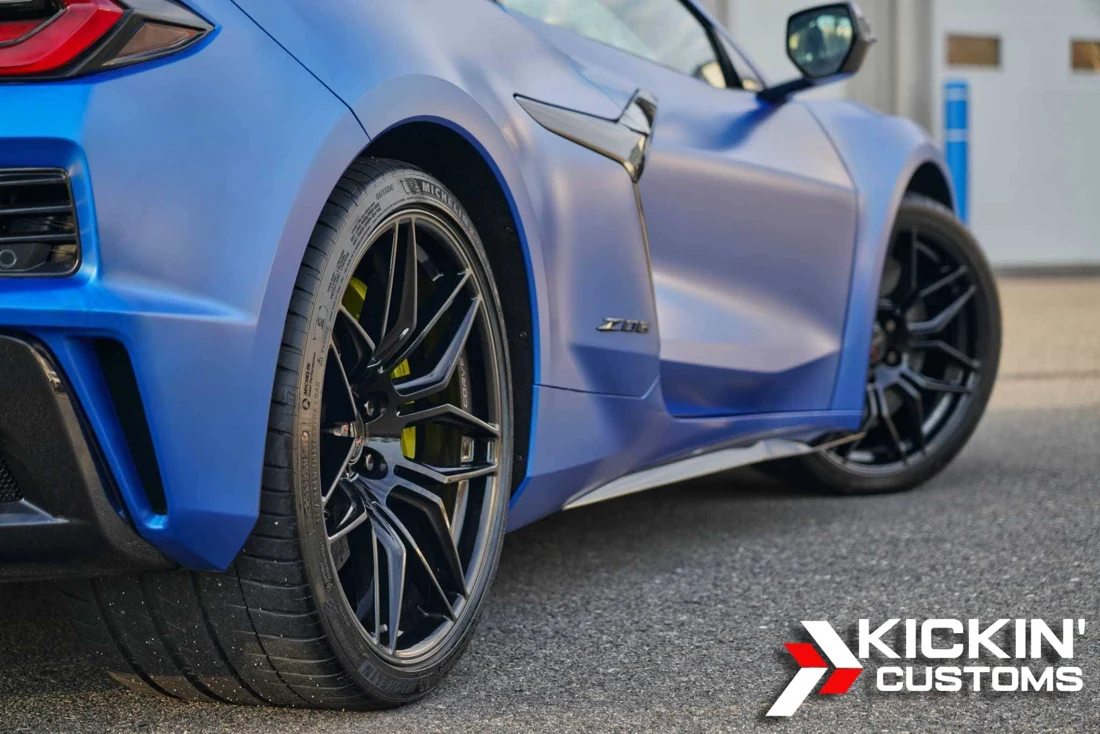
This is most common in areas with curves, tension, wrapped edges, tight corners, complex bumper shapes, mirrors, rocker panels, wheel arches, door cups, and lower body panels.
How Much Edge Movement Is Normal?
A slight amount of edge movement during curing can be normal.
In many cases, around 1/16 of an inch can be addressed during the 3-week follow-up inspection. This is why we ask customers not to panic over a tiny edge concern during the first few days.
The film is still curing. The vehicle is adjusting to real-world temperature changes. Moisture is still leaving the installation. Some small areas may need to be reviewed and touched up after the film has settled.
That said, the edge should not be peeling back heavily. It should not be collecting dirt. It should not be lifting in a large section. It should not be growing worse after normal use.
A small edge concern is one thing. A large lifting area is different.
What Areas Are More Likely to Show Edge Movement?
Not every panel behaves the same.
A hood is usually easier to install and cure because it is larger and flatter. A bumper is more complicated because it may have curves, parking sensors, grilles, vents, sharp body lines, and recessed areas.
Some common areas where customers may notice small curing-related concerns include front bumper corners, mirror edges, rocker panel ends, lower door edges, wheel arch areas, rear quarter edges, wrapped hood edges, A-pillars, door cups, and trunk or hatch loading areas.
These areas are not necessarily bad installation areas. They are simply places where the film has more shape, more tension, more exposure, or more contact with water, dirt, and air movement.
What Is Not Normal for PPF Edge Lift?
A tiny edge that needs review during curing is one thing.
A major lift is not something to ignore.
You should contact Kickin’ Customs if the film is peeling back, if the edge is lifting enough to collect dirt, if the lifted area is growing, if the film was hit by a pressure washer, if the edge was picked or pulled, or if the film looks loose across a larger section.
You should also contact us if the edge is located in a high-impact area, such as a rocker panel, bumper corner, lower door, or wheel arch.
The earlier we see it, the better chance we have of correcting it cleanly.
Protect the film while it settles
Do Not Pick at the Film
This is one of the most important things to understand after PPF installation.
Do not pick at the edge.
If you see a small area that looks lifted, do not press it down with your finger. Do not rub it. Do not try to heat it. Do not apply glue. Do not use a towel to force it back down. Do not trim it yourself.
Picking at the film can contaminate the adhesive, stretch the material, trap dirt, or turn a small issue into a larger replacement.
Even clean hands can introduce oils or debris under the edge. Once dirt gets under the film, that area becomes harder to correct cleanly.
If something concerns you, take a photo and contact the shop.
Do Not Pressure Wash a Lifted Edge
Pressure washers can cause serious problems if they are used too close to film edges.
After PPF has cured, pressure washing can be done carefully. But the nozzle should stay at least 3 feet away from film edges, seams, corners, and wrapped areas. The stream should never be aimed directly into the edge of the film.
This matters even more if an edge already looks slightly lifted.
High-pressure water can force its way under the film. Once water gets under the edge, it can carry dirt and road grime with it. That can make the edge harder to save.
PPF is built to take road abuse. It is not designed to have high-pressure water forced underneath it.
Why the First 7 Days Matter
The first week after PPF installation is important.
We recommend avoiding washing the vehicle for 7 days after installation. This gives the film time to begin bonding properly without soap, pressure, wash mitts, towels, automatic wash brushes, or chemicals disturbing the edges.
Even if the vehicle gets dirty, it is better to wait.
During the first week, leave the film alone. Let it cure. Avoid washing. Avoid pressure washing. Avoid touching edges. Avoid wiping dry dirt across the film.
The better the first week goes, the better the film has a chance to settle.
Inspection and coverage
Why the 3-Week Follow-Up Inspection Matters
At Kickin’ Customs, the 3-week follow-up inspection is required for PPF workmanship coverage.
This visit allows us to inspect the film after it has had time to cure, settle, and experience real-world conditions. We check edges, corners, moisture areas, lift points, and any small concerns that may have appeared during curing.
This appointment is where small edge movement can often be addressed before it becomes a larger issue.
If the follow-up is skipped and a later issue appears that could have been corrected during that inspection, replacement may not be free or covered under workmanship.
The follow-up is part of the installation process. It protects the customer, the shop, and the quality of the finished job.
Workmanship Coverage and Manufacturer Warranty Are Different
It is important to understand the difference between workmanship coverage and manufacturer warranty.
Kickin’ Customs installs XPEL paint protection film, including XPEL Ultimate Plus, XPEL Stealth, and XPEL Ultimate Fusion. XPEL paint protection film carries a 10-year manufacturer warranty against covered film defects.
Manufacturer warranty coverage applies to qualifying product issues. Workmanship coverage relates to the installation itself.
An edge issue caused by skipped aftercare, pressure washing too close, picking at the film, contamination, impact damage, or missing the required follow-up inspection is different from a covered manufacturer defect.
This is why aftercare and follow-up matter.
Repair and long-term care
Can an Edge Be Fixed?
Sometimes, yes.
If a small edge moves during curing and stays clean, it may be possible to correct it during the follow-up inspection. This is why early inspection matters.
If dirt, wax, soap, ceramic product, road grime, or pressure washer contamination gets under the edge, correction becomes harder. In some cases, the affected piece may need to be replaced.
The sooner the issue is reviewed, the more options we have.
Do not wait months to mention an edge concern that appeared during the first few weeks. By then, the area may have already collected contamination.
Can PPF Edge Lift Happen Later?
Yes, but later edge lift is usually tied to a cause.
Pressure washing too close to the film, automatic brush washes, aggressive scrubbing, harsh chemicals, wax buildup, impacts, scraping, road debris, or improper maintenance can all contribute to edge problems over time.
PPF is durable, but it still needs proper care.
Edges should not be treated like exposed paint. Avoid forcing towels, brushes, pressure washer streams, or chemicals into them.
Good maintenance habits help the film last longer and look better.
How to Protect PPF Edges Over Time
The best way to protect PPF edges is to wash the vehicle carefully and avoid aggressive contact.
Use clean microfiber towels. Use safe wash media. Avoid automatic brush washes. Keep pressure washers at least 3 feet away from edges. Do not aim water into corners or seams. Avoid wax or polish buildup along edges. Clean bugs, bird droppings, sap, salt, and grime as soon as reasonably possible.
For XPEL film, we recommend using XPEL maintenance products whenever possible. We do not test every product from every brand, so using products designed for XPEL film is the safest recommendation.
If your vehicle has XPEL Ultimate Fusion, the hydrophobic properties are expected to last around 4 years, while the film itself still carries the 10-year manufacturer warranty.
PPF Is Sacrificial Protection
Paint protection film protects the paint by taking the abuse first.
If the film gets damaged, marked, scraped, or torn, it may have done its job by helping protect the paint underneath. This is especially important on front bumpers, rocker panels, lower doors, rear quarters, mirrors, and other high-impact areas.
Edge lift is not the same thing as impact damage, but both should be inspected properly.
If a piece of film is damaged beyond correction, it may be replaced. That is still one of the biggest advantages of PPF compared to leaving the paint exposed.
Kickin’ Customs also offers a one-time No-Fault Replacement benefit up to $250 on qualifying installs of $495 or more. This can help with certain real-world situations where the film takes damage after installation.
The No-Fault Replacement benefit is for the original customer on qualifying PPF installations. Insurance claims are excluded.
What Should You Do If You Notice Edge Lift?
If you notice a small edge concern, do not touch it.
Take a clear photo. Try to show the panel, the location, and a close-up of the edge. Then contact Kickin’ Customs so we can review it.
If the vehicle is still within the curing period, we may tell you to leave it alone until the follow-up inspection. If the edge looks more serious, we may want to inspect it sooner.
Either way, the answer is not to pick at it or try to fix it yourself.
Final Thoughts
Yes, PPF can move slightly at the edges during curing.
A very small amount of edge movement, often around 1/16 of an inch, can be normal and may be addressed during the 3-week follow-up inspection. Minor curing behavior does not automatically mean the installation has failed.
Large lifting, peeling, dirt collection, or worsening edge movement should be checked.
At Kickin’ Customs in Raynham, MA, we install XPEL paint protection film for daily drivers, trucks, SUVs, EVs, luxury vehicles, performance cars, and exotics across Massachusetts and Rhode Island.
The film needs time to cure. The edges need proper care. The follow-up inspection matters.
If you see something that concerns you, leave it alone, take a photo, and contact us.
Frequently Asked Questions
Can PPF lift at the edges after installation?
Yes, a small amount of edge movement can happen during the curing period. Around 1/16 of an inch may be normal in some areas and can often be addressed during the 3-week follow-up inspection.
Is edge lift always an installation problem?
No. Edge lift can be related to curing, pressure washing, picking, contamination, harsh chemicals, automatic washes, impact damage, or improper maintenance. The cause should be inspected before assuming the issue.
Should I push a lifted PPF edge back down?
No. Do not press, rub, pick, heat, glue, or trim the film yourself. Contact Kickin’ Customs so the area can be reviewed properly.
Can pressure washing lift PPF edges?
Yes. A pressure washer can lift film if it is used too close or aimed directly into an edge. Keep the nozzle at least 3 feet away from film edges, seams, corners, and wrapped areas.
How long does PPF take to cure?
Most PPF installations take 2 to 3 weeks to cure. Cold, damp, or winter weather can slow the process.
When should I come back for a PPF follow-up?
Kickin’ Customs requires a 3-week follow-up inspection for PPF workmanship coverage. This allows us to inspect the film after it cures and address small concerns early.
What if dirt gets under a lifted edge?
If dirt gets under the film, the area can become harder to correct cleanly. Contact the shop as soon as possible and avoid touching or washing the area aggressively.
Can a lifted PPF edge be fixed?
Sometimes. If the edge is clean and caught early, it may be correctable. If the adhesive is contaminated or the film is damaged, replacement may be needed.
Plan your next step
Not sure if your PPF edge is normal or needs attention? Contact Kickin’ Customs in Raynham, MA to schedule a paint protection film inspection or your required 3-week follow-up appointment.
