The short answer
Windshield protection film and ceramic glass coating are both designed to help protect automotive glass, but they do very different jobs.
That is where the confusion usually starts.
One is a physical layer installed on the outside of the windshield.
The other is a coating applied to the glass surface.
They can both be useful, but they should not be compared as though they provide the same type of protection.
What each product does
What Is Windshield Protection Film?
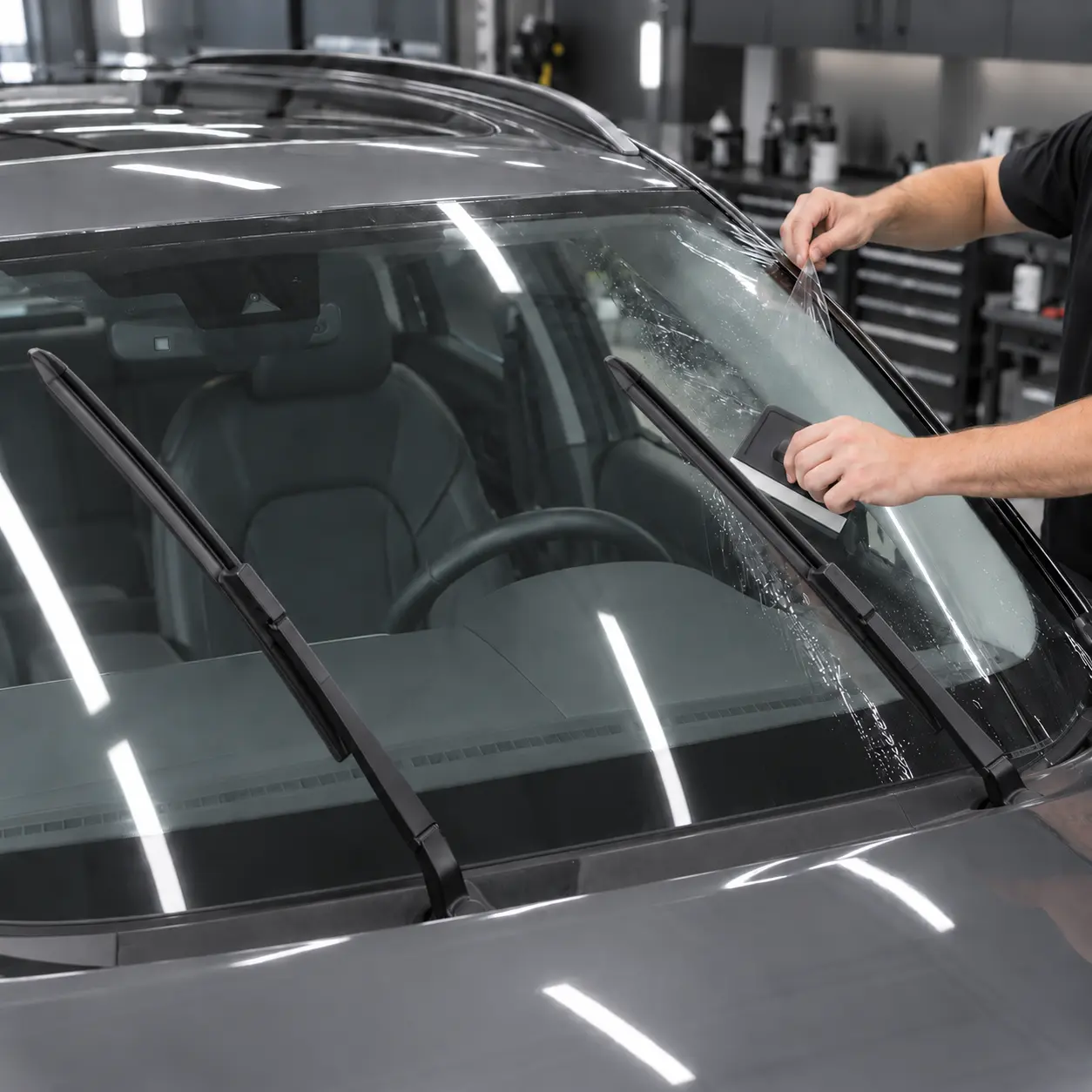
Windshield protection film is a clear exterior film installed over the windshield.
Its purpose is to act as a sacrificial layer between the glass and the road.
When small debris, sand, or stones hit the windshield, the film helps absorb and spread some of that impact before it reaches the glass.
It cannot guarantee that the windshield will never chip or crack.
The goal is risk reduction.
What Is a Ceramic Glass Coating?
A ceramic glass coating is applied directly to the glass surface.
Its main purpose is to improve surface behavior.
That can include:
- Better water repellency
- Easier cleaning
- Reduced buildup of dirt and contamination
- Improved visibility in wet conditions
It does not provide the same physical impact protection as windshield protection film.
That is the biggest difference between the two services.
One Protects Against Impact, the Other Helps With Maintenance
The easiest way to think about it is this:
Windshield protection film helps protect the glass from road impact.
Ceramic glass coating helps the glass stay easier to clean and shed water more effectively.
They solve different problems.
If your main concern is rock chips or cracked glass, windshield protection film is the more relevant service.
If your main goal is easier maintenance and better water behavior, ceramic glass coating may make more sense.
Can Ceramic Coating Stop a Rock Chip?
No.
A ceramic coating is extremely thin compared with a physical protection film.
It is not designed to absorb the energy from a stone hitting the windshield at highway speed.
It may protect the glass surface from certain environmental contamination, but it should not be sold as rock-chip protection.
Can Windshield Protection Film Improve Water Behavior?
Yes, depending on the product and its condition, the surface can still have useful water behavior.
But that is not the main reason the film is installed.
Its primary purpose is physical protection.
Over time, the exterior surface of the film can wear from:
- Windshield wipers
- Dirt
- Road debris
- Washing
- Weather
- Everyday driving
That is normal.
The film is designed to be replaceable.
Care and visibility
Windshield Protection Film Is a Wear Item
This is important for customers to understand.
Paint protection film can remain on a vehicle for many years.
Windshield protection film lives in a much harsher environment.
It sits directly in the path of road debris and is constantly contacted by the wipers.
That means it should be viewed as a wearable, replaceable protective layer.
At Kickin’ Customs, our XPEL windshield protection film carries a 12-month or 12,000-mile warranty.
The film may eventually need to be replaced as the surface wears.
Ceramic Glass Coating Also Requires Maintenance
A ceramic coating does not make glass maintenance-free.
The windshield still needs to be cleaned.
Wiper blades still need to be kept in good condition.
Mineral deposits, road film, and contamination can still build up.
The coating simply helps make the surface easier to maintain.
Like any coating, its performance can also change over time depending on use and care.
What About Visibility?
Both products should be installed with visibility in mind.
Windshield protection film is designed to remain clear, but because it is a physical layer, surface wear can eventually affect how it looks.
That is one reason regular inspection matters.
Ceramic glass coating does not add a film layer, so there is no replaceable surface sitting above the glass.
The tradeoff is that it does not provide the same physical protection.
What Happens When Windshield Protection Film Gets Damaged?
That is part of its purpose.
If the film takes damage from road debris, the film may need to be replaced.
In some cases, the windshield underneath may remain unharmed.
That does not mean the film failed.
It may have taken the damage instead of the glass.
The important thing is to inspect the windshield and film to determine what happened.
Can You Use Both?
In some situations, yes.
The best combination depends on the product and application.
The main point is that each service should be chosen for the job it is designed to do.
There is no reason to choose a ceramic glass coating when your real concern is impact damage.
There is also no reason to expect windshield protection film to behave exactly like a dedicated glass coating.
Choose your protection
Which One Makes More Sense for Highway Driving?
For customers who do a lot of highway driving, windshield protection film may be the more relevant option.
That is especially true for vehicles with:
- Large windshields
- Expensive glass
- Advanced driver-assistance cameras
- Difficult or costly windshield replacement
- High annual mileage
It can also be useful for vehicles that regularly travel behind trucks or through areas with loose road debris.
Again, it reduces risk.
It does not eliminate it.
Which One Makes More Sense for Easier Cleaning?
If the main goal is water behavior and easier maintenance, ceramic glass coating may be the better fit.
It can make rain, dirt, and contamination easier to manage.
That can be especially useful for vehicles that are driven regularly in poor weather.
Practical Comparison
Windshield Protection Film
Best for:
- Reducing the risk of chips and impact damage
- Protecting expensive or difficult-to-replace glass
- Highway-driven vehicles
- Owners who want a sacrificial exterior layer
Things to understand:
- It is a physical film
- It can wear over time
- Wipers contact the surface
- It may eventually need replacement
- It cannot guarantee the windshield will never crack
Ceramic Glass Coating
Best for:
- Water repellency
- Easier cleaning
- Reduced surface contamination
- Improving wet-weather glass behavior
Things to understand:
- It is not impact protection
- It still requires maintenance
- It does not stop rock chips
- Performance can decrease over time
How We Approach Windshield Protection at Kickin’ Customs
We recommend the service based on what the customer is actually trying to solve.
If the concern is rock chips, expensive replacement glass, or highway exposure, we discuss windshield protection film.
If the priority is water behavior and easier maintenance, we discuss ceramic glass coating.
In some cases, a customer may benefit from both types of protection.
The important part is understanding that they serve different purposes.
Final Thoughts
Windshield protection film and ceramic glass coating are not competing versions of the same product.
They do different jobs.
Windshield protection film is a physical, sacrificial layer designed to reduce the risk of road-impact damage.
Ceramic glass coating improves how the glass behaves and how easy it is to maintain.
Once you know which problem you are trying to solve, choosing between them becomes much easier.