
The short answer
Ceramic window tint is especially useful on electric vehicles when cabin comfort, glare control, and solar heat are priorities. Many EVs use large windshields, expansive side glass, or panoramic roof glass that can make the cabin feel bright and warm in direct sun. Ceramic film helps reduce incoming infrared and solar energy while filtering UV, and it can do that without requiring the darkest available shade.
For an EV owner, that matters for more than appearance. Heating and air conditioning use energy from the vehicle, and reducing solar load can make the cabin easier to cool. That does not mean ceramic tint will produce a guaranteed increase in driving range. Actual energy use depends on the vehicle, weather, temperature, glass area, HVAC settings, driving conditions, and many other factors.
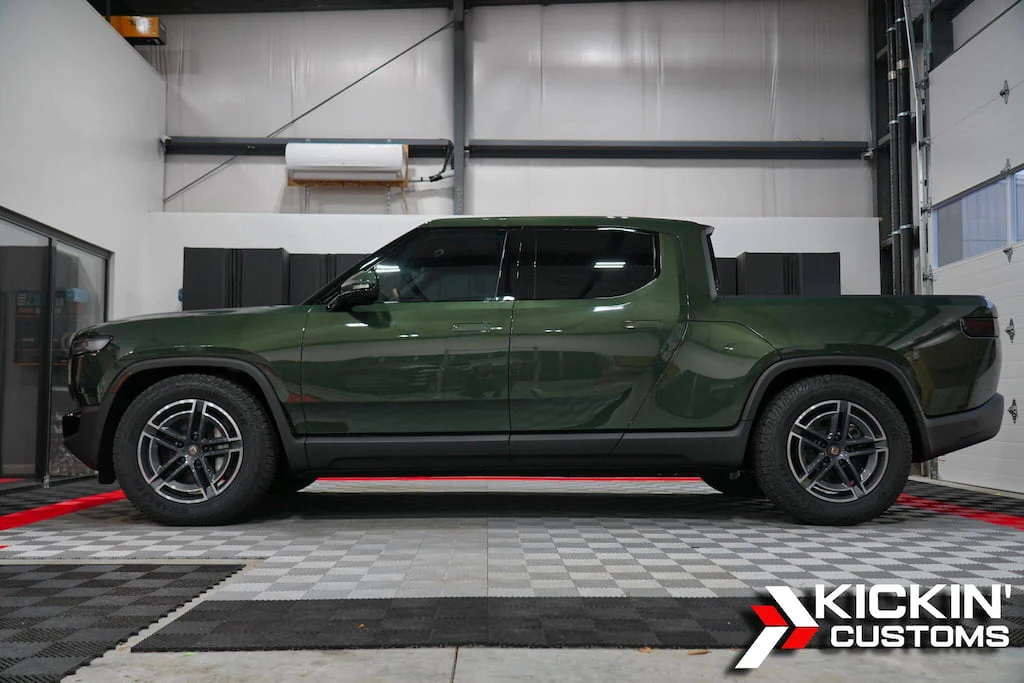
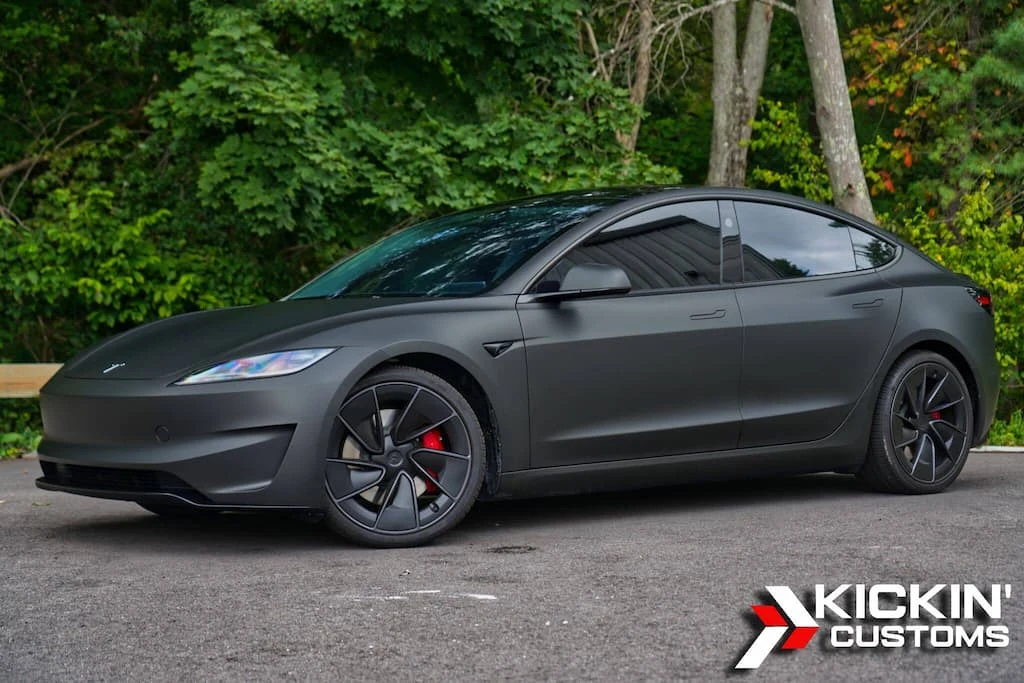
At Kickin' Customs in Raynham, Massachusetts, we install XPEL PRIME XR Black and XR Plus ceramic window film for electric vehicles including Tesla and Rivian models, as well as other EVs and plug-in vehicles. We are an XPEL Certified Tesla Network Partner and XPEL Certified Rivian Network Partner.
Comfort and ceramic performance
Why EV Owners Notice Glass and Cabin Heat
Electric vehicles are not automatically hotter than gasoline vehicles, but many popular EV designs put a large amount of glass around the cabin. A broad windshield, panoramic roof, large fixed quarter glass, or expansive rear glass can increase the amount of solar energy entering the vehicle depending on the factory glass and sun angle.
The issue is not limited to a parked car on a very hot day. Direct sun can create localized heat on the driver, front passenger, rear passengers, child seats, pets, dashboards, screens, seats, and armrests even while the climate control system is running.
Ceramic tint is useful because it addresses the glass itself. Instead of relying only on darker appearance, the film is selected for solar performance, UV filtering, glare control, and visibility.
Ceramic Tint Can Reduce Solar Load Without Making the Glass Extremely Dark
One of the biggest misconceptions about window tint is that darker automatically means better heat rejection. Film darkness and film technology are separate decisions.
A lighter ceramic film can provide meaningful infrared and UV performance while preserving more outward visibility. That is particularly important for owners who want cabin comfort without a heavily darkened appearance, or who are considering legally eligible windshield film.
XPEL currently positions PRIME XR Black as the balanced ceramic option and XR Plus as its highest PRIME ceramic performance tier. XPEL's published specifications show 99% UV rejection for both product families and higher maximum infrared performance for XR Plus. Exact performance varies by shade and measurement method, so the selected film should be compared by its current technical data rather than by darkness alone.
XR Black vs. XR Plus for an Electric Vehicle
Both films are ceramic options. The practical decision is how much solar performance you want and how much you want to invest in the upgrade.
| Film | Positioning | Current XPEL Performance Direction | Best Fit |
|---|---|---|---|
| XPEL PRIME XR Black | Balanced ceramic upgrade | High infrared rejection, 99% UV rejection, signal-friendly ceramic construction | Owners who want strong ceramic performance without moving to the top tier |
| XPEL PRIME XR Plus | Premium ceramic tier | XPEL's highest PRIME ceramic performance, 99% UV rejection, higher listed maximum IR figures | Owners prioritizing maximum available ceramic performance and cabin comfort |
Performance figures are manufacturer maximums, not a promise that every shade, vehicle, or glass configuration will perform identically. Factory glass, film shade, total glass area, weather, sun angle, and testing method all influence the result.
Does Ceramic Tint Improve EV Range?
Ceramic tint should not be sold as a range modification.
What can be said accurately is that vehicle climate control uses energy. The U.S. Department of Energy notes that heating and air conditioning can reduce EV driving range, and NREL research has shown that reducing solar load can reduce cooling demand. Advanced glazing and other thermal-load-reduction strategies are specifically studied because keeping solar energy out of the cabin lowers the work required during cool-down.
Ceramic window film can be part of that solar-load strategy, but the real-world effect on energy consumption varies too much to promise a mileage or percentage gain. An owner should choose ceramic tint primarily for cabin comfort, solar performance, UV filtering, and glare reduction. Any efficiency benefit should be treated as secondary and vehicle-specific.
Glass and electronics
Factory Privacy Glass Is Not the Same Question as Ceramic Performance
Many SUVs and trucks, including some electric models, come with darker rear privacy glass. That can make the vehicle look finished from the factory, but darkness alone does not tell you how much infrared or total solar energy the glass rejects.
That means a vehicle with dark rear glass may still benefit from ceramic film if the owner wants additional solar performance. The front windows can also be matched visually as closely as legal limits allow, but an exact color or reflection match to factory privacy glass is not guaranteed.
For a Rivian R1S or R1T, for example, rear passenger comfort, pets, cargo, and road-trip use can make the side and rear glass worth discussing even when it already looks dark.
Windshield Ceramic Tint Can Be One of the Most Noticeable Comfort Upgrades
The windshield is often one of the largest pieces of glass in the cabin and sits directly in front of the driver and passenger. A legally eligible lighter ceramic windshield film can reduce portions of incoming infrared energy, UV, and glare without being selected primarily for a dark appearance.
This is especially relevant on vehicles such as a Tesla Model 3 or Model Y, Rivian R1T or R1S, Porsche Taycan, and other EVs with broad or steeply raked glass. The correct film and shade still depend on the exact vehicle, measured glass, registration, applicable law, visibility needs, sensors, and Kickin' Customs policy.
A published windshield price is not automatic approval for every vehicle or shade. Legal eligibility must be reviewed before installation.
Panoramic Roof Glass Needs a Vehicle-Specific Review
Large roof glass is one reason EV owners ask about ceramic film, but panoramic roofs should not be treated like ordinary side windows.
Glass construction, factory coatings, laminates, curvature, embedded technology, existing damage, and manufacturer guidance all matter. Some owners are comfortable with the factory roof performance. Others want additional solar control because of direct sun exposure, rear-seat comfort, or how the cabin feels during summer driving.
Kickin' Customs reviews panoramic and sunroof glass by vehicle before accepting the installation. Our current ceramic tint pricing starts at $250 with XR Black and $350 with XR Plus for compatible roof glass, but the exact glass must be reviewed first.
Ceramic Tint and EV Electronics
Modern electric vehicles depend heavily on connected electronics, including phones, Bluetooth, GPS, satellite services, key systems, toll transponders, and vehicle connectivity. That makes signal compatibility part of the product discussion.
XPEL's current PRIME product comparison lists its ceramic films as signal compatible. Unlike older metalized films that could create interference concerns, modern ceramic products are selected specifically to deliver solar performance without relying on a metallic construction that blocks common signals.
Vehicle-specific sensors and cameras still deserve review when windshield work is involved. Film selection and installation should never assume that every piece of specialty glass is identical.
Coverage and starting prices
Where Should an EV Owner Start With Tint Coverage?
The best coverage depends on the vehicle and the problem you are trying to solve. A simple priority order is:
1. Front Side Windows
For many EV owners, the driver and front-passenger windows are the first upgrade because they directly affect daily comfort. This is also the common approach for SUVs and trucks that already have darker rear privacy glass.
2. Side and Rear Glass
Full-surround ceramic film creates more consistent solar performance across the cabin and is worth considering for family vehicles, rear passengers, pets, road trips, and owners who park outside often.
3. Windshield
When legally eligible, a lighter ceramic windshield film can address the largest forward-facing glass area without requiring a dark windshield appearance.
4. Panoramic Roof
Roof glass can be part of the plan when the exact construction and compatibility are approved. It is not automatically recommended for every EV.
Current Ceramic Tint Starting Prices
Kickin' Customs currently uses the following starting prices for XPEL PRIME XR Black and XR Plus ceramic window film. Final pricing depends on the exact vehicle, glass count and size, trim, curvature, existing film, access, specialty glass, and legal eligibility.
| Coverage | XR Black | XR Plus |
|---|---|---|
| Front two windows | $225 | $300 |
| Full vehicle surround | $525 | $750 |
| Full windshield | $300 | $400 |
| Full vehicle with windshield | $775 | $1,050 |
| Windshield strip | $100 | $125 |
| Sunroof or panoramic roof | $250 | $350 |
Windshield, windshield-strip, and panoramic-roof work is accepted only when the vehicle, glass, installation request, and applicable requirements are appropriate.
Expectations and aftercare
Ceramic Tint Is Not the Same as Windshield Protection Film
EV owners often ask about windshield tint and windshield protection film at the same time, but the two products have different jobs.
- Ceramic windshield tint is installed on the inside of eligible glass and is chosen for solar performance, UV filtering, glare control, and comfort.
- Windshield protection film is installed on the exterior and is designed as a replaceable sacrificial layer to help reduce the risk of certain chips, cracks, and surface wear from road debris.
One does not replace the other. On a vehicle with expensive or sensor-equipped glass, both can be worth discussing when compatible and appropriate.
What Ceramic Tint Does Not Do
Setting expectations matters, especially when the vehicle already has expensive factory glass and advanced electronics.
- It does not keep a parked vehicle permanently cool.
- It does not eliminate the need for air conditioning or preconditioning.
- It does not guarantee a measurable EV range increase.
- It does not make glass impact-resistant or prevent break-ins.
- It does not make the darkest shade the best choice for every driver.
- It does not guarantee an exact visual match to factory privacy glass.
- It does not make every windshield or panoramic roof automatically eligible for film.
Ceramic tint is most valuable when the owner wants better control over solar energy, glare, UV exposure, and cabin comfort while preserving the visibility and appearance that make sense for the vehicle.
What to Expect After Ceramic Tint Installation
- Keep movable windows closed for 3 to 5 days unless your delivery instructions specify longer.
- Do not clean the inside of the tinted glass for 7 days.
- Light haze, moisture pockets, or small water bubbles can remain visible for 1 to 2 weeks while the film cures.
- Curing can take longer in cold or humid weather.
- After curing, use a clean microfiber towel and a mild ammonia-free glass cleaner.
- Avoid abrasive towels, razor blades, rings, keys, cargo, pet claws, and sharp objects against the film.
Qualifying professionally installed XPEL PRIME film also includes XPEL's limited lifetime manufacturer warranty, subject to current written terms. Qualifying Kickin' Customs packages include separate ownership support under the current Window Film Replacement Benefit terms.
Electric Vehicles We Commonly Discuss for Ceramic Tint
The same principles apply across EV brands, but glass layout changes the recommendation. Examples include:
- Tesla Model S, Model 3, Model X, Model Y, and Cybertruck
- Rivian R1T and R1S
- Porsche Taycan
- BMW i4, i5, i7, and iX
- Mercedes-Benz EQ models
- Ford Mustang Mach-E and F-150 Lightning
- Hyundai IONIQ and Kia EV models
- Lucid Air and other premium EVs
This is not a one-size-fits-all list. Windshield construction, roof glass, factory privacy glass, legal requirements, and available patterns can differ by model year and trim.
Frequently asked questions
Is ceramic tint worth it on an electric vehicle?
It can be one of the most noticeable comfort upgrades on an EV, particularly when the vehicle has large glass areas or spends significant time in direct sun. Ceramic film can reduce incoming infrared energy, filter UV, and reduce glare without requiring an extremely dark shade.
Will ceramic tint increase my EV range?
Do not expect a guaranteed range increase. Climate control consumes vehicle energy, and reducing solar load can reduce cooling demand, but the real-world range effect depends on too many variables to promise a specific mileage or percentage improvement.
Does darker tint reject more heat?
Not necessarily. Film technology and VLT are separate. A lighter premium ceramic film can outperform a darker basic film for infrared and solar performance. Choose the product first, then choose an appropriate shade.
Do I need to tint factory privacy glass?
Not automatically. Factory privacy glass may already be dark, but appearance alone does not tell you its solar performance. Adding ceramic film can make sense when additional heat rejection or UV performance is the goal. The exact glass and desired appearance should be reviewed first.
Should I tint the panoramic roof on my Tesla or Rivian?
Only after the exact roof glass is reviewed. Glass construction, coatings, laminates, vehicle design, condition, and manufacturer guidance all matter. Some owners are satisfied with the factory roof glass, while others want additional solar control.
Can I tint the full windshield?
Only when the vehicle, registration, glass, measured VLT, requested film, visibility needs, applicable law, and Kickin' Customs policy make the installation eligible. The published price is not automatic approval.
Will ceramic tint interfere with GPS, Bluetooth, phones, or vehicle connectivity?
XPEL's current ceramic-film comparison lists signal compatibility. Modern non-metallic ceramic film is selected to provide solar performance without the signal-interference concerns associated with some older metalized films.
How long do I need to keep my windows up after tint?
Plan on 3 to 5 days unless your delivery instructions specify longer because of temperature or conditions. Light haze and moisture during the first one to two weeks can be normal while the film cures.
Plan your next step
Build the Tint Package Around the EV, Not Just the Shade
The best ceramic tint plan starts with the vehicle's glass layout and how the owner actually uses the cabin. A commuter may prioritize front windows and a legally eligible windshield. A family R1S may benefit from full-surround coverage. A Tesla owner with a panoramic roof may want the roof evaluated separately instead of assuming every piece of glass needs the same film.
Send us the year, make, model, trim, current glass condition, existing film, and the areas you want tinted. We will compare XR Black and XR Plus, review shade options in person, check the windshield or roof glass when applicable, and provide the exact written quote before installation.
Kickin' Customs installs XPEL ceramic window tint at our Raynham, Massachusetts shop for EV owners throughout Southeastern Massachusetts and Rhode Island.
