Protecting the paint you enjoy
A few rock chips on the bumper. A scratch along the rocker panel. Road rash building up behind the wheels.
These are common signs of driving a vehicle you enjoy. But when you want to bring the finish back to its original condition, the solution can involve more than a quick polish.
Our repainting cost graphic highlights how individual panels can add up to a significant repair bill. It also raises an important question: if you care about keeping your paint in good condition, does it make sense to protect it before the damage happens?
Paint protection film gives you that option.
Why Original Paint Is Worth Preserving
Your vehicle only has its original factory paint once.
A qualified body shop can produce an excellent repair. Modern refinishing products and skilled technicians can achieve a close color match and a high-quality finish. The point is not that every repaint will look different or perform poorly.
The distinction is that repairing the finish changes its history. Once a panel has been repainted, it is no longer wearing its original factory finish.
For an owner who values originality, that matters. Preserving healthy factory paint can also help avoid the time, expense, and decisions that come with refinishing a panel.
Repainting Costs Involve More Than Paint
When you receive an estimate to repaint a bumper or hood, you are paying for the work required to prepare, refinish, and reassemble that area.
Depending on the damage and the vehicle, the job may involve removing trim, repairing the surface, preparing the panel, matching the color, applying the finish, and reinstalling components.
Color matching can also require blending into an adjacent panel to make the transition less noticeable. PPG’s professional refinishing procedures include color verification and blending techniques because a quality repair requires more than selecting a paint code.
That is why a small area of visible damage does not always mean a small repair bill.
What Our Repainting Cost Graphic Shows
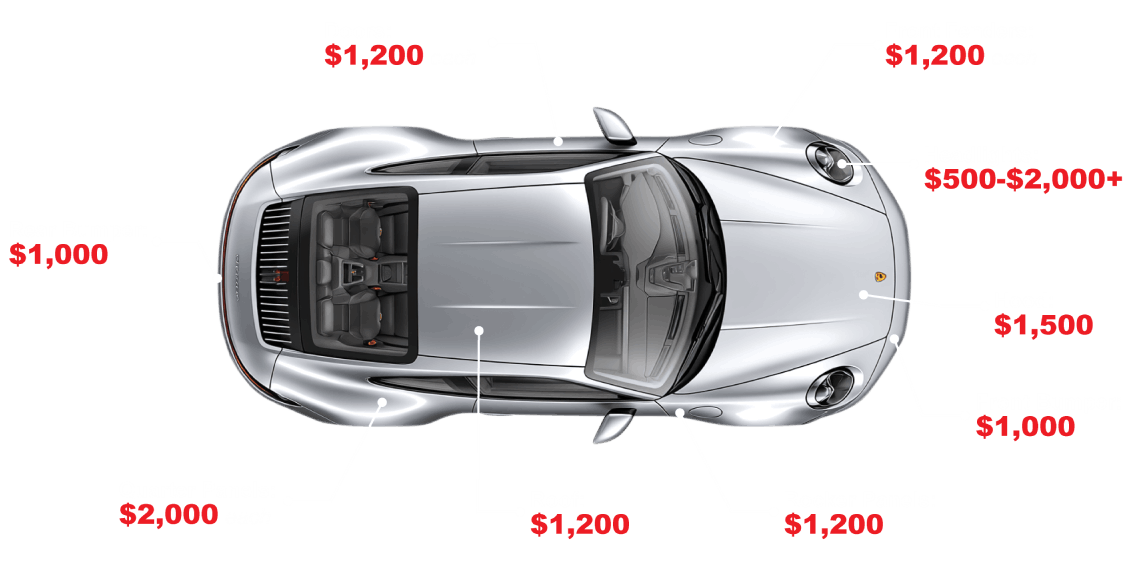
The graphic on our PPF page uses example costs of $1,000 for a front bumper, $1,500 for a hood, and $1,200 for each front fender.
Using those figures, refinishing those four areas would total $4,900.
These are illustrative figures, not repair quotes or a verified local pricing guide. Actual costs depend on the vehicle, paint finish, damage, labor, and repair procedures. Some repairs may cost less, while others may cost considerably more.
The headlight figure shown in the graphic is a separate replacement expense, not a repainting cost.
The takeaway is straightforward: correcting wear across multiple areas can become expensive, even when the vehicle has never been involved in a major collision.
What PPF Does Differently
Paint protection film places a protective layer over the painted surfaces you choose to cover.
XPEL PPF is designed to help protect against rock chips, scratches, and scuffs. Instead of leaving the paint directly exposed, the film takes the first contact.
If an impact damages the film without reaching the paint underneath, replacing the affected film can preserve the original finish.
That does not make the vehicle damage-proof. A severe impact can penetrate the film, and PPF does not prevent dents or collision damage. Film replacement also has a cost.
Its purpose is to reduce the likelihood of everyday damage reaching the paint.
Why Polishing Is Not Always the Answer
Paint correction can improve certain surface defects, but it cannot replace missing paint.
If a stone chips through the finish, polishing will not fill the chip. Touch-up paint may make the spot less noticeable, while more extensive damage may require refinishing to achieve the appearance the owner wants.
This is where protecting the surface beforehand becomes valuable. PPF helps address exposure to damage that detailing alone cannot undo.
You still need to wash and maintain a protected vehicle. The benefit is having a replaceable protective layer over the paint.
Does PPF Always Pay for Itself?
There is no honest way to guarantee that.
Some vehicles go years without needing paint repairs. Others develop noticeable front-end wear much sooner. Driving conditions, mileage, vehicle shape, and the owner’s expectations all affect the decision.
For many owners, the value goes beyond comparing installation cost with a future body shop bill. It includes keeping the original finish, spending less time arranging cosmetic repairs, and feeling more comfortable driving the vehicle.
PPF makes the most sense when those benefits matter to you.
Choose Coverage Around How You Drive
You do not have to protect every painted panel to get meaningful coverage.
For frequent highway driving, the front bumper, hood, front fenders, and mirrors are sensible areas to discuss. Vehicles exposed to debris along the lower body may benefit from additional rocker panel and rear impact-area coverage.
Full-body protection provides broader coverage for owners who want to protect more of the finish.
The right package depends on where the vehicle sees wear and how much of its original paint you want to preserve.
Protect the Paint You Want to Keep
Repainting is sometimes necessary, and quality repair work has an important place in vehicle ownership. PPF offers a way to help reduce preventable damage before that repair becomes necessary.
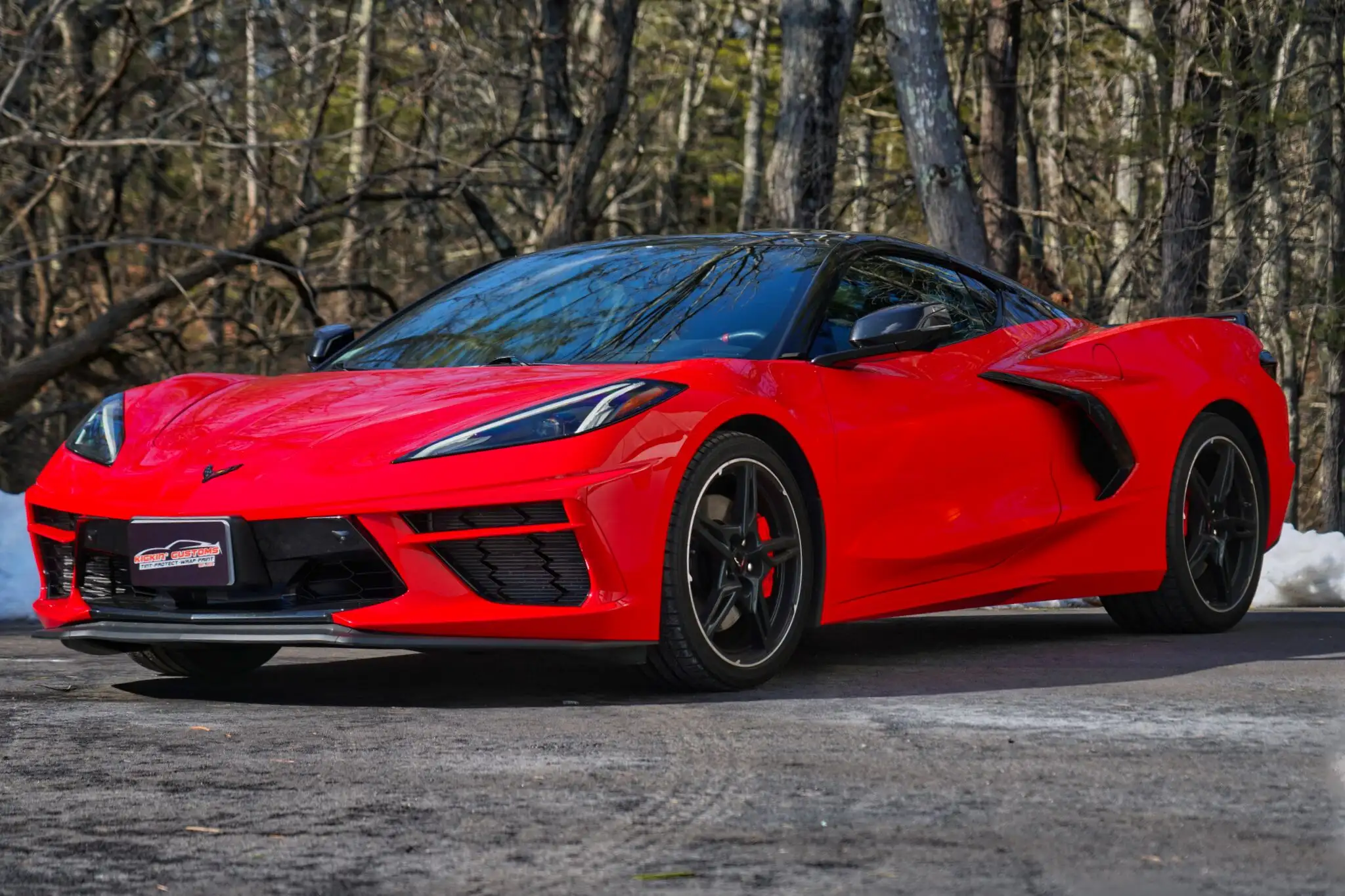
At Kickin’ Customs, we help you choose XPEL paint protection film coverage based on your vehicle, driving habits, and priorities.
Explore our PPF packages or request a quote to find the coverage that fits how you use your vehicle.