
The short answer
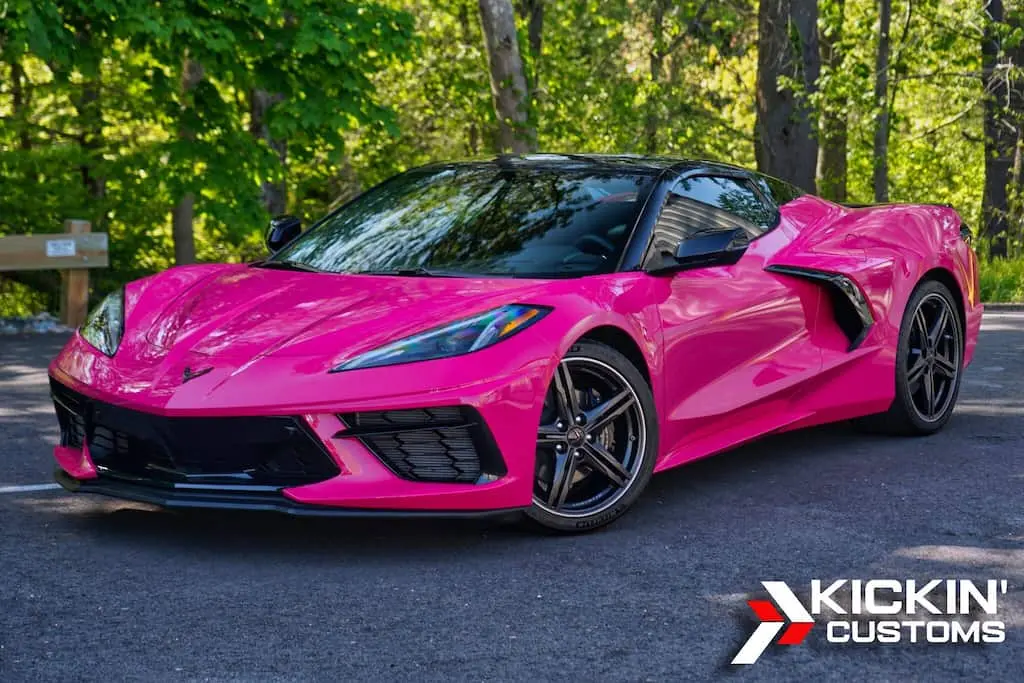
Vinyl wrap is available in far more than a basic gloss or matte finish. Depending on the manufacturer and current product line, vehicle owners can choose from gloss, high-gloss, satin, matte, metallic, pearl, color-shift, chrome, brushed, carbon-style, textured, and other specialty films. The finish changes how the color reflects light, how the vehicle's body lines read, how the wrap should be maintained, and sometimes how the material must be installed.
At Kickin' Customs in Raynham, Massachusetts, we work with established automotive wrap-film lines from manufacturers such as 3M, Avery Dennison, ORAFOL/ORACAL, KPMF, HEXIS, CheetahWrap, and EVOLV. We do not force every project into one brand. The recommendation depends on the exact color, finish, vehicle geometry, current material availability, and how the owner plans to use the vehicle.
The most important advice is simple: choose the finish from a current physical sample whenever possible. A color viewed on a phone or computer screen can look noticeably different once it is stretched across a curved hood, fender, or quarter panel in natural light.
Gloss, satin and matte
The Finish Changes More Than the Color
Two wraps can use nearly the same color and still make the same vehicle look completely different. A deep black in high gloss can create a paint-like, reflective appearance. The same general color in satin softens reflections and emphasizes the body shape. Matte reduces reflections further and creates a flatter visual effect.
Finish also affects ownership. Gloss films tend to reveal swirls, water spots, and surface contamination more readily. Satin and matte finishes need products that will not create uneven shine. Metallic and color-shift films can be directional, so film orientation becomes part of the installation plan. Chrome and textured films may require different seam strategies and can carry different durability or warranty expectations.
That is why the question is not only, 'What color do I want?' It is also, 'What do I want the vehicle to look like in sunlight, under shop lighting, after six months of washing, and from every normal viewing angle?'
Gloss and High-Gloss Vinyl Wrap
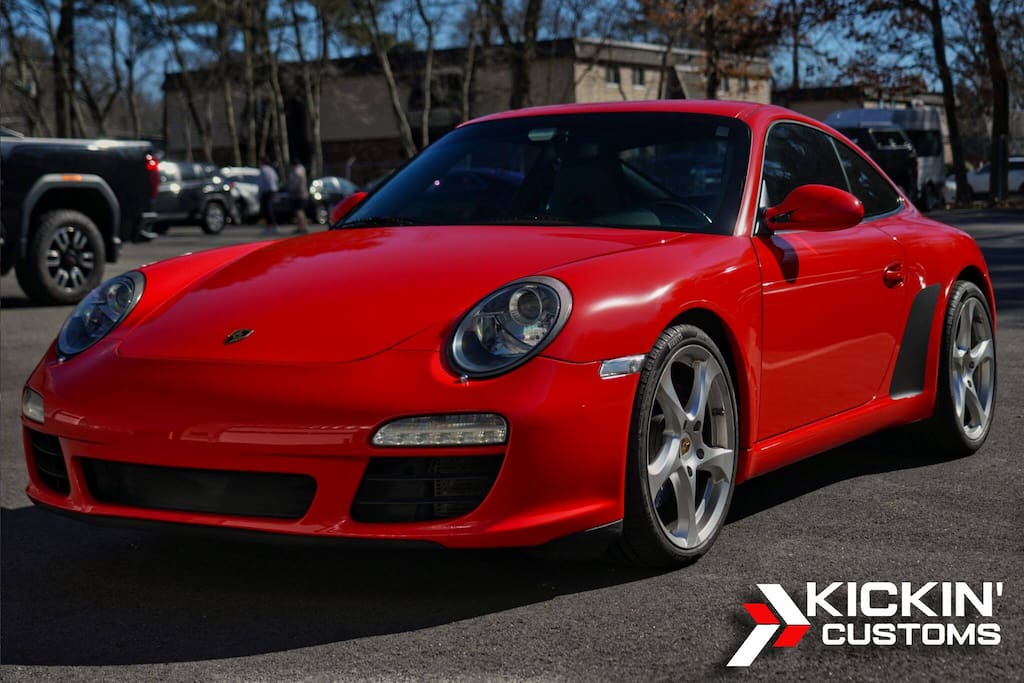
Gloss is the most familiar wrap finish because it is designed to reflect light in a way that feels closer to conventional automotive paint. High-gloss products push that effect further with deeper reflections and a more polished appearance.
Gloss is a strong choice when:
- You want the wrap to look closer to a painted finish than a deliberately muted vinyl finish.
- You like visible reflections and a brighter, more polished appearance.
- You are choosing a factory-inspired color, gloss black roof, blackout accent, or traditional full color change.
- You are comfortable maintaining a surface that can show wash marks, fingerprints, water spots, and contamination more readily than satin or matte.
Modern product lines include traditional gloss colors, metallic gloss, pearlescent effects, and high-gloss films. 3M's current 2080 range, for example, includes gloss and high-gloss options alongside satin, matte, textures, and color-flip films. Avery Dennison's current Supreme Wrapping Film range also spans gloss, satin, matte, metallic, special-effect, and ColorFlow products.
A gloss wrap should not be confused with paint. The surface is still vinyl, and the right wrap-safe maintenance products matter. Certain scratches or defects cannot simply be polished away the way an experienced detailer might approach clear-coated paint.
Satin Vinyl Wrap
Satin sits between gloss and matte. It reflects light, but the reflections are softer and more controlled. On vehicles with strong body lines, satin can make the shape of the doors, fenders, hood, and quarter panels stand out without the mirror-like reflection of gloss.
Satin is a strong choice when:
- You want a modern finish that is noticeably different from factory gloss paint without going fully flat.
- You want body lines and panel shape to read clearly in changing light.
- You prefer a softer premium appearance that works on performance cars, luxury vehicles, trucks, and SUVs.
- You are prepared to use finish-safe cleaners and avoid conventional polishing or gloss-enhancing products unless specifically approved for the film.
Satin metallic and satin color-shift films can add even more depth. The tradeoff is that the finish can be more sensitive to uneven rubbing, aggressive chemicals, or an incorrect maintenance product. A spot that becomes shinier than the surrounding panel can be difficult to hide.
Matte Vinyl Wrap
Matte wrap creates a low-reflection, flatter appearance. It can make a familiar factory color look completely different, especially on vehicles with large clean panels or aggressive styling.
Matte is a strong choice when:
- You want the most subdued reflection of the common solid-color finish families.
- You want a dramatic change from conventional gloss paint.
- You understand that stains, rubbing, fingerprints, and incorrect care products can create visible changes in sheen.
Matte requires discipline. Conventional compounds, polishes, waxes, and gloss enhancers can change the appearance of the film. Repeated rubbing in one area can also create an uneven shine. For an owner who wants to treat the vehicle like a normal gloss-painted car and polish isolated defects whenever they appear, matte may not be the best fit.
Specialty finishes and graphics
Metallic and Pearl Finishes
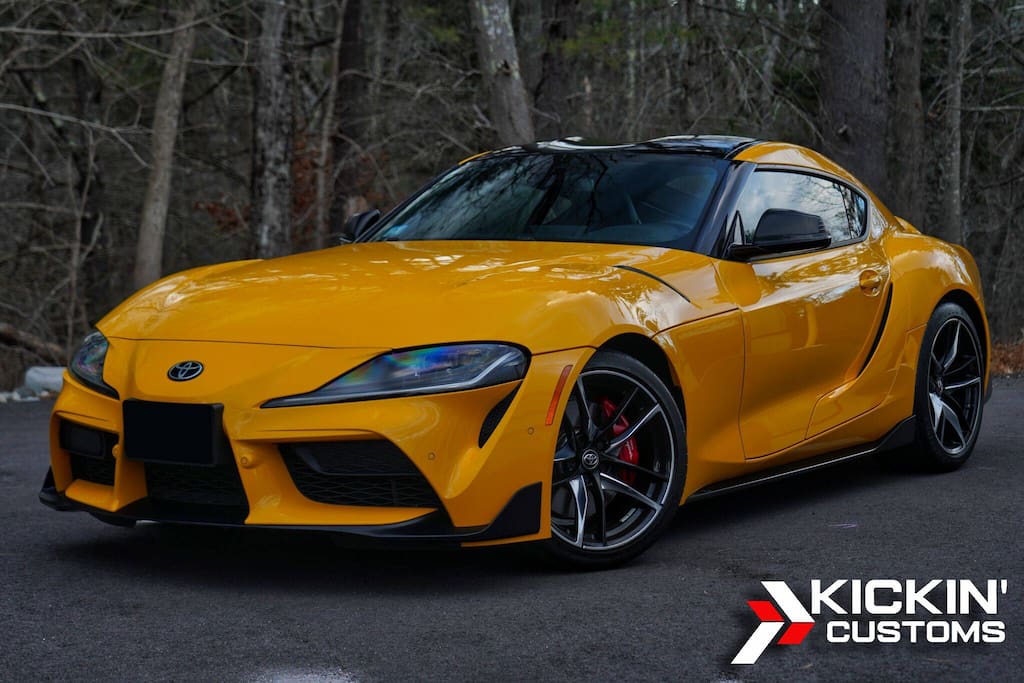
Metallic and pearl wraps add visual depth by incorporating reflective or color-effect elements into the film. These finishes can look relatively subtle in shade and much more active in direct sun.
Metallic films are often directional. That means the material should be installed with consistent orientation so the flake and reflection behave the same way from panel to panel. A door installed in the opposite direction from the adjacent quarter panel can look different even if both pieces came from the same roll.
Replacement planning matters too. If one panel needs to be rewrapped years later, aging, production-lot variation, sun exposure, and surrounding paint or film condition can make a perfect match difficult. For that reason, film name and production information should be documented when practical.
Color-Shift and Iridescent Wraps
Color-shift film is designed to change appearance with lighting and viewing angle. A vehicle may look blue from one direction, purple from another, and show a third tone under direct sun or artificial light. Manufacturers use different names for these effects, including color flip and ColorFlow.
These films create one of the biggest differences between a digital preview and the finished vehicle. A still photo captures only one angle and one lighting condition. In person, the effect moves across the body as you walk around the vehicle.
Color-shift makes the most sense when:
- The goal is an obvious custom appearance rather than a factory-color look.
- You want the vehicle to change character in different lighting conditions.
- You are comfortable with careful panel orientation and the possibility that future replacement material may not match aged film exactly.
Because orientation matters, complex vehicles may require more installation planning than a basic solid color. Film availability should be confirmed before the vehicle is scheduled.
Chrome, Brushed, Carbon-Style and Textured Films
Specialty films can create looks that standard gloss, satin, and matte products cannot. Examples include chrome or mirror-like finishes, brushed-metal effects, carbon-style patterns, rugged textures, and other patterned surfaces.
These materials should be chosen with more caution than a basic cast color-change film. Some specialty films cost more, conform differently, require additional seams or relief strategies, and may carry shorter manufacturer coverage or practical service life. Not every film is appropriate for every bumper, mirror, recess, or complex body shape.
A carbon-style vinyl also should not be represented as real carbon fiber. It is a cosmetic surface effect. The same principle applies to brushed-metal or forged-style patterns: they change appearance, not the underlying construction of the vehicle.
Custom Printed Wraps Are a Separate Direction
A printed wrap is different from selecting a premanufactured color-change film. Instead of choosing a solid color from a manufacturer's swatch book, the project can use original artwork, gradients, patterns, logos, livery elements, or other graphics printed onto compatible wrap media and protected with an appropriate laminate.
Printed cosmetic work is quoted for the actual project because design development, proofs, print media, ink coverage, laminate, production, panel mapping, and replacement planning all affect the scope.
For a personal vehicle, printed graphics can be combined with solid-color wrap areas, stripes, or exposed factory paint. Commercial vehicle graphics follow a separate design and production path because advertising, repeatability, fleet scheduling, and brand standards create different requirements.
Choose your film and budget
Which Vinyl Wrap Finish Is Easiest to Live With?
There is no single finish that is best for every owner. The right answer depends on the appearance you want and how willing you are to adjust your maintenance routine.
| Finish | Visual Character | Ownership Consideration | Good Fit For |
|---|---|---|---|
| Gloss / High Gloss | Bright, reflective, paint-like | Shows swirls, water spots, and contamination more readily | Factory-inspired or polished appearance |
| Satin | Soft reflection with visible body lines | Use finish-safe products; avoid unapproved polishing | Modern premium look with controlled sheen |
| Matte | Flat, low-reflection appearance | Rubbing, stains, and glossing can be difficult to correct | Owners committed to matte-specific care |
| Metallic / Pearl | Added depth and reflective flake | Direction and panel orientation can matter | Owners wanting more visual depth than a solid color |
| Color Shift | Changes with angle and lighting | Very directional; replacement matching can be harder later | Bold custom builds |
| Chrome / Textured | High-impact specialty appearance | Higher cost, more installation limits, finish-specific care | Accent or specialty projects after vehicle review |
If low-maintenance ownership is the main priority, do not automatically assume matte or textured film is the answer because it hides some reflections. Every finish has its own visible wear patterns. The best choice is the finish whose maintenance requirements you are actually willing to follow.
Do Not Choose a Wrap Color From a Phone Screen Alone
Digital visualizers are useful for narrowing the direction. They are not accurate enough to approve an exact color or finish.
The same film can change noticeably because of:
- Natural sun versus indoor lighting
- Flat swatch versus a curved body panel
- Viewing angle and surrounding colors
- Screen brightness, color calibration, and photo editing
- Metallic or color-shift direction
- Production-lot differences
Avery Dennison specifically advises buyers that digital color representations can differ because of lighting and viewing angle and recommends reviewing a physical swatch before final selection. Kickin' Customs follows the same practical approach.
How the Finish Affects Installation and Price
A full color-change wrap at Kickin' Customs starts at $4495 for a standard-size vehicle using a standard cast color-change film on acceptable painted surfaces. Specialty films are quoted by vehicle because material price and installation requirements can vary significantly.
The final quote can change with:
- Vehicle size and panel complexity
- Selected manufacturer, color, and finish
- Roll width and the amount of usable material required
- Directional metallic, pearl, or color-shift film
- Chrome, textured, limited-production, or other specialty film
- Existing wrap or coating that must be removed or prepared
- Paint condition, repaint history, chips, or body repairs
- Trim and emblem removal, difficult access, seams, inlays, and relief cuts
- Optional door jambs or interior openings
For a standard full color change, many projects are planned around a 4-to-6-business-day vehicle window after the material is confirmed and the vehicle passes inspection. Specialty materials, complex geometry, paint concerns, or added opening coverage can extend the schedule.
Care, protection and preparation
How Long Do Different Vinyl Wrap Finishes Last?
A useful ownership-planning range for many professionally installed cosmetic wraps is approximately three to five years, but that is not a universal replacement date. Product, finish, color, panel orientation, sun exposure, mileage, outdoor storage, winter use, contamination, washing, and maintenance all affect how a wrap ages.
Manufacturer durability figures also vary by product and installation orientation. 3M, Avery Dennison, and ORAFOL each publish product-specific durability and warranty information, but those maximum figures should not be treated as a promise that every hood, roof, bumper, door, and specialty finish will age identically.
Horizontal and high-exposure surfaces often weather sooner than vertical panels. Chrome, textured, and other specialty finishes may also have different practical expectations than a conventional gloss or satin cast film. The selected product's current technical and warranty documents should be reviewed when the material is chosen.
How Should Each Finish Be Maintained?
The basics are similar across most quality color-change films: keep the wrap clean, remove contamination early, avoid aggressive contact at edges, and use products that are compatible with the exact finish.
- Hand wash with a clean microfiber wash system and a gentle wrap-compatible automotive soap.
- Remove bird droppings, insects, tree sap, fuel, road salt, and other contamination promptly.
- Keep high-pressure spray and hot water away from edges, seams, inlays, and damaged areas.
- Avoid brush-style automatic washes, abrasive towels, aggressive solvents, scouring pads, and sharp tools.
- Do not polish, compound, or wax matte or satin film unless the product is specifically approved for that finish.
- Use extra care when removing snow or ice so hard edges do not cut or gouge the vinyl.
A vinyl-compatible coating can sometimes make washing easier, but it must be approved for the exact material and finish. A coating does not turn vinyl into paint protection film and does not make the wrap resistant to rock impacts, cuts, or physical abuse.
Vinyl Wrap Finish vs. Color Paint Protection Film
If the main goal is color and styling flexibility, traditional vinyl still offers one of the broadest selections of finishes. If the main goal is changing the vehicle's color while also adding meaningful protection against road debris, colored paint protection film deserves a separate conversation.
Vinyl is a thinner cosmetic film. Paint protection film is a thicker urethane product designed around physical paint protection. Color PPF selections are expanding, but traditional wrap vinyl still generally offers more colors, textures, special effects, and styling choices.
Choosing between them should start with the priority: style first or protection first.
Paint Condition Still Matters Before Any Finish Is Installed
A premium finish cannot correct a poor surface underneath it. Vinyl follows the paint and bodywork below it. Chips, scratches, sanding marks, dents, rust, failing clear coat, body filler edges, and uneven repairs can remain visible through the wrap and can create adhesion or removal concerns.
Factory paint in sound condition is generally the most predictable wrapping surface. Repainted or repaired panels need additional review. If the vehicle needs body repair or clear-coat restoration, that work should usually happen before the wrap.
That topic deserves its own article because the condition of the vehicle can matter just as much as the finish you select.
Frequently asked questions
Is satin or matte vinyl better?
Neither is universally better. Satin keeps more reflection and usually shows the vehicle's body lines more clearly. Matte creates a flatter appearance. Both require finish-safe maintenance, and neither should be treated like conventional gloss paint.
Does gloss vinyl look like real paint?
Quality gloss and high-gloss films can create a convincing paint-like appearance, especially from normal viewing distance. It is still an applied film, so close inspection can reveal edges, seams, inlays, or differences in surface behavior depending on the vehicle and installation plan.
Can I get metallic or pearl vinyl wrap?
Yes. Established wrap-film manufacturers offer metallic and pearl-style options. Availability changes by brand and production cycle, and directional materials need consistent panel orientation.
What is color-shift vinyl?
Color-shift vinyl changes appearance with viewing angle and lighting. Depending on the product, one wrap can show multiple tones as you move around the vehicle. Manufacturers may call these finishes color flip, ColorFlow, shift effect, or other product-specific names.
Is chrome vinyl harder to maintain?
It can be. Chrome and other specialty films may have different installation, cleaning, heat, durability, and warranty requirements than standard gloss or satin film. We review the specific product and vehicle before recommending it.
Can I choose the wrap from an online visualizer?
Use a visualizer to narrow your choices, not to approve the final material. Screen settings, lighting, body shape, film direction, finish, and production lot can all affect the real-world result. Review a current physical sample whenever possible.
Does a specialty finish cost more?
Often, yes. Chrome, textured, color-shift, limited-production, high-gloss, and other specialty films can change material cost, waste, seam planning, and installation time. They are quoted for the exact vehicle rather than treated as a universal upgrade price.
How long should I keep a vinyl wrap?
Do not wait for the film to become severely cracked, baked, or brittle before planning removal. Many cosmetic wraps are treated as a three-to-five-year ownership product, but actual timing depends on the film, finish, exposure, storage, mileage, and maintenance. Inspect exposed horizontal surfaces regularly.
Plan your next step
Choose the Finish in Person
The best vinyl wrap finish is the one that looks right on your vehicle and fits the way you plan to maintain it. Gloss, satin, matte, metallic, color-shift, and specialty films all create different results, and a finish that looks impressive in one photo may not be the right choice for every body style or owner.
Send us the year, make, model, current color, paint condition, and a few reference images through our quote form. We can narrow the material direction, review physical samples, check current availability, and build the final quote around the actual vehicle.
Kickin' Customs installs cosmetic vinyl wraps at our Raynham, Massachusetts shop for vehicle owners throughout Southeastern Massachusetts and Rhode Island.
